ZURICH, Switzerland--(BUSINESS WIRE)--Oct 14, 2026--
AL-S Pharma AG (“AL-S Pharma” or “the Company”), a clinical-stage biotechnology company discovering and developing human antibodies that target misfolded proteins implicated in amyotrophic lateral sclerosis (ALS), today announced the appointment of Harry Welten as chief executive officer (CEO). Mr. Welten succeeds Michael Salzmann, Ph.D. The Company recently reported positive topline results from a Phase 2 study of its lead program AP-101, a human monoclonal antibody targeting misfolded superoxide dismutase 1 (SOD1). AL-S Pharma is currently advancing AP-101 toward a confirmatory Phase 3 clinical trial in ALS which it aims to initiate in 2027.
This press release features multimedia. View the full release here: https://www.businesswire.com/news/home/20261013851910/en/
“As AP-101 enters its confirmatory study, we are delighted to welcome Harry to AL-S Pharma. Harry has spent his career building life sciences companies, both as CFO and as chairman setting strategy at the board level, and has a proven record of securing the financing and partnerships needed to advance clinical programs. The board is confident that his strategic and financial leadership is what AL-S Pharma needs to take AP-101 through Phase 3 and toward regulatory approval, so that it can become available to people living with ALS,” said Hubert Birner, Ph.D., chairman of AL-S Pharma. “On behalf of the board, I would also like to thank Michael for his leadership. During his tenure, the Company advanced AP-101 from early development to a Phase 3-ready program.”
“AL-S Pharma has reached a pivotal stage in the development of AP-101, and I have great respect for what the team has built over the past decade. I look forward to working with the board, the leadership team, and our clinical and scientific partners to build on this strong foundation,” said Mr. Welten. “As AP-101 advances into Phase 3, my priorities will be to execute the Phase 3 program with rigor, on time and on budget, and to secure the financing and strategic partnerships required to bring AP-101 through regulatory approval to patients. Above all, I am committed to contributing to the well-being of people living with ALS and their families, who urgently need new treatment options.”
Mr. Welten is a board-level executive with more than 25 years of chief financial officer (CFO) and chairman experience in the life sciences industry across Europe and the United States. He has guided companies through growth, restructuring, financings, M&A, and commercialization, and has raised more than CHF 500 million through venture capital, IPOs, follow-on offerings, PIPE financings, and convertible instruments. He has led or supported more than eight M&A, public-market, and strategic transactions including the largest European IPO of 2005.
With more than 15 years of board experience, Mr. Welten served on 14 life sciences, medtech, and AI diagnostics boards in Switzerland, across Europe, and in the United States, seven of them as chairman, and has chaired both audit and finance committees and nomination and compensation committees. As chairman, he guided Biognosys, Aidence, and Proteomedix through to their sale or merger with Nasdaq-listed companies. He currently serves as chairman of b-rayZ AG and as a board member of Lumendi AG. Mr. Welton holds an MBA with honors from Columbia Business School, a degree in business administration and economics from the Zurich School of Management, as well as a federal degree in banking and finance from the KV Business School Zurich.
About AL-S Pharma AG
AL-S Pharma is a clinical-stage biotech company developing AP-101 for the treatment of amyotrophic lateral sclerosis (ALS). Founded and co-owned by Neurimmune and TVM Capital Life Science, AL-S Pharma brings together a seasoned team of biotech and pharmaceutical leaders with expertise spanning drug discovery, translational research, and clinical development. AL-S Pharma is based in Zurich, Switzerland. For more information, visit www.al-spharma.com.

Harry Welten, CEO, AL-S Pharma AG
HANOI, Vietnam (AP) — Thousands carrying white flowers lined the roads in Vietnam’s Ho Chi Minh City Wednesday as the remains of 731 people believed to have been killed during the 1968 Tet Offensive were taken for burial nearly six decades after their deaths.
Vietnamese Prime Minister Le Minh Hung attended the memorial services at Le Thi Rieng Park, where the remains were recovered from mass graves after over three months of excavations. They were laid to rest at Ho Chi Minh City Martyrs’ Cemetery in the city previously known as Saigon.
Generations in Vietnam have spent decades searching for loved ones who never returned from war, hoping to recover their remains, give them a proper burial and finally find some measure of closure.
The Tet Offensive began on Jan. 31, 1968, when North Vietnamese communist forces launched coordinated surprise attacks across South Vietnam during the Lunar New Year holiday, known in Vietnam as Tet. One of the largest campaigns of the Vietnam War, it sparked fierce fighting and heavy casualties, including in the southern capital Saigon, where communist fighters attacked the U.S. Embassy, military installations and government buildings.
Although the communist forces suffered a military defeat, the offensive shocked Washington, undermined U.S. public support for the war, and became a turning point in the conflict. “The resultant conflict has changed the pattern of the war,” The Associated Press reported in February 1968.
The South Vietnamese government collected the bodies of communist fighters and civilians and buried them in mass graves during and after the fighting, according to Vietnamese government news.
The remains at Le Thi Rieng Park, which was previously the site of Do Thanh Cemetery, were discovered during excavations that began on June 23 at the park. Over weeks, excavators painstakingly unearthed bones and fragments, along with weapons, ammunition, military hammocks and personal belongings, said the Vietnamese government’s official news portal.
They discovered a wallet containing a faded military document bearing the name Huynh Van Quen, which helped authorities identify one of the dead as a soldier from the 1st Long An Battalion, a communist unit that fought a fierce seven-day battle at Saigon’s Y-shaped Bridge.
Among the mourners was Vo Huy Thinh, 70, who remembered watching bodies being buried there when he was 12. “The memory of that burial pit has stayed with me,” he told Vietnamese state media.
For years, architect Nguyen Xuan Thang pored over photographs from the Vietnam War, searching for clues to the location of the burial site.
A breakthrough came when he found a color photograph taken by an AP photographer on Feb. 12, 1968, with a caption describing three large burial trenches that each contained about 300 bodies, he told state media.
The photograph shows two men carrying a body as two others look on. Three boys stand nearby, one of them wearing shorts and a short-sleeved shirt and looking directly at the camera. A water tower is visible in the background, providing a crucial clue to the site’s location. The image was shot by a French photographer credited as Gautron.
Thang told state media that he spent months riding his motorbike through Ho Chi Minh City, comparing old military maps with present-day landmarks, including the water tower. His research was part of a nearly eight-year effort, from November 2018 to May 2026, involving his team and the military, which helped authorities narrow their search to the park.
Investigators worked with researchers, historians, journalists and witnesses to piece together the location of the mass graves. They examined other wartime photographs, satellite images, military maps and archival records from Vietnam and abroad, comparing them with field surveys and accounts from people who witnessed the burials, said the Vietnamese government’s official news portal.
The recovery is part of a nationwide 500-day campaign running through July 2027 to locate the remains of about 7,000 war dead and identify them.
More than half a century after the war ended in 1975, many Vietnamese families are still searching for relatives who never returned home. The remains of about 175,000 Vietnamese soldiers have yet to be recovered, while hundreds of thousands more lie in graves without confirmed identities, according to government figures.
Of the 731 sets of remains recovered in Ho Chi Minh City, 307 were found with personal belongings, according to state media. Most have not yet been identified.
“Due to the harsh conditions of war and the passage of time, we have been unable to identify the names, ages, or hometowns of the majority of the martyrs in this group,” said Nguyen Manh Cuong, who heads the city's war dead identification efforts.
Samples have been sent to the Vietnam Academy of Science and Technology in Hanoi for DNA testing and comparison with samples from relatives.
Similar memorial and burial ceremonies will be held Thursday in three other parts of Vietnam, with the remains of what are believed to be 93 people to be buried in Tuyen Quang province. Another 65 will be buried in Hai Phong and 120 in Can Tho.
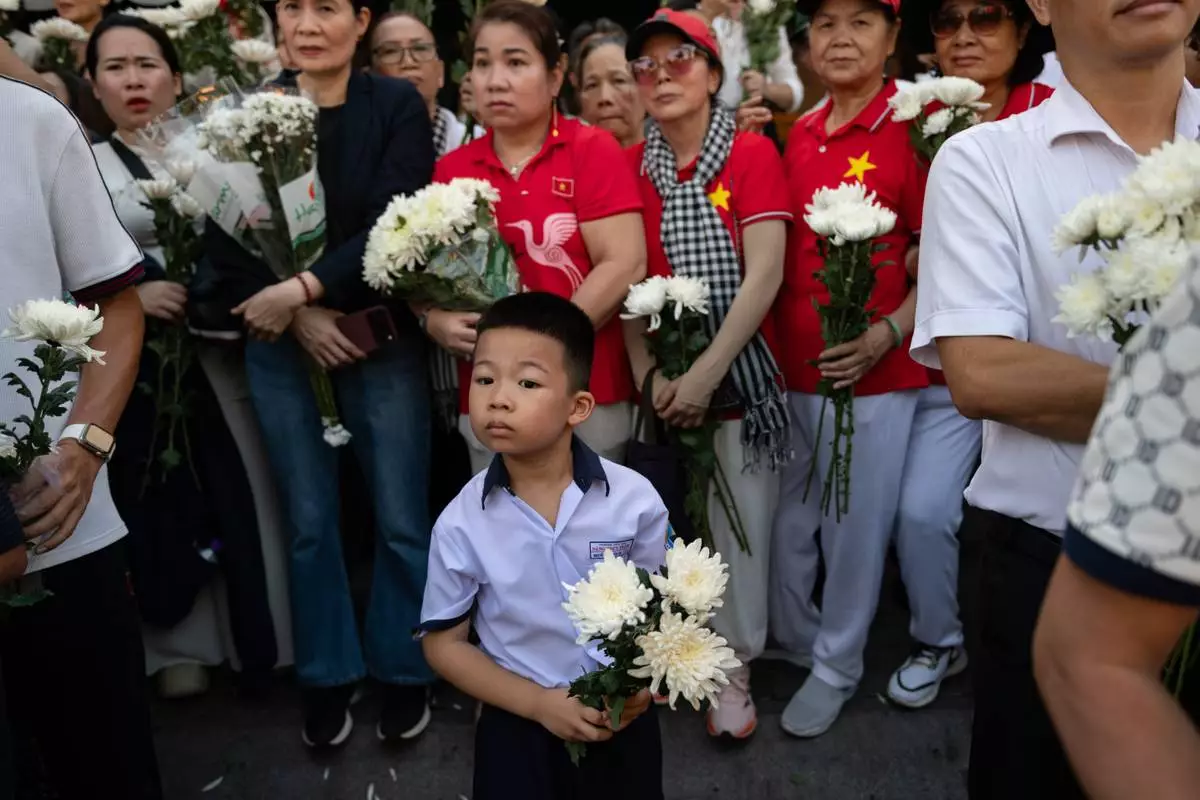
People watch as 731 sets of martyrs' remains found at Le Thi Rieng Cultural Park are transferred for burial at Ho Chi Minh City Martyrs' Cemetery Wednesday, Oct. 14, 2026, in Ho Chi Minh City, Vietnam. (AP Photo/Thanh Hue)
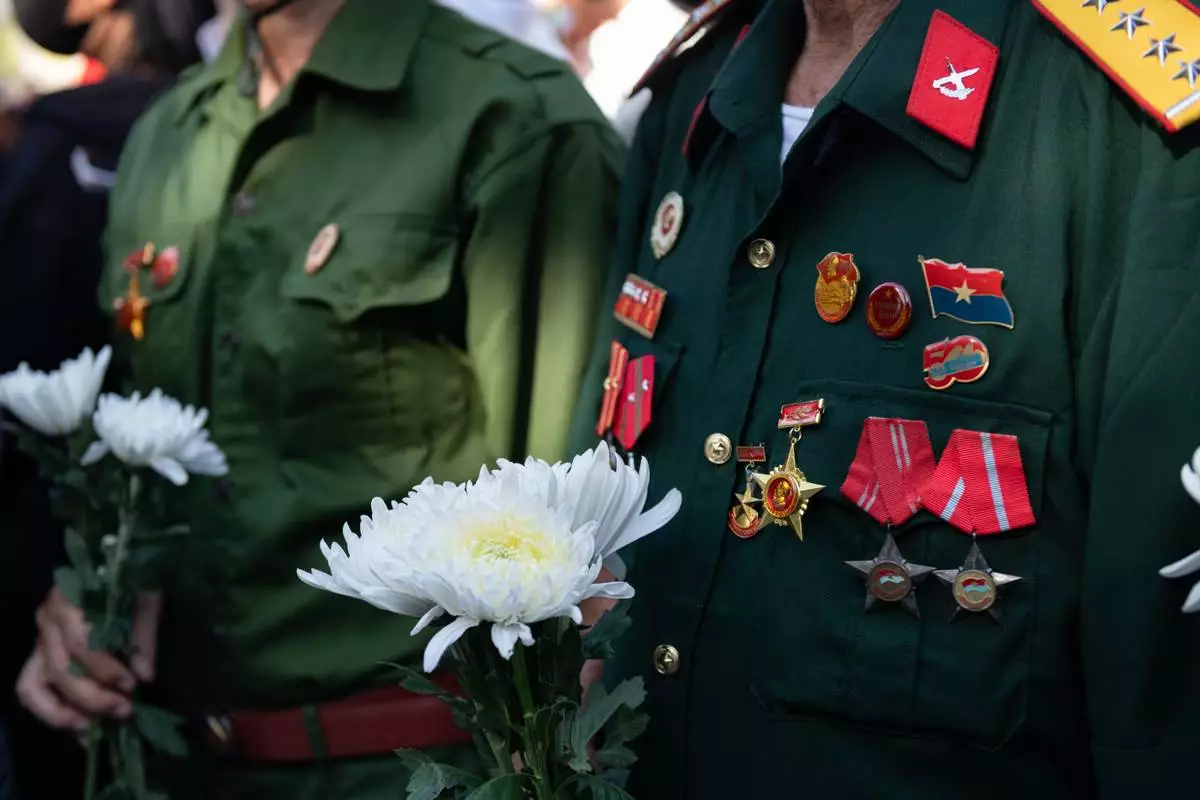
People watch as 731 sets of martyrs' remains found at Le Thi Rieng Cultural Park are transferred for burial at Ho Chi Minh City Martyrs' Cemetery Wednesday, Oct. 14, 2026, in Ho Chi Minh City, Vietnam. (AP Photo/Thanh Hue)
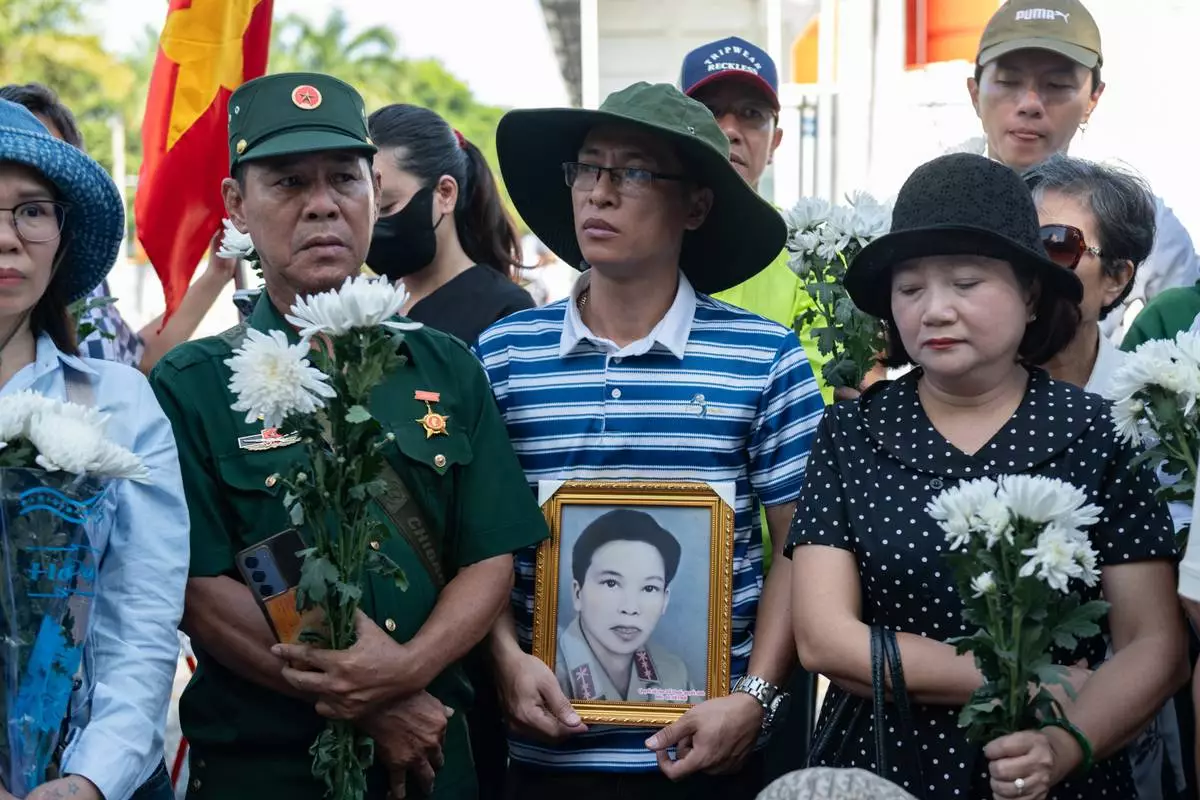
People watch as 731 sets of martyrs' remains found at Le Thi Rieng Cultural Park are transferred for burial at Ho Chi Minh City Martyrs' Cemetery Wednesday, Oct. 14, 2026, in Ho Chi Minh City, Vietnam. (AP Photo/Thanh Hue)
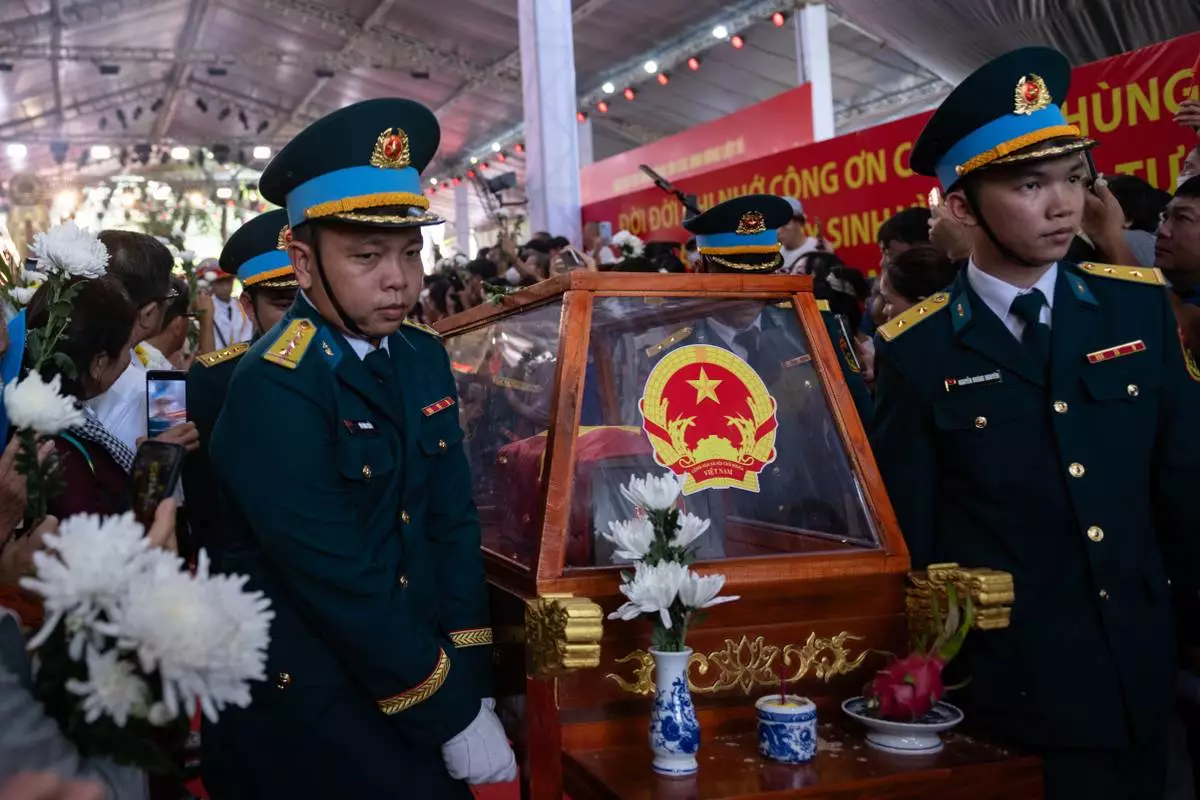
Military personnel carry the remains of 731 martyrs' remains found at Le Thi Rieng Cultural Park for burial at Ho Chi Minh City Martyrs' Cemetery Wednesday, Oct. 14, 2026, in Ho Chi Minh City, Vietnam. (AP Photo/Thanh Hue)
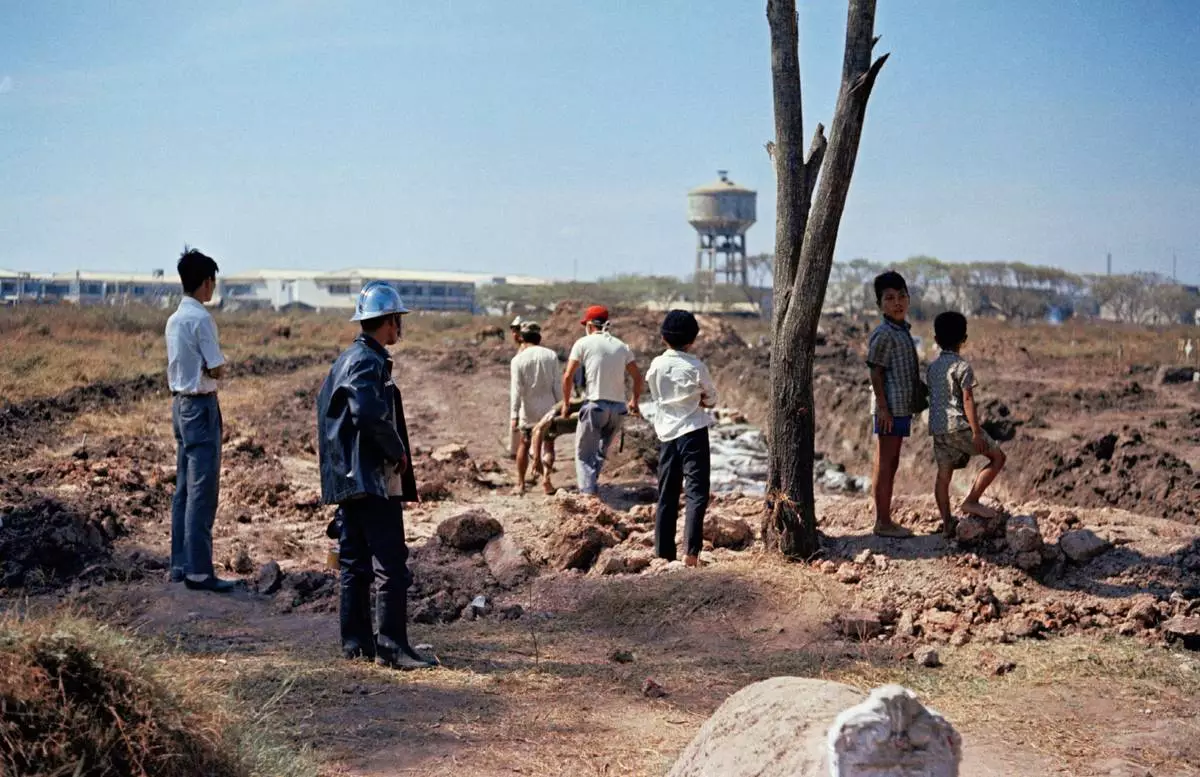
FILE- Gravediggers fill the third communal mass grave at a cemetery in Saigon, Vietnam on Feb. 12, 1968. The remains of more than 700 people, believed killed during the 1968 Tet Offensive were laid to rest in Ho Chi Minh City on Wednesday, Oct. 14, 2026, nearly six decades later. This wartime photograph provided a crucial clue, helping researchers locate the mass graves. (AP Photo/Gautron, File)