PRAGUE--(BUSINESS WIRE)--Oct 14, 2026--
eM Client, the European developer of an email and productivity application used by millions worldwide, today announced eM Client 11, its most significant release to date.
This press release features multimedia. View the full release here: https://www.businesswire.com/news/home/20261014613633/en/
Combining advanced AI capabilities, intelligent automation, and competitive pricing, eM Client 11 offers professionals and businesses across Asia a powerful, cost-effective alternative to Microsoft Outlook, with greater flexibility and control over their email experience.
Smarter Email with AI
eM Client 11 introduces an integrated AI Assistant that helps users search, summarize, organize, and manage emails using natural language.
New capabilities include personalized AI writing, context-aware quick replies, automatic task and event detection, AI-powered email rules, and intelligent search.
With Bring Your Own Key (BYOK) support, organizations can connect compatible AI providers and models of their choice, gaining greater flexibility over AI infrastructure, data handling, and costs.
The new Model Context Protocol (MCP) integration enables external AI assistants and agents to securely access relevant email context and perform supported actions, connecting email with broader AI-powered business workflows.
Enterprise Productivity at a Competitive Price
eM Client combines advanced productivity features with competitive pricing and flexible licensing, including subscription and perpetual license options.
For organizations looking to optimize IT spending, eM Client offers an attractive alternative to Microsoft Outlook without requiring costly changes to existing email infrastructure.
Businesses can retain their existing email services while choosing a more flexible email client, potentially reducing long-term software licensing costs.
Built for Asia's Diverse Business Environments
Supporting open standards including IMAP, CalDAV, and CardDAV, as well as Microsoft Exchange (via EWS or Microsoft Graph) and Google accounts, eM Client allows organizations to choose their email infrastructure independently of their email client.
This interoperability makes eM Client particularly suitable for businesses operating across multiple countries, managing diverse email platforms, and supporting distributed teams.
"Businesses across Asia need productivity tools that combine innovation, flexibility, and value," said Michal Bürger, CEO and Co-founder of eM Client. "With eM Client 11, we're bringing advanced AI capabilities and enterprise productivity features to organizations of all sizes, while giving them the freedom to choose their email infrastructure and AI providers."
More Productivity, Less Complexity
Beyond AI, eM Client 11 introduces a Command Palette, message pinning, advanced email automation, redesigned interfaces, and enhanced calendar functionality.
Native ARM support and eM Sync, featuring end-to-end encrypted settings synchronization, further improve the experience across devices.
Availability
eM Client 11 is available for Windows and Mac, with companion applications for Android and iOS. Free and paid licensing options are available for individuals and businesses.
More information: https://www.emclient.com
About eM Client
eM Client is a European software company developing email and productivity applications used by millions worldwide. Its software combines email, calendars, contacts, tasks, notes, and chat, emphasizing productivity, interoperability, privacy, and user choice.

eM Client 11 main window
ROME (AP) — Pope Leo XIV spent a peaceful night in Rome’s Gemelli hospital after doctors removed the lower lobe of his right lung and confirmed he has cancer, the Vatican said Wednesday. Experts said further tests are needed to know if the disease has spread and if more treatment is needed.
The surgery showed the 71-year-old pope has the most common type of lung cancer, known as lung adenocarcinoma, the Vatican said in a medical bulletin late Tuesday. The revelation — within a few hours of an operation that was announced by Leo himself — offered further evidence that the American pontiff is taking a new approach to communicating about his health.
The Vatican said the surgery lasted approximately 90 minutes and was successful, with no complications.
Doctors were waiting for the results of further tests before deciding on a course of treatment, the Vatican said. The press office pointed to the medical statement’s mention of the “radical” removal of the lobe as an indication that doctors took out all suspect tissue in hopes of removing any lingering traces of the cancer.
The right lung has three sections or lobes while the left has two. After one lobe is removed, the rest of the lung can gradually compensate, especially in otherwise healthy and physically active people. Leo is known to be sporty, with weekly tennis games and swimming.
Experts said some of Leo’s lymph nodes also would have been removed and tested to determine if the cancer had spread. There was no word yet on those test results.
If the cancer has spread, tests will determine what kind of therapy to pursue, said Dr. Stephen Liu, a lung cancer expert at Georgetown’s Lombardi Comprehensive Cancer Center. Options include chemotherapy, a combination of chemotherapy and immunotherapy or targeted therapy, which involves pills for specific cancers.
Liu, who is not involved in the pope’s care, said adenocarcinoma is the most common type of lung cancer, and also has the most favorable prognosis.
“While we know the diagnosis, we now need to know the stage,” Liu said. “We now need to know how big it is, how many spots in the lung are involved. Is it just one nodule, or more than one, and the lymph nodes, are they cancerous?”
Dr. PierCarlo Gentile, head of radiation oncology at the San Pietro Fatebenefratelli Hospital in Rome, said the kind of video-assisted minimally invasive chest surgery the pope underwent could allow him to be back on his feet within 48 to 72 hours. Recovery from the surgery itself takes 15 to 20 days. Post-op complications, including infections, are rare, he said.
In general, the lung can compensate for the loss of the lobe, Gentile said, “but recovery depends on the individual, their age and their breathing capacity before surgery. There will certainly be respiratory rehabilitation, but there is a very good chance of full recovery” of lung capacity.
The American pontiff has offered a rare level of transparency about the first publicly disclosed major health problem of his 17-month papacy. He revealed the discovery of the nodule, or growth, on his lung during his Sunday noon prayer, announcing it to the world on live television almost as an aside at the end of his blessing.
“That was truly a revolution. It was like he was reading a medical bulletin himself,” said Giovanni Maria Vian, a church historian and the former editor-in-chief of the Vatican newspaper L'Osservatore Romano.
The Vatican has long been secretive about the health of popes and tightly controlled any such information — a practice encapsulated in the popular Italian saying, “ The pope is fine until he’s dead.”
St. John XXIII died in 1963, nearly a year after doctors diagnosed stomach cancer that was kept hidden at the time. St. John Paul II died in 2005 after suffering for years from the obvious effects of Parkinson's disease that the Vatican only confirmed after he died.
Pope Francis seemed more up front about his health problems, giving an Argentine doctor a tell-all interview for a book about his physical and mental health. But in the end Francis, too, tightly controlled the information that was released in his dying months.
Vian, who was part of the Vatican communications team from 2007 to 2018, said the Vatican's obsession with secrecy about the pope's health was due to both practical and cultural considerations. He noted the Vatican is a 2,000-year-old institution that is culturally European — and Europeans tend to be more guarded about health problems than people in the United States.
“In theory, the pope has an absolute power, so you can understand that there are many people who would aspire to that absolute power," he said. Secrecy about a pope's health, therefore "is a legitimate defense of both the pope in question and the institution itself.”
He attributed Leo's decision to reveal his health condition to his American outlook and serenity, and said he hoped it would extend to other aspects of Vatican communications.
That said, Leo didn't share everything he knew Sunday when he announced the existence of the nodule: Tuesday's medical bulletin said doctors had suspected cancer based on tests, a suspicion that was confirmed in surgery.
The Vatican on Monday canceled all Leo’s audiences through Oct. 20. But there was no word on whether he would be able to keep his planned trip to South America next month.
Oncology surgeons often advise patients not to fly for three weeks after surgery — which would give the pope just enough time to make his planned Nov. 6-17 trip to Uruguay, Argentina and Peru. But whether he can go will depend on his recovery.
The current itinerary for the trip is ambitious and the longest of his papacy to date, calling for Leo to clock just over 31,000 kilometers (19,000 miles) on a dozen flights and two helicopter rides, and a significant altitude change in Peru.
“If it is stage 1, he can complete these trips. If more treatment is needed, I would likely advise against the trips,” said Liu.
Barry reported from Milan. Associated Press video producer Paolo Santalucia in Rome and Associated Press writer Lauran Neergaard in Washington contributed to this report.
Associated Press religion coverage receives support through the AP’s collaboration with The Conversation US, with funding from Lilly Endowment Inc. The AP is solely responsible for this content.
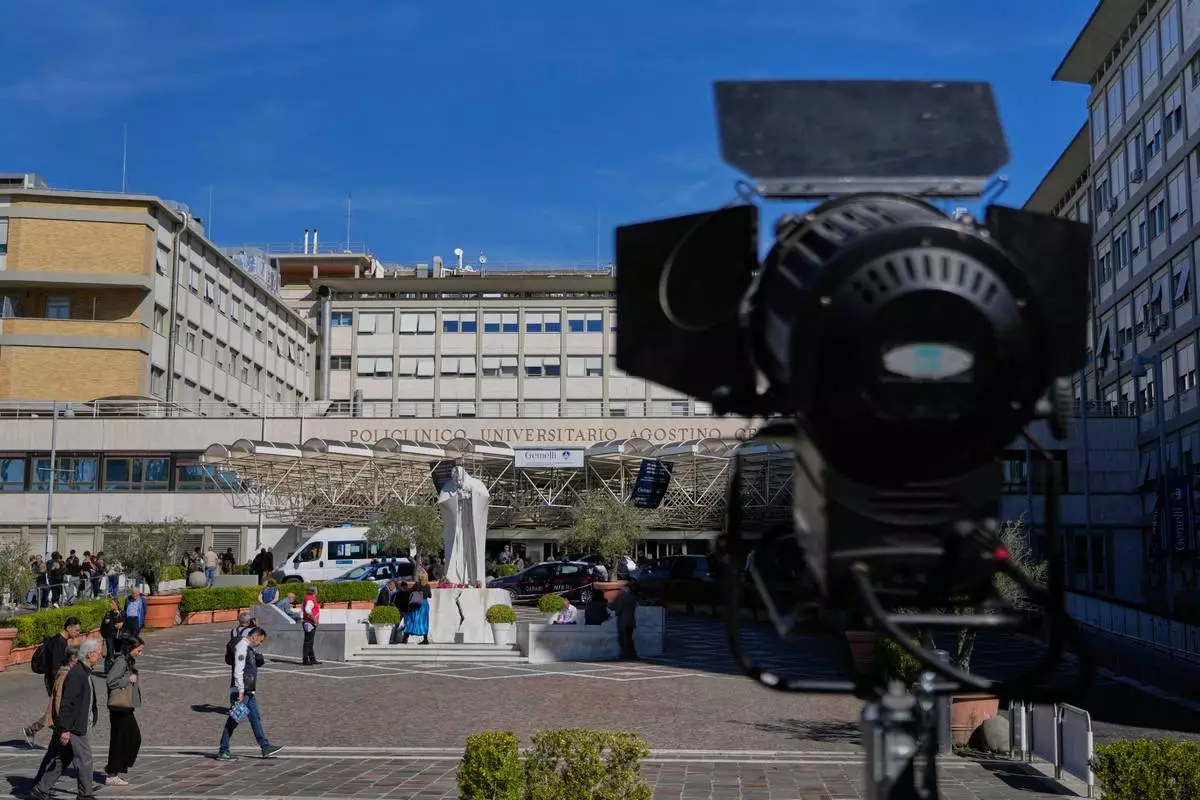
A television light is pointed towards the Agostino Gemelli Polyclinic, where Pope Leo XIV is hospitalized after undergoing a surgery, in Rome, Wednesday, Oct. 14, 2026. (AP Photo/Gregorio Borgia)
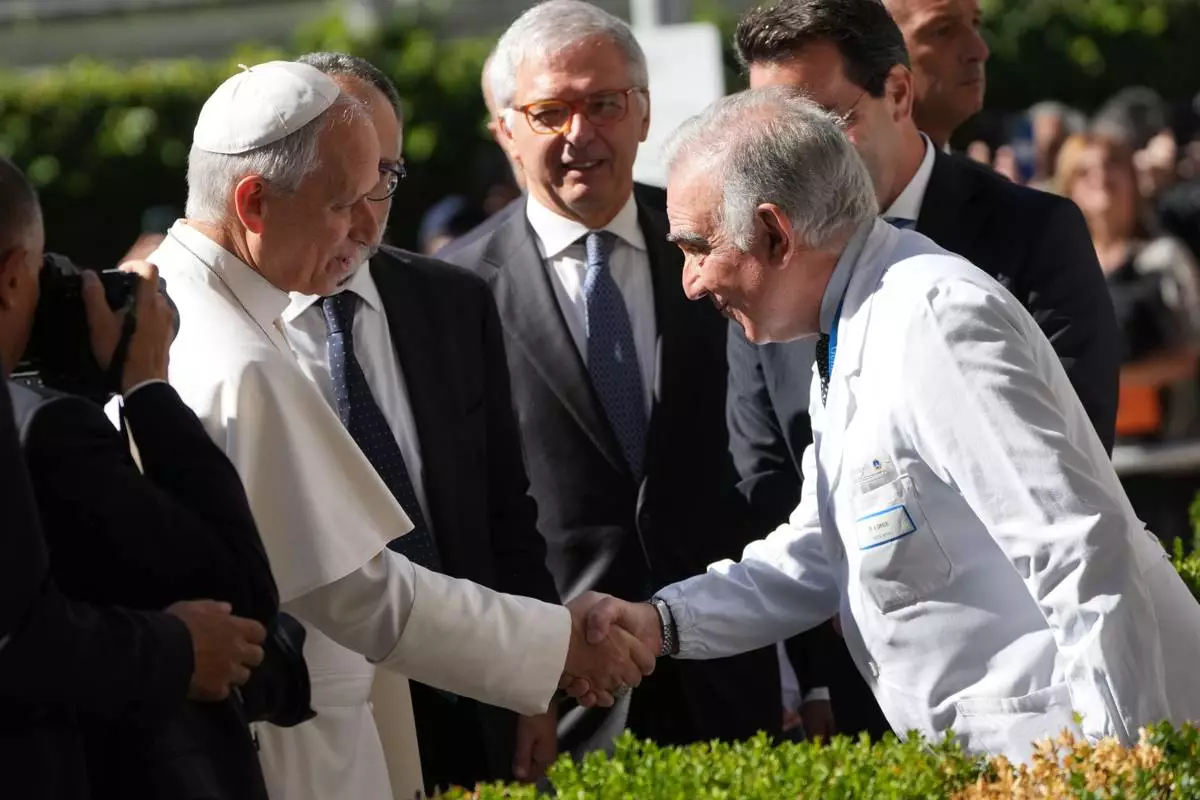
Medical Director Andrea Cambieri, right, receives Pope Leo XIV as he arrives at the Agostino Gemelli Polyclinic in Rome, Tuesday, Oct. 13, 2026, where he's expected to be operated to remove a lung nodule. (AP Photo/Gregorio Borgia)
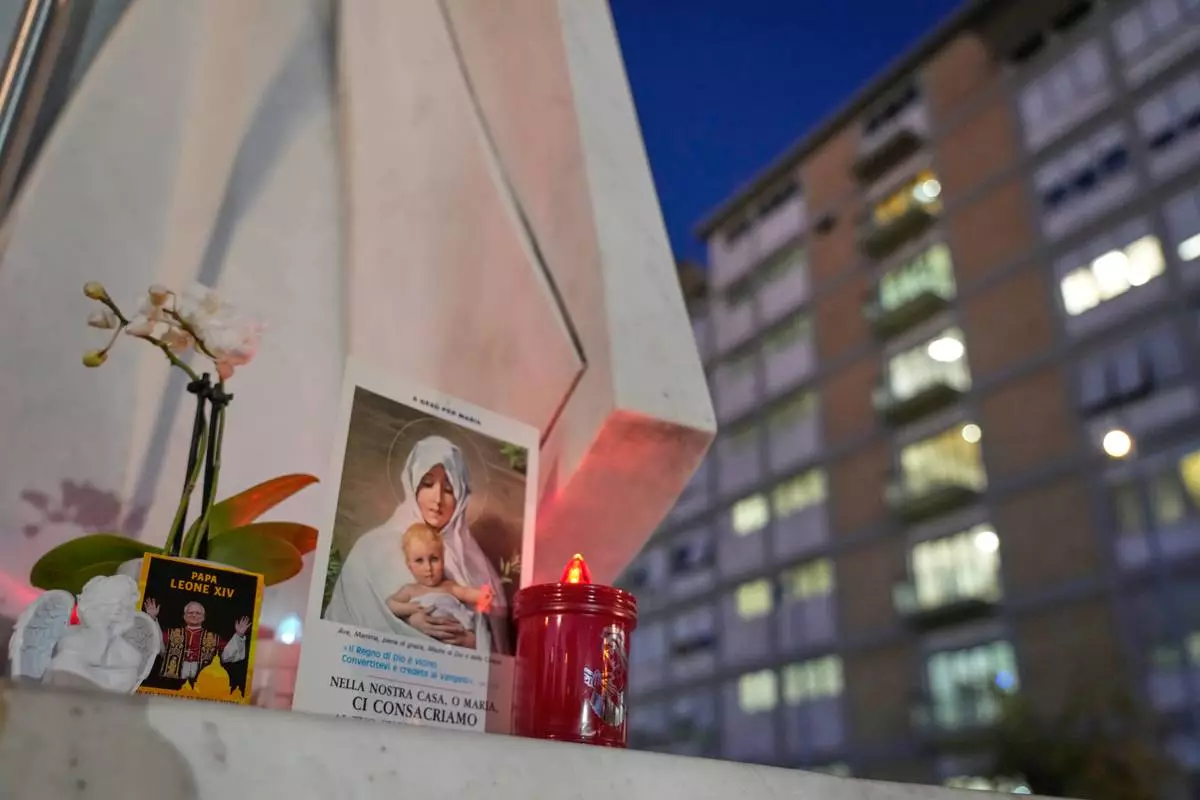
An image of Pope Leo XIV rests at the base of a statue of the late Pope John Paul II outside the Agostino Gemelli Polyclinic, where Leo is hospitalized for surgery to remove a lung nodule, in Rome, Tuesday, Oct. 13, 2026. (AP Photo/Gregorio Borgia)