A variety of counter-terrorism unmanned intelligent equipment are showcased at the ongoing Great Wall-2026 International Forum on Counter-Terrorism that opened in Beijing on Wednesday, presenting the performance of unmanned reconnaissance, cluster prevention and control, and precise handling.
Over 320 representatives from 62 countries and international organizations are attending the three-day forum.
Hosted by the Chinese People's Armed Police Force, this year's forum provides a platform for representatives to share insights and experience on pragmatic cooperation in the fight against terrorism in four seminar sessions.
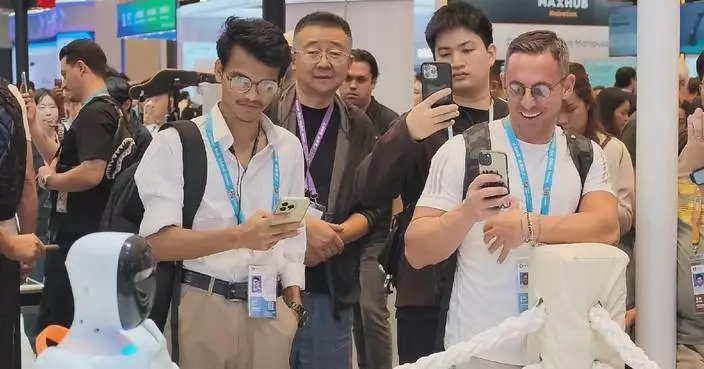
At the exhibition site, domestic and foreign guests are seen exchanging views and discussing the development trends of unmanned equipment, including unmanned equipment's combat strategies application, human-machine collaborative processing, and combat effectiveness.
"The first trend is cluster collaboration with low cost. Through cluster collaboration of multiple low-cost and simple individuals, we can achieve large-scale and precise strikes on high-value targets. The second trend is strike with low collateral damage. Currently, we are conducting operations under the prescribed legal and restrictive conditions, and it is impossible to achieve large-scale damage. Therefore, how to achieve precise strikes with low collateral damage has become a key direction for our future research," said Colonel Wu Husheng, an exhibitor from the Armed Police Force Engineering University.
"And the third trend is human-machine collaboration, meaning efficient coupling and collaboration between unmanned equipment and our special forces for battlefield tasks. This is also one of the key development trends we will focus on in the future," he continued.
Beyond equipment iteration, the transformation of decision-making models empowered by artificial intelligence (AI) algorithms also affects the entire process of counter-terrorism response.
Zhao Chunyu, another exhibitor, introduced the new changes brought about by AI to counter-terrorism operations.
"It can become more intelligent. In the past, people had to make judgments about what to do next and what decisions to make next. However, along with the development of AI, previous data have gradually become data sources for the current artificial intelligence, which helps us to make judgments about our next decisions. It can provide some support for us to make decisions," Zhao said.
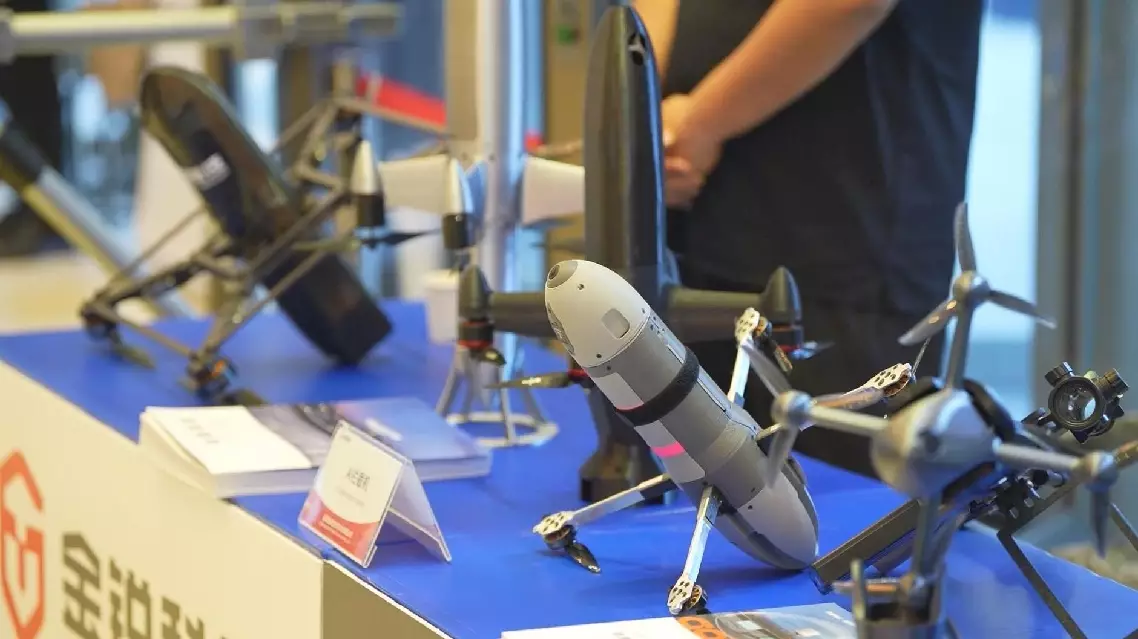
Various unmanned equipment showcased at international counter-terrorism forum