A prominent local warehouse owner died along with five other people when the plane he owned crashed in Wisconsin after ice built up on the wings during a thunderstorm.
Menomonie Airport Commission Chairman Daniel Johnson said at a public meeting Wednesday night that longtime pilot Ron Riek, who flew out of his airport regularly, died in the crash. Authorities have not yet released the names of the five others who died.
“He was simply a good man. A highly experienced pilot, and this was simply a tragedy,” Johnson said about the friend he had known for decades, according to Minneapolis TV station KSTP.
Riek carried an airline transport pilot rating on his license, according to Federal Aviation Administration records, which indicates that he had at least 1,500 hours of flying experience and the skills needed to be an airline captain.
Johnson told The Associated Press that Riek had a lot of experience relying on instruments when flying.
“He was an enthusiastic and engaging participant in airport activities, a popular and important member of our small aviation community, and a very active pilot,” Johnson said. Riek built the successful Woodville Warehousing and Distributing logistics company after several years as a trucker. His profile on the company website talks about his love of flying and how he used his plane to visit his customers.
It was Ron’s plane. I don’t know who else was on board except a local flight instructor, who I believe was not there to instruct, but as a friend. Ron was a longtime pilot operating out of Menomonie airport for many years, highly experienced in instrument conditions. He was a businessman who founded a successful logistics and warehousing firm based in Woodville. hrrps:// woodvillewarehousellc.com/about-us He was an enthusiastic and engaging participant in airport activities, a popular and important member of our small aviation community, and a very active pilot. Look at FlightAware, but understand that the radar image and the flight path image are an overlay and are not synchronous: https://www.flightaware.com/live/flight/id/N931TT-1791939438-sw-81p Unknowns: How significant was the ice he encountered? It’s always heaviest in cloud tops - was this a factor? How heavy was his passenger load? Is the Malibu relatively fragile in severe turbulence? I don’t know. He had onboard radar - why did he not give this small cell a wide berth? (Perhaps because it was small and he’d prior experience with such.) Was there lightning? This is associated with more severe turbulence. (If there’s no lightning, yellow radar areas generally have milder turbulence.) We can’t know exactly what he experienced. I don’t have info on the other passengers. Those I spoke to who know are too emotionally upset to speak publicly.
The National Transportation Safety Board is leading the investigation. Its experts will certainly examine the history of icing-related crashes involving Piper PA-46 Malibu planes like the one that Riek owned that was registered at his home address. The agency did a safety study on seven Piper crashes between 1989 and 1991.
Johnson said “the aircraft has a reputation of not doing well in thunderstorms.”
This latest crash is hitting the aviation community around Menomonie hard because just last year four people died in a different plane crash. Riek helped organize a fundraiser afterward to raise money for the three young children of one couple that died.
"This is two fatal crashes in 18 months. We’ve lost a lot of friends,” Johnson said. “This creates a hole in the aviation community.”
The pilot in this week's crash told an air traffic controller about icing on the wings of the Piper PA-46 Malibu as it flew at 24,000 feet (7,315 meters) and requested permission to descend, according to the NTSB. That is a major aviation hazard because even a thin layer of ice can make it difficult for a plane to remain airborne.
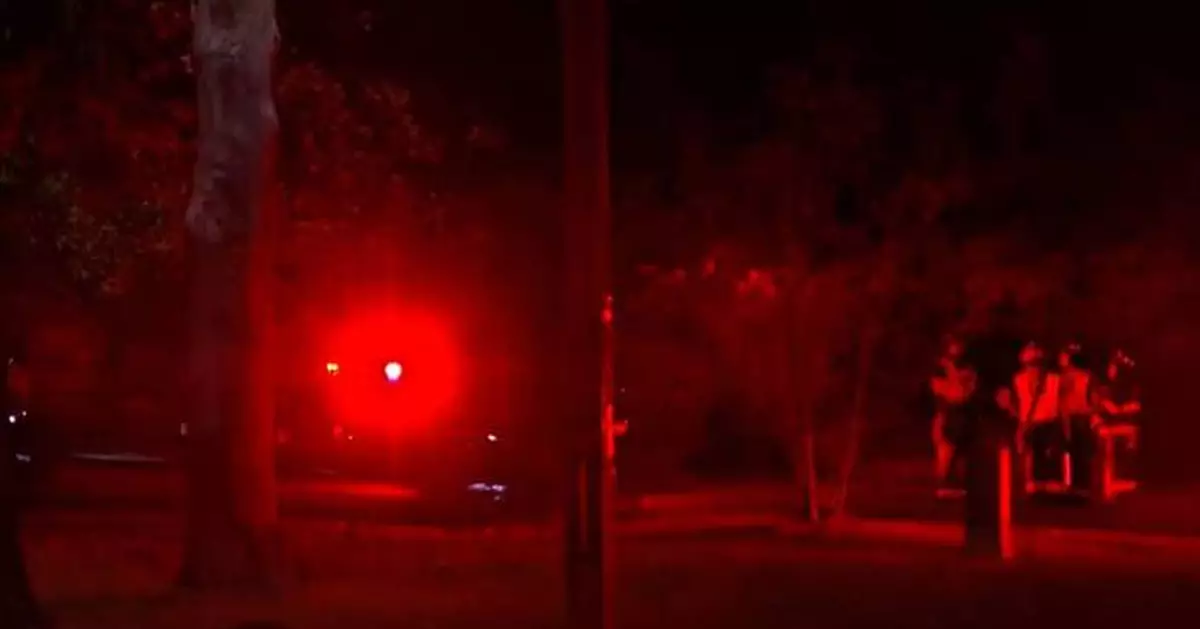
Air traffic control approved the descent, and the plane began a right descending turn that increased sharply in rate until communications and data tracking were lost shortly before 10 p.m. Tuesday. The six-seat, single-engine plane was traveling from Kenosha to Menomonie when it crashed in a wooded area near Mirror Lake State Park, not far from the popular tourist destination of Wisconsin Dells. No one on the ground was hurt.
The Wisconsin Dells sells itself as the “Waterpark Capital of the World” because of its high concentration of waterparks. The area drew more than 5 million visitors in 2025, according to state tourism officials.
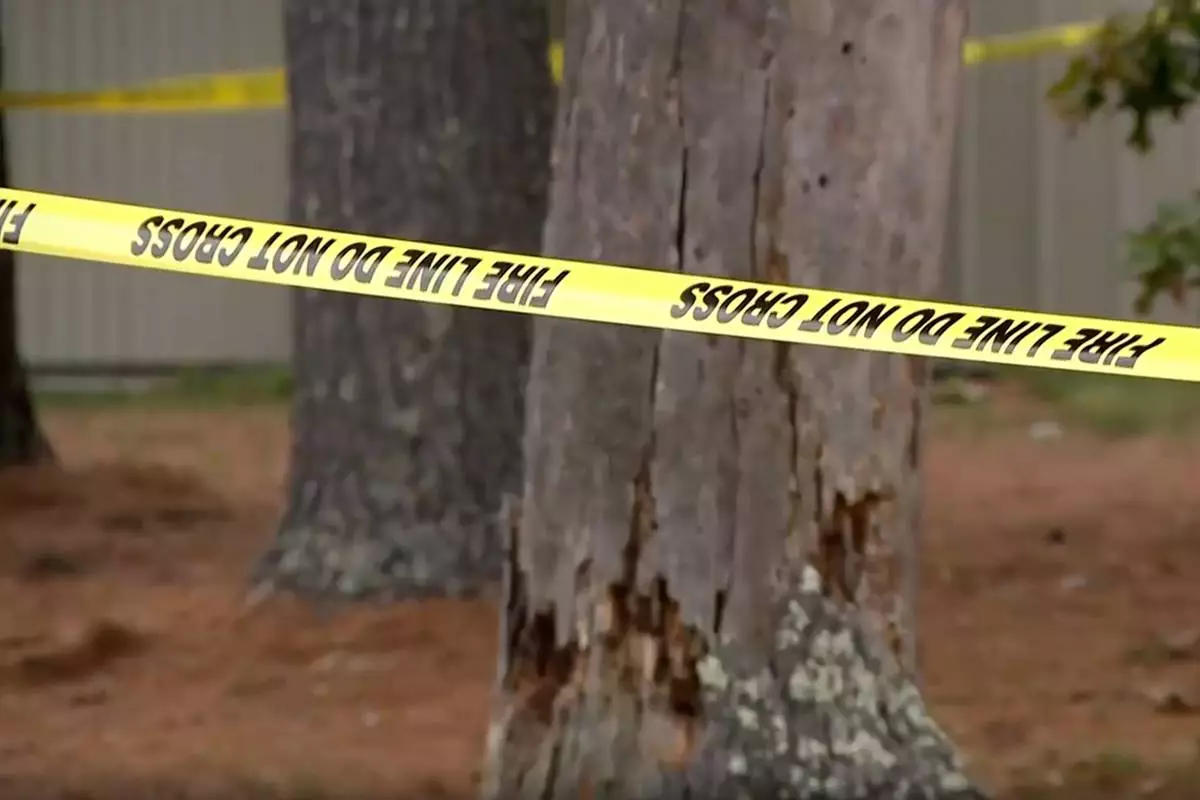
In this image taken from WISN video the wooded area around a fatal plane crash is cordoned off Wednesday, Oct. 14, 2026, near Mirror Lake State Park, Wis. (WISN via AP)
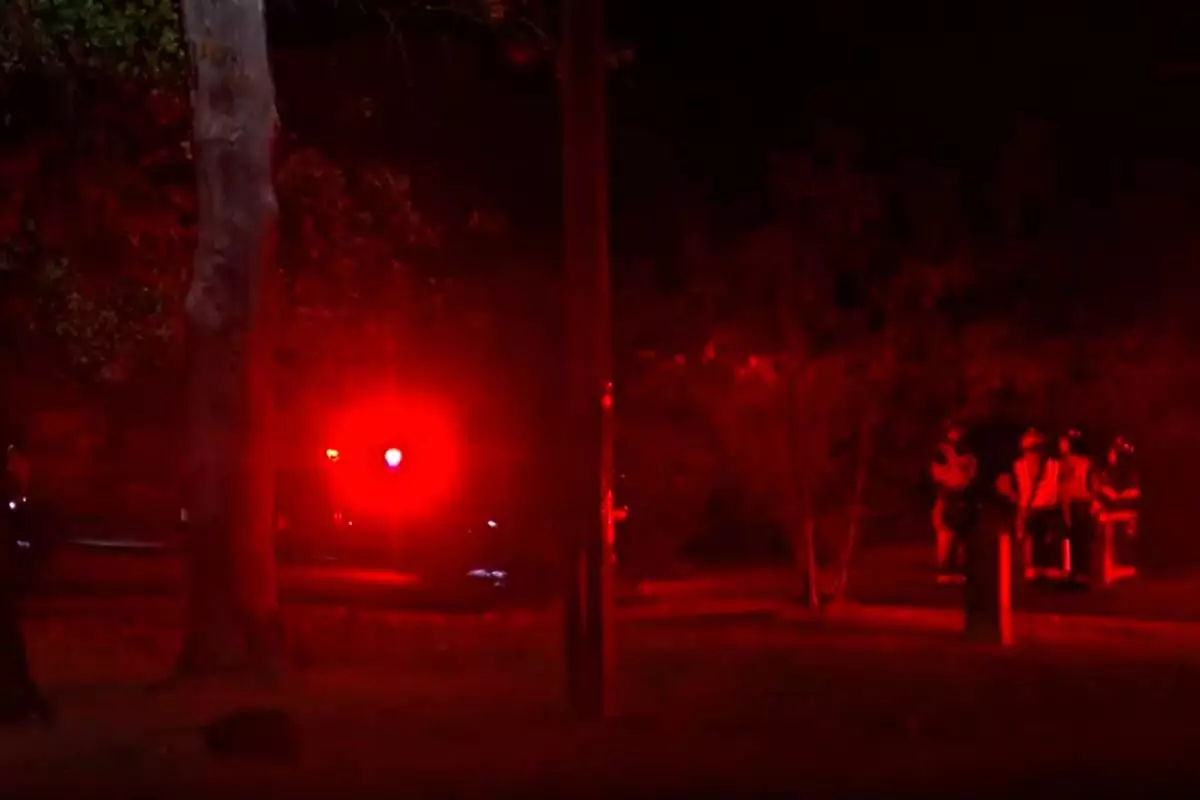
This image taken from WKOW video shows first responders at the scene of a fatal plane crash Tuesday, Oct. 13, 2026, in a wooded area near Mirror Lake State Park in the Town of Dellona, Wis. (WKOW via AP)
NEW YORK (AP) — Wall Street is steadying Thursday following jarring drops for stocks worldwide in the artificial-intelligence industry on worries about how much longer the AI frenzy will last.
After initially falling to a loss following its worst day since July, the S&P 500 quickly erased it and added 0.1% to edge closer to its all-time high set last week.
Continued weakness for AI stocks dragged the Nasdaq composite down 0.4%. But most of the rest of the U.S. stock market nevertheless rose, and the Dow Jones Industrial Average was up 406 points, or 0.8%, as of 12:15 p.m. Eastern time.
Markets were much shakier earlier in the day. A sell-off for AI stocks that began on Wall Street Wednesday whipped around the world and sent South Korea’s Kospi stock index down 7.6% and Japan’s Nikkei 225 down 4.9%.
They're the latest swings for AI stocks after they led the market for years. Companies are pouring money into the technology in hopes of bigger profits and improved productivity. But data centers and AI chips cost money, and many companies have been borrowing the cash to get them.
Now, after yields in bond markets worldwide hit their highest levels in years and made borrowing money more expensive, worries are rising about how resilient that boom in spending can be. Many AI-related companies have already taken on debt to build out their aspirations, and stocks are struggling under the debt loads.
CoreWeave, which offers AI computing power to customers over the cloud, fell 2.5% a day after tumbling 15.5%. It said in the summer that it had $4.41 billion in principal payments to make on its debt over the second half of this year and another $6.18 billion in 2027. It had more than $5.5 billion in cash, as of June 30.
High yields in the bond market also generally make investors less willing to pay high prices for stocks, particularly those seen as the most expensive.
Nvidia, the chip company that’s ridden the AI boom to become Wall Street’s most valuable company, fell 1.8% and was the heaviest weight on the S&P 500. It came into the day with a nearly 1,415% gain since the end of 2022.
The losses for AI stocks moderated as the day progressed, which helped broad U.S. indexes to steady. CoreWeave had been down as much as 9.5% in the morning before more than halving its loss, while stocks outside of AI were much more resilient.
Marsh & McLennan helped lead the market after the insurance and professional services firm reported a stronger profit for the summer than analysts expected. The company, which updated its brand name to Marsh earlier this year, also made more revenue than expected, and its stock climbed 5.2%.
Expectations are high for profits at all kinds of companies this reporting season, which began in earnest this week. That's what's allowed U.S. stocks to set records despite high inflation and many other worries weighing on Wall Street. Now, companies will need to surpass those high expectations to drive their stock prices even higher.
Seven out of every 10 stocks within the S&P 500 rose. But because AI stocks have become so big in value, their stock movements have more effect on the index and can drown out the rest of the market.
In the bond market, Treasury yields fell, which means investors were willing to pay higher prices to buy U.S. government bonds. Treasurys have a reputation as a safer investment, one with less risk of the borrower going bankrupt, and investors often flock to them when feeling nervous.
The yield on the 10-year Treasury sank to 5.09% from 5.19% late Wednesday. It had topped 5.30% earlier this month and touched its highest level since 2002 because of worries about high inflation, signals of a strong U.S. economy and other factors.
The drop in yields came even though another report signaled inflation has worsened in the United States by more than economists expected.
Several reports on the U.S. economy also came in stronger than economists expected, which typically push yields upward. One report said U.S. retailers made more money last month than economists expected, while another said fewer U.S. workers applied for unemployment benefits last week than expected.
In stock markets abroad, South Korea’s loss was the headliner. Its Kospi index is dominated by two chip companies, Samsung Electronics and SK Hynix, and it fell to its worst day since July. It has dropped 39% since setting a record in June.
Indexes were stronger in Europe, which has less of a dependence on tech stocks, and London's FTSE 100 rallied 1.1% for one of the world's biggest gains.
AP Business Writers Chan Ho-him and Matt Ott contributed to this report.
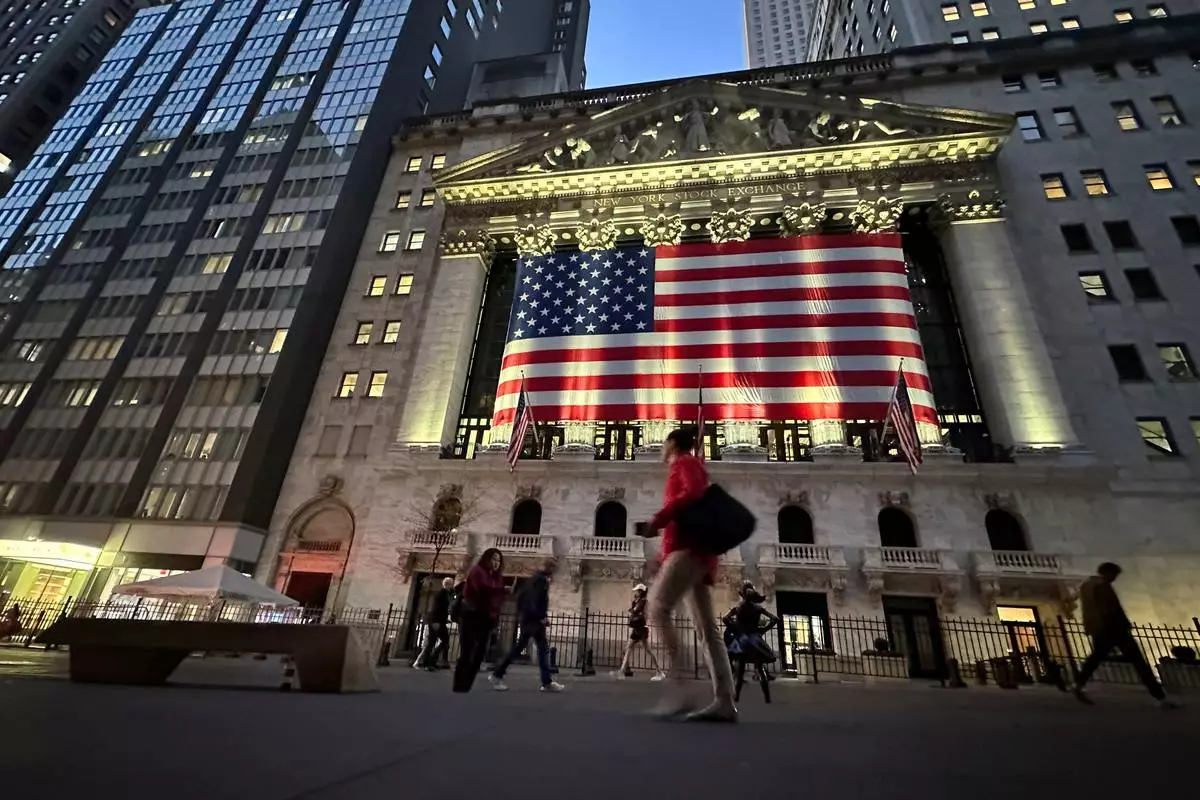
FILE - People pass the New York Stock Exchange on Nov. 5, 2024, in New York. (AP Photo/Peter Morgan, File)
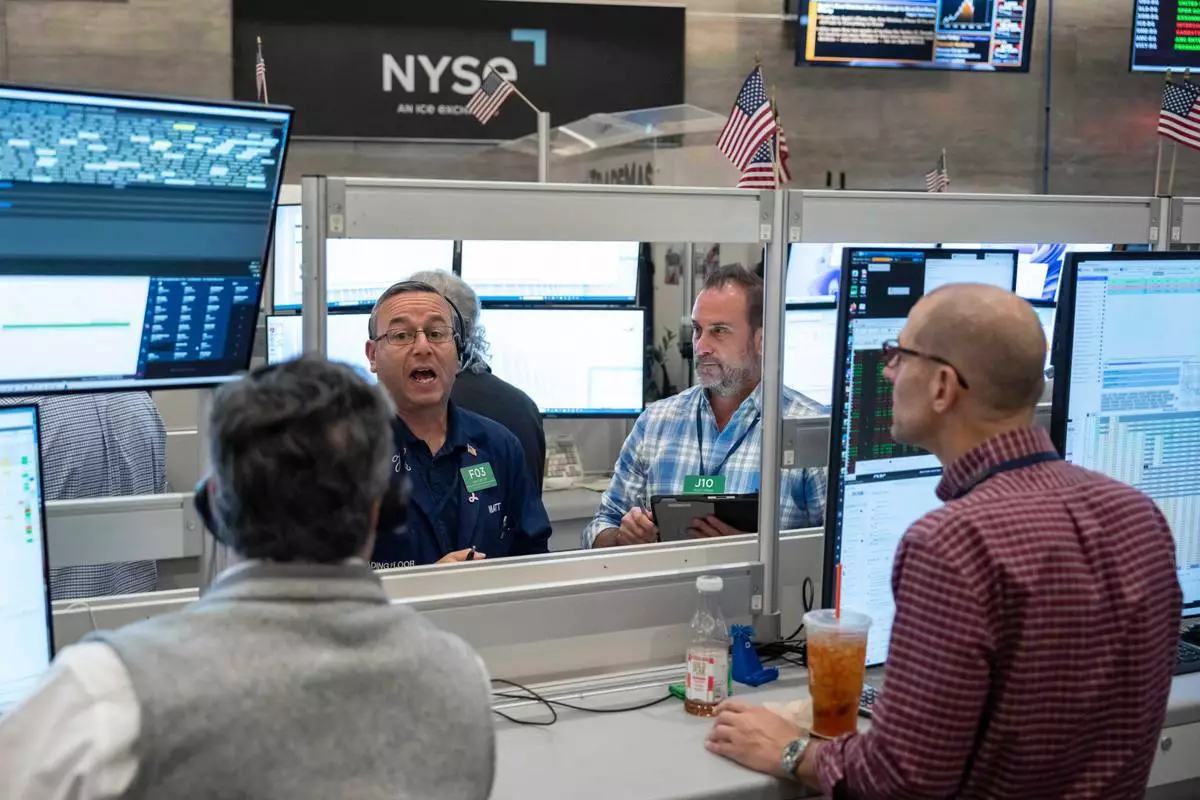
Options trader Matt Hefter works on the floor of the New York Stock Exchange, Thursday, Oct. 8, 2026, in New York. (AP Photo/Yuki Iwamura)
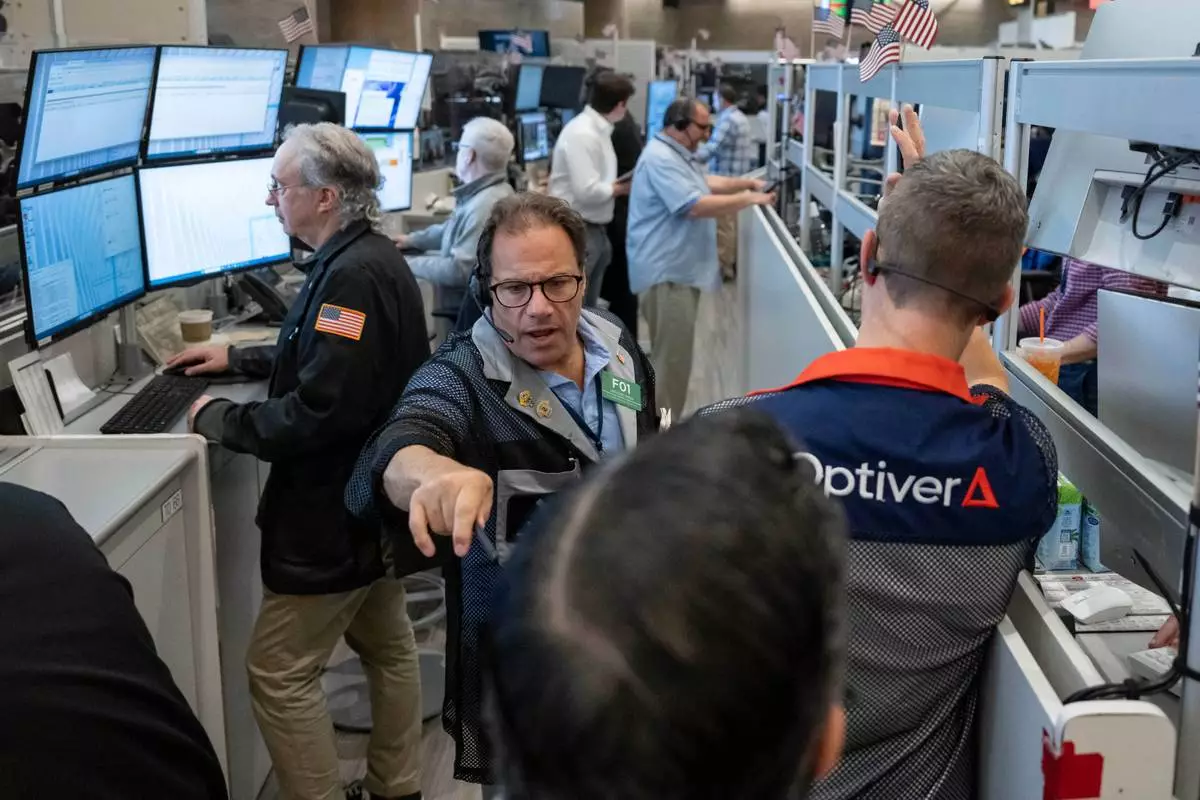
Options trader Anthony Spina works on the floor of the New York Stock Exchange, Thursday, Oct. 8, 2026, in New York. (AP Photo/Yuki Iwamura)
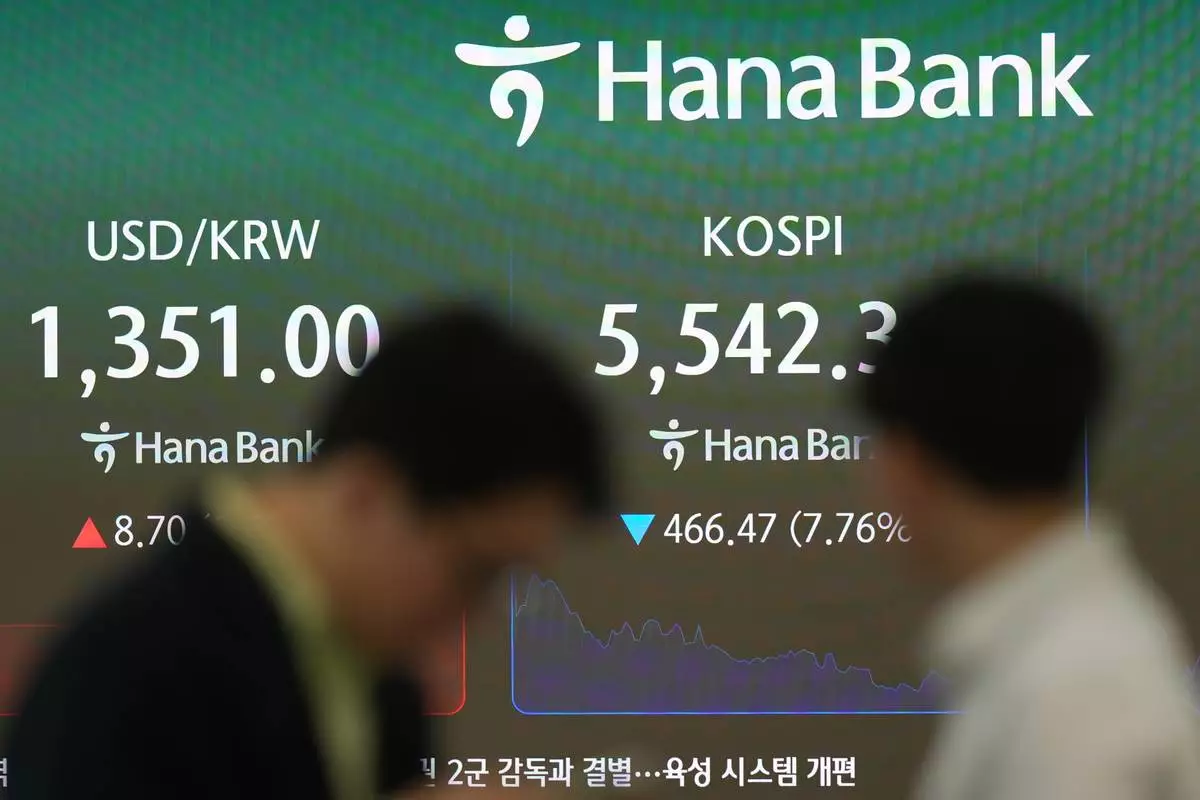
Dealers stand near the screens showing the Korea Composite Stock Price Index (KOSPI), left, and the foreign exchange rate between U.S. dollar and South Korean won at a dealing room of Hana Bank in Seoul, South Korea, Thursday, Oct. 15, 2026. (AP Photo/Lee Jin-man)
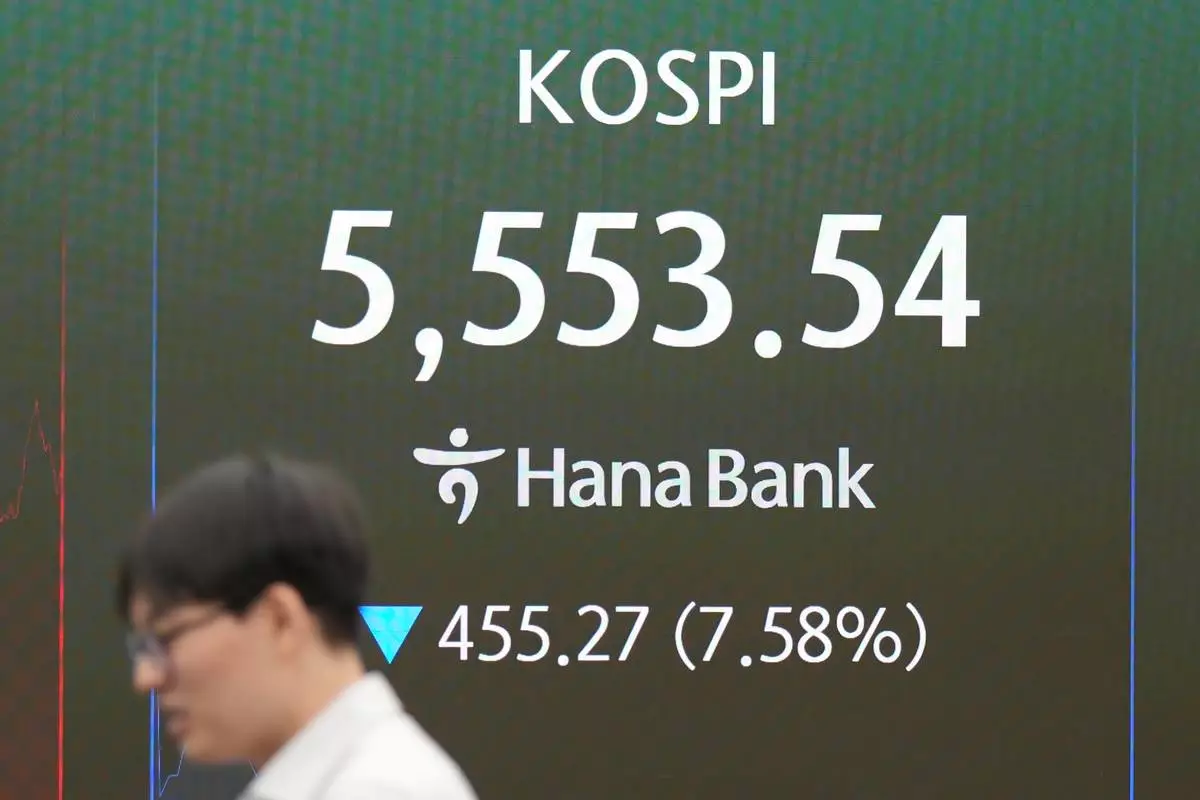
A dealer stands near the screen showing the Korea Composite Stock Price Index (KOSPI) at a dealing room of Hana Bank in Seoul, South Korea, Thursday, Oct. 15, 2026. (AP Photo/Lee Jin-man)
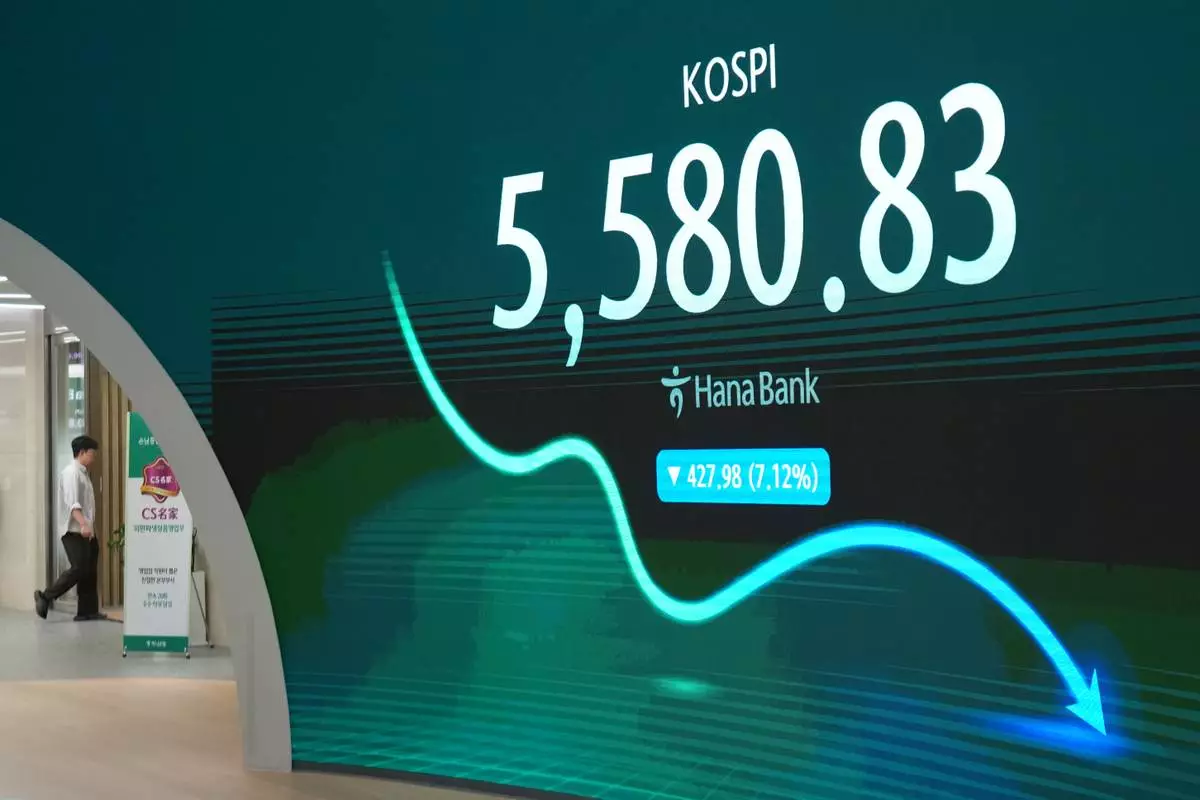
A dealer walks near the screen showing the Korea Composite Stock Price Index (KOSPI) at a dealing room of Hana Bank in Seoul, South Korea, Thursday, Oct. 15, 2026. (AP Photo/Lee Jin-man)
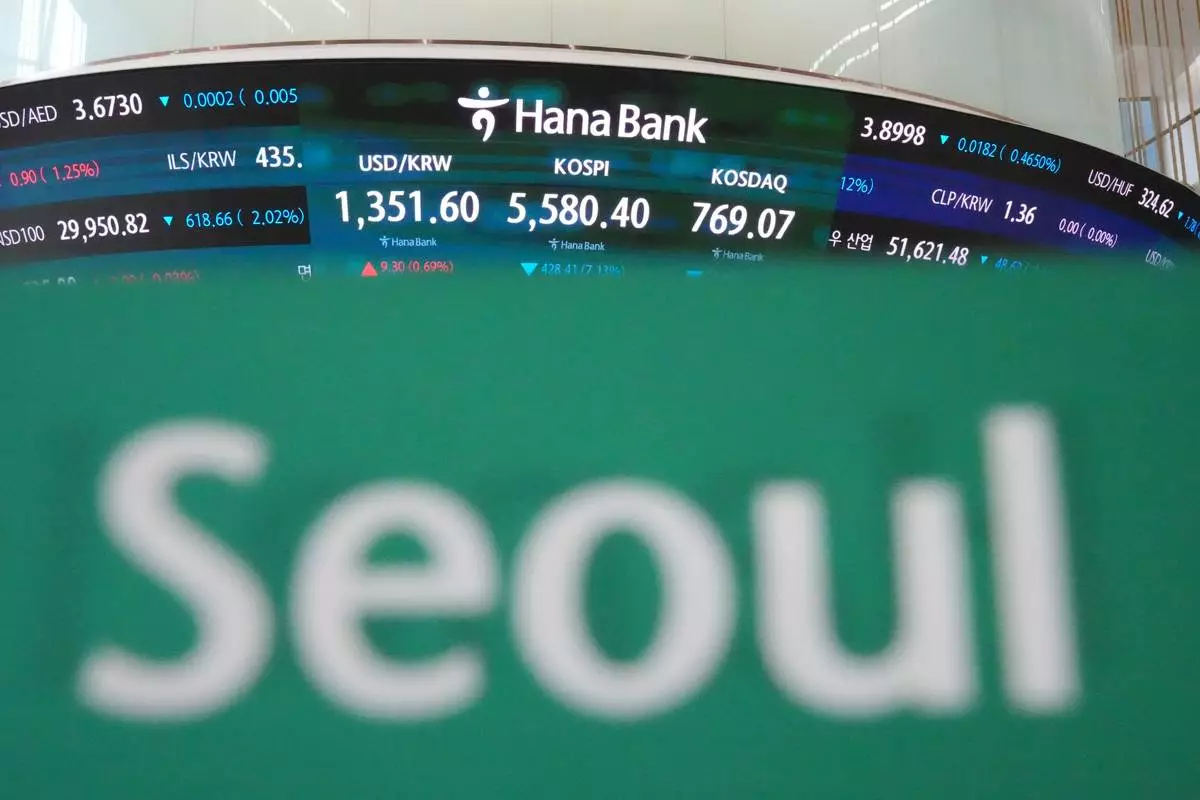
Screens showing the Korea Composite Stock Price Index (KOSPI), the Korean Securities Dealers Automated Quotations (KOSDAQ) and the foreign exchange rate between U.S. dollar and South Korean won are seen at a dealing room of Hana Bank in Seoul, South Korea, Thursday, Oct. 15, 2026. (AP Photo/Lee Jin-man)
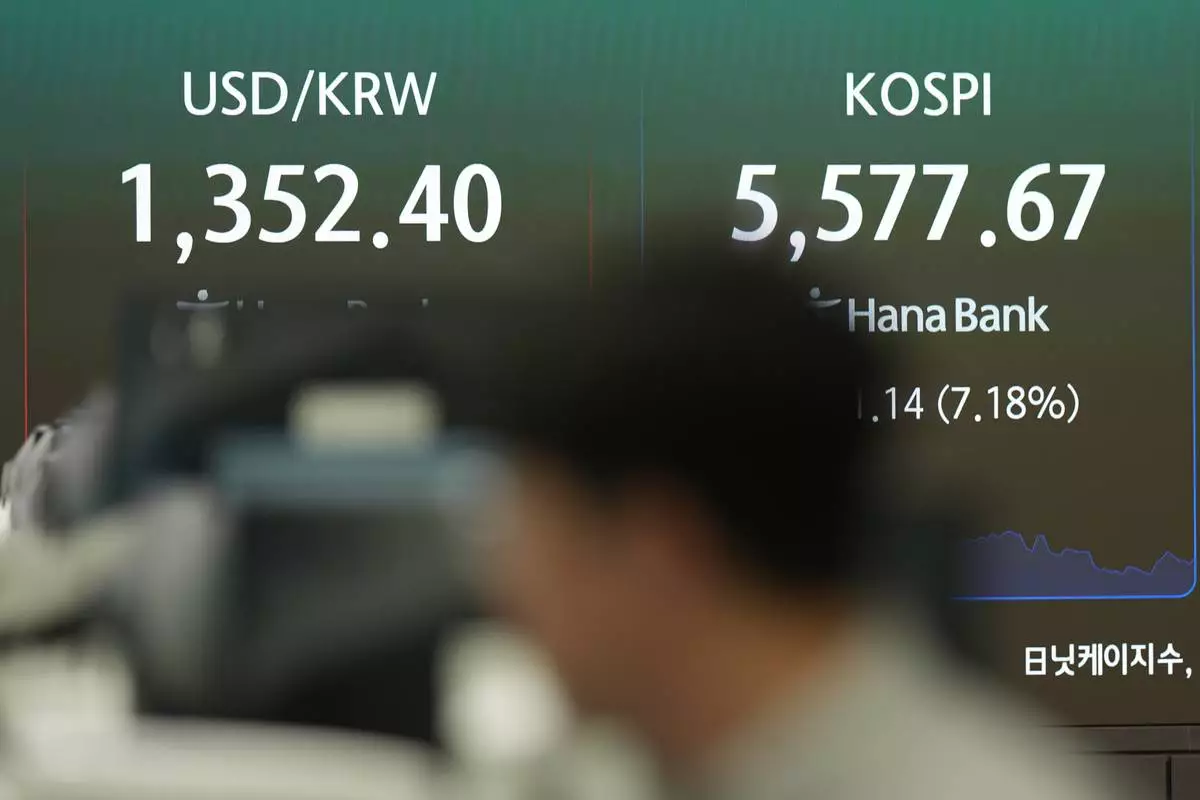
A dealer walks near the screens showing the Korea Composite Stock Price Index (KOSPI) and the foreign exchange rate between U.S. dollar and South Korean won at a dealing room of Hana Bank in Seoul, South Korea, Thursday, Oct. 15, 2026. (AP Photo/Lee Jin-man)
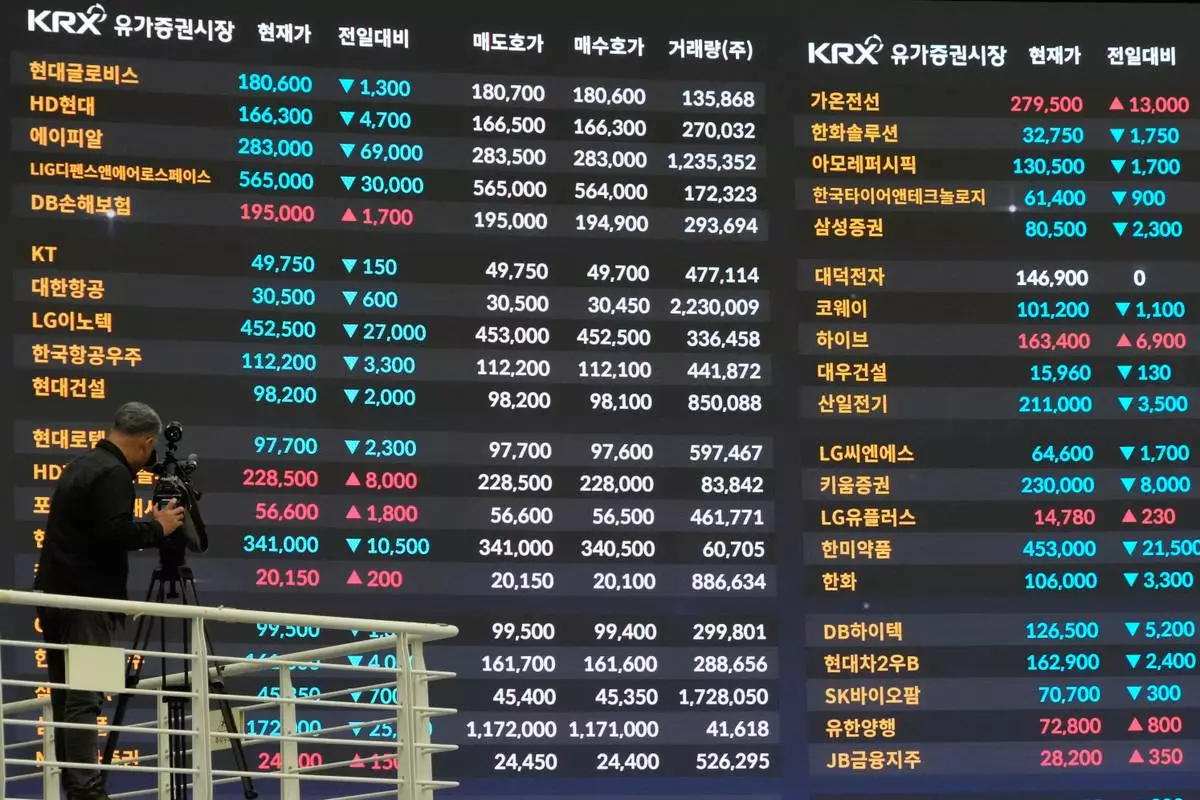
A TV camera man works in front of a screen showing stock prices at the Korea Exchange in Seoul, South Korea, Tuesday, Oct. 13, 2026. (AP Photo/Ahn Young-joon)