Taiwan media practitioners and Chinese mainland experts have slammed the Oct. 10 speech by Taiwan leader Lai Ching-te, as it once again disregarded historical facts, stubbornly clinging to the "Taiwan secession" stance by packaging the Taiwan question as an international issue. Although Lai did not explicitly use the phrase "[the two side are] not subordinate to each other" in discussing cross-Strait relations in his address on Oct. 10 this year, Taiwan media analysts noted that his "Taiwan independence" stance remains unchanged.
Lai continued his "democracy versus authoritarianism" narrative in a more subtle and deceptive way to cloak his true intent of seeking independence by relying on external forces, according to Taiwan media practitioners.
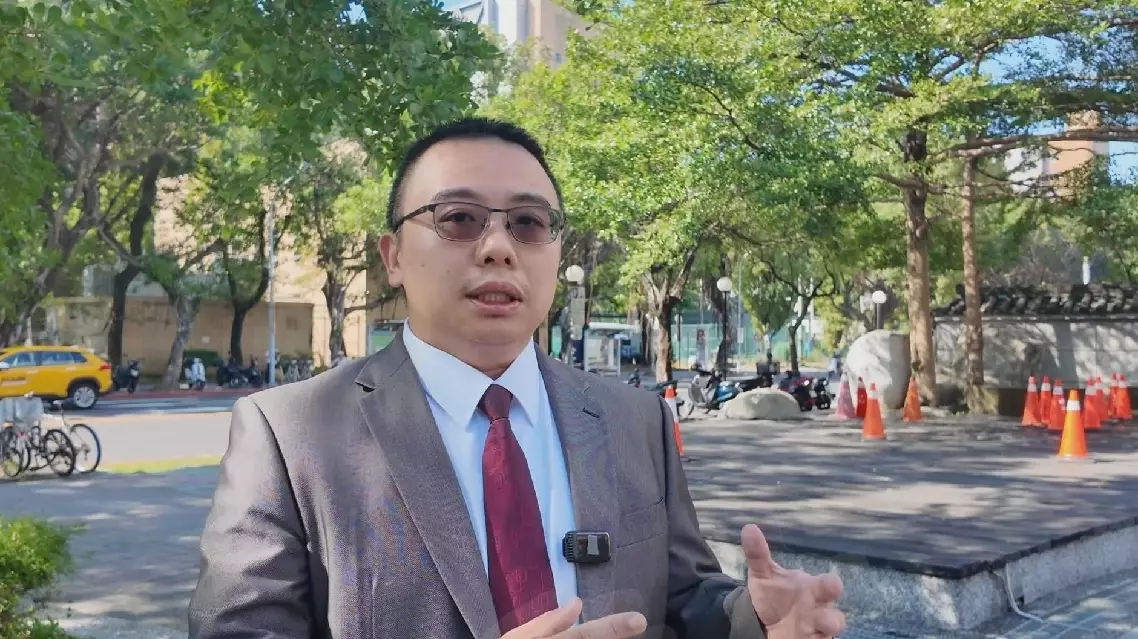
"The series of meetings between the Chinese and U.S. heads of state, from May to September of this year, has shaped a new dynamic and injected fresh momentum to profoundly influencing the broader landscape of U.S. policy toward Taiwan and the situation across the Taiwan Strait. The Lai administration has to carefully digest and interpret these signals, and make the necessary adjustments accordingly. Unable to successfully restore dialogue with the mainland, and unwilling to rectify its distorted view of World War II history to confront the reality that Taiwan has been restored to China [from Japanese colonial rule], the Lai administration is left with only one path forward: repeatedly seeking to prove its loyalty and alignment to the United States," said Xu Heqian, a Media professional from Taiwan and senior editor for international news at Caixin Media.
Lai's distortion of World War II history has also sparked controversy in Taiwan, according to Xu.
"For China, the most significant outcome of the Chinese People's War of Resistance Against Japanese Aggression (1931-1945) was the restoration of Taiwan and the recovery of all other Chinese territories that had fallen under Japanese occupation, including those in the Northeast. Yet since taking office, Lai has rejected the historical perspective of Taiwan's restoration, denying the fact that the island has already returned to China. At the same time, when the leaders of China and the United States, along with insightful people of both countries, jointly commemorate historical feats such as the Flying Tigers and their aid to China, the joint opening of the Hump Route by China and the United States, and the Gung-Ho spirit, the Lai administration is very eager to seek a sense of presence in all of these. They even attempt to seize the narrative regarding the War of Resistance, a stance that appears to be quite self-contradictory," said Xu.
Mainland experts also pointed out that soliciting external support for "Taiwan independence" has long been a dead end, and that the one-China principle is a prevailing international consensus.
"In the past, the Taiwan authorities could rely on so-called overseas forces or external interference, particularly the United States, but in recent years these backers have been gradually stepping back. I believe the Taiwan authorities are fully aware of this, but they simply dare not tell the truth to their own people. The one-China principle has long been a firmly established international consensus, which the 'Taiwan independence' forces alone are simply unable to challenge or undermine at all," said Xin Qiang, director of the Center for Taiwan Studies at Shanghai-based Fudan University.
Taiwan, mainland experts slam Lai's secessionist address