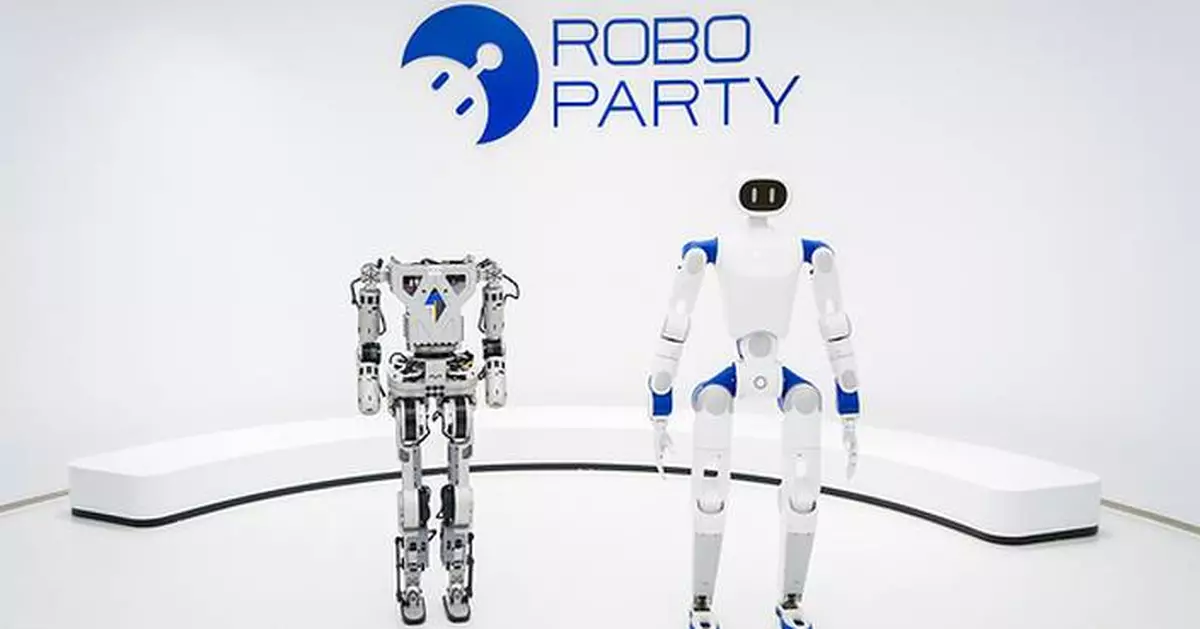
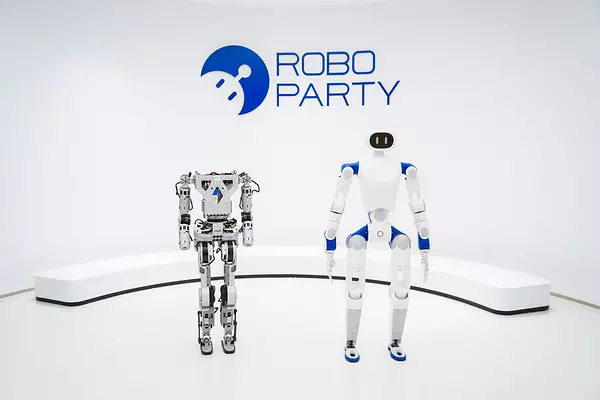
With RP1 and RPO, RoboParty offers open humanoid platforms spanning hands-on education, foundational robotics development, and advanced embodied AI research.
SHANGHAI, Oct. 16, 2026 /PRNewswire/ -- On October 15, 2026, RoboParty launches RP1 (ROBOTO 01), a high-performance, full-stack open-source humanoid platform, to Southeast Asian markets. Together with RPO, its fully open-source humanoid robotics kit, RoboParty offers universities, researchers, and developers a path from hands-on learning to advanced robotics research.
Different research goals demand different platforms. Openness gives developers the freedom to adapt the robot to their work, rather than the other way around.
RP1 is designed for advanced robotics and embodied AI research. Its full-stack open architecture spans mechanical design, in-house-developed ROMOMO actuator modules, low-level control, simulation, SDKs, and training tools. Researchers can understand, modify, and validate the robot itself, tracing problems across model policies, control systems, and physical execution to optimize the complete system.
True openness puts full control of the robot back into developers' hands.
RP1 also provides established motion capabilities, including continuous walking, disturbance recovery, and getting up after a fall. These capabilities help teams reduce repetitive development of basic motion skills and focus on model training, locomotion research, and complex task validation.
PartyOS is RoboParty's open development foundation for humanoid robotics, connecting motion retargeting, policy training, simulation validation, and deployment on real robots.
From Robotics Education to Advanced Research: RPO and RP1 Expand Open Platform Choices
RP1 carries forward an open-source journey that began with RPO, RoboParty's first fully open-source humanoid robot.
RPO is a cost-effective humanoid robot sold as a DIY kit, designed for hands-on embodied AI learning and customization. Its publicly available mechanical, electrical, training, and deployment resources enable developers to assemble their own robot, understand the complete system, and extend its capabilities. The project has earned more than 2,600 GitHub stars and has been replicated by over 100 users.
Together, RPO and RP1 address complementary needs: RPO provides a practical foundation for robotics education and early-stage development, while RP1 supports more demanding research in humanoid locomotion, control, and embodied AI.
For universities and research institutions across Southeast Asia, this means greater flexibility to choose, adapt, and build upon an open platform that matches their research objectives.
From the classroom to the research frontier, RoboParty is working to make humanoid robotics more open, accessible, and adaptable to the people building its future.
GitHub: https://github.com/Roboparty/RP1
Website: https://roboparty.com
Media Contact: marketing@roboparty.com
** This press release is distributed by PR Newswire through automated distribution system, for which the client assumes full responsibility. **
RoboParty Launches RP1 in Southeast Asia, Bringing Full-Stack Open Robotics to Education and Research
—Huawei and 14 Partners Jointly Launch the Global AI CITY Innovation & Development Ecosystem Alliance to Build a New Era of AI CITY
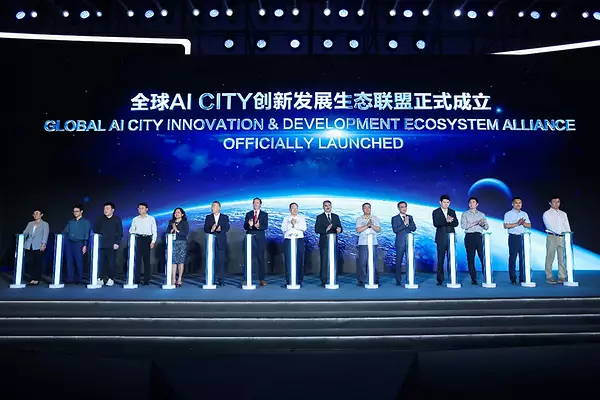
SHANGHAI, Oct. 16, 2026 /PRNewswire/ -- During HUAWEI CONNECT 2026, the Global Government AI CITY Innovation Summit was successfully held. Themed " Digitalize & Innovate Cities ,AI Delivers Value to All Nations," the summit brought together over 500 participants, including global industry experts, government representatives, and ecosystem partners, to discuss how AI and data can empower industry development, government services, and city governance. Meanwhile, Huawei and 14 partners jointly launched the Global AI CITY Innovation & Development Ecosystem Alliance, aiming to build an open and shared ecosystem for digital and intelligent city innovation and development.
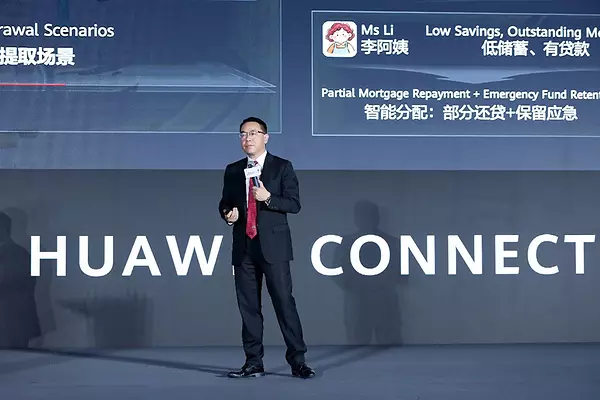
At the summit, Huawei invited customers from Angola, Saudi Arabia, and Ethiopia, as well as Guangzhou and Shanghai in China, to share their experiences in AI CITY construction. Tao Jingwen, Deputy Chairman of the Supervisory Board, Huawei, delivered a welcome speech, and Yang Ruikai, CEO of Huawei Government Public Services Digitalization BU, attended the event.
Tao Jingwen remarked that AI is deeply integrating into all aspects of city development, optimizing government service experiences and innovating city governance models. Compute and data have become the core drivers of high-quality city development. Huawei has always adhered to the principles of openness, inclusiveness, and win-win cooperation. By solidifying the computing backbone, building AI-ready data infrastructure, and delivering ultimate business experiences, Huawei will work closely with ecosystem partners and global government customers to explore innovative paths for the digital and intelligent transformation of government services and cities.
From city governance to government services and industry enablement, AI agents have permeated every aspect of cities. In his keynote speech, Simon Zou, Vice President of Government Public Services Digitalization BU and President of Marketing & Solution Sales, Huawei, shared several real-life stories from Shenzhen's Longgang District and the city of Shantou, illustrating how AI will help cities become safer, more efficient, and more harmonious. The city governance agent makes city safety visible, reducing labor costs with compute and improving governance efficiency. The government service agent, which enables "Chat-to-Process," transforms city services from the conventional model of "citizens crowding service windows and guessing the policies" to a proactive, user-centric service that delivers benefits directly to those eligible. By consuming power locally, keeping data within borders, and exporting AI services globally, the Token Factory cross-border model not only empowers the local AI industry but also drives cross-border cooperation. Leveraging its ICT capabilities and experience, Huawei has worked with innovative cities and partners to propose the AI CITY technical reference architecture. This architecture uses OpenHarmony as the unified foundation for various types of city terminals, and leverages the compute of Ascend AI to enable device-edge-cloud intelligent collaboration. In this way, a brand-new AI CITY Solution can be built to support the large-scale implementation of the aforementioned service scenarios.
During the event, Huawei and the State Information Center of China jointly released the AI CITY Development Research Report 2026, providing guidance for the comprehensive digital and intelligent upgrade of cities. The report defines the paradigm of AI CITY and proposes that cities are moving from the "data-driven" era to the era of "city super agents." AI CITY will use intelligent computing and city public clouds as the foundation to support the implementation of high-value intelligent scenarios, and shift the focus from building capabilities to delivering value. The report also includes benchmark cases from Shenzhen, Wuhan, and Karamay, providing replicable paths for intelligent city upgrades.
With the successive establishment of the World Data Organization and the World Artificial Intelligence Cooperation Organization (WAICO), global cooperation in the AI and data fields is poised to enter a new phase of vigorous growth. The innovation journey of AI CITY calls for global partners to harness their collective wisdom, pool ideas, and collaborate closely. At the conclusion of this summit, Huawei, together with 14 global partners including TIS, Egabi Solution, HMN Tech, Epoint, and the United Nations Industrial Development Organization (UNIDO), launched the Global AI CITY Innovation & Development Ecosystem Alliance. The alliance aims to focus on compute collaboration, data circulation, and scenario innovation, consolidating industrial strength to jointly build an open and shared digital and intelligent urban ecosystem.
Under the theme of "Smart-Digital Innovative Cities, AI for Global Inclusion," Huawei looks forward to working with more customers and partners to jointly build, share, and embrace the AI CITY.
** This press release is distributed by PR Newswire through automated distribution system, for which the client assumes full responsibility. **
Global Government AI CITY Innovation Summit Successfully Held
Global Government AI CITY Innovation Summit Successfully Held