The Iranian Army's Navy announced that its monitoring teams on Thursday detected a "violating" oil tanker that had caught fire earlier in the day while seeking to cross the "forbidden region" east of the Strait of Hormuz.
In a statement released on the army's website, the navy said its teams detected the oil tanker as they were patrolling and controlling the strait's eastern waters.
It added that the "violating" oil tanker had turned off its tracking systems and sought to pass through the "forbidden region," stressing that its forces have full control and dominance over the strait's eastern waters.
The navy said on Tuesday its monitoring teams had detected another "violating" oil tanker that had sustained damage and caught fire on the same day while crossing the "forbidden region" east of the Strait of Hormuz.
The navy stressed that through a new deployment of its operational units east of the strait and across the Arabian Sea and the Sea of Oman, it is continuously monitoring all "enemy" activities and vessels' movements in real-time and with full dominance.
It strongly advised all vessels to strictly refrain from switching off their electronic equipment in compliance with international regulations and ensure necessary coordination with Iran's armed forces for safe passage through the Strait of Hormuz.
On Thursday, Deputy Chief of the Iranian Army for Coordination Habibollah Sayyari said the Strait of Hormuz is completely closed, according to a statement released on the army's website.
Sayyari noted that the navy of Iran's Islamic Revolution Guard Corps is fully controlling the strait's western waters, while the waterway's eastern waters up to the north of the Gulf of Oman are completely controlled and monitored by the army's naval forces.
Iran tightened its grip on the Strait of Hormuz on Feb 28, barring safe passage of vessels belonging to or affiliated with Israel and the United States following their joint strikes on Iranian territory.
According to data from the International Maritime Organization (IMO), by Wednesday, 22 ships had encountered attacks and other incidents in the Strait of Hormuz and surrounding waters this month.
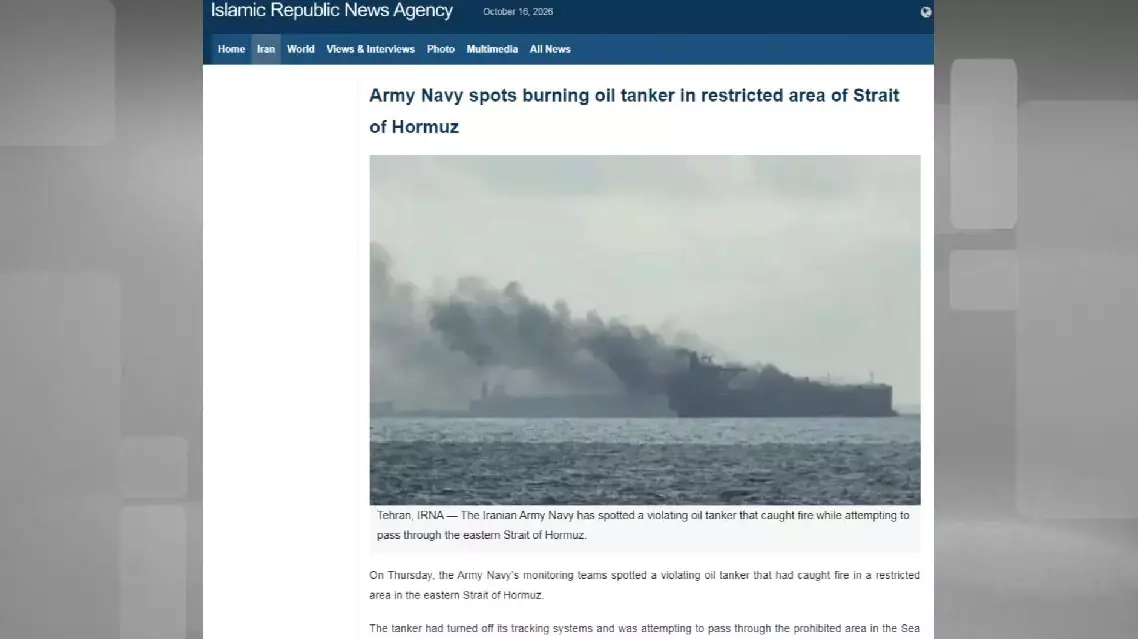
Iran's navy says "violating" oil tanker caught fire east of Hormuz Strait
U.S. stocks recovered on Thursday as falling Treasury yields provided relief to equity markets, helping technology and semiconductor shares stabilize amid debt-financing worries.
The Dow Jones Industrial Average rose 556.21 points, or 1.08 percent, to 52,177.69. The S and P 500 added 25.12 points, or 0.33 percent, to 7,744.06. The Nasdaq Composite Index increased by 20.16 points, or 0.08 percent, to 26,713.03.
Eight of the 11 primary S and P 500 sectors ended in the green, with health and materials leading the gainers by going up 1.84 percent and 1.71 percent, respectively. Meanwhile, energy and technology led the laggards by losing 1.55 percent and 0.54 percent, respectively.
Market sentiment found footing as benchmark borrowing costs retreated, allowing heavily pressured tech equities to pare steep losses.
In the AI infrastructure sector, cloud compute provider CoreWeave gained nearly 6 percent, reversing a portion of Wednesday's more than 15 percent drop triggered by concerns over excessive debt accumulation to finance its hardware expansion. Memory manufacturer Micron Technology also recovered most of its intraday decline, closing 1.87 percent higher.
Concerns across the AI ecosystem were compounded by a CNBC report that Anthropic's quarterly revenue reached 16.8 billion U.S. dollars in the third quarter. While representing massive growth, the pace raised questions among some market participants about whether revenue expansion remains swift enough to sustain lofty valuations across underlying chipmakers.
Despite the broader equity recovery, inflation pressures remained pronounced. The U.S. Bureau of Labor Statistics reported Thursday that the producer price index (PPI) for final demand jumped 1.3 percent in September, lifting the annualized wholesale rate to 6.3 percent, its fastest pace since 2022.
The sharp acceleration followed Wednesday's hotter-than-expected consumer price index (CPI) reading, further complicating the Federal Reserve's policy trajectory as officials weigh persistent price spikes ahead of their upcoming interest rate decision.
"Today's PPI report, after Wednesday's CPI, confirms inflation is getting worse as energy prices stay high," said David Russell, global head of market strategy at TradeStation. "Election or no election, prices are rising and the Fed might be forced to act."
According to CME FedWatch, traders now see a 29 percent likelihood the Federal Reserve will raise interest rates at its meeting in two weeks, and an 88 percent likelihood the central bank will lift rates at least a quarter-percentage point at its December meeting.
Broader market gains were underpinned by defensive and consumer-oriented sectors outside of technology. Walmart advanced 1.47 percent, after Deutsche Bank upgraded the stock to "buy" from "hold," citing a positive outlook for 2027. The bank expects incremental margins to improve and noted current inflation levels could help the company attract consumers.
Nike jumped more than 5 percent, leading consumer discretionary gainers. Apple, which on Wednesday joined Nvidia as the only companies ever to close with a market capitalization above 5 trillion dollars, ended 0.28 percent lower.
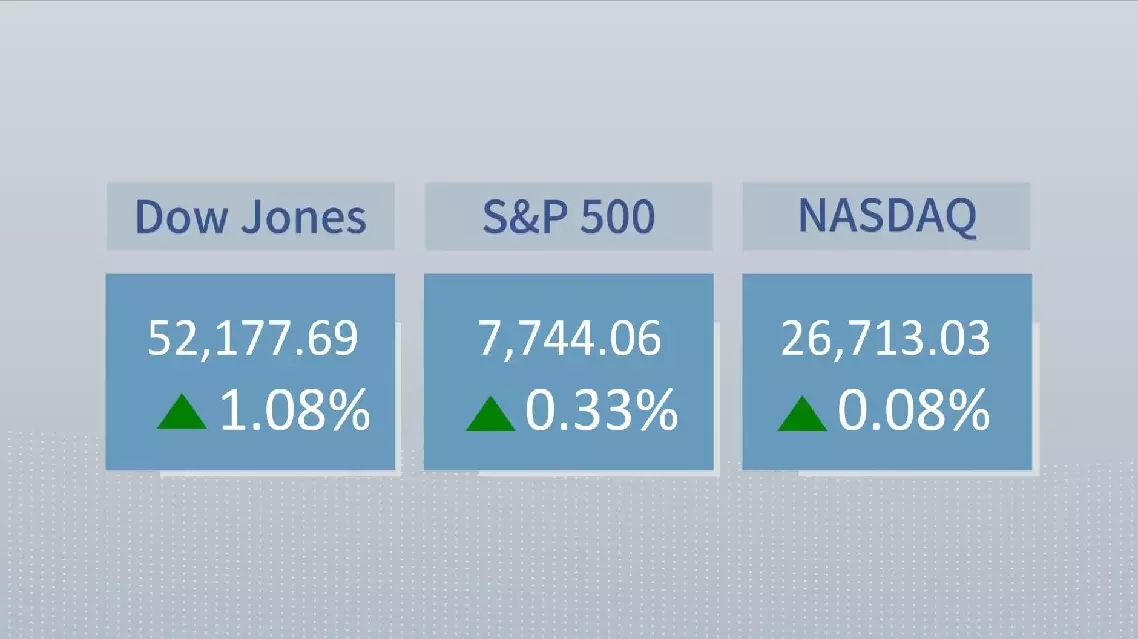
U.S. stocks recover as sliding Treasury yields offset hot inflation data