China is willing to work with Croatia to achieve greater outcomes in bilateral cooperation, said Chinese Foreign Minister Wang Yi when holding talks with Croatian Minister of Foreign and European Affairs Gordan Grlic Radman in the Croatian capital of Zagreb on Friday.
Wang, also a member of the Political Bureau of the Communist Party of China Central Committee, said that Croatia, an important stop on the ancient Silk Road, has once fostered mutual learning between Eastern and Western civilizations. This marks the first visit to Croatia by a Chinese foreign minister in 33 years, and serves as a reciprocal visit following Radman's trip to China last year.
The China-Croatia relations have developed in a mature and steady manner over the years, setting an example for the relations between countries of different sizes, Wang said.
The success of bilateral relations rests on equality, mutual respect and trust, win-win cooperation and friendly exchanges between the two peoples, Wang said, adding that these ties inject more certainty and stability into a complex and volatile international landscape.
China is willing to work with Croatia to take next year's 35th anniversary of establishing diplomatic relations as an opportunity to draw on experience and chart a course for stronger ties over the next 35 years, Wang said, calling on the two sides to work together for following high-level exchanges and bring bilateral ties to a new high.
Wang stressed that China respects Croatia's sovereignty and territorial integrity and supports its constructive role in international and regional affairs. China also appreciates Croatia's longstanding commitment to the one-China policy, which has strengthened the political foundation of bilateral relations and opened up broad prospects for cooperation, he added.
Wang said China is ready to work with Croatia to leverage "three major engines" to drive further progress in bilateral cooperation.
First, at the bilateral level, the two sides should focus on infrastructure and renewable energy as key areas, while expanding cooperation into new sectors such as nuclear energy, ports, telecommunications, and artificial intelligence.
Second, at the regional level, China-Croatia cooperation can be advanced through the broader framework of China-EU (the European Union) cooperation, as the Peljesac Bridge serves as an example of successful trilateral cooperation between China, the EU, and Croatia.
Third, at the sub-regional level, the two sides should promote cooperation between China and Central and Eastern European Countries (CEECs). Croatia has been a builder, contributor, and beneficiary of this cooperation mechanism. China stands ready to work with CEECs to plan the next phase of engagement and deliver more tangible results.
Emphasizing that China and the EU share extensive common interests, Wang said that both sides advocate multilateralism, uphold the central and leading role of the United Nations and are committed to resolving international and regional disputes through political dialogues. China and Europe also share common ground on global issues such as climate change, he added.
Recent progress at the second meeting of the China-EU trade and investment consultation mechanism has shown that bilateral differences can be resolved through dialogues on an equal footing, he said.
China is willing to deepen its comprehensive strategic partnership with the EU and hopes that Croatia, as an EU member, will play a constructive role in advancing China-EU relations, Wang said.
Radman said that Croatia attaches great importance to its relations with China and respects China's sovereignty and territorial integrity. Croatia has consistently adhered to the one-China policy and will continue to uphold it firmly, neither participating in nor supporting any Taiwan secessionist activities, he added.
Croatia is willing to take the 35th anniversary of establishing diplomatic relations as an opportunity to elevate bilateral ties, and will work to expand cooperation with China in areas such as transportation and logistics, renewable energy and automobile manufacturing, Radman said.
He added that China has played an important role in maintaining world peace and stability. As key partners, the EU and China share responsibility to jointly safeguard international order and promote global security and development.
Croatia values the cooperation framework between CEECs and China, Radman said. He thanked China for organizing activities under the framework and expressed hope that further cooperation would yield more results and bring greater benefits to the peoples of both sides.
During their talks, Radman also shared his views on the situation in the Western Balkans. Wang said that Croatia is an important country in the region, adding that China does not interfere in the internal affairs of Balkan countries and respects the choices made by their peoples.
China is willing to be a friend and partner of these countries and hopes they will foster harmonious relations and work together to build a shared future, Wang said.
Croatia is one of the stops on Wang's tour of Azerbaijan, Croatia, Montenegro and Bulgaria from Oct 14 to 20.
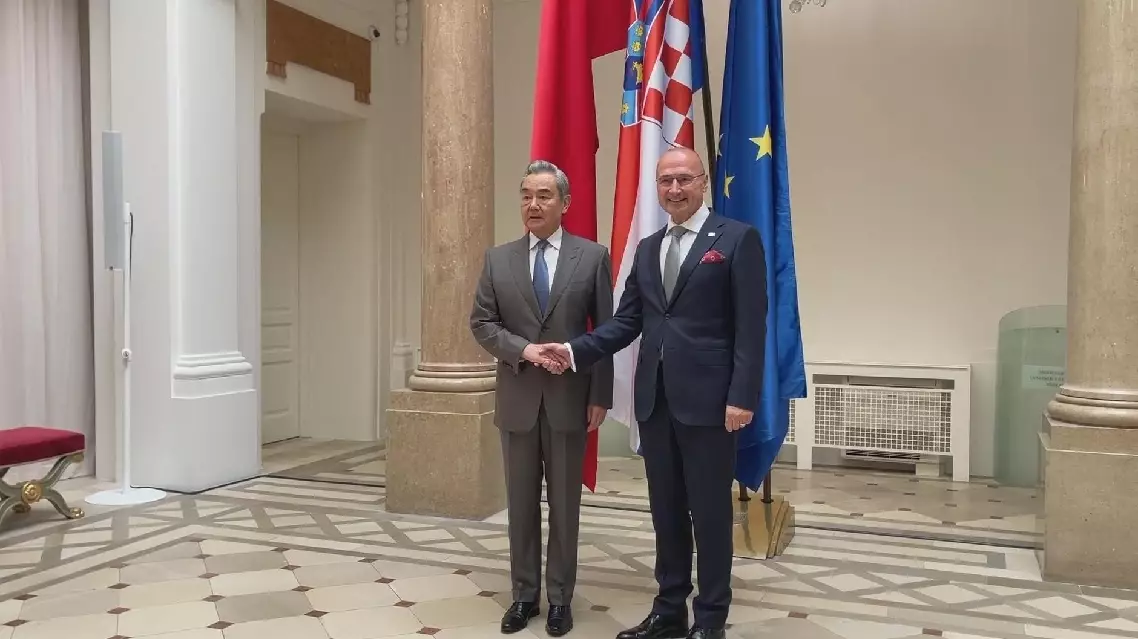
China willing to deepen cooperation with Croatia: Chinese FM