Cities in central Iran are taking actions to offset the impact of U.S. airstrikes and economic sanctions, with local manufacturing and daily life still under pressure.
The U.S.-Israel-Iran conflict has caused severe damage in many parts of Iran, with many civilian institutions such as schools and sports venues destroyed in deadly U.S.-Israeli airstrikes.
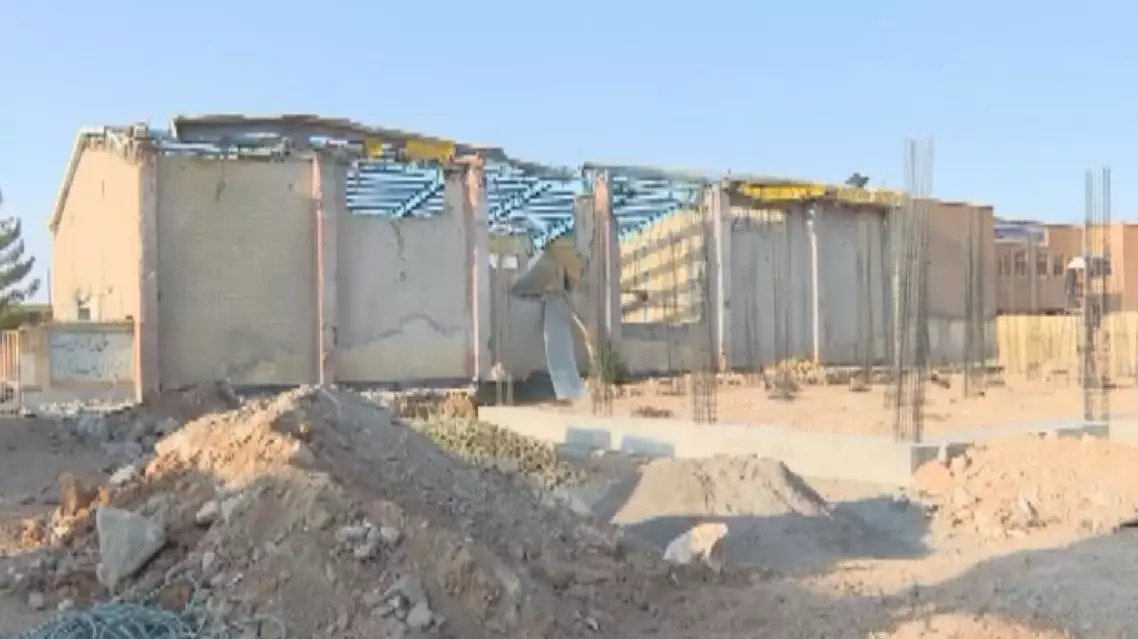
According to incomplete statistics, more than 29 civilian facilities were damaged in Khomein, a city in Markazi province, during the conflict.
Vahid Baratizadeh, the mayor of Khomein, said that in addition to civilian facilities, this small city with a population of less than 100,000 saw 21 residents killed in airstrikes, 13 homes completely destroyed, and more than 1,000 houses damaged in the explosions. Local municipal departments are still carrying out reconstruction and repairs.
"Just hours after the attack, after people's homes were damaged, we already began to engage in the reconstruction work. Within days or weeks, residents gradually moved back to their houses that were damaged. The place we are looking at now was completely destroyed before, and we still need time to finish the reconstruction. We hope to complete the relevant work as soon as possible so as to better provide services for the people," he said.
Against the backdrop of unresolved differences between the United States and Iran and numerous obstacles in negotiations, the United States has continued to increase pressure by imposing harsh economic sanctions on Iran.
Markazi is a major industrial province in Iran. Despite the dual pressure of war threats and continued U.S. sanctions, many Iranian factories are stepping up production by tapping into local manufacturing potential, stabilizing domestic supply, and striving to overcome the negative impact of U.S. sanctions.
At an agricultural vehicle production workshop in Arak in Markazi, the company's head said that in order to meet market demand, the production line remained in full operation even during the most intense period of the conflict.
He said the U.S. economic blockade has affected all enterprises, but it has also given Iran an opportunity to localize production. At present, by relying on Iran's local technological innovation, most of the parts that previously required large-scale imports can now be produced domestically.
"We have also taken war risks into account in our planning, so we are already prepared. We do not believe that the [U.S.] blockade will end in the short term. Our assessment is that it may continue. The company has produced some strategically important components and has corresponding solutions. At present, we are coordinating with multiple enterprises to achieve domestic production of more components," said Hamidifard, a person in charge of Iran Combine Harvester Company.
In response to U.S. economic and military threats, Mehdi Zandyeh Vakili, the governor of Markazi province, said that beyond the military, Iran, as a major resource-rich country in energy and minerals, can ensure domestic production and meet people's needs.
"Commodity prices have indeed been affected to some extent and have risen, but there is no situation in which people are starving, unable to buy food or lacking basic living facilities. Many of our daily necessities can be self-sufficient. It can be said with certainty that from now on and for some time to come, any form of sanctions will no longer be effective against Iran," he said.
Central Iran cities take actions to offset impact of U.S. airstrikes, sanctions