Chinese automakers are moving from exporting individual models to coordinating research and development, production, supply chains and services worldwide, a shift reflected in strong export growth in the first three quarters of this year.
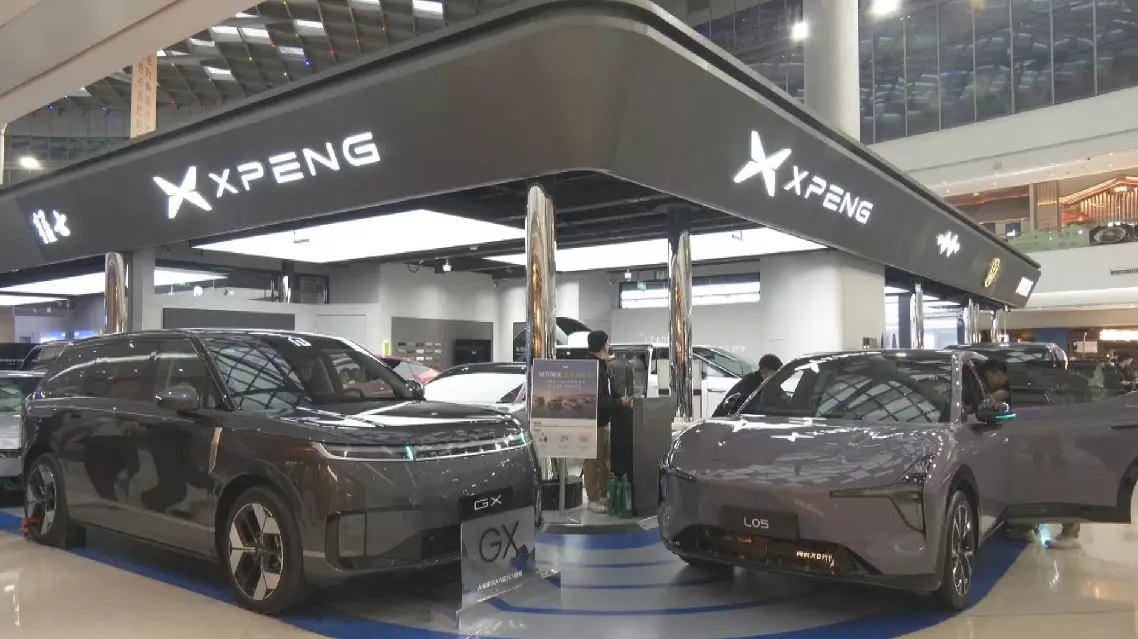
At an XPeng showroom in Beijing, a new car model drew many consumers to check and test drive it. Just over a month after its domestic launch, the model unveiled its overseas version at the 2026 Paris Motor Show and is slated for delivery within the year. The narrowing gap between domestic and overseas launch timelines reflects a shift in the company's research and development model.
"From the very beginning of development, this model was designed to meet the regulatory requirements and adaptability needs of more than 60 countries around the world," said Wu Dipei, head of brand and international marketing at XPeng.
Today, overseas market needs are factored into the product development process much earlier. But synchronized global research and development does not mean simply replicating the same product solution across different countries. Different road conditions and driving habits still need to be reflected in vehicle design and tuning.
"To put it simply, the ride and handling of this car are specifically tuned for Europe and China; they are different, to suit different road conditions. In Europe, given that urban streets are relatively narrow, we try to maximize interior space," said Weng Jie, head of channels at Li Auto's international business department.
As Chinese automakers further expand into overseas markets, they face not only the challenge of adapting individual models but also the question of whether research and development, production, supply chains and services can work in coordination.
"Now we are evolving toward a system-wide approach to going global, covering everything from vehicle research and development and production to the entire supply chain and services. We are building a European research and development center," said Zhang Xiong, a member of the strategic executive committee of Guangzhou Automobile Group Co., Ltd. (GAC) and president of the Hyptec and Aion business unit.
From corporate expansion to industry-wide export performance, the globalization of Chinese automobiles is advancing to a deeper level.
Data shows that in the first three quarters of this year, China's auto exports reached 8.205 million units, up 65.8 percent year on year. The China Association of Automobile Manufacturers (CAAM) expects full-year exports to exceed 10 million units.
"In terms of structure, new energy vehicles accounted for 48.8 percent of exports in the first three quarters, close to half, with a 1.3-fold year-on-year increase, far outpacing the 31.6 percent growth of conventional fuel vehicles. This means that the global competitiveness of Chinese automobiles has shifted from a cost-performance advantage to a system-level competitiveness centered on new energy, forging a new advantage on this new track," said Liu Yan, deputy secretary-general of the CAAM.
Chinese automakers shift to establish deeper roots in global markets