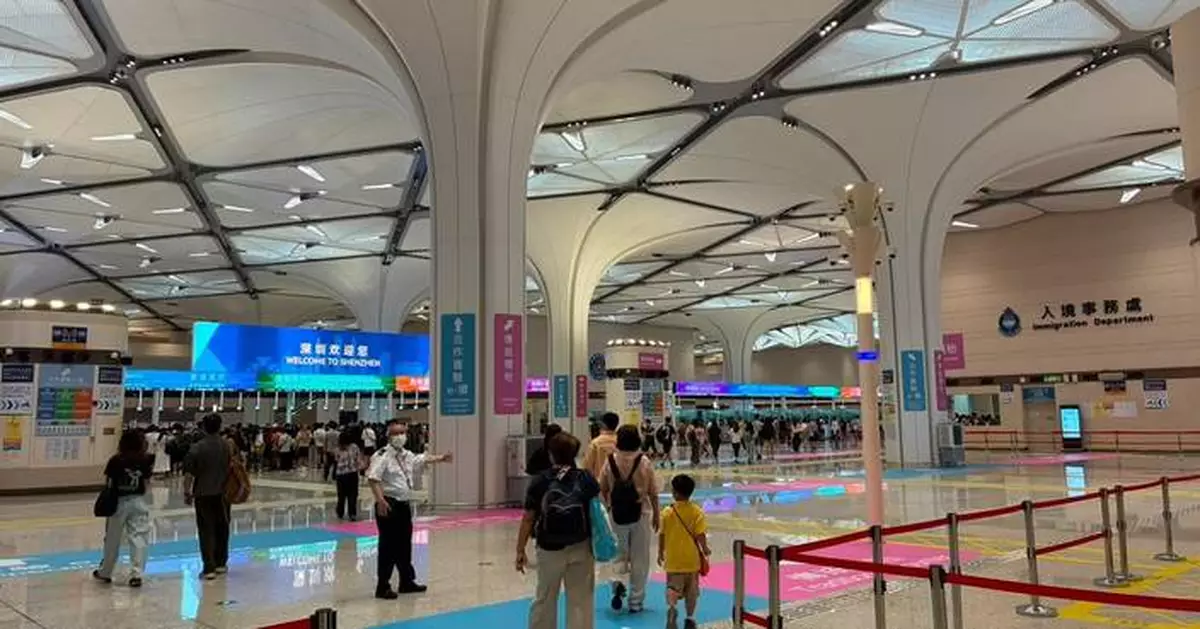
Latest updates on passenger traffic at Huanggang Port
The Security Bureau (SB) today (October 18) said that outbound passenger flow at the Huanggang Port had increased significantly since around 11am this morning. Around 19 000 passengers departed for the Mainland via the Huanggang Port between 12 noon and 2pm, representing an increase of 835 per cent (over eight times) compared with the same period in the past at the Huanggang Port/Lok Ma Chau Control Point. During the peak hour between 1pm and 2pm, as many as 9 728 outbound passenger trips were recorded within one hour, representing an increase of 899 per cent (nearly nine times) compared with the same period in the past at the Huanggang Port/Lok Ma Chau Control Point.
In view of this, the Immigration Department (ImmD) immediately opened all clearance channels and counters at the departure hall on L5 to expedite passenger flow, and implemented crowd diversion and control measures on L2 and L5 in collaboration with the Police. For passengers entering the Huanggang Port during the peak hours mentioned above, the waiting time for crowd diversion arrangements on L2 was about 30 to 45 minutes, while the waiting time inside the departure hall on L5 was maintained within 30 minutes.
The ImmD has disseminated the latest waiting time information via the "Easy Boundary" platform, and advised members of the public and travellers to plan their journeys in advance and consider using other boundary control points for departure.
The outbound peak gradually subsided from around 2pm today. Crowd diversion and control measures on L2 were lifted at 2.10pm, and the waiting time at the departure hall on L5 had dropped to under 15 minutes by 2.40pm.
In fact, relevant departments had already assessed the potential surge in passenger flow during peak hours and formulated plans for diversion, queue management and inter-departmental co-ordination during an earlier large-scale drill at the Huanggang Port involving around 20 000 participants. Faced with this sudden surge in passengers, the various contingency plans were activated promptly and overall operations remained generally smooth.
The SB will continue to work with the ImmD, the Police and other relevant departments to closely monitor the situation at the port and passenger flow. Timely reviews will be conducted and corresponding contingency measures will be adopted in light of actual circumstances to ensure the smooth operation of clearance arrangements and public services.
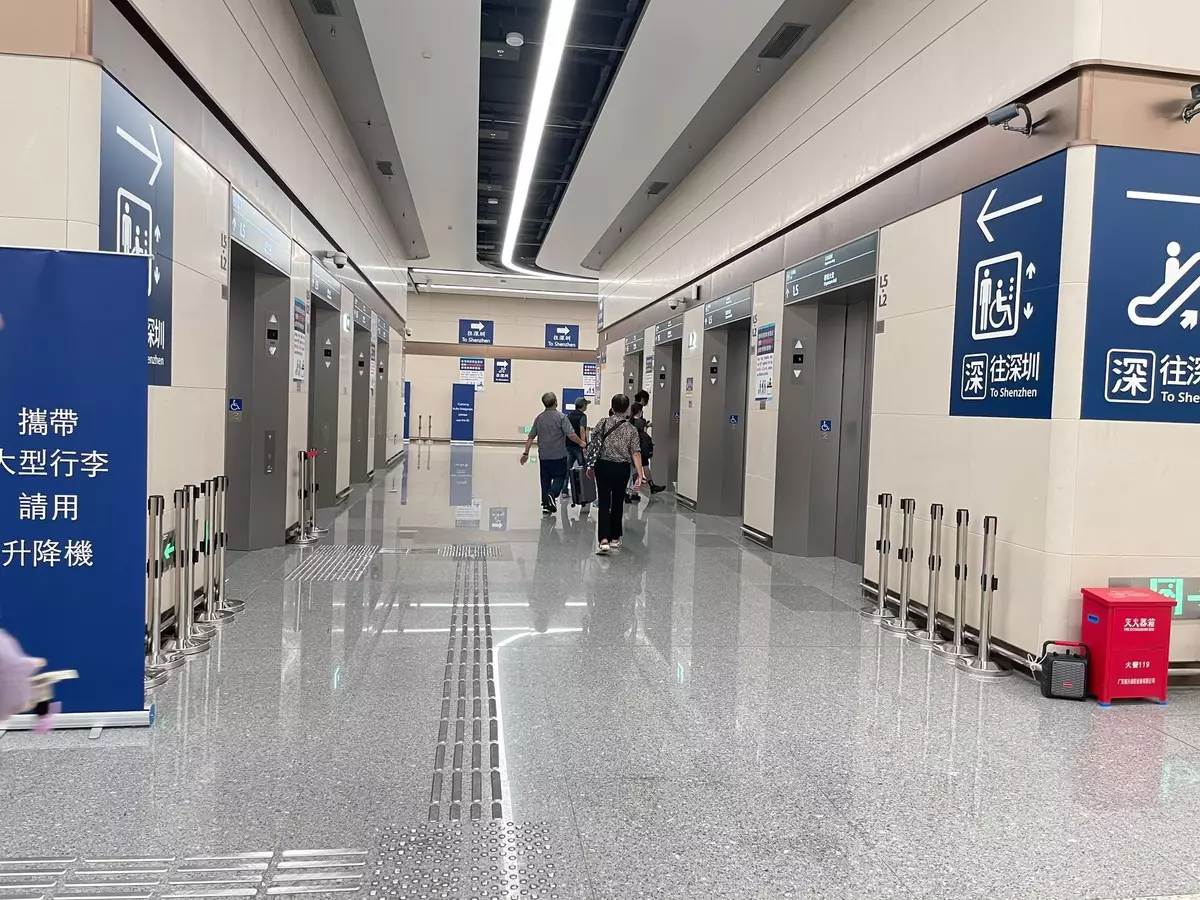
Latest updates on passenger traffic at Huanggang Port Source: HKSAR Government Press Releases
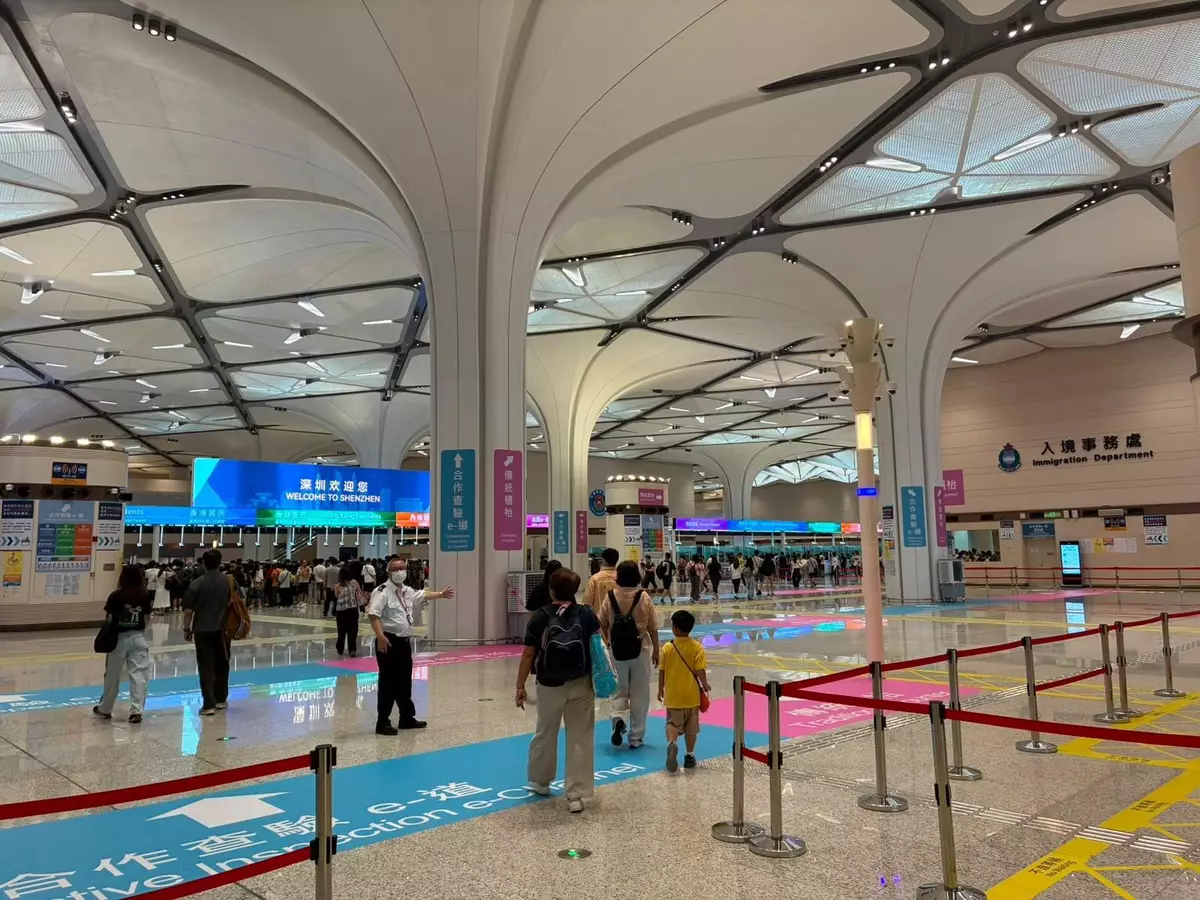
Latest updates on passenger traffic at Huanggang Port Source: HKSAR Government Press Releases
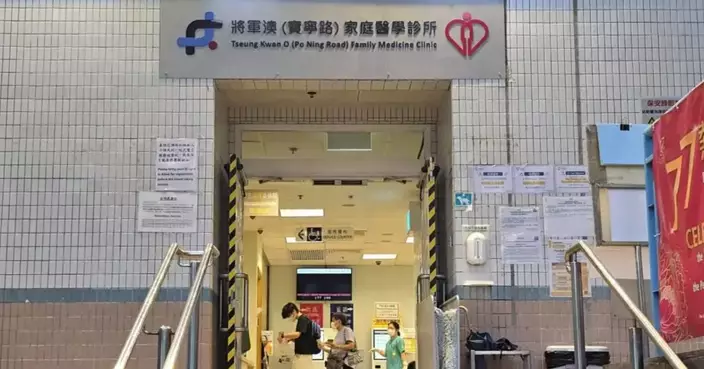
CHP investigates fatal case of invasive pneumococcal disease
The Centre for Health Protection (CHP) of the Department of Health (DH) is today (October 18) investigating a fatal case of invasive pneumococcal disease (IPD), and reminded the public to observe hygiene practices against the disease.
The patient was a nine-year-old boy with good past health, who had developed fever, runny nose, cough, and chest pain associated with the coughing since October 10. He was brought to private clinics on October 10 and 13. On October 14, he was brought to the Accident and Emergency Department at Tin Shui Wai Hospital due to persistent symptoms and shortness of breath. He was transferred to the Paediatric Intensive Care Unit at Tuen Mun Hospital for further management. His condition deteriorated and he passed away on October 15.
His pleural fluid specimen tested positive for Streptococcus pneumoniae upon laboratory testing. The clinical diagnosis was severe pneumonia complicated with empyema, septic shock and acute renal failure. The CHP will arrange furthertesting and serotype analysis of patient's bacterial samples.
Initial enquiries revealed that the boy had no travel history during the incubation period. His home contacts have remained asymptomatic so far. Investigations are ongoing. The case will be referred to the Coroner for investigation.
Pneumococcal infection is caused by the bacteria Streptococcus pneumoniae (pneumococcus). It causes a wide range of diseases. More common ones include middle ear infection and chest infection. It may also cause various forms of IPDs, such as infection of the brain membranes and blood stream. The infection can be serious or even life-threatening. Local data showed that about three per cent of the cases of paediatric IPD recorded over the past decade have been fatal.
Pneumococci are commonly found in the nose and throat of healthy people, particularly in children. Occasionally, these bacteria will cause an infection. They mainly spread through droplets via coughing and sneezing, close contact with the patients or contact with materials soiled with the bacteria.
Scientific research data from around the world indicated that the pneumococcal conjugate vaccine (PCV) canprovide direct protection effectively, and achieve herd immunity by reducing transmission. Receiving PCV can reduce the risk of IPD among children by 60 per cent to 90 per cent, demonstrating the effectiveness of the vaccine. In light of this, the DH has incorporated PCV into the Hong Kong Childhood Immunisation Programme (HKCIP) since September 2009, providing free vaccinations for children. Local research data showed a significant decrease in the number of cases of IPD after the HKCIP was launched. The incidence ofchildren aged two years or below, and children aged two to five years dropped by 85 per cent and 35 per cent respectively. Parents should ensure that their children receive PCV according to the schedule of the HKCIP. Elderly and high-risk individuals should also receive pneumococcal vaccine to safeguard their health.
The health condition of children with IPD can deteriorate rapidly. Parents should bring their children to seek medical attention as soon as possible if they develop a fever or respiratory symptoms.If the condition persists or deteriorates with symptoms such as shortness of breath, chest pain, blue lips, convulsions, drowsiness,stiff neck, refusal to eat, persistent vomiting or decreased urination, they should attend an accident and emergency department for treatment immediately.
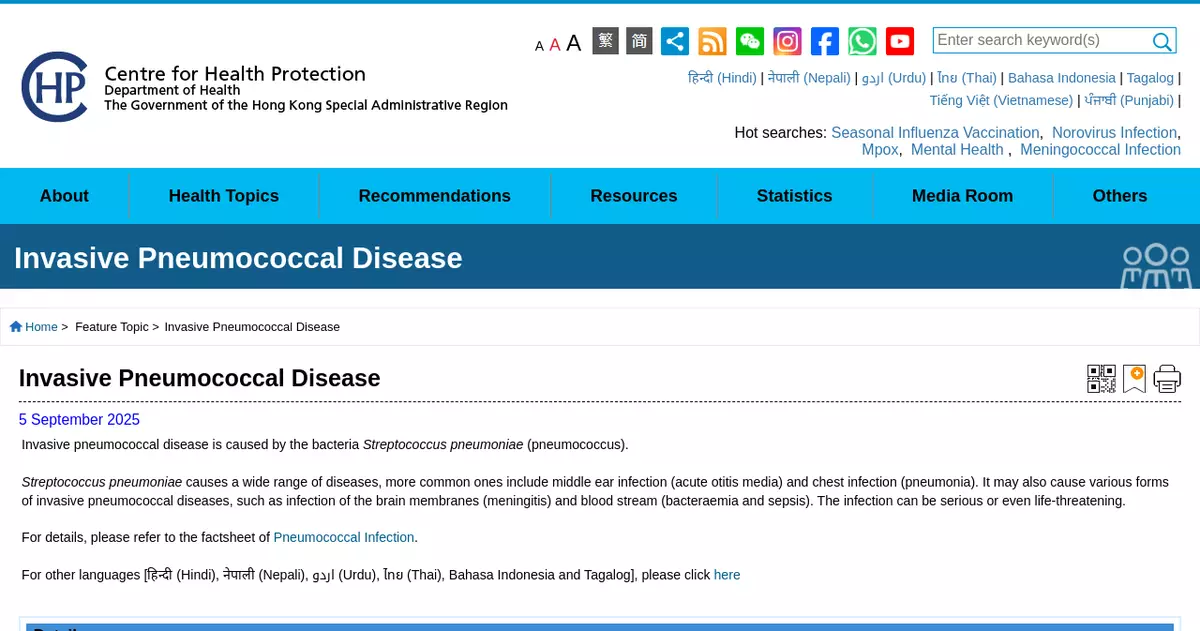
To prevent pneumococcal infection, the CHP appealed to the public for pneumococcal vaccination and hygiene practices. The public may visit the CHP'sinvasive pneumococcal disease pagefor more information.
Source: AI-found images