Skip to Content Facebook Feature Image

ACCESSCO Advances AGV–Entrance Integration for Singapore’s Next Generation of Smart Buildings

Asia Pacific

ACCESSCO Advances AGV–Entrance Integration for Singapore’s Next Generation of Smart Buildings
Asia Pacific

Asia Pacific

ACCESSCO Advances AGV–Entrance Integration for Singapore’s Next Generation of Smart Buildings

2026-10-19 17:05 Last Updated At:17:16

SINGAPORE – Media OutReach Newswire – 18 October 2026 – ACCESSCO (Access Concept Pte Ltd), a provider of automatic door solutions in Singapore, has extended its entrance systems work to cover integration with automated guided vehicles (AGVs) and service robots. The company specifies and commissions door systems that respond to robot traffic alongside pedestrians, on new installations and on upgrades to existing door estates. The work follows the publication of SS 713:2025, the Singapore Standard governing data exchange between robots, lifts, and automated doorways.

On a robot route, a door has to acknowledge a request from the fleet management system, confirm that it has reached full open, hold that position until the vehicle has cleared the threshold, and report its state back so that robots are not dispatched towards a failed door. Clear opening width and hold-open time are set as route parameters, sensor logic is adjusted to detect low-profile vehicles that presence sensors tuned to human height can miss, and fire-mode and power-loss behaviour is agreed in advance. These requirements apply mainly to automatic sliding door systems, which carry most of the traffic in Singapore's commercial and healthcare buildings. For routes that cannot be widened structurally, a telescopic sliding automatic door stacks multiple panels within the existing width to give clear openings of up to 5,000mm on bi-parting configurations. As an automatic swing door manufacturer, ACCESSCO supplies operators rated to 350kg per leaf with adjustable speed, force, and hold-open time. As a hermetic sliding door supplier, it also works on operating theatres, isolation rooms, and clean rooms, where airtight sealing and infection control now need to accommodate delivery robots in hospital corridors.

SS 713:2025, "Data exchange between robots, lifts and automated doorways to enable autonomous operations", replaced Technical Reference TR 93:2021, which was withdrawn on 28 March 2025. The standard sets out the minimum data exchanges, hardware requirements, and safety considerations for integrating robots with lifts and automated doorways, including how they communicate during fire evacuation and power loss. Robot adoption in Singapore is rising quickly. The country recorded 818 industrial robots per 10,000 manufacturing employees in 2024, the second-highest density in the world after the Republic of Korea, according to the International Federation of Robotics. In commercial property, Mapletree Business City began a two-year rollout of robotics middleware in 2023, which the Infocomm Media Development Authority described as Singapore's first large-scale deployment of its kind. Most of this work is retrofit, and contributors to the standard have noted that conventional lifts and doors need controller upgrades before they can communicate over an API. This places robot readiness within the scope of an automatic door repair service in Singapore, covering the assessment of operators already in service, the replacement of controllers that cannot be addressed, and the restoration of ageing units to a reliable opening cycle. ACCESSCO can service nearly any type of door operator brands, allowing mixed estates to be assessed and upgraded without replacing every entrance.

ACCESSCO has supplied entrance systems to sites including Changi Airport, Changi General Hospital, CapitaLand properties, and Singapore Science Park. The company aims to be specified at design stage on projects where robot traffic is planned, as agreeing fire-mode and power-loss behaviour between the door, the robot fleet, and the building accounts for most of the engineering work in AGV–entrance integration.Hashtag: #AccessConcept #ACCESSCO


The issuer is solely responsible for the content of this announcement.

About ACCESSCO

Operating since 2010, ACCESSCO (Access Concept Pte Ltd) is a Singapore-based specialist in automated entrance and access solutions. The company supplies, installs, services, and upgrades automatic sliding, telescopic sliding, swing, and hermetic doors, together with manual sliding and swing door systems, for healthcare, commercial, hospitality, transport, and institutional buildings. Its systems are built to DIN 18650-1 and EN 16005-1 pedestrian safety standards, with cyclic endurance testing of up to 2,000,000 cycles depending on the system, and TÜV fire testing of up to two hours on swing door assemblies. ACCESSCO is registered with Singapore's Building and Construction Authority and is BizSafe certified, and it provides preventive maintenance and multi-brand servicing across the systems it installs.

** This press release is distributed by Media OutReach Newswire through automated distribution system, for which the client assumes full responsibility. **

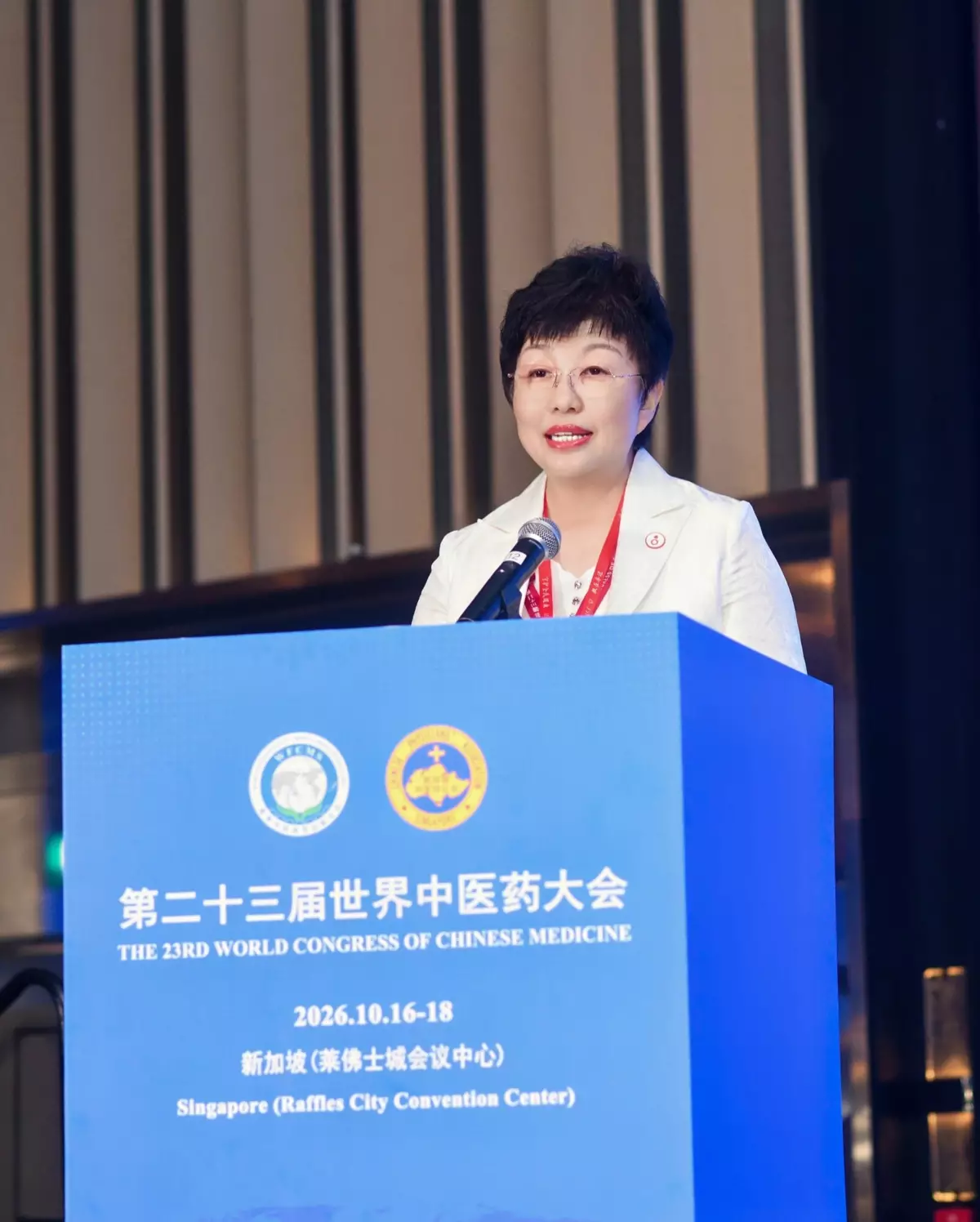
SINGAPORE – Media OutReach Newswire – 19 October 2026 – A leading Chinese medicine maker told a global gathering of traditional Chinese medicine (TCM) practitioners here Saturday that a 500-year-old tradition built on treating the whole patient and tailoring treatment has offered an Eastern answer to aging societies and chronic disease worldwide.

Wang Lei, chairman of Da Ren Tang and president of Tianjin Pharmaceutical Group, addresses the congress.

Wang Lei, chairman of Da Ren Tang and president of Tianjin Pharmaceutical Group, addresses the congress.

According to a press report issued by China News Service (CNS), Tianjin Pharmaceutical Da Ren Tang Group, one of China's oldest pharmacy houses, also announced that it would conduct an international randomized, double-blind, controlled trial of its flagship heart remedy, sold in English as Suxiao Jiuxin Pills, in collaboration with Singapore General Hospital, the city-state's largest acute tertiary hospital.

Wang Lei, chairman of Da Ren Tang and president of Tianjin Pharmaceutical Group, made both points in her address at the opening ceremony of the 23rd World Congress of Chinese Medicine in Singapore. She noted that Chinese medicine's holistic approach and pattern-based diagnosis give it an advantage in strengthening public health systems, and that the industry must demonstrate this through internationally recognized, verifiable evidence, the CNS report said.

The study marks the first time a Chinese proprietary medicine has undergone clinical trials at a major Western-medicine hospital in Singapore, the CNS report highlighted.

"We have always believed that Chinese medicine cannot stop at product exports," Wang said, adding that the trial would offer internationally recognized and verifiable clinical evidence.

The congress, hosted by the World Federation of Chinese Medicine Societies and organized by the Singapore Chinese Physicians' Association, ran Oct. 16-18 at Raffles City Convention Centre under the theme "Addressing Global Health Challenges, Integrating Chinese Medicine into National Health Systems." About 1,400 experts, officials and industry representatives from 25 countries and regions participated, the CNS report added.

Wang devoted much of her speech, titled "Gathering the Wisdom of Traditional Medicine to Shoulder the Global Mission of Health," to arguing that traditional medicine belongs in the global public health conversation rather than on its margins.

Chinese medicine's emphasis on the body as a whole, and on tailoring treatment to individual patients' symptom patterns, gives it a distinct advantage in strengthening public health systems, she noted.

For countries facing aging populations and a rising burden of chronic disease, TCM represents "a valuable solution with Eastern characteristics," Wang said, highlighting its contribution to China's "Health Silk Road" vision and its role in China's broader approach to global health governance.

Wang said Da Ren Tang's roughly 70 years of exporting, dating back to 1955, had taught the company that a remedy must suit the actual health needs of the people who take it rather than be shipped abroad merely as a cultural product.

She set out a three-part plan: concentrate clinical research on cardiovascular and cerebrovascular diseases, respiratory conditions, digestive health, musculoskeletal disorders and skin diseases, working with overseas medical institutions to turn traditional experience into evidence regulators can evaluate; follow international research norms while pursuing product registrations and high-quality studies abroad; and recognize that medical systems and regulatory cultures differ from country to country.

"We have to respect the medical systems and cultural contexts of each country and build an open, mutually trusting and mutually beneficial form of cooperation," Wang was quoted as saying by CNS.

According to the CNS report, the company is working with Singapore General Hospital on the study and hopes that solid results will help traditional medicine enter national health systems and reach more patients overseas.

Wang called on the congress to bring Chinese medicine standards into alignment with international rules, build platforms for sharing research results, and tell the story of Chinese medicine to the world.

Da Ren Tang traces its pharmacy lineage to 1522 and has been listed in Singapore since 1997. The company holds 122 exclusive products and 599 drug approval numbers, sells more than 150 products in more than 20 countries, and ranks among China's top five exporters of traditional Chinese medicine, according to the CNS report.
Hashtag: #ChinaNewsService

The issuer is solely responsible for the content of this announcement.

** This press release is distributed by Media OutReach Newswire through automated distribution system, for which the client assumes full responsibility. **
Recommended Articles