CHP records case of severe paediatric influenza infection
The Centre for Health Protection (CHP) of the Department of Health today (October 19) recorded a severe paediatric influenza infection case. The CHP urged the public to receive vaccinations as early as possible to safeguard their own health and that of their families. In addition, the public should maintain good personal and environmental hygiene at all times to prevent influenza and other respiratory illnesses.
The case involves a six-year-old girl with good past health. She developed a fever, runny nose, vomiting and poor appetite on October 15. She was then brought to the Accident and Emergency Department of Tuen Mun Hospital for medical attention and was admitted for treatment. Her condition deteriorated and was transferred to the paediatric intensive care unit (PICU) of the hospital for further treatment on October 17. Her respiratory specimen tested positive for influenza A (H1) virus. Her clinical diagnosis was influenza A infection complicated with shock. The patient remains hospitalised at the PICU in critical condition.
The CHP's preliminary investigation revealed that the patient had no travel history during the incubation period, and has not received the 2026/27 Seasonal Influenza Vaccination (SIV). Her household contacts are currently asymptomatic. The CHP will continue to investigate the case.
"Hong Kong entered the influenza season in late June this year and the influenza season has lasted for more than three months by now. Currently, the local influenza activity remains at a high level. The predominant influenza virus detected at present is influenza A (H1). The CHP's epidemiological investigation indicated that the characteristics of severe or death cases related to seasonal influenza during this influenza season are similar to those in previous years, affecting primarily the elderly and children. Since the start of the influenza season in late June, a cumulative total of 24 cases of severe paediatric influenza infection have been recorded. Among these cases, 20 patients have recovered and been discharged from hospital, three patients are in critical condition and one has passed away. Due to widespread influenza transmission in the community in recent months, there has been a significant increase in both the number of infections and severe cases. Since the new school year started in September, nearly 440 influenza-like illness outbreaks have been recorded in schools, affecting a total of approximately 2 700 persons. Schools and parents must remain vigilant and take preventive measures. The CHP anticipates that the influenza activity will continue to fluctuate at high levels in the coming weeks," said the Controller of the CHP, Dr Edwin Tsui.
The 2026/27 SIV Programmes, including the SIV School Outreach Programme (SIVSOP), commenced on September 17. The SIVSOP this year has introduced a new Electronic Consent Form (e-consent form) feature via eHealth. This new measure not only facilitates the public to join the SIV Programmes but also streamlines the administrative procedures for healthcare service providers and schools, so that SIV outreach activities can start as early as possible. About 840 schools have organised SIV outreach activities. SIV outreach activities are expected to be completed by mid-December, about two weeks earlier than last year.
Dr Tsui appeals to all schools and parents in Hong Kong to work closely with the CHP and complete the consent process as soon as possible so that students can be arranged to receive SIV earlier.
Dr Tsui reminds parents that the health condition of children with influenza can deteriorate rapidly. Parents must pay close attention to their condition, and visit an accident and emergency department immediately if the child's condition deteriorates with symptoms such as shortness of breath, wheezing, blue lips, chest pain, confusion, a persistent fever or convulsions. Members of the public should seek medical attention as soon as possible if they develop respiratory symptoms. If they live with members of high-risk groups, such as children, the elderly and those with underlying illnesses or compromised immune systems, they should wear a surgical mask at home to reduce the risk of infecting them. Other effective ways to reduce the spread of the disease include maintaining household hygiene, frequently cleaning and disinfecting frequently touched surfaces, practising good hand hygiene, and ensuring proper indoor air circulation.
Members of the public may refer to the CHP'sCOVID-19 & Flu Express,Seasonal Influenza WebpageandVaccination Schemesfor the latest information.
Source: AI-found images
Director of Health attends WHO Western Pacific Regional Committee meeting
The Director of Health, Dr Ronald Lam, today (October 19) led a delegation from the Department of Health (DH) to attend the 77th session of the World Health Organization (WHO) Regional Committee for the Western Pacific in Manila, the Philippines. He engaged in in-depth discussions with representatives from other countries and regions on major health issues of common concern. They explored practical response strategies and effective ways to strengthen the resilience of health systems.
During the opening session today, Dr Lam reported on the latest developments and challenges in public health in the Hong Kong Special Administrative Region (HKSAR).
He said, "The latest progress report announced by the WHO shows that the Western Pacific Region's Universal Health Coverage index has risen significantly, with particularly notable progress in communicable disease prevention and control, demonstrating the powerful force of regional collaboration. The HKSAR is committed to maintaining a resilient public health system, including accessible healthcare services, comprehensive disease prevention and control, surveillance and early warning, and emergency response and preparedness. As a result, the HKSAR has consistently ranked among the world's best in core health indicators, such as life expectancy, and maternal and infant mortality rates. However, like other economies in the region, the HKSAR faces a number of public health challenges, such as the growing burden posed by non-communicable diseases, healthcare workforce, communicable diseases, and climate-related health risks. The HKSAR is actively leveraging digital health tools and artificial intelligence to optimise resource allocation and enhance the efficiency of primary healthcare. We are adopting a 'life-course approach' to ensure that our public health measures protect all people, especially the vulnerable."
The Chief Executive recently announced the First Five-Year Plan for Economic and Social Development of the Hong Kong Special Administrative Region (2026-2030) (Hong Kong's First Five-Year Plan) and the Chief Executive's 2026 Policy Address (Policy Address), providing a strategic vision for a bright new era and enhancing livelihood. In terms of healthcare, three key directions are covered, including deepening healthcare system reform, developing Hong Kong into a health and medical innovation hub with global influence, and playing the role of a healthcare 'superconnector' for the HKSAR to deepen cross-boundary healthcare co-operation, align with national standards and deepen international co-operation.
Dr Lam added, "The WHO Western Pacific Region's vision of 'Weaving Health for All' closely aligns with the strategic development directions and objectives on healthcare outlined in Hong Kong's First Five-Year Plan and the Policy Address. Hong Kong, China, will continue to collaborate closely with the WHO, leveraging the advantage under 'one country, two systems' to continuously deepen exchanges and co-operation on health with various regions, deeply participate in global health governance, and make positive contributions to improving the health and well-being of people around the world."
During the meeting, participants will also discuss artificial intelligence, hypertension control, immunisation, tobacco control, as well as regional health essential stockpile and pooled procurement mechanism, among other topics.
With the continued support of the National Health Commission of the People's Republic of China, the DH has actively integrated into and served the national health development framework, actively supporting the WHO in advancing global health issues and addressing various public health challenges, contributing to global public health. The DH has been designated by the WHO as a Collaborating Centre for Smoking Cessation and Treatment of Tobacco Dependence and a Collaborating Centre for Traditional Medicine for over ten consecutive years. The DH also serves as a reference laboratory for various communicable diseases, contributing to global disease surveillance and talent training.
Dr Lam added that the Microbiology Division of the Public Health Laboratory Services Branch under the Centre for Health Protection of the DH was appointed by the WHO this year as a "Collaborating Centre on Quality and Capacity Building for the Global Influenza Surveillance and Response System", and has successively hosted international expert meetings on WHO's surveillance, response, and prevention and control of global influenza, and on the formulation of the International Herbal Pharmacopoeia, fully demonstrating the HKSAR's important bridging role in the healthcare field and its contribution to improving global health governance. With the support of the Central Government and under the principle of "one country, two systems", the DH will continue to maintain close liaison with the WHO member states and regions on various issues concerning the protection of public health. Through multilateral collaboration and consensus-building, the DH will further enhance and safeguard overall public health in the region.
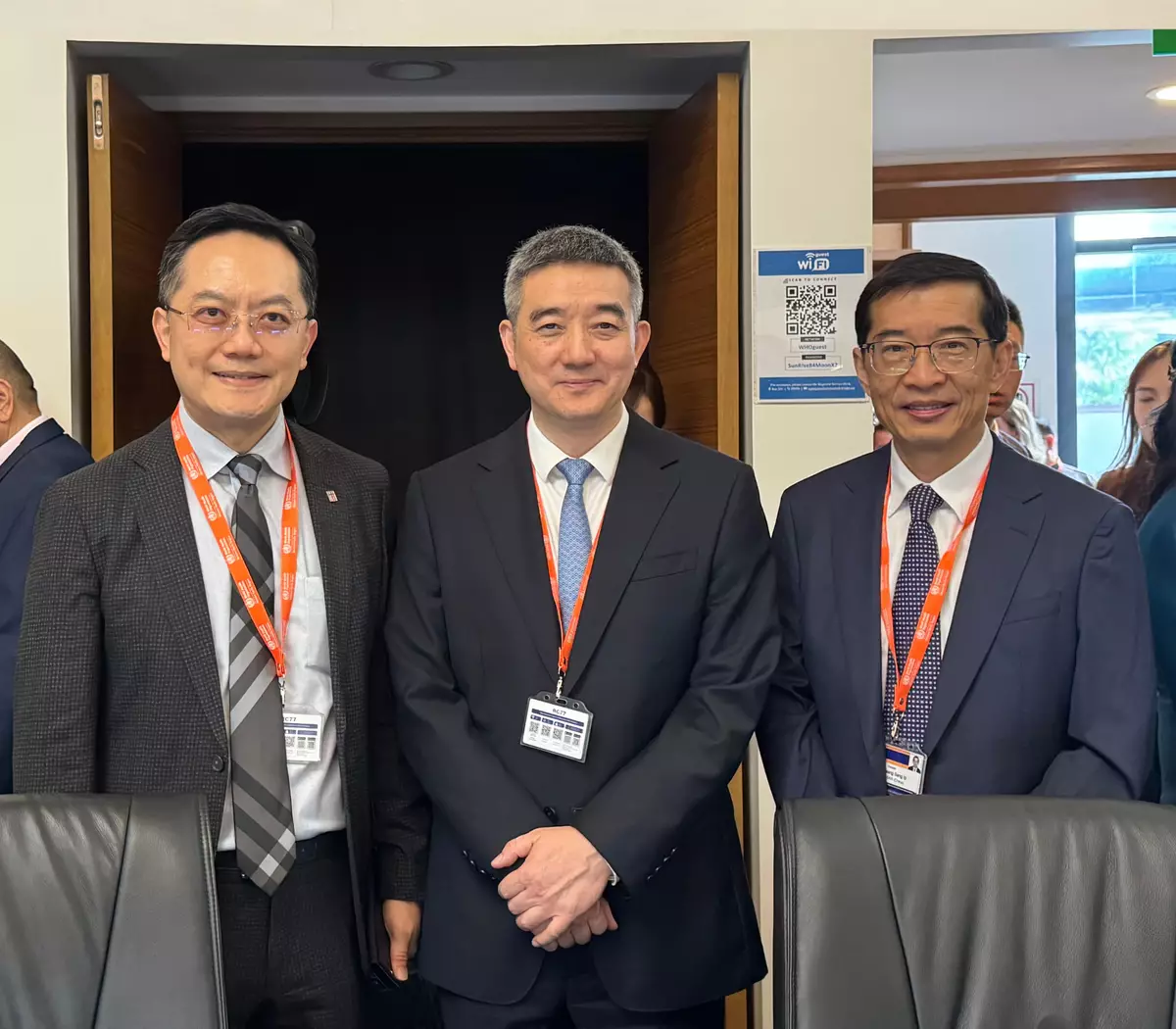
Director of Health attends WHO Western Pacific Regional Committee meeting Source: HKSAR Government Press Releases
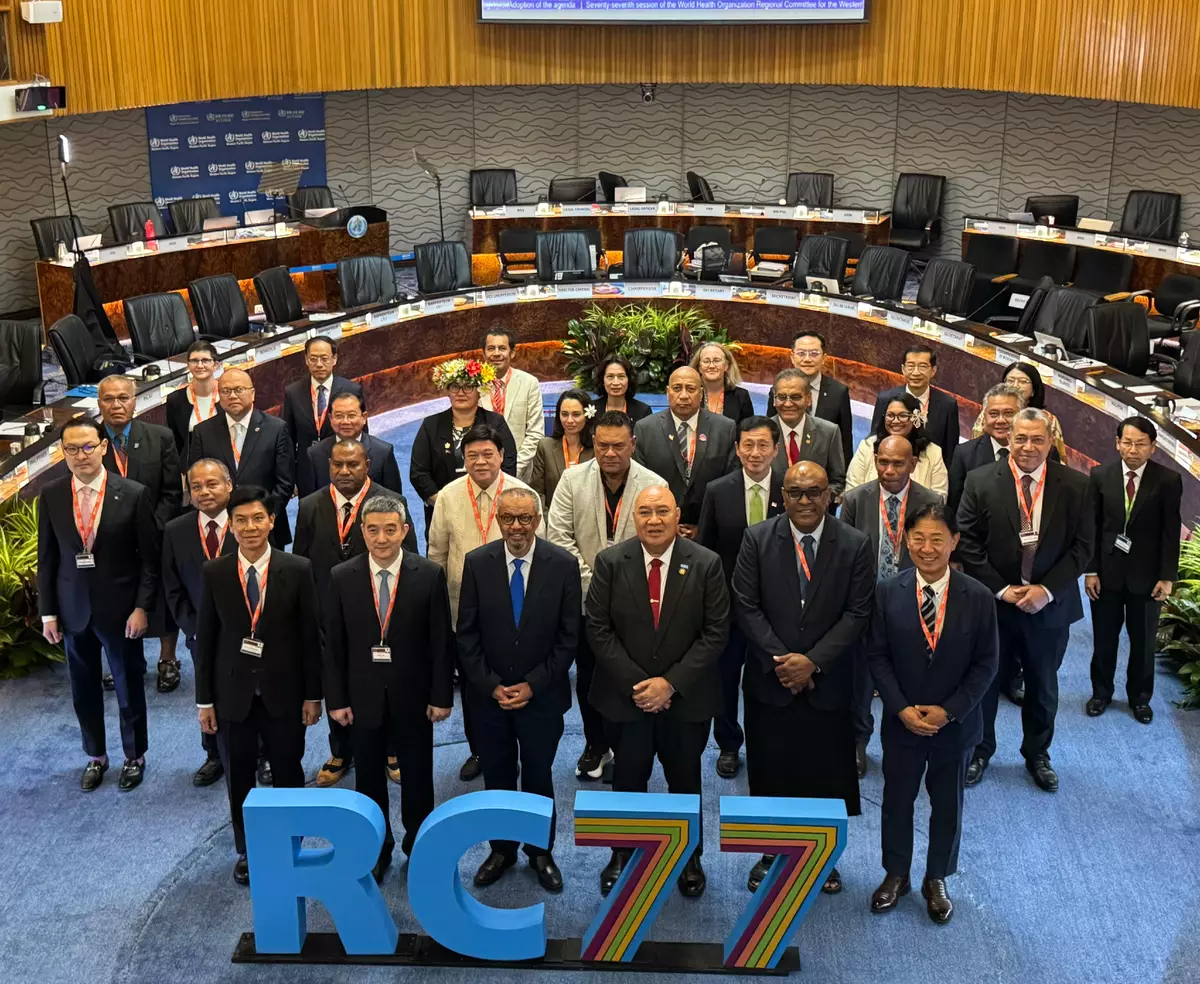
Director of Health attends WHO Western Pacific Regional Committee meeting Source: HKSAR Government Press Releases