A new episode of a documentary produced by China Global Television Network (CGTN) follows the final steps along the Long March route, a journey of hardship and uncertainty, to discover how perseverance, and belief shaped China's historic path.
The episode is part of the CGTN series 'Breaking Through,' which traces China's journey from the Long March to modern-day achievements to mark the 90th anniversary of the victory of the Long March, a maneuver helped lay the foundation for the eventual victory of the Chinese revolution.
The Long March was an epic military trek from 1934 to 1936, during which the Communist Party of China (CPC)-led Red Army broke through encirclement by Kuomintang forces. Red Army soldiers braved raging rivers, snow-covered mountains and treacherous grasslands to complete the 12,500 kilometer-odyssey.
On October 19, 1935, the Central Red Army reached Wuqi in the revolutionary base in northwest China's Shaanxi Province, marking the end of the Central Red Army's Long March.
"On the Long March, for over a year we suffered terribly, with no roof over our heads. No food. No clothing. No shelter. No supplies," said Zhong Zhurui, a former soldier of the Red Army, recalling the hardship that the troops had overcome.
Over the following year, other Red Army forces also completed their Long March, gradually arriving in Huining, Gansu Province, and Jiangtaibu in the Ningxia Hui Autonomous Region.
With all three main Red Army forces joining together, the Long March had finally come to an end after two years.
"They lifted me high up into the air. I was scared I'd fall, and I cried," said Wan Manlin, a former soldier of the Fourth Front Army of the Red Army, recalling how excited the soldiers were as they celebrated the end of the Long March.
"We shouted slogans. Long live the Communist Party! Down with the Kuomintang!" said Liu Zhanrong, a former deputy squad leader of the 84th Division of the Northern Shaanxi Red Army, looking back on the moment the Long March ended.
During the grueling journey, the Central Red Army set out with 86,000 soldiers, but only about 7,000 reached the revolutionary base in northwest China, meaning roughly one in 12 survived to witness the victory.
During the march, the Red Army crossed nearly 100 rivers, traversed vast grasslands once known as a "death trap," and climbed more than 40 mountains, including over 20 snow-capped peaks rising above 4,000 meters.
"Saying farewell to comrades, it was heartbreaking. So many died," Kang Lize, a former soldier of the Fourth Front Army of the Red Army said with tears in eyes.
American journalist Edgar Snow later described the journey as "an odyssey unequaled in modern times."
"I think its legacy is really as much psychological as other in terms of the sense of the viability and survivability of the communist movement. Because of their own capacities and their own will, if you could make it through that, maybe you can make it through anything," said T. M. Chang, professor of China studies of Harvard University.
"They think they found ways to do it. They have looked at the world in which they grew up and say that is simply awful, and we need a new future. We can make a new world," said Hans van de Ven, professor of modern Chinese history of Cambridge University.
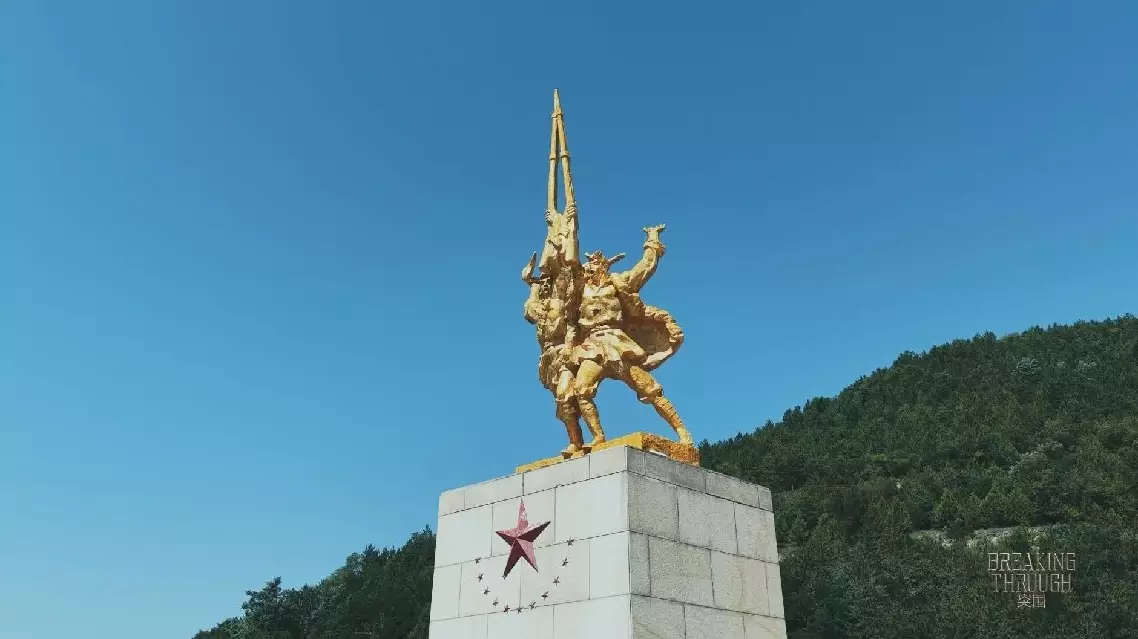
CGTN documentary explores how perseverance, belief shape China's historic path