WASHINGTON (AP) — A federal judge on Monday questioned the Trump administration’s claims surrounding its efforts to redevelop a historic Washington golf course, challenging its contention that a recent tree-cutting spree did not indicate work was moving forward on the project, which is temporarily blocked by a court order.
“There is no universe in which all of this coincidentally happened all at the same time,” U.S. District Judge Ana Reyes said during a hearing over the fate of a project that has emerged as the latest legal flashpoint in President Donald Trump's campaign to leave his personal imprint on the nation's capital.
Click to Gallery
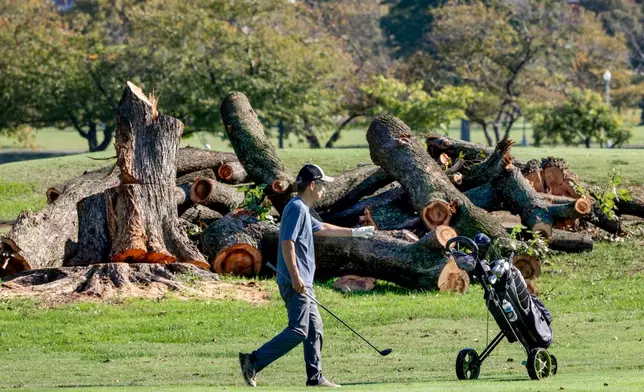
A golfer walks near log sections cut from trees at the East Potomac Golf Links, in Washington, Tuesday, Oct. 13, 2026. (AP Photo/J. Scott Applewhite)
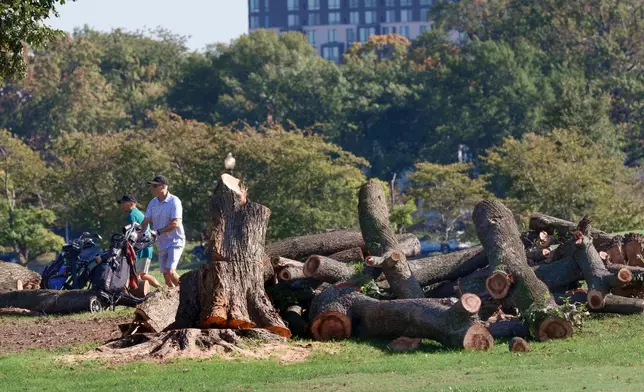
Golfers walk near log sections cut from trees at the East Potomac Golf Links, in Washington, Tuesday, Oct. 13, 2026. (AP Photo/J. Scott Applewhite)
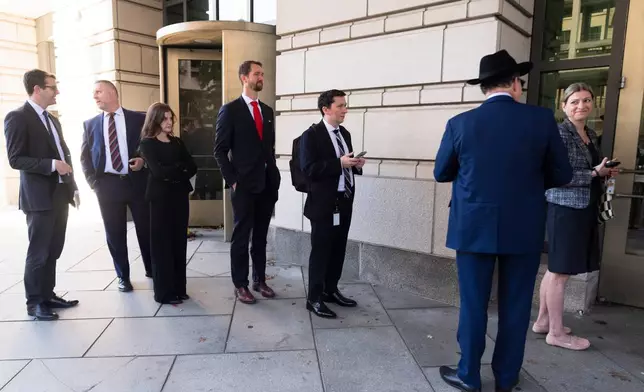
People wait line outside the Federal Courthouse, Monday, October.19, 2026, in Washington, before the start of a hearing in the lawsuit challenging the President Donald Trump administration's tree removal and redevelopment plans at East Potomac Golf Links, Monday, Oct. 19, 2026, in Washington. (AP Photo/Manuel Balce Ceneta)
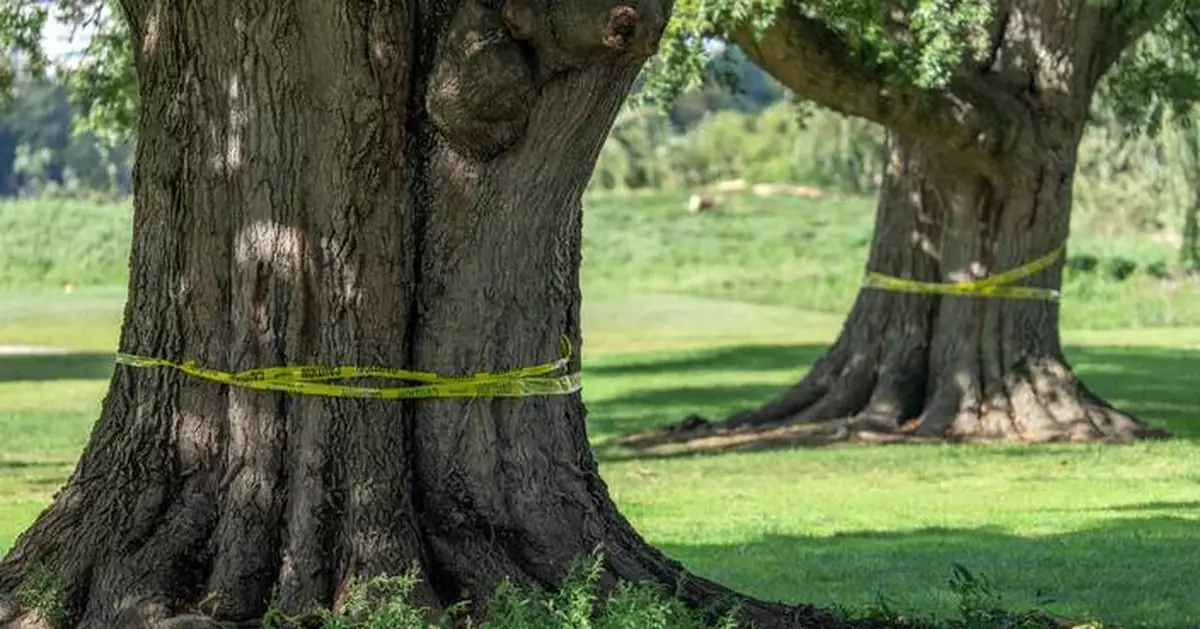
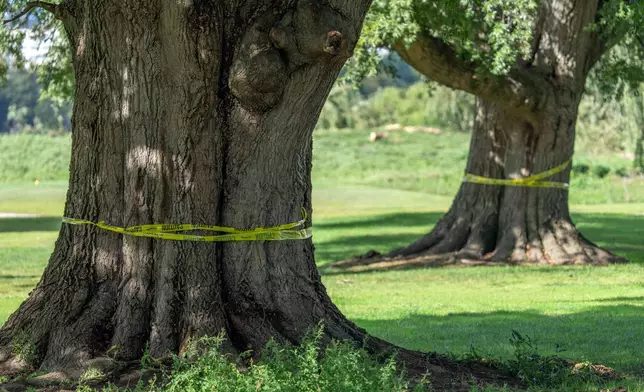
The trunks of large trees are wrapped in caution tape at the East Potomac Golf Links, Monday, Oct. 12, 2026, in Washington. (AP Photo/Mark Schiefelbein)
Reyes last week ordered a halt to the golf course's redevelopment plans until at least Oct. 26 after scolding the government for starting a large-scale tree removal at the course over a holiday weekend while providing little notice to the court or the plaintiffs trying to stop the makeover.
Then, on Sunday, Trump announced plans on social media to close the golf course for 15 months, starting on Nov. 15, and redevelop the 106-year-old park and course despite a court challenge by the D.C. Preservation League and two golfers. In a post on Monday, Trump said the work would start immediately.
Plaintiffs’ attorneys challenging the golf course renovation work have asked Reyes to extend her order that temporarily paused the work. They say the work is inflicting irreversible damage and that the redevelopment would violate the congressional act that created the park where the course is located.
The hearings on the century-old golf course have grown increasingly tense and on the eve of Monday’s hearing, Reyes rejected the administration’s request for her to recuse herself from the case. The government questioned her impartiality and accused her of engaging in “egregious” behavior from the bench during last week’s emergency hearing for the case.
Trump, a Republican, referred to Reyes as a “crazed lunatic” in his social media post on Monday.
"The United States Department of Interior wants to take a terrible and very unsafe golf course, and make it into a great, safe, and prestigious golf course. They have an absolute right to do so. It’s as simple as that!” Trump wrote.
Reyes, who was nominated by Democratic President Joe Biden, said the government has failed “by any objective measure” to demonstrate the need for her recusal from the case.
"It is easy to weaponize selective quotations to bring a baseless recusal motion. But it is much harder to meet the demanding legal standard against a full record,” she wrote.
Trump has pledged to turn the course into a world-class golf venue — part of his grand vision for Washington, D.C., where he has torn down storied structures, remade or renamed others and deployed the National Guard for more than a year.
While it has been open to Washingtonians of all income levels, opponents of Trump’s plans for the golf course have argued it will alter the character of the space and make it less affordable to people.
Monday’s hearing started with a tense confrontation between Reyes and Justice Department official Stanley Woodward, when the judge asked if other any government attorneys in the room “as officers of the court” were willing to certify that everything within a Sunday filing was truthful and legally sound under federal rules of civil procedures.
In that filing Woodward argued that there were no final plans for the park.
“First, the plan is not final because the Park Service has not completed its review and the details of the proposal are subject to change during the review process,” the filing said.
Much of the hearing revolved around Trump’s social media posts over the weekend and his appearance last June at the golf course, accompanied by golf course architects and members of the administration and why there was such a sense of urgency for the cutting of the trees.
The witnesses at the hearing, Greg Wischer, deputy chief of staff at the Interior Department, and acting National Park Service director Jessica Bowron both acknowledged that they had only learned of the National Park Service Cultural Landscape Report in September that led to the tree cutting. That NPS report was from 2019.
Associated Press writer Michael Kunzelman contributed.
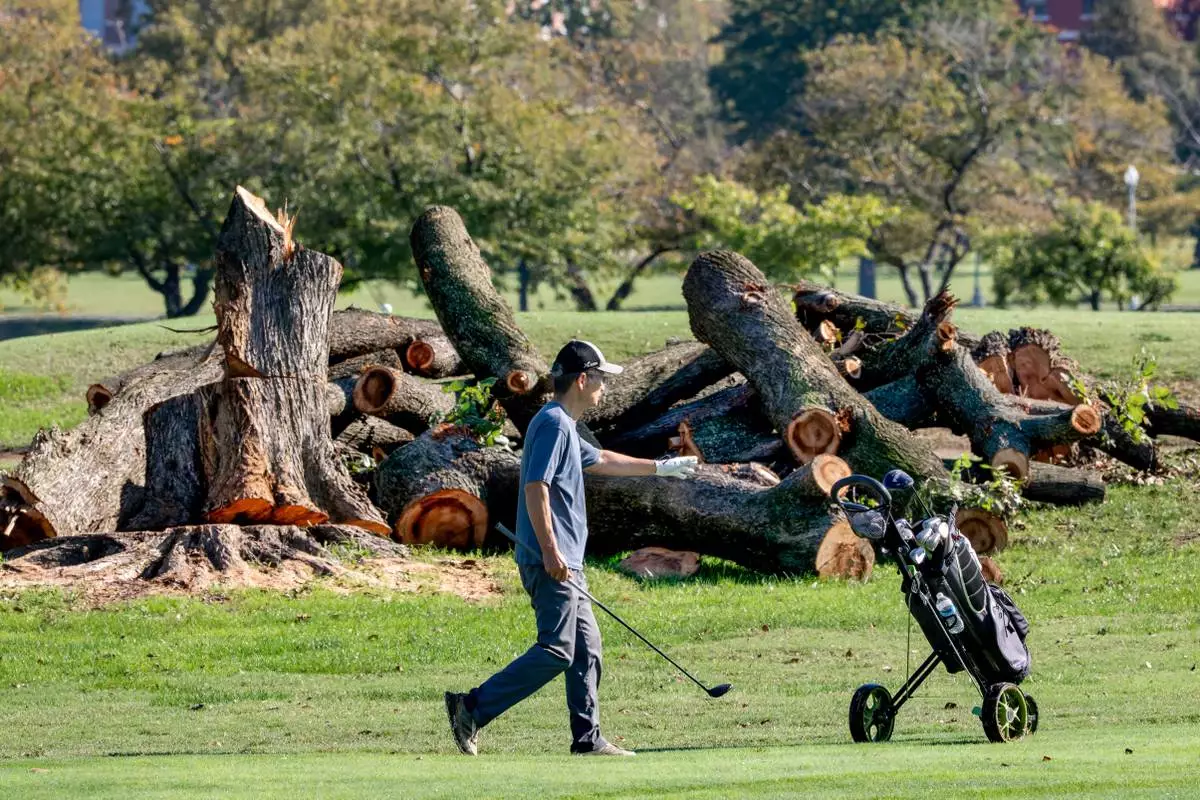
A golfer walks near log sections cut from trees at the East Potomac Golf Links, in Washington, Tuesday, Oct. 13, 2026. (AP Photo/J. Scott Applewhite)
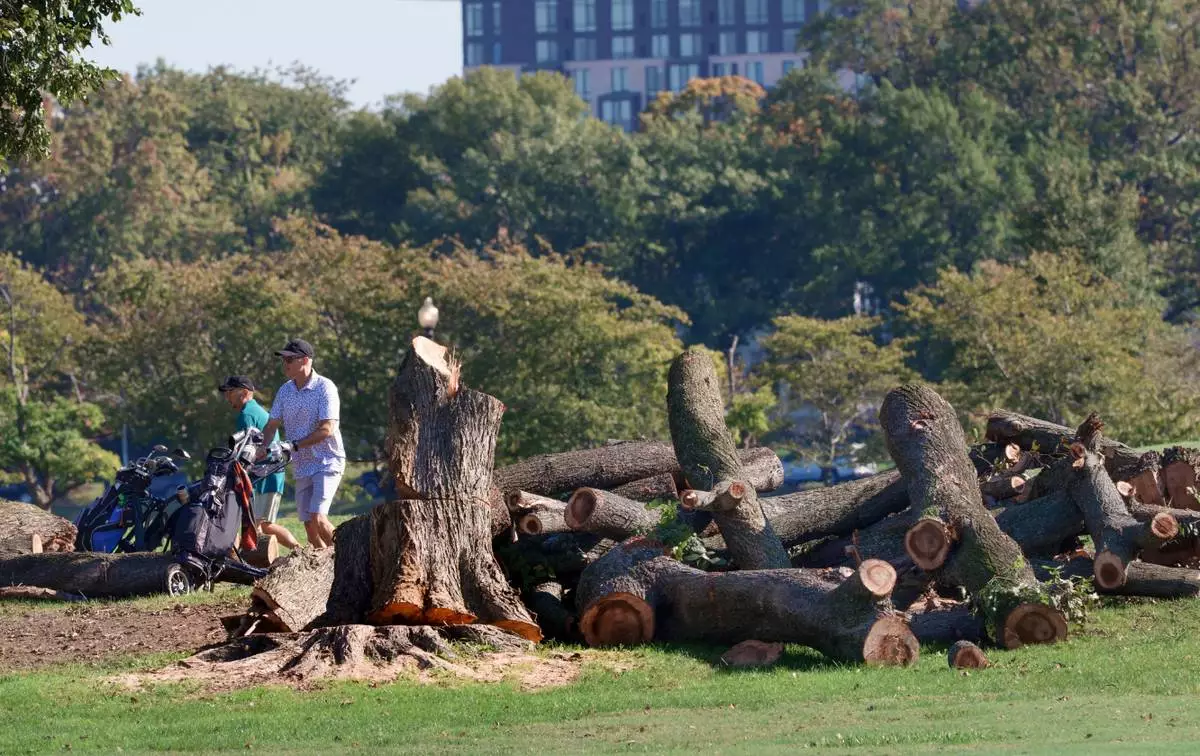
Golfers walk near log sections cut from trees at the East Potomac Golf Links, in Washington, Tuesday, Oct. 13, 2026. (AP Photo/J. Scott Applewhite)
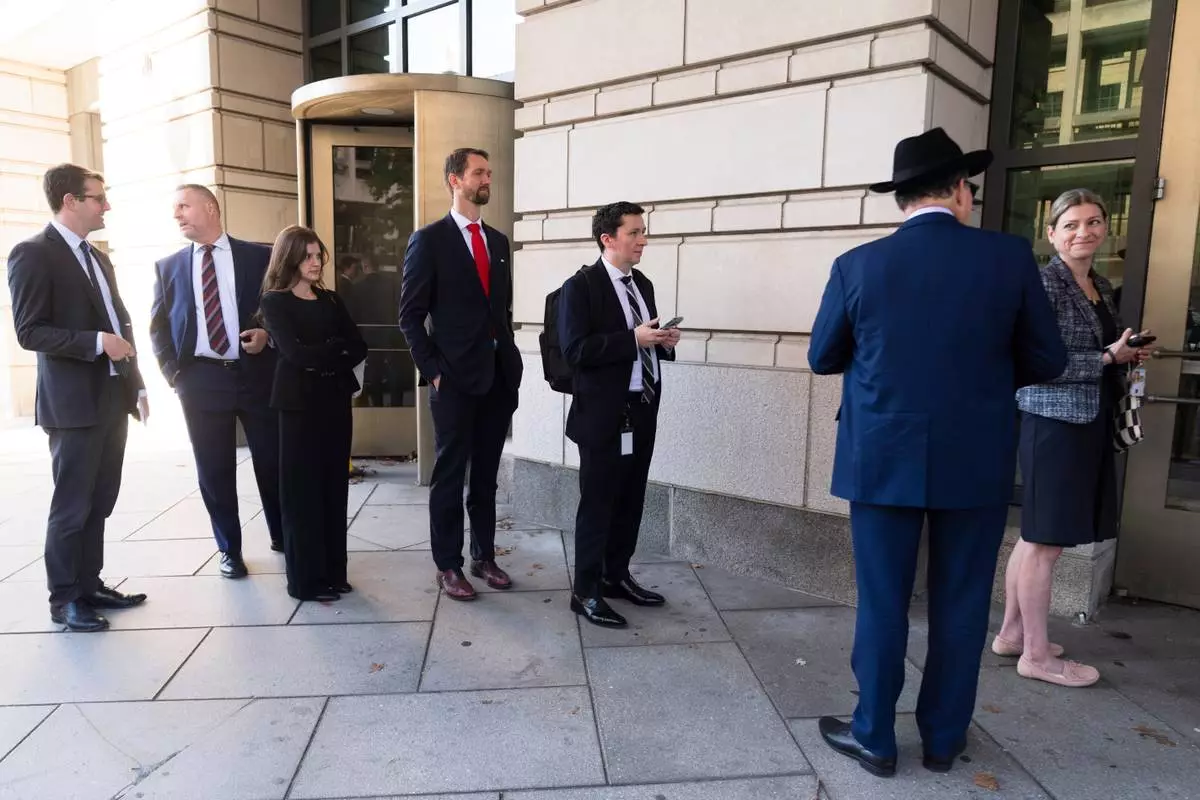
People wait line outside the Federal Courthouse, Monday, October.19, 2026, in Washington, before the start of a hearing in the lawsuit challenging the President Donald Trump administration's tree removal and redevelopment plans at East Potomac Golf Links, Monday, Oct. 19, 2026, in Washington. (AP Photo/Manuel Balce Ceneta)
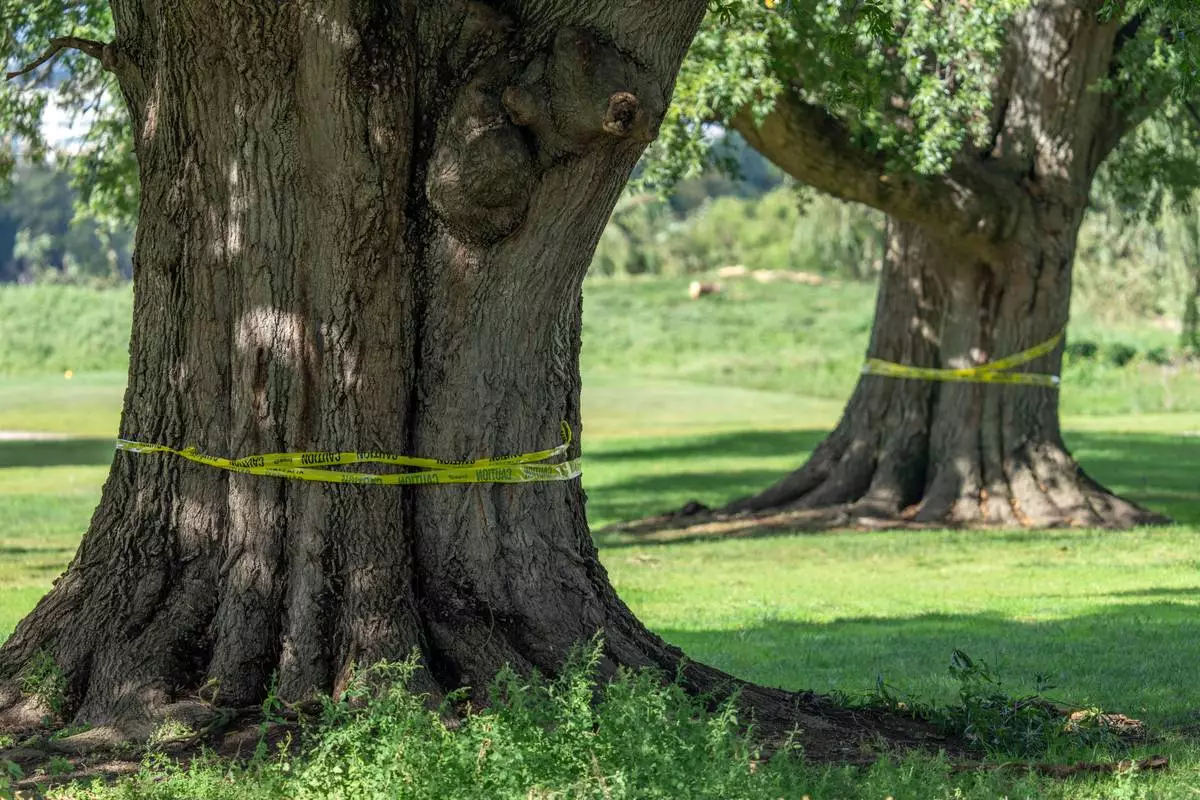
The trunks of large trees are wrapped in caution tape at the East Potomac Golf Links, Monday, Oct. 12, 2026, in Washington. (AP Photo/Mark Schiefelbein)
LOS ANGELES (AP) — Federal authorities charged more than two dozen foreign nationals Monday in California as part of a statewide sweep targeting people who officials say have illegally registered or voted in U.S. elections.
The arrests are part of a Trump administration effort to root out noncitizen voting ahead of next month's midterm elections, even though data shows that the problem is incredibly rare, difficult to prove and has not been shown to change the outcome of races.
Federal officials on Monday blamed California officials for the alleged crimes, accusing them of facilitating noncitizen voting through inadequate voter roll maintenance and hiding it from the public. The charges escalated a simmering voter roll fight that came into focus last week when the Justice Department sued California and warned that local election workers who knowingly process or tabulate ballots submitted by noncitizen voters are at risk of investigation and potential prosecution.
The Justice Department said the 28 people who were charged as part of a sweep dubbed Operation Protect the Vote are lawful permanent residents — but not U.S. citizens who are permitted to legally vote. They are charged with crimes including making false statements on a naturalization application and submitting fraudulent voter registrations.
“This causes real damage to real elections and real damage to American citizens," Trent McCotter, the acting deputy attorney general at the Justice Department, said during a news conference in Los Angeles.
Rob Bonta, California's Democratic attorney general, said Monday that there is no widespread voter fraud in California and that while “one-off” examples of voter fraud are possible, those instances are “a drop in the bucket” considering the state has 23 million registered voters.
Bonta said he expects his state to prevail in the federal government's lawsuit, saying the Republican administration “has provided us with no facts of any ineligible voters, just a conclusory statement with no evidence to back it.”
The federal government has made noncitizen voting a priority this year, demanding detailed voter information — including dates of birth, addresses, driver’s license numbers and partial Social Security numbers — from the states. While some states voluntarily handed over the information, the department sued 30 states and the District of Columbia to obtain it — lawsuits that so far have been unsuccessful.
The Justice Department said Monday it has charged 113 people in 20 states with illegal voting and illegal registration offenses over the last several weeks, It earlier said it had charged about 90 people for various types of election misconduct so far this year, including 50 who are alleged to have voted as noncitizens. There were more than 227 million registered voters in the United States during the 2024 presidential election.
The operation Monday involved the four U.S. attorneys' offices across California in what the Justice Department intended as a statewide show of force.
Among the dozens of people arrested was a 72-year-old Belize-born man who is accused of voting illegally in four elections.
Dozens of federal agents descended on Omar Alexander Muñoz's residential cul-de-sac in Commerce, a small city in Los Angeles County, to make the arrest. Muñoz was put in handcuffs in his pajamas and taken into federal custody downtown.
Esmeralda Muñoz, 70, said her family was furious that agents showed up to their home in full tactical gear with guns drawn to arrest her husband before dawn.
“It’s a show for them,” she said, calling it a “shame” that government officials arrived with camera crews and news helicopters.
She and her three children and 10 grandchildren are all U.S. citizens, she said; Omar Muñoz is a legal permanent resident, she said, and they didn’t realize that he was registered to vote. When they do talk about politics, Esmeralda said Omar has been a vociferous supporter of Trump.
The arrests were the latest in a flurry of activity that has unfolded in heavily Democratic California, which is not typically regarded as a key battleground state but does have a handful of competitive congressional races that could help determine which party controls the U.S. House for the final two years of President Donald Trump’s term.
The administration last week sued California to prevent it from counting mail ballots from people the federal government has identified as “likely” noncitizens until their immigration status can be confirmed.
The complaint was filed after California officials were given, and did not meet, a 48-hour deadline to review a password-protected thumb drive that contained a list of 20,000 names. The federal government says those are likely noncitizens who were sent ballots to participate in the Nov. 3 election, although the secretary of state said the administration has provided no evidence to support that claim. The state mails ballots to all registered voters.
McCotter said the 20,000 number was likely to rise.
“That’s just the floor,” he said.
McCotter said the lawsuit against California was necessary because “state-facilitated voter fraud is unacceptable,” and accused state officials of creating the last-minute emergency before Election Day by not working with the Justice Department sooner to check alleged noncitizen voters.
Explaining why it was important to address voting by noncitizens even thought it's rare, he noted that some races in California have been decided by just hundreds of votes.
Bill Essayli, the top federal prosecutor in Los Angeles, criticized the state's election officials for not cooperating with the department's demands.
“Why is California refusing to show their voter rolls?” he asked. “What are they afraid of? What are they hiding?”
As part of its lawsuit, the Justice Department filed paperwork Monday seeking a court order that would force California to set aside ballots from suspected noncitizens and to independently, or in conjunction with the federal government, verify their citizenship status before tabulating their mail-in ballot. The Justice Department asked for the order to be entered in time for the Nov. 3 election.
Absent that order, the government said, “there is a significant risk that American votes will be diluted.”
Requests for comment sent Monday to the secretary of state and governor's office were not immediately returned. Newsom on Monday published a series of X posts seeking to undermine the Justice Department's announcement.
“WOW. First Assistant Bill just admitted in front of the press that not all of those arrested today may have voted,” he wrote in one post, referencing Essayli.
On Friday, the Justice Department followed up with a warning that state election officials who knowingly process ballots cast by noncitizen voters are at risk of investigation.
A letter from McCotter reads: “If persons knowingly tabulate ballots cast by individuals identified by federal agencies as noncitizens, they risk becoming aiders and abettors to a federal crime.”
The letter is addressed to the Los Angeles County Counsel’s office and also is copied to California Secretary of State Shirley Weber and Los Angeles County Registrar Dean Logan, effectively putting the entire state on notice.
In response, Logan said his office is focused on conducting a fair and secure election while noting that Election Day is a mere 18 days away.
“The U.S. Department of Justice has chosen to litigate their unverified assertions of voting eligibility. At this point, it is best for this to be addressed in court,” he said.
Associated Press writers Eric Tucker in Washington, Ali Swenson in New York and Sophie Austin in Sacramento, California, contributed to this report.

Acting U.S. Deputy Attorney General Trent McCotter stands next to a display showing photos of people charged with illegally registering to vote during a news conference in Los Angeles, Monday, Oct. 19, 2026. (AP Photo/Jae C. Hong)

A Homeland Security Investigations task force officer stands near police tape marking a perimeter during a federal operation targeting suspected illegal voter registration in Commerce, Calif., Monday, Oct. 19, 2026. (AP Photo/Jae C. Hong)

Homeland Security Investigations task force officers escort a suspect accused of illegally registering to vote to a processing facility at Federal Building in Los Angeles, Monday, Oct. 19, 2026. (AP Photo/Jae C. Hong)

Homeland Security Investigations task force officers arrest a suspect accused of illegally registering to vote during a federal operation in Commerce, Calif., Monday, Oct. 19, 2026. (AP Photo/Jae C. Hong)

Homeland Security Investigations task force officers escort a suspect accused of illegally registering to vote during a federal operation in Commerce, Calif., Monday, Oct. 19, 2026. (AP Photo/Jae C. Hong)

FILE - Ballots are sorted the day after California's primary election at the LA County Ballot Processing Center, June 3, 2026, in City of Industry, Calif. (AP Photo/Jae C. Hong, File)