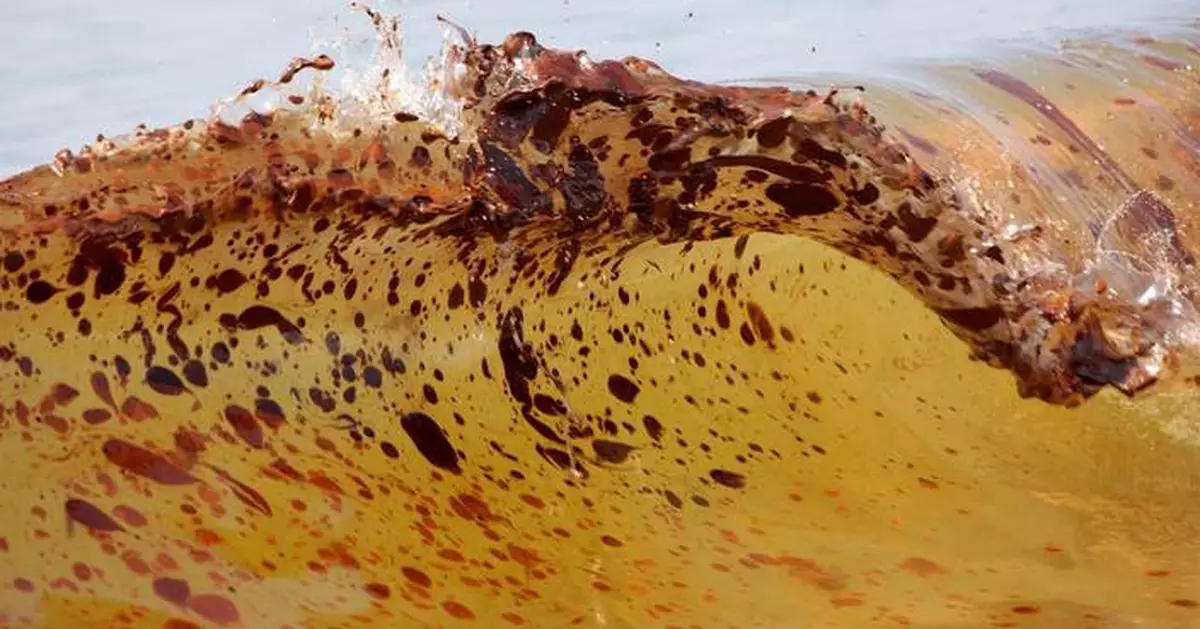
Skip to Content Facebook Feature Image

Marine life dramatically declined in Gulf of Mexico in years after BP oil spill, study finds

News

Marine life dramatically declined in Gulf of Mexico in years after BP oil spill, study finds
News

News

Marine life dramatically declined in Gulf of Mexico in years after BP oil spill, study finds

2026-10-20 07:46 Last Updated At:07:50

WASHINGTON (AP) — In a deep, dark part of the Gulf of Mexico, the number of marine animals plummeted by about 60% in the years following the 2010 Deepwater Horizon explosion, a new study found.

In a crucial part of the Gulf between the light surface and the darkest depths, where the BP-operated well failed and dumped 134 million gallons of oil, the number of fish found dropped by 63.5% from the year after the spill to 2015. Crustaceans, including shrimp and krill, a key food for whales, went down 62%, and larger animals like squid and octopuses fell 59.7%, according to a study published Monday in the journal PNAS.

And those populations haven't come close to recovering, the study found.

Researchers focused on the ocean's “twilight zone,” a vast area above the seafloor, where much of the surface marine life, including dolphins and whales, feast on creatures. Yet little is known about this gigantic ecosystem, and this region of the Gulf had not been studied before the 2010 spill, said study lead author Tracey Sutton, a biological oceanographer at Nova Southeastern University.

A 2011 post-spill exploration cited in the research, which used six sets of nets at different depths and acoustic sonar, gave scientists a good sense of how much sea life was in the area between the surface and 5,000 feet deep (1,500 meters). They returned to the same place with the same equipment three-and-a-half years later and found sea life was between one-third and one-quarter of what it was in 2011.

“We saw this big decline,” Sutton said. “The question was then why? So we looked at all of the natural variables we thought could account for it, namely temperature, oxygen supply and food. None of those vary with the decline. The event that did was the oil spill. So we think that’s the most likely cause of the decline.”

Researchers kept on sampling since 2015 and the low populations remained, with a slight rise in 2022 and 2023 that did not prove statistically significant or lasting, Sutton said.

Sutton's team documented the population declines with three different lines of evidence: what they caught in the nets, what their acoustic sonar found and genetic studies showing the species losing genetic diversity because of inbreeding.

A lot of marine life died instantly after the explosion, which killed 11 workers, and from nearly five months of leaking oil and gas. Those pollutants got stored in the eggs of survivors and subsequent generations of critters got more compromised and weaker, Sutton said.

BP spokesperson Paul Takahashi said the accident “forever changed” the company: “We have made many changes intended to help prevent an event like this from ever happening again.”

Both the oil and the dispersants used to clean the spill hurt fish, but in different ways, said study co-author Isabel Romero, a chemical oceanographer at the University of South Carolina. Oil is more toxic and an overall threat, but the dispersant breaks the oil into smaller droplets, increasing the exposure of animals that live in the deeper water column, she said.

Dispersants caused many problems, and new studies show that in future accidents, it would be better to avoid those chemicals and instead add agents that increase oil-munching microbes, said former National Science Foundation Director Rita Colwell, a University of Maryland environmental microbiologist who headed a 10-year, $500 million BP-funded program to study spill effects.

Sutton said his team couldn’t prove an exact causal link to the BP oil spill, but by eliminating the other possibilities and looking at the timing, it’s logically clear that the spill caused the problem.

The krill population dropped 72%. Lanternfish — odd fish with blue-green lights embedded over their bodies — are a third of what they used to be, Sutton said. The stunning but scary dragonfish — with sharp teeth, light organs and a lure attached to its head — also had big losses, he said.

“These are foundational species,” Sutton said. “They're the things most things eat. So it's no wonder that we had wholesale changes across the community.”

Scientists learned much about this unexplored area of the Gulf.

“One of our biggest findings from the whole thing is how connected the whole oceanic Gulf is from top to bottom because the animals move up and down,” Sutton said. “There are predators at the top that dive deep. Lots of things that are deep that come up at night. So the system is one very large pulsing system, rather than just a layered system like people might have thought beforehand.”

Outside scientists were especially bothered by where the spill damaged.

“We know more about space in some ways than we do about the inner ocean. Because we can’t see these regions, there is a tendency to assume everything is fine, but here we have a clear result showing that something went very wrong," Scripps Institution of Oceanography marine scientist Kaitlin Frasier said in an email.

Frasier, who wasn't part of the study released Monday, published a post-spill study in 2024 looking at Gulf of Mexico whales and dolphins, finding population drops as high as 83%.

“It’s shocking how a single failure in a drilling rig can have this vast and sustained impact over thousands of square kilometers, with little visible recovery over 13 years after the spill,” said Dalhousie University marine scientist Boris Worm, who wasn't part of the study. “It is important that we see this, because for the longest time these consequences were completely out of sight and out of mind.”

Worm and Colwell said this damage should be kept in mind as the world talks about deep-sea mining and increased oil drilling in deep waters.

The Associated Press’ climate and environmental coverage receives financial support from multiple private foundations. AP is solely responsible for all content. Find AP’s standards for working with philanthropies, a list of supporters and funded coverage areas at AP.org.
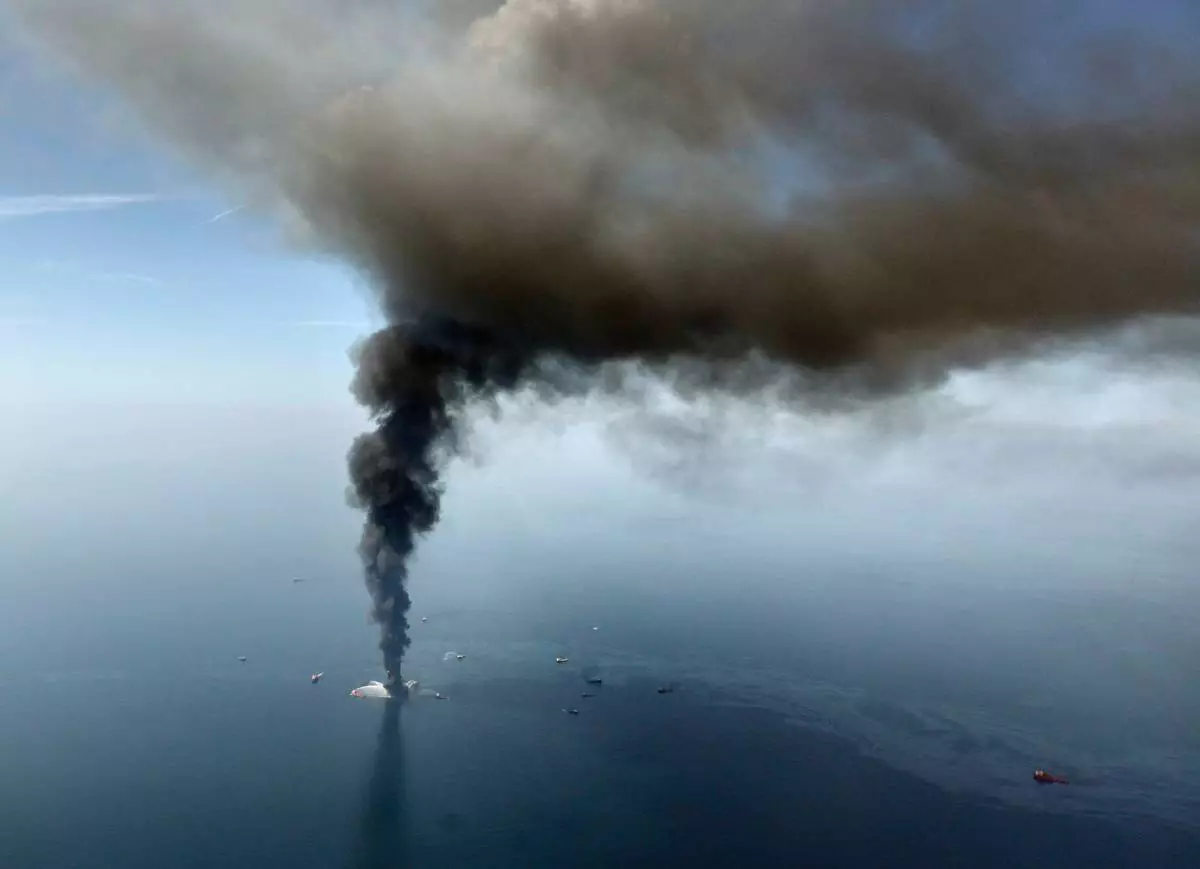
FILE - A large plume of smoke rises from BP's Deepwater Horizon offshore oil rig in the Gulf of Mexico on April 21, 2010. (AP Photo/Gerald Herbert, File)
FILE - A large plume of smoke rises from BP's Deepwater Horizon offshore oil rig in the Gulf of Mexico on April 21, 2010. (AP Photo/Gerald Herbert, File)

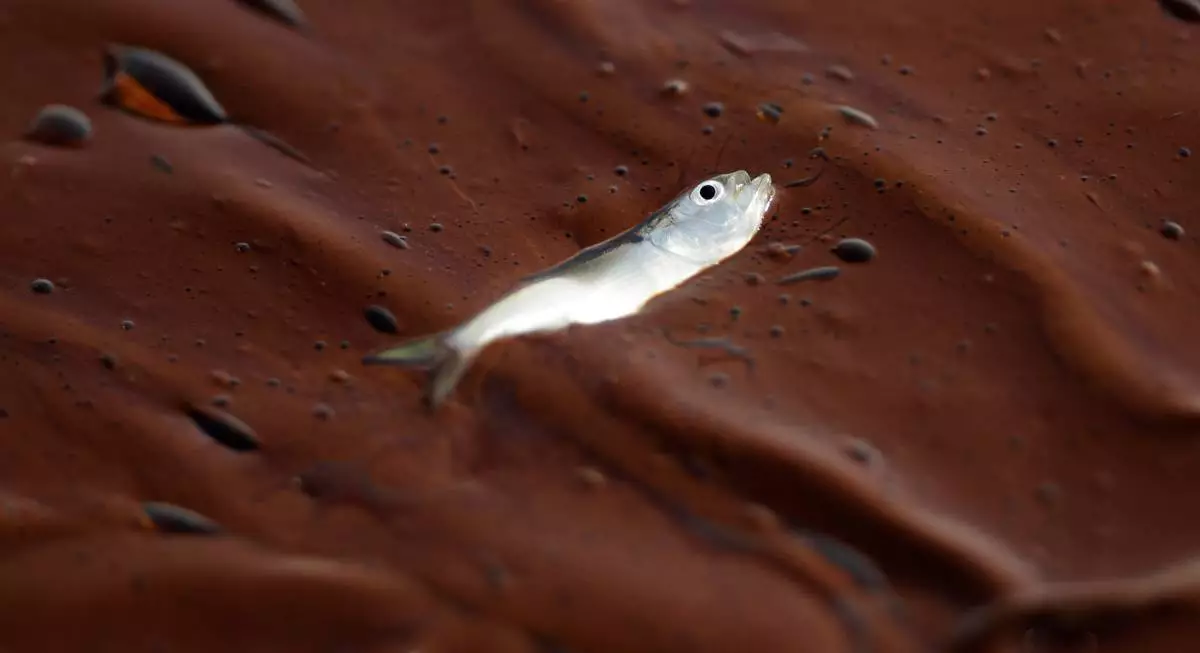
FILE - A small dead fish floats on a pool of oil at Bay Long, off the coast of Louisiana, June 6, 2010. (AP Photo/Charlie Riedel, File)
FILE - A small dead fish floats on a pool of oil at Bay Long, off the coast of Louisiana, June 6, 2010. (AP Photo/Charlie Riedel, File)

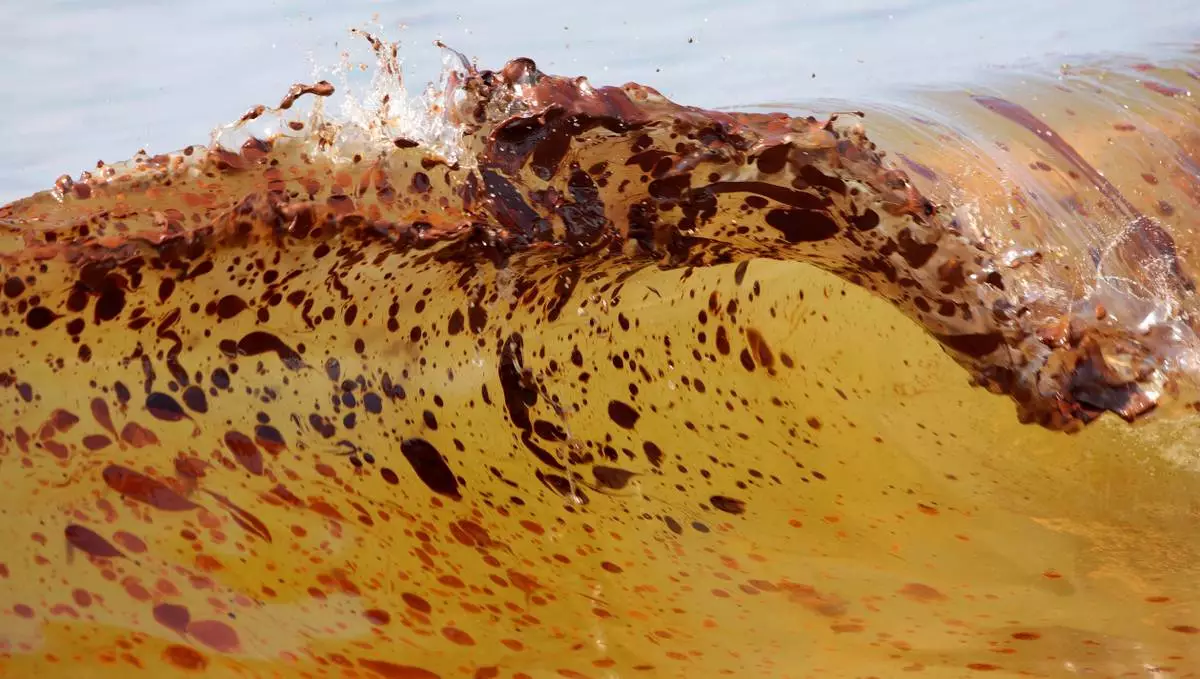
FILE - Crude oil from the Deepwater Horizon oil spill washes ashore in Orange Beach, Ala., June 12, 2010. (AP Photo/Dave Martin, File)

FILE - Crude oil from the Deepwater Horizon oil spill washes ashore in Orange Beach, Ala., June 12, 2010. (AP Photo/Dave Martin, File)
ATLANTA (AP) — Another slow start to a game has left the Atlanta Falcons with an urgent need to reverse their slow start to the season.

Two straight losses have left the Falcons (2-4) two games under .500. It's a familiar challenge for a team looking to end a streak of eight straight losing seasons.

The Falcons trailed 14-0 in Sunday's 31-23 loss to the Chicago Bears before recording a first down. They opened the game with two straight three-and-outs following long touchdown drives by the Bears. Chicago dominated the first quarter the way Bears fans took over Atlanta's home stadium.

“Certainly our goal as a team is to start fast,” coach Kevin Stefanski said Monday.

Responsibility for failing to come close to that goal fell equally on the offense and defense.

The Falcons' defense couldn't slow quarterback Caleb Williams and the Bears' offense.

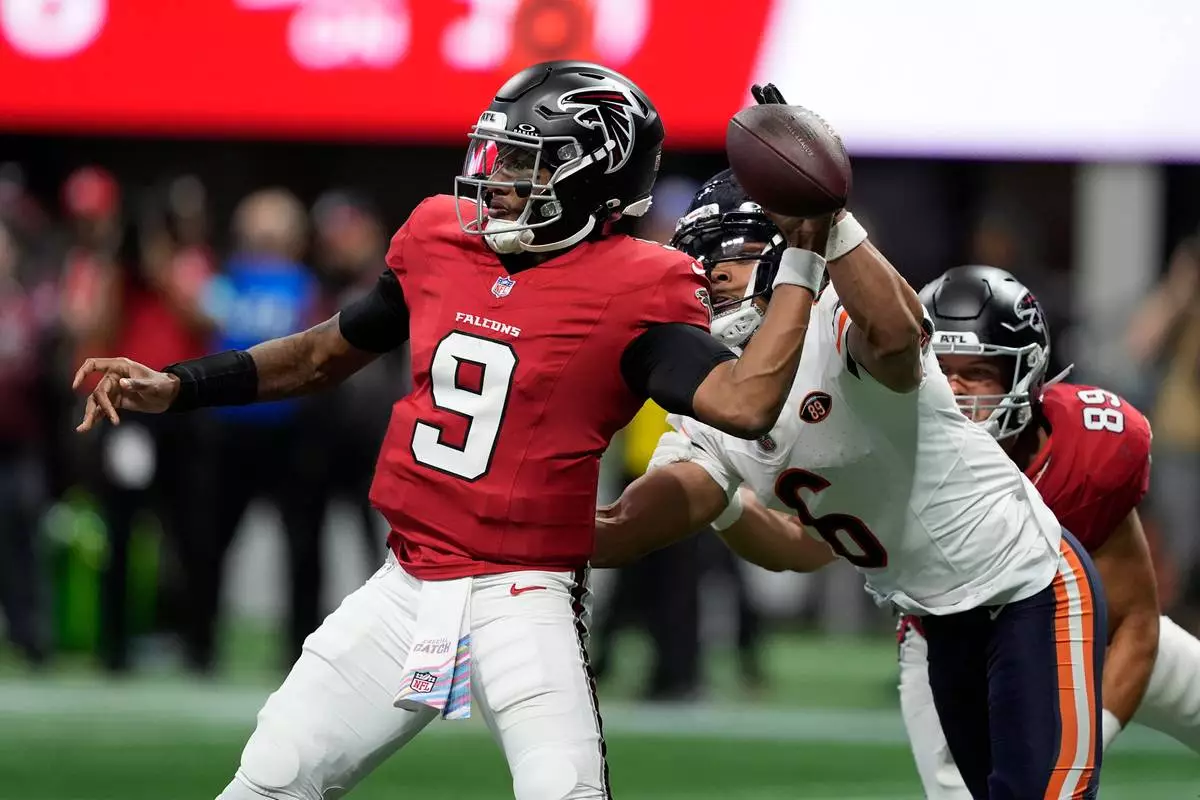
Quarterback Michael Penix Jr. led only one scoring drive in the first half and the Falcons trailed 31-7 before finally demonstrating offensive potential while running their two-minute offense in the fourth quarter. For most of the game, Penix struggled against pressure from the Bears, failing to take advantage of opportunities created by blitzes.

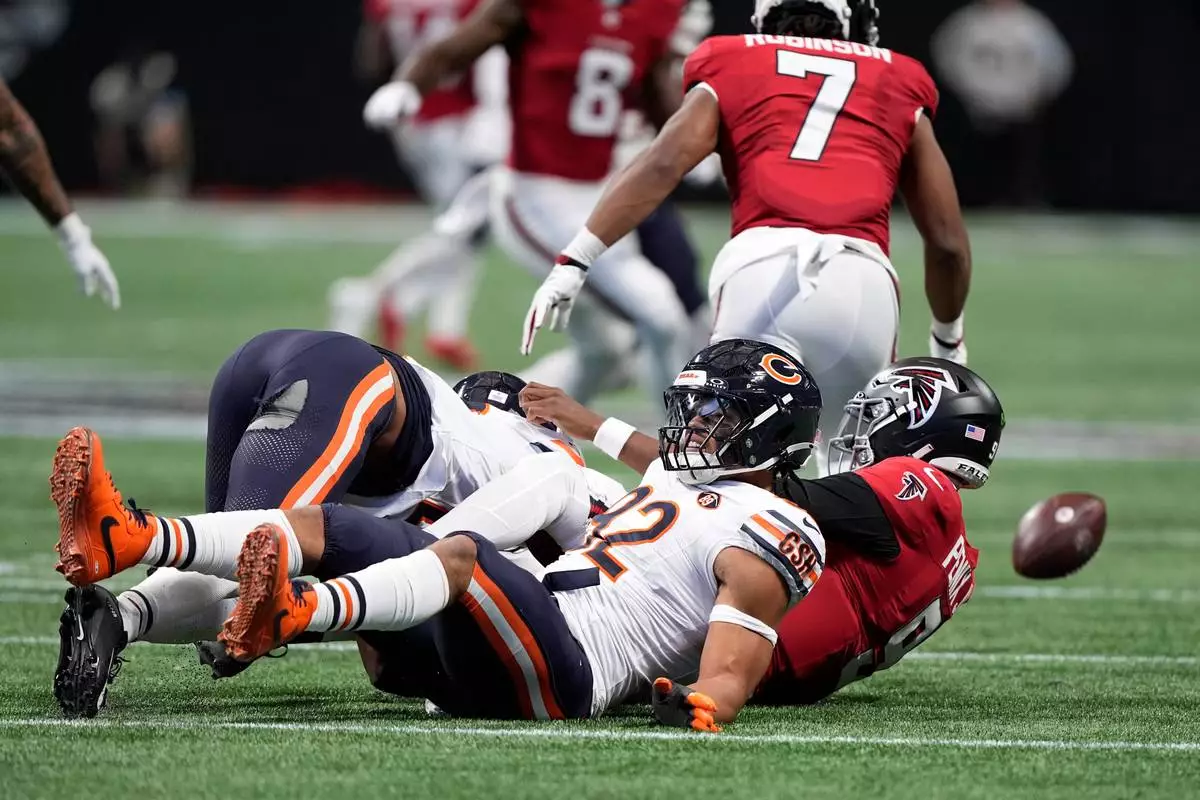
Penix was sacked five times and fumbled twice, losing one.

Stefanski knows other teams will take note of the Bears' game plan on defense.

“I think the name of the game in the NFL is when they pressure you as an offense, you have to make them pay,” Stefanski said. “We didn’t do that enough yesterday and that’s on all of us. ... You have to look at those as an opportunity if teams are going to all-out blitz you in a given game. So we know this league can be a copycat league. So you’ll see if that continues to be the trend.”

Penix missed the first two games of the season while completing his recovery from a torn ACL in his left knee that ended his 2025 season. The Falcons were 0-2 with Cooper Rush as the fill-in starter. Rush was released on Monday, when the Falcons signed veteran Andy Dalton.

Tua Tagovailoa is expected to keep his job as Penix's backup, at least for this week as Dalton learns the system. Rookie Jack Strand's role as a developmental player won't change as long as the Falcons keep four quarterbacks.

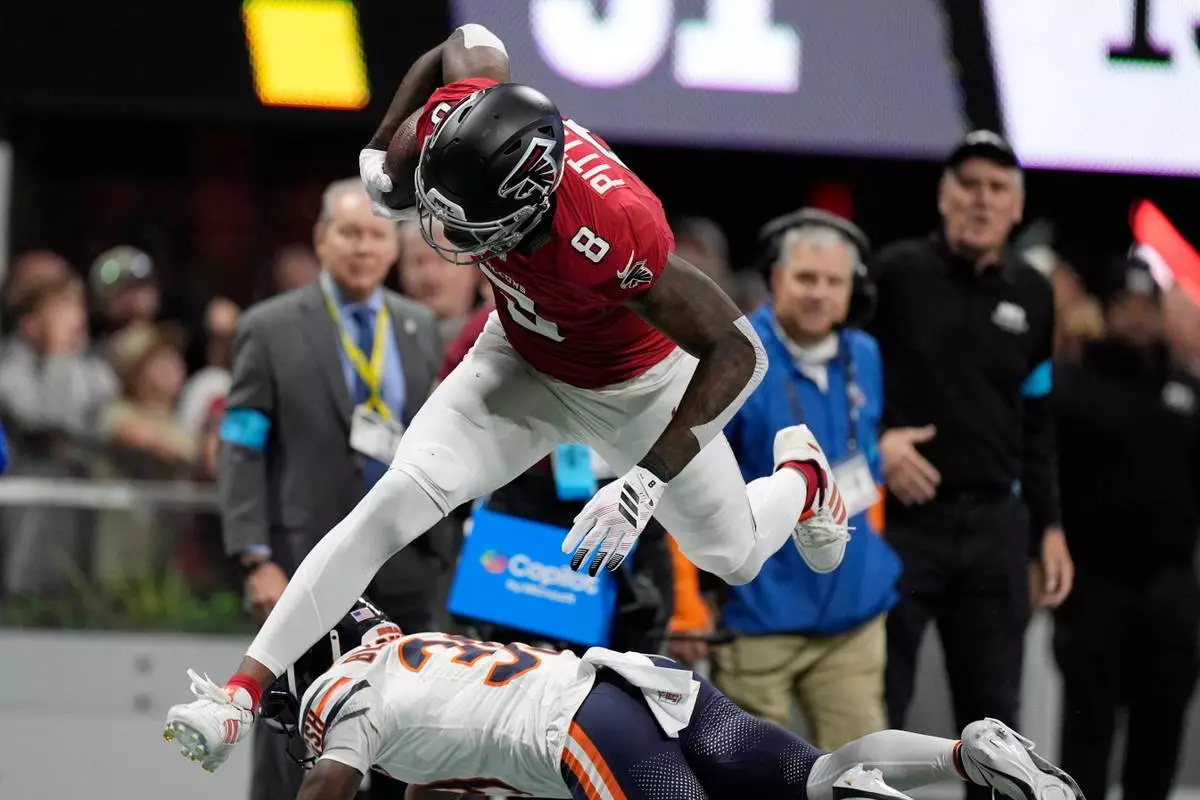
Atlanta's fourth-quarter comeback attempt allowed tight end Kyle Pitts to show why he should have been better utilized earlier in the game. Pitts had scoring catches of 10 and 5 yards in the final quarter. He had five catches for 60 yards and has a combined three scoring receptions in the last two games after having none in the first four.

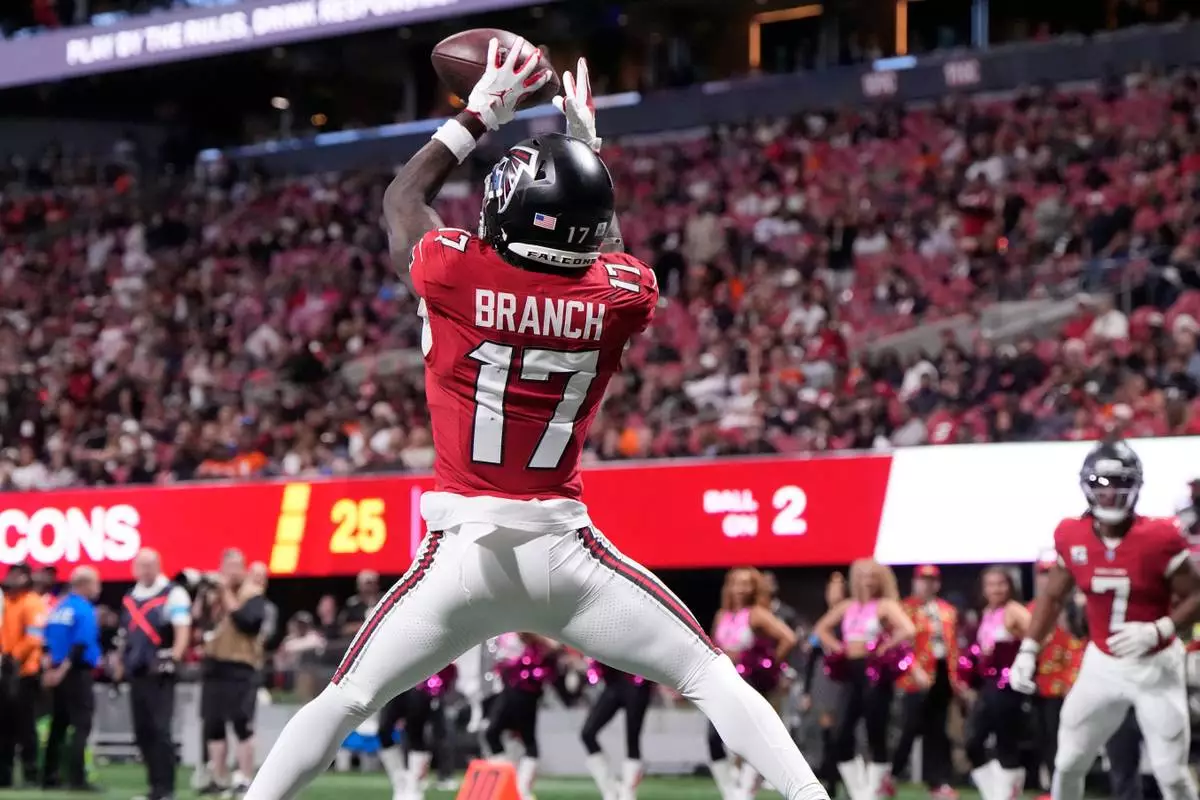
Rookie Zachariah Branch lost two fumbles on returns. He misjudged a fair catch attempt on a second-quarter punt and fumbled a kickoff return late in the third quarter. Branch had a catch for a 2-point conversion in the final quarter.

Cornerback A.J. Terrell, who was placed on injured reserve following a groin injury in the first quarter of a 34-3 home loss to Carolina in Week 2, is eligible to return this week after missing four games.

“It's trending that way, but let's get through the next couple of days,” Stefanski said when asked about Terrell playing this week.

The return of Terrell, the older brother of rookie nickel back Avieon Terrell, would be a big boost after the Falcons gave up 305 passing yards to Williams.

Bijan Robinson had 16 or more carries in each of the first five games and entered the weekend leading the NFL with 580 rushing yards. Thanks to the big early deficit, the Falcons couldn't maintain their normal commitment to the running game and Robinson had season-low totals of nine carries for 61 yards.

Rookie linebacker Kendal Daniels was at the team practice facility on Monday after he left the field on a stretcher with a neck injury in the third quarter on Sunday.

Stefanski said it was too early to project Daniels' status for this week but said he was grateful for “all positive news.” The Falcons announced Sunday that Daniels was alert and had movement in all his extremities. After being taken to a hospital for further evaluation, he returned to the locker room after the game.

“So I feel very, very fortunate that he got the treatment he got,” Stefanski said. “But also that we feel really good about where he is.”

Stefanski had no updates on ILB Divine Deablo (arm), CB Avieon Terrell (left shoulder) or DB Billy Bowman Jr. (hamstring).

Minus-8: Robinson had two catches for a combined loss of 8 yards. On the Falcons' opening drive, he caught a pass from Penix behind the line of scrimmage and was dropped for a loss of 5 yards. On the second drive, Penix again tried a quick pass to Robinson behind the line, losing 3 yards.

The Falcons, 0-3 at home, will try again for their first win of the season at Mercedes-Benz Stadium when the San Francisco 49ers visit on Sunday.

See AP’s full NFL coverage here

Atlanta Falcons wide receiver Zachariah Branch (17) catches a pass for a two-point conversion against the Chicago Bears during the second half of an NFL football game in Atlanta, Sunday, Oct. 18, 2026. (AP Photo/Mike Stewart)

Atlanta Falcons wide receiver Zachariah Branch (17) catches a pass for a two-point conversion against the Chicago Bears during the second half of an NFL football game in Atlanta, Sunday, Oct. 18, 2026. (AP Photo/Mike Stewart)

Atlanta Falcons tight end Kyle Pitts (8) carries the ball during the second half of an NFL football game against the Atlanta Falcons in Atlanta, Sunday, Oct. 18, 2026. (AP Photo/Mike Stewart)

Atlanta Falcons tight end Kyle Pitts (8) carries the ball during the second half of an NFL football game against the Atlanta Falcons in Atlanta, Sunday, Oct. 18, 2026. (AP Photo/Mike Stewart)

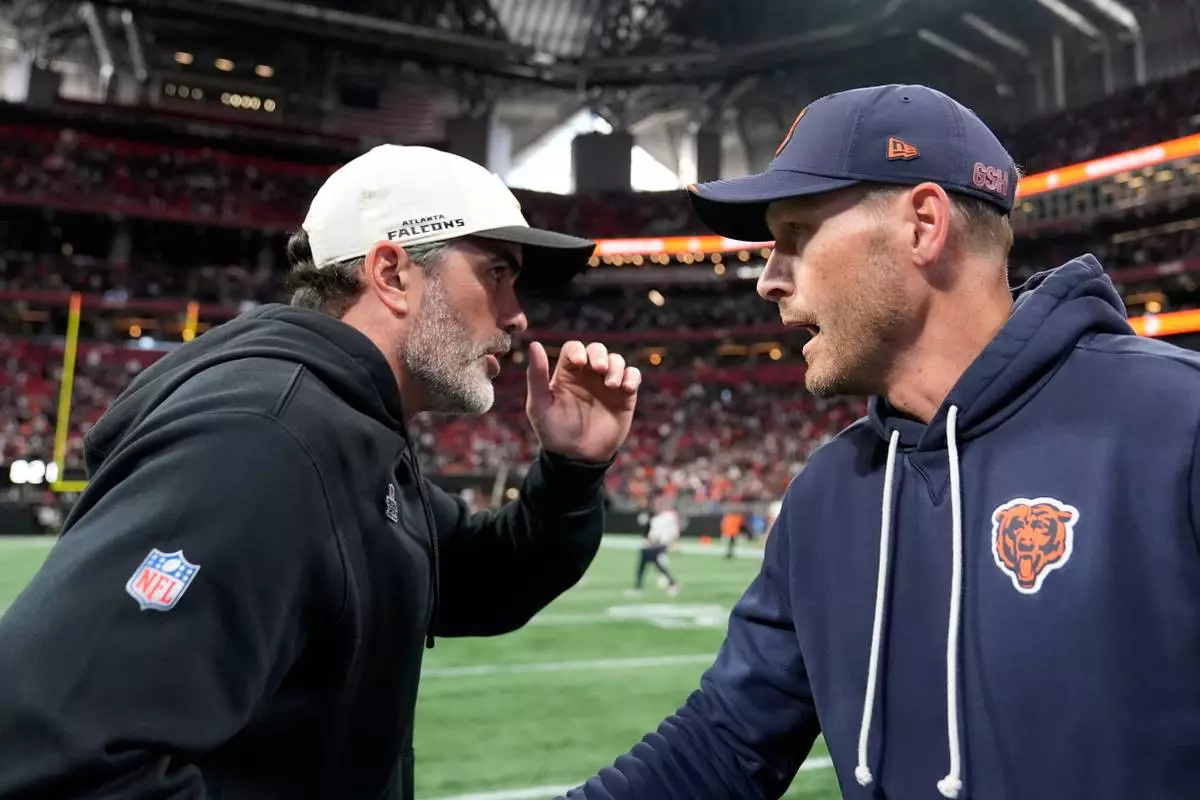
Atlanta Falcons head coach Kevin Stefanski, left, congratulates Chicago Bears head coach Ben Johnson after an NFL football game in Atlanta, Sunday, Oct. 18, 2026. (AP Photo/Brynn Anderson)

Atlanta Falcons head coach Kevin Stefanski, left, congratulates Chicago Bears head coach Ben Johnson after an NFL football game in Atlanta, Sunday, Oct. 18, 2026. (AP Photo/Brynn Anderson)

Chicago Bears defensive end Daniel Hardy (92) sacks Atlanta Falcons quarterback Michael Penix Jr. (9) and causes a fumble that was recovered by the Falcons during the first half of an NFL football game in Atlanta, Sunday, Oct. 18, 2026. (AP Photo/Brynn Anderson)

Chicago Bears defensive end Daniel Hardy (92) sacks Atlanta Falcons quarterback Michael Penix Jr. (9) and causes a fumble that was recovered by the Falcons during the first half of an NFL football game in Atlanta, Sunday, Oct. 18, 2026. (AP Photo/Brynn Anderson)

Chicago Bears cornerback Kyler Gordon (6) pressures Atlanta Falcons quarterback Michael Penix Jr. (9) during the second half of an NFL football game in Atlanta, Sunday, Oct. 18, 2026. (AP Photo/Brynn Anderson)

Chicago Bears cornerback Kyler Gordon (6) pressures Atlanta Falcons quarterback Michael Penix Jr. (9) during the second half of an NFL football game in Atlanta, Sunday, Oct. 18, 2026. (AP Photo/Brynn Anderson)

Recommended Articles