MELBOURNE, Australia (AP) — An Australian federal lawmaker remained in a hospital in a critical but stable condition, Prime Minister Anthony Albanese said Tuesday as he praised a barber who helped restrain the driver accused of deliberately hitting the lawmaker twice.
Helen Haines, a 65-year-old independent politician, was struck by a Toyota Land Cruiser SUV on Monday outside her office in her electorate in the city of Wangaratta in Victoria state. The 43-year-old driver, Brendan Nugent, from nearby Tarrawingee, remained in police custody on Tuesday.
Click to Gallery
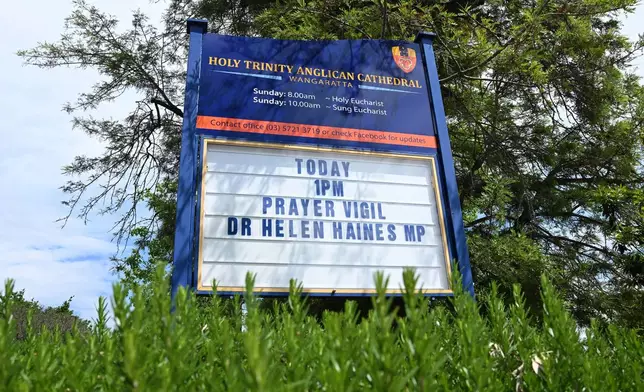
A church sign advertising a vigil for independent member of parliament Helen Haines at the Holy Trinity Anglican Cathedral in Wangaratta, Australia, Tuesday, Oct. 20, 2026. (James Ross/AAP Image via AP)
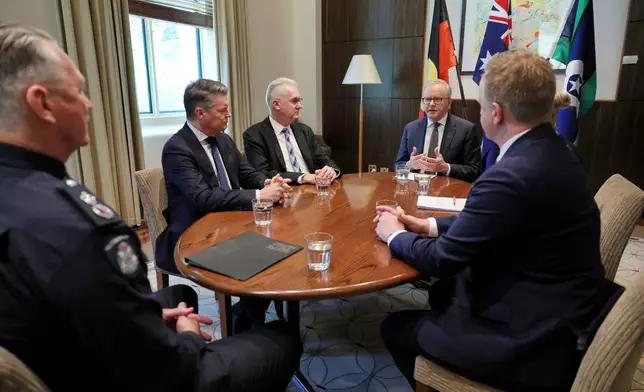
Australian Prime Minister Anthony Albanese, second right, Home Affairs Minister Tony Burke, third left, Victorian Premier Ben Carroll, Chief Commissioner of Victoria Police Mike Bush, left, Australian Federal Police Commissioner Krissy Barrett, obscured, and Victorian Police Minister Paul Edbrooke, right, hold a meeting following the attack on federal independent member of parliament, Helen Haines in Wangaratta, at the Commonwealth Offices in Melbourne, Australia, Tuesday, Oct. 20, 2026. (Con Chronis/AAP Image via AP)
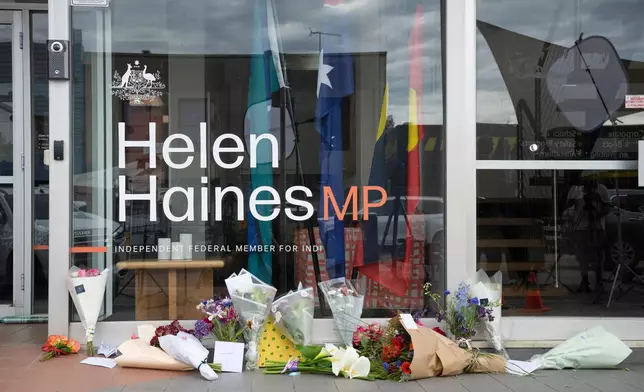
Tributes and flowers are placed outside the electoral office for independent member of parliament Helen Haines in Wangaratta, Australia, Tuesday, Oct. 20, 2026. (James Ross/AAPImage via AP)
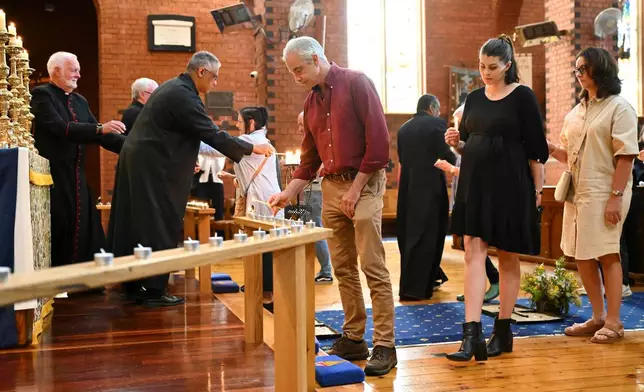
People line up to light a candle during a vigil for independent federal member of parliament, Helen Haines at the Holy Trinity Anglican Cathedral in Wangaratta, Australia, Tuesday, Oct. 20, 2026. (James Ross/AAP Image via AP)
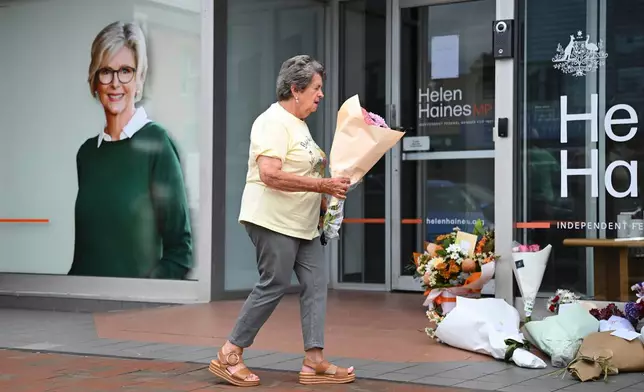
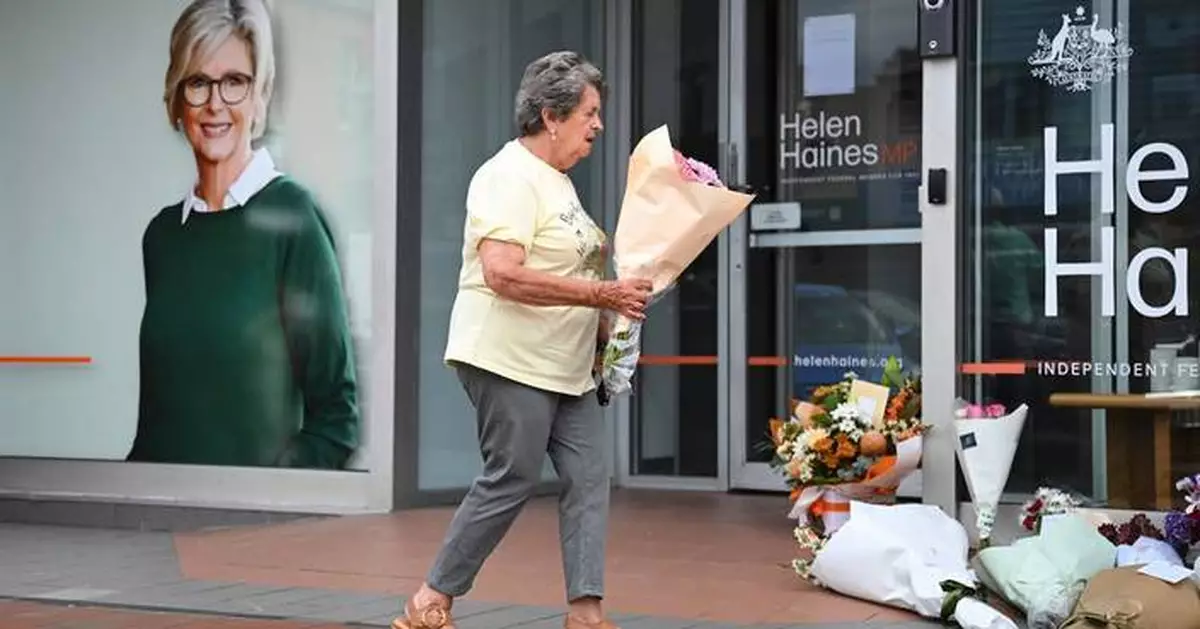
A woman delivers flowers at the electoral office of independent member of parliament, Helen Haines, in Wangaratta, Australia, Tuesday, Oct. 20, 2026. (James Ross/AAP Image via AP)
The incident shocked Australians as political violence is rare here and politicians have always been accessible to the public. Most lawmakers are not accompanied by security officers and go about their work and personal lives on their own.
The suspect’s father, Rod Nugent, released a statement Tuesday describing Haines as a “deeply respected, valued and much loved member of our local community.”
“Helen has been our friend for more than 20 years and what happened to her yesterday is devastating and unfathomable,” the father said.
Albanese said he phoned local barber Ricky Jefferies, who had run from his store to help members of the public detain the suspect, to thank him on Tuesday for intervening.
“It’s a reminder that at the worst of times, we see the best of the Australian character,” Albanese said in Melbourne.
Jefferies had earlier told reporters he searched the driver’s pockets and removed a knife. Police confirmed a knife had been found. Jefferies also said he did not consider himself a hero.
“It was crazy," he said. “A lot of people got involved immediately and they didn't even check for danger. They just ran to help.”
Haines’s family released a statement expressing thanks for the “swift assistance of bystanders” as well as health workers and police.
Haines, who was first elected to Parliament in 2019 and had been reelected twice since, was initially taken to a hospital in Wangaratta, a city of 30,000 people. She was airlifted later on Monday to a hospital in the state capital, Melbourne, 236 kilometers (147 miles) away.
The Alfred Hospital didn't respond Tuesday to a request for comment on media reports that Haines had had a leg amputated.
Recent data has shown that threats of political violence have grown in Australia. The head of the Australian Security Intelligence Organisation spy agency, Mike Burgess, on Tuesday reiterated an earlier warning that politically motivated violence was a top security concern, along with espionage and foreign interference.
Police reported in 2025 that threats against parliamentarians had doubled over the past three years. Official data showed more than 1,000 such threats against politicians in the 2025-2026 fiscal year.
Lawmakers from across the political spectrum and Albanese spoke to media outlets Tuesday, urging their colleagues, reporters and the public to turn down the heat in increasingly fractious political debates. Many also said they hoped Australia’s easygoing culture of approachable politicians wouldn’t change.
Haines was not known for polarizing views. The daughter of dairy farmers and mother of three was a nurse, midwife and academic before entering politics, and advocated for rural health matters. She was initially elected in 2019 with a campaign focused on health equity, rural prosperity and climate action.
Albanese said eyewitnesses had reported the suspect passed Haines in his SUV as she stood by the trunk of her parked car. The SUV then turned and came back before the man allegedly drove into the politician, the prime minister said.
Home Affairs Minister Tony Burke told Australian Broadcasting Corp., citing witness accounts, that the driver allegedly reversed and struck Haines a second time, pinning her against her car, after initially hitting her.
One of the bystanders who came to Haines' assistance, Cody Lepoidevin, told reporters he thought he was witnessing a hit-and-run when the SUV backed away after she was first struck.
But instead of fleeing the scene, Lepoidevin said the driver “then reversed and drove back into her.”
Elsewhere in the world, authorities have warned of growing threats to lawmakers. The United States has seen a rise in political violence over the past decade.
That includes the 2022 hammer assault on the husband of then-House Speaker Nancy Pelosi, a Democrat, in California; the 2024 assassination attempt on Donald Trump at a Pennsylvania rally during his presidential campaign as well as another on the president at the White House Correspondents’ Association Dinner in April; and the assassinations in 2025 of a Democratic Minnesota state lawmaker and her husband, and of conservative commentator Charlie Kirk in Utah.
In Britain, killings of politicians have also prompted bolstered security. Labour lawmaker Jo Cox was shot and stabbed in 2016 by a far-right extremist, while Conservative David Amess was stabbed in 2021 by an attacker inspired by the militant Islamic State group.
In July, the former British politician and reality TV contestant Ann Widdecombe was found beaten to death with a hammer at her home. A man has been charged with murder and terrorism-related offenses.
Graham-McLay reported from Wellington, New Zealand.
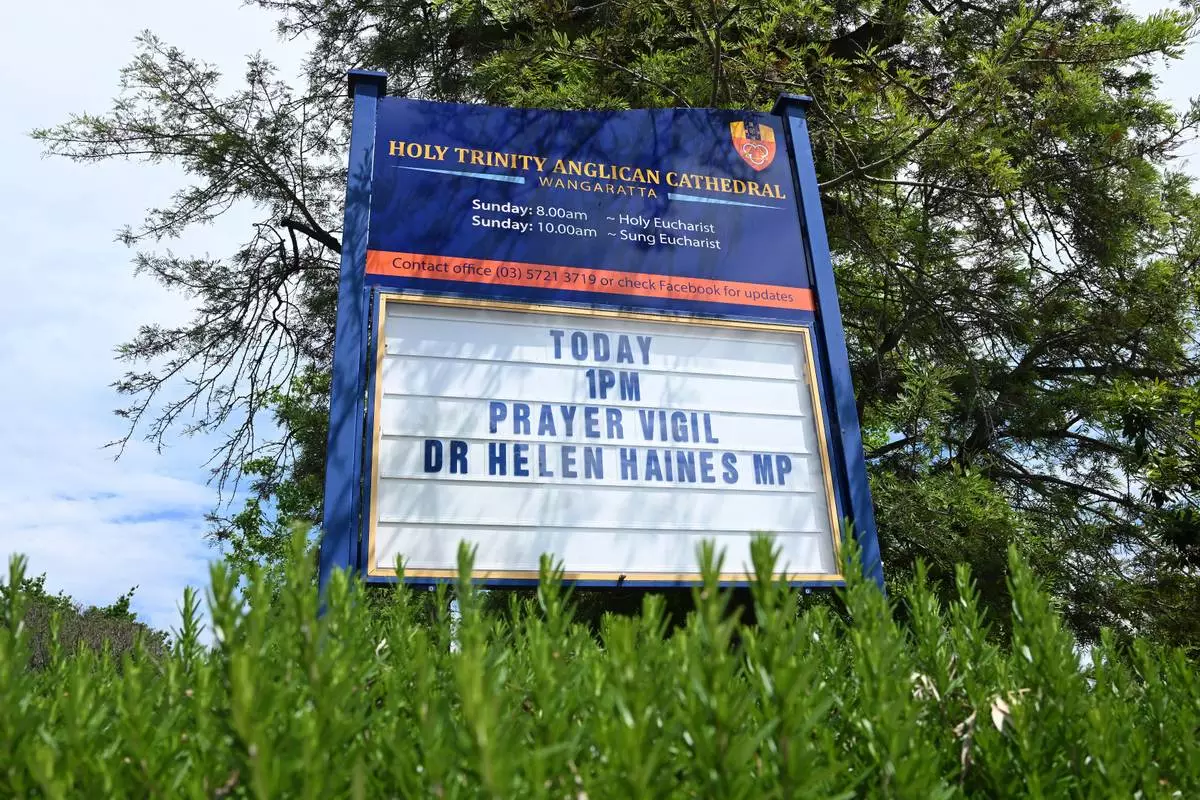
A church sign advertising a vigil for independent member of parliament Helen Haines at the Holy Trinity Anglican Cathedral in Wangaratta, Australia, Tuesday, Oct. 20, 2026. (James Ross/AAP Image via AP)
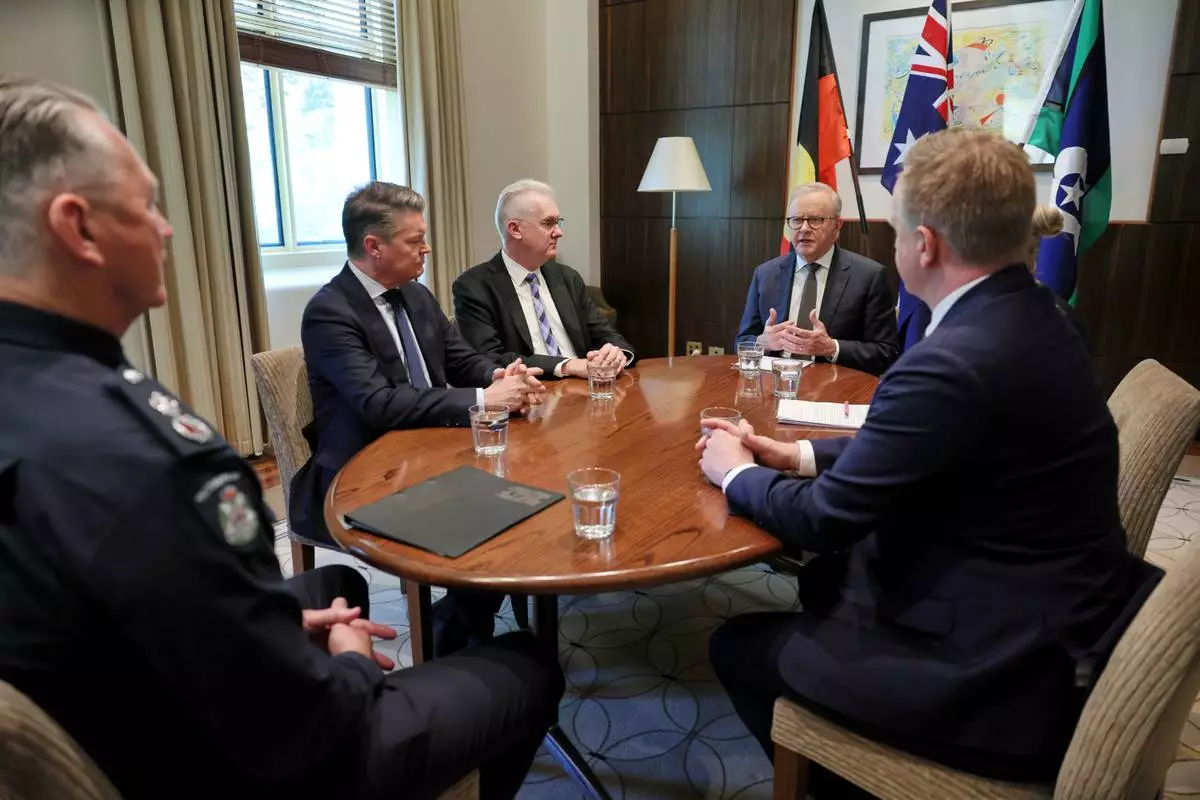
Australian Prime Minister Anthony Albanese, second right, Home Affairs Minister Tony Burke, third left, Victorian Premier Ben Carroll, Chief Commissioner of Victoria Police Mike Bush, left, Australian Federal Police Commissioner Krissy Barrett, obscured, and Victorian Police Minister Paul Edbrooke, right, hold a meeting following the attack on federal independent member of parliament, Helen Haines in Wangaratta, at the Commonwealth Offices in Melbourne, Australia, Tuesday, Oct. 20, 2026. (Con Chronis/AAP Image via AP)
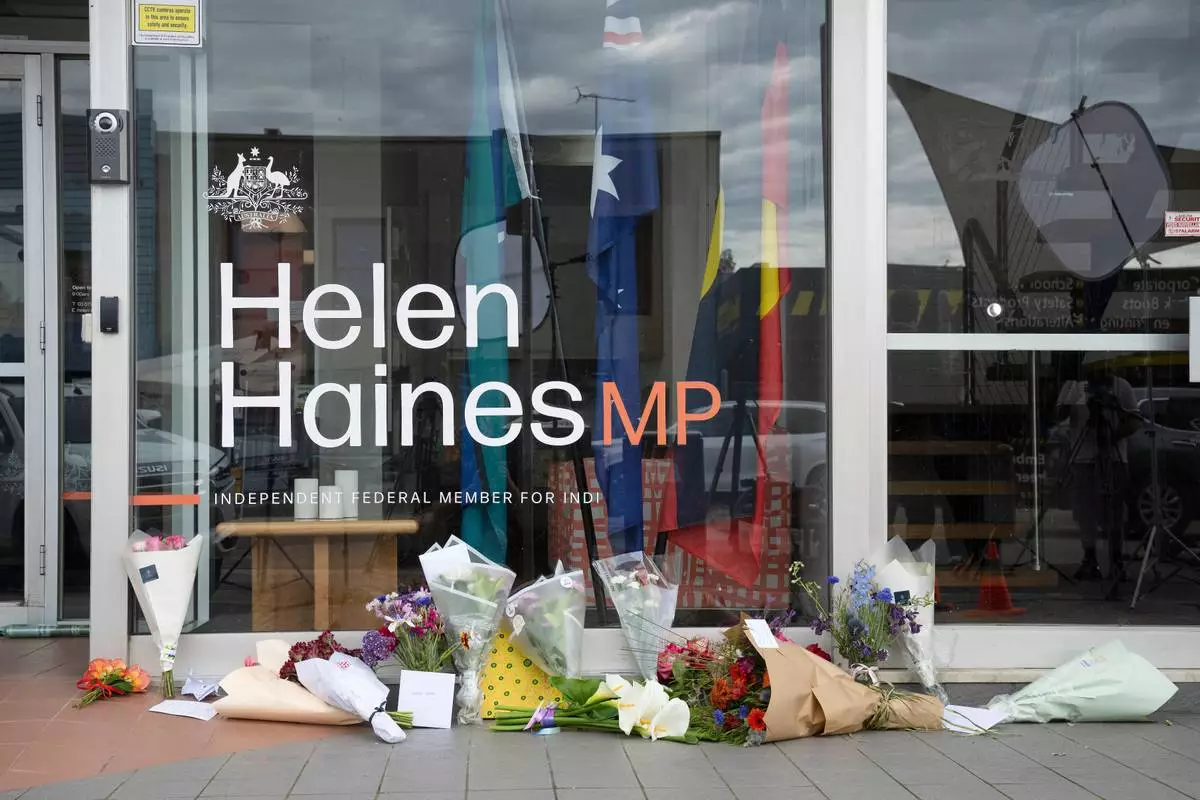
Tributes and flowers are placed outside the electoral office for independent member of parliament Helen Haines in Wangaratta, Australia, Tuesday, Oct. 20, 2026. (James Ross/AAPImage via AP)
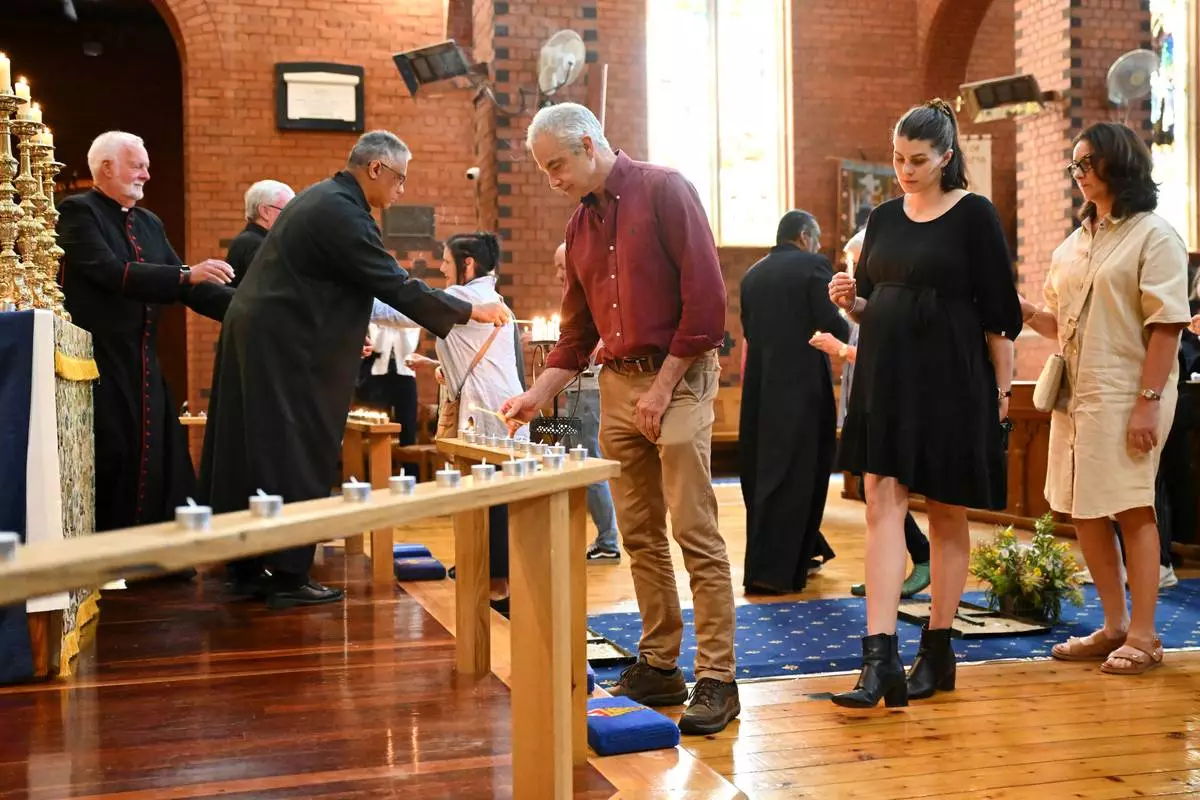
People line up to light a candle during a vigil for independent federal member of parliament, Helen Haines at the Holy Trinity Anglican Cathedral in Wangaratta, Australia, Tuesday, Oct. 20, 2026. (James Ross/AAP Image via AP)
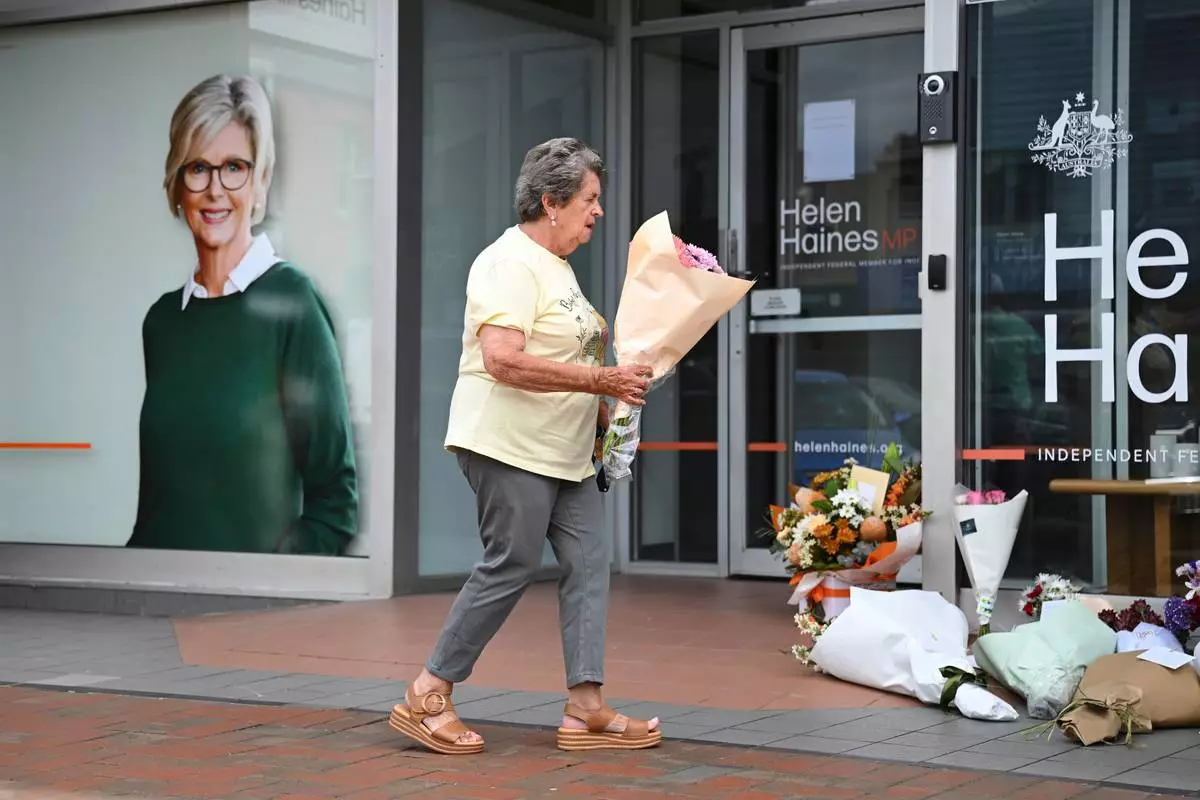
A woman delivers flowers at the electoral office of independent member of parliament, Helen Haines, in Wangaratta, Australia, Tuesday, Oct. 20, 2026. (James Ross/AAP Image via AP)