It’s not always patience and luck that get patients off the organ transplant waiting list and into the operating room.
Unlike in many areas of medicine, experts say there’s a lot of variation in the U.S. transplant system. Knowing there are differences and what to ask might help.
“I had to ask a lot of questions to figure out what it was that I could do to move the needle,” said Katherine Screws of Phoenix, who got a rare intestine transplant after she decided to get on the waiting list at more than one hospital to increase her chances.
It can be difficult to learn how to navigate that search, but there's publicly available information about which hospitals perform the most of each type of transplant, plus their waiting times and outcomes. Long used by experts analyzing the transplant system, the Scientific Registry of Transplant Recipients, or SRTR, database has new patient-friendly tools developed in the hopes that more would-be transplant recipients will use it.
“People are making these really high-stakes decisions without understanding the options,” said Dr. Allyson Hart of Minnesota’s Hennepin Healthcare Research Institute, who helped design the tools.
Here are some things to know.
There are about 100,000 people on the U.S. transplant list at any given time, the vast majority of whom need a kidney. With just over 49,000 transplants performed in the U.S last year, more people than ever are getting new organs. It’s mostly thanks to over a decade of increases in donations from the deceased, which are recovered by organ procurement organizations, or OPOs.
But more organs are needed to meet the demand, and different transplant hospitals have different criteria for who they'll accept on their waiting list.
Sometimes, “if a patient receives a ‘no’ at one place, they can go somewhere else and be successfully transplanted,” said Dr. Syed Ali Husain, a kidney specialist at NYU Langone Health.
Each transplant program's waiting list is linked to a national automated matching system. OPOs enter information about viable organs into that system, which generates lists of possible matches at multiple hospitals in order of priority. When the OPO offers an organ, the transplant team must quickly decide if it's a good choice for that patient or the offer moves to the hospital with the next-in-line candidate.
Some hospitals are more conservative than others about which organs they’ll accept, said Husain, who studies such differences.
One large study of kidney transplants found “there’s about a 16-fold variation in how quickly a patient will get transplanted at one center versus another,” he said. That's partly because some surgeons have more experience than others using kidneys with complex anatomy such as extra arteries, or those from older, sicker donors that still may be better than dialysis for the right patient.
Typically, a doctor or other health worker points patients to the nearest hospital offering the kind of transplant they need. But the SRTR database allows people to compare transplant centers around the country in multiple ways.
Search for a particular organ and a list of the highest-to-lowest-volume centers pops up, with dials to show how they perform on such measures as getting a transplant faster, survival on the waiting list and the new organ's survival. Click on those of interest for more data.
For certain organs, there's a “personalized decision guide” to customize the search a little more with demographic and medical information that compares outcomes for patients similar to you. It may be important to know, for example, if hospitals you’re considering perform transplants for a lot of older adults or people with certain chronic illnesses, Hart said.
There's more data about kidneys, the most-transplanted organ, and a kidney decision aid also allows adding factors such as blood type and diabetes that play a particular role in those transplants. That tool shows the chances of getting a transplant in the first five years after joining the waiting list, or the alternatives — still waiting or having died or become too sick to get a transplant.
Like Screws, the Phoenix patient, some people choose to “double list” at a hospital closer to home and another higher-volume transplant program further away.
While not everyone is able to travel, the search tools can also help inform discussions with your chosen transplant program.
It's OK to come to a transplant program to say, “'Hey, there are other centers that do this faster. Help me understand why,'” Hart said. “Sometimes, that conversation is really enough to prompt maybe more aggressive offer acceptance than that center might otherwise do on their own.”
The Associated Press’ health and science coverage receives financial support from the AP Fund for Journalism and private foundations. AP is solely responsible for all content. Find AP’s standards for working with philanthropies, a list of supporters and funded coverage areas at AP.org.
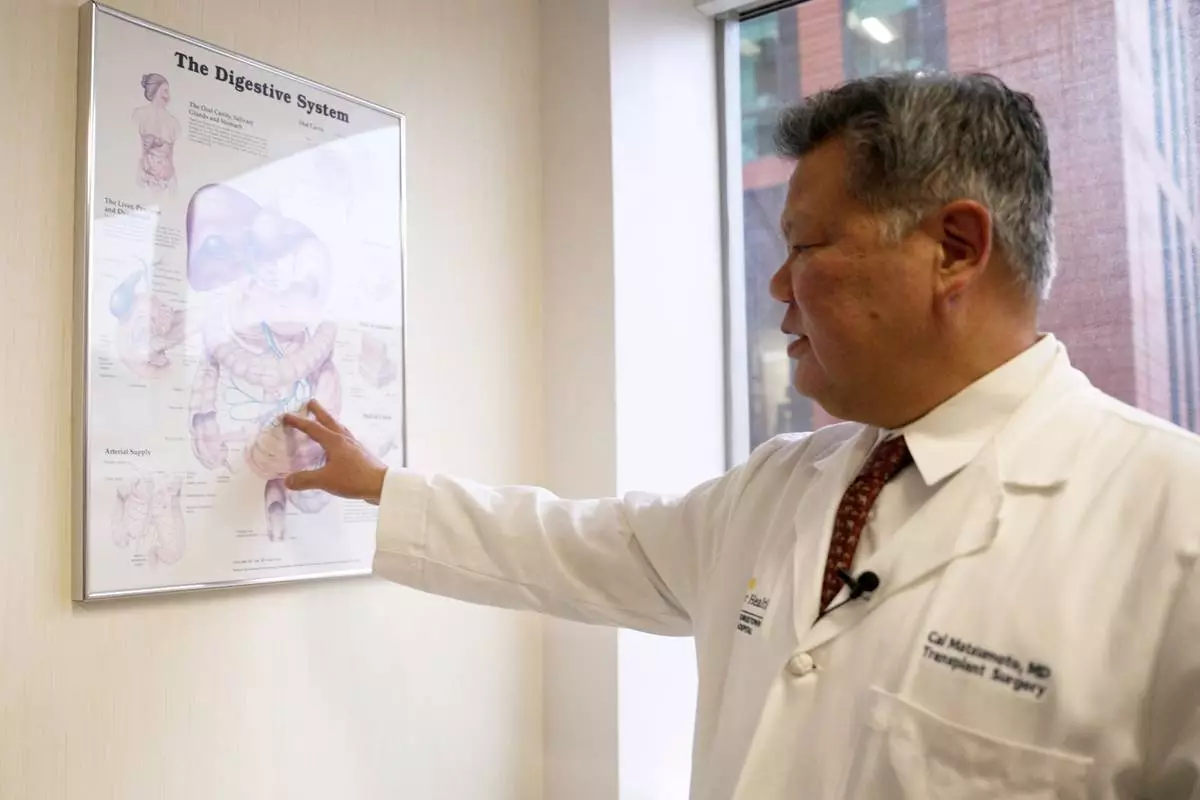
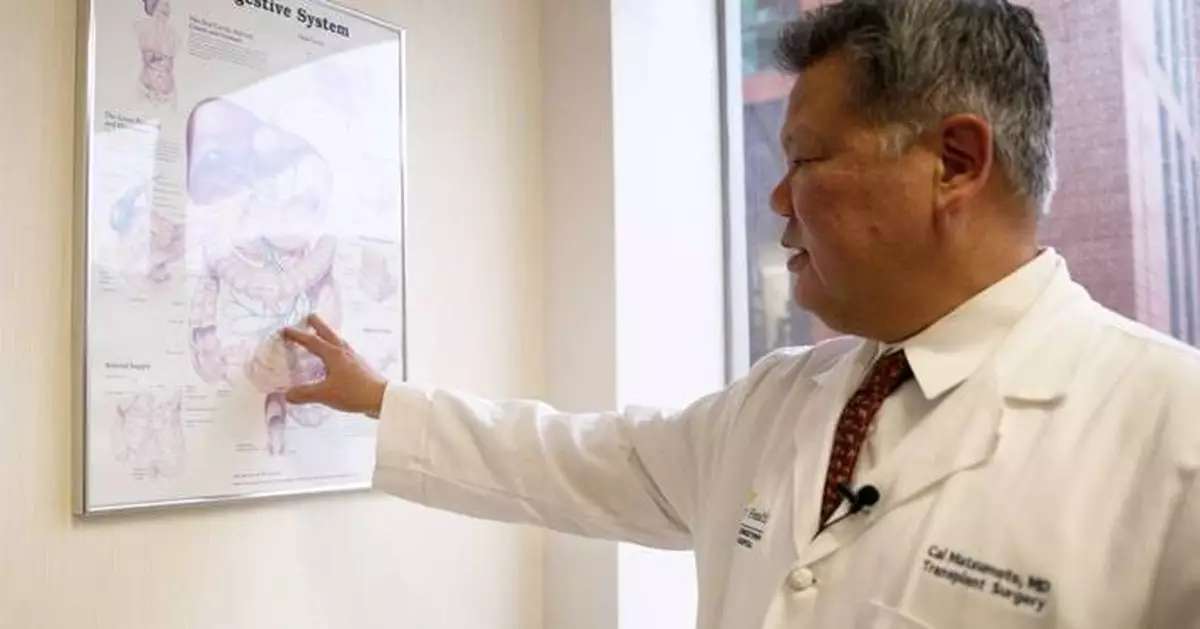
Dr. Cal Matsumoto, a MedStar Georgetown University Hospital transplant surgeon, gestures to a chart on the digestive system on March 4, 2026, in Washington. (AP Photo/Shelby Lum)
Everything about “Wildwood” is ambitious. It's a stop-motion animated movie that stretches over two hours, with 230 hand-controlled puppets across 132 sets, shot frame by frame by frame by frame. It sounds exhausting to make and that's also sometimes what it feels like to watch it.
Wildly industrious, terribly quirky and technically dazzling, “Wildwood” is also overly violent and uses labor-intensive world-building to only slightly tweak fairy tale conventions. It's a movie in which individual toes curl and feathers rustle gloriously but the message is a wan, “Don't be in a hurry to grow up.” The technology outstrips the story.
“Wildwood” is based on a 2011 middle-grade fantasy novel written by Colin Meloy, frontman for The Decemberists, and illustrated by his wife, Carson Ellis. The movie has a screenplay by Chris Butler, direction by Travis Knight and a new stomping song by The Decemberists, “The Better Part of Bravery.”
It centers on a sullen teenager, Prue McKeel, who lives in Portland, Oregon, with her overprotective parents — weirdly, her dad totally looks like Post Malone without facial tattoos — and baby brother, Mac. It's VERY Portland, with nice nods to Powell’s City of Books and Voodoo Doughnut. At one point, the filmmakers embrace the weird with a passing image of what looks like a guy on a unicycle playing flaming bagpipes wearing a Darth Vader mask.
Prue doesn't believe in anything but the world she can see outside her window — “I'm not buying it. I don't want any part of your fairy tale,” she says — despite her parents' embrace of spirituality. “There's magic in you,” says dad.
When Prue is looking after Mac one day at the playground, crows snatch him and fly away to a place called the Impassable Wilderness. Prue, nicely voiced by Peyton Elizabeth Lee, naturally pursues, along with a reluctant companion, Curtis, an awkward gamer with a schoolyard crush.
In the wild, there is, of course, a massive data center — no, it's just a fantastically realized forest protected by magic, with light bouncing off ferns and glorious waterfalls. It also has talking animals, bandits, soldiers, farmers, fussy bureaucrats and a stern Dowager Governess (Carey Mulligan), who sounds friendly but may be hiding a nefarious plan. There's a K9 police officer in a tie and a leather jacket who seems pretty smart but nonetheless chases his own tail.
“I don't know whether this is terrifying or adorable,” Prue says, as she encounters rams in suits and tortoises carrying mail on their backs. “Wildwood” is a bit of both; the terrifying includes a beheading, bloody hand-to-hand combat, eyes being gouged out, animals in chains, prisoners shot in cages and a crying baby with a dagger plunging toward his abdomen.
Prue must band together the good humans and animals in this land to defeat the baddies and rescue her brother, uncovering a shocking family secret along the way (and it's not, apparently, that her dad is Post Malone). It's all pretty standard stuff. One thing that isn't standard is the film's hatred for invasive English ivy, but that gets lost in the weeds.
Take a pause for the work that's gone into this: More than 142,000 3D faces were printed for the puppets, 3,800 feathers were crafted for one giant eagle, and the whole thing took so long to make that 85 production babies were born. Some puppets were built with imbedded devices that make them look like they're breathing.
Some of the celebrity voices really stand out, especially a rat by Awkwafina, Jacob Tremblay's Curtis and an owl by Richard E. Grant. But others make little impression. Only at the credits did I learn Tom Waits voiced a coyote.
The filmmakers have been faithful to the world Meloy and Ellis originally created, but it takes a while to get used to. There's an army of snarling coyotes — they're suddenly having a moment thanks to this and “Coyote vs. Acme” — who wear what look like 18th century military uniforms with tall black hats and gold brocade epaulettes. Why is not clear. This forest has muskets and rusty mail gasoline-powered trucks. It’s all very twee, not very organic.
The filmmakers use this fantastical world to try to talk about grief, growing up, environmentalism and unity in the face of fascism, but none convincingly. Why Curtis has to show he's finally a hero only with violence is a sad way to come of age. And what Prue has learned after all this mayhem is unclear. Even so, the sheer amount of labor in this labor of love has to be applauded. One of the best lines appears after the credits: “This film was handmade in Oregon.”
“Wildwood,” a Fathom Entertainment release that opens in theaters Friday, is rated PG-13 by the Motion Picture Association for “strong fantasy violence/bloody images, thematic material, suicide-related material, brief partial nudity and language.” Running time: 132 minutes. Two and a half stars out of four.
This story has been corrected to show the name of the Portland store is Voodoo Doughnut, not Donuts.
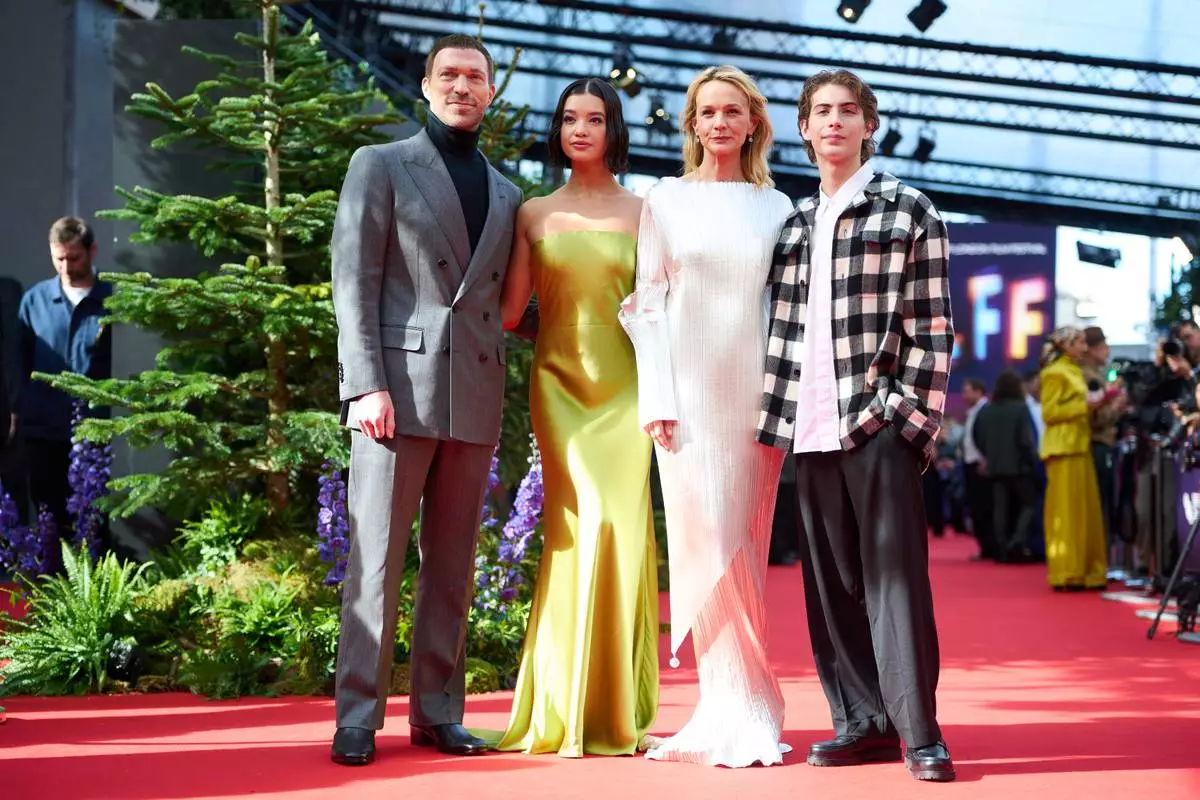
Travis Knight, from left, Peyton Elizabeth Lee, Carey Mulligan and Jacob Tremblay pose for photographers upon arrival at the premiere for the film "Wildwood" as part of the London film festival in London, Sunday, Oct. 11, 2026. (Photo by Scott A Garfitt/Invision/AP)