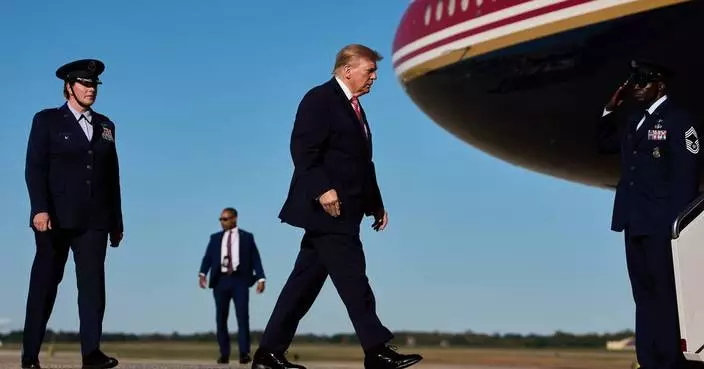
SAO PAULO (AP) — Tech giant Meta said on Tuesday it has complied with an order of Brazil's electoral court for it to give equal treatment in its platforms to President Luiz Inácio Lula da Silva and opposition candidate Flávio Bolsonaro ahead of the Oct. 25 runoff for the nation's top job.
The case is the latest example of courts intervening to fix platform imbalances impacting politics and elections.
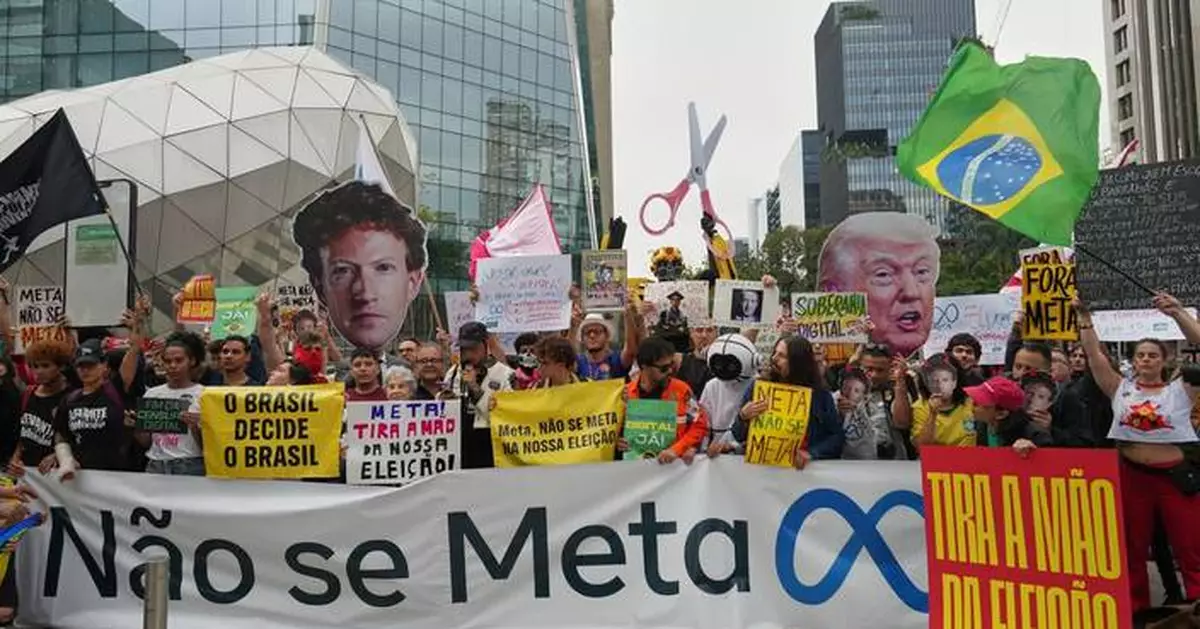
The suit was triggered by Lula’s campaign on Oct. 15, when it accused the tech company that owns Instagram, Facebook and WhatsApp of using biased algorithms and AI restrictions to favor Bolsonaro. On Monday, hundreds of people protested in front of the company’s office in metropolis Sao Paulo.
Meta said it had “completed the implementation of measures to comply with the directive from the electoral court.” It added the restrictions ordered by the court “do not affect organic posts.”
Bolsonaro won the most votes in the first round of the elections on Oct. 4, with 47% to Lula's 45%, with polls and analysts suggesting they will be in a tight race for victory until the last minute.
Meta said it has enforced comprehensive measures to enforce compliance with electoral advertisement regulations and safeguard the integrity of the nation’s democratic process. It also said it implemented a dedicated human review system, under which any automatic blocks or limitations placed on presidential campaign ad accounts must undergo manual evaluation within two hours.
Meta insisted its recent operational incidents come from technical limitations rather than any partiality. It once again denied any allegations of political bias, manipulation or intentional interference in Brazil's elections.
Tatiana Cochlar, a spokesperson for Brazil’s electoral court, confirmed Meta’s response was received and added that later on Tuesday representatives of the company and the two presidential campaigns are expected to meet with a judge in capital Brasilia to discuss the situation.
The case in Brazil mirrors precedents in Europe where the state apparatus also intervened. In Germany, a 2019 court ruling forced Facebook to restore a blocked political page to protect political equality. Five years later, Romania annulled its presidential election after hidden TikTok bot networks boosted a pro-Russia candidate. The European nation later passed legislation mandating tracking codes on political social media messaging.
Follow AP’s coverage of Latin America and the Caribbean at https://apnews.com/hub/latin-america
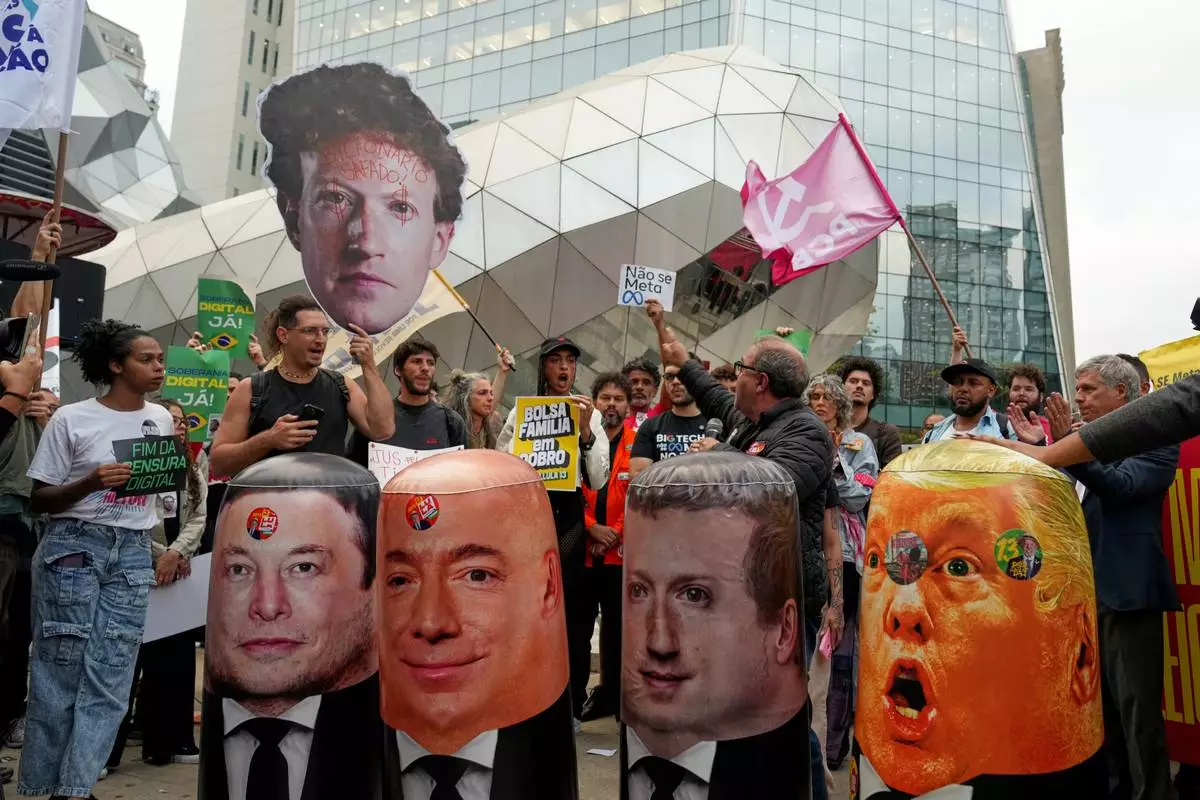
Demonstrators rally against Meta over allegations of interference in Brazil's presidential election, outside Meta's headquarters in Sao Paulo, Monday, Oct. 19, 2026. (AP Photo/Andre Penner)
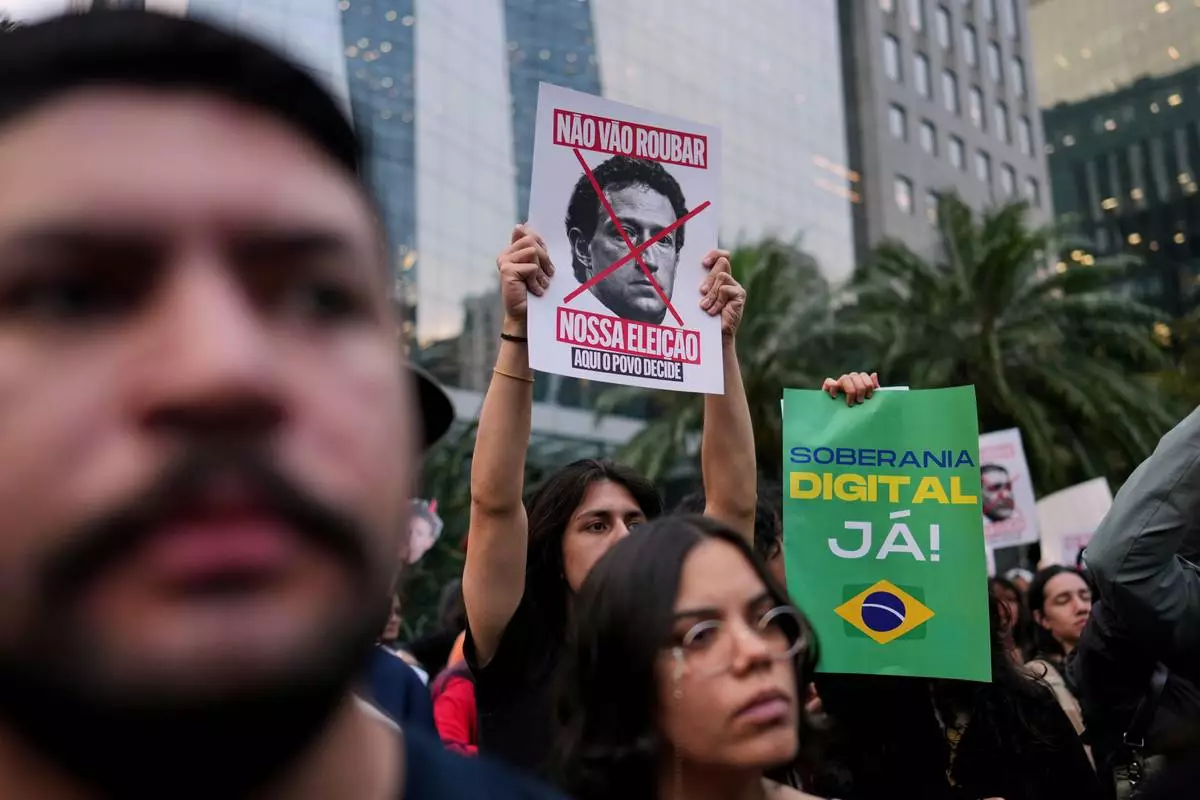
Demonstrators holding a banner that reads in Portuguese "Do not fraud our election" and "Digital sovereignty" rally against Meta over allegations of interference in Brazil's presidential election, outside Meta's headquarters in Sao Paulo, Monday, Oct. 19, 2026. (AP Photo/Andre Penner)
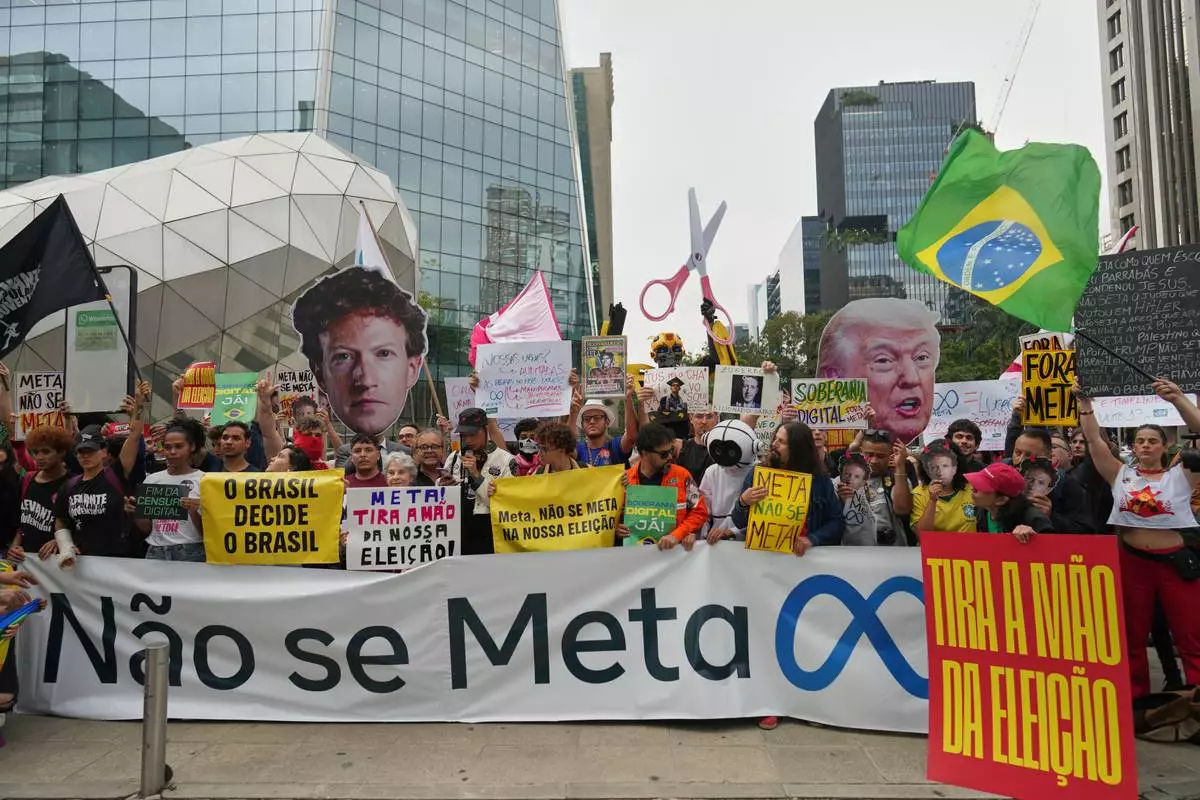
Demonstrators, holding a banner that reads in Portuguese "Meta do not interfere," rally against Meta over allegations of interference in Brazil's presidential election, outside Meta's headquarters in Sao Paulo, Monday, Oct. 19, 2026. (AP Photo/Andre Penner)
PARIS (AP) — President Donald Trump and leading Republicans are trying to leverage widespread riots in France ahead of midterm congressional elections by making unsubstantiated claims that the social unrest in Europe is caused by Muslim migrants.
Peaceful nationwide demonstrations in France over the high cost of living and in support of students' grievances over underfunded schools turned violent over the weekend, with masked rioters committing vandalism and clashing with overwhelmed police. In Italy’s finance and fashion capital of Milan on Saturday, rioters clashed with police, looted stores and set property on fire.
Here's a closer look at the facts.
CLAIM: Migrants of Muslim heritage are doing most of the damage in France and Italy.
THE FACTS: It is difficult to know the exact sociological makeup of the protesters, but no one group has been singled out as being responsible for the violence.
Trump has tried to put the blame on migrants, urging French President Emmanuel Macron to “close your borders and take control before it is too late!”
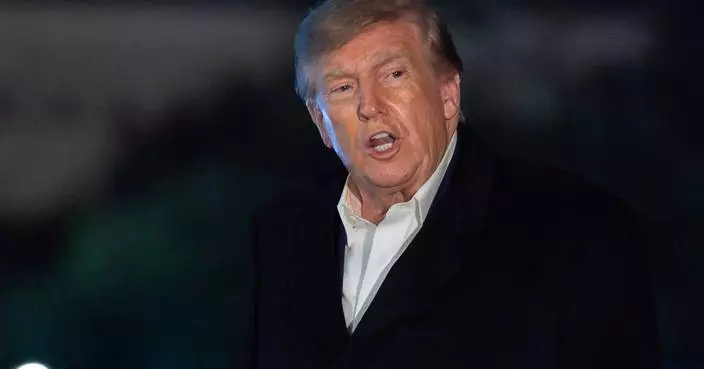
“If Europe doesn’t close its borders and bring the criminals out, like the people that are protesting, Europe is finished,” Trump said at the White House while leaving for a campaign rally supporting Republicans in Kansas. “When I look at France, when you look at Italy, when you look at all the turmoil and the hatred — that’s not about school. That’s about people coming into the countries that hate the country.”
Republicans have specifically alleged that Muslims are releasing pent-up anger at the historically Catholic France, while tying it to a dystopian view of what could happen in the U.S.
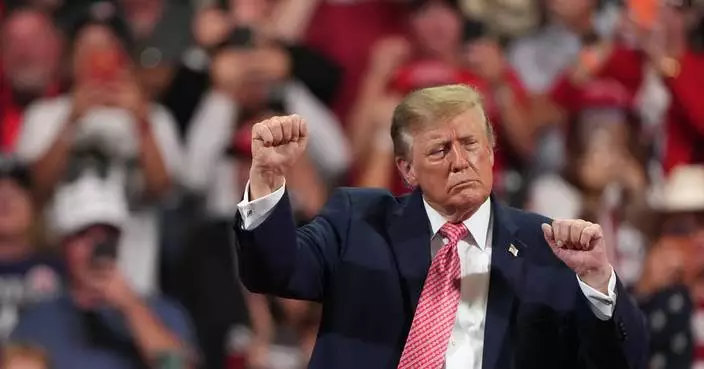
“Today, radical Islam is the single greatest threat to the American democracy and freedom. We’re seeing in real time in France what happens when moderates capitulate to radical Islam,” Kansas Sen. Roger Marshall told the crowd at Monday's rally attended by Trump.
Authorities and police have not linked immigrants to the rioting in France.
French authorities do not release the identities of people arrested and sent to trial. Unlike the United States, France does not collect data based on race or ethnicity, in line with a national doctrine of colorblindness, which aims at encouraging equality by ignoring race altogether.
Accounts of the protests and images of the unrest seem to show they are representative of France’s diverse society, which has seen influxes of people from France’s former colonies in Africa and Asia for generations.
In Italy, Milan police said violent protests on Saturday included a large number of naturalized children of immigrants as well as foreign nationals. However, Milan’s welfare councilor, Lamberto Bertolé, told The Associated Press that more investigation would be needed to determine the backgrounds and motivations of the young people who participated in the violence.
CLAIM: Synagogues in France have suffered antisemitic attacks and “steeples” have burned.
THE FACTS: No direct link has been established between violence and faith, and no houses of worship have been directly attacked.
Social media is awash with posts claiming to link Muslim rioters to acts of religiously motivated violence. Trump also tried to make this link, saying “when you see burning steeples and raging fires in France just remember that is what the radical Democrats want to do to America.”
The Jewish Community Protection Service, a French organization that monitors antisemitic incidents, said in a statement that a Paris synagogue was damaged over the weekend in what is believed to be a burglary attempt and that “no evidence suggests” that some businesses were targeted because of their owners’ religious affiliation. Authorities said at least 3,000 shops have been damaged or looted in major cities across the country.
France, which has a history of antisemitism, is home to the largest Jewish community and the largest Muslim population in Western Europe.
One of the most dramatic images of the French riots has been the burning of the 19th-century town hall in Limoges, whose bell tower was engulfed in flames before it collapsed. Ablaze, the bell tower could potentially be mistaken for a steeple.
CLAIM: France’s far-left is at fault.
THE FACTS: France’s far-left party has backed the student movement from the start, and is now being blamed for the disorder by political rivals ahead of April’s national election. While radical far-left activists have been found by authorities to be behind some of the violence, they are not entirely to blame for the extent of the vandalism and clashes.
Right-wing social media is full of video showing rioters smashing storefronts and causing French police in riot gear to retreat under a hail of stones and other hurled debris.
The center-right Macron, who will step down next year, accused far-left activists of trying to foment chaos by attacking buildings and police, as did other political leaders in France. Right-wing figures elsewhere in Europe and the U.S. have done the same.
France has a long tradition of street protests over social and political concerns, which are sometimes marred by violence on the fringes of otherwise peaceful marches, leading to clashes with police.
On Saturday in Paris, the march and the clashes largely unfolded side by side. Tens of thousands of people gathered at Place de la République, and the vast majority set off peacefully toward the northern part of the city. Around the same time, clashes with police broke out on and around the square, and groups of hundreds formed unauthorized marches across central Paris, police said.
The radical far-left is too small to account for violence on this scale, said Sebastian Roché, a professor at Sciences Po Grenoble, who has studied policing for more than two decades. “It is a very small core, a very small milieu, because these are not structured groups.”
Roché said looting in particular is “not at all how these groups operate,” and is mostly the work of criminals seizing the opportunity created by the disorder.
France’s far-left leader, Jean-Luc Mélenchon, has stuck with his support for the protesters, and has appealed for the protests to be peaceful while calling the police response heavy handed.
Wilson reported from Barcelona, Spain.
AP writers Colleen Barry in Milan, Italy, and Tom Nouvian in Paris contributed.
Find AP Fact Checks here: https://apnews.com/APFactCheck.
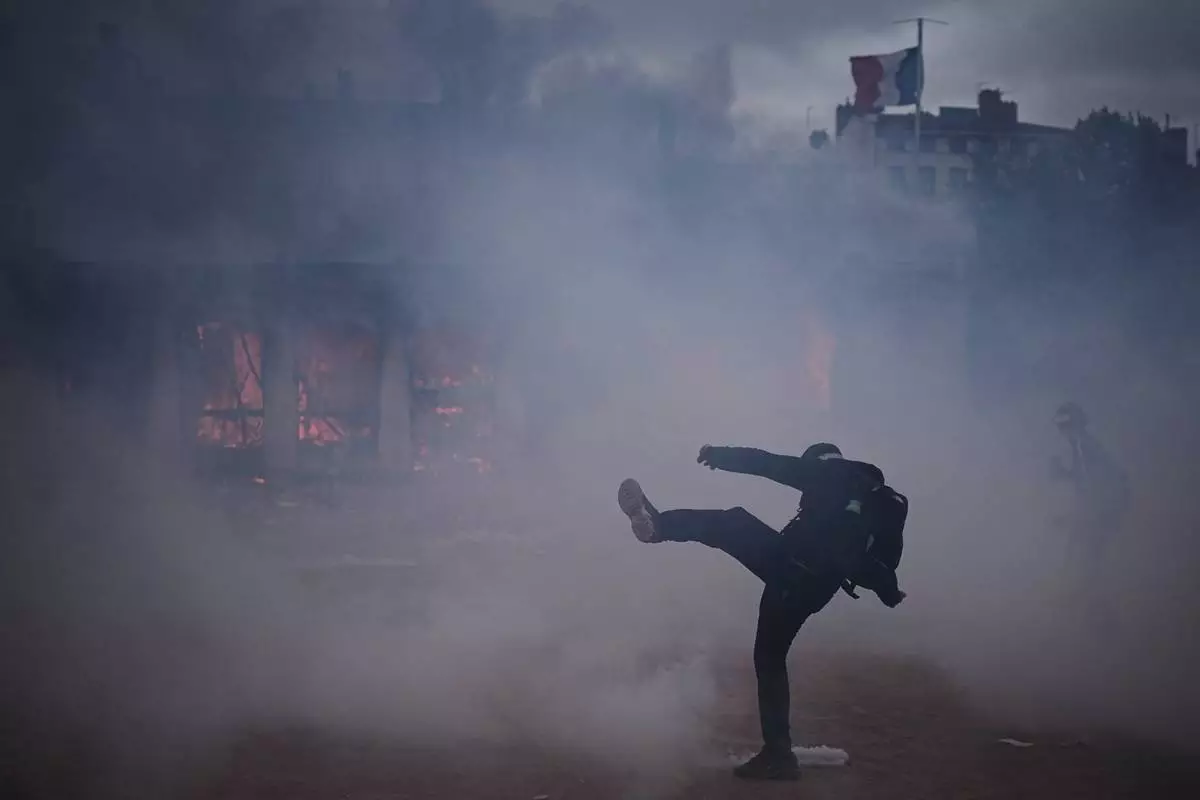
A protester kicks a tear gas canister in front of the burning tourism office during a demonstration against rising living costs and in solidarity with students’ grievances in Lyon, France, Saturday, Oct. 17, 2026. (AP Photo/Laurent Cipriani)
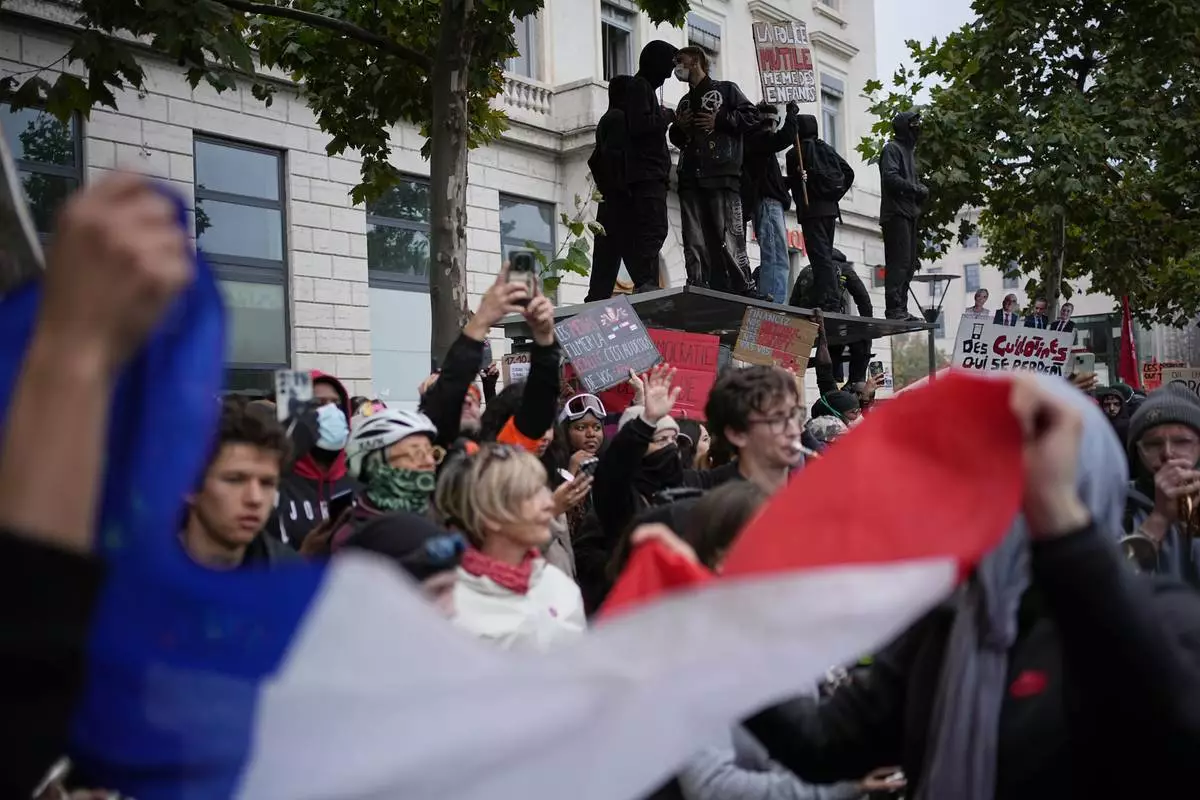
A protesters holds a French flag during a demonstration against rising living costs, joining students' grievances, in Lyon, France, Saturday, Oct. 17, 2026. (AP Photo/Laurent Cipriani)
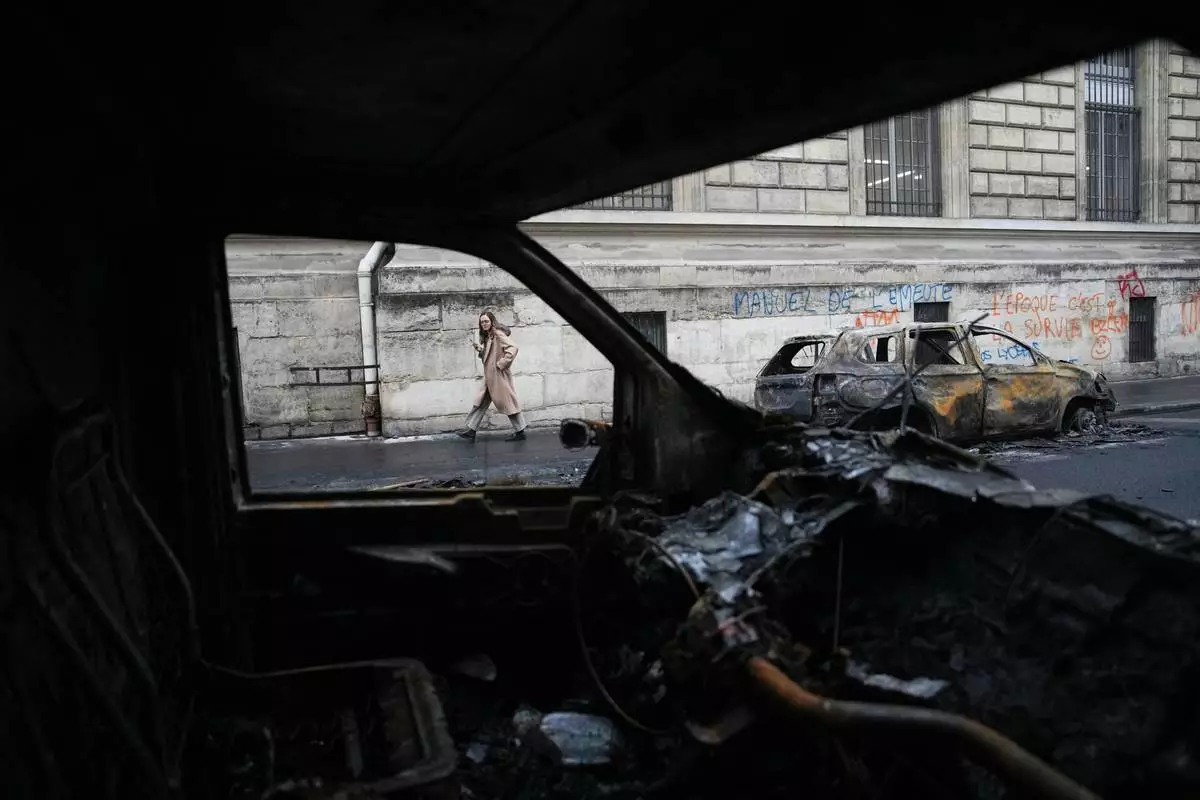
A woman walks past burned-out cars after a quiet night Monday under curfew, the first since weekend protests over the cost of living turned into rioting and looting across France, in Paris, Tuesday, Oct. 20, 2026. (AP Photo/Christophe Ena)