BUDAPEST, Hungary (AP) — Hungarian police arrested the country's former Central Bank governor on Wednesday, a significant step in the new government’s pursuit of suspected financial abuses during the rein of Viktor Orbán, whose government has been accused of widespread corruption.
Prime Minister Péter Magyar wrote in a post on Facebook that the former governor, György Matolcsy, who had also served as finance minister, was in custody, without providing further details.
Since taking office earlier this year, Magyar’s government has prioritized investigating suspected financial abuses committed by Orbán-era officials.
The arrest followed a statement from Hungary's Central Prosecutor's Office earlier in the day, saying it was “carrying out coordinated investigative actions" in several locations in connection with a Central Bank-related investigation into criminal misappropriation of funds.
It did not mention Matolcsy by name but said more details about the case would come later.
Matolcsy led Hungary’s central bank from 2013 to 2025, after serving as Orbán’s minister of economy from 2010 to 2013. He was long one of Orbán’s closest economic allies, and has denied any wrongdoing.
Matolcsy's lawyer, Pál Bátki, told Hungarian news outlet Telex that the former governor was detained on suspicion of economic fraud that caused significant financial damage and using a forged private document.
Much of Matolcsy's tenure as head of the central bank was mired in accusations of corruption related to the bank's establishment of foundations that it endowed with hundreds of billions of forints — equivalent to hundreds of millions of dollars — in public funds.
A criminal complaint was filed last month on suspicion of embezzlement, negligence, fraud, and abuse of office while Matolcsy was governor. The complaint came after the central bank audited past real estate investments that it found to have been purchased for inflated prices, causing significant financial damage to the bank.
It was unclear whether Matolcsy's detention was related to the real estate purchases or the endowments to the bank's foundations.
In an exclusive interview with The Associated Press on Tuesday, Magyar said it was clear that “certain members of the previous government as well as oligarchs, businessmen and family members connected to them committed serious crimes, typically corruption crimes, both with national funding and EU funding.”
His administration in July launched the National Asset Recovery and Protection Office, which holds investigative and prosecutorial powers to pursue cases of misused public funds.
Magyar called the office a “superauthority” that can enlist police, prosecutors and the national tax authority “so that it doesn’t take years to uncover a complicated corruption case.”
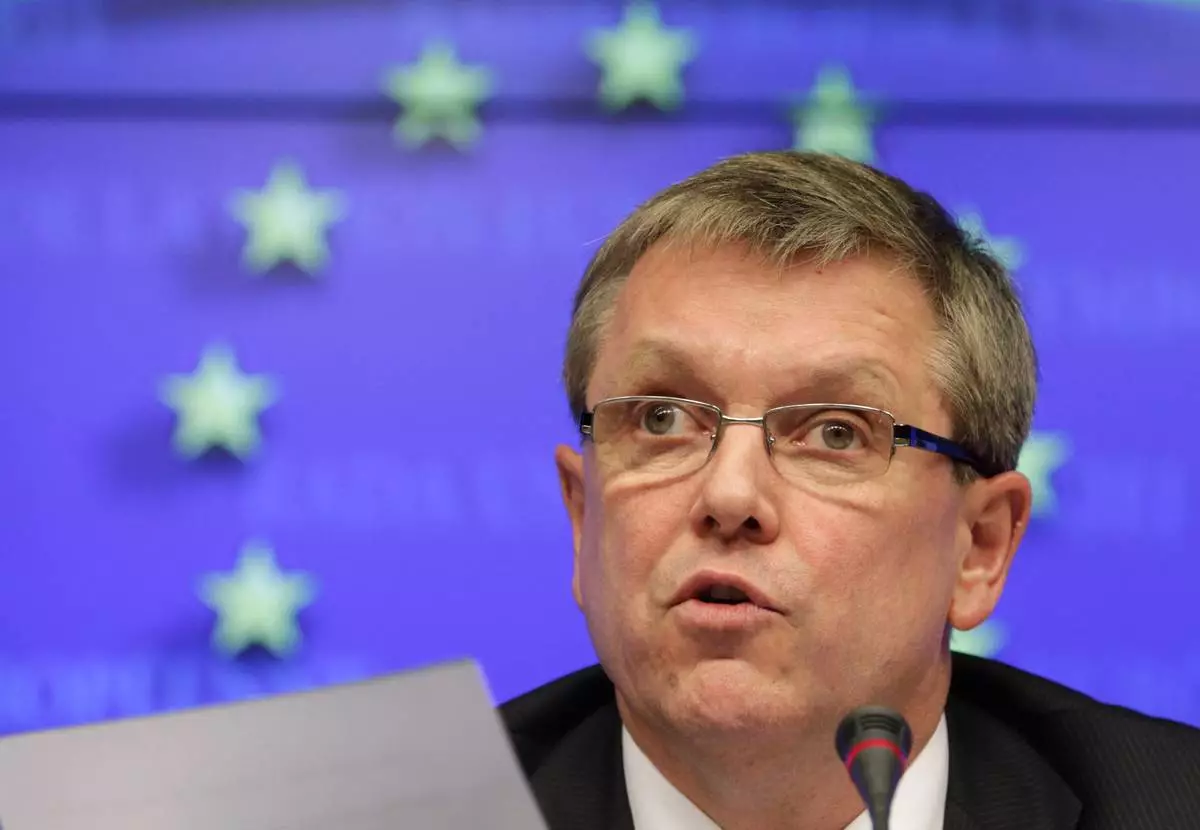
FILE - The then Hungarian Finance Minister and President of the EU rotating Council Gyorgy Matolcsy, addresses the media during an EU finance ministers meeting at the European Council building in Brussels, Tuesday, March 15, 2011. (AP Photo/Yves Logghe, File)
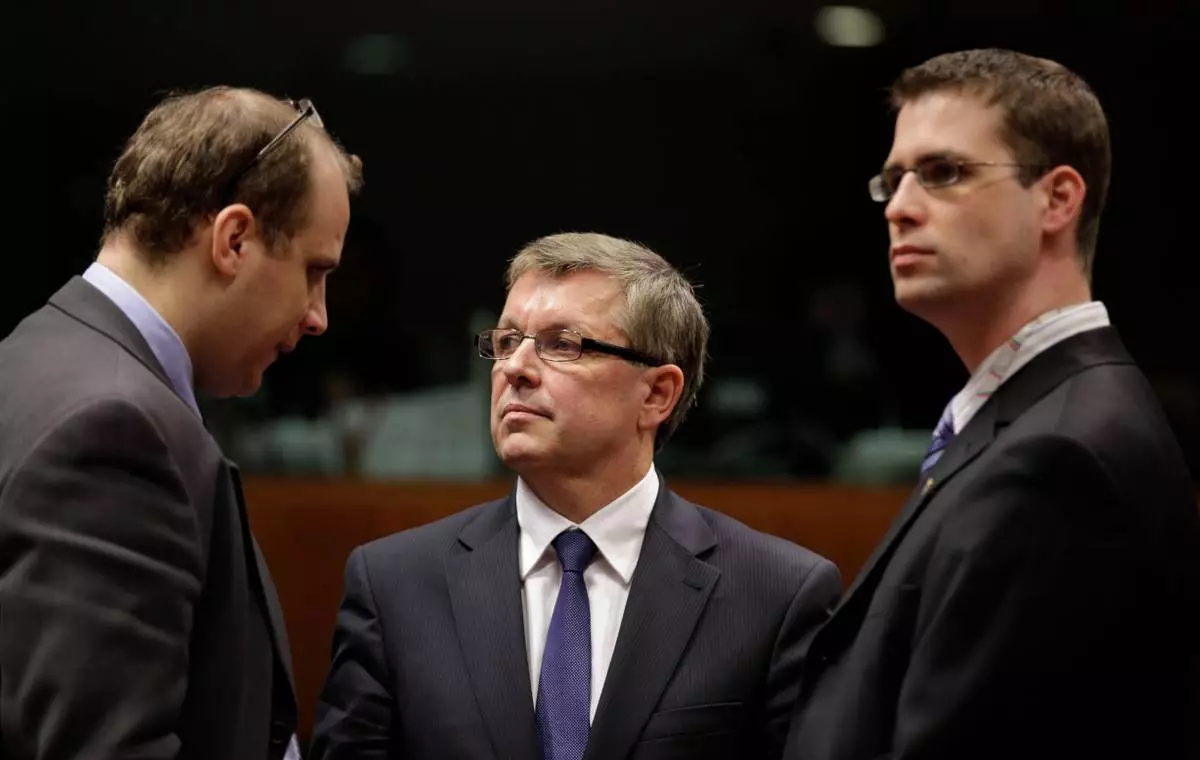
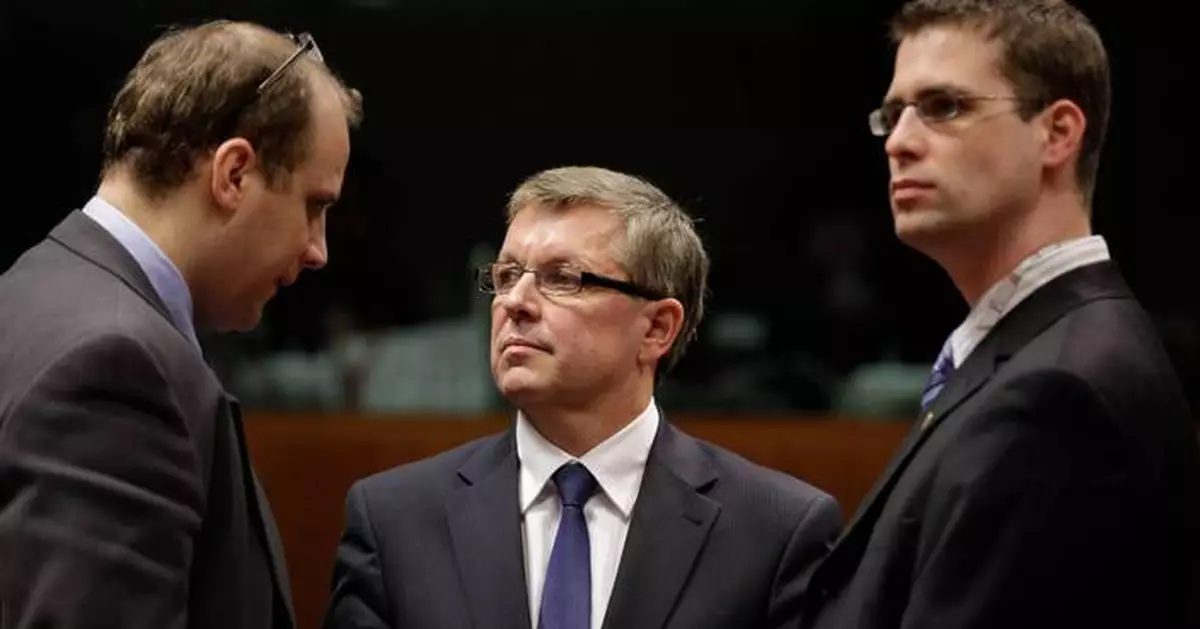
FILE - Hungary's Finance Minister Gyorgy Matolcsy, center, speaks with unidentified members of his delegation during a meeting of EU finance ministers in Brussels on March 13, 2012. (AP Photo/Virginia Mayo, File)
PARIS (AP) — U.S. President Donald Trump and leading Republicans are trying to leverage widespread riots in France ahead of midterm congressional elections by making unsubstantiated claims that the social unrest in Europe is caused by Muslim migrants.
This “is completely false,” French President Emmanuel Macron replied Wednesday.
Peaceful nationwide demonstrations in France over the high cost of living and in support of students' grievances over underfunded schools turned violent over the weekend, with masked rioters committing vandalism and clashing with overwhelmed police. In Italy’s finance and fashion capital of Milan on Saturday, rioters clashed with police, looted stores and set property on fire.
Here's a closer look at the facts.
CLAIM: Migrants of Muslim heritage are doing most of the damage in France and Italy.
THE FACTS: It is difficult to know the exact sociological makeup of the protesters, but no one group has been singled out as being responsible for the violence.
Trump has tried to put the blame on migrants, urging French President Emmanuel Macron to “close your borders and take control before it is too late!”
“If Europe doesn’t close its borders and bring the criminals out, like the people that are protesting, Europe is finished,” Trump said at the White House while leaving for a campaign rally supporting Republicans in Kansas. “When I look at France, when you look at Italy, when you look at all the turmoil and the hatred — that’s not about school. That’s about people coming into the countries that hate the country.”
Republicans have specifically alleged that Muslims are releasing pent-up anger at the historically Catholic France, while tying it to a dystopian view of what could happen in the U.S.
“Today, radical Islam is the single greatest threat to the American democracy and freedom. We’re seeing in real time in France what happens when moderates capitulate to radical Islam,” Kansas Sen. Roger Marshall told the crowd at Monday's rally attended by Trump.
Macron, speaking during a trip to Qatar, said “We’ve had people claiming that we were invaded by hordes of migrants and Islamists, which is completely false," telling reporters he's referring to Trump's comments, among others.
Macron pointed to “foreign manipulation of information in the aftermath” and “AI-generated images depicting scenes that never actually happened.”
Some leaders on the other side of the Atlantic are “using our country for their own political campaigns,” he added. “People must stop spreading nonsense.”
Authorities and police have not linked immigrants to the rioting in France.
French authorities do not release the identities of people arrested and sent to trial. Unlike the United States, France does not collect data based on race or ethnicity, in line with a national doctrine of colorblindness, which aims at encouraging equality by ignoring race altogether.
Accounts of the protests and images of the unrest seem to show they are representative of France’s diverse society, which has seen influxes of people from France’s former colonies in Africa and Asia for generations.
In Italy, Milan police said violent protests on Saturday included a large number of naturalized children of immigrants as well as foreign nationals. However, Milan’s welfare councilor, Lamberto Bertolé, told The Associated Press that more investigation would be needed to determine the backgrounds and motivations of the young people who participated in the violence.
CLAIM: Synagogues in France have suffered antisemitic attacks and “steeples” have burned.
THE FACTS: No direct link has been established between violence and faith, and no houses of worship have been directly attacked.
Social media is awash with posts claiming to link Muslim rioters to acts of religiously motivated violence. Trump also tried to make this link, saying “when you see burning steeples and raging fires in France just remember that is what the radical Democrats want to do to America.”
The Jewish Community Protection Service, a French organization that monitors antisemitic incidents, said in a statement that a Paris synagogue was damaged over the weekend in what is believed to be a burglary attempt and that “no evidence suggests” that some businesses were targeted because of their owners’ religious affiliation. Authorities said at least 3,000 shops have been damaged or looted in major cities across the country.
France, which has a history of antisemitism, is home to the largest Jewish community and the largest Muslim population in Western Europe.
One of the most dramatic images of the French riots has been the burning of the 19th-century town hall in Limoges, whose bell tower was engulfed in flames before it collapsed. Ablaze, the bell tower could potentially be mistaken for a steeple.
CLAIM: France’s far-left is at fault.
THE FACTS: France’s far-left party has backed the student movement from the start, and is now being blamed for the disorder by political rivals ahead of April’s national election. While radical far-left activists have been found by authorities to be behind some of the violence, they are not entirely to blame for the extent of the vandalism and clashes.
Right-wing social media is full of video showing rioters smashing storefronts and causing French police in riot gear to retreat under a hail of stones and other hurled debris.
The center-right Macron, who will step down next year, accused far-left activists of trying to foment chaos by attacking buildings and police, as did other political leaders in France. Right-wing figures elsewhere in Europe and the U.S. have done the same.
France has a long tradition of street protests over social and political concerns, which are sometimes marred by violence on the fringes of otherwise peaceful marches, leading to clashes with police.
On Saturday in Paris, the march and the clashes largely unfolded side by side. Tens of thousands of people gathered at Place de la République, and the vast majority set off peacefully toward the northern part of the city. Around the same time, clashes with police broke out on and around the square, and groups of hundreds formed unauthorized marches across central Paris, police said.
The radical far-left is too small to account for violence on this scale, said Sebastian Roché, a professor at Sciences Po Grenoble, who has studied policing for more than two decades. “It is a very small core, a very small milieu, because these are not structured groups.”
Roché said looting in particular is “not at all how these groups operate,” and is mostly the work of criminals seizing the opportunity created by the disorder.
France’s far-left leader, Jean-Luc Mélenchon, has stuck with his support for the protesters, and has appealed for the protests to be peaceful while calling the police response heavy handed.
Wilson reported from Barcelona, Spain.
AP writers Colleen Barry in Milan and Tom Nouvian in Paris contributed to this report.
Find AP Fact Checks here: https://apnews.com/APFactCheck.
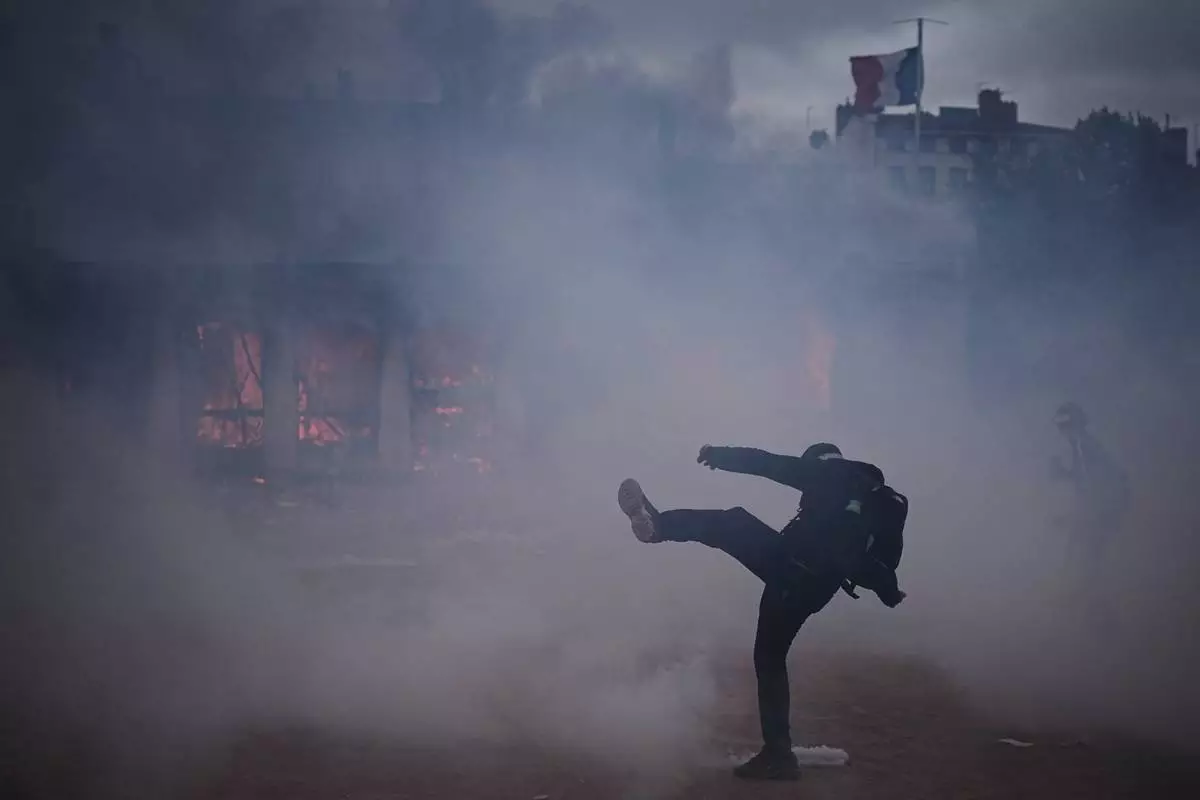
A protester kicks a tear gas canister in front of the burning tourism office during a demonstration against rising living costs and in solidarity with students’ grievances in Lyon, France, Saturday, Oct. 17, 2026. (AP Photo/Laurent Cipriani)
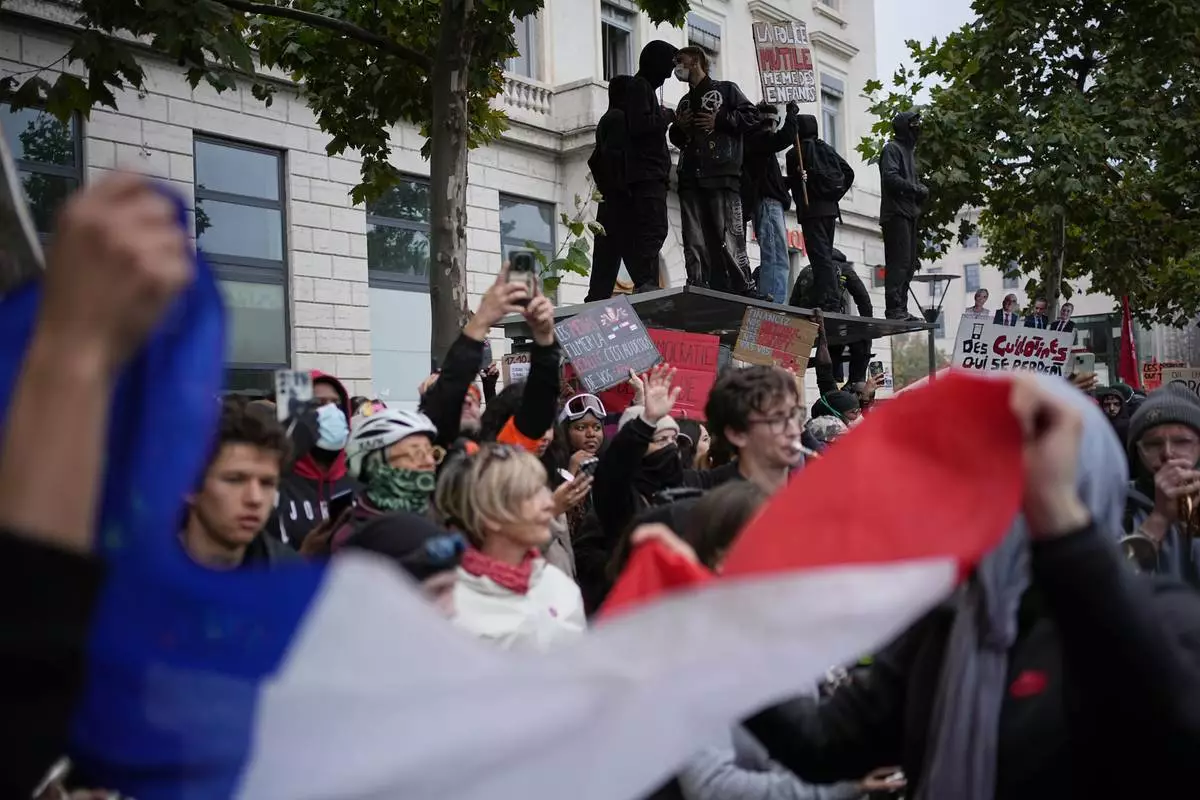
A protesters holds a French flag during a demonstration against rising living costs, joining students' grievances, in Lyon, France, Saturday, Oct. 17, 2026. (AP Photo/Laurent Cipriani)
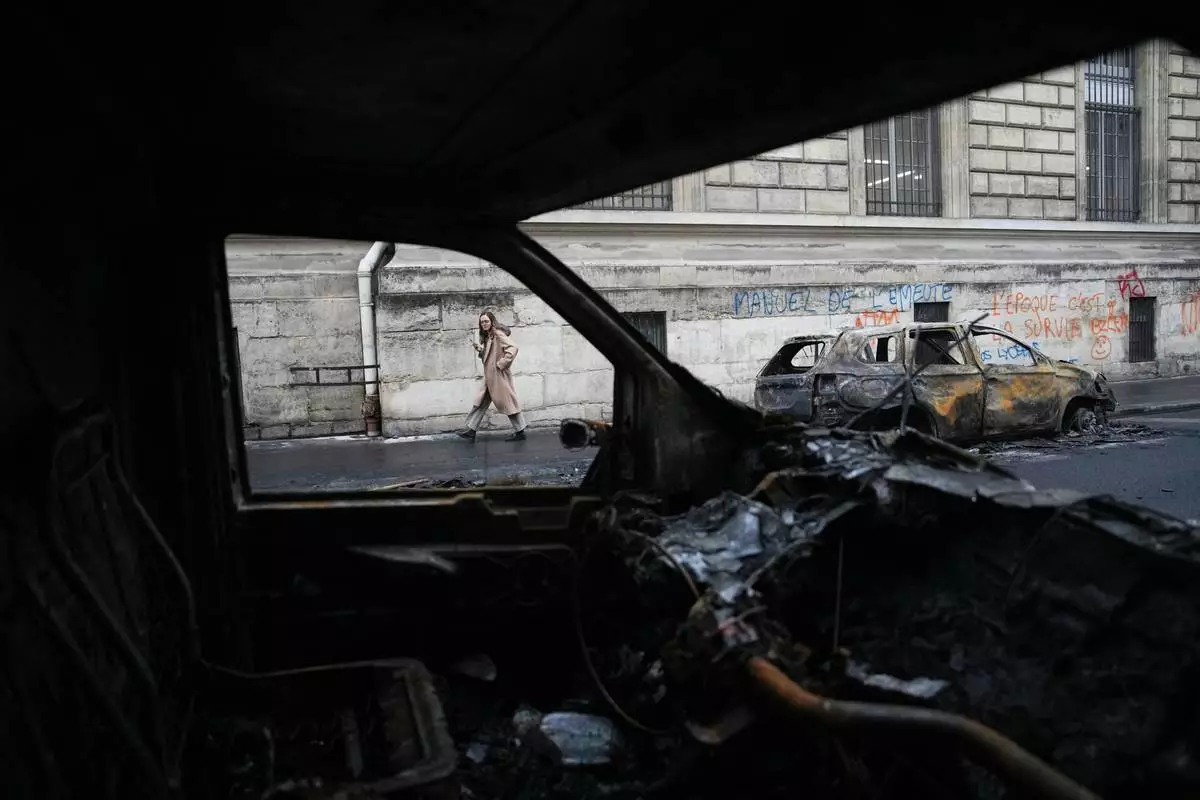
A woman walks past burned-out cars after a quiet night Monday under curfew, the first since weekend protests over the cost of living turned into rioting and looting across France, in Paris, Tuesday, Oct. 20, 2026. (AP Photo/Christophe Ena)