BERLIN (AP) — Nvidia CEO Jensen Huang urged players in Europe's lagging artificial intelligence industry to get going and touted a modular system to quickly build AI data centers with the massive computing capacity the continent's developers need but currently lack.
In an upbeat speech Wednesday at a company conference for developers and investors in Berlin, Huang also laid out tools to keep AI applications from running amok by confining them in a digital “sandbox.”
Click to Gallery
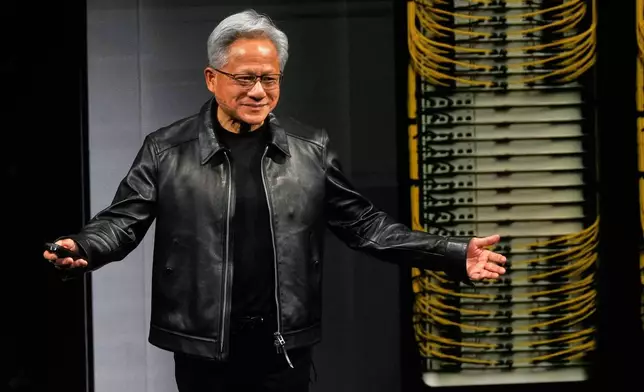
Nvidia CEO Jensen Huang delivers his keynote on the company's GTC event in Berlin, Germany, Wednesday, Oct. 21, 2026. (AP Photo/Markus Schreiber)
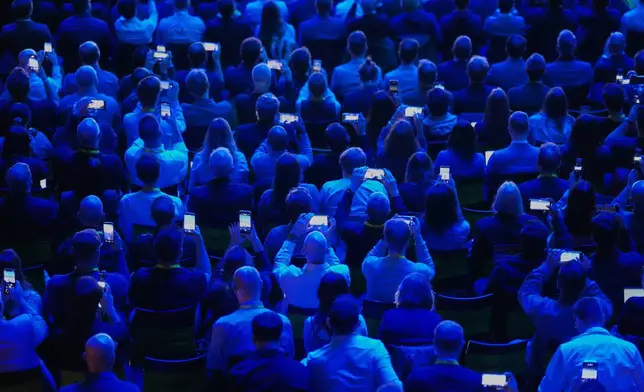
Visitors attend Nvidia CEO Jensen Huang delivering his keynote on the company's GTC event in Berlin, Germany, Wednesday, Oct. 21, 2026. (AP Photo/Markus Schreiber)
Nvidia CEO Jensen Huang delivers his keynote on the company's GTC event in Berlin, Germany, Wednesday, Oct. 21, 2026. (AP Photo/Markus Schreiber)
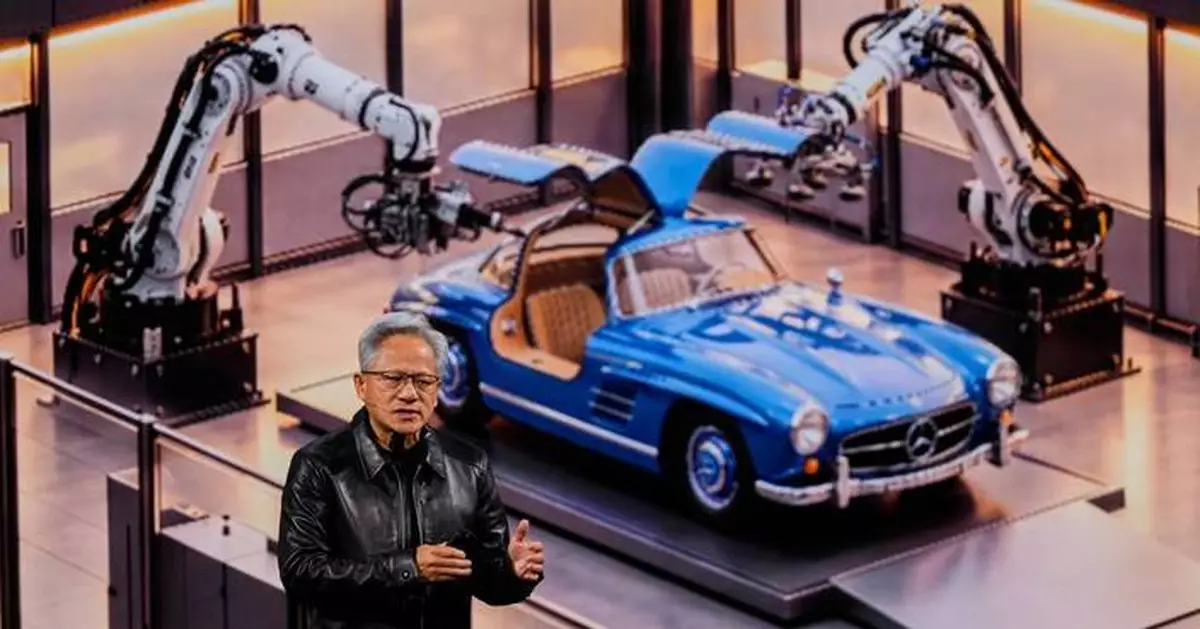
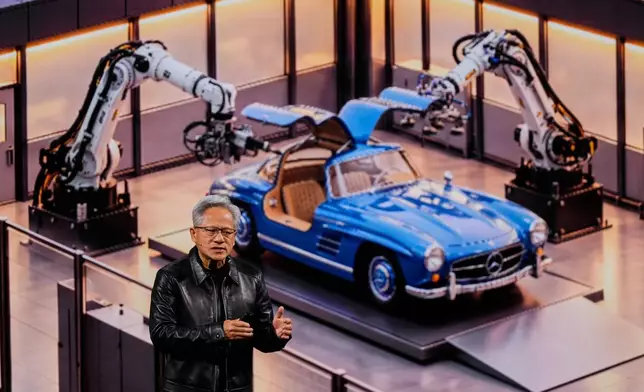
Nvidia CEO Jensen Huang stands near a Mercedes car as he delivers his keynote on the company's GTC event in Berlin, Germany, Wednesday, Oct. 21, 2026. (AP Photo/Markus Schreiber)
“Europe's AI economy is starting, and it's accelerating, and it's great to see,” Huang, striding across the stage in his trademark leather jacket and sneakers, said in front of some 3,000 developers, analysts and journalists at Berlin's Tempodrom auditorium.
Huang, whose company designs the computer chips and software used by AI developers like Anthropic and OpenAI, frequently name-checked European partner companies such as Siemens, Mercedes-Benz and Volkswagen's Audi.
“Europe is building its AI economy" as the technology moves from language models to so-called physical AI in manufacturing, Huang said. “Every company in the future will be an AI company.”
Mercedes-Benz CEO Ola Kallenius, whose company is working on developing autonomous driving technology with Nvidia, said that the technology could reduce the number of auto fatalities caused by human error “down to zero... we will have safer streets once we have full autonomy.”
Huang said Nvidia's design for the Vera Rubin DSK Pod, a ready-made modular computing center made by partners and delivered in a shipping container-like box, can serve reduce the time needed to set up an AI data center at a prepared site from months to days. The pod “will change the way people build AI centers,” Huang told attendees of the Nvidia GTC conference.
He said Nvidia had invested $10 billion in European startups and partners in the past year.
Building out data centers is key for Europe, which has only about 5% of the world's AI computing capacity, compared to 75% in the U.S. Lack of the massive computing power, or “compute” in digital jargon, needed to train AI applications is a key obstacle for European developers.
“The big bottleneck is compute,” said Jeannette zu Fürstenberg, president and managing director of General Catalyst, ahead of the speech. General Catalyst invests in AI companies.
Huang was briefly interrupted by protesters who stood up with a banner urging him to “clean up" his business. Huang promised “to talk to you later” and urged security to avoid rough handling as they removed the protesters.
Huang also addressed concerns about safety by talking about the company's OpenShell open-source software designed to exert external control over what AI applications are doing and block them if they violate company policy.
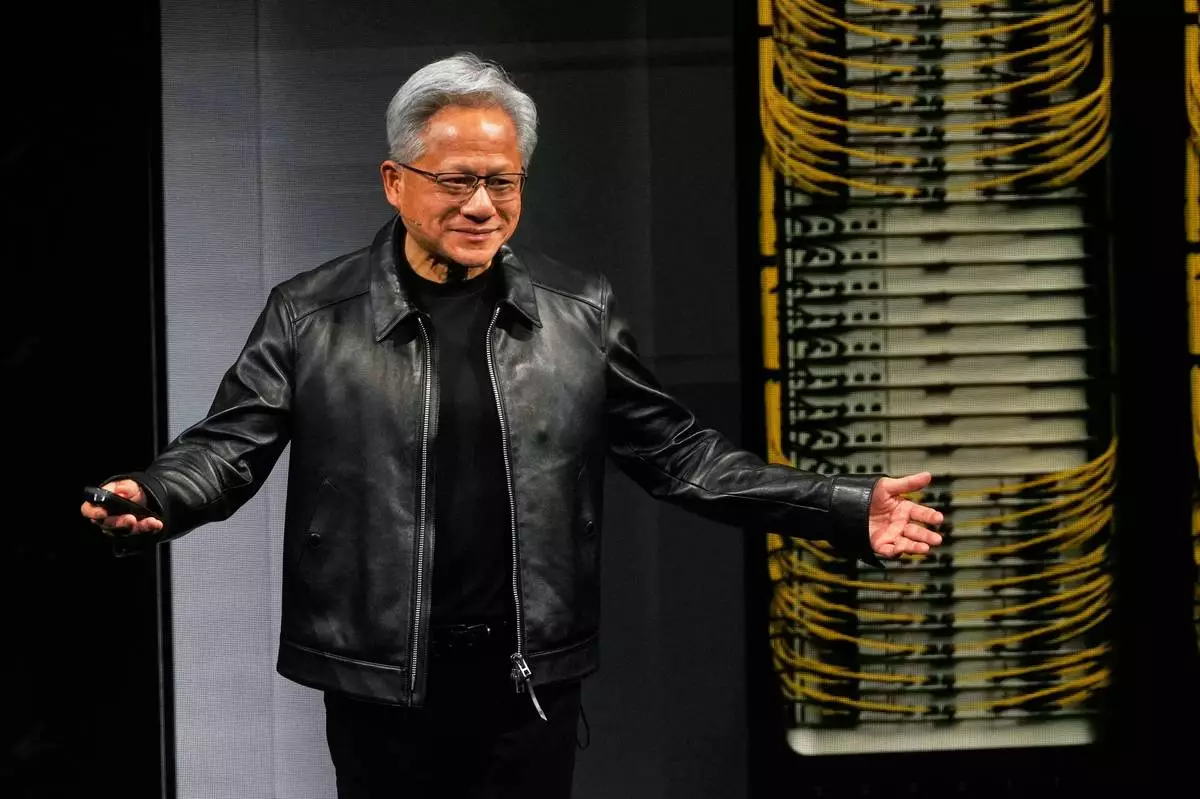
Nvidia CEO Jensen Huang delivers his keynote on the company's GTC event in Berlin, Germany, Wednesday, Oct. 21, 2026. (AP Photo/Markus Schreiber)
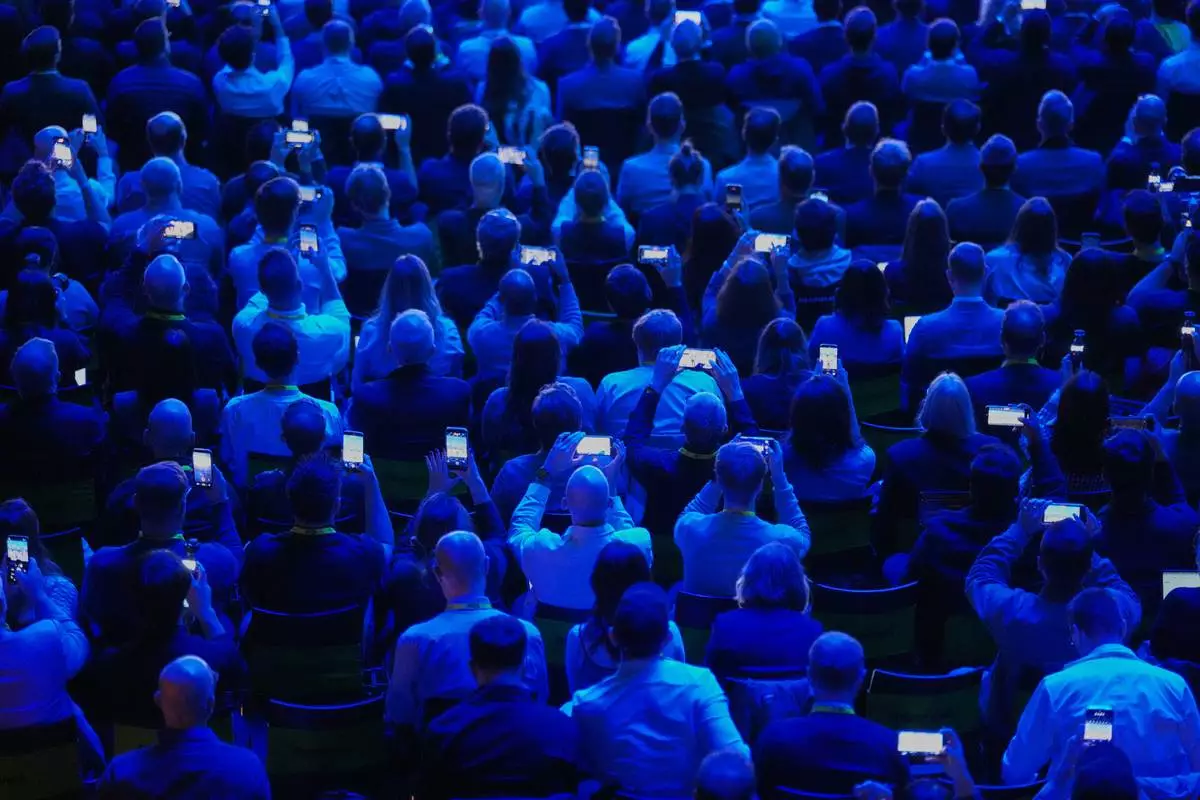
Visitors attend Nvidia CEO Jensen Huang delivering his keynote on the company's GTC event in Berlin, Germany, Wednesday, Oct. 21, 2026. (AP Photo/Markus Schreiber)
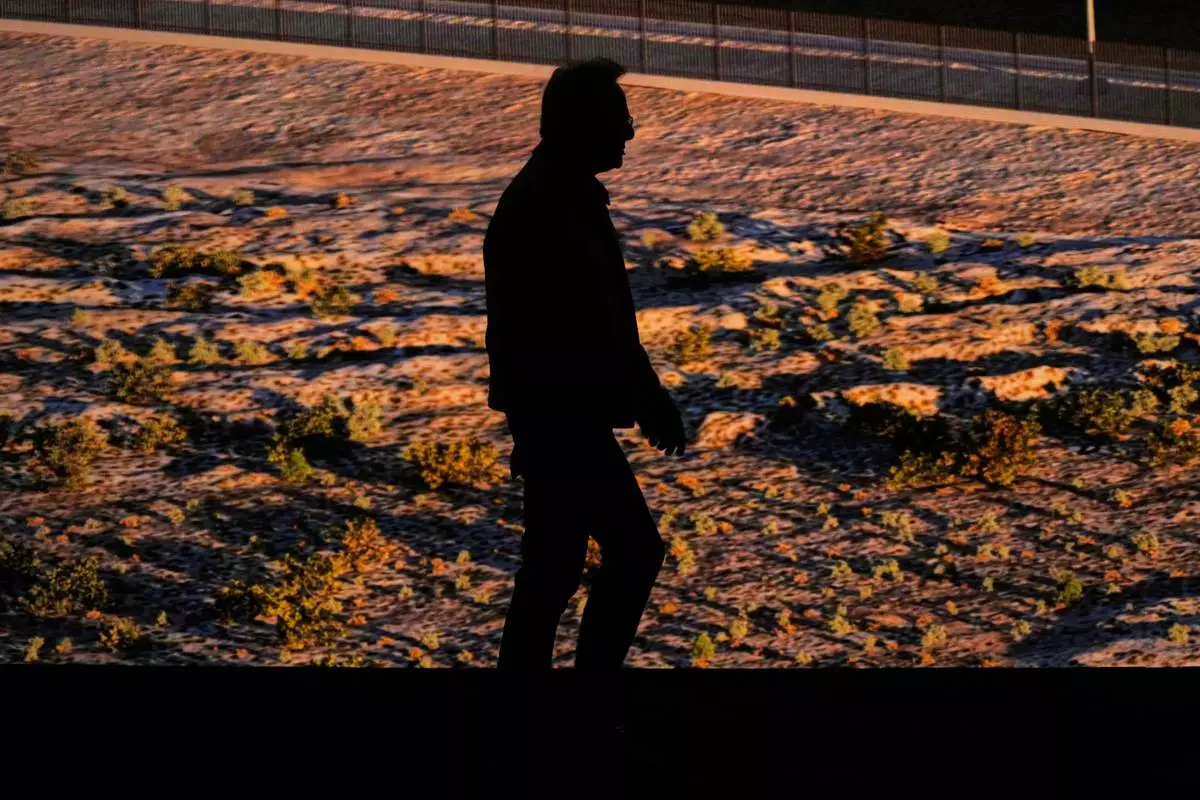
Nvidia CEO Jensen Huang delivers his keynote on the company's GTC event in Berlin, Germany, Wednesday, Oct. 21, 2026. (AP Photo/Markus Schreiber)
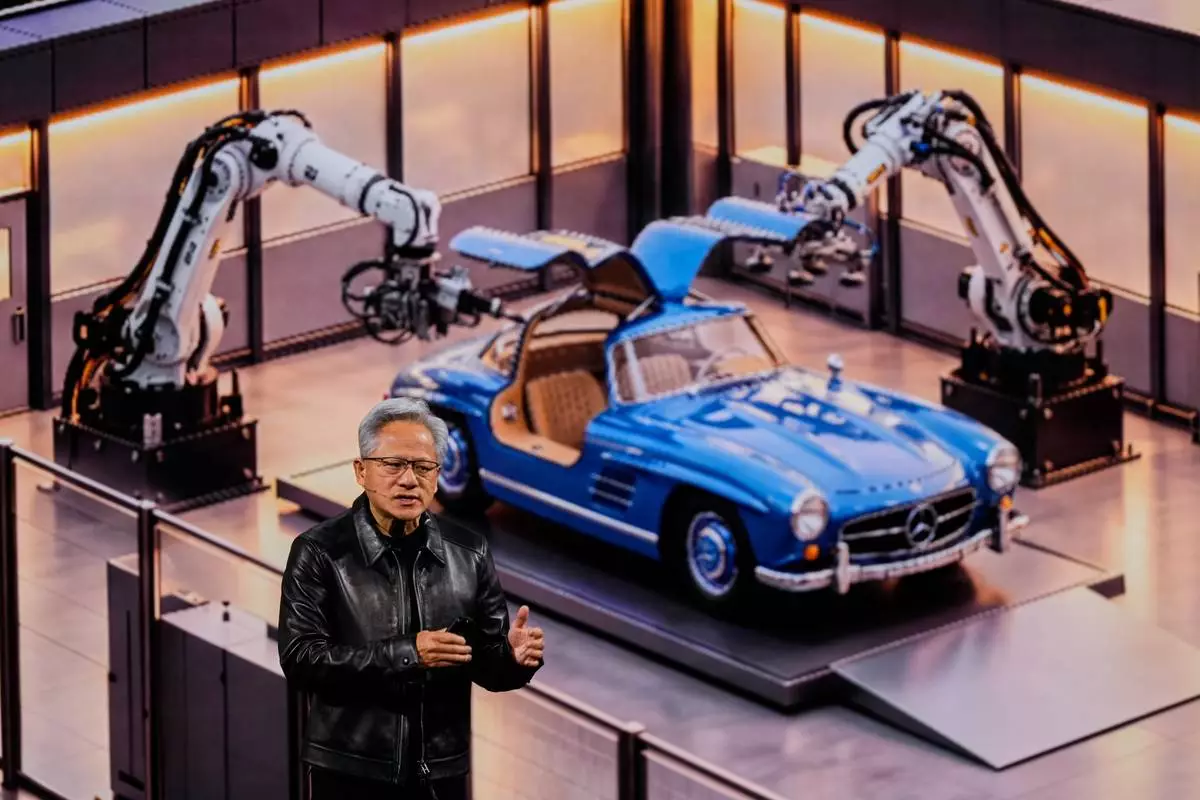
Nvidia CEO Jensen Huang stands near a Mercedes car as he delivers his keynote on the company's GTC event in Berlin, Germany, Wednesday, Oct. 21, 2026. (AP Photo/Markus Schreiber)
Russia on Wednesday freed an American who had been jailed for more than four years on charges of fighting as a mercenary in Ukraine, in a deal completed during a visit by a top U.S. envoy and at a time when President Donald Trump has taken a series of actions meant to benefit Moscow.
Trump said in a Truth Social post that he had asked Russian President Vladimir Putin during a phone call last week to free Stephen Hubbard, and that, unlike previous releases, the U.S. did not have to give up anyone in return.
“Welcome home, Stephen, it’s great to have you back,” Trump said.
Hubbard, a 74-year-old former teacher from Michigan, was on his way home following a visit to St. Petersburg by U.S. envoy Steve Witkoff, who also held talks with Putin about Moscow’s full-scale invasion of Ukraine, as Trump pushes Kyiv to make a deal that stops the fighting.
Hubbard was sentenced in 2024 to nearly seven years in prison following a closed trial. Prosecutors said he had signed a contract with the Ukrainian military after Russia's full-scale invasion in February 2022, and that he fought alongside Kyiv's forces until being captured two months later. The U.S. government under the Biden administration designated Hubbard as wrongfully detained.
Witkoff, a key Trump administration figure who has tried without success to steer Russia and Ukraine toward a settlement to end a war that will hit the five-year mark in February 2027, thanked Putin for releasing Hubbard, telling him, “Because of you, he's going home to his family.”
“You talk so much about my president, President Trump, being a humanitarian. You are a humanitarian also, sir,” Witkoff said.
Kremlin spokesman Dmitry Peskov told Russian media on Wednesday that Hubbard’s release was “raised by the American side for a certain time,” and Putin decided to free the man out of “humanitarian considerations.”
He added that general contacts "continue on a regular basis between the intelligence services.”
Speaking to reporters after the talks, Putin aide Yuri Ushakov said the Kremlin leader had pardoned Hubbard, who upon his release was taken to the St. Petersburg airport, Pulkovo, for Witkoff to bring him home to the United States.
Video showed Witkoff and Hubbard shaking hands, with the newly released American thanking the envoy.
Witkoff introduced Putin’s envoy Kirill Dmitriev to Hubbard and described him as someone “who had a lot to do with this happening.”
“We just met President Putin, he sends you blessings and wishes you good things,” Witkoff added.
The release occurred at a dynamic moment in relations between the United States, Ukraine and Russia, with the Washington-Kyiv relationship being roiled by fresh tensions at the same time that the Trump administration has advanced policies that aid Putin.
Those include Trump's move last week to waive sanctions on Russia imposed by a bill that Congress overwhelmingly passed to support Ukraine. Named after the late South Carolina Republican Sen. Lindsey Graham, the legislation targeted the flow of financial resources fueling Moscow’s war. That decision followed Trump’s announcement of a deal to import Russian diesel fuel in a long-shot effort to curb high gas prices ahead of next month's U.S. midterm elections.
Witkoff met with Ukrainian President Volodymyr Zelenskyy in Norway on Tuesday. He was expected to exchange ideas from that meeting, as well as proposals from European and American colleagues, in his talks Wednesday with Russian leaders in St. Petersburg.
Hubbard is the second American freed by Russia in roughly two months, following the release in August of Marine veteran Robert Gilman, who had been gravely ill and was imprisoned on disputed charges of assaulting a police officer.
Other Americans, including some with serious illnesses, remain jailed in Russia. Hubbard was the last remaining American designated as wrongfully detained, although advocates say that label should be applied to other prisoners.
Global Reach, an advocacy group that works to free Americans detained abroad and currently represents five Americans held in Russia, praised the release but called for the other prisoners to come home as well.
“We are grateful to the Trump Administration for reuniting Stephen Hubbard with his family, but at the same time, we know that there are five other families of Americans held in Russia who are going to have a hard time understanding why their loved one was not included in the deal,” Eric Lebson, the group's chief strategy officer, said in a statement.
Hubbard had been imprisoned since 2022 on charges that Hostage Aid Worldwide, a hostage advocacy group, has called bogus.
The organization earlier this year posted a letter to Trump that it said was written by Patricia Hubbard Fox, Hubbard’s sister, in which she offered praise for Trump but also said her brother had been subjected to “constant beatings, torture and starvation” while in custody.
“Even so, everything that you’re doing isn’t going to matter to my kidnapped, American Veteran brother, Stephen James Hubbard (soon to be 74) if Putin won’t cave and let him come home and he dies up there in a Nazi prison (crying),” the letter said.
Russia reported more arrests of foreigners in recent days. The FSB security service said Wednesday it detained a German national suspected of mercenary activities and last week announced arrests of a Swedish national suspected of sabotage and a Japanese journalist accused of espionage.
Tucker reported from Washington; Litvinova reported from Tallinn, Estonia.
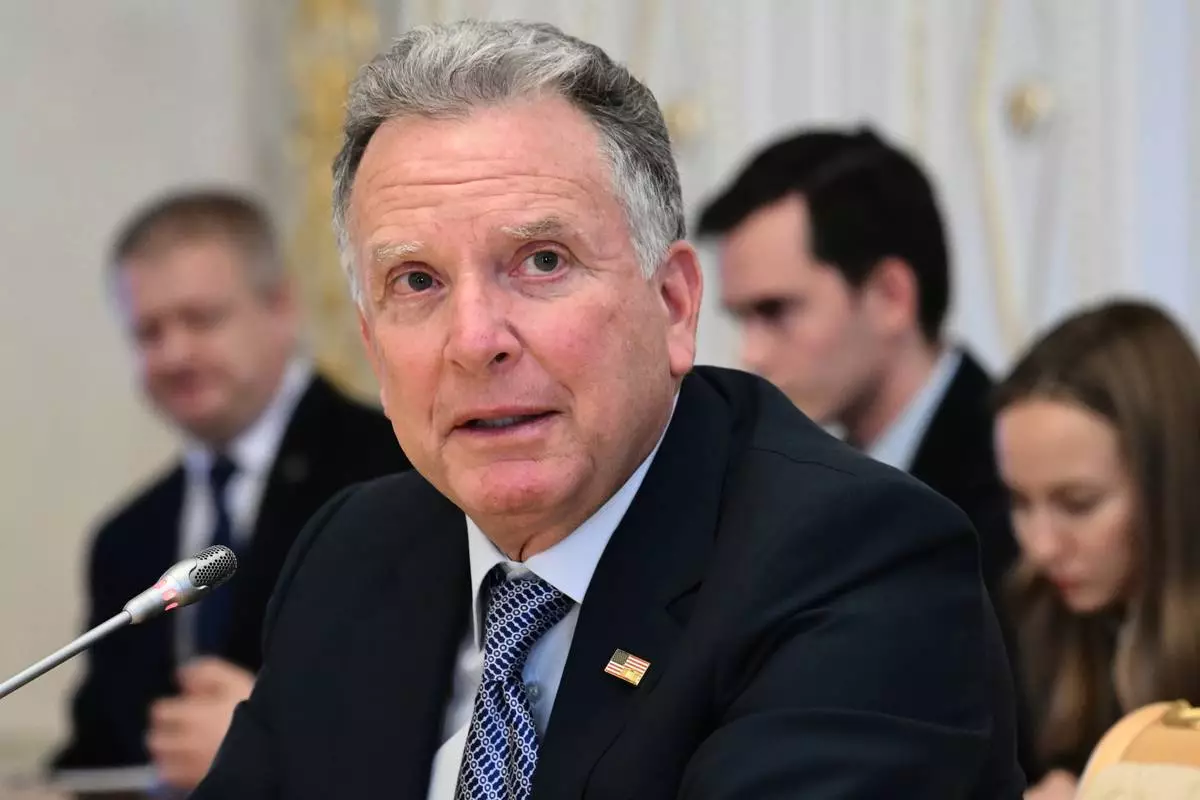
U.S. President Donald Trump's special envoy Steve Witkoff speaks during his meeting with Russian President Vladimir Putin at the Konstantin Palace in Strelnya, outside St. Petersburg, Russia, on Wednesday, Oct. 21, 2026. (Kristina Solovyova, Sputnik, Kremlin Pool Photo via AP)
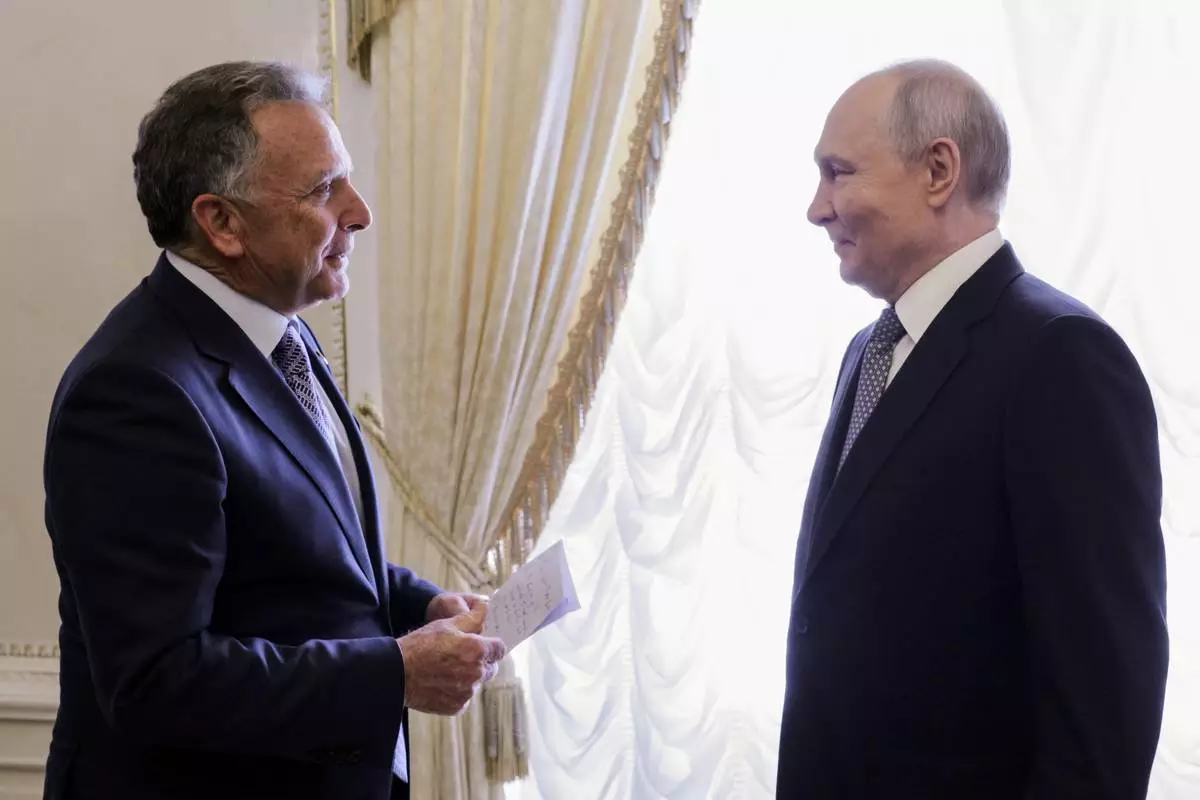
U.S. President Donald Trump's special envoy Steve Witkoff, left, holds a paper while speaking to Russian President Vladimir Putin at the Konstantin Palace in Strelnya, outside St. Petersburg, Russia, on Wednesday, Oct. 21, 2026. (Gavriil Grigorov, Sputnik, Kremlin Pool Photo via AP)
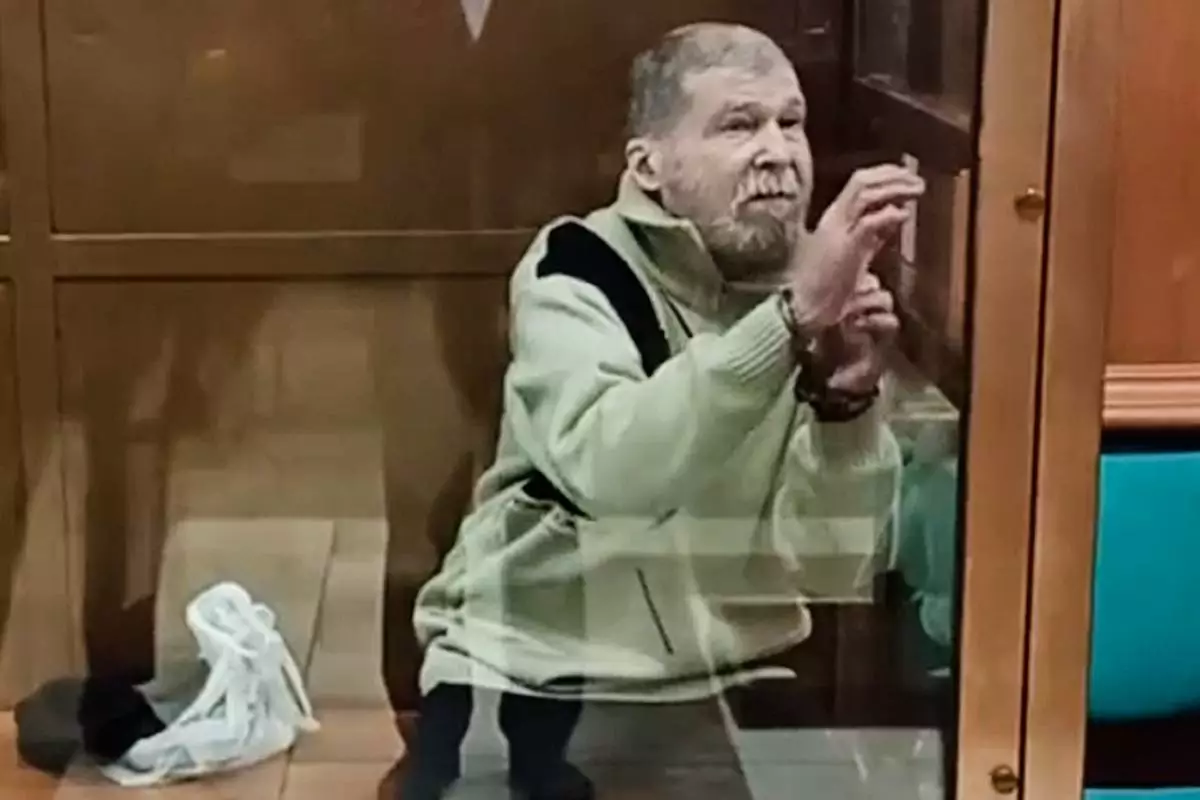
FILE - In this photo taken from video released by the Moscow City Court Press Service, Stephen Hubbard, a U.S. citizen accused of fighting as a mercenary in Ukraine against Russia stands in a glass cage during a court session in the Moscow City court in Moscow, Russia, Oct. 7, 2024. (Moscow City Court Press Service via AP, File)
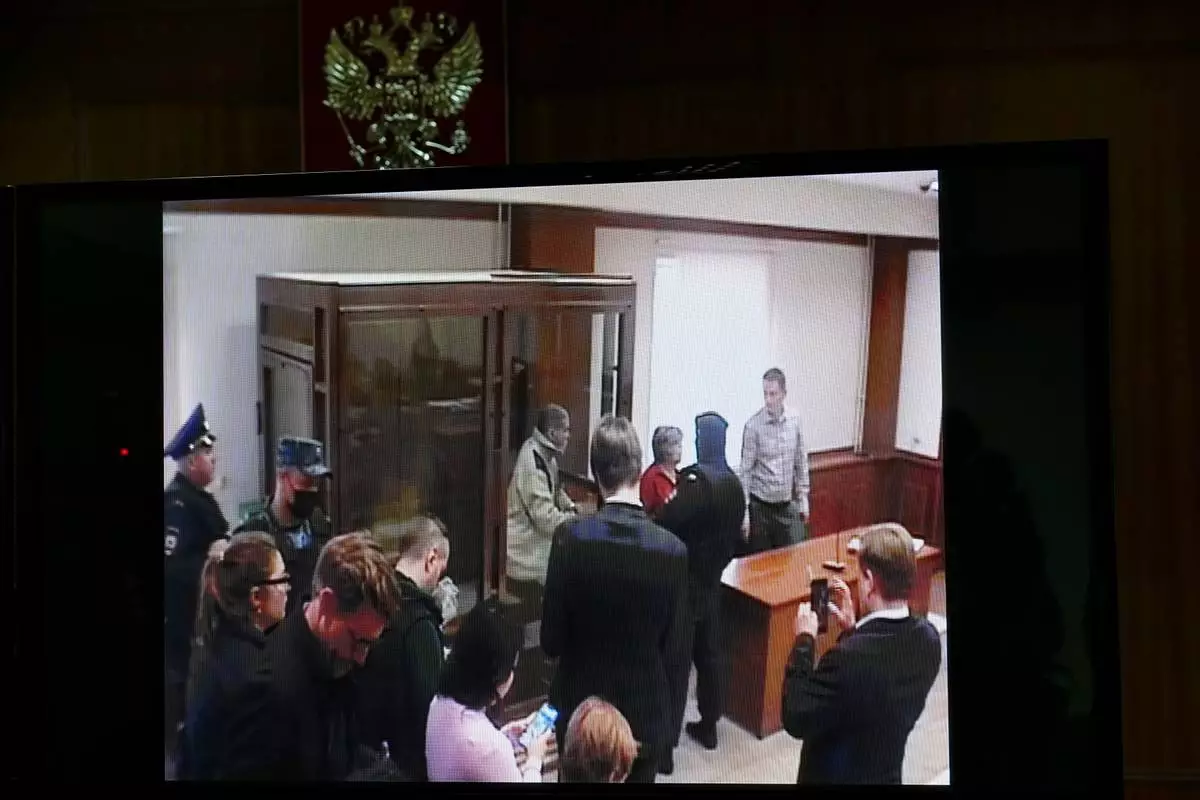
FILE - Stephen Hubbard, a U.S. citizen accused of fighting as a mercenary in Ukraine against Russia shows up in a video link as he stands in a glass cage during a court session in the Moscow City court in Moscow, Russia, Monday, Oct. 7, 2024. (AP Photo/Alexander Zemlianichenko, File)
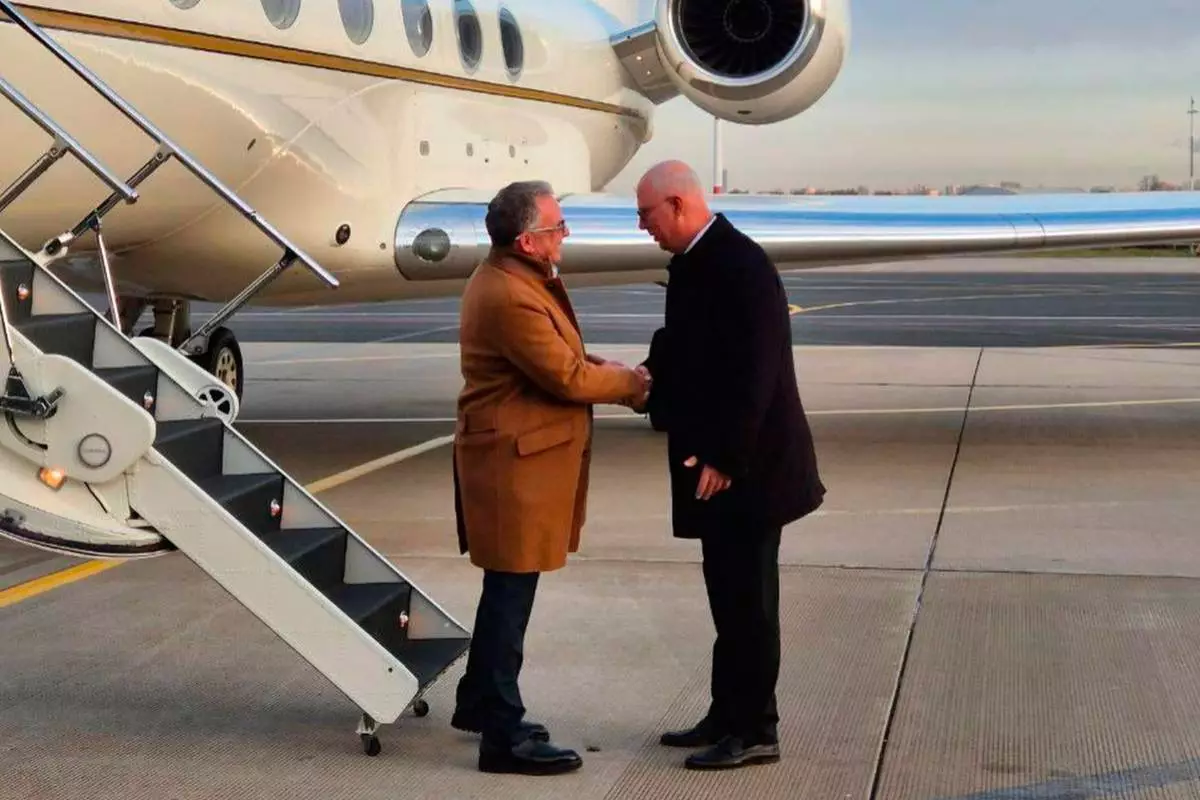
Russian presidential envoy Kirill Dmitriev, right, greets U.S. special envoy Steve Witkoff at the international airport outside St. Petersburg, Russia, Wednesday, Oct. 21, 2026. (TASS Photo via AP)