Skip to Content Facebook Feature Image

In Honduras, hard hit by drought, authorities hope to make it rain using contentious tactic

News

In Honduras, hard hit by drought, authorities hope to make it rain using contentious tactic
News

News

In Honduras, hard hit by drought, authorities hope to make it rain using contentious tactic

2026-10-21 23:30 Last Updated At:23:50

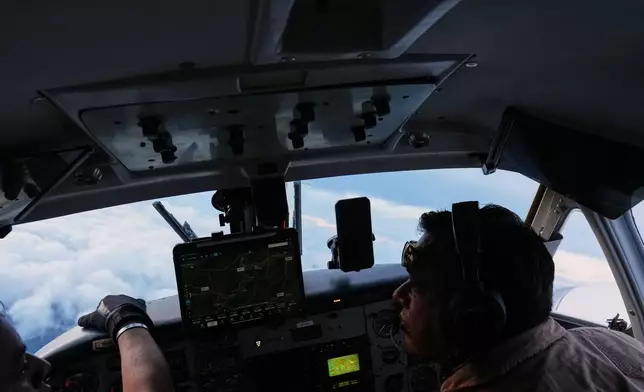
NUEVA CONCEPCION, Honduras (AP) — Victor Torres is on the hunt for clouds as he flies over parched corn fields ravaged by months of drought in the rugged Honduran mountains.

“We’re seeing strong cloud cover over here,” the pilot says, pointing to a map on the dashboard as he banks the small plane sharply into a patch of dark gray.

More Images
People line up to receive food aid distributed by the World Food Program in the drought-prone Dry Corridor, where the government declared a state of emergency over worsening drought conditions linked to El Niño in Nueva Concepción, Honduras, Thursday, Oct. 15, 2026. (AP Photo/Moises Castillo)
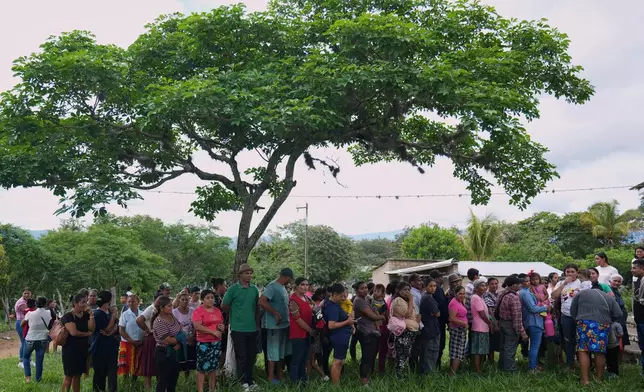
People line up to receive food aid distributed by the World Food Program in the drought-prone Dry Corridor, where the government declared a state of emergency over worsening drought conditions linked to El Niño in Nueva Concepción, Honduras, Thursday, Oct. 15, 2026. (AP Photo/Moises Castillo)

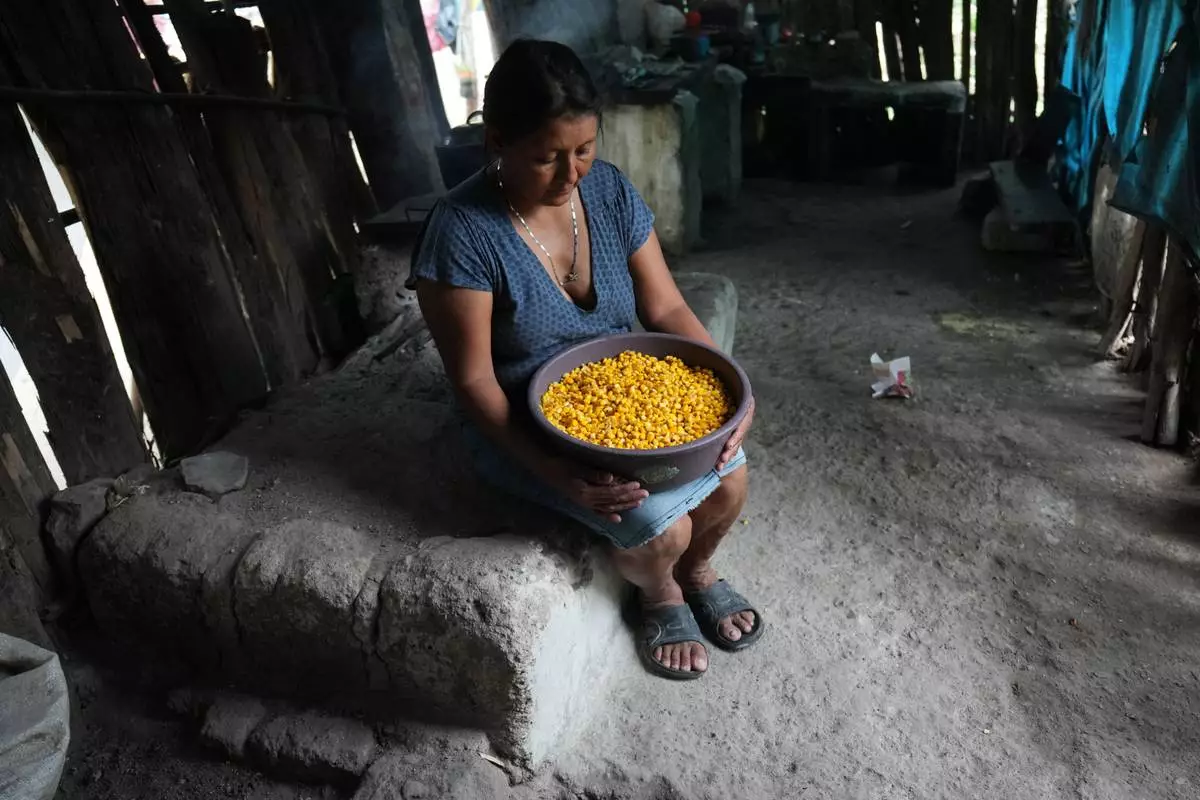
Glenda Suyapa Vasquez holds a bucket containing the corn she uses in one day to feed six people in her home in Texiguat, Honduras, part of the Central American Dry Corridor, Sunday, Oct. 11, 2026. (AP Photo/Moises Castillo)
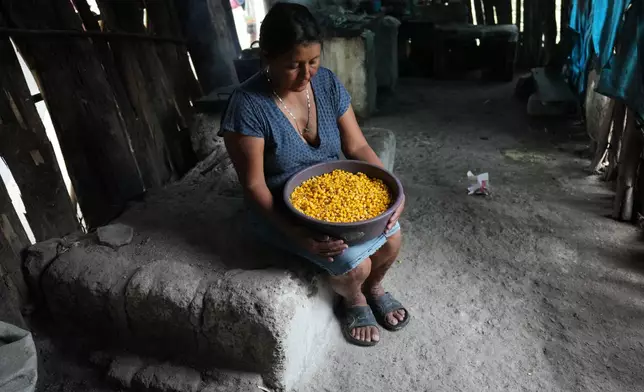
Glenda Suyapa Vasquez holds a bucket containing the corn she uses in one day to feed six people in her home in Texiguat, Honduras, part of the Central American Dry Corridor, Sunday, Oct. 11, 2026. (AP Photo/Moises Castillo)

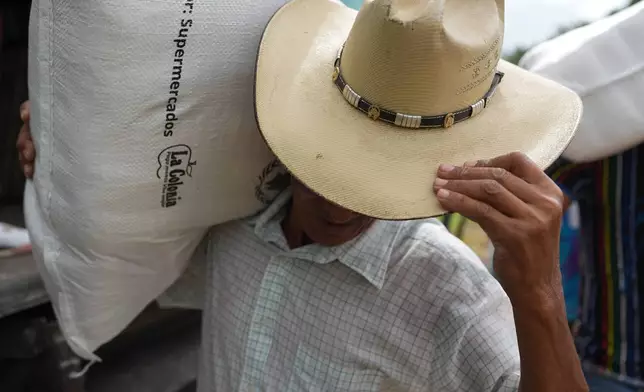
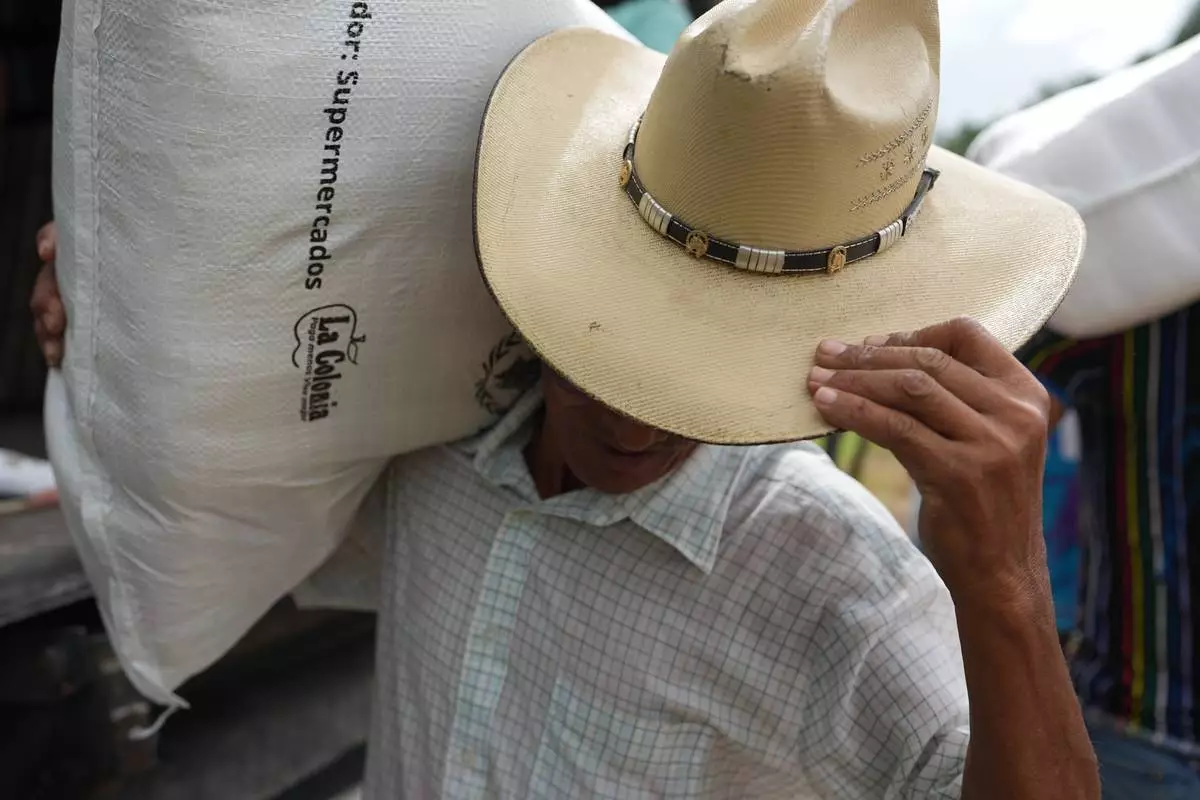
A peasant loads food distributed by the World Food Program in Honduras’ drought-prone Dry Corridor, where the government declared a state of emergency over worsening drought conditions linked to El Niño in Nueva Concepción, Honduras, Thursday, Oct. 15, 2026. (AP Photo/Moises Castillo)
A peasant loads food distributed by the World Food Program in Honduras’ drought-prone Dry Corridor, where the government declared a state of emergency over worsening drought conditions linked to El Niño in Nueva Concepción, Honduras, Thursday, Oct. 15, 2026. (AP Photo/Moises Castillo)

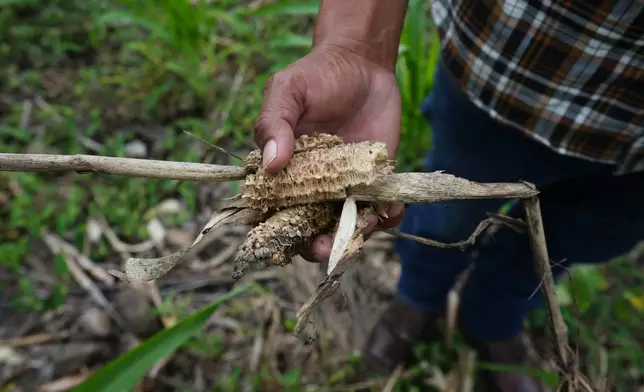
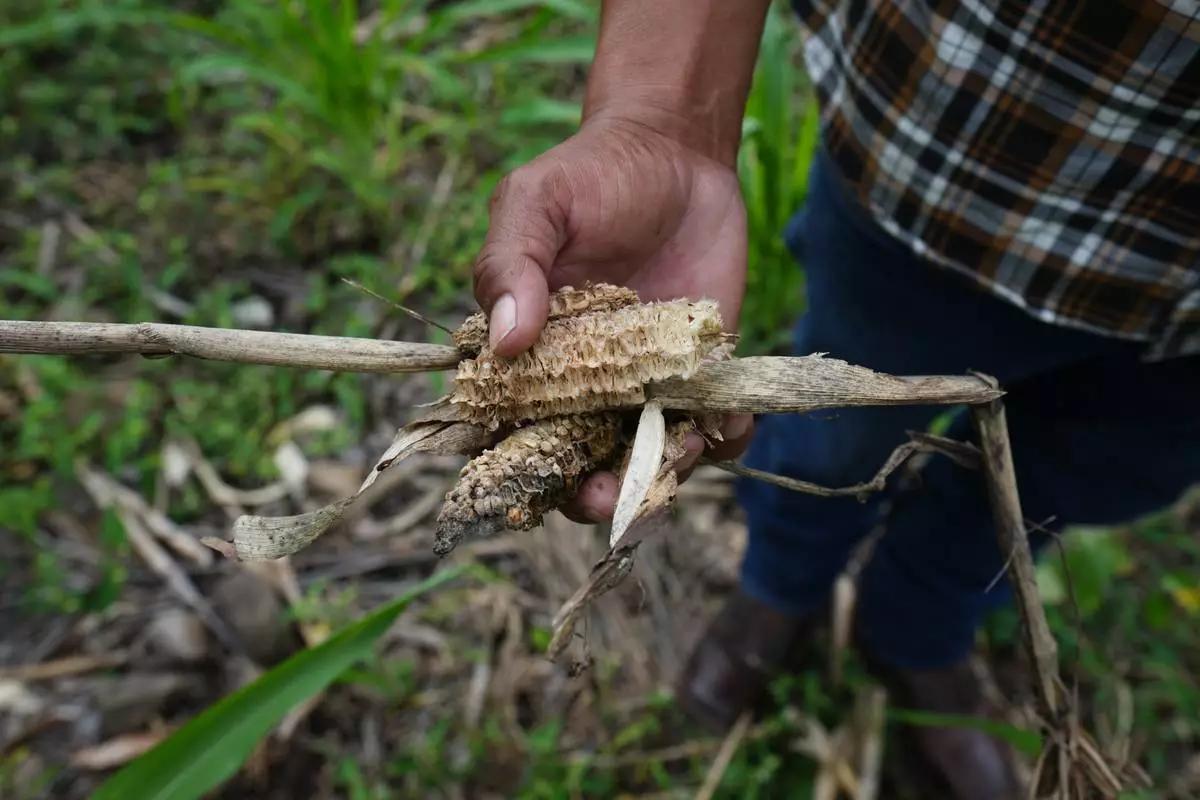
Giovani Contreras shows the remains of a corn crop that failed due to a lack of rain in Texiguat, Honduras, part of the Central American Dry Corridor, Sunday, Oct. 11, 2026. (AP Photo/Moises Castillo)

Giovani Contreras shows the remains of a corn crop that failed due to a lack of rain in Texiguat, Honduras, part of the Central American Dry Corridor, Sunday, Oct. 11, 2026. (AP Photo/Moises Castillo)

Salvadoran farmer Raul Figueroa walks through a dried-up cornfield caused by a lack of rain in Tecoluca, El Salvador, part of the Central American Dry Corridor, Wednesday, Oct. 14, 2026. (AP Photo/Salvador Melendez)
Salvadoran farmer Raul Figueroa walks through a dried-up cornfield caused by a lack of rain in Tecoluca, El Salvador, part of the Central American Dry Corridor, Wednesday, Oct. 14, 2026. (AP Photo/Salvador Melendez)

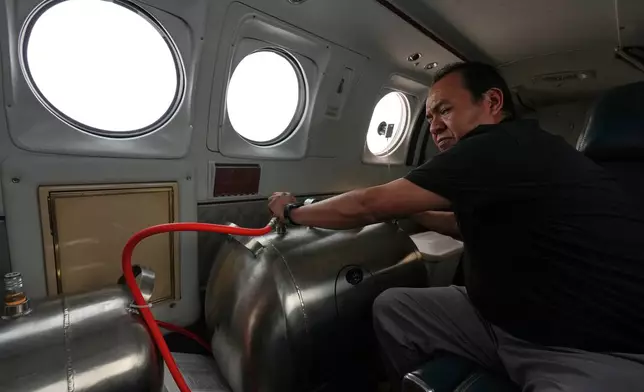
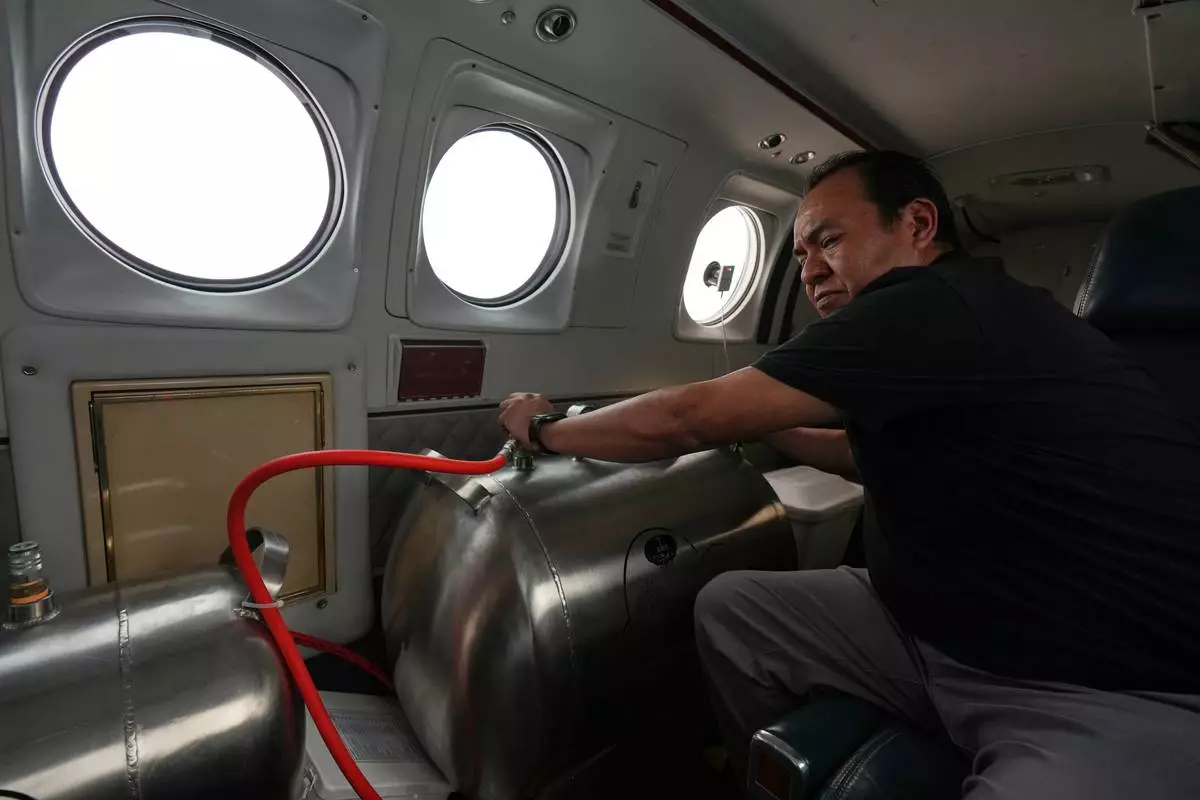
Mexican technician Juan Carlos Diaz operates equipment aboard an aircraft as it flies through the clouds during a cloud-seeding mission aimed at inducing rain as part of the Honduran government's efforts to address an extensive drought in Valle Siria, Honduras, Wednesday, Oct. 14, 2026. (AP Photo/Moises Castillo)
Mexican technician Juan Carlos Diaz operates equipment aboard an aircraft as it flies through the clouds during a cloud-seeding mission aimed at inducing rain as part of the Honduran government's efforts to address an extensive drought in Valle Siria, Honduras, Wednesday, Oct. 14, 2026. (AP Photo/Moises Castillo)

Pilots Victor Torres from Mexico, right, and Jose Torres from Honduras fly an aircraft during a cloud seeding mission aimed at inducing rain as part of the Honduran government's efforts to address a prolonged drought at the Aguan river, in northern Honduras, Wednesday, Oct. 14, 2026. (AP Photo/Moises Castillo)

Pilots Victor Torres from Mexico, right, and Jose Torres from Honduras fly an aircraft during a cloud seeding mission aimed at inducing rain as part of the Honduran government's efforts to address a prolonged drought at the Aguan river, in northern Honduras, Wednesday, Oct. 14, 2026. (AP Photo/Moises Castillo)

Behind him, a technician cranks the knob of a large metal tank, which hisses as it sprays yellow silver iodide particles into the skies. This “cloud seeding” is a gamble by the Honduran government, aiming to induce enough rain over enough fields to help farmers and their crops survive.

The El Niño climate pattern, scrambling weather worldwide and now exacerbated by warming seas, has devastated communities across the Central American Dry Corridor, an arid region from southern Mexico through Panama.

The effects are particularly acute in the dry forests of Guatemala, Honduras, El Salvador and Nicaragua, where corn and bean crops have dried up, leaving subsistence farmers without food. Cattle have either died or been sold off. Coffee plantations have withered and shrimp farms have lost production.

“Families are going to bed with one or two meals a day, and that’s after turning to other survival strategies like selling off their animals, their tools … just to get by,” said Aníbal Zúñiga, who coordinates World Food Program aid distribution in Nueva Concepcion, a 250-person village tucked in the mountains 90 minutes north of Honduras’ capital, Tegucigalpa.

The WFP estimates that nearly 50 million people globally could be pushed into acute food insecurity now that El Niño is expected to last into 2027. Central America is among the places to be hit the hardest.

In Honduras, where one in five people already face some level of food insecurity in a normal year, the government has paid a Mexican company $750,000 for 20 flights to trigger rainfall. Meteorologists have routinely cast doubt on cloud seeding, saying weather modification is no solution to long-term drought. Some religious rural farmers see it as trying to play God with the weather.

“This is an experiment,” said Nabil Kawas, a meteorologist and former dean of sciences at the National Autonomous University of Honduras. “Now if you ask me whether I would have taken that $750,000 and invested it in an irrigation project or water reservoir … it would likely have a greater benefit to poor farmers who use the water for their crops.”

José Francisco Ordóñez, a spokesman for the Honduran Secretary of Agriculture, defends the flights as one of a number of climate mitigation projects being carried out by the government and international aid groups. Others include fortifying existing irrigation systems, building water reservoirs, and distributing food aid, fertilizer and seeds to farmers hit the hardest.

Ordóñez said the cloud seeding program has taken advantage of recent clouds and rainfall briefly breaking up the painfully dry season to make the most of the water before the drought stretches on.

He said the flights have boosted rainfall between 20% and 60% in key areas, compared to projected rainfall, and they hope to extend it. Kawas said a previous cloud seeding program in Honduras during comparable droughts boosted rain by less than 10%.

Carlos Alberto Hernández spends most of his days wondering if he and his wife will go hungry.

They have long lived off their small patch of bean crops in Nueva Concepcion, and like most people in the Dry Corridor, the 81-year-old farmer has never been able to afford an irrigation system, so they depend on the skies to yield their two yearly harvests.

As Honduran authorities issued a series of drought alerts this summer, he watched his first crop of the year die.

“We can’t afford to buy food. What we grow, that’s what we live off,” Hernández said. “Without water, we’re left with nothing.”

Ordóñez estimated that farmers like Hernández have lost 80% to 90% of their crops during this year’s drought.

Hernández, who joined hundreds at the WFP site, said he’s spent many nights with an empty stomach, preferring to save what food he had for the next day. Thursday’s food shipment, funded by WFP and coordinated with Honduras’ government, was the first such aid the community had received.

But Hernández dismissed the cloud seeding, saying what he and his neighbors need is help digging wells, so they can survive with or without the rain.

In an attempt to fend off a deeper crisis, Salvadoran authorities declared a six-month state of emergency. Guatemala approved emergency measures to mitigate hunger in poorer indigenous communities, including importing staple grains without tariffs.

As for Nicaragua, where the government tightly controls information, the exiled opposition has criticized the lack of an emergency declaration or contingency plan. Nicaragua’s government did not respond to a request for comment.

The recent rainfall, which was expected before the cloud seeding began, has given farmers some hope. Hernández has planted bean seedlings. If more rain falls, they could provide him with steady food by December.

But the World Meteorological Organization now projects that El Niño will persist until February, and the U.S. National Weather Service predicted it will strengthen and likely break records. For the Dry Corridor, this likely means what little rain they usually get will fall elsewhere, feeding everything from floods to hurricanes in other regions.

In Nueva Concepcion, another crop failure would be a second blow in a year when families already sold whatever they could to buy food, and have few resources to recover, Zúñiga said.

Hernández keeps a close watch on his small patch of bean sprouts, peeking out from soil that had been cracked and dry.

“You go to bed at night, and you wake up in the morning praying to God that he sends water,” Hernández said.

——

Moises Castillo in Nueva Concepcion, Marlon González in Tegucigalpa, Honduras, Sonia Pérez D. in Guatemala City, and Marcos Alemán in San Salvador contributed to this report.

The Associated Press’ climate and environmental coverage receives financial support from multiple private foundations. AP is solely responsible for all content. Find AP’s standards for working with philanthropies, a list of supporters and funded coverage areas at AP.org.
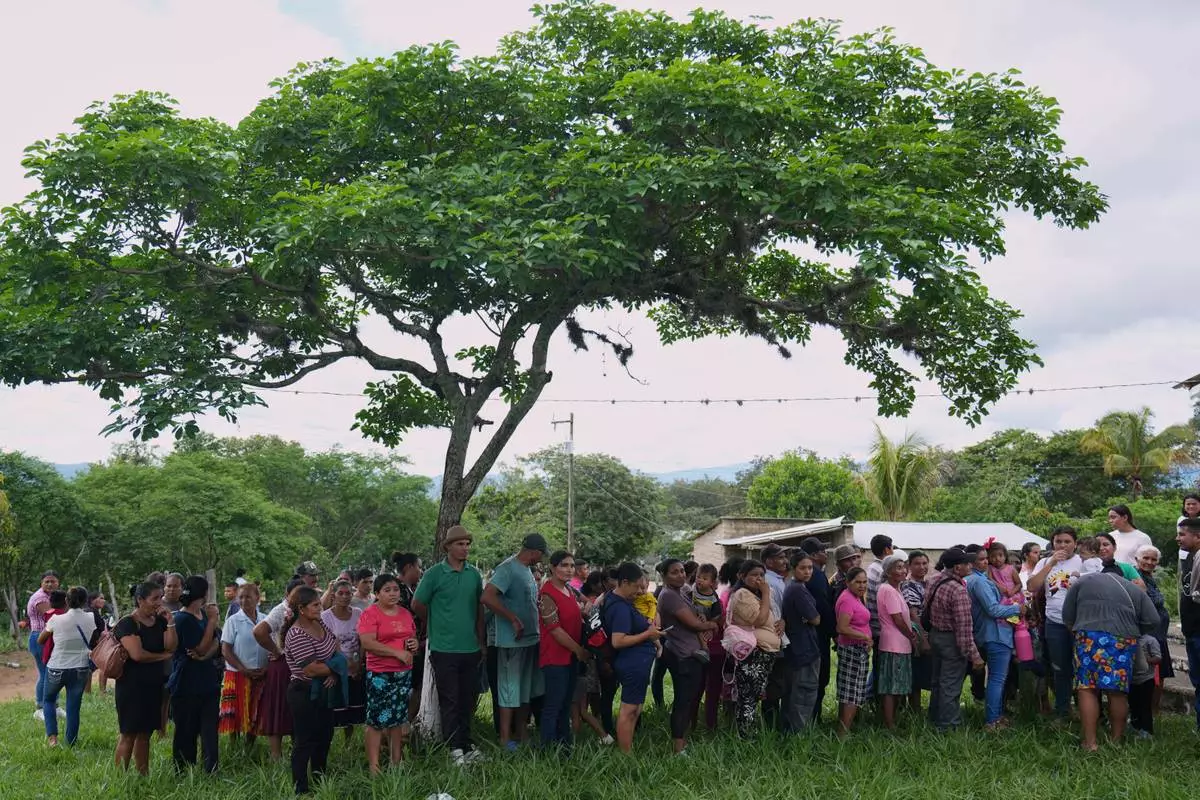
People line up to receive food aid distributed by the World Food Program in the drought-prone Dry Corridor, where the government declared a state of emergency over worsening drought conditions linked to El Niño in Nueva Concepción, Honduras, Thursday, Oct. 15, 2026. (AP Photo/Moises Castillo)
People line up to receive food aid distributed by the World Food Program in the drought-prone Dry Corridor, where the government declared a state of emergency over worsening drought conditions linked to El Niño in Nueva Concepción, Honduras, Thursday, Oct. 15, 2026. (AP Photo/Moises Castillo)

Glenda Suyapa Vasquez holds a bucket containing the corn she uses in one day to feed six people in her home in Texiguat, Honduras, part of the Central American Dry Corridor, Sunday, Oct. 11, 2026. (AP Photo/Moises Castillo)
Glenda Suyapa Vasquez holds a bucket containing the corn she uses in one day to feed six people in her home in Texiguat, Honduras, part of the Central American Dry Corridor, Sunday, Oct. 11, 2026. (AP Photo/Moises Castillo)

A peasant loads food distributed by the World Food Program in Honduras’ drought-prone Dry Corridor, where the government declared a state of emergency over worsening drought conditions linked to El Niño in Nueva Concepción, Honduras, Thursday, Oct. 15, 2026. (AP Photo/Moises Castillo)
A peasant loads food distributed by the World Food Program in Honduras’ drought-prone Dry Corridor, where the government declared a state of emergency over worsening drought conditions linked to El Niño in Nueva Concepción, Honduras, Thursday, Oct. 15, 2026. (AP Photo/Moises Castillo)

Giovani Contreras shows the remains of a corn crop that failed due to a lack of rain in Texiguat, Honduras, part of the Central American Dry Corridor, Sunday, Oct. 11, 2026. (AP Photo/Moises Castillo)

Giovani Contreras shows the remains of a corn crop that failed due to a lack of rain in Texiguat, Honduras, part of the Central American Dry Corridor, Sunday, Oct. 11, 2026. (AP Photo/Moises Castillo)

Salvadoran farmer Raul Figueroa walks through a dried-up cornfield caused by a lack of rain in Tecoluca, El Salvador, part of the Central American Dry Corridor, Wednesday, Oct. 14, 2026. (AP Photo/Salvador Melendez)
Salvadoran farmer Raul Figueroa walks through a dried-up cornfield caused by a lack of rain in Tecoluca, El Salvador, part of the Central American Dry Corridor, Wednesday, Oct. 14, 2026. (AP Photo/Salvador Melendez)

Mexican technician Juan Carlos Diaz operates equipment aboard an aircraft as it flies through the clouds during a cloud-seeding mission aimed at inducing rain as part of the Honduran government's efforts to address an extensive drought in Valle Siria, Honduras, Wednesday, Oct. 14, 2026. (AP Photo/Moises Castillo)

Mexican technician Juan Carlos Diaz operates equipment aboard an aircraft as it flies through the clouds during a cloud-seeding mission aimed at inducing rain as part of the Honduran government's efforts to address an extensive drought in Valle Siria, Honduras, Wednesday, Oct. 14, 2026. (AP Photo/Moises Castillo)

Pilots Victor Torres from Mexico, right, and Jose Torres from Honduras fly an aircraft during a cloud seeding mission aimed at inducing rain as part of the Honduran government's efforts to address a prolonged drought at the Aguan river, in northern Honduras, Wednesday, Oct. 14, 2026. (AP Photo/Moises Castillo)


Pilots Victor Torres from Mexico, right, and Jose Torres from Honduras fly an aircraft during a cloud seeding mission aimed at inducing rain as part of the Honduran government's efforts to address a prolonged drought at the Aguan river, in northern Honduras, Wednesday, Oct. 14, 2026. (AP Photo/Moises Castillo)

NEW YORK (AP) — The U.S. stock market is ticking higher Wednesday as strong profit reports from SpaceX, Capital One Financial and other big companies offset updates from Netflix and AT&T that investors found disappointing.

The S&P 500 rose 0.4% and was on track for a third straight modest gain. The Dow Jones Industrial Average was up 127 points, or 0.2%, as of 11:30 a.m. Eastern time, and the Nasdaq composite was 1% higher.

SpaceX helped lead the market and climbed 9.9% after reporting a stronger profit for the summer than analysts expected. Elon Musk, who runs the company that makes money from artificial-intelligence technology, rockets and other businesses, also said that SpaceX took a step to consider a possible merger with Tesla, his electric-vehicle company.

Tesla, which will report its latest quarterly results late Wednesday, rose 3.5% and was one of the strongest forces lifting the S&P 500.

Other stocks rallying on profit reports that topped analysts’ expectations included Capital One Financial, which rose 4.4%, and Winnebago Industries, which climbed 7.6%.

Expectations are high for profit growth during the summer, and companies will need to meet them to justify the big runs their stock prices have made toward records despite worries about high inflation, higher interest rates and other challenges weighing on Wall Street.

Winnebago was able to report a more resilient profit than analysts expected even as high fuel prices and frustration among U.S. shoppers restrain interest in recreational vehicles, for example. CEO Michael Happe said its more expensive towable RVs are a tougher sell, but customers are interested in its “more accessible” offerings.

On the losing side of Wall Street was Netflix, which fell 4.9% even though the streaming service reported a stronger profit than analysts expected. Investors focused instead on worries that Netflix’s momentum may be slowing. The company’s forecast for revenue growth in the final three months of the year fell short of analysts’ expectations.

AT&T fell 6.3% even though it likewise delivered a stronger profit for the latest quarter than analysts expected. It gave a forecast for growth this year in an underlying measure of earnings before income taxes and some other things that fell short of some analysts’ expectations.

Among AI stocks, which have been at the center of the market’s action in recent weeks, the movements remained unsettled.

After leading the rest of the market for years because of the frenzy around AI, stocks in the industry have become shaky on worries that the build out of data centers may slow because of how much more expensive it’s become to borrow money.

CoreWeave, which has borrowed money to buy AI chips that it rents out to customers over the cloud, has been particularly volatile. It bounced between an early gain of nearly 4% and a drop of 4.5% Wednesday morning before moderating to a dip of 0.5%. A day earlier, it had careened between similarly wide gains and losses.

Other AI-linked stocks were more resilient. Nvidia's rise of 1.7% was the strongest force lifting the S&P 500.

Besides SpaceX’s profit report showing strength for AI spending, another encouraging signal for the industry came from Super Micro Computer, which sells AI servers and services. It said it expects to report stronger revenue for the summer than it had earlier forecast because of “increased demand for AI platforms,” and its stock rallied 8.8%.

Another potential boost for the AI industry came from an easing of Treasury yields, which help dictate how expensive loans are for the U.S. government, companies and regular Americans.

The yield on the 10-year Treasury fell to 5.10% from 5.12% late Tuesday, though it remains far above its 3.97% level from before the war with Iran sent oil prices and worries about inflation higher.

Oil prices remained unsteady on Wednesday following big recent swings on uncertainty about when the energy industry can return to normal. The price for a barrel of Brent crude added 0.3% to $109.12 after flipping up and down through the morning. It’s been yo-yoing between $97 and $112 in October.

In stock markets abroad, indexes rose in Europe following a mixed finish in Asia. South Korea’s Kospi jumped 3.3% for one of the world’s biggest moves as AI stocks regained strength.

AP Business Writers Michelle Chapman and Elaine Kurtenbach contributed to this report.

A general view shows the floor of the New York Stock Exchange, Friday, Oct. 16, 2026, in New York. (AP Photo/Yuki Iwamura)

A general view shows the floor of the New York Stock Exchange, Friday, Oct. 16, 2026, in New York. (AP Photo/Yuki Iwamura)

FILE - Signs at the intersection of Broad and Wall Streets stand near flags flying from the New York Stock Exchange on Sept. 4, 2024, in New York. (AP Photo/Peter Morgan, File)

FILE - Signs at the intersection of Broad and Wall Streets stand near flags flying from the New York Stock Exchange on Sept. 4, 2024, in New York. (AP Photo/Peter Morgan, File)

A currency trader passes by a screen showing the Korea Composite Stock Price Index (KOSPI) and the foreign exchange rate between U.S. Dollar and South Korean Won at the foreign exchange dealing room of the Hana Bank headquarters in Seoul, South Korea, Wednesday, Oct. 21, 2026. (AP Photo/Ahn Young-joon)

A currency trader passes by a screen showing the Korea Composite Stock Price Index (KOSPI) and the foreign exchange rate between U.S. Dollar and South Korean Won at the foreign exchange dealing room of the Hana Bank headquarters in Seoul, South Korea, Wednesday, Oct. 21, 2026. (AP Photo/Ahn Young-joon)

A currency trader talks with her colleague near a screen showing the Korea Composite Stock Price Index (KOSPI), and the foreign exchange rate between U.S. Dollar and South Korean Won at the foreign exchange dealing room of the Hana Bank headquarters in Seoul, South Korea, Wednesday, Oct. 21, 2026. (AP Photo/Ahn Young-joon)

A currency trader talks with her colleague near a screen showing the Korea Composite Stock Price Index (KOSPI), and the foreign exchange rate between U.S. Dollar and South Korean Won at the foreign exchange dealing room of the Hana Bank headquarters in Seoul, South Korea, Wednesday, Oct. 21, 2026. (AP Photo/Ahn Young-joon)

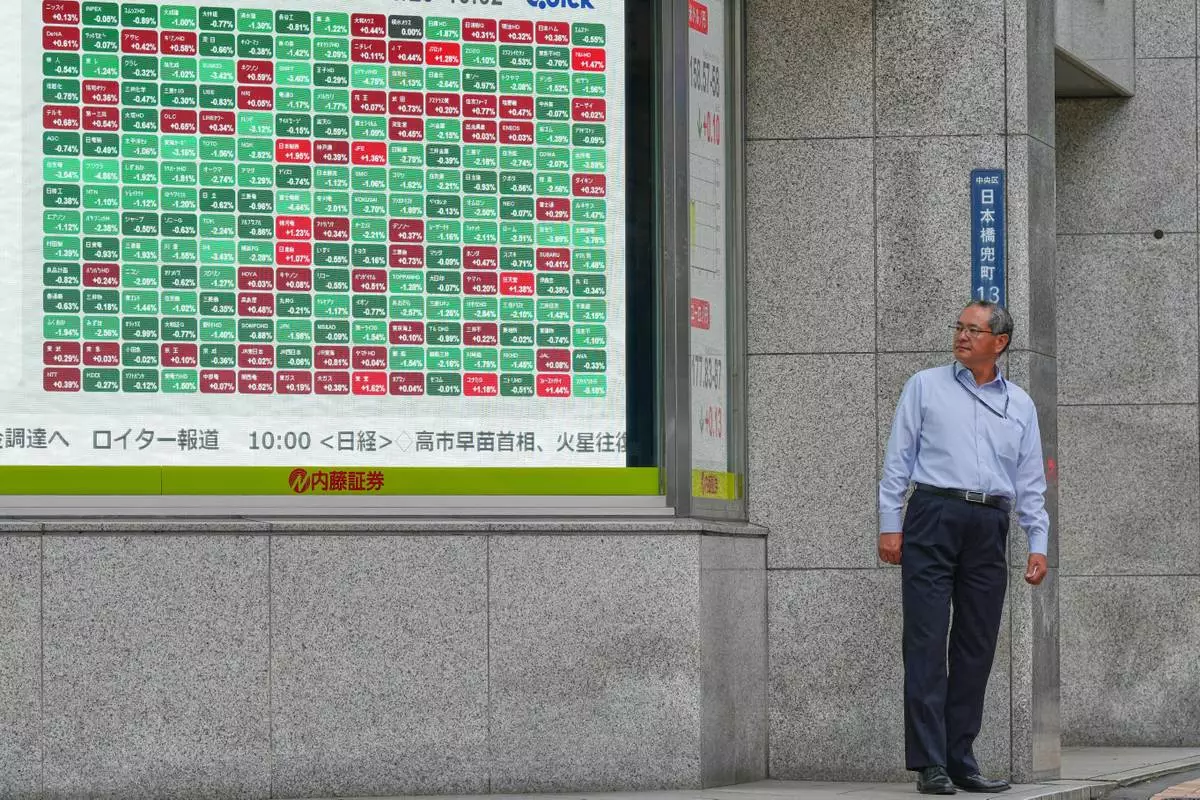
A person looks at an electronic stock board showing Japan's Nikkei index at a securities firm Tuesday, Oct. 20, 2026, in Tokyo. (AP Photo/Eugene Hoshiko)

A person looks at an electronic stock board showing Japan's Nikkei index at a securities firm Tuesday, Oct. 20, 2026, in Tokyo. (AP Photo/Eugene Hoshiko)

A screen shows the Korea Composite Stock Price Index (KOSPI), the foreign exchange rate between U.S. Dollar and South Korean Won, SK Hynix and Samsung Electronics Co. stock price at the foreign exchange dealing room of the Hana Bank headquarters in Seoul, South Korea, Wednesday, Oct. 21, 2026. (AP Photo/Ahn Young-joon)

A screen shows the Korea Composite Stock Price Index (KOSPI), the foreign exchange rate between U.S. Dollar and South Korean Won, SK Hynix and Samsung Electronics Co. stock price at the foreign exchange dealing room of the Hana Bank headquarters in Seoul, South Korea, Wednesday, Oct. 21, 2026. (AP Photo/Ahn Young-joon)

Recommended Articles