Amid rapid AI adoption, a former U.S. financial official has called on global regulators to refresh banking rules to strike a balance between promoting technological innovation and maintaining financial stability.
At the Annual Conference of Financial Street Forum 2026, taking place from Oct. 19 to 22 in Beijing, Sheila Bair, former chair of the U.S. Federal Deposit Insurance Corporation (FDIC), sat for an interview with the China Global Television Network (CGTN). She underscored that AI has opened up vast potential for boosting financial inclusion while also presenting new cybersecurity challenges.
"I am very optimistic about technology improving financial services, improving banking and making it more inclusive. I think we talked a lot about AI, and I think there are tremendous benefits with AI in terms of helping banks that provide better quality services to their customers and being more inclusive, having better tools to understand whether a loan should be made, the reliability, the creditworthiness of that borrower, customer service, cybersecurity. So that's a double-edged sword," said Bair.
Bair noted that emerging technologies, particularly blockchain, offer innovative tools to enhance payment efficiency and bolster financial stability.
"AI gives banks better tools to protect themselves against cyberattacks, but it also gives that the hackers some additional tools to use. But I think blockchain technology has good promise there to make payments faster and cheaper and easier for households. It's also a really good tool for helping banks track ownership of collateral that they hold against loans. So, this has been a problem in lots of countries, including the U.S. When fraud occurs, banks think that they have loaned against good collateral against an asset that they can take possession of if the loan is not repaid. It turns out that that asset, that collateral has been pledged to multiple other lenders. So, so being able to track that, I think, is going to be a very good financial stability tool," she said.
She also highlighted the broad potential for international cooperation, noting that mutual learning can help advance bond market development and diversify credit channels.
"I think there's some good cooperation for learning and collaboration. I think China is developing its bond market, China has been working on that with some nice progress. And I think the U.S. has very developed capital markets. So, in the U.S., we don't rely just on bank lending for credit. We have bond markets too. So, bonds are issued to investors broadly, and that helps the larger companies at least, raise money to grow and operate," she said.
With a theme of "Building an Open Collaborative and Inclusive Ecosystem for Global Financial Development," this year's Financial Street Forum conference has attracted about 400 prominent guests from over 40 countries and regions to attend various activities, including the main forum, parallel forums, thematic conferences and side events.
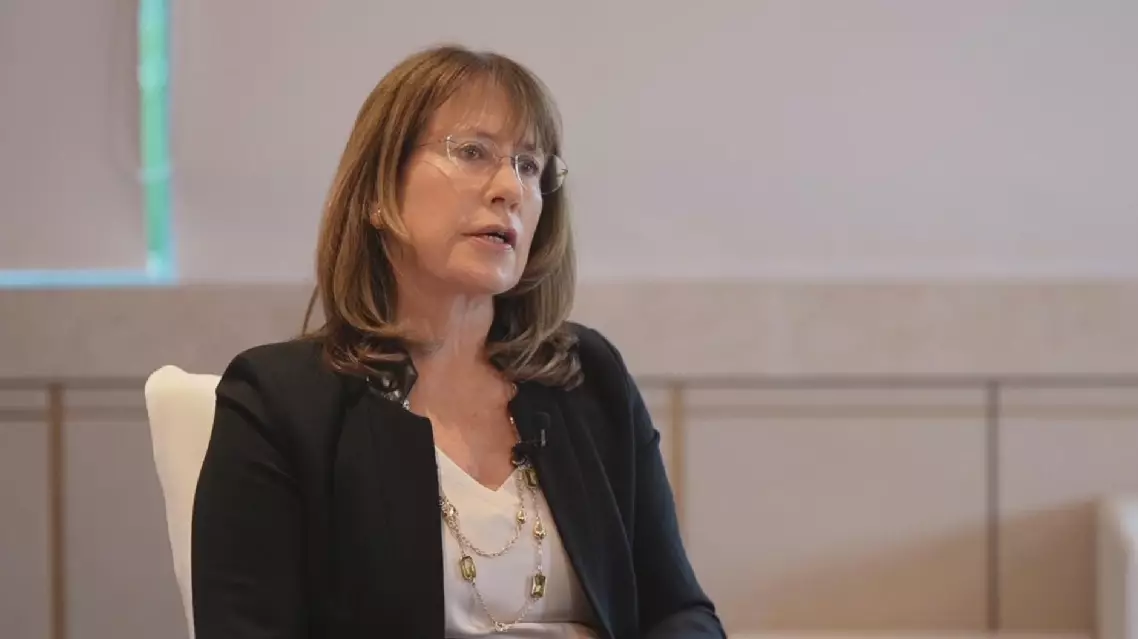
Former US financial official calls for updated banking rules amid AI adoption