Survivors of a deadly stampede at a religious celebration in the eastern Indian city of Kolkata have described the panic and chaos of the incident, after a sudden downpour drove thousands to seek shelter in an overcrowded pavilion.
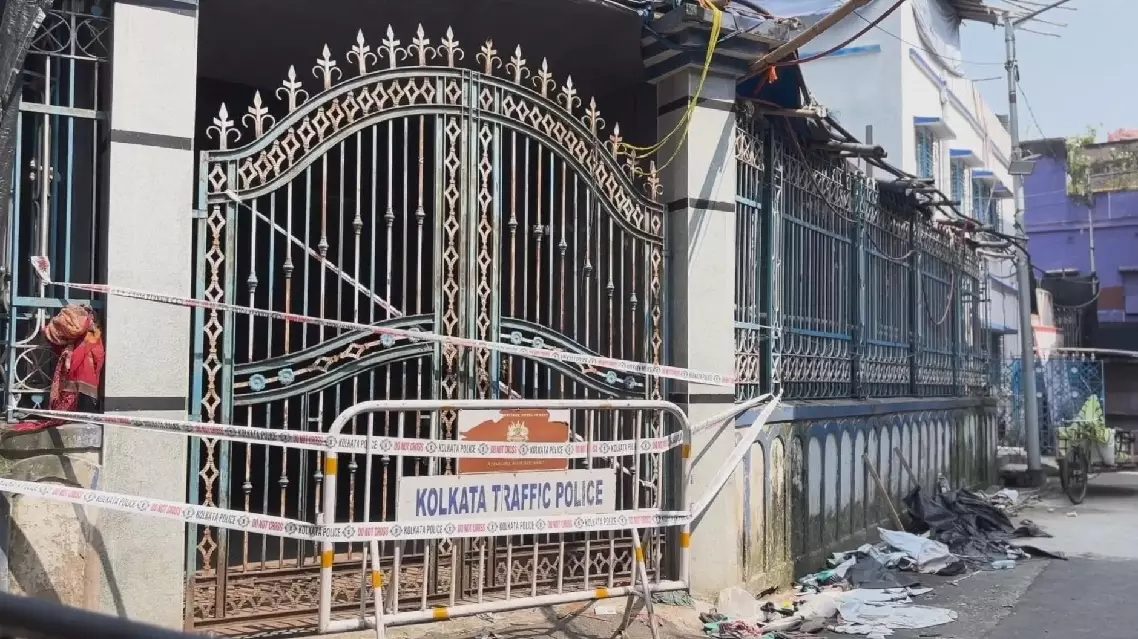
The stampede occurred at around 19:40 local time (1410 GMT) on Saturday at a temporary pavilion set up for the Hindu festival of Durga Puja in the city's Chorbagan Sarbojanin neighborhood. It resulted in the deaths of 19 people and left dozens injured.
Abhishek, who survived the incident, recounted the chaotic scene.
"At around 19:25, there was a sudden loud noise, like a loudspeaker announcement, and then a stampede-like situation developed. We were sitting here and people ran towards the spot. When we saw the situation, we found that people had fallen on top of one another. When we tried to pull someone out from underneath, we couldn’t get them free. So, in the end we broke the plywood barriers on both sides and moved some people through to the other side. After that, people were gradually brought out. By the time most people had been evacuated, some were still trapped underneath at the end. Most of those people were almost unconscious, in a semi-conscious state or possibly already dead; I cannot say for certain," said Abhishek.
He noted that violent or fatal situations are unheard of at this long-standing religious event.
"Look, this is not a new puja (Hindu act of worship). Chorbagan's puja has been going on for 91 years. Nothing like this has ever happened before. We never imagined something like this could happen. It is a major puja, a themed puja. That is why it is so well known. You could say it is famous. People come here to see the puja, which draws large crowds," said Abhishek.
In his view, the sudden rain was the cause of the chaos.
"Now, if you ask me how the incident happened, I would say it happened primarily because of the rain. The people inside the pandal (temporary structure for worship) did not come out because they were trying to avoid getting wet in the rain. And those outside were getting soaked. They rushed inside the pandal to take shelter to escape the rain. A space with a capacity of 500 people ended up accommodating 1,500 people," said Abhishek.
He also recalled the immediate aftermath, in which people acted quickly to save the lives of the injured.
"Initially, when the incident happened, we, the local people, were the ones who rescued them. Shortly afterwards, the police and volunteers arrived to provide support. Initially, we local residents were the first to step forward and begin the rescue," said Abhishek.
Another survivor, Santi Das, shared her account of the tragedy.
"The rain was coming down very heavily. Some people were standing there, and then people began rushing inside to escape the rain. The accident happened as people entered. Announcements were made repeatedly, telling people: 'Be careful! Be careful! Our structure is breaking. Move back!' But the public did not listen. Then, as one person fell, others fell on top of one another. Many people lost their lives. The exit area was narrow. When the commotion began, people tried to get out through that narrow passage, but the space was too small, which made it difficult for people to escape," said Das.
"Then many people around us, including the people nearby, tried to pull everyone out. They were all making efforts to help the injured regain consciousness. But the accident had already happened. I had never seen anything like this in my life. This was the first time I had witnessed such a thing. My own body was also affected, and I felt weak. Even walking and moving around were difficult. My mind was filled with worry, fear and panic," she said.
Survivors recount chaos of fatal stampede in India