China's electronic information manufacturing sector saw profit surge in the first three quarters, as 5G and AI continue to power high-quality industrial development, a Ministry of Industry and Information Technology (MIIT) official said Tuesday.
Data from the MIIT showed that in the first three quarters, the electronic information manufacturing sector sustained high-speed growth in revenue and profits. The industry's value-added growth reached 15.8 percent, 10.3 percentage points higher than the overall industrial value-added growth during the same period.
From January to August, the sector achieved a business revenue of 12.8 trillion yuan (about 1.92 trillion U.S. dollars), up 20.1 percent year on year, and total profits of 847.5 billion yuan, surging 109.9 percent year on year. Its contribution to the profit growth of all industrial enterprises above designated size reached 62 percent.
"Innovation in hot areas such as AI remains highly active, becoming the main driver of industrial growth. In the third quarter, more than 20 new AI-powered mobile phones and computers were launched. Flagship products have acquired on-device autonomous task execution capabilities, marking a shift of AI terminals from passive response to active service," said Xie Cun, director general of the Information and Communications Development Department of the MIIT.
According to MIIT data, the information and communication industry maintained stable development in the first three quarters. The total volume of telecommunications services increased by 7.3 percent year on year, and internet business revenue grew by 8.9 percent year on year from January to August.
Domestically, 5G and industrial internet are empowering all sectors of the economy, and foreign investment access to telecommunications services is steadily opening up, according to Xie.
"Infrastructure capabilities have been steadily enhanced. A total of 5.254 million 5G base stations have been built, with the coverage of 5G-Advanced networks gradually expanding. Pilot deployments of 10-gigabit optical networks have been realized in residential communities, factories, and industrial parks. In terms of computing power facilities, by the end of September 2026, China's intelligent computing power scale had reached 2,592 EFLOPS, a year-on-year increase of 146 percent, strongly supporting the rapid development of China's AI industry," said Xie.
EFLOPS is a unit of measurement for a computer's speed. A 1 EFLOPS computing system can complete 1 quintillion floating-point operations per second.
Xie also noted that China continues to promote the integration of 5G and industrial internet into all sectors. Currently, 5G technology has been integrated into all 97 major categories of the national economy, and the industrial internet covers all 41 major industrial categories, with more than 26,000 industrial 5G private networks and 1,260 5G factories built.
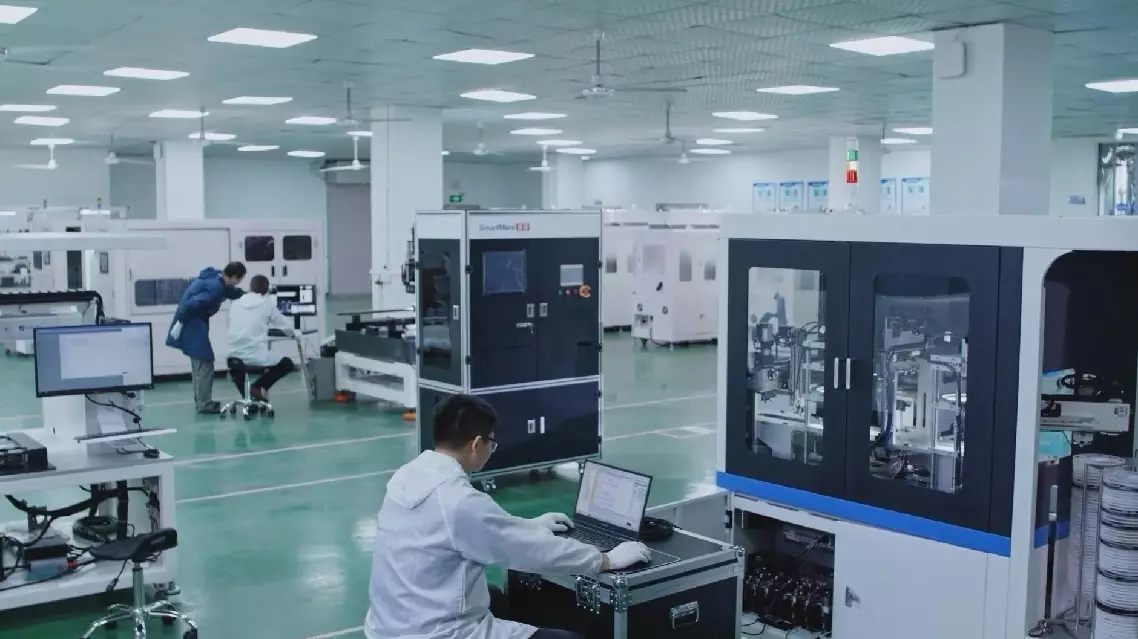
China's electronic info manufacturing profits surge in first three quarters: official