Skip to Content Facebook Feature Image

Former Hong Kong SFC Chairman sheds light on global AI race, China's financial markets

China

China

China

Former Hong Kong SFC Chairman sheds light on global AI race, China's financial markets

2026-10-21 17:04 Last Updated At:10-22 12:08

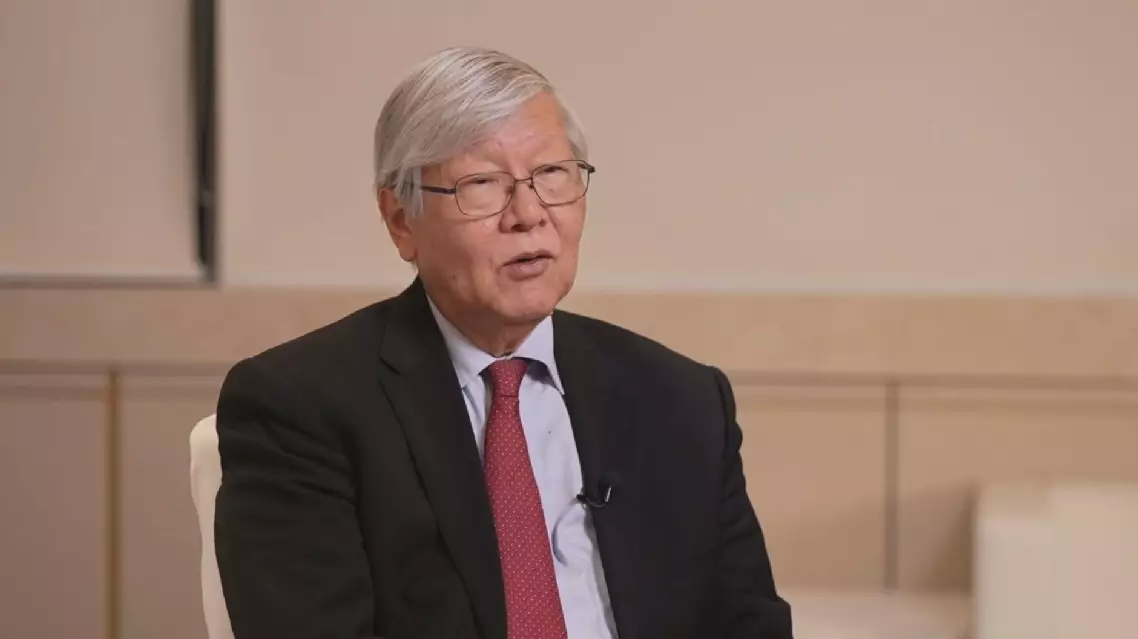
Andrew Sheng, former chairman of the Hong Kong Securities and Futures Commission (SFC), has unpacked global strategies in the AI race and the path forward for China's financial reforms in a recent interview with China Global Television Network (CGTN).

Sheng is in Beijing to attend the Annual Conference of Financial Street Forum 2026 scheduled from Oct 19 to 22. In a discussion on the sidelines of the event, he shared his views on mounting global competition in the realm of artificial intelligence.

"AI is a wonderful tool. I am very positive over the benefits of AI, although I am also aware of the risks involved. Now, the current situation is that most countries are now moving towards two areas. One is the chase for AI supremacy. That means to build bigger, better, faster models. The smaller countries are going towards what I call AI diffusion: How do I use AI towards more people so that overall productivity will gain," he said.

Sheng is also an advisor to the China National Financial Regulatory Administration. He noted that as China charts its financial future, it may carefully consider the pros and cons of the systems of more developed countries, where "patient capital" investments help prop up markets in the long term.

"The existence of patient capital is there (in China), but it has not been as institutionalized as in some countries. So for example, in America, the stock market is very well developed, the private equity is very well developed, the pension insurance funds are all sources of patient capital. But at the same time, I think those countries that have developed a long-term institutional pension funds, insurance funds, are beginning to see the rise of private equity, venture capital, and also family offices and foundations which are able to give patient capital. Now, this is a work in progress. So I think that every country now realizes, like China, capital markets are multilevel. It is not just or simply bank or stock markets. You really need different levels of capital for different types of risks and projects," Sheng said.

Whatever lies ahead for China's finance markets, Sheng said that the country's gradual opening-up policy has formed a solid foundation.

"You must realize that China has moved from a relatively poor country to the second largest economy in the world, and today is one of the major exporters and manufacturing centers. So China is a net exporter of capital, it's not a net importer. Now, in that case, the gradual, stable opening of the capital account, with more money coming out not just on the trade side but also the investment side, is healthy, not only for China, but also for the rest of the world. And that is a very positive aspect. And this is why the stable, steady, gradual opening up is the right policy. I think this gradual opening up of China's capital account is always in the right direction," he said.
Former Hong Kong SFC Chairman sheds light on global AI race, China's financial markets

Former Hong Kong SFC Chairman sheds light on global AI race, China's financial markets
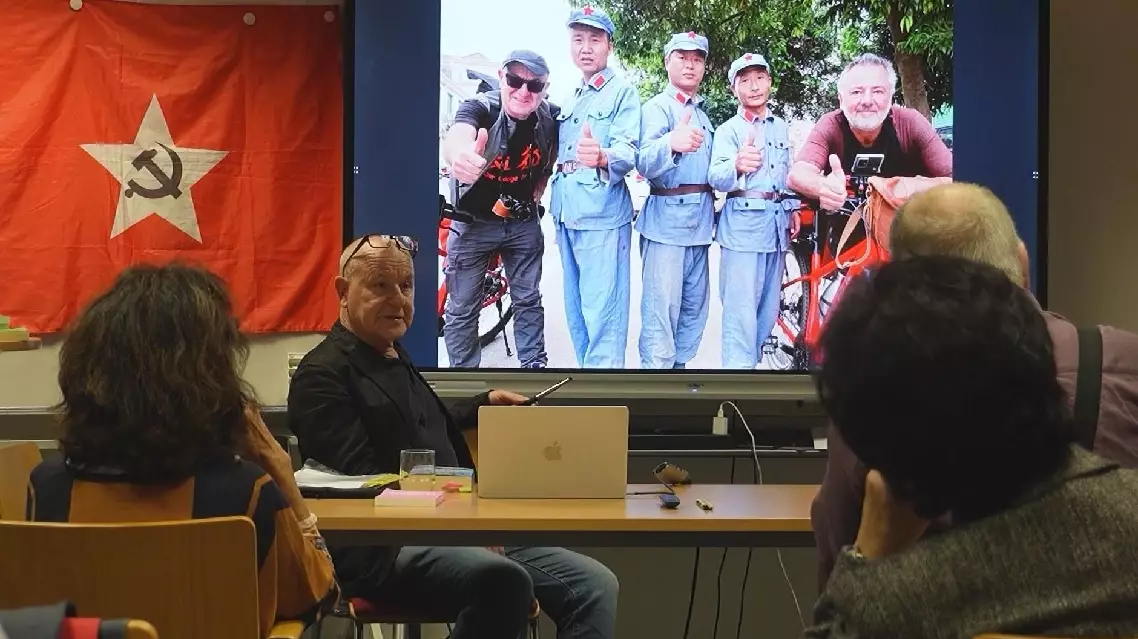
As China marks the 90th anniversary of the victory of the Long March, a roughly 12,500-kilometer military odyssey, German writer Christian Y. Schmidt shared his and fellow author Volker Haering's extraordinary cycling journey retracing the the historic route with local audiences in Germany.

The Long March (1934-1936) was a military maneuver by the Chinese Workers' and Peasants' Red Army that later became a defining episode in modern Chinese history, symbolizing endurance and perseverance as troops crossed some of the country's harshest terrain to establish a new revolutionary base. Some marched as far as 12,500 kilometers, enduring hunger, thirst and cold.

Schmidt and his friend, fellow writer Haering spent 138 days between 2023 and 2024, cycling nearly 7,000 kilometers along the historic route of the Chinese Red Army, starting from Ruijin County in east China's Jiangxi Province and heading northwest.

Their experiences have been compiled into a book titled "Der lange Fahrrad-Marsch: 7.000 Kilometer durch das Reich der Mitte".

Last week, Schmidt shared extraordinary journey with audiences at the Confucius Institute at Dusseldorf, drawing engagement from local attendees seeking fresh perspectives on Chinese modern history.

"I think we can take away an inspiration from this: As long as you keep moving forward, never give up, and always keep your eyes fixed on your goal, you will surely be able to keep going. And if you encounter difficulties along the way, you just have to find ways to overcome them," said Schmidt.

The presentation prompted reflections on endurance and modern development among the German audience.

"Mao Zedong once said, 'Nothing is impossible in the world if you dare to scale the heights.' I think this is precisely the spirit demonstrated during the Long March. Who could have imagined that after enduring such hardship, victory could still be achieved in the end? I think that is the lesson we can draw from it. In a sense, the memory of the Long March seems deeply etched into the genes of future generations," said Kneppel, an attendee.

"China's development is indeed nothing short of a miracle. China has achieved astonishing leaps in technological development. Driven by the government, China displays tremendous vitality, focus, and purposeful effort. The Chinese government unites people from all over the country to march toward the exact same goal, and I have witnessed this with my own eyes," said Maria, another attendee.

German writer shares 7,000 km Long March cycling journey with audiences

German writer shares 7,000 km Long March cycling journey with audiences

Recommended Articles