NEW YORK (AP) — The horse-drawn carriages that have cruised through Central Park for more than 150 years are set to be banished soon from New York City, ending an iconic tradition beloved by tourists but long opposed by animal welfare activists.
For the carriage drivers, it's unclear what comes next.
Click to Gallery
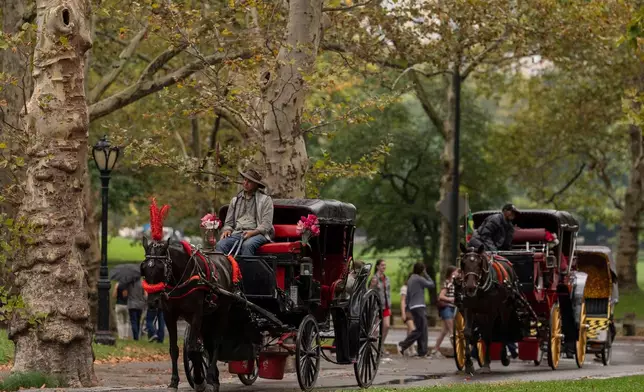
Horse-drawn carriages offer trips through through Central Park, Wednesday, Oct. 14, 2026, in New York. (AP Photo/Yuki Iwamura)
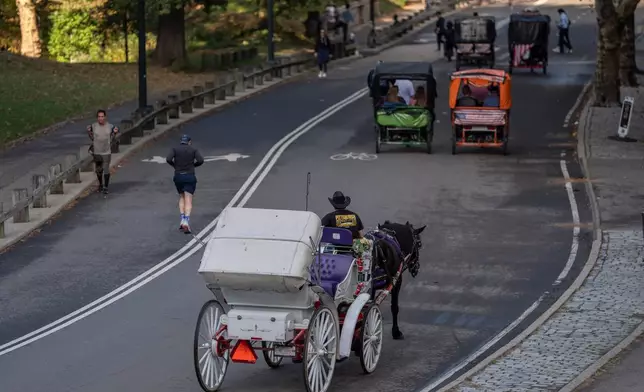
A horse-drawn carriage takes passengers for a loop through Central Park, Wednesday, Oct. 14, 2026, in New York. (AP Photo/Yuki Iwamura)
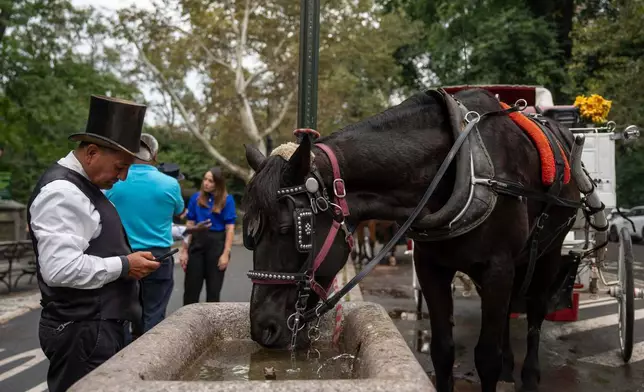
A carriage horse that takes people on rides through Central Park drinks water at an entrance to the park, Wednesday, Oct. 14, 2026, in New York. (AP Photo/Yuki Iwamura)
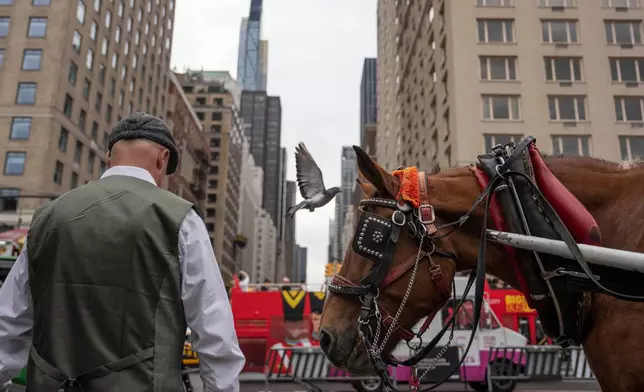
A carriage horse stands at an entrance to Central Park, Wednesday, Oct. 14, 2026, in New York. (AP Photo/Yuki Iwamura)
“No one can come up with an appropriate answer because there is none,” said Alexus Lawson, a 28-year-old carriage driver from Queens who grew up with horses and has worked as a riding instructor. Now, she worries about what would become of 7-year-old Starlight and her other horses. “Without a job, how can I take care of my horses?”
The New York City Council is expected to pass a bill Thursday that would ban horse-drawn carriage rides by June 2028, pulling back the reins after the death of a teenage tourist last spring spurred the latest call to end the rides after decades of opposition from activists.
But the one question that has come up time and again — what to do with drivers whose jobs would be eliminated — remains largely unanswered.
The legislation requires Mayor Zohran Mamdani's office to develop a plan by next April to help the more than 150 remaining drivers find other work. That would include referrals for job openings in the city's transit, hospitality and taxi industries, as well as career counseling. It also would anticipate the administration considering some form of compensation for industry workers.
City Hall is working on a detailed plan for the transition of the workforce and has started discussions on potential compensation, a spokesperson for the mayor said. And Mamdani himself has said government has a “civic responsibility to ensure that we are not leaving anybody out to dry.”
Medet Fidan, a former cab driver who traded his steering wheel for a set of reins after ride sharing apps upended the taxi industry, said he felt like he was being targeted.
“I think the city is leaving us a big mess,” said Fidan, 56, who has been driving a carriage for 15 years. “We’re going to lose our businesses, we’re going to lose our jobs, we’re going to lose our livelihoods.”
Council Speaker Julie Menin “will remain engaged in the transition process,” a spokesperson said, adding that the legislation seeks to address the longstanding question of what happens to displaced carriage drivers by setting a firm deadline for City Hall to act.
The union representing the drivers has vowed to file a legal challenge “the minute the ink dries" on the legislation.
Mamdani's two immediate predecessors as mayor had both called to end the industry, but neither succeeded.
Former Mayor Bill de Blasio campaigned on ending the rides on day one of his administration but the effort wilted amid a backlash from unions and a big media blitz involving action Liam Neeson. Eric Adams, the mayor just before Mamdani, floated a ban late in his term but the proposal went nowhere.
The latest push began in June after an 18-year-old Indian tourist, Romanch Mahajan, died after jumping from a runaway carriage during a ride. That appeared to be the first first fatality involving a horse carriage in Central Park since the rides began.
Mahajan's family has personally appealed to the city to end the rides, offering tearful testimony that they thought the rides were safe. His father, Deepak Mahajan, told lawmakers that his son jumped from the carriage to help his mother after she was thrown out of her seat after the horse suddenly bolted.
Carriage drivers have express sympathy for Mahajan and his family but argue that they are being unfairly targeted because of a single accident.
“It does nothing for alternate employment, for the continuation of our businesses,” said Christina Hansen, a longtime carriage driver and industry spokesperson. “Who’s going to pay my rent while I’m looking for a job.”
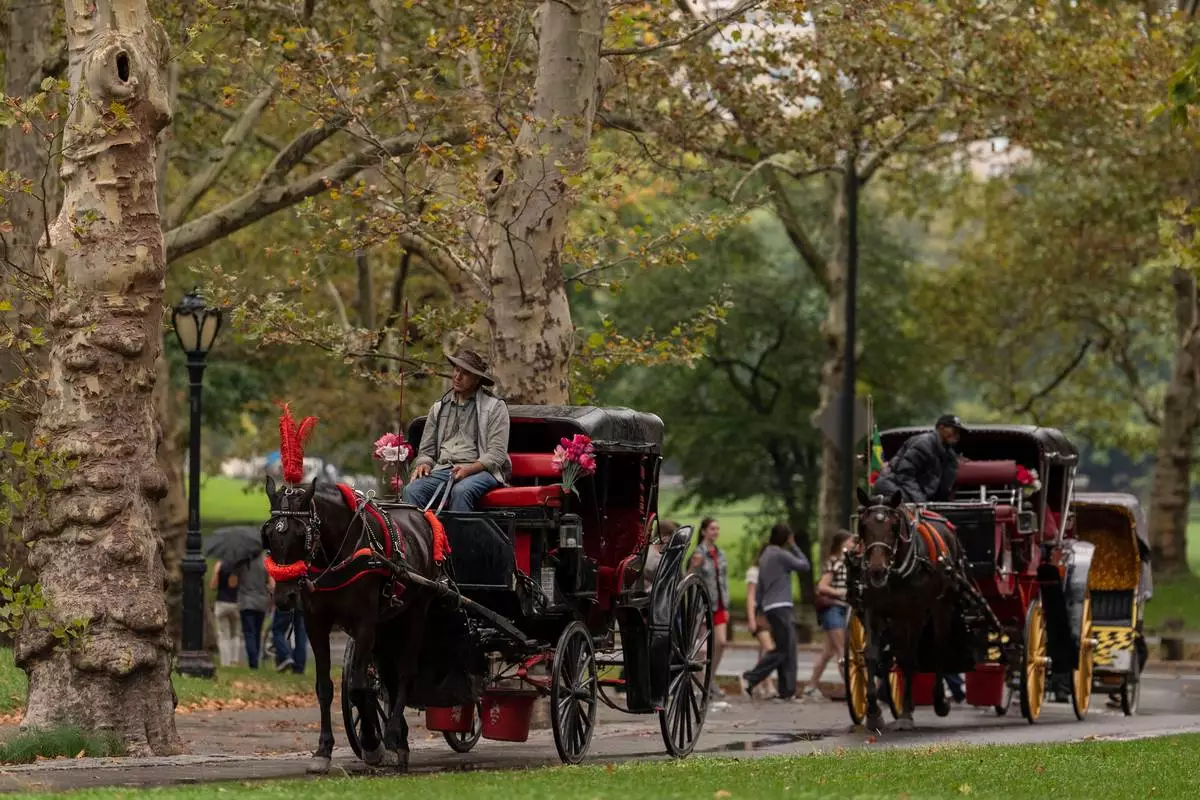
Horse-drawn carriages offer trips through through Central Park, Wednesday, Oct. 14, 2026, in New York. (AP Photo/Yuki Iwamura)
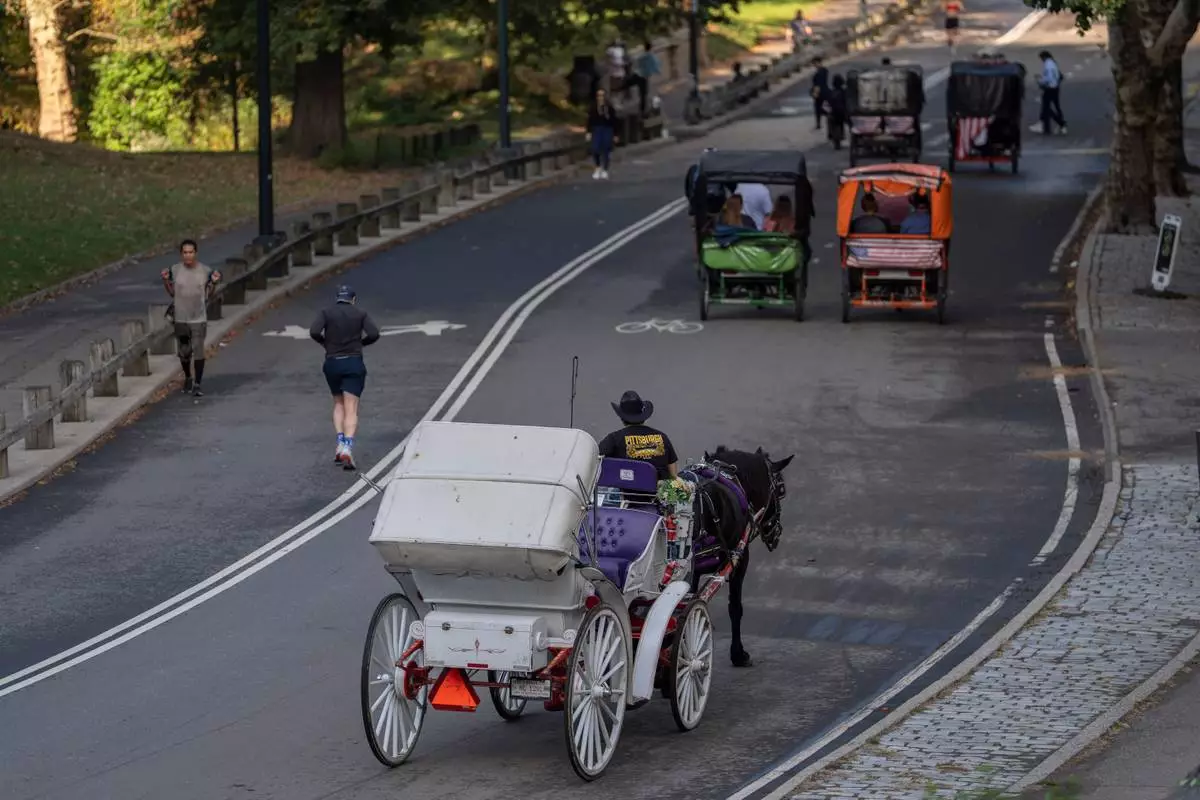
A horse-drawn carriage takes passengers for a loop through Central Park, Wednesday, Oct. 14, 2026, in New York. (AP Photo/Yuki Iwamura)
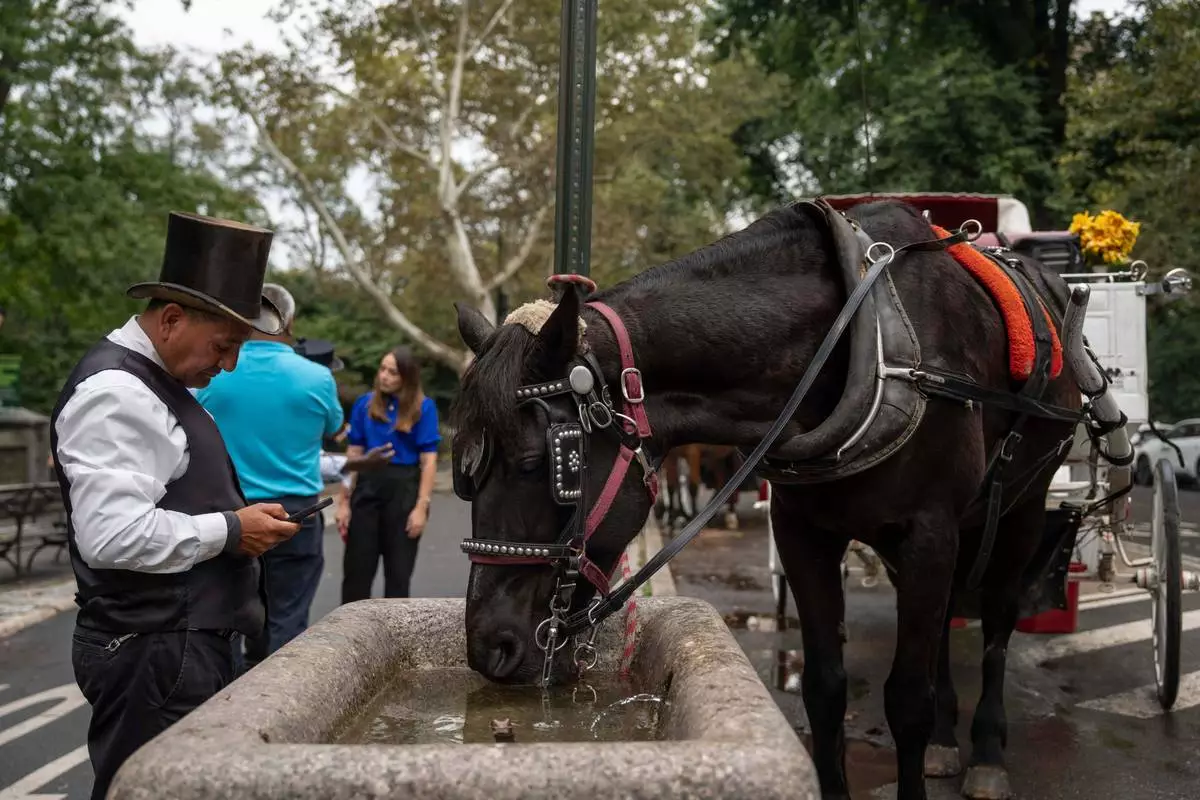
A carriage horse that takes people on rides through Central Park drinks water at an entrance to the park, Wednesday, Oct. 14, 2026, in New York. (AP Photo/Yuki Iwamura)
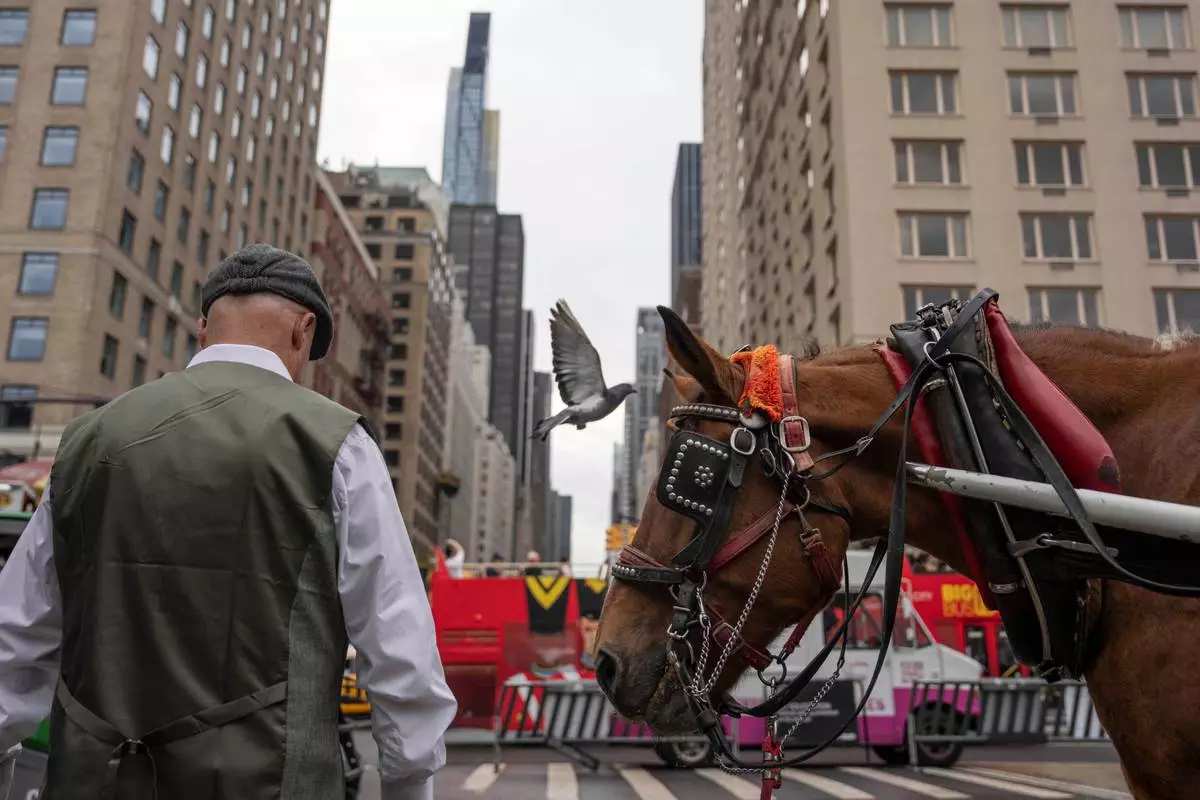
A carriage horse stands at an entrance to Central Park, Wednesday, Oct. 14, 2026, in New York. (AP Photo/Yuki Iwamura)
Conservatives are banding together to grow classical Christian schools by leveraging new taxpayer-funded scholarships.
These scholarships have rapidly expanded in states around the country. They mean half of school-age children in the U.S. are now eligible to apply for state money to attend private schools.
Last year, the Association of Classical Christian Schools, or ACCS, formed a coalition with some powerful conservative groups, including Turning Point Education and the Heritage Foundation. Their goal is to convert or create 5,000 new classical Christian schools in the next decade with 1.5 million students nationwide.
“It sounds like a very ambitious goal, but this money has never been there before,” said ACCS President David Goodwin.
He sees a historic opportunity to take a share of public funding and educate Christian leaders. Critics worry this movement will harm public schools and create church-state issues.
ACCS, which has ties to the Trump administration, is the oldest network of classical Christian schools. Its founder is Doug Wilson, a conservative Idaho pastor and writer.
The Associated Press interviewed more than 30 ACCS leaders and parents, as well as more than a dozen other experts and advocates. The reporting was done from Washington, D.C., inside schools in Texas and at the group’s annual conference in Atlanta.
Here are some takeaways from the AP’s reporting.
The Association of Classical Christian Schools calls its campaign the “Battle for the American School.” It’s a riff on the 2022 bestselling book Goodwin co-wrote with Defense Secretary Pete Hegseth, who sent his children to ACCS schools before joining President Donald Trump’s cabinet. Their book, “Battle for the American Mind,” extols classical education and critiques the prevailing public school model.
Hegseth remains a booster: The Pentagon recently introduced a form of classical education into government-run schools on military bases.
ACCS membership includes about 500 schools, but it has grown by nearly 200 since 2019. Goodwin, its president, credits a pandemic-era mistrust of public education, when debates ignited over school closures, books, race, sexuality and gender identity.
Not all ACCS schools accept government money, but many that do now advertise state funding options on their websites.
Classical education, popular among conservatives, was already on the rise before more taxpayer funds became available. It exists in many forms, in religious schools outside ACCS, homeschooling groups, secular and charter schools.
Many classical Christian schools go a step further in their focus on reclaiming and promoting Western Christian culture.
The ACCS version of classical Christian education is proudly erudite: The Oxford-educated Christian writer C.S. Lewis is a lodestar, and students study the liberal arts and the “great books.” Its teaching methods draw from ancient and medieval sources with a strong focus on Western Christian history.
Doug Wilson is a self-described Christian nationalist who has made headlines for preaching at a Pentagon worship service and advocating for the repeal of women’s voting rights. He is also a pioneer in classical Christian education.
In 1981, he helped start the Logos School in Moscow, Idaho, one of the first in the modern classical Christian movement. He founded ACCS in 1994.
ACCS is less pugilistic than its founder. It includes socially conservative Christians across denominations and hasn’t adopted Wilson’s more fringe beliefs. Schools agree to a statement of faith, including that same-sex relationships and gender transitions are off-limits, but families may not be aware of Wilson’s teachings or influence. He still advises the ACCS board, though, and his books are required reading in some of its schools.
This summer, Texas began rolling out $1 billion in public funding that eligible families can put toward private education expenses.
Keith Castello, an ACCS administrator in the Dallas-Fort Worth suburbs, said the influx of taxpayer money “completely transforms the possibility” of increasing access to Christian education.
Now that Texas offers money for private school tuition, he encourages parents to use it.
Castello is launching three classical Christian schools this fall. At one of his startup schools, an estimated 22 of 25 students are using Texas Education Freedom Accounts, or TEFA.
The Texas program prioritizes low-income students and those with disabilities, but its income limits this year go up to $165,000 for a family of four, opening the door to middle-income families. Eligible students can receive at least $10,474 for private school.
At Coram Deo Academy, an ACCS school where Castello served as vice president of operations until last year, more than 360 students out of 2,000 have been approved for TEFA.
Coram Deo could potentially receive $3.5 million in TEFA funds this year, equal to nearly 17% of its budget, according to Scott Head, the school’s chief financial officer. The taxpayer funds are also on track to cover half the school’s financial aid budget.
For years, Democrats and rural Republicans in Texas blocked efforts to create education savings accounts, worried about their effect on public schools, especially in rural areas.
In the U.S., most private schools are religious. Securing public money for them fulfills a longstanding goal for Christian conservatives but raises issues over church-state separation.
“It’s an abject violation of religious freedom to force a taxpayer to fund a school that discriminates against their faith,” said Rachel Laser, head of the advocacy group Americans United for Separation of Church and State.
Castello has heard the critiques that these programs will hurt public schools. He counters that he and other private school parents still pay taxes that support public education.
“I’m not against the public schools,” Castello said, but he believes the line between public and private is blurring.
“If private schools are being funded by taxpayer funds, then what is the difference between public and private?” he asked.
Associated Press religion coverage receives support through the AP’s collaboration with The Conversation US, with funding from Lilly Endowment Inc. The AP is solely responsible for this content.
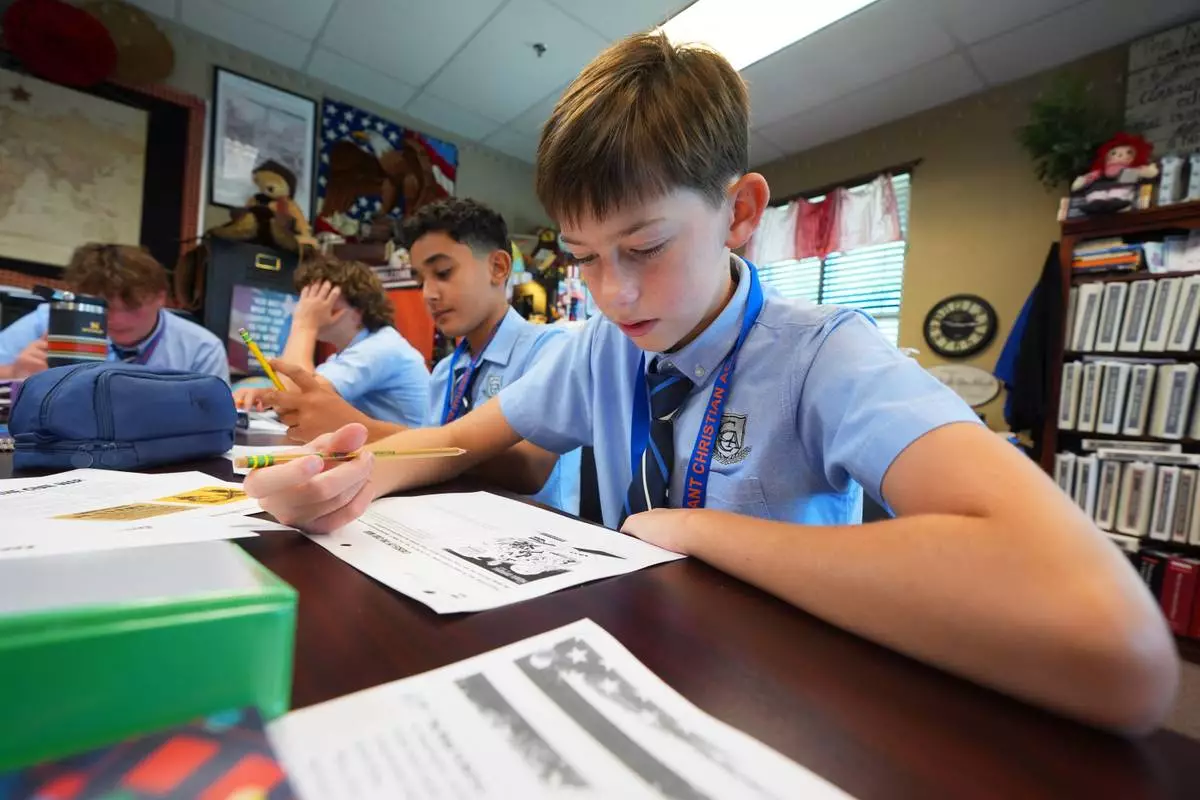
Students work at their desks at Covenant Christian Academy in Colleyville, Texas, Wednesday, Aug. 12, 2026. (AP Photo/LM Otero)
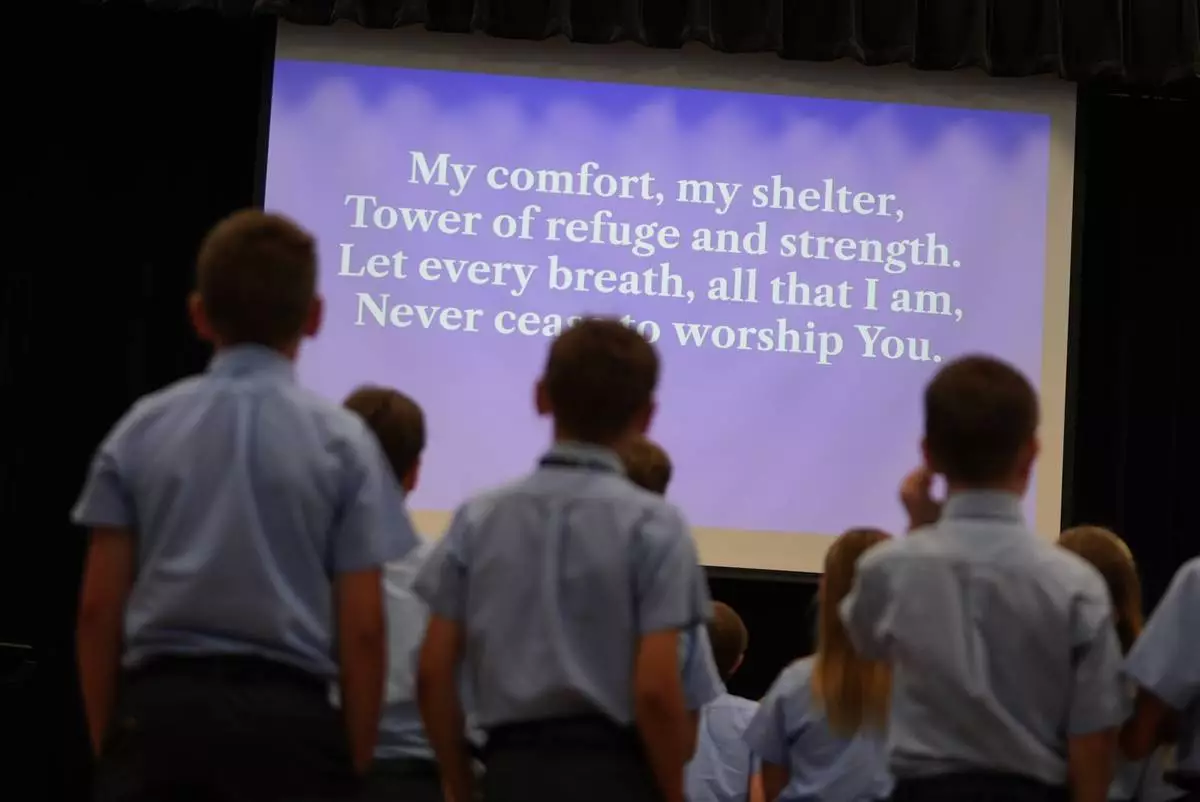
Students at Covenant Christian Academy look on a during chapel at the private school in Colleyville, Texas, Wednesday, Aug. 12, 2026. (AP Photo/LM Otero)
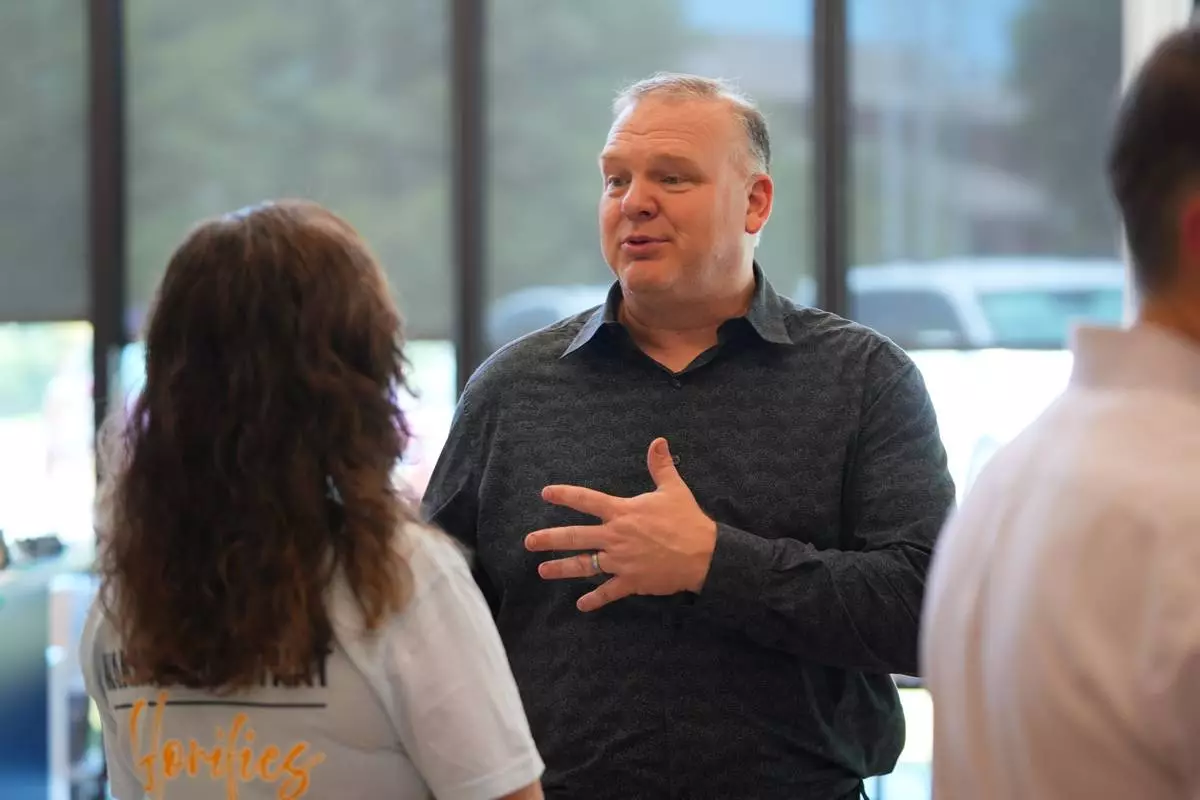
Keith Castello has a conversation at Coram Deo Academy in Flower Mound, Texas, Tuesday, Aug. 11, 2026. (AP Photo/LM Otero)
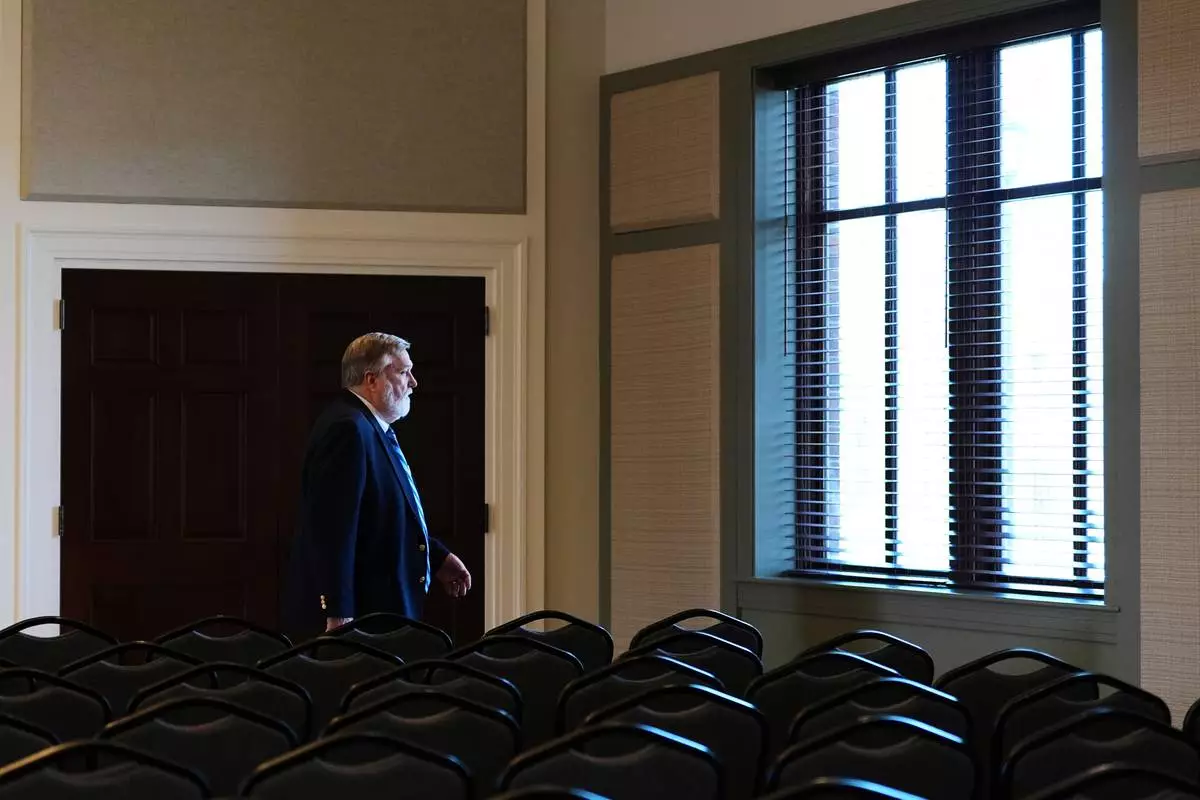
FILE - Pastor Doug Wilson walks through the church hall after Sunday services at the new campus for Christ Church and its Logos School, Sunday, April 6, 2025, in Moscow, Idaho. (AP Photo/Lindsey Wasson, File)
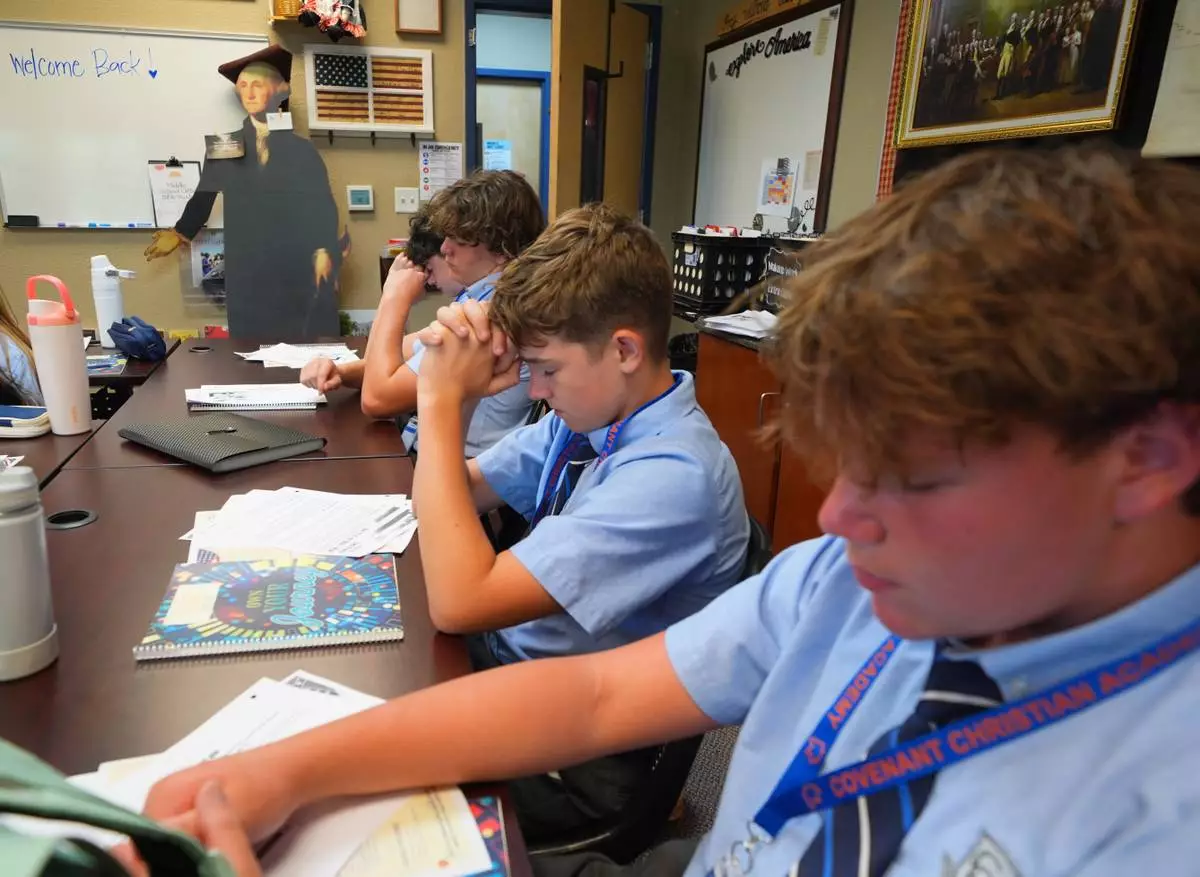
Students pray during a U.S. history class at Covenant Christian Academy in Colleyville, Texas, Wednesday, Aug. 12, 2026. (AP Photo/LM Otero)