MELBOURNE, Australia (AP) — A man has been charged with threatening an Australian lawmaker’s staff with nunchucks, police said Thursday, days after another legislator was critically injured when a man repeatedly hit her with a car.
Nunchucks are a weapon used in martial arts consisting of two sticks or rods connected by a rope or chain.
The incidents are heightening concerns about female politicians’ safety and raising concerns about security in a country where lawmakers are highly accessible to the public.
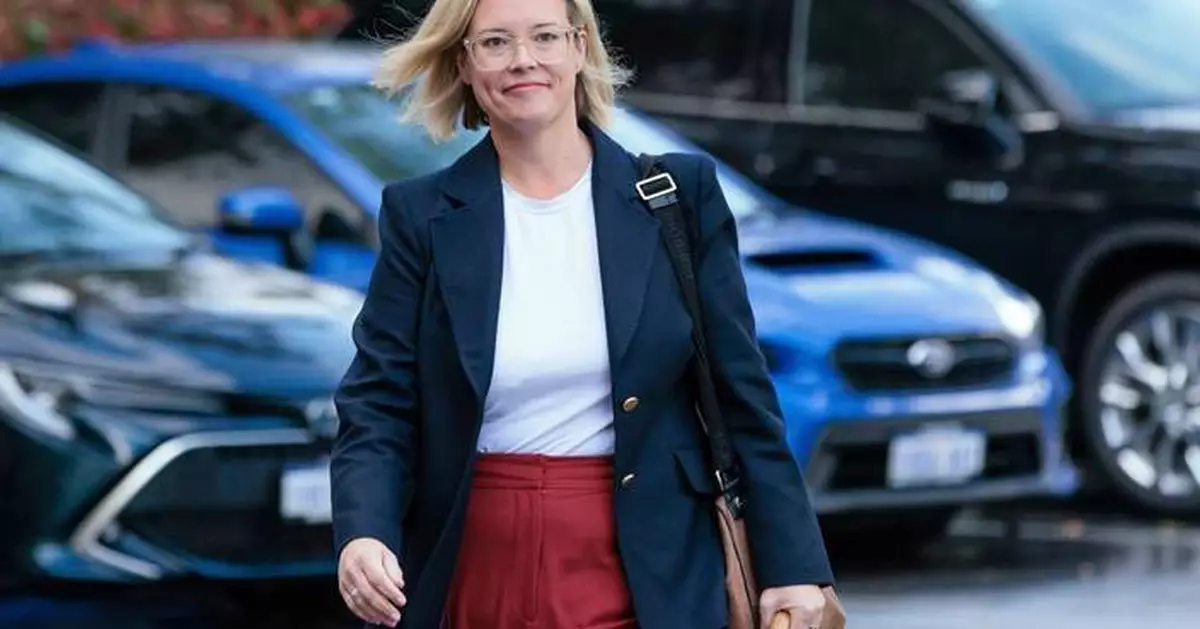
Police say that a 56-year-old man entered Western Australian state government minister Hannah Beazley’s electorate office in suburban Perth on Wednesday, brandishing nunchucks and making verbal threats. Beazley wasn't in the office at the time.
The man was detained and charged with being armed in a way that may cause fear and with threatening to perform an unlawful act. He spent the night in police custody and will appear in a Perth court later Thursday, police said.
There was no allegation the man’s behavior was connected to the driver who hit federal lawmaker Helen Haines with his car in the east coast state of Victoria on Monday.
Haines' alleged attacker, Brendan Nugent, appeared in a court on Wednesday charged with intentionally causing serious injury, dangerous driving causing serious injury and causing harm to a federal official. He did not enter pleas and remains in custody.
Police are still searching for a motive.
Haines, a 65-year-old independent lawmaker, remained in critical condition on Thursday in a Melbourne hospital where surgeons have amputated both her legs, a health department statement said.
Both the Haines and Beazley incidents have raised concerns about the safety of female politicians, who account for a growing proportion of lawmakers in Australian parliaments.
Just under 50% of federal lawmakers and a majority of Prime Minister Anthony Albanese’s Cabinet are women.
Australian lawmakers are some of the most accessible in the world and political violence has traditionally been rare. But there are fears that increasingly toxic public debate driven by social media creates additional risks for elected women.
Albanese said the fact that the threat to Beazley came so soon after the alleged attack on Haines was “just heartbreaking.” Beazley is the daughter of Albanese's former federal colleague, Kim Beazley.
“We can have debate and disagreement, but do it in a way without descending into the sort of violence that we have seen in too many parts of the world,” Albanese told Australian Broadcasting Corp. “It’s certainly not who we are as Australians.”
Albanese attended an online security briefing this week for women lawmakers in his center-left Labor Party. Security agencies addressed misogynistic threats directed at them.
Male and female federal lawmakers agree that women are facing the worst of the online abuse.
“Of course people are concerned. They’re anxious,” Albanese said. “There has been a normalization of behavior that can be very aggressive in a way that wasn’t happening a couple of decades ago.”
Hannah Beazley said she was in the state parliament when the man entered her electorate office demanding to see her.
Beazley said two members of her staff had been “rattled,” but had remained safe behind a security screen.
“We don't know his motives at all,” she told reporters on Wednesday.
Governor-General Sam Mostyn, who is only the second woman to ever serve as the British monarch’s representative in Australia, said that she was abused on social media for speaking at a press conference on Wednesday alongside Haines’ husband Phil Haines.
“Like any woman who has stepped up into any position across any part of our society, there is a unique and pernicious form of attack that comes our way,” Mostyn told ABC.
“Women across the country know that there are certain things that are reserved for women in that attack that go to our gender and they are often vicious and just despicable,” she added.
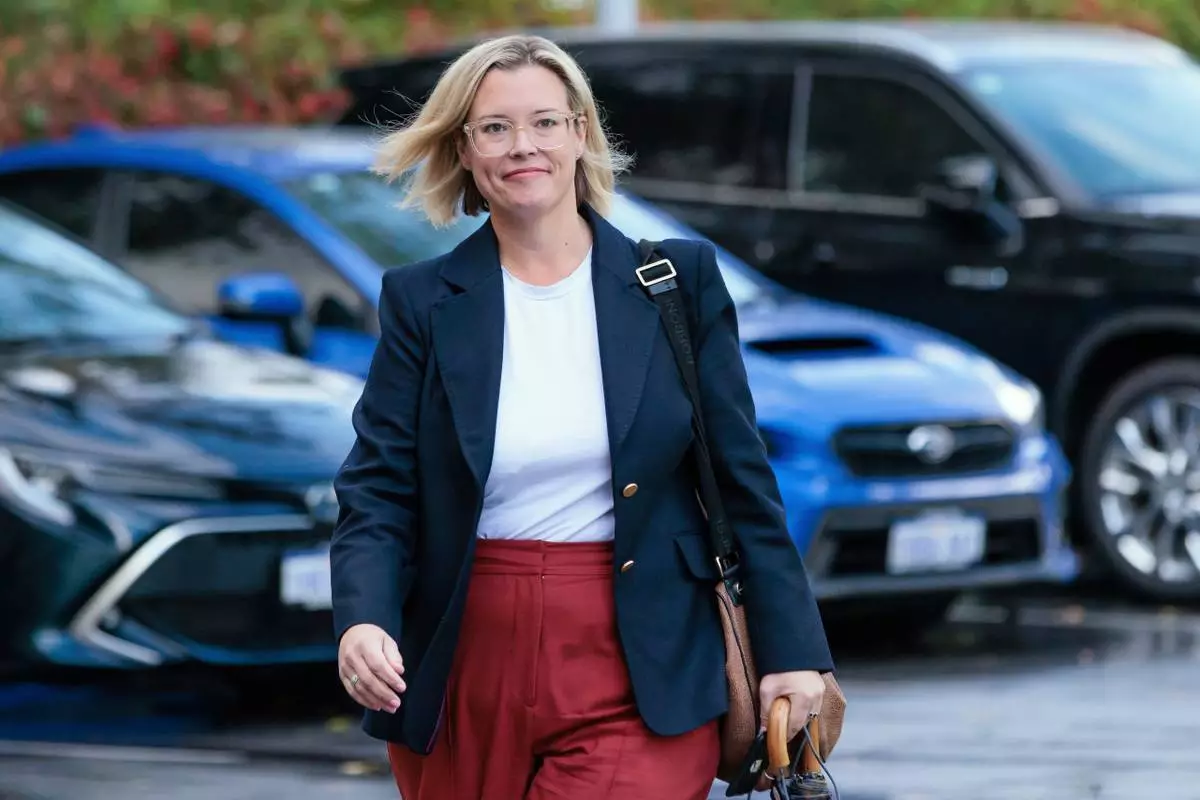
Western Australian state government minister Hannah Beazley arrive for a Labor caucus meeting in Perth, Australia, June 6, 2023. (Richard Wainwright/AAP Image via AP)
WARSAW, Poland (AP) — Women plan street demonstrations in more than 20 Polish cities and towns Thursday to protest the lack of access to free and legal abortion.
They're accusing Prime Minister Donald Tusk's liberal government of failing to fulfill its promise to relax Poland's strict abortion laws, and protesting even though the parliament passed two bills on Tuesday aimed at easing abortion rules. The measures are likely to be vetoed by the conservative president, Karol Nawrocki.
Passing the draft laws now, a year before the next parliamentary election, is a case of “token gestures” rather than a genuine effort to reform abortion law, said Zofia Marcinek of the Abortion Dream Team, a reproductive rights activist group in Warsaw.
She said the liberal government knew the draft laws stand no chance of withstanding Nawrocki's veto, and has merely tried to create the impression of taking action because it needs women's support to win elections next year.
Since 1993, legal abortions have been allowed in Catholic Poland only in cases of severe fetal abnormality, risk to the mother’s life and health, or the pregnancy being a result of rape or incest.
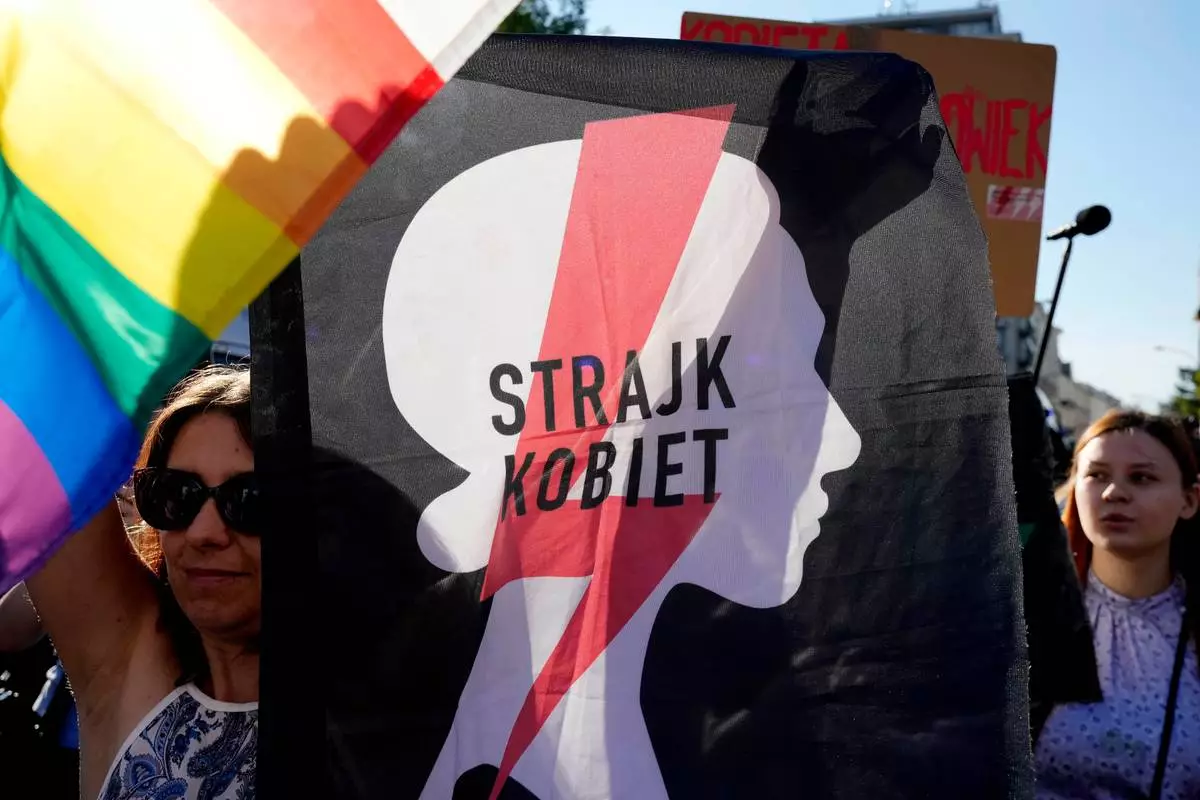
Polish women have been pushing for the legalization of abortion ever since, including in a nationwide wave of demonstrations of women wearing black called “Black Protest,” which began in 2016.
Rather than being liberalized, Poland’s abortion laws were tightened further, banning abortions of fetuses with congenital defects in 2020 under the national-conservative Law and Justice (PiS) government.
Despite the laws, abortions remain common in Poland, an overwhelming majority of which are carried out by women at home using pills obtained from outside the country. Women who undergo abortions, including by taking pills, do not face criminal responsibility under Polish law. But people helping them, including doctors and family, can potentially be prosecuted.
And abortion remains a taboo subject in Poland, which now has one of Europe’s most restrictive abortion laws, with only Malta imposing stricter limits.
Tusk’s pro-European coalition won the 2023 election in part on a promise to liberalize Poland’s abortion laws. But in 2024, Tusk said his government wouldn't be able to overcome the likely veto of a conservative president. Instead, measures were introduced to prevent hospitals from refusing to perform legal abortions on religious grounds.
"The state will increasingly effectively stand on the side of the woman when she is making dramatic decisions in her life,” Tusk said in 2024 when he announced the measures.
Polish hospitals performed 573 abortions in the first half of 2026, compared to 452 in the whole of 2022 before Tusk came to power, according to data from the national health fund. But activists say tens of thousands of abortions happen yearly outside of hospitals.
Activists organizing Thursday’s protests are claiming the Tusk government has betrayed Polish women — and that Tusk's claims that women's access to abortion has improved during his administration have actually complicated getting care for some women.
“The government's promises act as a type of disinformation,” Marcinek told the AP. “Women getting pregnant hear the prime minister say that everything is ok, that there is access to abortion, and then they end up in the hospital and see that is not the case. So they come to us when it's very late and very complicated and expensive to help them.”
Meanwhile, international donors are less interested in supporting Polish women's rights because they mistakenly believe things have improved, Marcinek said.
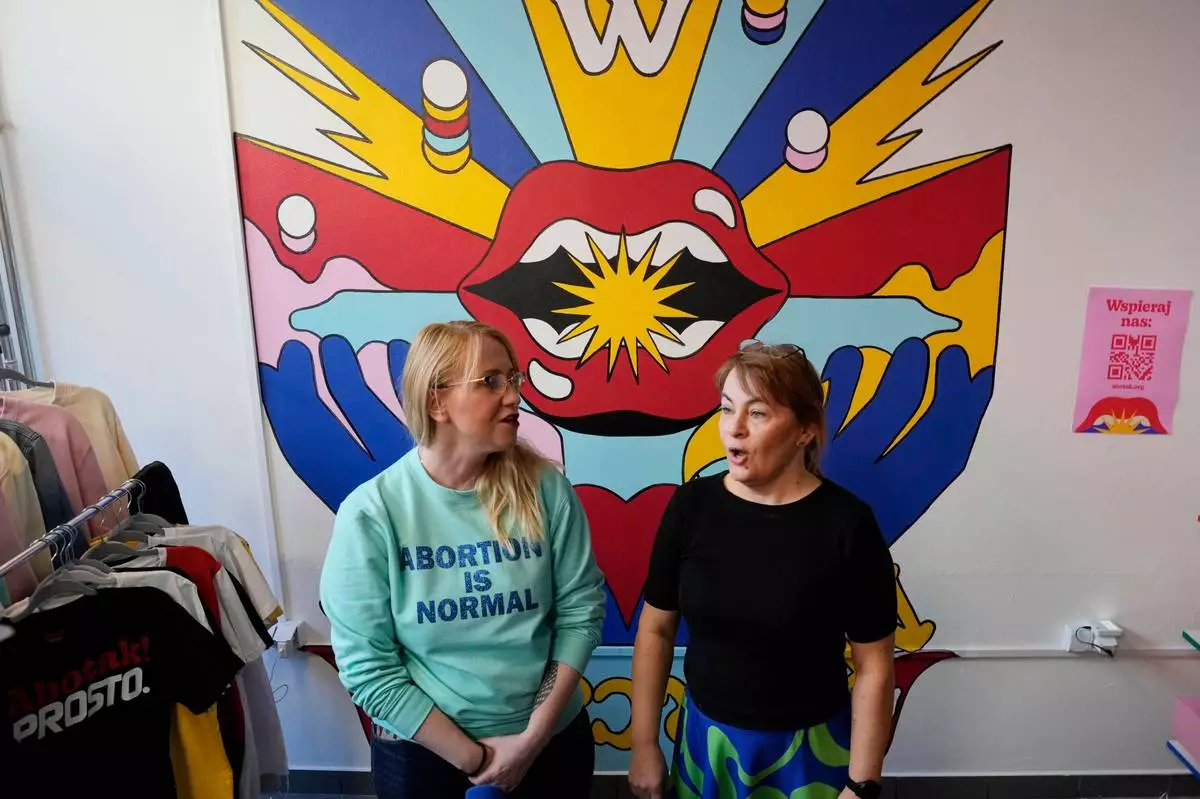
In 2025, the Abortion Dream Team opened an “ abortion clinic ” across from the parliament building in Warsaw where women can get information about their options, or even take their abortion pills in the company of supporting activists.
This September, the activists also launched a parcel locker dispensing abortion pills at the same location, nicknamed “Abortomat."
The dispenser is operated by the international feminist non-profit Women Help Women. It enables women needing abortions to get the pills the next day, rather than wait for up to two weeks for home delivery, Marcinek said.
“There are also people who cannot safely order such pills at their own address, for example because of an unsupportive family or abusive partner," she said. “These women can get a pin number and pick up the pills in the machine the next day.”
“In Poland, assisting with an abortion is a criminal offence. Even passing the pills from hand to hand can be considered a crime,” the Abortion Dream Team wrote in a statement. "That’s why we’re hacking the Criminal Code and bringing abortion into the 21st century.”
FILE - Polish abortion rights activists open a center where women can have abortions with pills, either alone or with other women, in Warsaw, Poland on Saturday, March 8, 2025. (AP Photo/Czarek Sokolowski, File)
FILE - A woman with the sign of a women's rights organization and with a pro-LGBT+ rights flag take part in a protest in Warsaw, Poland, Tuesday, July 23, 2024. (AP Photo/Czarek Sokolowski, File)