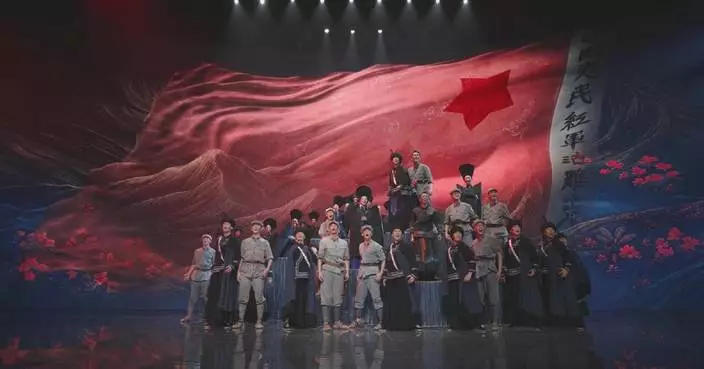
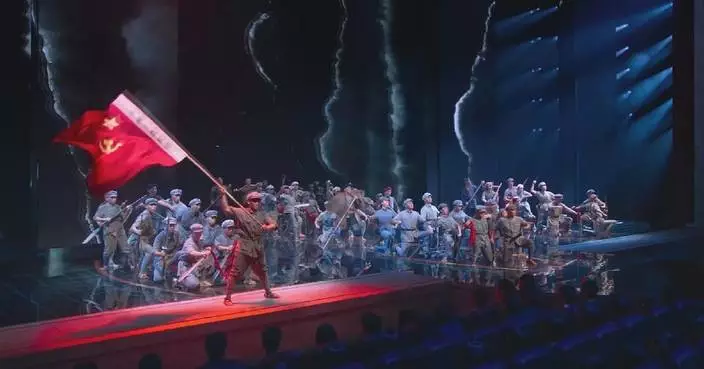
As this year marks the 90th anniversary of the victory of the Long March, young people from Nigeria, the United States, Germany, Vietnam and beyond retraced the Red Army's historic route to discover why the legacy of the remarkable revolutionary feat still resonates nearly a century later in modern China.
During the epic military trek which lasted from 1934 to 1936, the Red Army under the leadership of the Communist Party of China (CPC) broke through encirclement by Kuomintang forces. Red Army soldiers braved raging rivers, snow-covered mountains and treacherous grasslands, with some marching as far as 12,500 kilometers.
The arduous journey helped lay the foundation for the eventual victory of the Chinese revolution. Nine decades later, the Long March remains an important window into China's history and development.
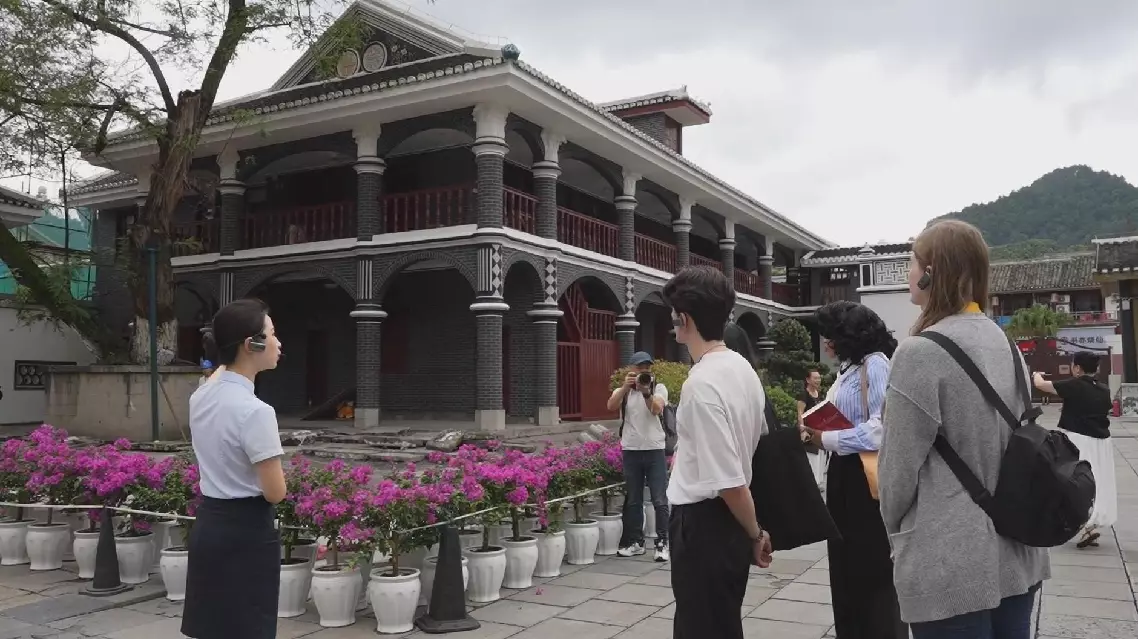
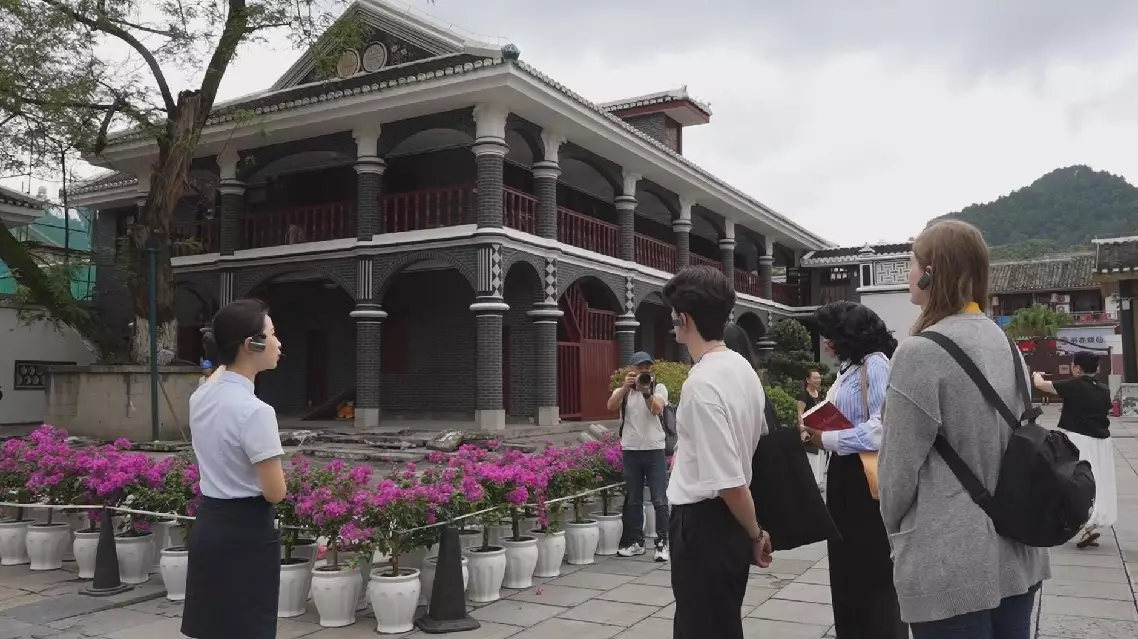
At the sites of the Zunyi Conference and the Loushan Pass battle in southwest China's Guizhou Province, the young foreign visitors paused before historical remains and stone inscriptions of poetry, immersing themselves in a look back at those years of hardship.
The three-day Zunyi Conference in January 1935 is considered a crucial turning point in the history of the CPC, as it helped establish the leadership of Mao Zedong in the Party's Central Committee.
Loushan Pass occupies an important place in the history of the Long March. Achieved in February 1935 after the historic Zunyi Conference, the battle at Loushan Pass is widely remembered as the Red Army's first major victory since the start of the Long March and as a turning point that helped reverse a difficult military situation.
"Before coming here, I had heard stories about the Red Army and China's red culture. Every historic site is exceptionally well-preserved. This is especially true in Zunyi, where every detail has been carefully preserved. It is truly a place well worth studying," said Ibeakamma Ugochinyere, a young woman from Nigeria.
"As I just walk through and imagine the thousands of people marching across and fighting the battles, I feel like I can still feel that and experience firsthand through my own eyes that history. So if people want to understand China today, you have to know where China has come from. And understanding that spirit that I'm talking about is one of the greatest insights you can have into modern China today," said Robert Dedman, an American youth.
Looking from the historical sites toward today's cities and countryside, the young people learned that the vitality of the Long March spirit has never faded. While visiting an exhibition on Long March history, German youth Elih Nuechter was touched by the oral account of a centenarian.
"I remember it was a very old grandma. She is 108 years old. Her husband participated in the Long March and unfortunately he didn't come back. I would say this is the spirit of the Long March, not to be afraid of a challenge, not to be afraid of uncertainty. And I would say it's a spirit of the Chinese nation too to walk towards the Chinese dream," he said.
American youth Aaron Kyle came to Yudu County of east China's Jiangxi Province, the starting point of the Central Red Army's Long March, walking the route and observing exhibits. The image of the Red Army setting out resolutely on its expedition gradually became clear in his mind.
"I highly recommend people from around the world to come and learn and understand how the Long March formed the spirit of China. To understand modern China, it's essential to understand these formative historical events like the Long March. Compared with 90 years ago, I think people at the time would not believe how modern and amazing this environment is. They'd be so happy and fulfilled to know that," he said.
A youth delegation from Vietnam traveled to northwest China, revisiting history at the Huining Red Army Meeting Site, where the three main forces of the Red Army reunited, marking the end of the Long March. Among them, a resonance that crosses national borders grew all the deeper.
"Today, it was really touching to witness and hear the story of the Long March of the Chinese Red Army. It shows that the firm leadership of the Communist Party of China and the indomitable fighting spirit of the Chinese Red Army. The journey was correct and brought success to the Chinese revolution. The Long March spirit has also spread until now among China's youth," said Tran Cong Hung, secretary-general of Vietnam's Tien Phong Newspaper.
The young foreign travelers measured history with their footsteps and felt the Long March spirit with their hearts. They said that the best way to truly understand where modern China comes from is to set foot on these historical sites.
90 years on, Long March spirit resonates beyond borders
90 years on, Long March spirit resonates beyond borders