Skip to Content Facebook Feature Image

General Atomics Takes on Lead Industrial Role to Tackle America’s Nuclear Waste Challenge

Business

General Atomics Takes on Lead Industrial Role to Tackle America’s Nuclear Waste Challenge
Business

Business

General Atomics Takes on Lead Industrial Role to Tackle America’s Nuclear Waste Challenge

2026-10-22 21:04 Last Updated At:21:11

SAN DIEGO--(BUSINESS WIRE)--Oct 22, 2026--

America has spent decades searching for a better answer to one of nuclear energy’s toughest questions: what to do with used nuclear fuel that can remain hazardous for thousands of years. Now, General Atomics (GA) is taking on a lead industrial role in a collaborative project to develop technology that could make large-scale nuclear waste processing more practical and affordable in the United States.

This press release features multimedia. View the full release here: https://www.businesswire.com/news/home/20261021962118/en/

The work is part of NEWTON, a program led by the U.S. Department of Energy’s Advanced Research Projects Agency-Energy (ARPA-E). Short for Nuclear Energy Waste Transmutation Optimized Now, NEWTON is exploring new approaches to processing used nuclear fuel. Working alongside collaborators Jefferson Lab, Stellant Systems and Oak Ridge National Laboratory, GA was awarded a contract to develop a prototype radio frequency (RF) system using a technology known as magnetron combining. The goal is to develop a more efficient and affordable way to power the equipment used for transmutation, a process that transforms nuclear waste into forms that are easier to manage.

“We’re proud to step into this larger role on a project with the potential to change how the country thinks about nuclear waste,” said Dr. Drew Packard, scientist for General Atomics Energy. “Our team combines cutting-edge scientific and industrial expertise to deliver key technology that could help advance future transmutation systems toward practical, large-scale operation.”

According to the U.S. Department of Energy, U.S. nuclear reactors have generated more than 90,000 metric tons of used nuclear fuel, with roughly 2,000 additional metric tons produced each year. Much of it remains stored at nuclear power plants nationwide. Countries such as France recover usable materials from used fuel for use in new fuel, but high costs, government investment requirements and other challenges have limited commercial recycling in the United States.

NEWTON scientists believe transmutation could be the key to overcoming many of these challenges. The process uses powerful machines called particle accelerators to direct tiny, high-energy particles at some of the most hazardous materials in used nuclear fuel. This triggers reactions that change those materials into forms that remain hazardous for much shorter periods, potentially making nuclear waste easier to manage. However, treating waste on a large scale would require accelerators that consume enormous amounts of electricity, making energy use and cost major barriers to commercial use.

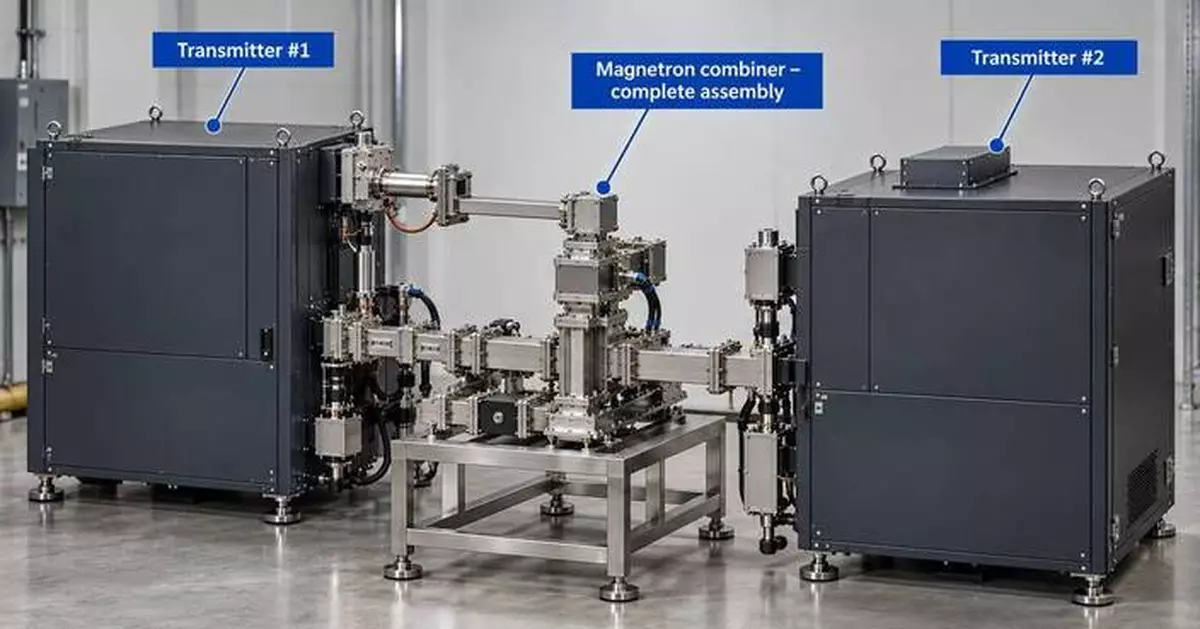
This is where GA and its collaborators come in. As part of the broader effort, the team will design, procure and integrate an RF system that combines the power of multiple magnetrons. These devices generate microwave energy, which is brought together into a single, high-power source to help operate the accelerator. The goal is to demonstrate a more efficient approach that could reduce electricity consumption and lower the operating costs of future accelerators.

“This project is President Trump’s nuclear renaissance in action — putting the same basic technology behind a kitchen microwave to work on one of nuclear energy’s toughest challenges, spent fuel,” said Conner Prochaska, director of the Advanced Research Projects Agency-Energy. “By making particle accelerators smaller, cheaper and more efficient, General Atomics and its partners could help reduce the impact of nuclear waste destined for permanent disposal, strengthen American leadership in nuclear innovation, and help usher in a new golden age of American energy.”

General Atomics has advanced nuclear technology since the 1950s, from developing the TRIGA research reactor to supporting major fusion breakthroughs. The company operates the DIII-D National Fusion Facility, built the ITER Central Solenoid and produced precision components that contributed to the historic achievement of fusion ignition at Lawrence Livermore National Laboratory.

Building on that experience, GA’s work on the magnetron combiner will complement technologies being developed by Jefferson Lab, Stellant Systems and Oak Ridge National Laboratory. If the prototype performs as planned, it could be prepared for future integration with other components into larger accelerator systems, moving the team toward a more complete demonstration.

The potential reaches beyond nuclear waste. More efficient, lower-cost accelerators could also support medical isotope production, help break down persistent chemicals such as PFAS, often called “forever chemicals,” and enable other advanced nuclear energy applications.

“This project brings together the strengths of American industry and the national laboratory community to address a persistent challenge that demands new technical solutions,” Packard said. “That is what makes this work exciting. It could give the United States another practical option for dealing with used nuclear fuel while opening new possibilities for accelerator technology.”

For more information about NEWTON, visit ARPA-E’s NEWTON program page. To learn more about General Atomics’ work in energy, including fission and fusion, visit GA’s Energy Systems and Products page.

About General Atomics

Since the dawn of the atomic age, General Atomics has advanced science and technology across fields including nuclear energy, defense, medicine and high-performance computing. With a global team of scientists, engineers and professionals, GA applies its experience and capabilities to deliver safe, sustainable, economical and innovative solutions for complex challenges.
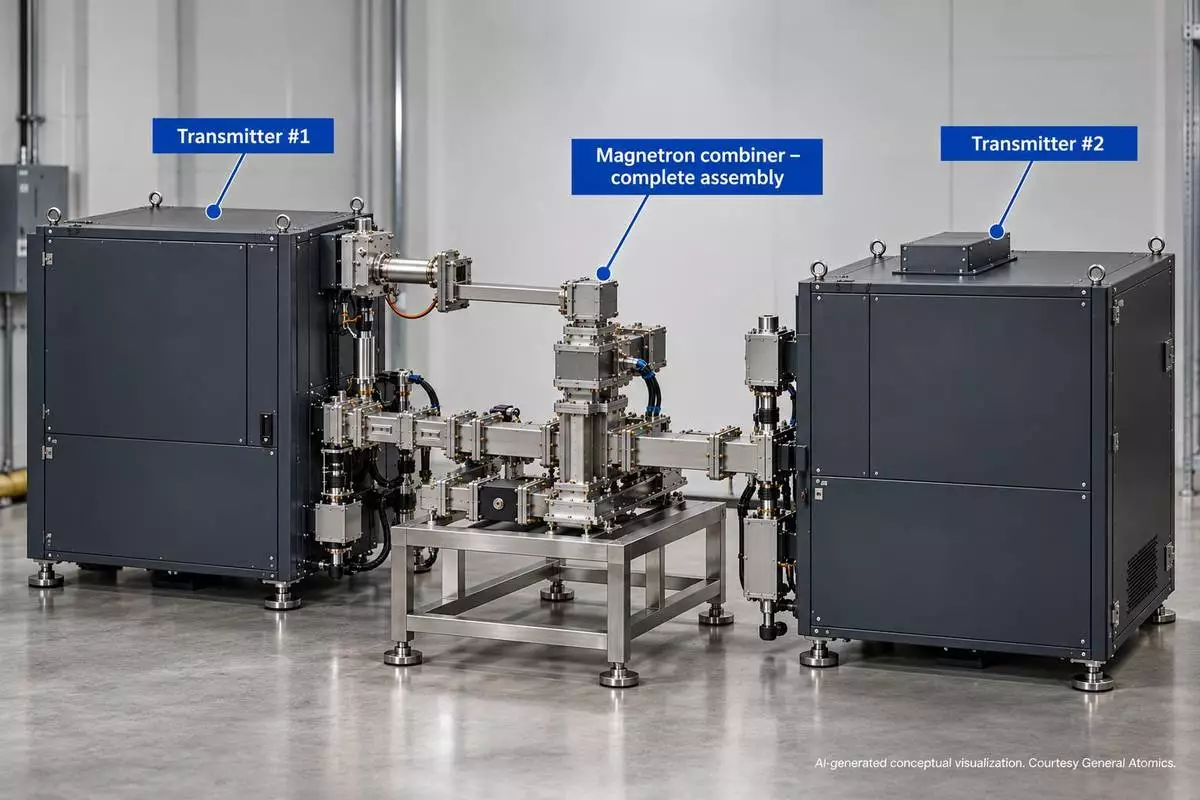
AI-generated conceptual visualization of the magnetron combiner system being developed to help reduce the cost of nuclear waste treatment. Courtesy General Atomics.

AI-generated conceptual visualization of the magnetron combiner system being developed to help reduce the cost of nuclear waste treatment. Courtesy General Atomics.
WASHINGTON (AP) — A first-of-its-kind cancer vaccine is significantly reducing the chances that melanoma patients’ tumors come back, according to results of a major study released Thursday by drugmakers Moderna and Merck.

The vaccine was custom-brewed for each patient to match their tumor. Adding it to a standard post-surgery treatment reduced by 42% the risk of melanoma returning two years after surgery, according to the most advanced study to date of this new strategy for fighting cancer.

“The field has been looking for a win and I think this one is a big one,” said Dr. Hussein Tawbi of MD Anderson Cancer Center in Houston, one of the researchers in the international study.

The vaccine, called intismeran, is made with the same Nobel Prize-winning mRNA technology that was behind COVID-19 vaccines. Experimental personalized cancer vaccines made with mRNA and some other approaches also are being tested against other types of cancer including lung, kidney and pancreatic.

Experts not involved with the new study say its success bolsters the field.

“This is a new frontier,” said Karen Knudsen, CEO of the Parker Institute, which helps fund cancer immunotherapy research.

“It’s a big step forward for science, for oncology, because this vaccine will apply to many different cancers,” said Dr. Michael Atkins, deputy director of Georgetown University’s Lombardi Comprehensive Cancer Center.

Moderna and Merck had announced in August that the late-stage trial of intismeran was successful but the detailed results were set to be released Saturday at a meeting of the European Society of Medical Oncology in Madrid. Some of the data was leaked publicly late Thursday, prompting a full release ahead of the weekend's scientific presentation.

Most people think of vaccines as preventing an infection, like measles or whooping cough. There are already two cancer-preventing vaccines, the HPV and hepatitis B shots that block infection from those tumor-causing viruses. And research is underway to prevent some types of inherited cancer such as Lynch syndrome-caused colorectal cancer.

But a personalized vaccine designed to block surgically-removed cancer from returning is very different. For the intismeran study, scientists hunted gene mutations unique to each patient’s tumor, mutations that create proteins which shouldn’t be in the body unless those cancer cells start to grow again. The custom vaccine — nine doses given three weeks apart — teaches the patient’s immune system to watch out for and attack those so-called neoantigens.

How did it work? The study included more than 1,100 people with high-risk melanoma that was surgically removed. Everyone was given the standard follow-up therapy: Merck’s immunotherapy named Keytruda. The participants were randomly assigned to also receive custom-brewed vaccine doses or a placebo.

Two years later, 82% of the people in the vaccine group were still living without a recurrence of their cancer compared to 70% who had gotten standard Keytruda alone. The trial is continuing to track participants’ longer-term outcomes.

In 2024, Tony Hout joined the vaccine trial at MD Anderson after seeking care for a spot on his ear that had been bleeding intermittently and wouldn’t fully heal. Doctors recognized melanoma and during surgery discovered it had started to spread.

“I want to make sure I’m doing everything I can to be here for my family,” said Hout, 62, who has since moved to Cayuga, Indiana, and travels back to Houston every few months for a study check-up. Scans this week showed he’s still cancer-free.

The vaccine’s side effects were mainly the sore arm, fatigue and other reactions typical of mRNA coronavirus vaccination, MD Anderson's Tawbi said.

Moderna and Merck are talking with regulatory authorities about next steps for seeking approval of the vaccine.

Customized medicines generally are very expensive. The drugmakers aren’t discussing what such a cancer vaccine might cost.

But Moderna President Stephen Hoge said the company’s special cancer vaccine manufacturing facility in Massachusetts is providing doses for thousands of people enrolled in multiple studies underway internationally.

Hoge said it takes a few days to brew the vaccine but the whole process, starting with analyzing the tumor genetics to come up with what is essentially a recipe for each patient, can take roughly six weeks, sometimes more. Meanwhile, the melanoma patients had already started their standard Keytruda, a different kind of immunotherapy.

Moderna shares dropped 18% Thursday after the study’s full results were made public, but they remained more than 200% higher than they were in late August before investors were first told of the initial results.

The Associated Press’ health and science coverage receives financial support from the AP Fund for Journalism and private foundations. AP is solely responsible for all content. Find AP’s standards for working with philanthropies, a list of supporters and funded coverage areas at AP.org

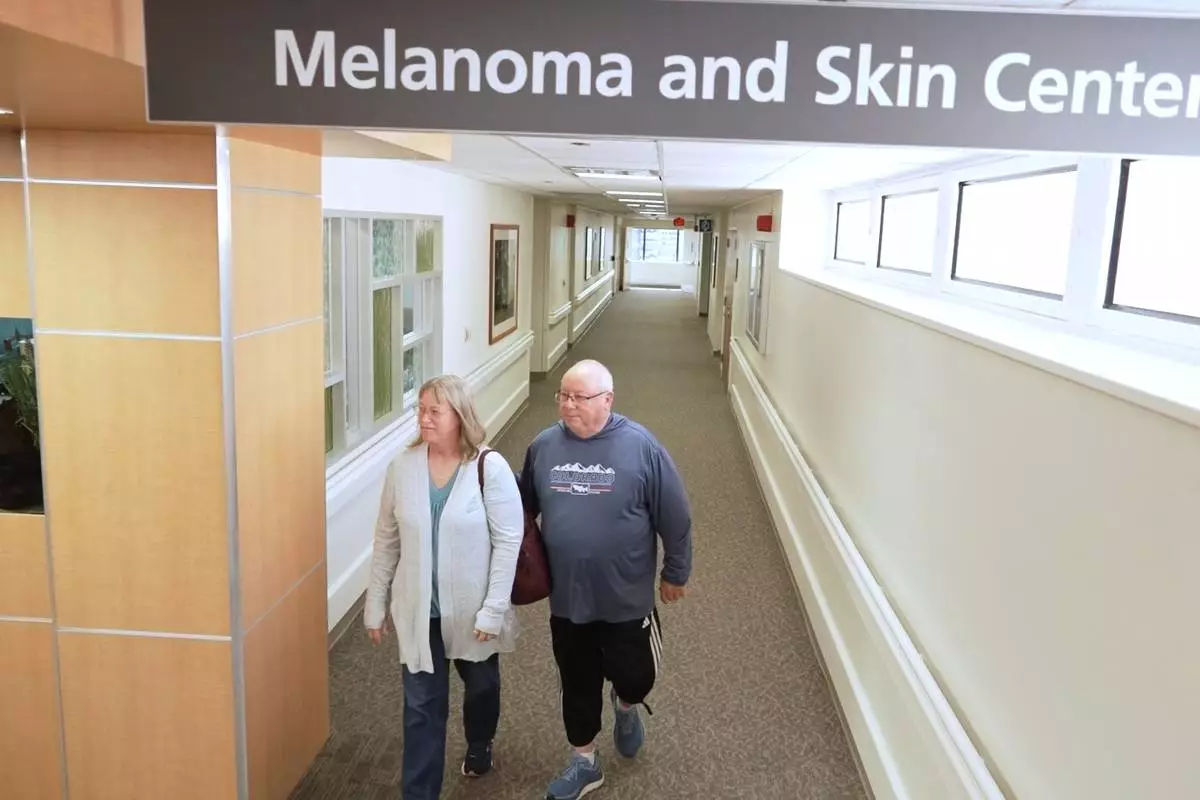
In this image made from video, Tony Hout, right, walks with his wife Kim, at UT MD Anderson Cancer Center in Houston, Monday, Oct. 19, 2026. (AP Photo/Lekan Oyekanmi)

In this image made from video, Tony Hout, right, walks with his wife Kim, at UT MD Anderson Cancer Center in Houston, Monday, Oct. 19, 2026. (AP Photo/Lekan Oyekanmi)

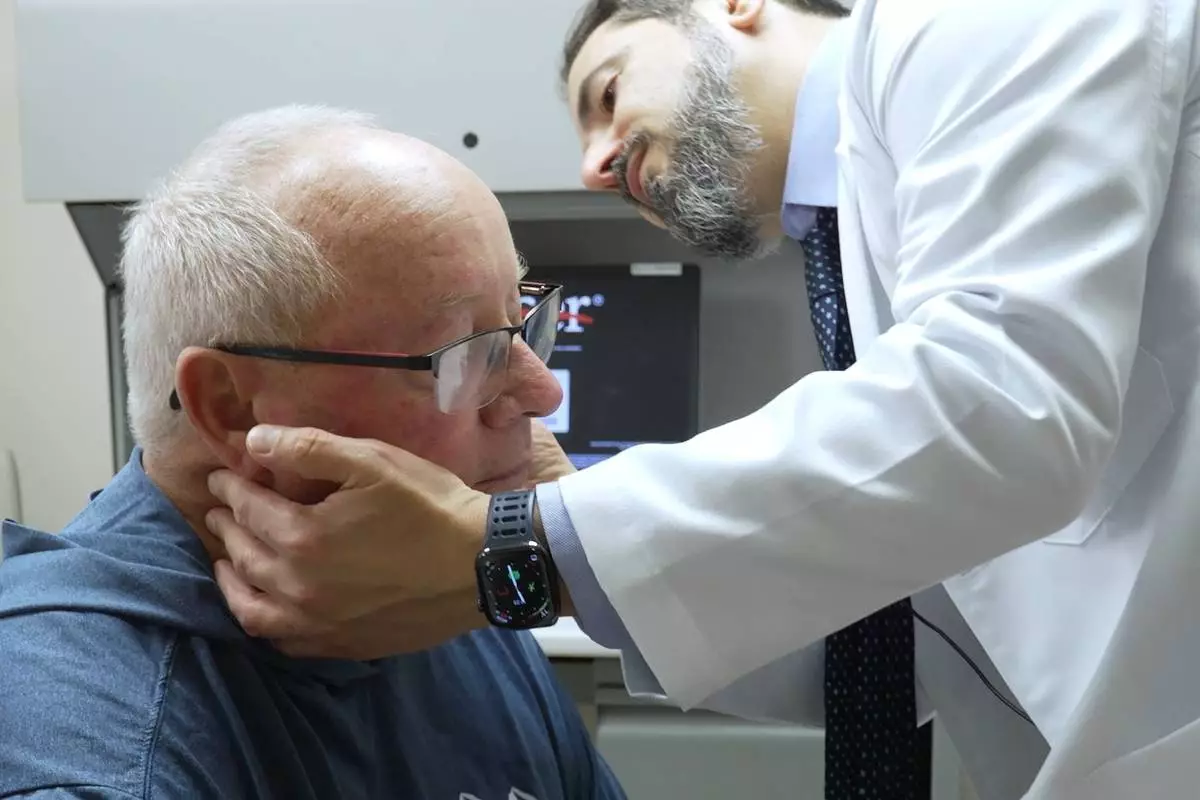
In this image made from video, Tony Hout is examined by Dr. Hussein Tawbi at UT MD Anderson Cancer Center in Houston, Monday, Oct. 19, 2026. (AP Photo/Lekan Oyekanmi)

In this image made from video, Tony Hout is examined by Dr. Hussein Tawbi at UT MD Anderson Cancer Center in Houston, Monday, Oct. 19, 2026. (AP Photo/Lekan Oyekanmi)

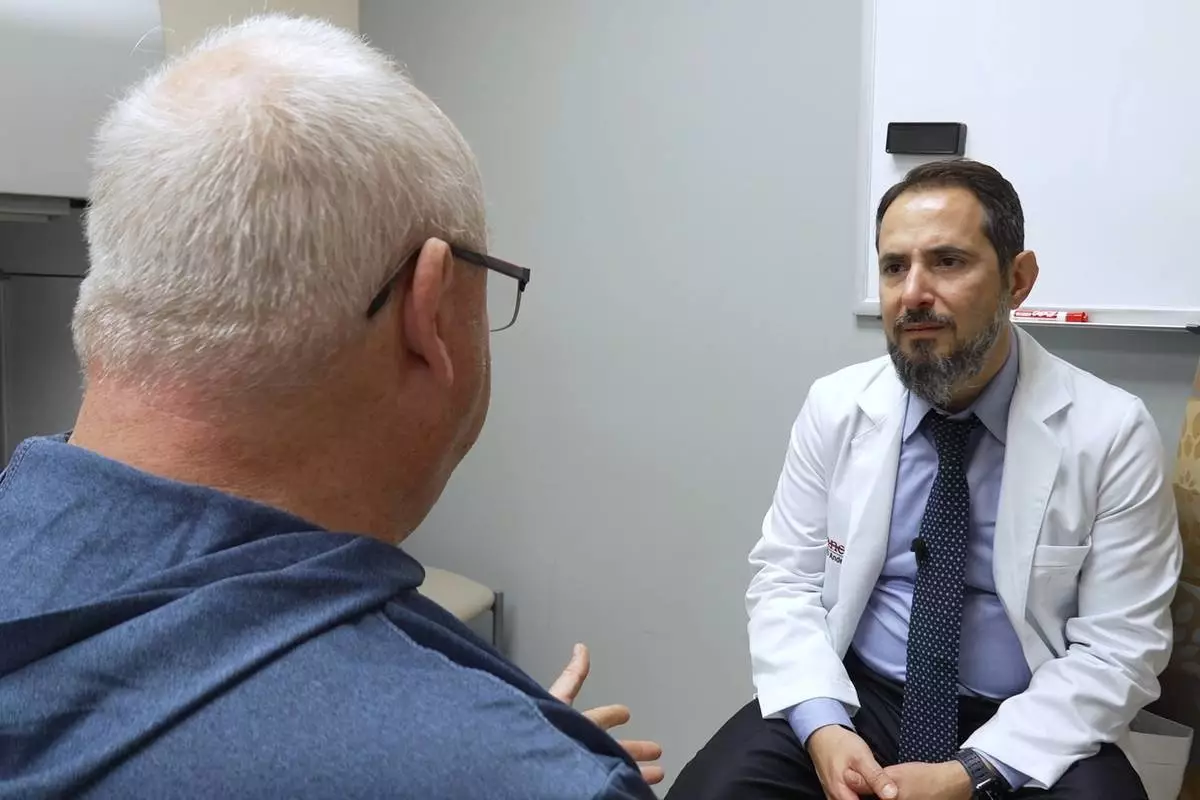
In this image made from video, Tony Hout, left, talks with Dr. Hussein Tawbi at UT MD Anderson Cancer Center in Houston, Monday, Oct. 19, 2026. (AP Photo/Lekan Oyekanmi)

In this image made from video, Tony Hout, left, talks with Dr. Hussein Tawbi at UT MD Anderson Cancer Center in Houston, Monday, Oct. 19, 2026. (AP Photo/Lekan Oyekanmi)

Recommended Articles