Skip to Content Facebook Feature Image

The GOP is on a rescue mission in Kansas, where Dems haven't won a Senate race in nearly a century

News

The GOP is on a rescue mission in Kansas, where Dems haven't won a Senate race in nearly a century
News

News

The GOP is on a rescue mission in Kansas, where Dems haven't won a Senate race in nearly a century

2026-10-23 04:53 Last Updated At:05:00

TOPEKA, Kan. (AP) — At 94 years, the Kansas GOP’s streak of one-party dominance in Senate races is the nation’s longest because even in the toughest years, disaffected Republican-leaning voters have reliably drifted back to the party’s fold before Election Day.

But Republicans fear this year could be different, setting the race between Republican Sen. Roger Marshall and Democrat Adam Hamilton on track to be the most expensive in state history.

More Images
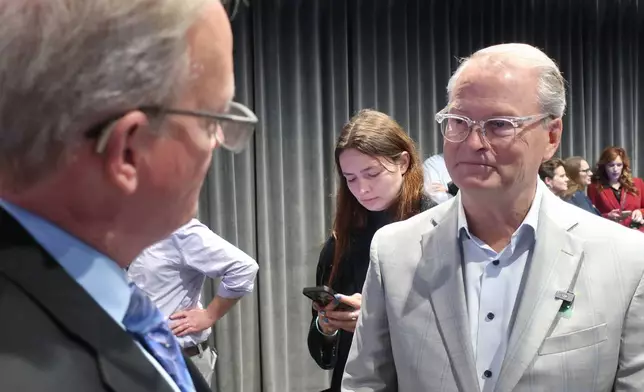
Adam Hamilton, right, Democratic Senate nominee in Kansas, speaks with Curtis Sneden, president and CEO of the Metropolitan Topeka Airport Authority, at a Meet the Candidate event sponsored by the Greater Topeka Chamber of Commerce, Friday, Oct. 16, 2026, in Topeka, Kan. (AP Photo/John Hanna)
Adam Hamilton, right, Democratic Senate nominee in Kansas, speaks with Curtis Sneden, president and CEO of the Metropolitan Topeka Airport Authority, at a Meet the Candidate event sponsored by the Greater Topeka Chamber of Commerce, Friday, Oct. 16, 2026, in Topeka, Kan. (AP Photo/John Hanna)

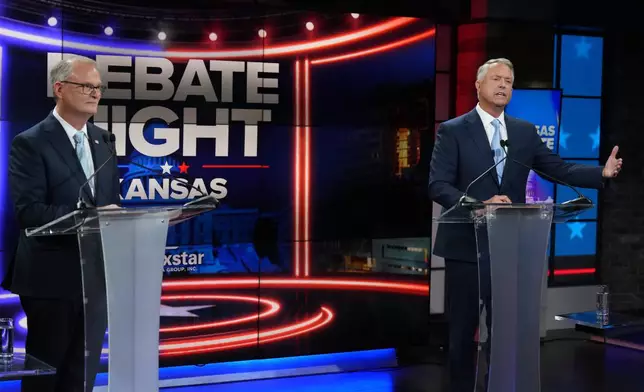
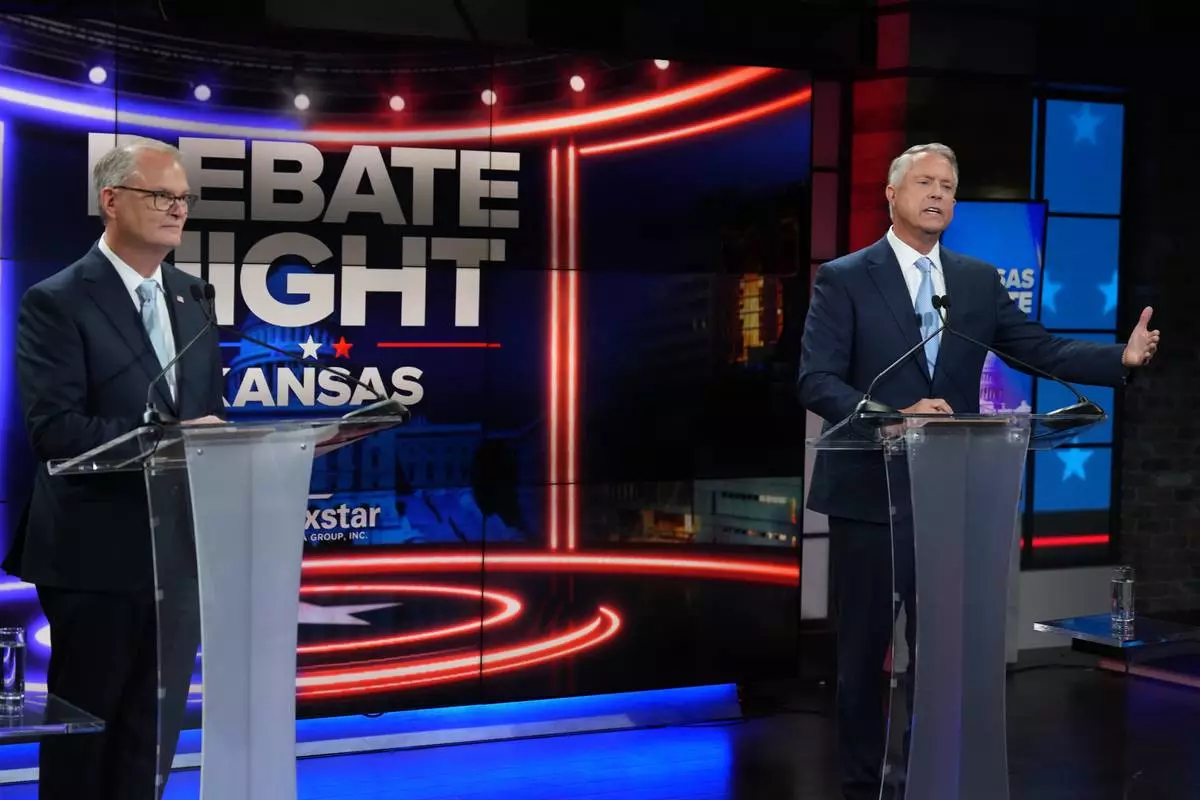
Republican Sen. Roger Marshall, right, and Democratic nominee for U.S. Senate Adam Hamilton participate in a debate in Kansas City, Mo., Wednesday, Oct. 21, 2026. (AP Photo/Charlie Riedel, Pool)
Republican Sen. Roger Marshall, right, and Democratic nominee for U.S. Senate Adam Hamilton participate in a debate in Kansas City, Mo., Wednesday, Oct. 21, 2026. (AP Photo/Charlie Riedel, Pool)

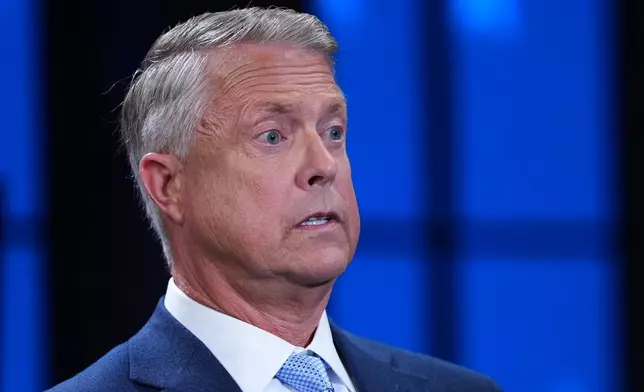
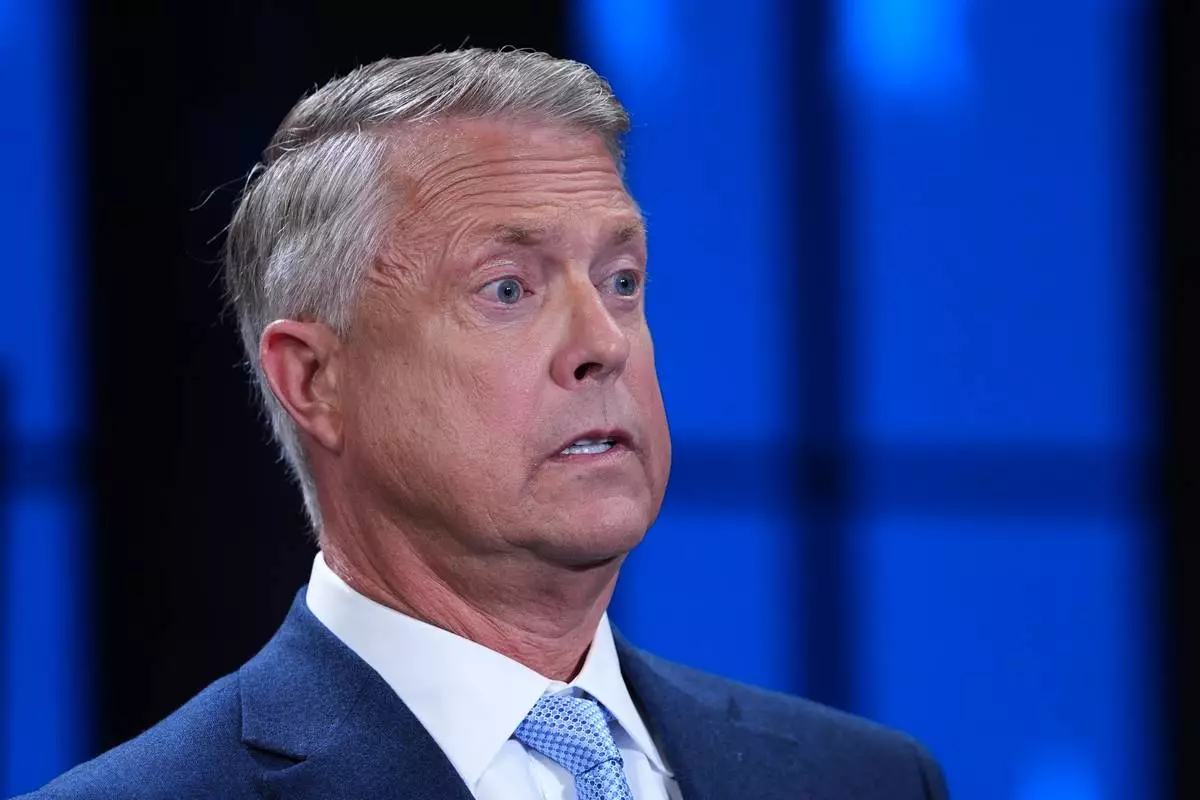
Republican Sen. Roger Marshall participates in a debate with Democratic nominee for U.S. Senate Adam Hamilton at WDAF TV in Kansas City, Mo., Wednesday, Oct. 21, 2026. (AP Photo/Charlie Riedel, Pool)
Republican Sen. Roger Marshall participates in a debate with Democratic nominee for U.S. Senate Adam Hamilton at WDAF TV in Kansas City, Mo., Wednesday, Oct. 21, 2026. (AP Photo/Charlie Riedel, Pool)

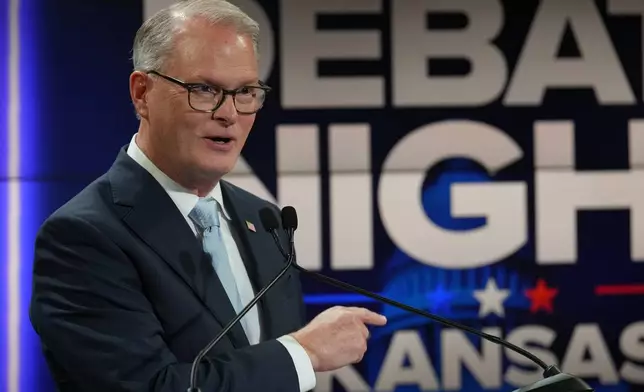
Democratic nominee for U.S. Senate Adam Hamilton participates in a debate with Republican Sen. Roger Marshall in Kansas City, Mo., Wednesday, Oct. 21, 2026. (AP Photo/Charlie Riedel, Pool)
Democratic nominee for U.S. Senate Adam Hamilton participates in a debate with Republican Sen. Roger Marshall in Kansas City, Mo., Wednesday, Oct. 21, 2026. (AP Photo/Charlie Riedel, Pool)

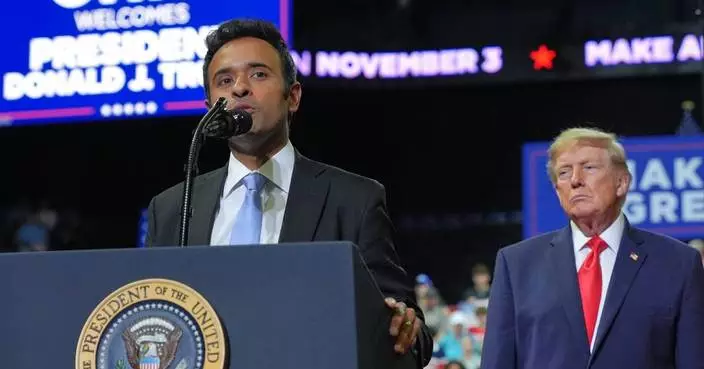
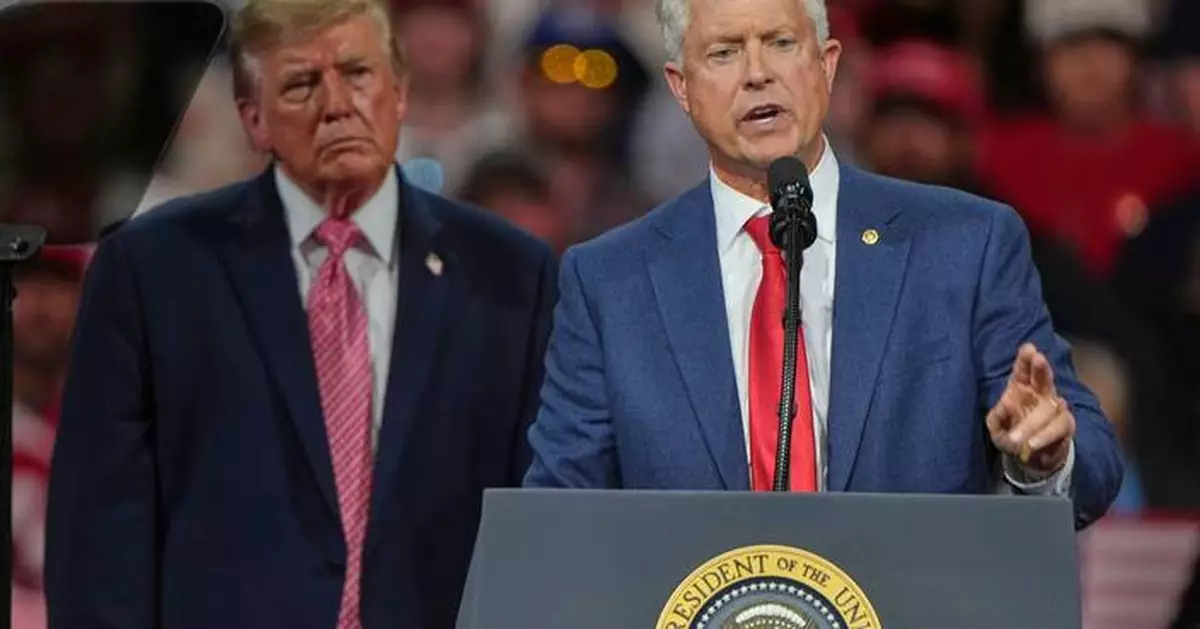
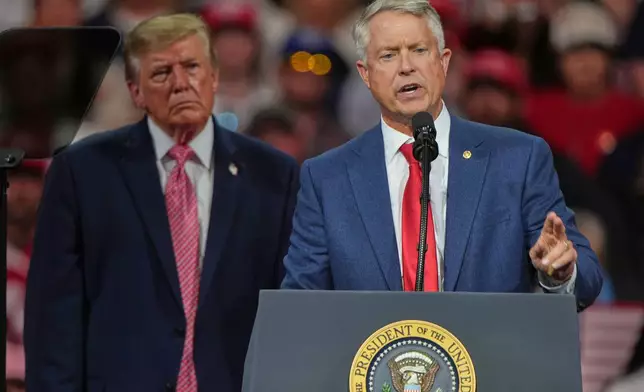
President Donald Trump listens as Sen. Roger Marshall, R-Kan., speaks at a campaign rally at Heartland Credit Union Arena, Monday, Oct. 19, 2026, in Park City, Kan. (AP Photo/Charlie Riedel)

President Donald Trump listens as Sen. Roger Marshall, R-Kan., speaks at a campaign rally at Heartland Credit Union Arena, Monday, Oct. 19, 2026, in Park City, Kan. (AP Photo/Charlie Riedel)

Hamilton, founder and senior pastor of the nation’s largest United Methodist church, has raised significantly more money than Marshall, who is seeking his second term. Hamilton’s candidacy — and voters’ disapproval of President Donald Trump’s handling of the economy — have upended GOP hopes of seeing Marshall coast to victory as the GOP tries to hold its Senate majority.

Kansas, which Trump carried in three presidential races, is an unlikely Senate battleground. Republicans redirected money from the North Carolina Senate race to help Marshall, and Trump flew to Kansas this week to hold a rally for him, calling Marshall “one of the greatest senators in our country." Vice President JD Vance plans to have a rally next week in Topeka after previously headlining one in the Kansas City suburbs in September.

Stalwart GOP voters sensed a serious threat even before Trump announced his rally.

In Topeka, 81-year-old Julie Adamson has been praying about the election, but she's also knocked on doors for Marshall, about 200 by her count. She said if Hamilton wins and Democrats control the Senate, “We’ll see, ‘impeach, impeach Trump.’”

“And nothing will get done for our country,” she added.

Before entering the race, Hamilton already had a public profile in vote-rich suburbs through building his Kansas City-area Church of the Resurrection into a 25,000 member congregation. Churchgoing Protestants also knew him as the author of several dozen books, and he’s honed his speaking skills through weekly sermons.

Hamilton has positioned himself as a moderate and made rising prices, particularly for fuel, a key issue. During a debate Wednesday, both he and Marshall endorsed barring transgender girls and women from female sports teams. Hamilton called for local officials to make such decisions but suggested Marshall and other Republicans have been bullying transgender people by making the issue prominent in campaigns.

Marshall, a mostly retired doctor, portrays Hamilton as too liberal — radical, even — for a state where less than 26% of the 2 million registered voters are Democrats, while more than 44% are Republicans.

During Wednesday's debate, Marshall repeatedly said a Hamilton victory would put Democrats in charge of the Senate and that Hamilton would vote with liberal Democrats.

“We need to remind everybody that control the Senate goes through Kansas,” he said.

There are signs that voter enthusiasm is with the Democrats as advance voting has surged across the U.S. compared to the last midterm. In Kansas, it has more than doubled for the same period.

Amanda Chavez Thomson, who is part owner of a small home-restoration business, said she believes change has been needed “for quite some time.”

“I think we finally have a candidate that can give us that energy and that surge that we need from people who may be on the fence or may not have voted in the past,” she said.

Since the state's August primary, Republican groups have committed to spending more than $26 million on television and digital advertising to boost Marshall, more than what they spent in his first race in 2020, according to the ad-tracking firm AdImpact. Including Marshall's campaign, total GOP ad spending would exceed $32 million.

But Hamilton and Democratic groups together have committed to spending more than $38 million, according to AdImpact. Total ad spending — involving more than 40 groups outside the campaigns — would be about $71 million, a record for Kansas.

One of the reasons the GOP is pushing money toward Marshall may be that the incumbent has proven a lackluster fundraiser. Between the state's August primary and Thursday, Hamilton has collected more than 10,000 contributions from Kansas residents, while raising $8 million from across the U.S., online campaign finance reports show. Marshall has about 200 contributions from Kansans while raising $905,000 total.

“People are crying out, saying, ‘Come on, Roger Marshall, speak up for us,’” Hamilton said during Wednesday night's debate.

Marshall’s campaign and GOP groups have tried to knock any shine off Hamilton’s public image by attacking how he’s led his church and using snippets of his own sermons to portray him as too “woke.” During Trump’s rally, Marshall called Hamilton “the most radical liberal Democrat to ever get through a Senate primary in the history of Kansas.”

But such attacks aren't resonating with at least a few disaffected Republicans. Don Hineman, a western Kansas rancher and former GOP state House majority leader, said he's tired of “woke” being as an insult.

Hineman, who has signed on to the Republicans for Hamilton group, added that no one “was more ‘woke’ than Jesus Christ.”

Democrats have countered with television ads over Marshall's pursuit of unpaid patient bills from the practice as an obstetrician that he gave up a decade ago. State court records online show that from 1996 through 2016, Marshall or his practice filed at least 700 debt-collection lawsuits, occasionally 10 or more a day.

The New York Times first reported the extent of the litigation. It said that in 81 cases, patients were arrested for missing court dates and quoted two experts who called Marshall's tactics extreme. During Wednesday's debate, Marshall said he's faced a “gross mischaracterization” of his actions.

Democrats can hold out hope for a Hamilton victory because the state has sizable blocs of moderate Republican and independent voters who've regularly swung elections to their candidates for governor and who protected abortion rights in a statewide vote in 2022.

Yet Republicans still have two key assets: Kansas’ political history and the loyalty that even unhappy Republican-leaning voters show to the party.

Not only have Democrats lost every Senate race in Kansas since 1932, no Democrat has come within 10 points of winning since 1974. In both 2014 and 2020, races considered tossups in mid-October fizzled, and Marshall’s predecessor, Republican Sen. Pat Roberts, won.

Leroy Towns, a former Roberts chief of staff, said many Republicans in 2014 who considered voting against Roberts “just couldn’t do it.” Towns — who switched parties because of Trump — is backing Hamilton.

Towns believes Hamilton will win, but added, “That Republican pull at the end of an election is really, really strong in this state.”
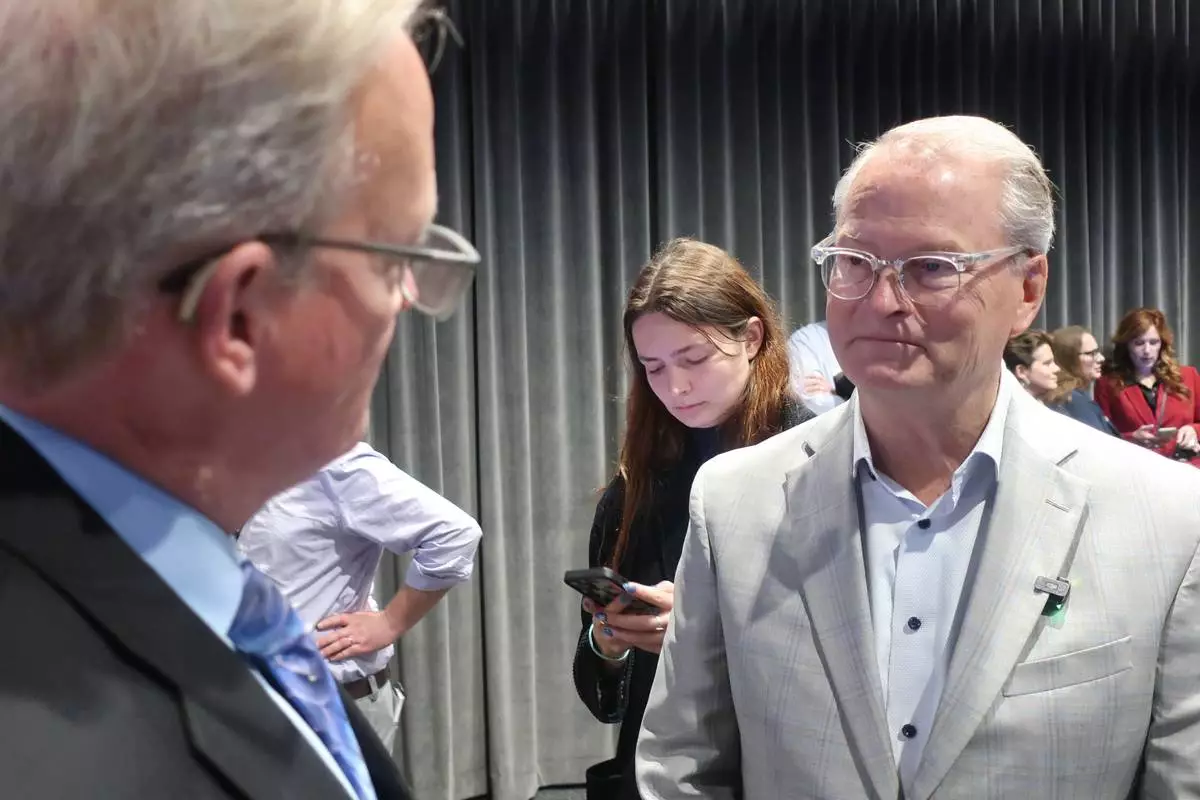
Adam Hamilton, right, Democratic Senate nominee in Kansas, speaks with Curtis Sneden, president and CEO of the Metropolitan Topeka Airport Authority, at a Meet the Candidate event sponsored by the Greater Topeka Chamber of Commerce, Friday, Oct. 16, 2026, in Topeka, Kan. (AP Photo/John Hanna)
Adam Hamilton, right, Democratic Senate nominee in Kansas, speaks with Curtis Sneden, president and CEO of the Metropolitan Topeka Airport Authority, at a Meet the Candidate event sponsored by the Greater Topeka Chamber of Commerce, Friday, Oct. 16, 2026, in Topeka, Kan. (AP Photo/John Hanna)

Republican Sen. Roger Marshall, right, and Democratic nominee for U.S. Senate Adam Hamilton participate in a debate in Kansas City, Mo., Wednesday, Oct. 21, 2026. (AP Photo/Charlie Riedel, Pool)
Republican Sen. Roger Marshall, right, and Democratic nominee for U.S. Senate Adam Hamilton participate in a debate in Kansas City, Mo., Wednesday, Oct. 21, 2026. (AP Photo/Charlie Riedel, Pool)

Republican Sen. Roger Marshall participates in a debate with Democratic nominee for U.S. Senate Adam Hamilton at WDAF TV in Kansas City, Mo., Wednesday, Oct. 21, 2026. (AP Photo/Charlie Riedel, Pool)
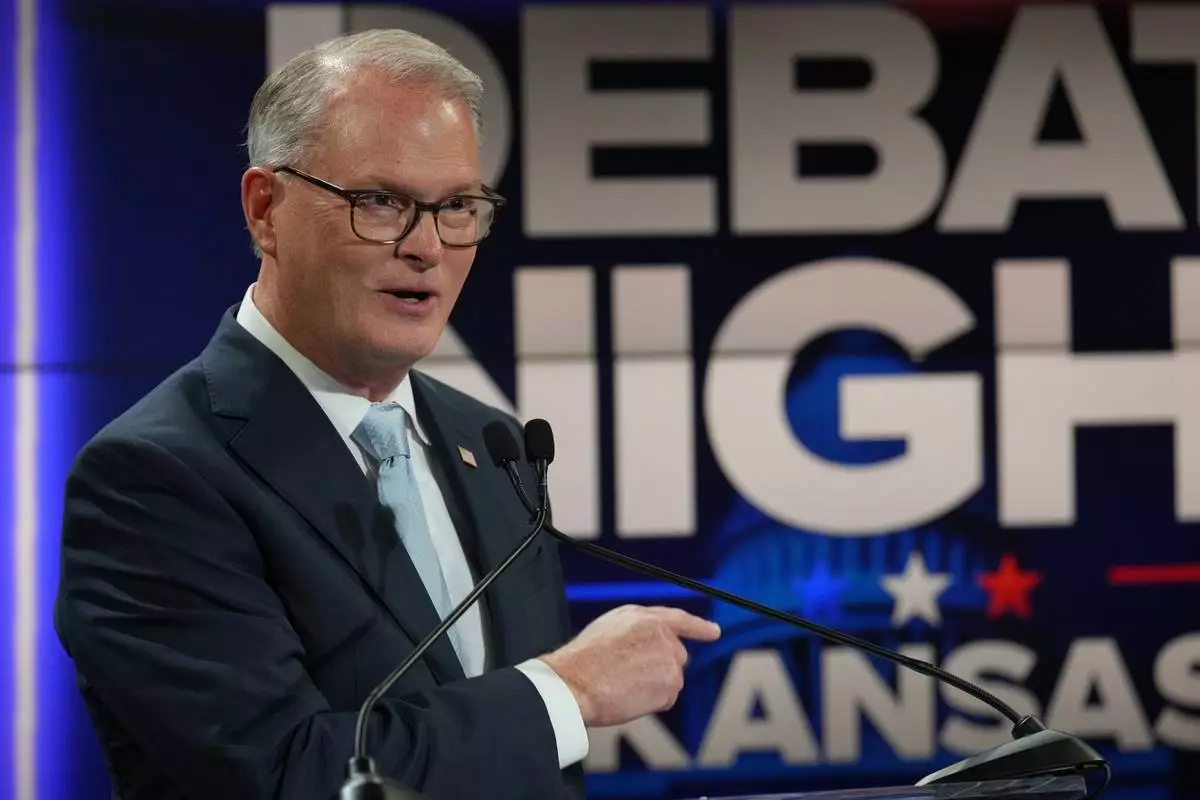
Republican Sen. Roger Marshall participates in a debate with Democratic nominee for U.S. Senate Adam Hamilton at WDAF TV in Kansas City, Mo., Wednesday, Oct. 21, 2026. (AP Photo/Charlie Riedel, Pool)

Democratic nominee for U.S. Senate Adam Hamilton participates in a debate with Republican Sen. Roger Marshall in Kansas City, Mo., Wednesday, Oct. 21, 2026. (AP Photo/Charlie Riedel, Pool)
Democratic nominee for U.S. Senate Adam Hamilton participates in a debate with Republican Sen. Roger Marshall in Kansas City, Mo., Wednesday, Oct. 21, 2026. (AP Photo/Charlie Riedel, Pool)

President Donald Trump listens as Sen. Roger Marshall, R-Kan., speaks at a campaign rally at Heartland Credit Union Arena, Monday, Oct. 19, 2026, in Park City, Kan. (AP Photo/Charlie Riedel)
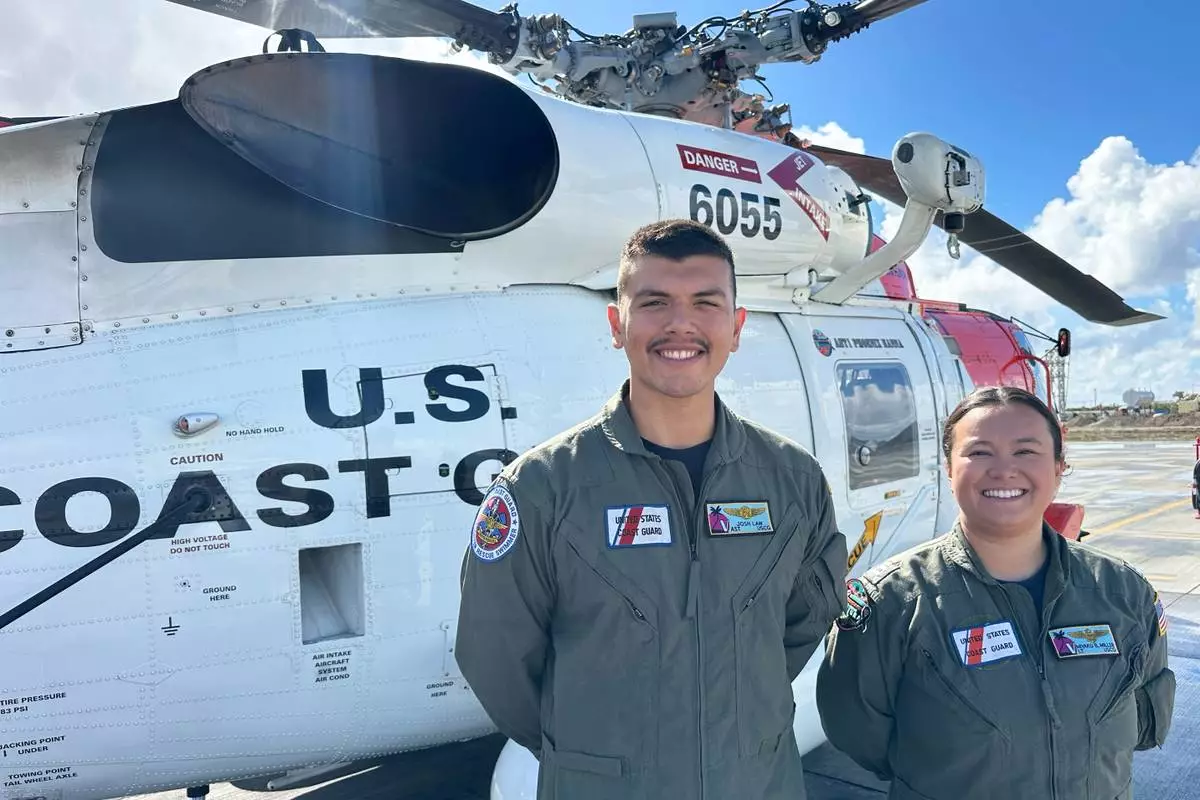
President Donald Trump listens as Sen. Roger Marshall, R-Kan., speaks at a campaign rally at Heartland Credit Union Arena, Monday, Oct. 19, 2026, in Park City, Kan. (AP Photo/Charlie Riedel)
LOS ANGELES (AP) — Strapped into a harness, Josh Law was lowered from a U.S. Coast Guard helicopter into the rough Pacific Ocean in the pitch black night, far off the Mexican coast.

The force of the helicopter blades pummeled the water, whipping up spray and turbulence. The Coast Guard rescue swimmer couldn’t hear anything over the noise or see anything in the darkness. Waves of 6 to 8 feet (1.8 to 2.4 meters) hit him.

All he could do was follow the searchlight from the helicopter with the hope it would lead him to the more than two dozen people flung into the cold waters some 140 miles (225 kilometers) off the coast of Mexico’s Baja peninsula. He would personally rescue 16 of them.

“I was experiencing exhaustion at that point," Law, 24, told The Associated Press in his first interview since the rescue. "We had very little sleep. But what I was experiencing was nothing compared to what they were at that point ... I just had to keep that in mind.”

Over the next two hours in the predawn hours of Oct. 16, Law was the sole person in the water who would get the people whose boat had capsized out of the water. Eleven others were never found. The Coast Guard called off its search late Sunday.

Law described the dramatic operation to save lives along a remote route frequented by migrant smuggling boats. What the boat was doing out there and where it originated from are part of a federal investigation. It was unclear if the vessel got lost, had engine failure, was swept out to sea or meant to go that far. Only what were believed to be pieces of the boat were found. All who were rescued are Mexican, the Mexican consulate said.

The Coast Guard said U.S. Customs and Border Protection was investigating and interviewing the survivors, but the agency did not respond to multiple inquiries on whether the vessel was a migrant smuggling boat.

The mayday call came in around 1 a.m.

Someone said their boat was sinking in the middle of the Pacific Ocean off the coast of Ensenada, Mexico.

Within minutes, the alarm sounded at the U.S. Coast Guard Air Station in Ventura, northwest of Los Angeles, rousing Law and his colleagues from their sleep.

Helicopter pilot Lt. Miyako Miller checked flying conditions and planned the flight route that would take the crew of four over the vast ocean south of the U.S. border.

Law prepared his dry suit, fins and medical items, then put on a harness that would be hooked onto a cable to lower him down from the aircraft into the ocean.

By 2 a.m., they were taking off from the Coast Guard station in Ventura.

Miller wore night vision goggles to help her fly in the dark. She said she relied on the stars, with no moonlight that night.

As the crew approached the reported location of the sinking, Miller spotted a tiny flicker of light in the distance.

Then she spotted what looked like debris floating in the water, but it was difficult to distinguish what it was. Miller carefully navigated the helicopter over the area, lowering the aircraft until it was hovering about 40 feet (12 meters) above the water.

“I’m doing my best to maintain my references externally by looking outside through the night vision goggles," Miller said, adding that meanwhile “the flight mechanic is telling me where to position the helicopter.”

Some 250 miles (400 kilometers) southwest of Ensenada, Mexico, is Guadalupe Island, a biosphere reserve that is well known as a place brimming with great white sharks.

Law said he didn’t think about what was in the water as he hooked himself to a cable and zipped into the ocean, strapped in a harness.

There was no time to waste. While Law’s dry suit provided some warmth, he knew the others had already spent hours in hypothermic temperature waters.

Law said he was guided by a searchlight from the crew, which allowed him to catch a glimpse of the people in the water.

They were scattered across a wide area. Some were wearing life vests that had tiny lights that produced the flicker first spotted by Miller. Others clung onto one another, buoys and pieces of wreckage, shivering and treading water to stay afloat.

Law said he swam to them, flipped them on their backs, put his arm over them and pulled them up using the “buddy tow” technique. Kicking his legs to swim, he carried them to the spot where he could signal the flight mechanic to lower a basket for them to be picked up.

“With one hand, I’m holding the survivor. With the other, I am signaling to the helicopter and working with the device,” he said.

He placed them into the basket, one by one. Then it was hoisted up to the helicopter where the crew got each person into the aircraft before lowering the basket again.

Law’s dry suit slowly filled up to his knees with water, feeling like weights pulling on him as he swam.

Over the next 90 minutes, Law battled heavy waves while swimming back and forth.

With a packed helicopter and dwindling fuel, the crew decided to head to the Coast Guard station in San Diego where ambulances were waiting.

On the flight, Law treated three people with what he described as “bad” wounds, staunching the bleeding. Several of the injuries were “consistent with shark bites" and the Coast Guard provided life-saving first aid, the agency said in a statement Saturday.

Customs and Border Protection officers went to a hospital and said they would process the survivors according to immigration laws after they were medically cleared. Nearly half of those rescued have since been returned to Mexico, U.S. officials said.

Law and his crew returned to Ventura that morning — it was by far the longest rescue operation he had ever done, he said.

The search for the 11 others continued for another two days to no avail. The Coast Guard, alongside Mexico and the U.S. Navy, searched more than 2,441 square miles (6,322 square kilometers) for a combined 89 hours.

Migrants are increasingly turning to the risky alternative offered by smugglers to travel by sea to avoid heavily guarded land borders. Small boats called pangas leave Baja at night and sometimes travel hundreds of miles (kilometers) north.

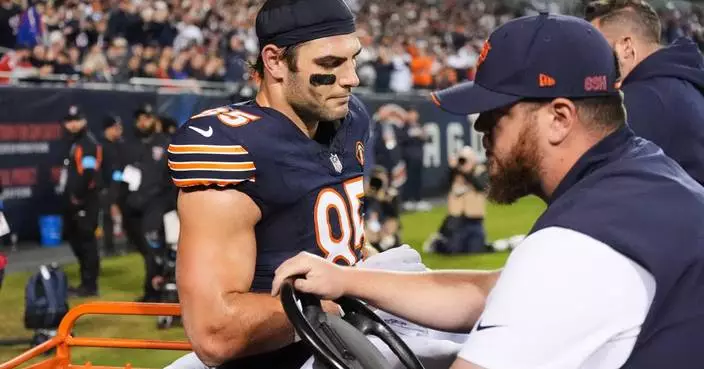
This photo made with a smartphone shows U.S. Coast Guard officer Josh Law, left, and lieutenant Miyako Miller standing in front of a rescue helicopter at the U.S. Coast Guard Air Station in Ventura, Calif., Thursday, Oct. 22, 2026. (AP Photo/Eugene Garcia)

This photo made with a smartphone shows U.S. Coast Guard officer Josh Law, left, and lieutenant Miyako Miller standing in front of a rescue helicopter at the U.S. Coast Guard Air Station in Ventura, Calif., Thursday, Oct. 22, 2026. (AP Photo/Eugene Garcia)

Recommended Articles