Skip to Content Facebook Feature Image

What to know about the weapons and tactics blamed for injuring French protesters

News

What to know about the weapons and tactics blamed for injuring French protesters
News

News

What to know about the weapons and tactics blamed for injuring French protesters

2026-10-23 12:05 Last Updated At:12:20

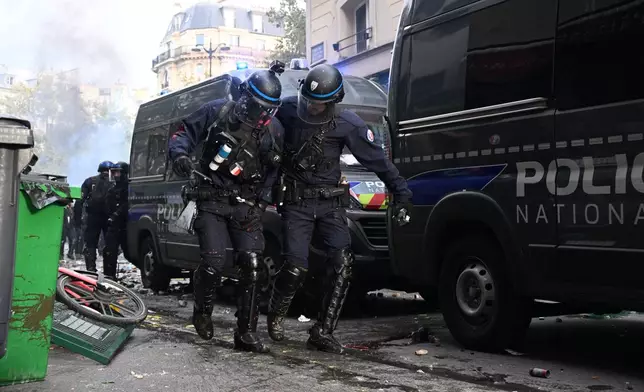
PARIS (AP) — Police across France are under pressure to maintain security during further protests expected in some cities, while facing scrutiny over their riot-control tactics used during previous unrest that left some teenagers seriously injured.

Officers have appeared outnumbered and overwhelmed during last weekend's protests against rising living costs and poor conditions in schools. Authorities have announced police reinforcements ahead of further protests expected on Saturday, amid fears of renewed violence.

More Images
Police officers leave the Republique square during a demonstration against rising living costs, joining students' grievances, in Paris, Saturday, Oct. 17, 2026. (AP Photo/Emma Da Silva)
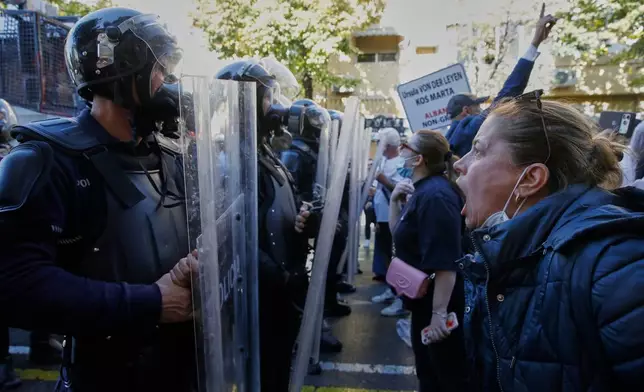
Police officers leave the Republique square during a demonstration against rising living costs, joining students' grievances, in Paris, Saturday, Oct. 17, 2026. (AP Photo/Emma Da Silva)

A woman shouts at riot police during an anti-government protest in Tirana, Albania, Tuesday, Oct. 20, 2026. (AP Photo/Boris Grdanoski)
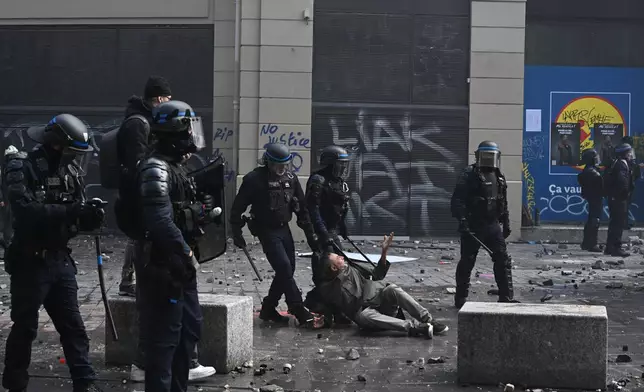
A woman shouts at riot police during an anti-government protest in Tirana, Albania, Tuesday, Oct. 20, 2026. (AP Photo/Boris Grdanoski)

Police detain a protester during a demonstration against rising living costs and students' grievances, in Paris, Saturday, Oct. 17, 2026. (AP Photo/Emma Da Silva)
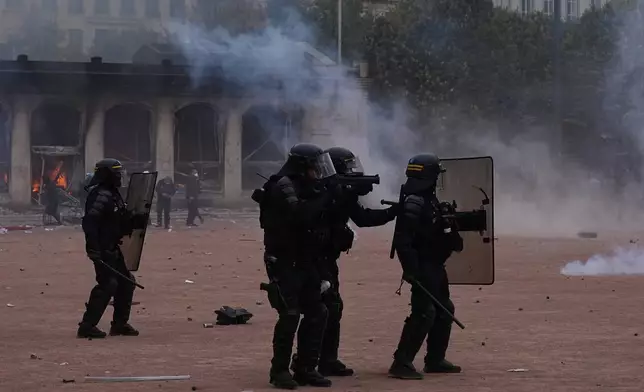
Police detain a protester during a demonstration against rising living costs and students' grievances, in Paris, Saturday, Oct. 17, 2026. (AP Photo/Emma Da Silva)

Riot police face protesters during a demonstration against rising living costs and in support of students’ grievances in Paris, Saturday, Oct. 17, 2026. (AP Photo/Laurent Cipriani)
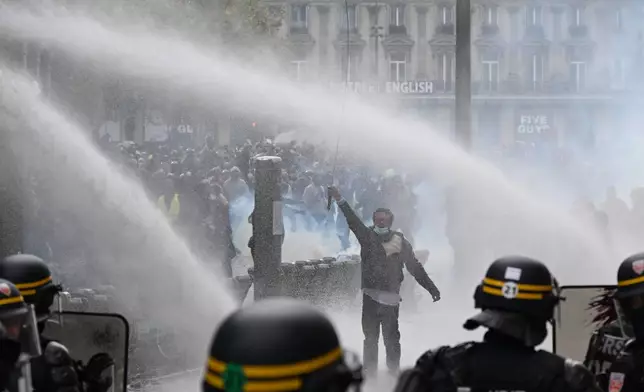
Riot police face protesters during a demonstration against rising living costs and in support of students’ grievances in Paris, Saturday, Oct. 17, 2026. (AP Photo/Laurent Cipriani)

Protesters face police during a demonstration against rising living costs, joining students' grievances, in Paris, Saturday, Oct. 17, 2026. (AP Photo/Emma Da Silva)

Protesters face police during a demonstration against rising living costs, joining students' grievances, in Paris, Saturday, Oct. 17, 2026. (AP Photo/Emma Da Silva)

A 17-year-old girl lost an eye while participating in a protest in Mulhouse last Saturday, while a 17-year-old boy lost a hand in Saint-Etienne. Other teenagers have suffered disabling injuries during weeks of high school blockades and street demonstrations.

Here’s a look at French police tactics and riot-control weapons.

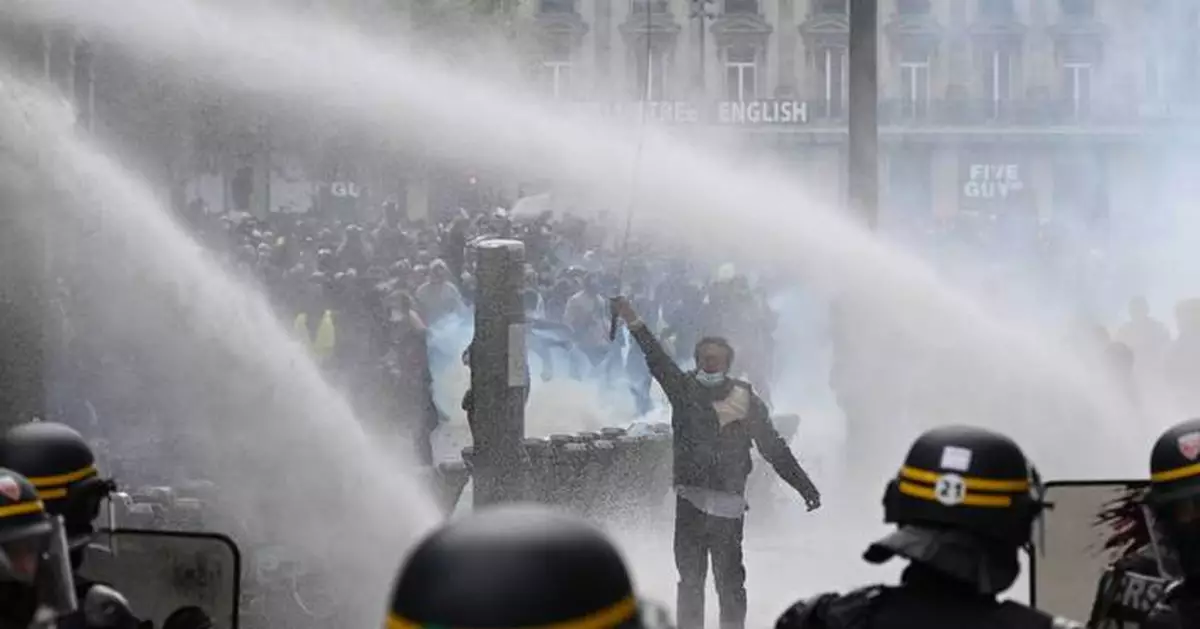
French police forces are equipped with batons, tear gas, sound grenades and foam-round launchers, as well as riot shields equipped with powerful strobe lights designed to disorient protesters. Electric stun guns are prohibited in crowd-control operations.

“Intermediate-force weapons are defensive response tools that allow law enforcement officers to respond to a threat in a graduated and proportionate manner,” French National Police said in a statement to The Associated Press.

But critics, including families of injured teenagers, say the police have been too heavy-handed.

Some have called for bans on foam-round launchers, tear gas and stun grenades, echoing demands made by human rights groups since the violent 2018 “yellow vest” protests.

Earlier this month, Amnesty International called for a permanent ban on all stun grenades, saying they are designed to shock, disorient and sow panic, and that some can cause permanent hearing loss and life-changing injuries from blasts and shrapnel.

United Nations guidance on what it calls “less-lethal weapons” says kinetic impact projectiles should be used only against an imminent threat, targeting the abdomen and never the head, face or neck. Firing from elevated positions or at close range, or bouncing rounds off the ground, can increase the risk of serious injury.

Foam-round launchers, though classified as less-lethal and considered safer than rubber-bullet shotguns, “in certain circumstances, can kill,” said Neil Corney, an arms researcher at the U.K.-based Omega Research Foundation who helped draft the U.N. guidance.

Proper training and guidelines can reduce injuries, he said, pointing to Spain, where authorities replaced criticized rubber-bullet shotguns with foam-round launchers following a violent police crackdown on Catalonia’s 2017 independence referendum. Injuries have declined there, he said.

Foam-round launchers were initially developed for military training and later adapted for “high-risk, hostage-type situations” and anti-terrorism operations, said Patrick Wilckin, an arms researcher at Amnesty International.

“They were never really meant for policing of protests,” he said.

Accountability is another concern. Unlike bullets, foam rounds generally leave no traceable evidence. Activists have proposed stamping identification numbers on the rounds to help identify officers involved in incidents that cause serious injuries. Corney said the measure would greatly improve accountability at little cost.

The use of such weapons reflects a broader shift in French policing toward keeping officers at a distance from protesters, said Jean-Marie Godard, an author specializing in France’s internal security.

In the early 2000s, France’s conservative government moved away from community policing, which emphasized foot patrols and engagement with residents, toward specialized riot-control units.

People across France’s political spectrum regret abandoning the community policing model, Godard said.

French policing today differs from that in many other European countries, according to Laura Keesmann, a sociologist at the University of Antwerp who led a wide-ranging comparative study of policing methods in France, the U.K., the Netherlands and Sweden. In the other countries studied, police often engage directly with demonstrators, sometimes mingling with crowds to defuse tensions, she said.

“That is just really, really not the case in France,” she said. “There’s much more of an authoritarian way of policing.”

Keesmann stressed, however, that French police face unusually militant and sometimes violent protesters.

On the eve of last Saturday’s protests, Interior Minister Laurent Nuñez said his instructions were “very clear: the police and gendarmes should be able to use the entirety of the intermediate weapons at their disposal.”

France has more than 250,000 national police officers and gendarmes. Police generally operate in cities, while gendarmes usually cover rural areas and smaller towns. Both forces fall under the Interior Ministry, which said 997 officers and gendarmes were injured during Saturday’s unrest, seven of them seriously.

Police said more than 100 protesters and residents were injured in Paris on Saturday. Authorities have not released a nationwide injury tally. About 2,400 people were arrested across France that day.

Godard said protest movements have become increasingly decentralized as labor unions have lost influence over demonstrations, drawing a wider range of participants, including radical groups.

French authorities have blamed much of the recent violence on far-left radicals, accusing them of orchestrating clashes with police and targeting public buildings. Others took advantage of the unrest to loot businesses, authorities said.

McNeil reported from Brussels. AP journalist John Leicester contributed to the story.
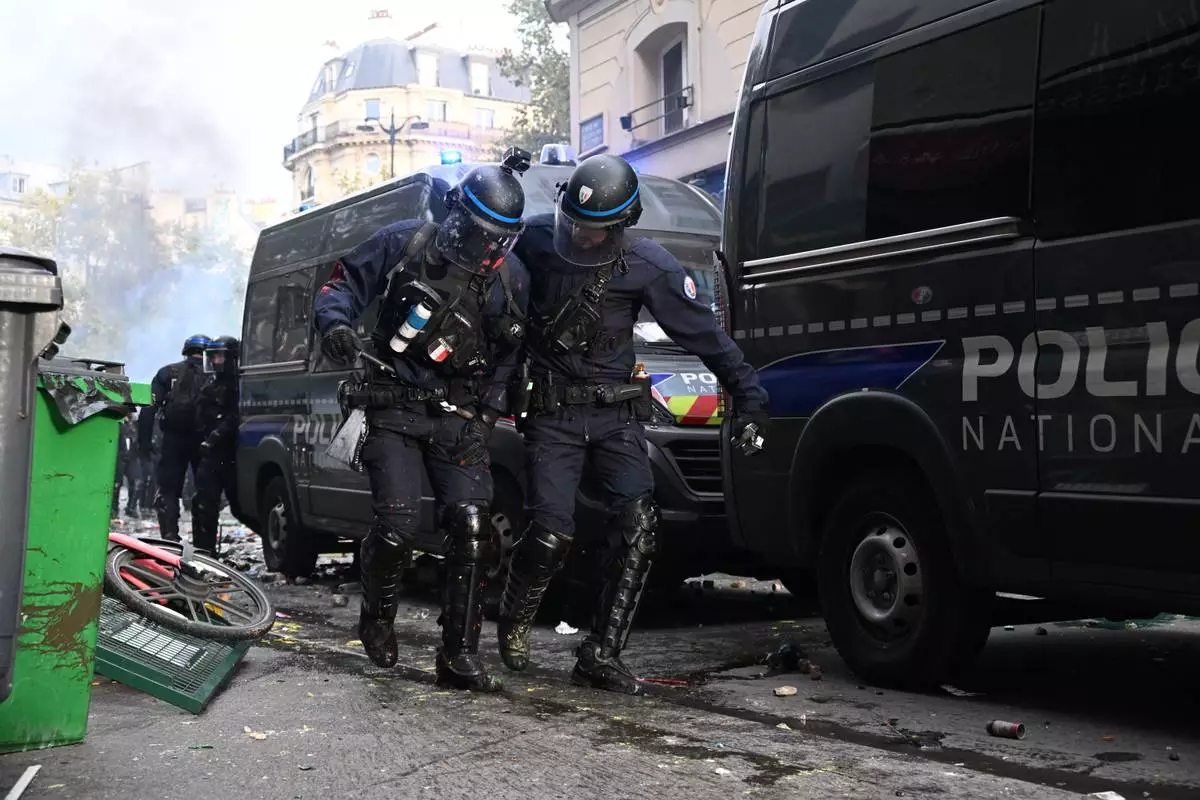
Police officers leave the Republique square during a demonstration against rising living costs, joining students' grievances, in Paris, Saturday, Oct. 17, 2026. (AP Photo/Emma Da Silva)
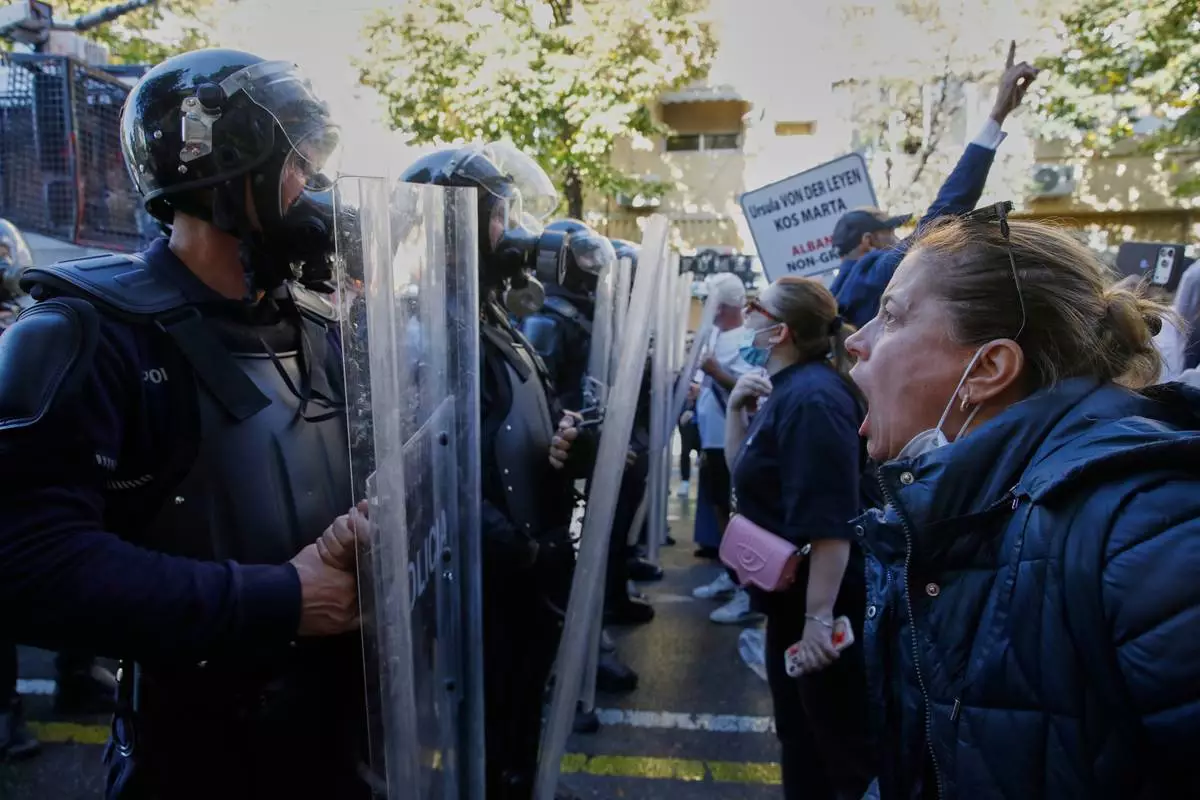
Police officers leave the Republique square during a demonstration against rising living costs, joining students' grievances, in Paris, Saturday, Oct. 17, 2026. (AP Photo/Emma Da Silva)

A woman shouts at riot police during an anti-government protest in Tirana, Albania, Tuesday, Oct. 20, 2026. (AP Photo/Boris Grdanoski)
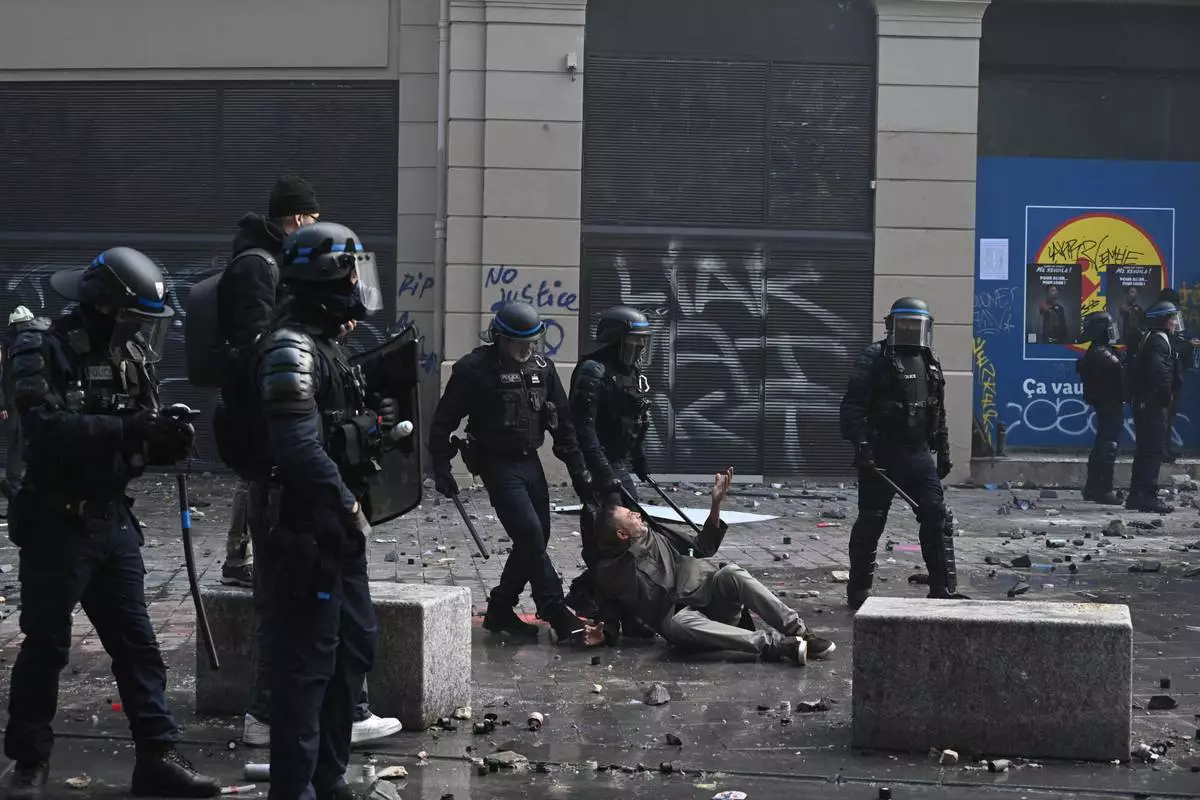
A woman shouts at riot police during an anti-government protest in Tirana, Albania, Tuesday, Oct. 20, 2026. (AP Photo/Boris Grdanoski)

Police detain a protester during a demonstration against rising living costs and students' grievances, in Paris, Saturday, Oct. 17, 2026. (AP Photo/Emma Da Silva)
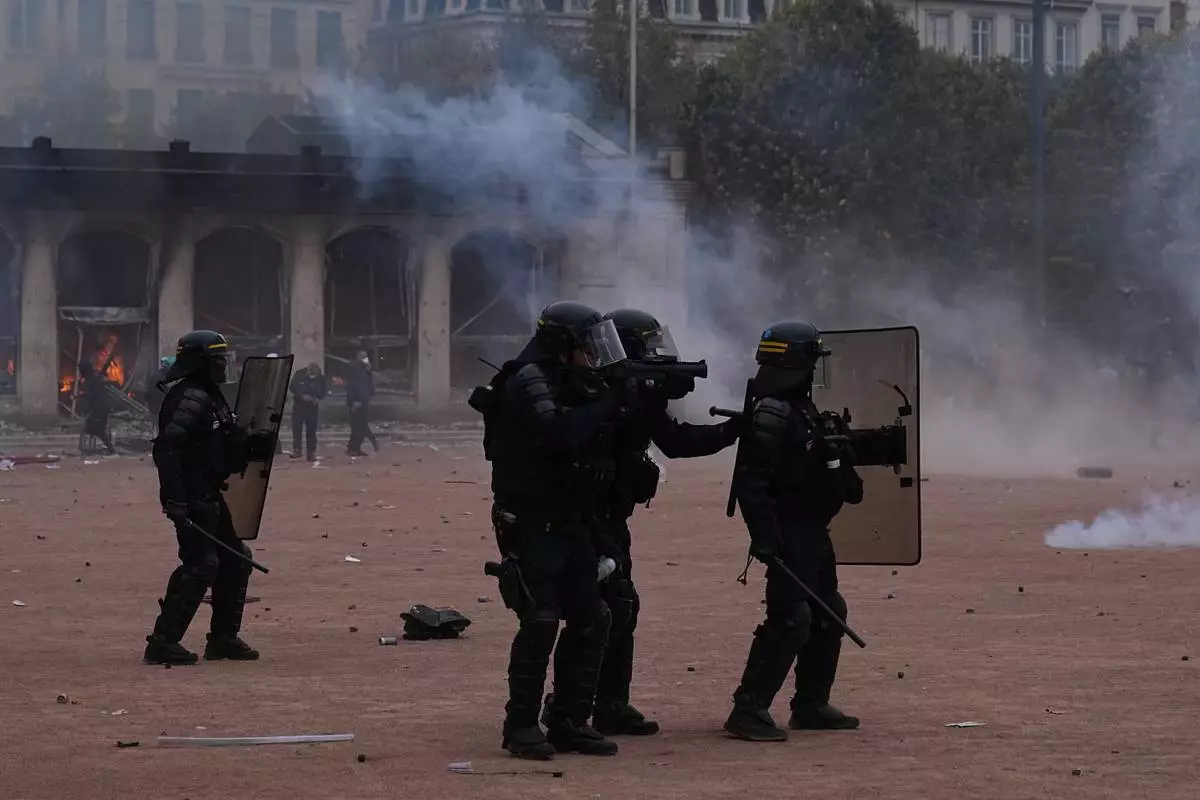
Police detain a protester during a demonstration against rising living costs and students' grievances, in Paris, Saturday, Oct. 17, 2026. (AP Photo/Emma Da Silva)

Riot police face protesters during a demonstration against rising living costs and in support of students’ grievances in Paris, Saturday, Oct. 17, 2026. (AP Photo/Laurent Cipriani)
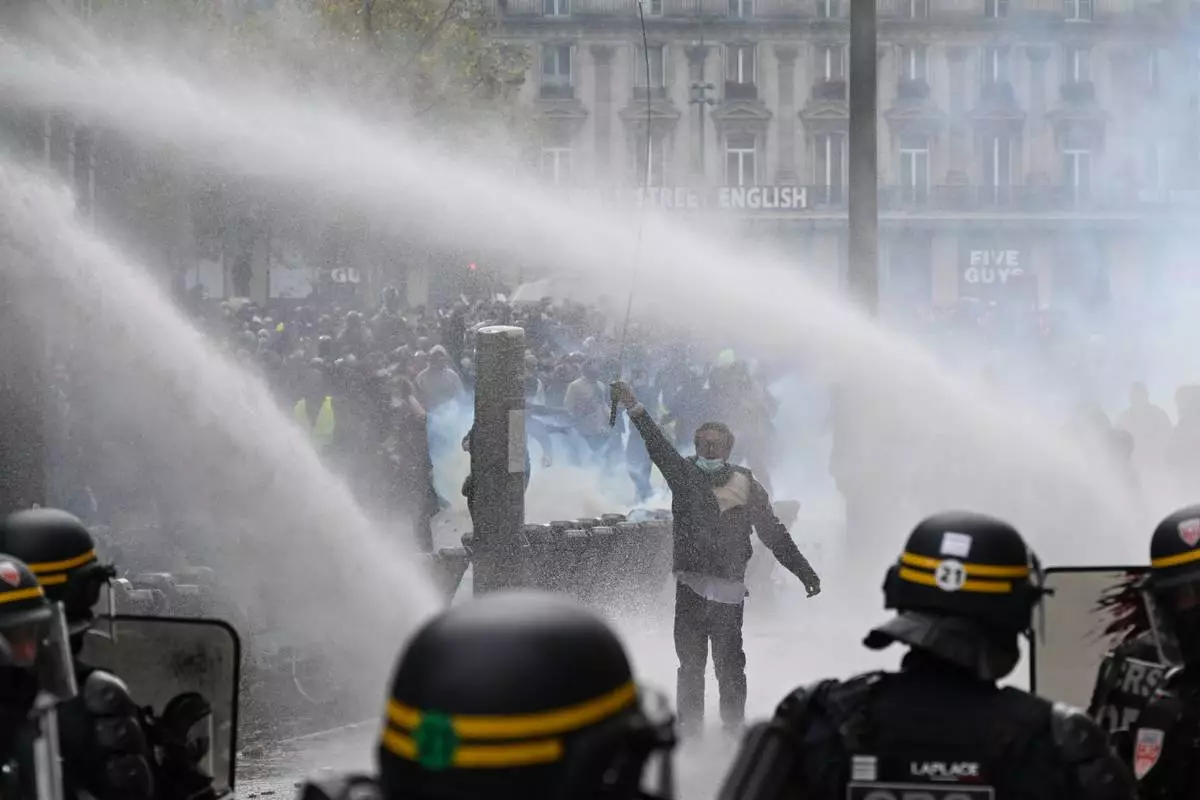
Riot police face protesters during a demonstration against rising living costs and in support of students’ grievances in Paris, Saturday, Oct. 17, 2026. (AP Photo/Laurent Cipriani)

Protesters face police during a demonstration against rising living costs, joining students' grievances, in Paris, Saturday, Oct. 17, 2026. (AP Photo/Emma Da Silva)


Protesters face police during a demonstration against rising living costs, joining students' grievances, in Paris, Saturday, Oct. 17, 2026. (AP Photo/Emma Da Silva)
Recent efforts to throttle Ukraine’s access to satellite systems have created a blame game of sorts among Trump administration officials and their allies, who have offered mixed messages about what led to the sudden restrictions on Kyiv's ability to intercept Russian strikes.

The limitations placed on Starshield — SpaceX’s military-grade version of the Starlink satellite internet service and the backbone of Ukraine’s drone operations and communication — last week alarmed the country's military and government officials, with commanders reporting lost drones and disrupted missions.

President Donald Trump has asserted that the service is running again at full speed. President Volodymyr Zelenskyy, however, said Friday that restrictions were still in place.

The episode and subsequent lack of accountability have sent shock waves through Russia hawks and Ukraine's allies on Capitol Hill. Democratic Sen. Richard Blumenthal announced a new inquiry into how the technologies were slowed down for Ukraine’s defense systems.

Questions have percolated since last week about who ordered the interruptions to the Elon Musk-made satellite internet system that Ukraine has relied on for years to counter Moscow's attacks.

Trump has maintained that he didn’t make the call, while also saying Musk should not be blamed. Vice President JD Vance has hinted at White House coordination with Musk, while Secretary of State Marco Rubio and Defense Secretary Pete Hegseth have denied any administration involvement.

Musk — one of the GOP's biggest donors and a Trump ally — indicated that because Ukraine was using the military-grade version of his technology, questions about the service should be directed to the Pentagon.

Here are the players in their own words:

Over the last week, Trump has repeatedly told reporters that he didn’t order restrictions on a satellite communications system used by Ukraine’s military, causing its drones to lose speed.

The president also has doubted the disruption came from Musk, formerly a close adviser and frequent companion, saying last week that “it wasn’t me, and I don’t think it was Elon."

“Elon will never do anything wrong,” Trump told reporters Friday. “I know him very well. He’s a fair person.”

On Thursday, Trump appeared to confirm that the service had been down and claimed that it was once again working at optimal speeds. The Wall Street Journal reported that Musk had agreed to lift restrictions, and Trump demurred when asked if he had requested to lift the cap.

“You know, whether I called or whether somebody else called, doesn’t make any difference,” Trump told reporters. “I guess the bottom line, he put it back.”

By Friday, Trump said he had not heard that there are still problems with the service and declined to comment on who ordered the restrictions to Starshield, telling a reporter: “I wouldn’t tell you if I did know.”

In Cincinnati on Thursday, Vance was asked about Musk’s involvement in the slowdown of Starlink and Starshield in Ukraine and whether it warranted an investigation.

“I think that fundamentally, Elon Musk runs a private corporation,” Vance told reporters. “And I think it’s completely understandable that he doesn’t want to get in the middle of what is a war between two state actors without the United States government effectively directing him on what to do.”

Vance continued: “So I don’t think this is about Elon. I think it’s fundamentally what is America’s policy in Ukraine and Russia going to be.”

Rubio has insisted that the Trump administration and the U.S. government more broadly had nothing to do with interruptions to Ukraine’s access to crucial satellite data.

Speaking to reporters in India on Wednesday, Rubio said for the third time in four days that any throttling of network access to Ukraine was not directed or ordered by Trump or anyone else in his administration. He suggested, though, that the owner of the system — Musk — may have been involved.

“What I can tell you with certainty is the president of the United States nor anyone in our system ever requested that any changes to that system be made, and that’s what we said repeatedly,” Rubio said. “The president has nothing to do with the decisions that are made by Starlink and Starshield and by Mr. Musk. That’s a private company. The president doesn’t run that company and can’t direct that company to do anything.”

Hegseth has echoed Rubio's comments, denying on Tuesday any American role in slowing down the satellite internet service while also pushing the responsibility to Musk's company.

“We haven’t pulled anything back,” Hegseth told reporters, before adding that “there are terms of service that ultimately need to be complied to.”

He offered no elaboration on what terms of service Ukraine needed to comply with but said that “Starlink has the option to make those decisions.”

Musk, the world's richest man and leader of the company behind Starlink and Starshield, last week put the onus on the Trump administration.

“Starshield systems are owned and controlled by the US government. Any limits on speed or usage are decided by the US military and ultimately POTUS,” he wrote Oct. 14 on X.

“Starlink is a commercial service owned and controlled by SpaceX. Usage of Starlink is limited to civilian or defensive activities and cannot be used for offensive military action, as doing so would be inappropriate for a commercial company,” Musk added.

The wartime president has been working to reverse the restrictions imposed without warning last week, calling it "a planned operation.”

Zelenskyy spoke to a bipartisan group of U.S. lawmakers Monday, saying in a video of the briefing posted to social media that “we still face speed restrictions on Starlink and Starshield services in different parts of the front, and we still have no explanation for this. Just different strange stories.”

Zelenskyy says he spoke this week with Rubio, who told him that the Starshield and Starlink service would be fully restored within 48 to 72 hours.

But the limits on "Starlink and Starshield are still there, and the speed has still not been restored,” the Ukrainian president said Friday during a remote address to the Hudson Institute, a Washington think tank. Ukraine made repeated checks and faces the same speed restriction of about 100 mph (160 kph), he said.

Amiri reported from New York and Arhirova from Kyiv, Ukraine. Associated Press writers Aamer Madhani, Seung Min Kim, Konstantin Toropin, Matthew Lee, Lisa Mascaro and Ben Finley in Washington contributed to this report.

U.S. Secretary of State Marco Rubio arrives to speak with members of the media at the Taj Mahal Palace hotel in Mumbai, India, Wednesday, Oct. 21, 2026. (Kylie Cooper/Pool Photo via AP)

U.S. Secretary of State Marco Rubio arrives to speak with members of the media at the Taj Mahal Palace hotel in Mumbai, India, Wednesday, Oct. 21, 2026. (Kylie Cooper/Pool Photo via AP)

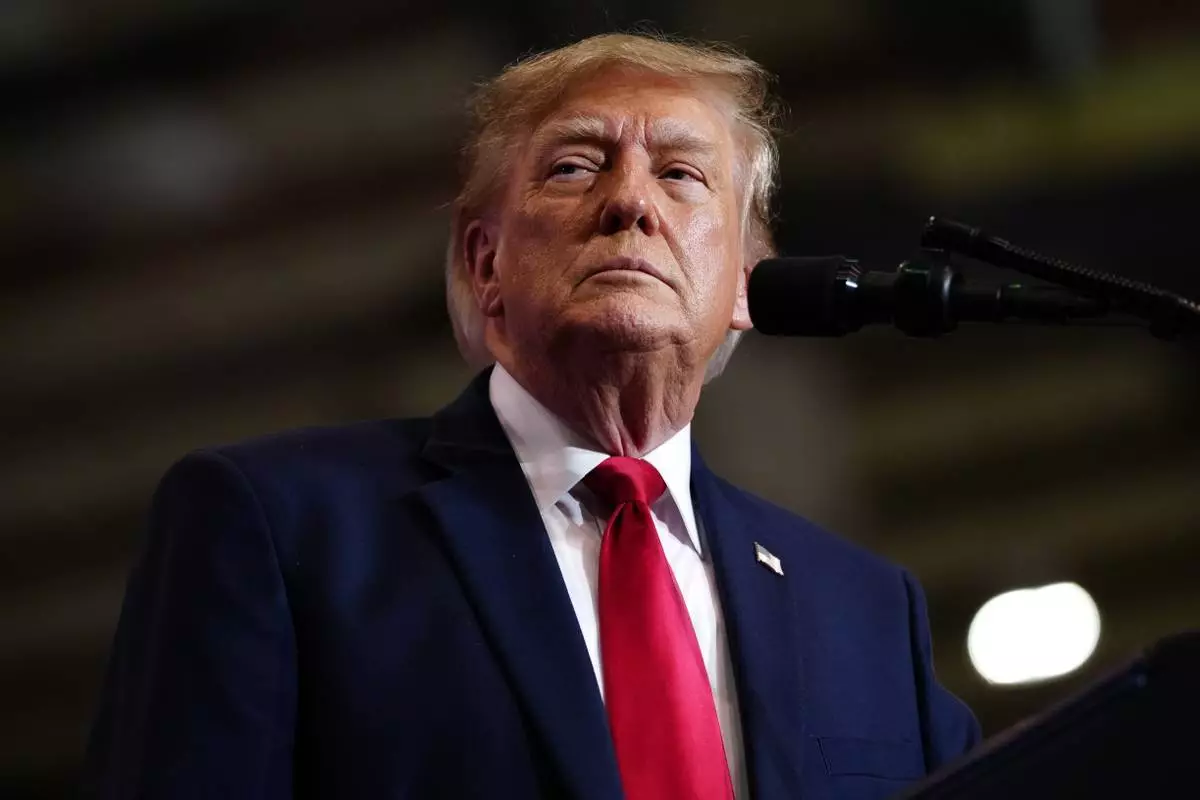
President Donald Trump speaks at a campaign rally at the T. Ed Garrison Arena, Wednesday, Oct. 21, 2026, in Pendleton, S.C. (AP Photo/Julia Demaree Nikhinson)

President Donald Trump speaks at a campaign rally at the T. Ed Garrison Arena, Wednesday, Oct. 21, 2026, in Pendleton, S.C. (AP Photo/Julia Demaree Nikhinson)

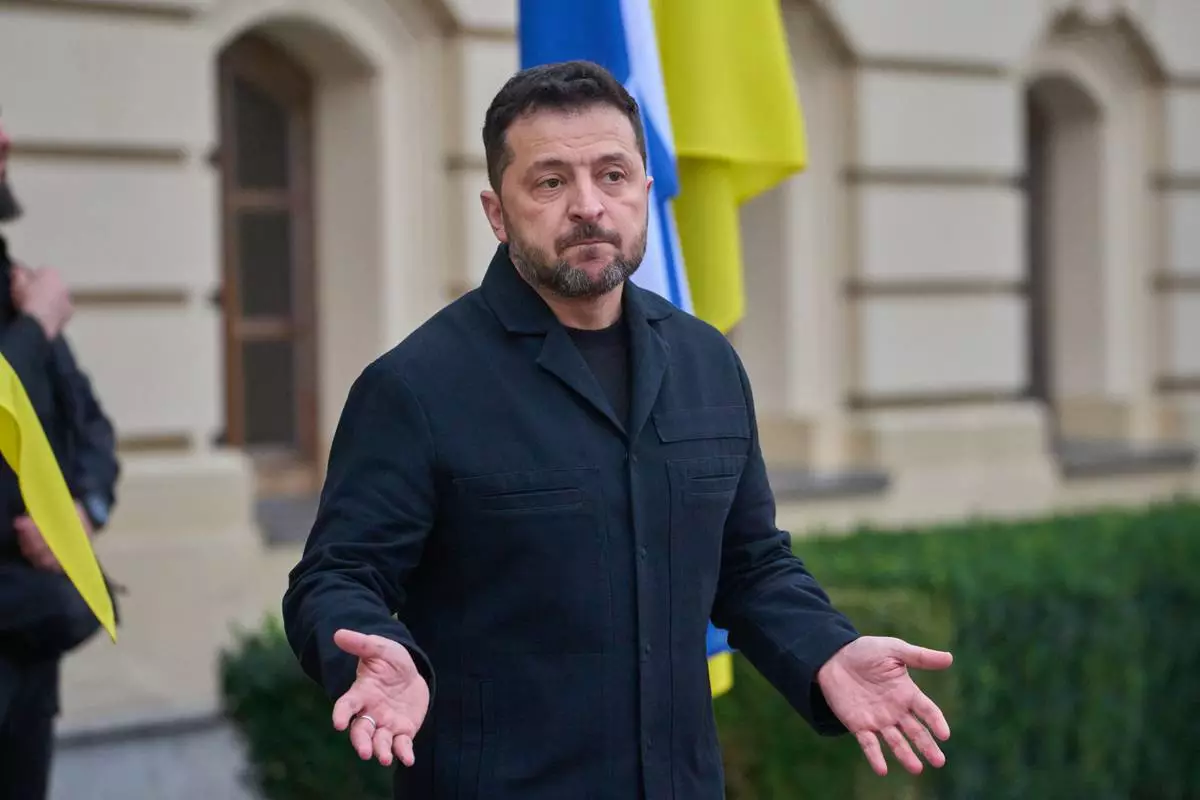
Ukraine's President Volodymyr Zelenskyy answers media questions before his meeting with Finnish Prime Minister Petteri Orpo in Kyiv, Ukraine, Thursday Oct. 22, 2026. (AP Photo/Efrem Lukatsky)

Ukraine's President Volodymyr Zelenskyy answers media questions before his meeting with Finnish Prime Minister Petteri Orpo in Kyiv, Ukraine, Thursday Oct. 22, 2026. (AP Photo/Efrem Lukatsky)

Recommended Articles