Skip to Content Facebook Feature Image

From Small Clinical Trials to a Single Patient, Genialis Demonstrates the Power of Biology-First AI in Cancer Research

Business

From Small Clinical Trials to a Single Patient, Genialis Demonstrates the Power of Biology-First AI in Cancer Research
Business

Business

From Small Clinical Trials to a Single Patient, Genialis Demonstrates the Power of Biology-First AI in Cancer Research

2026-10-23 14:00 Last Updated At:14:10

MADRID--(BUSINESS WIRE)--Oct 23, 2026--

Genialis, the therapeutic intelligence company, will present data at the European Society for Medical Oncology (ESMO) Congress 2026 showing that its biology-first models predict treatment response even with limited available patient data. Across three distinct cancer types and treatment regimens, the models demonstrated superior predictive performance in cohorts of fewer than 70 patients, addressing one of the fundamental challenges in developing predictive biomarkers for precision oncology.

This press release features multimedia. View the full release here: https://www.businesswire.com/news/home/20261022380424/en/

Clinical trials are small data. Early-stage studies often enroll relatively small patient populations, creating challenges for conventional modeling approaches attempting to extract meaningful predictive signals. Yet drug developers must make critical decisions about pipeline advancement and patient selection criteria, often before independent validation data are available.

A tumor RNA-seq profile measures roughly 20,000 genes; with 50 patients, a conventional deep learning model risks identifying statistical noise rather than meaningful biological signals. Overcoming this “curse of dimensionality” has been central to Genialis’ approach to predictive modeling since its founding.

The Genialis™ Supermodel is a large molecular model of cancer biology trained on hundreds of thousands of transcriptomic samples. The Supermodel transforms tens of thousands of individual gene-expression measurements from RNA sequencing (RNA-seq) into biologically meaningful features called “biomodules,” each representing a fundamental aspect of cancer biology, including oncogenic signaling, immune activation, and DNA damage response. By reducing the complexity of molecular data into interpretable biological features before model training, Genialis can develop predictive biomarkers from relatively small patient populations while providing insight into the biological mechanisms driving treatment sensitivity and resistance.

The ESMO poster (abstract #8664) evaluates this approach across datasets from three different cancer types in a typical size of early clinical studies: pretreatment RNA-seq from anti-PD-1-treated melanoma (n=41), pembrolizumab-treated gastric cancer (n=45) and KRAS G12C-mutant non-small cell lung cancer (NSCLC) treated with sotorasib (n=66). Under strict held-out testing, biomodule models outperformed matched gene-expression models in every cohort. In NSCLC, biomodules predicted sotorasib response with an AUROC of 0.8, against 0.6 for the best gene-expression model, and predicted responders stayed on treatment a median of 337 days versus 178. Each prediction came with a biological rationale, with predicted NSCLC responders showing MAPK-addicted biology, while non-responders exhibited PI3K bypass programs.

From Small Cohorts to an N-of-1 Application: The Sid Sijbrandij Case Study

When GitLab co-founder Sid Sijbrandij was diagnosed with osteosarcoma in November 2022, he faced a rare bone cancer diagnosed in roughly 1,000 people each year in the United States. When his cancer returned and standard treatment options ran out, Sijbrandij built a team to pursue an extraordinary approach to understanding and treating his disease. Combining what they call “maximal diagnostics” with personalized experimental therapies, the team collected and publicly shared more than 30 terabytes of Sid’s clinical and molecular data at osteosarc.com.

Genialis retrospectively analyzed four tumor RNA-seq libraries generated over 25 months by three clinical laboratories from different specimens. The Supermodel enabled consistent biological comparisons across the four samples, even where raw gene-expression data were not comparable. By linking each sample's biology to therapeutic hypotheses, the analysis demonstrated how researchers can revisit those hypotheses as additional samples become available. Genialis expects this approach to become increasingly valuable as precision oncology advances toward smaller, more precisely defined patient populations and, ultimately, treatment strategies tailored to individual patients.

“For patients facing rare cancers and researchers working with limited patient data, the ability to compare tumor biology across samples collected over time opens new opportunities to investigate disease and develop therapeutic hypotheses,” said Rafael Rosengarten, PhD, Chief Executive Officer and Co-Founder of Genialis. “Together, the ESMO findings and Sid’s case study demonstrate the potential of biology-first AI to extract meaningful insights from limited patient data, whether across a clinical cohort or within a single patient's cancer journey.”

Poster details
Title: Biology-first modeling enables interpretable patient-selection strategies from small oncology cohorts
Abstract: #8664
Date and time: Poster Display session, Sunday, October 25 | 12:00–12:45 CET | ESMO Congress 2026, Madrid, October 23–27, 2026
Poster Category: AI for clinical research and drug development
Presentation no.: 152P

Single-patient analysis:https://www.genialis.com/2026/10/19/a-biology-first-approach-to-precision-medicine-tracking-sids-tumor-biology-with-the-genialis-supermodel/

About Genialis

Genialis provides therapeutic intelligence with its Supermodel of cancer biology. We develop and validate clinically actionable AI models informed by the world’s most ethnographically diverse cancer data sets to predict patient responses and guide treatment decisions for targeted inhibitors, immunotherapies, and other emerging therapeutic classes. Genialis is trusted by pharma and diagnostics partners, and together, we are transforming medicine through data. The company is headquartered in Houston, Boston and Ljubljana.
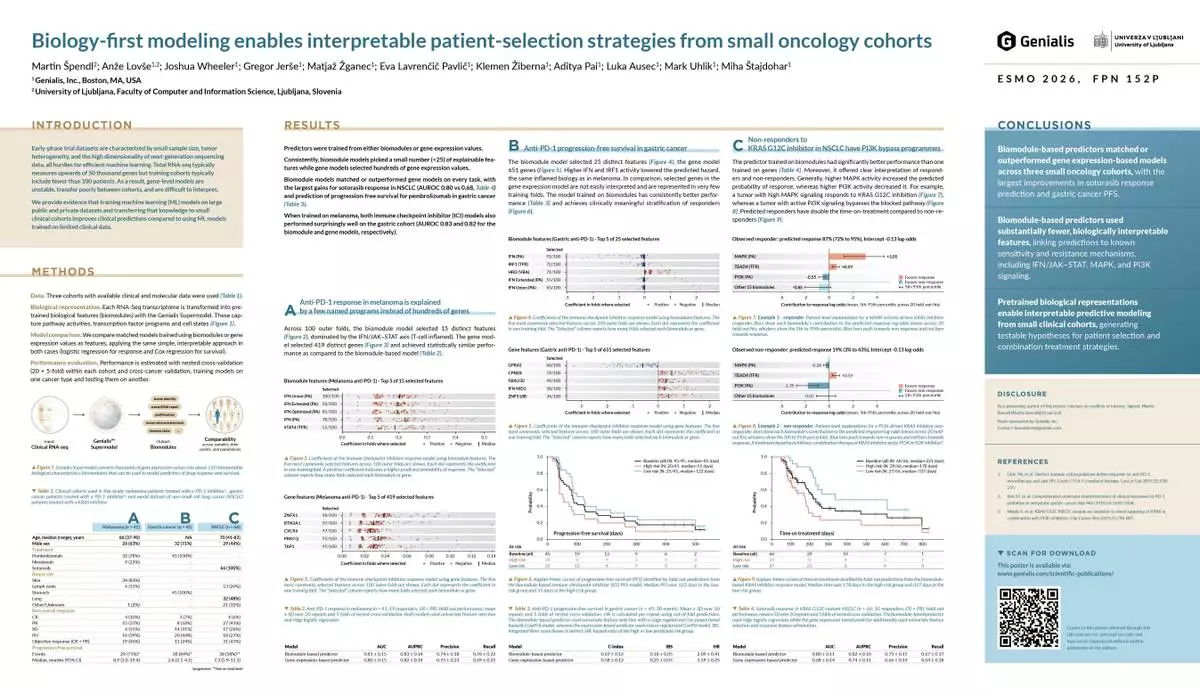
ESMO 2026 Poster
ESMO 2026 Poster

JERUSALEM (AP) — Gunmen opened fire during a funeral at a church in Jordan on Friday, killing seven people and wounding 40 others, authorities said.

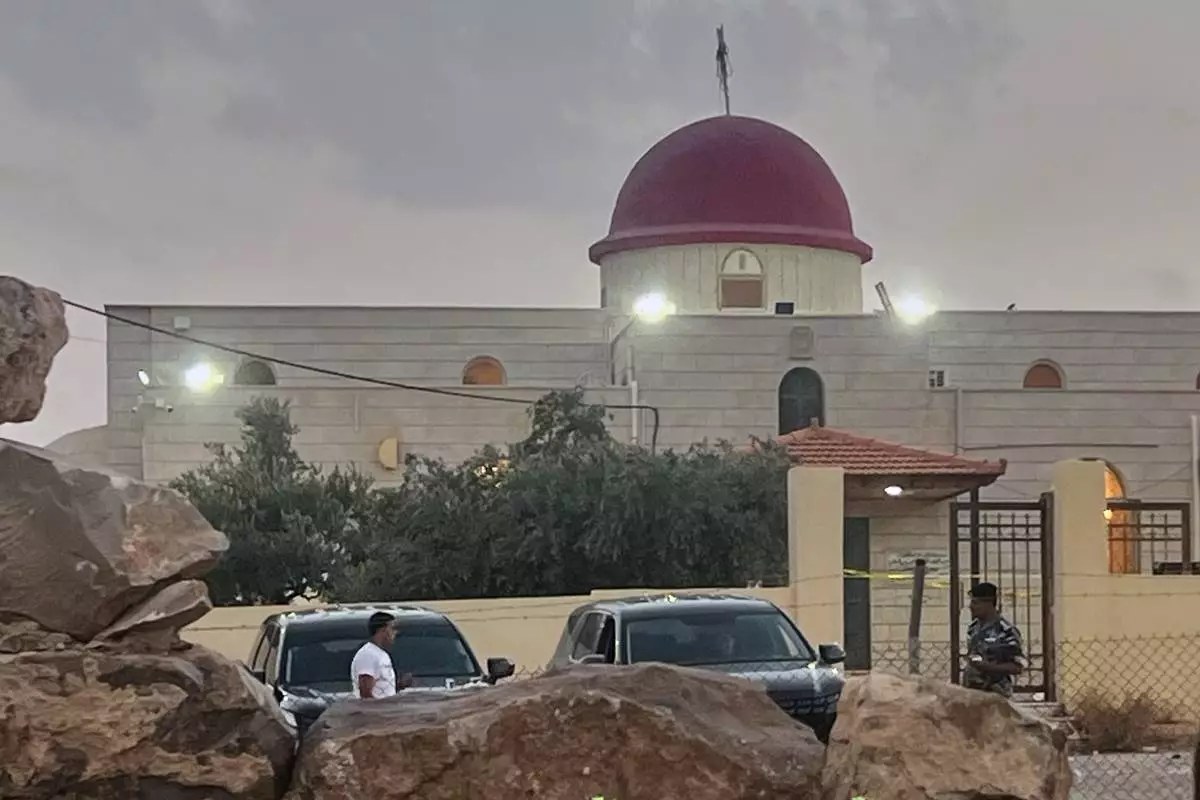
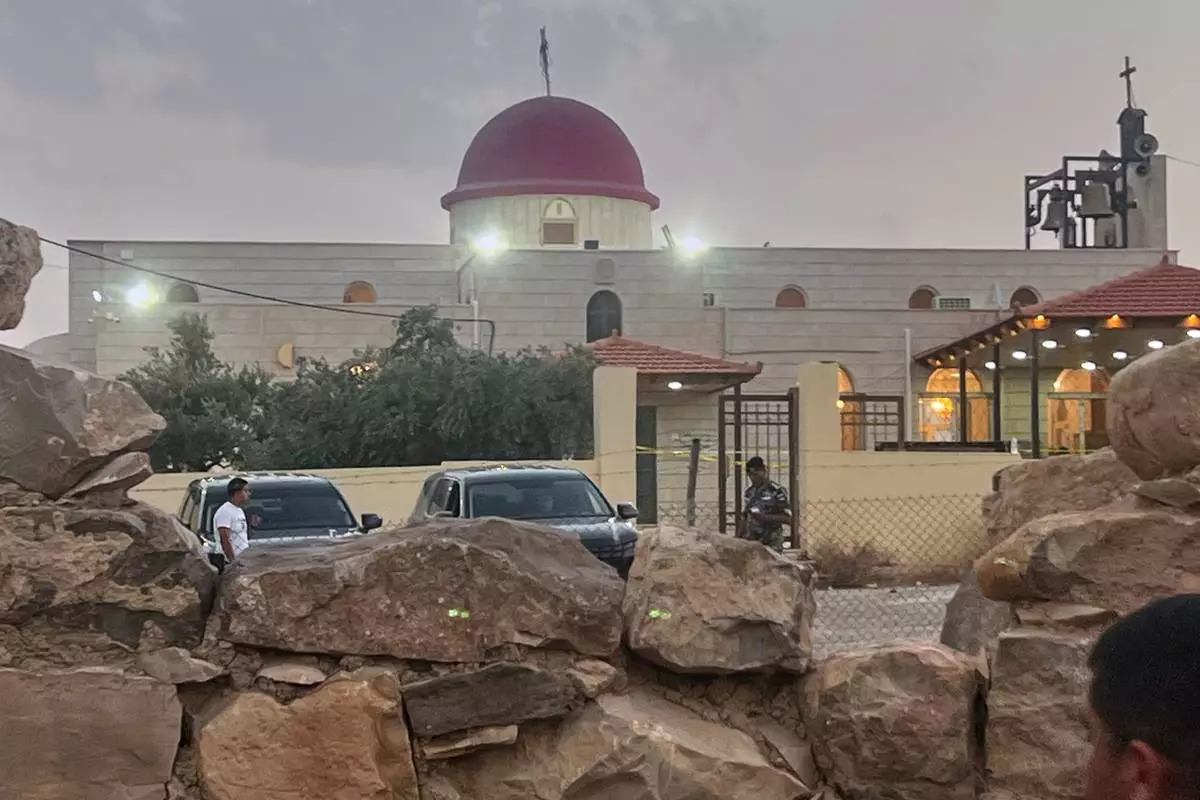
The shooting took place at a Greek Orthodox church in Karak, about 180 kilometers (110 miles) south of the capital, Amman.

Footage broadcast on Jordanian state television showed two gunmen who appear to be holding pistols approaching the church and firing shots. A third man who appears to be holding a semiautomatic rifle then approaches and opens fire, and all three then run toward the church.

Video footage taken by witnesses shows broken glass and pools of blood on the floor of the church.

Dorgham Halasa, who was among the mourners inside the church, said intense gunfire erupted 15 minutes after the funeral had started, and then people started running. “It was a weird situation, and heavy gunfire,” Halasa said.

He did not see the gunmen, but said other people reported seeing four of them. The Associated Press could not independently verify the number of assailants, and Jordan’s security services did not immediately release details.

A government statement said that the attack was “carried out by unknown assailants,” but didn't say whether any gunmen were captured or killed. It said that “investigations are underway at full speed.”

Jordan declared three days of national mourning, according to the kingdom’s Petra News Agency.

Karak is home to a minority Christian population.

In 2016, gunmen ambushed police in a series of attacks in Karak, including at a Crusader castle popular with tourists, killing 10 people, including seven officers, and wounding dozens. Jordanian security forces killed those gunmen after a long standoff.

Jordan’s Health Minister Ibrahim al-Budour said two of those wounded are in critical condition.

King Abdullah II said on X that Jordan “will confront the terrorist act that targeted Karak with the harshest penalties” and offered his “deepest condolences to the families of the martyrs, and our wishes for recovery to the wounded.”

Jordan’s Prime Minister Jafar Hassan said during a security meeting in Karak on Friday evening that the attack was a result of terrorist ideology and blind extremism. He said the assailants will be punished and legal measures taken against those who seek to introduce extremism.

Condemnation of the slayings came from around the region, including from Lebanon, Syria, Egypt and Oman.

Ahmed al-Tayeb in Cairo, the grand imam of Al-Azhar, the Sunni Muslim world’s foremost religious institution, offered his condolences to the families of victims in Friday’s shooting, calling it a “heinous terrorist attack.”

Iraqi Foreign Minister Fuad Hussein called his Jordanian counterpart and “affirmed Iraq’s solidarity with Jordan in the face of terrorism,” Hussein’s office said in a statement.

U.N. Secretary-General Antonio Guterres condemned the attack during a funeral as “especially heinous,” spokesman Stephane Dujarric said. “The secretary-general also calls for all those responsible to be found and to be held to account.”

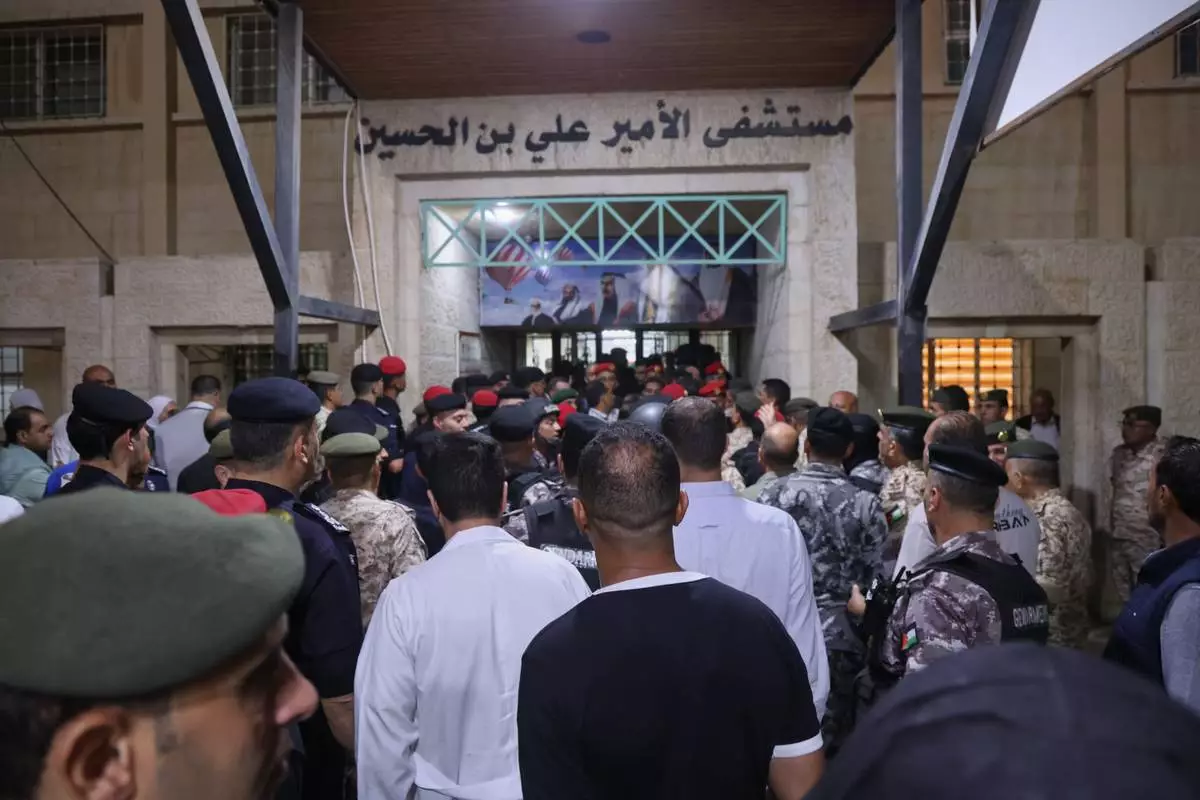
Residents gather as soldiers and security officers block the entrance to Prince Ali Military Hospital during King Abdullah II's visit to people wounded in a shooting at a Greek Orthodox church during a funeral hours earlier, in Karak, Jordan, Friday, Oct. 23, 2026. (AP Photo)

Residents gather as soldiers and security officers block the entrance to Prince Ali Military Hospital during King Abdullah II's visit to people wounded in a shooting at a Greek Orthodox church during a funeral hours earlier, in Karak, Jordan, Friday, Oct. 23, 2026. (AP Photo)

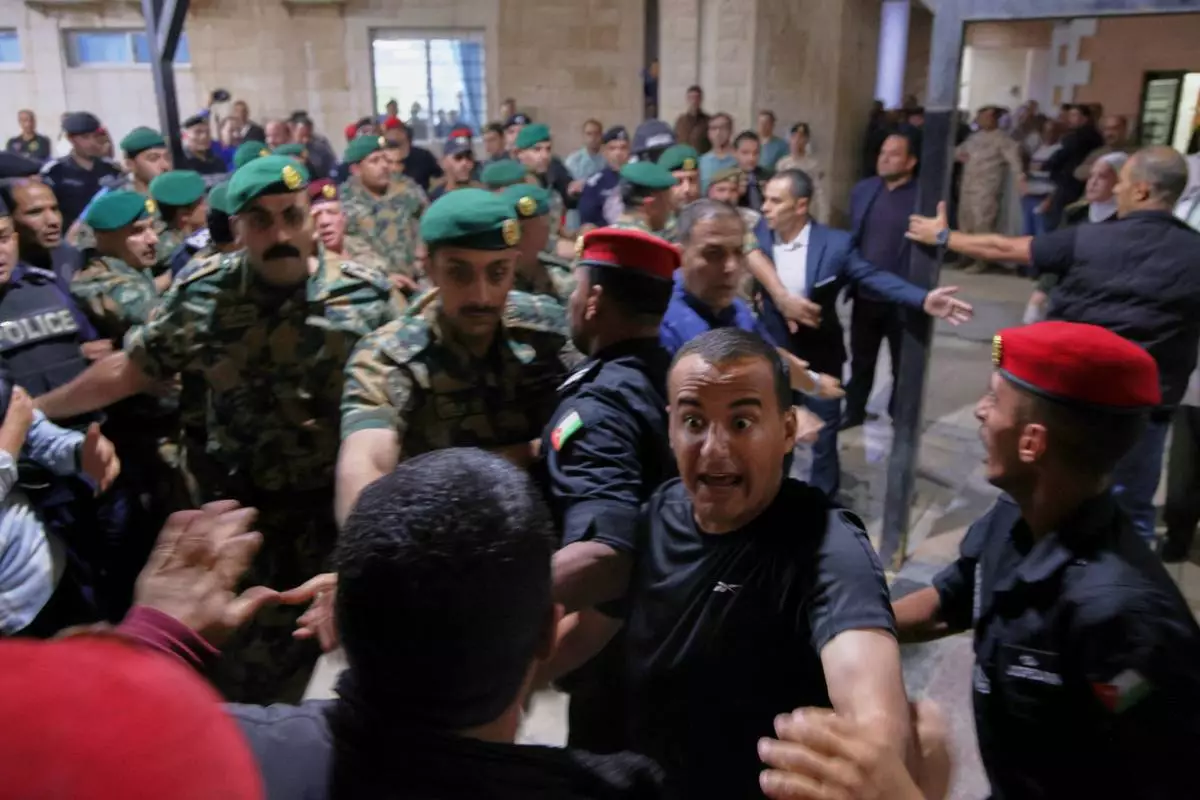
Soldiers and security officers hold back residents outside Prince Ali Military Hospital during King Abdullah II's visit to people wounded when gunmen opened fire during a funeral at a Greek Orthodox church hours earlier, in Karak, Jordan, Friday, Oct. 23, 2026. (AP Photo)

Soldiers and security officers hold back residents outside Prince Ali Military Hospital during King Abdullah II's visit to people wounded when gunmen opened fire during a funeral at a Greek Orthodox church hours earlier, in Karak, Jordan, Friday, Oct. 23, 2026. (AP Photo)

A security officer stands guard a Greek Orthodox Church where gunmen opened fire during a funeral earlier in Hamoud village, in Jordan's Karak governorate, Friday, Oct. 23, 2026. (AP Photo)

A security officer stands guard a Greek Orthodox Church where gunmen opened fire during a funeral earlier in Hamoud village, in Jordan's Karak governorate, Friday, Oct. 23, 2026. (AP Photo)

A security officer stands guard outside a Greek Orthodox Church where gunmen opened fire during a funeral earlier in Hamoud village, in Jordan's Karak governorate, Friday, Oct. 23, 2026. (AP Photo)

A security officer stands guard outside a Greek Orthodox Church where gunmen opened fire during a funeral earlier in Hamoud village, in Jordan's Karak governorate, Friday, Oct. 23, 2026. (AP Photo)

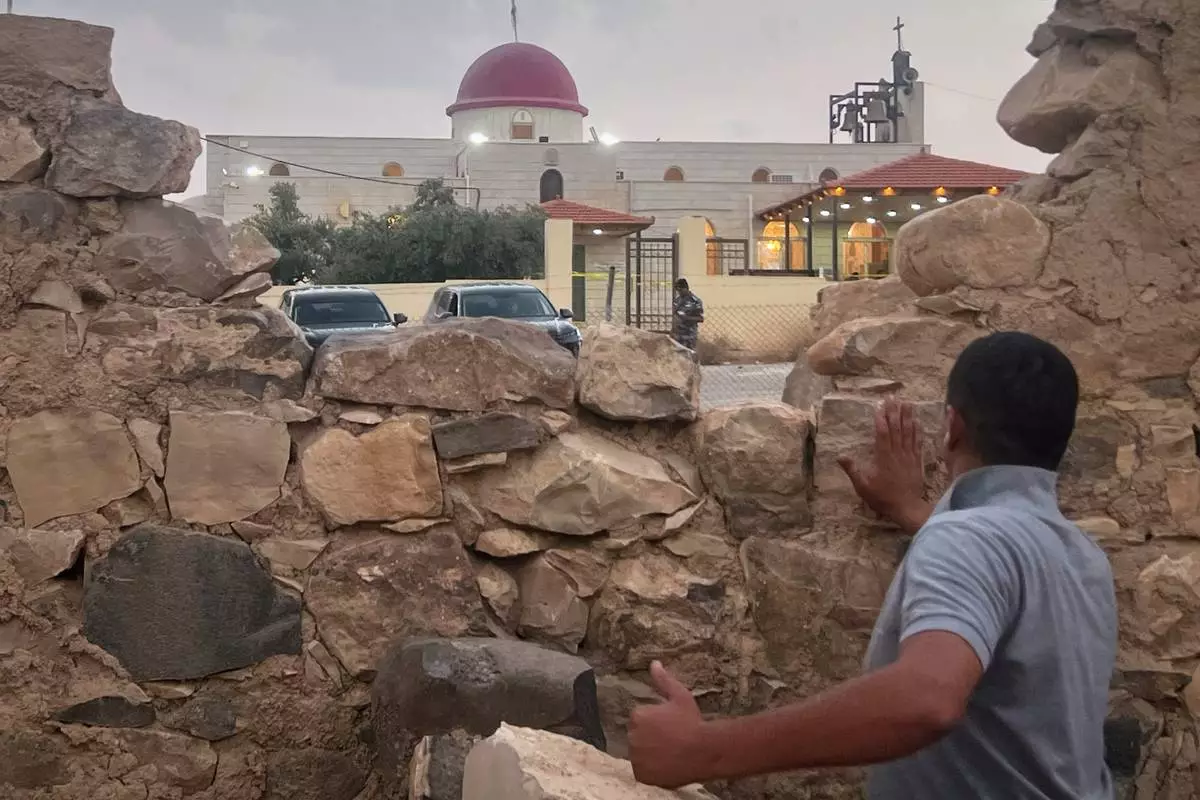
A man looks through a gap in a stone wall toward a Greek Orthodox church where gunmen opened fire during a funeral hours earlier in Hamoud village, in Jordan's Karak governorate, Friday, Oct. 23, 2026. (AP Photo)

A man looks through a gap in a stone wall toward a Greek Orthodox church where gunmen opened fire during a funeral hours earlier in Hamoud village, in Jordan's Karak governorate, Friday, Oct. 23, 2026. (AP Photo)

Recommended Articles