Skip to Content Facebook Feature Image

Severe Pediatric Influenza Case Reported; CHP Urges Early Vaccination and Hygiene Practices

HK

Severe Pediatric Influenza Case Reported; CHP Urges Early Vaccination and Hygiene Practices
HK

HK

Severe Pediatric Influenza Case Reported; CHP Urges Early Vaccination and Hygiene Practices

2026-10-23 19:25 Last Updated At:19:38

CHP records case of severe paediatric influenza infection

The Centre for Health Protection (CHP) of the Department of Health today (October 23) recorded a severe case of paediatric influenza infection. The CHP urged the public not to underestimate the seasonal influenza and to receive vaccinations as early as possible, especially those in high-risk groups, to protect their own health and that of their families. In addition, the public should maintain good personal and environmental hygiene at all times to prevent influenza and other respiratory illnesses.

The case involves a 3-year-old boy with underlying health conditions. He developed a fever and cough on October 20. He experienced mild shortness of breath the next day and was taken to a private clinic for treatment. On October 22, his condition worsened, and he was brought to the Accident and Emergency Department of Tuen Mun Hospital. He briefly lost consciousness, but was resuscitated and was admitted to the Pediatric Intensive Care Unit (PICU). His respiratory specimen tested positive for influenza A (H1) virus. The clinical diagnosis was influenza A infection complicated with asthma exacerbation, acute necrotising encephalopathy and septic shock. The patient remains hospitalised and is in critical condition.

The CHP's preliminary investigation revealed that the boy travelled to the United States during the incubation period and had not received the 2026/27 Seasonal Influenza Vaccination (SIV). One of his close contacts recently developed mild upper respiratory symptoms that did not require hospitalisation and has recovered. The CHP will continue to investigate the case.

"Hong Kong entered the influenza season in late June this year and the influenza season has lasted for nearly four months by now. Currently, local influenza activity remains at a high level. Over the past four weeks (from September 20 to October 17), the percentage of respiratory specimens testing positive for seasonal influenza viruses remained between 10.04 to 11.61 per cent. During the same period, the influenza admission rate in public hospitals also remained between 0.46 and 0.67 cases per 10 000 population. Both indicators were above the respective baseline thresholds of 4.94 per cent and 0.27 cases per 10 000 population. A cumulative total of 26 cases of severe paediatric influenza infection have been recorded in the current influenza season. Among these cases, 20 patients have recovered and been discharged from hospital, two are in serious condition, two are in critical condition, and two have passed away," said the Controller of the CHP, Dr Edwin Tsui.

"Vaccine effectiveness begins to wane approximately nine months after vaccination. Therefore, the World Health Organization recommends receiving SIV every year. For most people, more than nine months have passed since they received last season's (2025/26) SIV. Hence, a decline in protection is inevitable. A decline in the overall population's herd immunity, coupled with the fact that the current influenza season has persisted at high levels for an extended period, has increased the likelihood of infection and severe complications among high-risk groups. Receiving SIV is the most effective way to prevent severe cases of seasonal influenza and its complications. SIV also reduces the risk of hospitalisation and death. The CHP's analysis of data from the previous year revealed that the rate of severe complications or death among unvaccinated children following influenza infection was approximately five times higher than that among vaccinated children. Among unvaccinated residents aged 65 years or older living in residential care homes for the elderly, the rate of severe complications was approximately four times higher than that among vaccinated residents. Therefore, all people aged 6 months or above, except those with known contraindications, should receive SIV for personal protection as early as possible," he added.

The 2026/27 SIV programmes, including the SIV School Outreach Programme (SIVSOP), commenced on September 17. The SIVSOP this year has introduced a new Electronic Consent Form (e-consent form) feature via eHealth. This new measure not only enables the public to join the SIV Programmes but also streamlines the administrative procedures for healthcare service providers and schools, so that SIV outreach activities can start as early as possible. About 1 000 schools have organised SIV outreach activities. SIV outreach activities are expected to be completed by mid-December, about two weeks earlier than last year.

The health condition of children with influenza can deteriorate rapidly. Parents must pay close attention to their condition and visit an accident and emergency department immediately if the child's condition deteriorates with symptoms such as shortness of breath, wheezing, blue lips, chest pain, confusion, a persistent fever or convulsions. Members of the public should seek medical attention as soon as possible if they develop respiratory symptoms. If they live with members of high-risk groups, such as children, the elderly and those with underlying illnesses or compromised immune systems, they should wear a surgical mask at home to reduce the risk of infecting them. Other effective ways to reduce the spread of the disease include maintaining household hygiene, frequently cleaning and disinfecting frequently touched surfaces, practising good hand hygiene, and ensuring proper indoor air circulation.

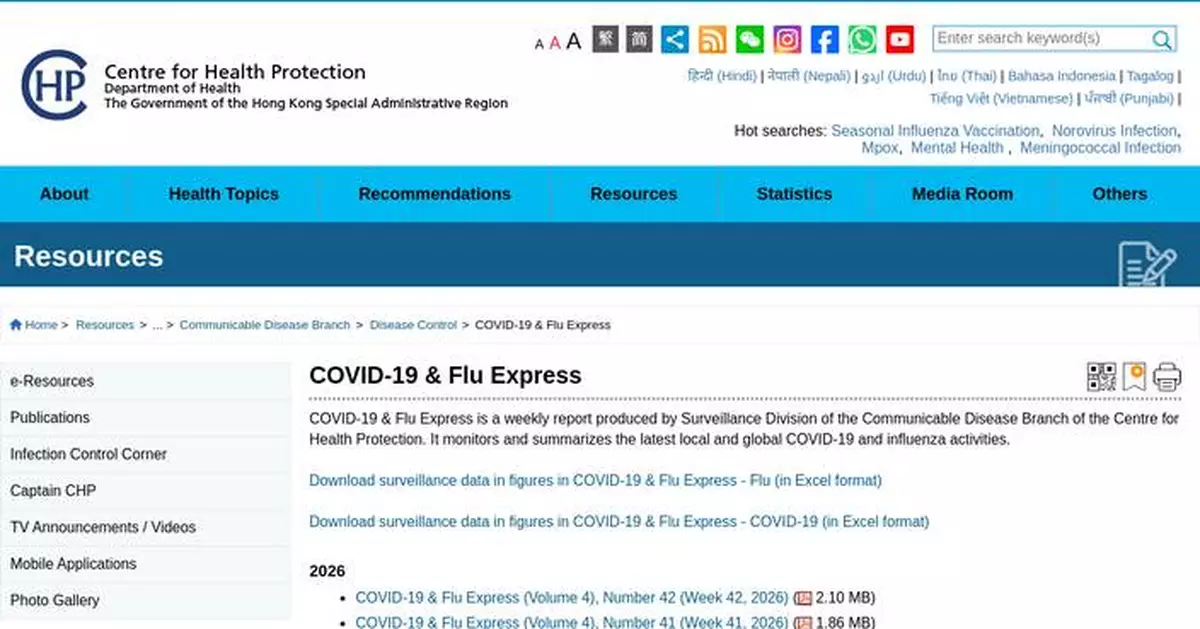
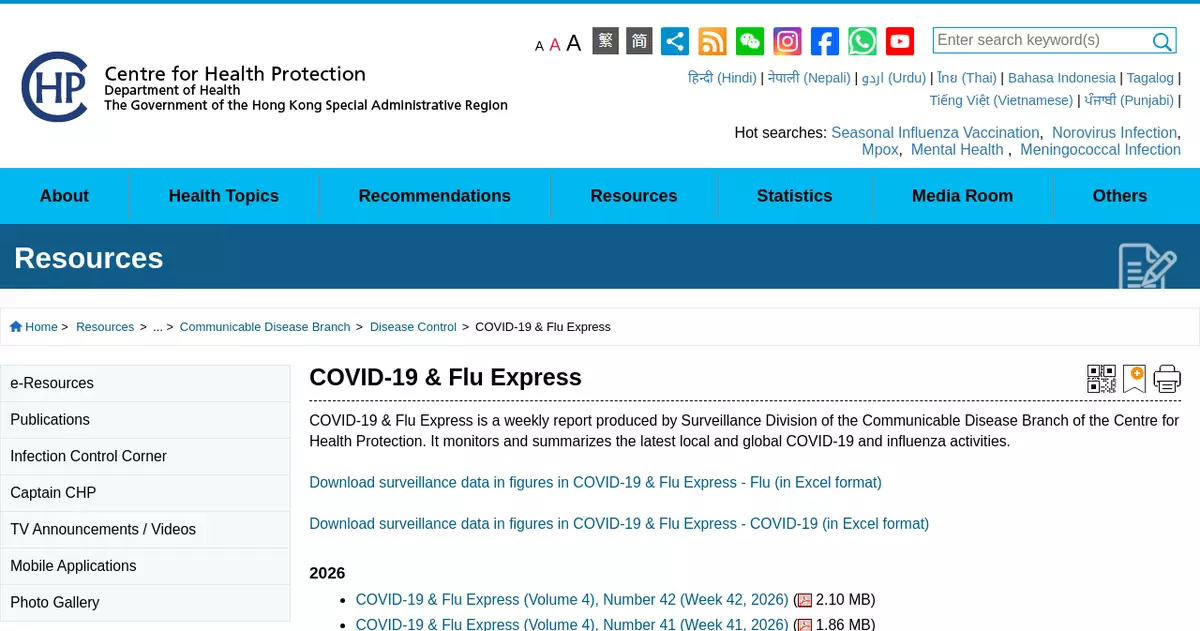
Members of the public may refer to the CHP'sCOVID-19 & Flu Express,Seasonal Influenza WebpageandVaccination Schemesfor the latest information.
Source: AI-found images

Source: AI-found images

Opening remarks by DSJ at seminar "Iteration and Assurance: Cross-Border Arbitration Practice under the New PRC Arbitration Law and the Amendment to the Hong Kong Arbitration Ordinance" of Hong Kong Arbitration Week 2026

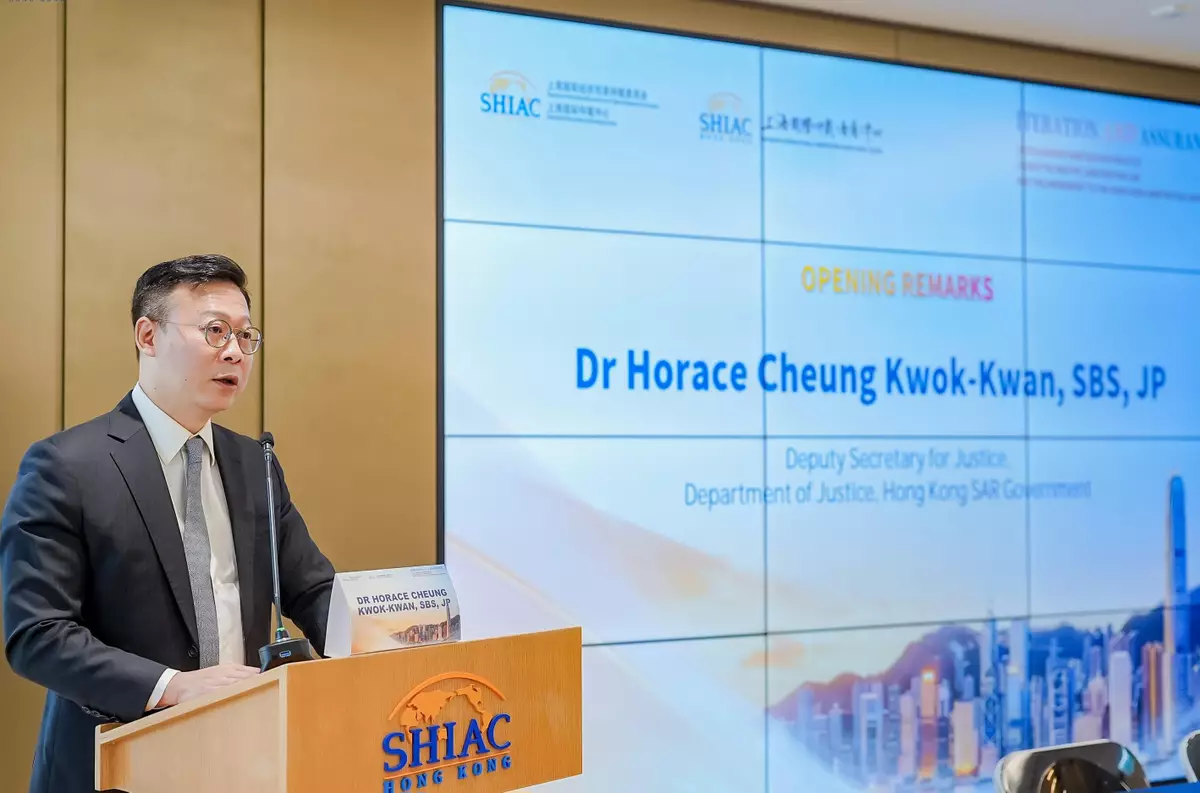
Following are the opening remarks by the Deputy Secretary for Justice, Dr Cheung Kwok-kwan, at the seminar "Iteration and Assurance: Cross-Border Arbitration Practice under the New PRC Arbitration Law and the Amendment to the Hong Kong Arbitration Ordinance" of the Hong Kong Arbitration Week 2026 today (October 23):

Distinguished guests, ladies and gentlemen,

Good afternoon. It is my pleasure to join you today during the Hong Kong Arbitration Week 2026 for this seminar on the theme of "Iteration and Assurance: Cross-Border Arbitration Practice under the New PRC Arbitration Law and the Amendment to the Hong Kong Arbitration Ordinance".

As global trade and investment flourish, navigating commercial disputes becomes an inevitable feature of cross-border commerce. In this dynamic landscape, arbitration serves as a critical tool that offers a neutral, flexible and internationally enforceable mechanism to resolve cross-border disputes. To remain effective, however, our arbitration framework must stay responsive to the changing needs of international trade. Today's seminar is therefore very timely, as we examine major arbitration legislative advancements taking shape on both sides of the border.

New Arbitration Law of People's Republic of China

The landmark revision to the Arbitration Law of the People's Republic of China (PRC) came into effect in March this year. This represents the first comprehensive overhaul of the Chinese Mainland arbitral legal framework, aligning it more closely with international standards. Notably, the law introduces a dedicated chapter for foreign-related arbitration. Among its key innovations are provisions permitting ad hoc arbitration for foreign-related maritime disputes and commercial disputes between enterprises within the Pilot Free Trade Zones, the Hainan Free Trade Port, and other designated regions. It also establishes the legal basis for foreign arbitral institutions to set up offices and conduct foreign-related arbitration services in these zones. Furthermore, it explicitly encourages parties to foreign-related disputes to choose arbitral institutions of the PRC, and to choose the PRC as the arbitral seat, both of which include the Hong Kong Special Administrative Region. Together, these dynamic reforms unlock unprecedented opportunities for Hong Kong's arbitral institutions and practitioners to expand their operational reach in the Chinese Mainland and contribute their international arbitration expertise to foreign-related disputes.

Hong Kong arbitration law reform

In parallel, Hong Kong is proactively modernising our arbitration legal framework. The Department of Justice (DoJ) established the Working Group on Arbitration Law Reform last year with members drawn from the leading figures of the legal and dispute resolution sector, including Edward (Partner of Haiwen & Partners Hong Kong Office Mr Edward Liu) who will be moderating today's panel discussion shortly. Based on the Working Group's deep-dive examination of Hong Kong's Arbitration Ordinance, the DoJ has formulated amendment proposals under four vital pillars: speed and convenience, confidentiality, scope, as well as fairness and justice. A one-month stakeholder consultation is now underway and will run until October 27. After considering the stakeholders' feedback, the DoJ will take forward the legislative amendments and will strive to complete the exercise within next year. Through these statutory refinements, we hope to offer global users a modern, transparent and forward-looking legal environment for them to choose Hong Kong as their arbitral seat with sheer confidence.

Hong Kong's strategic role as a premier dispute resolution hub

Anchored in "one country, two systems", Hong Kong's robust framework and dispute resolution ecosystem serve as a solid foundation to support both national and international development. As emphasised in Hong Kong's First Five-Year Plan (First Five-Year Plan for Economic and Social Development of the Hong Kong Special Administrative Region (2026-2030)) and the Policy Address 2026, the Government is committed to deepening Hong Kong's development as an international legal and dispute resolution services centre. As a "super connector" and "super value-adder", Hong Kong leverages its unique proximity to the Chinese Mainland alongside a trusted bilingual common law tradition. Reinforced by the deep expertise in both institutional and ad hoc arbitration, our multilingual legal and dispute resolution community offers global investors and Chinese Mainland enterprises an exceptionally professional, efficient and world-class arbitration environment.

As landmark arbitration legislative developments unfold in both the Chinese Mainland and Hong Kong, new horizons are opening for the arbitration community to maximise synergy in cross-border arbitration in the region. On this note, I wish you all an engaging and rewarding seminar. Thank you.

Opening remarks by DSJ at seminar "Iteration and Assurance: Cross-Border Arbitration Practice under the New PRC Arbitration Law and the Amendment to the Hong Kong Arbitration Ordinance" of Hong Kong Arbitration Week 2026 Source: HKSAR Government Press Releases

Opening remarks by DSJ at seminar "Iteration and Assurance: Cross-Border Arbitration Practice under the New PRC Arbitration Law and the Amendment to the Hong Kong Arbitration Ordinance" of Hong Kong Arbitration Week 2026 Source: HKSAR Government Press Releases

Recommended Articles