Medical treatment and support work are going smoothly at the Sog County People's Hospital in the vicinity of Baqen County in the city of Nagqu in southwest China's Xizang Autonomous Region that was hit by a powerful earthquake on Thursday.
Some of the injured people in Maru Township and Gangqie Township of Baqen County were transferred to the hospital, which is about 57 kilometers away from the epicenter.
The hospital has sufficient medical supplies and living necessities.
"All the medical staff in our hospital are working together to provide treatment for the injured. Those who need to be hospitalized are hospitalized, and those who need observation are under observation. We also provide round-the-clock food services for the family members," said nurse Kunsang.
"We have been working around the clock since last night, and more patients have been coming in," said hospital official Rinchen Drolma.
Besides offering effective treatment, medical workers have also been giving psychological support to the injured and their family members.
"The medical workers and police officers helped us reach here. The foods are great, and the hospital is taking good care of the patients. Now my child has received a comprehensive examination and his condition has stabilized," said Pug Rayul, father of an injured kid.
"We are from Maru Township, and the ambulance took us here from the quake-hit area. Medical staff come every half an hour to check if our blood pressures and other data are normal. They also prepared bedding and other daily necessities for us," said Namchoe Gya, family member of an injured resident.
A local of Sog County brought free foods to the patients at the hospital Friday morning.
"I brought more than 100 servings of Tibetan noodle, as well as Tibetan tea and tsampa. I prepared all these myself. I feel very happy to be able to help others," said Norbu Wangchen, the local.
At least 16 people were killed and 76 others were injured after the quake jolted Baqen County at 22:33 Beijing time (1433 GMT) on Thursday.
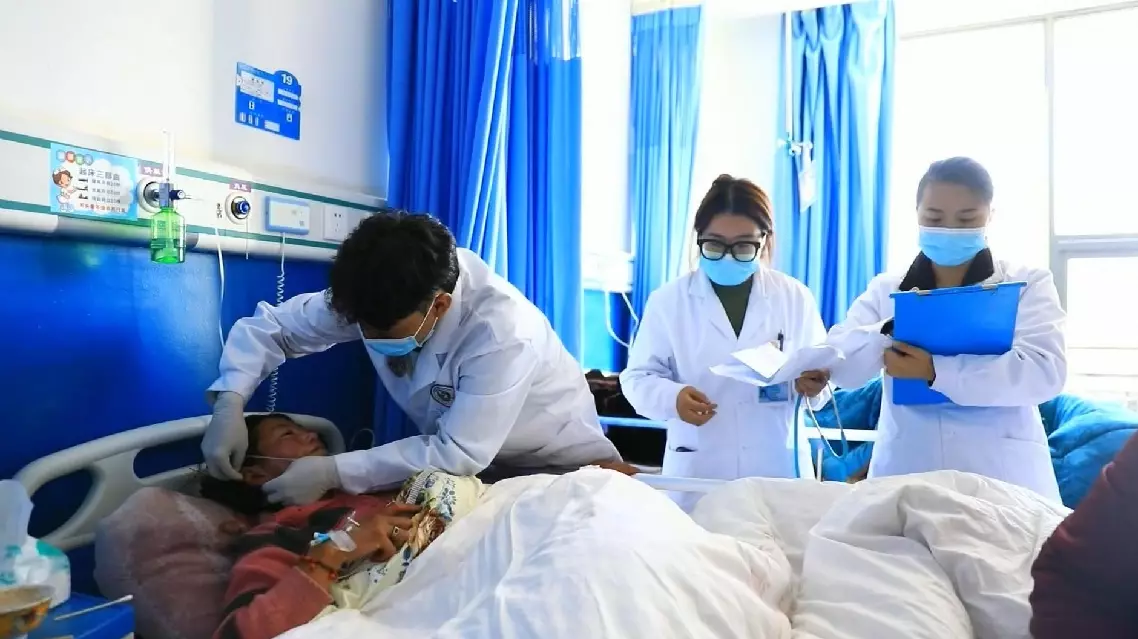
Post-quake medical treatment goes smoothly at county hospital in Xizang
The 19th Europe-China Business and Technology Cooperation Fair concluded on Friday in Chengdu, the capital of Sichuan Province in southwest China, attracting over 600 enterprises and institutions from more than 20 countries and generating more than 160 preliminary cooperation intentions.
Co-hosted by the China Chamber of International Commerce and the European Union Chamber of Commerce in China, the fair serves as a premier platform for targeted business matchmaking between European and Chinese businesses. It aims to foster meaningful, sustainable cooperation across sectors.
During the three-day event, enterprises from China, Spain, Portugal, and other countries held nearly 400 one-on-one business matchmaking sessions across sectors such as new energy, biomedicine, agriculture and food, and artificial intelligence.
Speaking at the fair, Liu Jiannan, vice chairman of the China Council for the Promotion of International Trade, emphasized the need to explore innovative cooperation models between the two sides.
"We are ready to help enterprises from both sides fully utilize platforms like the Europe-China Business and Technology Cooperation Fair to strengthen sci-tech exchanges, deepen innovative cooperation in areas such as AI, clean energy, and digital economy, and explore new models for cooperation in third-party markets," said Liu.
Business leaders at the event stressed the evolving and deeply integrated nature of Sino-European business ties.
Luigi Gambardella, president of the ChinaEU Digital Association, urged young entrepreneurs to become more involved to deepen mutual understanding.
"I hope that young people, young entrepreneurs, and young startups will start to consider co-creation. I think such kind of cooperation would be much more profound. That's because it will allow entrepreneurs [and] employees to enrich with a different culture, understanding each other," said Gambardella.
Adam Dunnett, secretary general of the European Union Chamber of Commerce in China, underscored the Chinese market's critical importance to Europe, calling for deeper two-way investment and trade.
"China is an important market for us. It's really, really important as a source for our supply chain. [It] really doesn't matter if [European] companies are investing in China or if Chinese companies are investing in Europe, or they're finding ways to trade with each other or to make use of each other's supply chains," said Dunnett.
Since its inception, the event has attracted over 14,000 Chinese and European enterprises. To date, it has successfully facilitated nearly 30,000 business matchmaking sessions, resulting in more than 3,000 cooperation intentions and agreements.
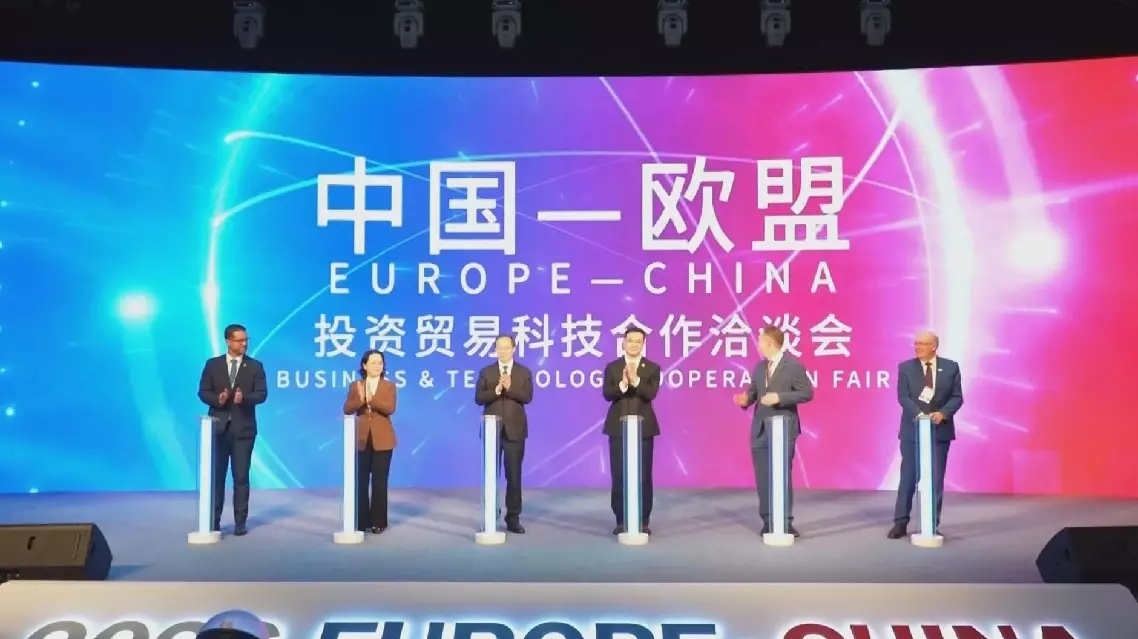
Europe-China fair wraps up in Chengdu with over 160 preliminary deals