Skip to Content Facebook Feature Image

As Trump fights over what America owes, slavery descendants organize for the future

News

As Trump fights over what America owes, slavery descendants organize for the future
News

News

As Trump fights over what America owes, slavery descendants organize for the future

2026-10-24 19:48 Last Updated At:19:50

WASHINGTON (AP) — N’nanba (Robin Rue Simmons) has spent years trying to answer a question that has vexed the United States since the abolition of slavery: What would it actually look like to repair the damage?

In Evanston, Illinois, she helped turn that question into a $25,000 housing grant for Black residents whose families were harmed by discriminatory housing policies. Now, Rue Simmons is spreading the nation’s first municipal reparations program to more than 100 communities across the country.

More Images
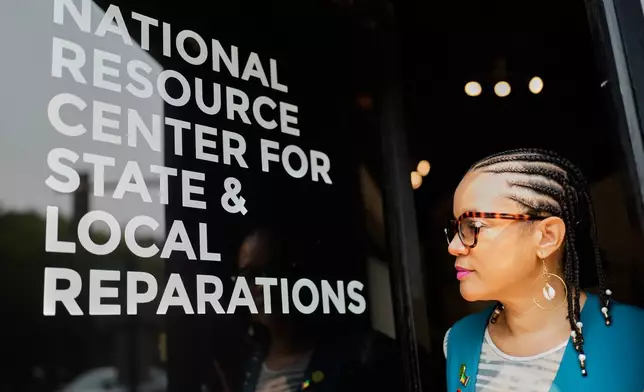
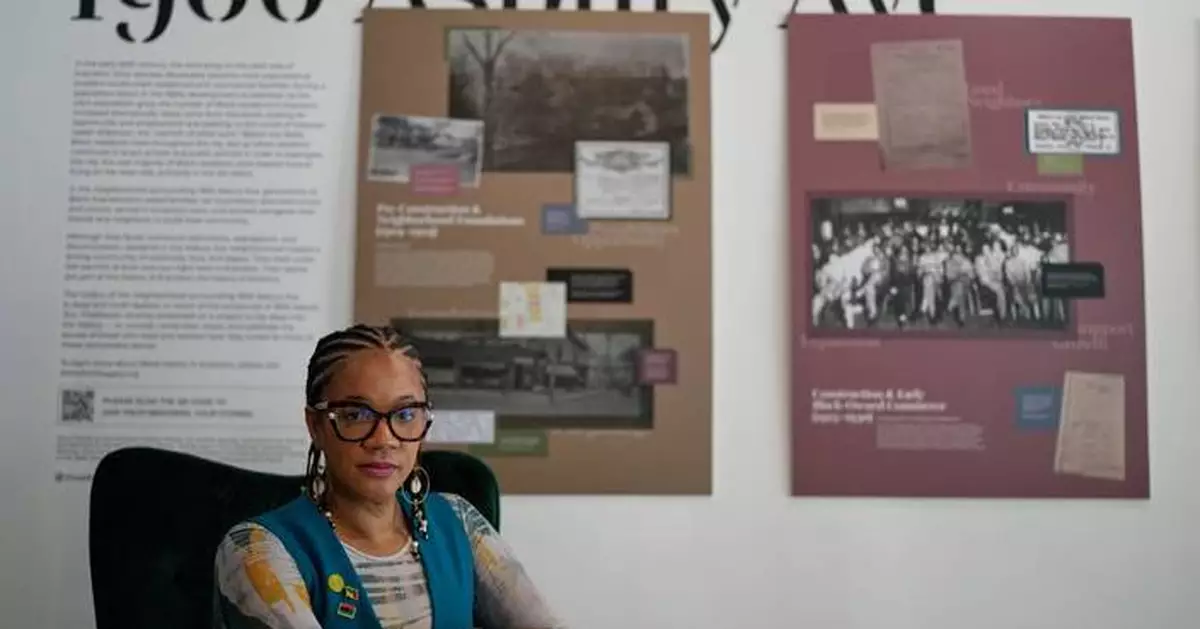
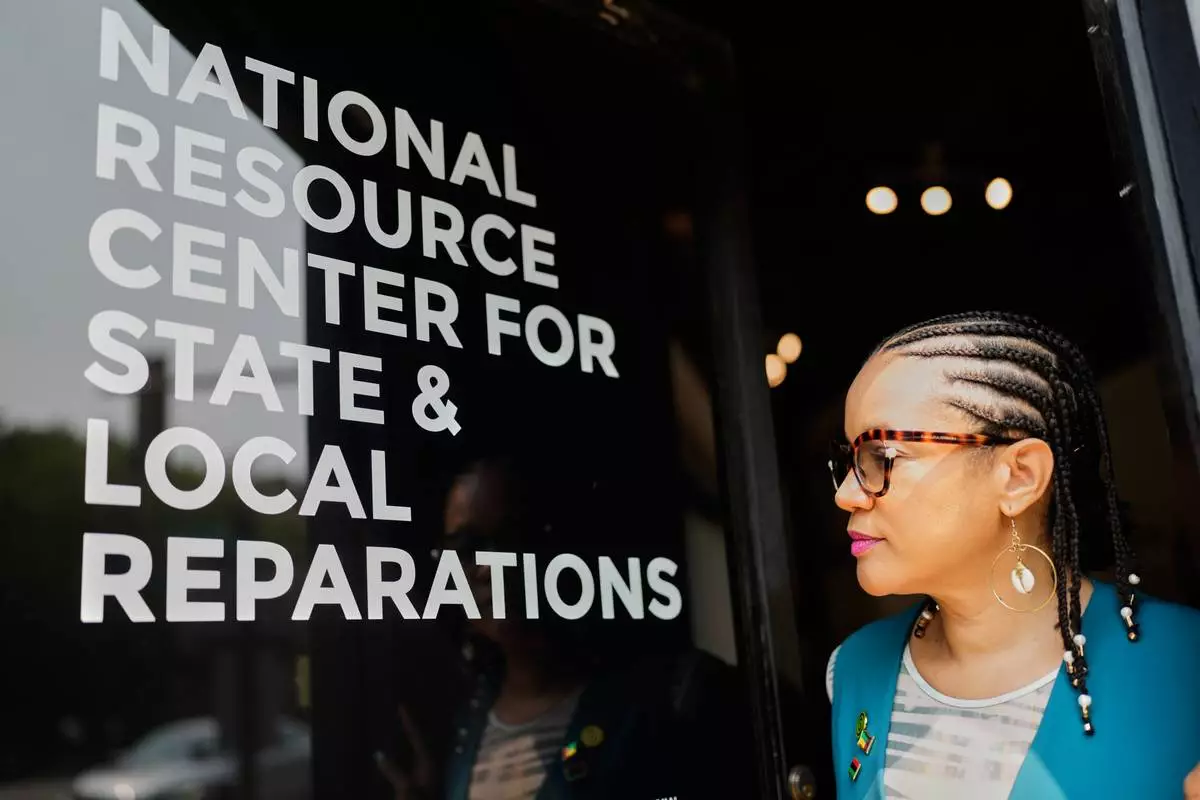
Founder and Executive director of FirstRepair, Robin Rue Simmons looks at a window at her office Monday, Aug. 10, 2026, in Evanston, Ill. (AP Photo/Nam Y. Huh)
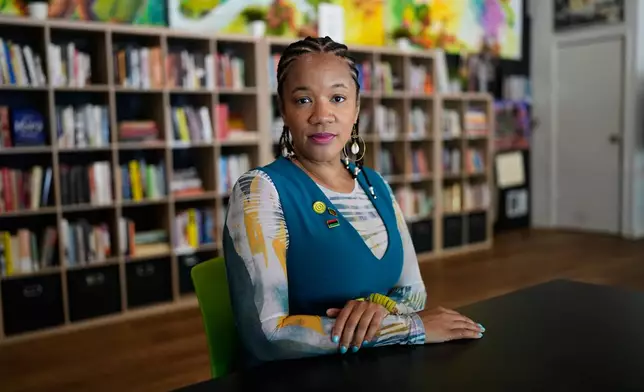
Founder and Executive director of FirstRepair, Robin Rue Simmons looks at a window at her office Monday, Aug. 10, 2026, in Evanston, Ill. (AP Photo/Nam Y. Huh)

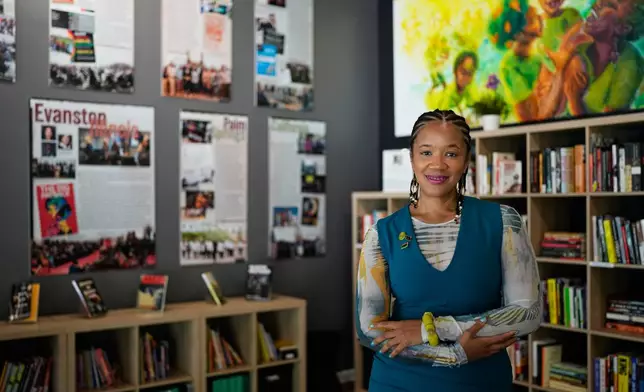
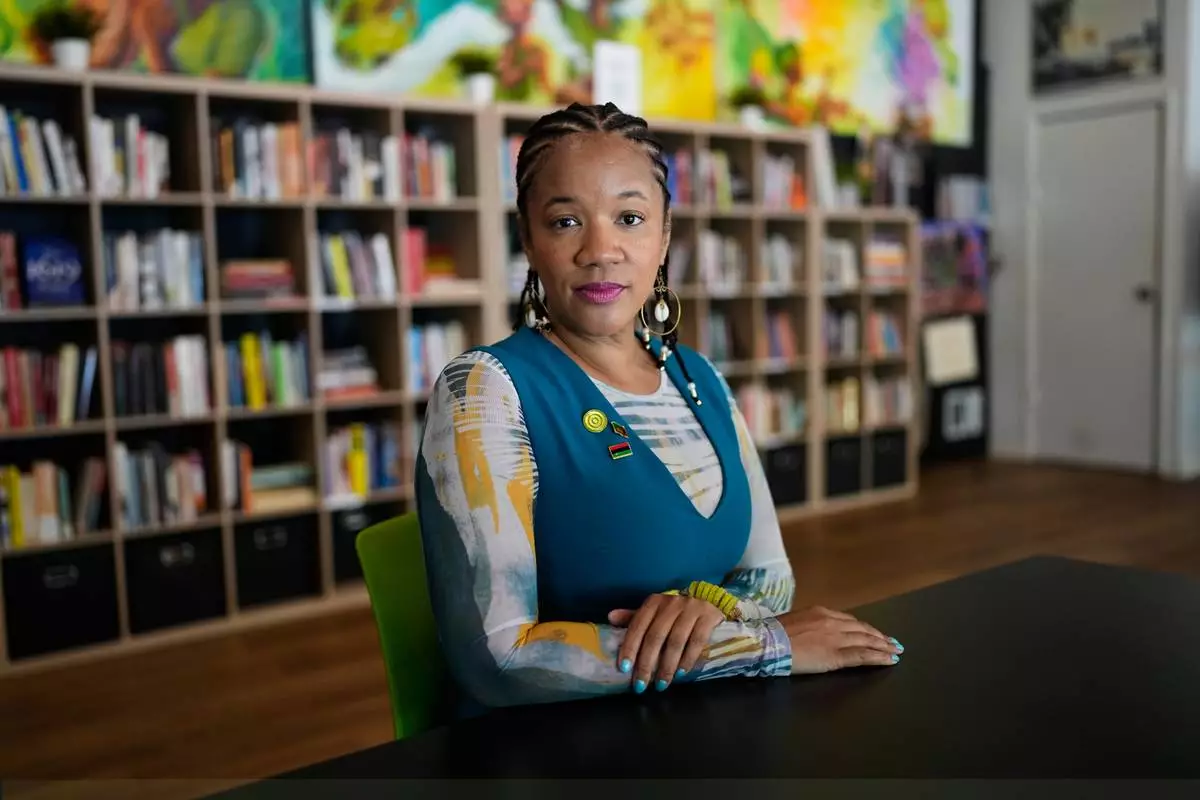
Founder and Executive director of FirstRepair, Robin Rue Simmons poses for a photo ah her office Monday, Aug. 10, 2026, in Evanston, Ill. (AP Photo/Nam Y. Huh)
Founder and Executive director of FirstRepair, Robin Rue Simmons poses for a photo ah her office Monday, Aug. 10, 2026, in Evanston, Ill. (AP Photo/Nam Y. Huh)

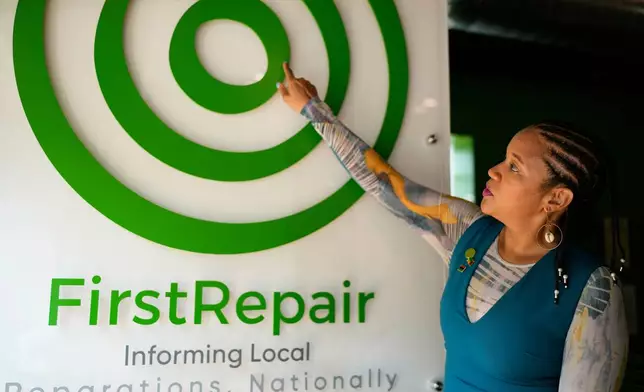
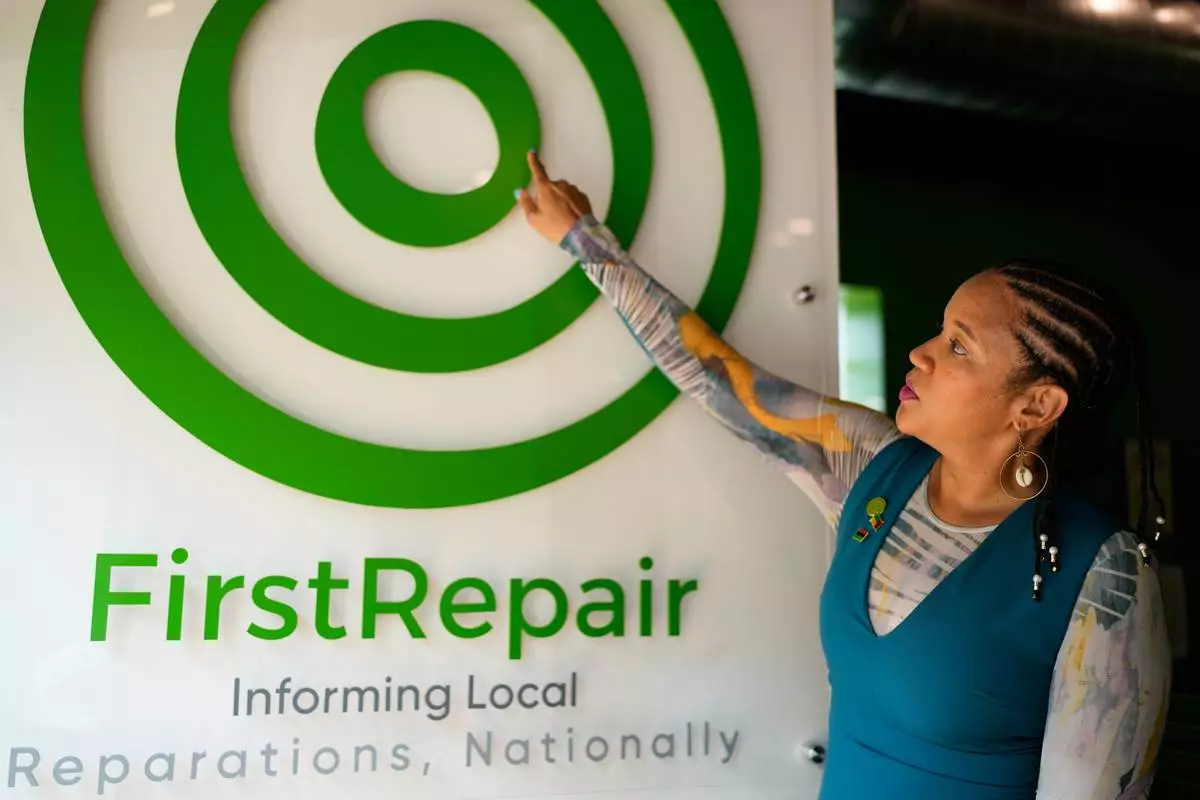
Founder and Executive director of FirstRepair, Robin Rue Simmons points FirstRepair logo as she talks at her office Monday, Aug. 10, 2026, in Evanston, Ill. (AP Photo/Nam Y. Huh)
Founder and Executive director of FirstRepair, Robin Rue Simmons points FirstRepair logo as she talks at her office Monday, Aug. 10, 2026, in Evanston, Ill. (AP Photo/Nam Y. Huh)

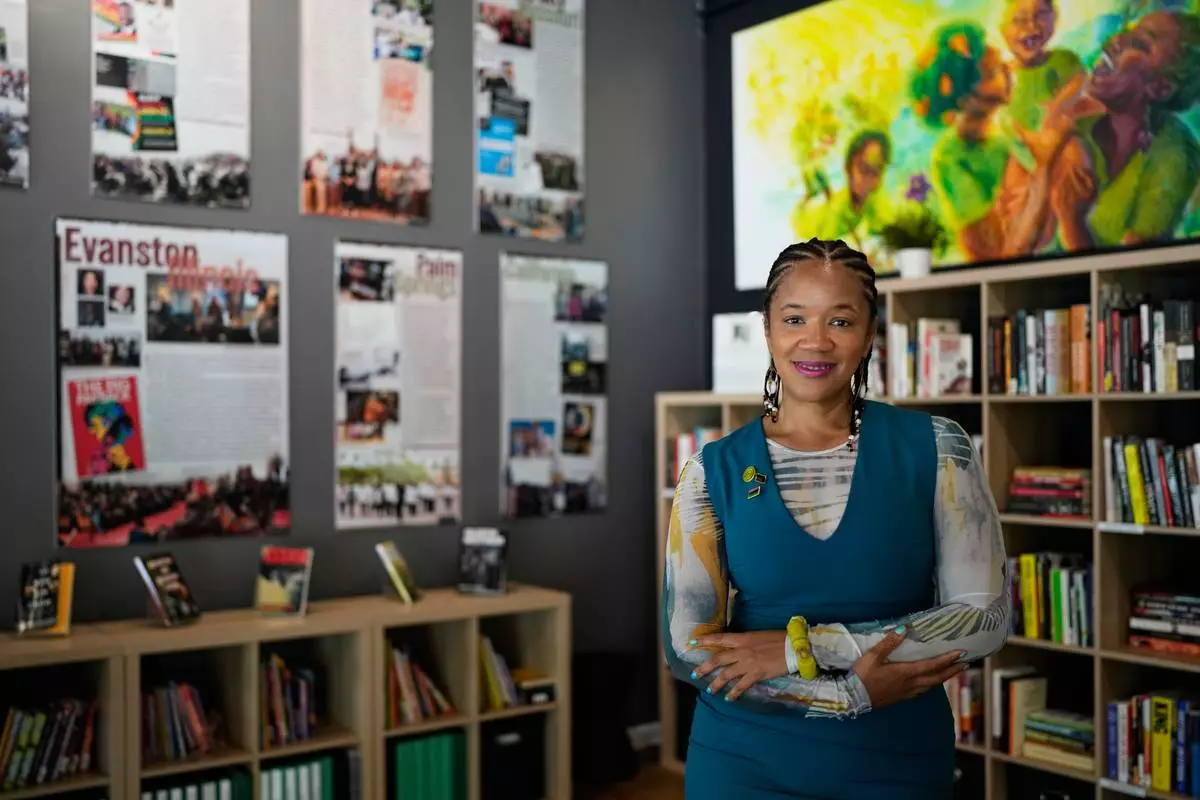
Founder and Executive director of FirstRepair, Robin Rue Simmons poses for a photo at her office Monday, Aug. 10, 2026, in Evanston, Ill. (AP Photo/Nam Y. Huh)
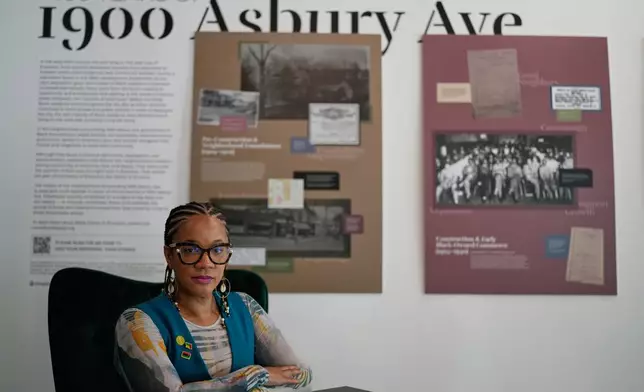
Founder and Executive director of FirstRepair, Robin Rue Simmons poses for a photo at her office Monday, Aug. 10, 2026, in Evanston, Ill. (AP Photo/Nam Y. Huh)

Founder and Executive director of FirstRepair, Robin Rue Simmons poses for a photo ah her office Monday, Aug. 10, 2026, in Evanston, Ill. (AP Photo/Nam Y. Huh)

Founder and Executive director of FirstRepair, Robin Rue Simmons poses for a photo ah her office Monday, Aug. 10, 2026, in Evanston, Ill. (AP Photo/Nam Y. Huh)

But as America celebrates its 250th anniversary, there is a formidable hurdle: President Donald Trump's administration.

The administration’s campaign against diversity, equity and inclusion programs, and its broader efforts to curtail federal support for race-based initiatives and Black history, have prompted some institutions to reconsider or quietly scale back reparations work.

Those reversals come while at least part of the world community is reexamining the past. In March the U.N. General Assembly issued a resolution declaring the trafficking of millions of enslaved Africans “the gravest crime against humanity” and calling for reparations. More than 120 countries supported the resolution — only three voted against it — Argentina, Israel and the U.S. Fifty-two, including England and 27 members of the European Union, abstained.

“Under this administration, of course, there are many barriers to achieving that, but we still stand on federal redress as our collective north star,” Rue Simmons, the chairman of Evanston’s Reparations Committee and a former city councilwoman, told The Associated Press.

For more than three and half centuries, the trans-Atlantic slave trade forced an estimated 12.5 million Africans aboard ships bound for the Americas; some 1.8 million didn't survive the journey. Roughly 388,000 enslaved people were taken to what is now the U.S. and their enslavers maintained a system of chattel slavery, treating the enslaved and their children as property, until abolition in 1865.

Enslavement deprived generations of Black Americans their freedom and any meaningful share of the fruits of their labor. Jim Crow segregation, discrimination and systemic racism further depressed the Black population's ability to build wealth that is still largely concentrated among white families.

From the unfulfilled promise of 40 acres and a mule, to modern day reparations proposals, initiatives to address the legacy of slavery are entering a new era of political uncertainty.

“I don’t think that there’s been any president who’s been supportive of comprehensive Black reparations — for a long time it was just taboo to even speak the word," said William Darity, who wrote a book on reparations with A. Kirsten Mullen.

"Now, Trump will speak the word, but with hostility,” he added.

“They want to steal your money for reparations,” Trump told his supporters during a speech in September. "Our country doesn’t have that kind of money. ... The people that hate our country are asking for it, but it’s going nowhere.”

Marcus Anthony Hunter, a sociologist in African American studies at the University of California, Los Angeles, said reparations are about atoning for the past crime of chattel slavery, even if some programs come in the form of housing grants or college scholarships instead of direct cash payments.

"It's not even a lot of money that they are given. But it comes back to the recognition, the acknowledgment, responsibility and remedy,” he said.

The Trump administration disagrees and has entered the legal fight in Evanston to stop it from happening.

The Republican administration's attacks on modern-day repayment efforts include a lawsuit in Evanston, which was initially filed by Judicial Watch.

Michael Bekesha, who represents the plaintiffs, says the Evanston program distributes funds based on race without specific harm identification. He argues the city's program is unlike historical reparations programs.

“The Constitution prohibits governments from picking winners and losers based entirely on race," Beshka told the AP.

The Justice Department this month received a federal judge's permission to intervene in the case, alleging that the city’s actions violate the equal protection clause of the 14th Amendment and the Fair Housing Act.

Last year, the Justice Department sent a letter of warning to leaders in Asheville and Buncombe County, North Carolina, contemplating creating their own programs.

Kiersten Pels, a spokeswoman for the Justice Department, said in a statement to the AP that “race-based government benefit programs are both unconstitutional and often violate federal civil rights laws."

"Those implementing these programs do so in violation of federal law and the federal government has an obligation to stop them,” she said.

The White House referred questions to the Justice Department.

Georgetown University was one of the leaders, offering admission consideration for the descendants of enslaved people tied to the campus’ past, an effort that has continued despite Trump’s crackdown on campus DEI efforts.

But across higher education, new efforts have come to a standstill, said Richard Cellini, who previously led a Harvard University project to identify descendants of people enslaved by Harvard’s past leaders.

“People don’t want to talk about it, they don’t want to hear about it, they’re not hiring for it,” Cellini said.

At Harvard, Cellini's team identified nearly 500 living descendants of enslaved people tied to Harvard’s past. But just days after Trump returned to the White House in January 2025 and signed an anti-DEI order aimed at U.S. universities, Harvard fired the entire team.

Research by an outside company, American Ancestors, has continued. But Harvard has yet to provide redress to living descendants.

Harvard declined to comment for this story. The Education Department referred questions to the Justice Department.

Some Virginia universities have quietly been taking steps to provide scholarships to descendants, as required under a 2021 state law. But otherwise there has been no sign of new scholarship programs being started since Trump returned to office, said Kirt von Daacke, a University of Virginia historian who leads a consortium of colleges studying slavery.

“I don’t think there is any will to do anything that would threaten federal research dollars,” he said.

The Georgetown initiative focuses on descendants of slaves sold by Georgetown's Jesuit priests to slaveholders in Louisiana.

Juan Woolfolk, 36, one of the Georgetown descendants, is using the $10,000 scholarship he has received indirectly through a foundation set up for descendants to pursue a degree in museum studies at Southern University at New Orleans. He called it a “tremendous opportunity,” especially with the seeming attack on presenting the nation’s past accurately.

The Virginia Theological Seminary makes annual cash payments to the descendants whose family members labored on its campus during slavery and Jim Crow eras. The private institution's program is funded by an endowment started in 2019 that has grown from $1.7 million to $2.8 million. Payments to individuals vary based on the closest lineage to the family members and continue into perpetuity.

“We believe we’re the only educational institution in the United States which makes annual cash reparations payments” with no strings attached, said Nicky Burridge, the seminary’s spokeswoman.

“The moral repair, the healing aspect is as great as the monetary one,” said Ebonee Davis-Hayes, director of reparations.

In Evanston, Joe Martin, a 46-year-old reparations recipient who works as a Delta flight attendant, said he was pleasantly surprised with the program. The nation’s history has been to ignore the contributions of Black Americans helping “build America” or the terror they endured, he said.

Now, the Trump administration supports stopping the program he benefits from.

"We all know the history, 40 acres and a mule didn’t go down the way it was supposed to,” he said, and so someone establishes a program that’s legitimate and “the government’s like, naw.”
Founder and Executive director of FirstRepair, Robin Rue Simmons looks at a window at her office Monday, Aug. 10, 2026, in Evanston, Ill. (AP Photo/Nam Y. Huh)
Founder and Executive director of FirstRepair, Robin Rue Simmons looks at a window at her office Monday, Aug. 10, 2026, in Evanston, Ill. (AP Photo/Nam Y. Huh)

Founder and Executive director of FirstRepair, Robin Rue Simmons poses for a photo ah her office Monday, Aug. 10, 2026, in Evanston, Ill. (AP Photo/Nam Y. Huh)
Founder and Executive director of FirstRepair, Robin Rue Simmons poses for a photo ah her office Monday, Aug. 10, 2026, in Evanston, Ill. (AP Photo/Nam Y. Huh)

Founder and Executive director of FirstRepair, Robin Rue Simmons points FirstRepair logo as she talks at her office Monday, Aug. 10, 2026, in Evanston, Ill. (AP Photo/Nam Y. Huh)
Founder and Executive director of FirstRepair, Robin Rue Simmons points FirstRepair logo as she talks at her office Monday, Aug. 10, 2026, in Evanston, Ill. (AP Photo/Nam Y. Huh)

Founder and Executive director of FirstRepair, Robin Rue Simmons poses for a photo at her office Monday, Aug. 10, 2026, in Evanston, Ill. (AP Photo/Nam Y. Huh)
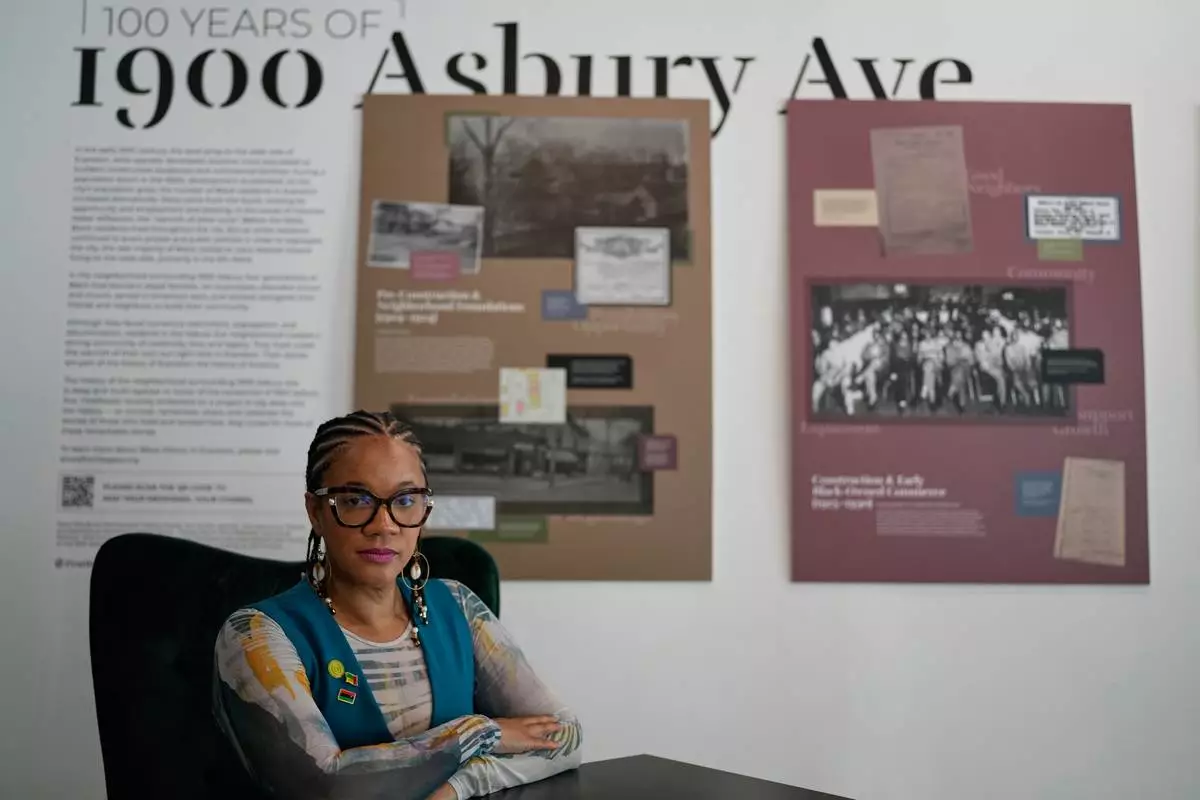
Founder and Executive director of FirstRepair, Robin Rue Simmons poses for a photo at her office Monday, Aug. 10, 2026, in Evanston, Ill. (AP Photo/Nam Y. Huh)

Founder and Executive director of FirstRepair, Robin Rue Simmons poses for a photo ah her office Monday, Aug. 10, 2026, in Evanston, Ill. (AP Photo/Nam Y. Huh)

Founder and Executive director of FirstRepair, Robin Rue Simmons poses for a photo ah her office Monday, Aug. 10, 2026, in Evanston, Ill. (AP Photo/Nam Y. Huh)
KYIV, Ukraine (AP) — Ukraine and Russia have signaled their willingness to resume U.S.-brokered peace talks and are backing a humanitarian mission led by First lady Melania Trump. But deep disagreements over territory and security guarantees that re-emerged this week underscore obstacles to ending the war.

The new diplomatic push comes after more than 4½ years of fighting, bringing with it a surprise announcement on Friday: Kyiv and Moscow have agreed to a local ceasefire to allow aid next week into a stranded town in Ukraine's southern war-divided region of Kherson, following secret consultations between Melania Trump and civilian negotiators from Russia and Ukraine.

While the initiative raised hopes of similar humanitarian missions in the future, there were few indications that any of the key positions have shifted. Russia continues to demand Ukrainian territory it does not fully control, while Kyiv insists any agreement must include ironclad guarantees against another invasion.

Within hours of Russian President Vladimir Putin saying he agreed “in principle” to restart talks, Russia launched a deadly barrage of ballistic missiles and drones on Kyiv. Moscow on the same day said it had destroyed more than 800 Ukrainian drones heading toward its cities.

Here’s a look at where the two countries stand as potential negotiations loom.

U.S. presidential envoy Steve Witkoff secured the latest commitment to talks after shuttling between Oslo, Norway, and St. Petersburg, Russia, this week to meet Ukrainian President Volodymyr Zelenskyy and Putin.

A new round of negotiations would be the fourth brokered by the Trump administration, following the most recent round in Geneva in February.

A Kremlin spokesman said that the next round of talks is likely to be held in Abu Dhabi, the capital of the United Arab Emirates, around mid-November. Western governments backing the peace initiative are seeking a new formula to break the impasse while acknowledging that territorial and security questions remain unresolved.

U.S. President Donald Trump’s ties with Zelenskyy, meanwhile, have sunk to a new low. Moscow has been bolstered by Trump’s deal for Russia to supply the U.S. with diesel and his recent rejection of new Russia sanctions.

Kyiv has been undermined by disruptions in satellite support for its drones after rejecting a call by the U.S. president to halt strikes on Russian oil infrastructure. Ukrainian leaders fear the moves will embolden Putin, giving him little incentive to compromise at the negotiating table.

As Trump increased pressure on Zelenskyy, accusing him of being an obstacle to peace, Witkoff secured the release of an American who had been jailed for more than four years on charges of fighting as a mercenary in Ukraine. The envoy described the Russian leader as a “humanitarian” at their meeting in St. Petersburg — a remark met with consternation in Ukraine.

While both sides back calls for new talks, Russia and Ukraine are still far apart on their terms for a settlement, while their armies remain locked on the battlefield and they pummel each other with daily long-range strikes.

Central to Russia’s demands is full control of four Ukrainian regions it illegally annexed months after the start of the full-scale invasion in 2022: Donetsk, Luhansk, Zaporizhzhia and Kherson, in addition to Crimea, which Moscow seized in 2014.

Russia currently occupies about 20% of Ukraine but has failed to capture all the territory in the regions over which it claims sovereignty.

In a long list of demands, Moscow also wants Ukraine to withdraw forces from all four annexed regions, renounce its bid to join NATO, reduce the size of its military and drop restrictions against the Russian language and a Moscow-affiliated branch of the Orthodox Church.

Speaking on state television late Thursday, Putin said Moscow remains "ready to negotiate and seek solutions to this difficult, complex situation,” before adding: “But if some prefer a different path, so be it. In any case, all the objectives of the special military operation will be achieved.”

Zelenskyy — who for months has publicly advocated for peace talks — argues that giving up land would leave Ukraine more vulnerable to future attacks. Kyiv views security guarantees as essential to prevent Russia from restarting the war in the future.

The Ukrainian president has reaffirmed support for a ceasefire that would freeze front-line positions, followed by talks on conditions for ending the war. Moscow has rejected a break in hostilities until a comprehensive agreement on its terms is reached.

While Kyiv and Moscow have maintained limited contact to organize prisoner exchanges and the return of fallen soldiers, previous talks have made no progress on the security arrangements needed to sustain a peace deal.

Ukraine believes security guarantees backed by Western allies are essential to any future settlement, ideally in the form of NATO membership — an option Vladimir Putin has rejected. Ukraine expects to heavily rely on its own army as the main security guarantee with financial backing from its allies.

Other elements of security guarantees being discussed range from NATO membership, which the U.S. administration has currently ruled out, direct guarantees from the United States in what Zelenskyy has described as an “Article 5-like format” and backing by the European-led 30-country alliance known as the Coalition of the Willing.

Article 5 of the NATO charter contains the alliance's mutual-defense guarantee, which establishes that an attack on one is an attack on all.

“All of these guarantees are possible on the basis of a strong Ukrainian army — in terms of both numbers and quality — with clear funding, and not a small amount. Our colleagues in Europe and America know this,” Zelenskyy told reporters Thursday at a briefing.

Following the massive attacks on Kyiv and other cities this week, he argued that only increased Western pressure on Moscow would change its calculations about future peace talks.

“It is important to keep trying to find the right solutions to end this war,” Zelenskyy wrote in an online post. “But when Russia responds to negotiations with ballistic missiles, real pressure on Russia is needed to bring about different steps — steps toward ending the killing.”

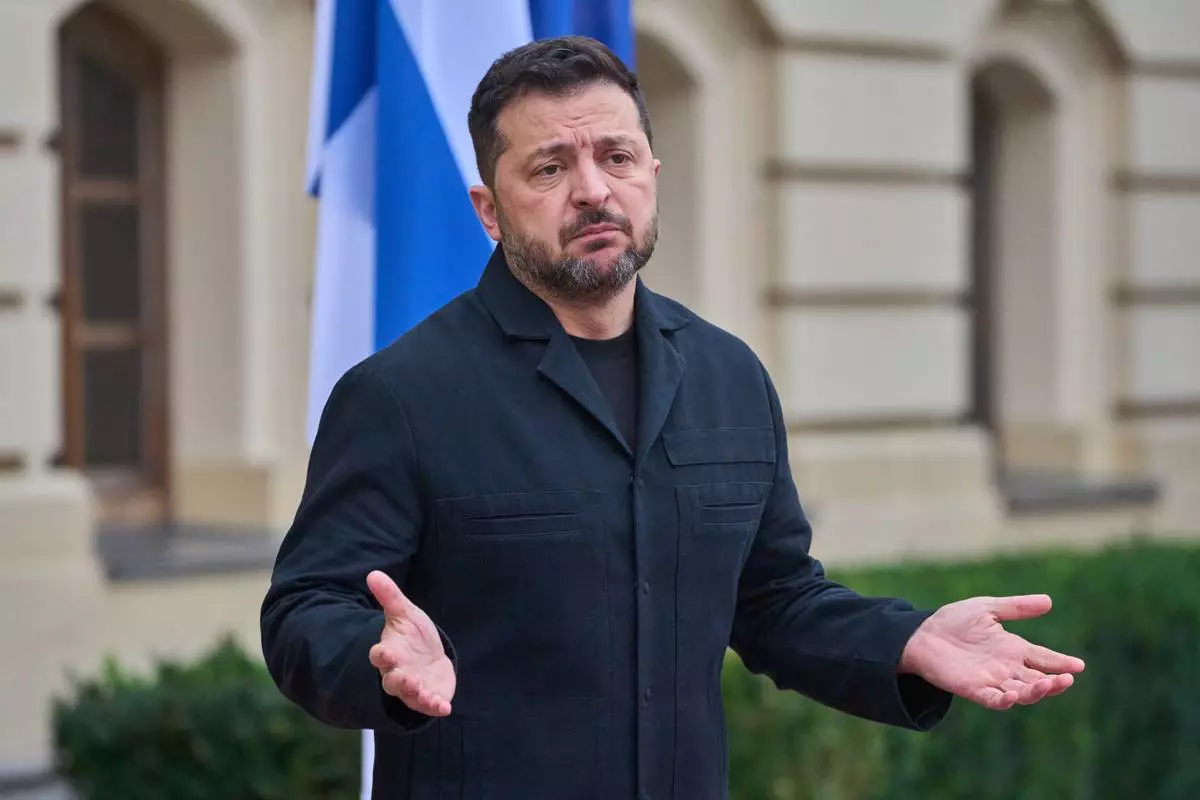
Ukraine's President Volodymyr Zelenskyy answers media questions before his meeting with Finnish Prime Minister Petteri Orpo in Kyiv, Ukraine, Thursday Oct. 22, 2026. (AP Photo/Efrem Lukatsky)

Ukraine's President Volodymyr Zelenskyy answers media questions before his meeting with Finnish Prime Minister Petteri Orpo in Kyiv, Ukraine, Thursday Oct. 22, 2026. (AP Photo/Efrem Lukatsky)

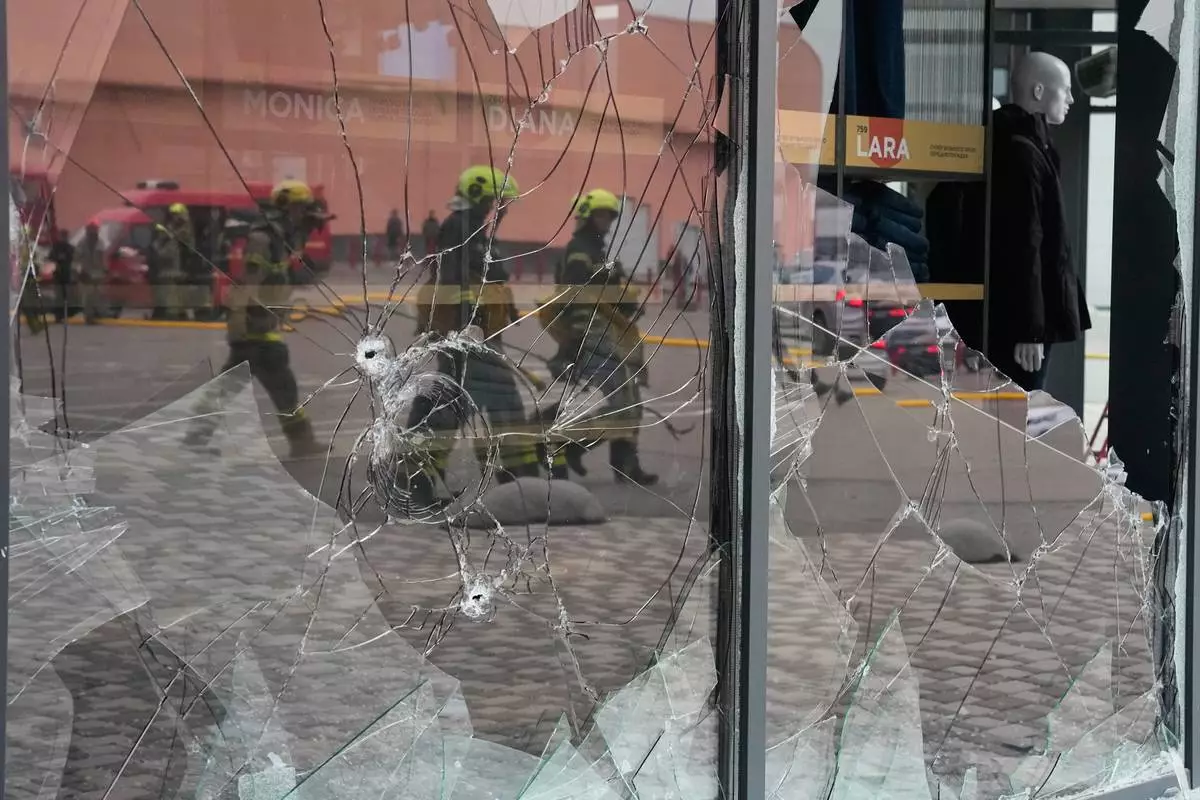
Firefighters are reflected in the broken glass after a Russian missile attack in central Kyiv, Ukraine, Thursday, Oct. 22, 2026. (AP Photo/Efrem Lukatsky)

Firefighters are reflected in the broken glass after a Russian missile attack in central Kyiv, Ukraine, Thursday, Oct. 22, 2026. (AP Photo/Efrem Lukatsky)

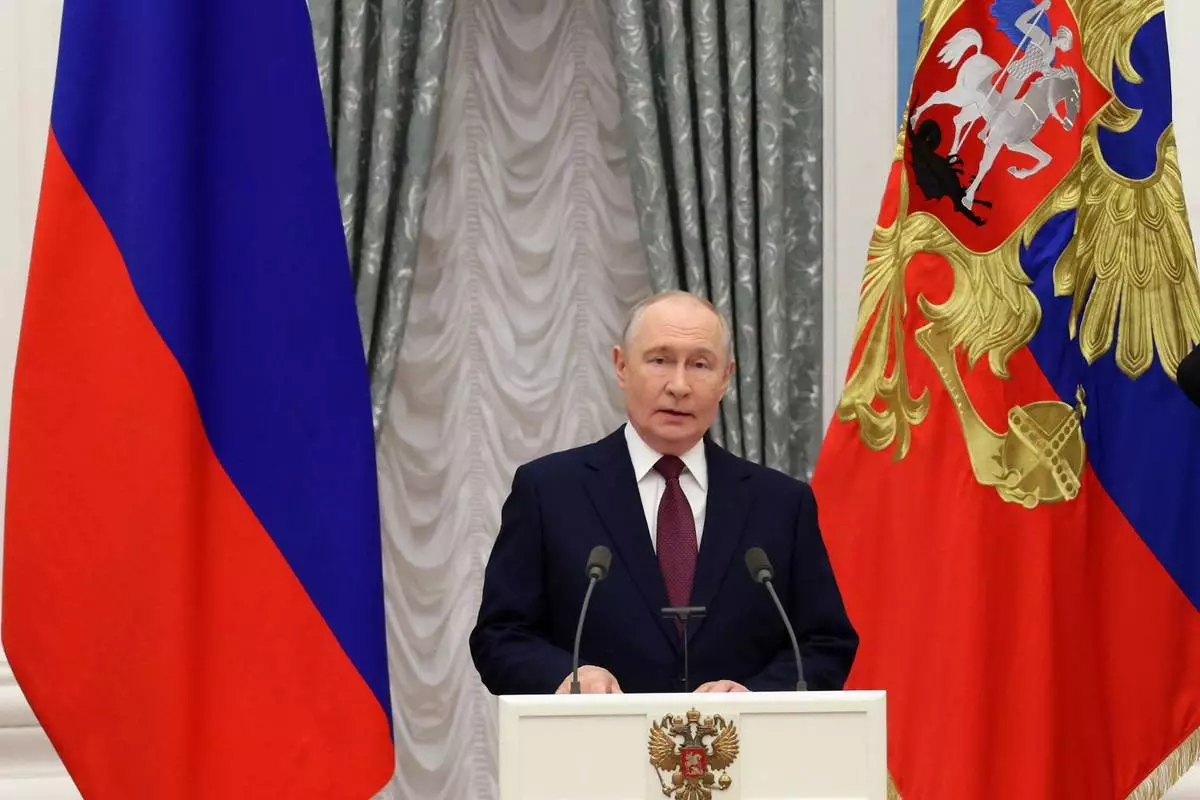
Russian President Vladimir Putin delivers his speech at the presentation of a banner of the Federal Customs Service at the Kremlin in Moscow, Thursday, Oct. 22, 2026. (Gavriil Grigorov/Sputnik, Kremlin Pool Photo via AP)

Russian President Vladimir Putin delivers his speech at the presentation of a banner of the Federal Customs Service at the Kremlin in Moscow, Thursday, Oct. 22, 2026. (Gavriil Grigorov/Sputnik, Kremlin Pool Photo via AP)

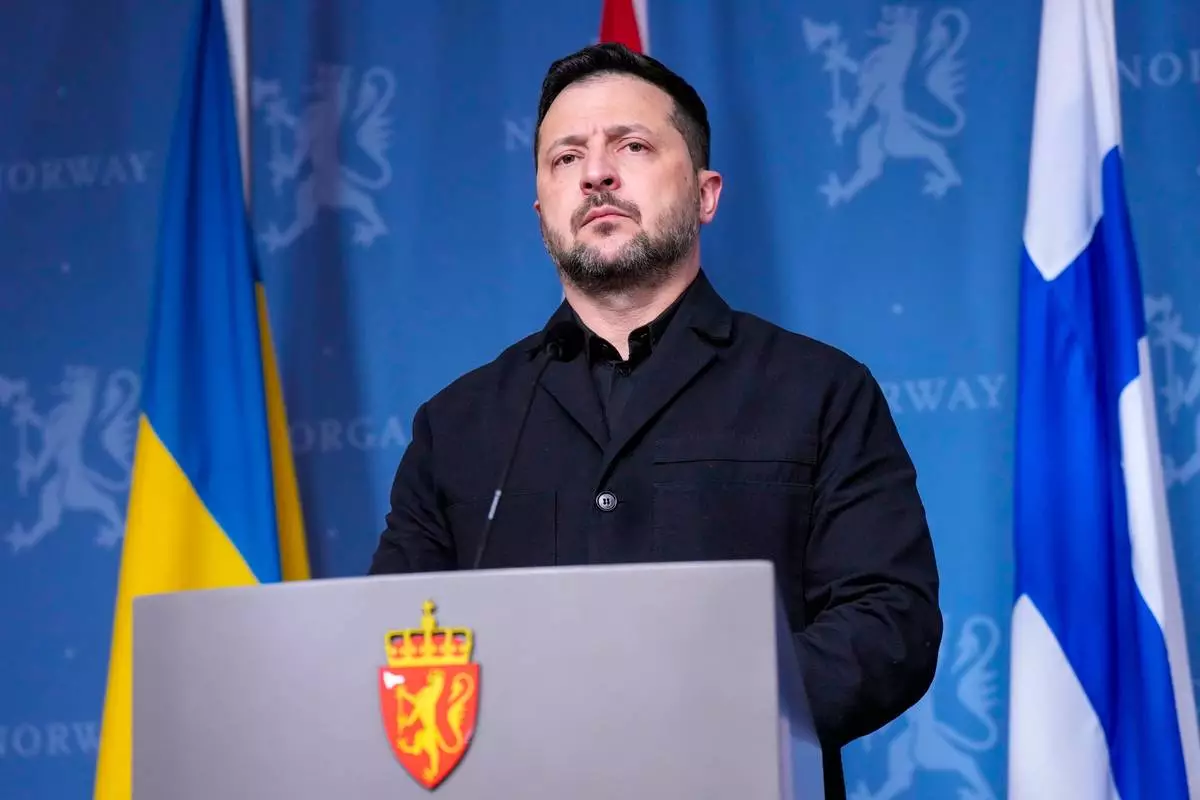
Ukrainian President Volodymyr Zelensky speaks during a press conference on Tuesday, Oct. 20, 2026 in Oslo, Norway. (Lise Åserud/NTB Scanpix via AP)

Ukrainian President Volodymyr Zelensky speaks during a press conference on Tuesday, Oct. 20, 2026 in Oslo, Norway. (Lise Åserud/NTB Scanpix via AP)

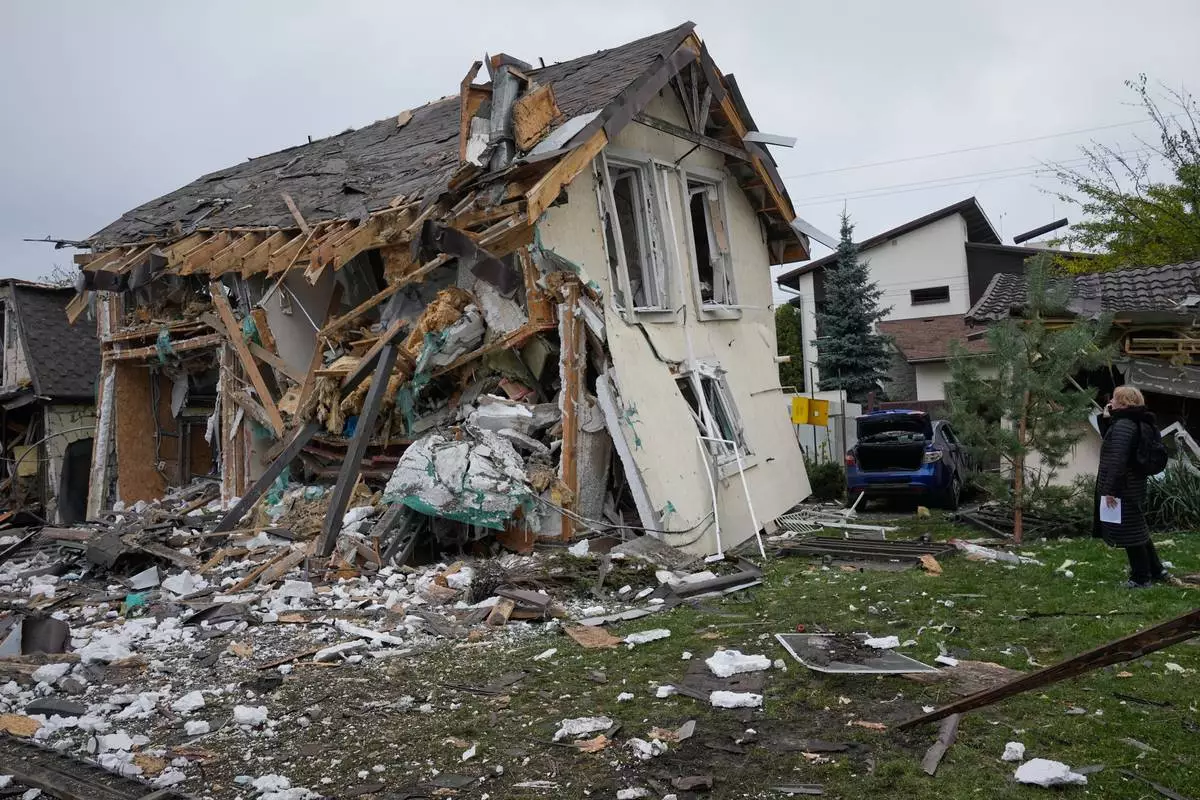
A woman looks at residential house destroyed in a Russian missile strike in Kyiv, Thursday, Oct. 22, 2026. (AP Photo/Efrem Lukatsky)

A woman looks at residential house destroyed in a Russian missile strike in Kyiv, Thursday, Oct. 22, 2026. (AP Photo/Efrem Lukatsky)

Recommended Articles