Ukrainian President Volodymyr Zelensky said on Friday that he is ready for trilateral talks with the United States and Russia "even tomorrow," though the timing ultimately depends on Moscow.
In a phone call with U.S. Special Envoy Steve Witkoff and Jared Kushner, Zelensky agreed to a planned meeting in Abu Dhabi in the first half of November, according to Ukrainian sources. "We are ready to meet at any time, even tomorrow, but it all depends on the Russian side," he said.
Zelensky stressed that the top priority is ensuring the talks take place. He also expressed hope that European and other partners could join the U.S. in the discussions, and stressed the need to hold the trilateral talks at the leaders' level, saying it is necessary to move from technical-level negotiations to a meeting of leaders, as key issues can only be resolved at the highest level.
On the Russian side, Kremlin spokesperson Dmitry Peskov confirmed on Friday that trilateral negotiations on security guarantees for Russia and Ukraine will begin in Abu Dhabi in the first half of November. He noted that the format is still being discussed, but did not rule out future European participation.
Russian President Vladimir Putin said on Thursday that following a meeting with U.S. Special Envoy Witkoff, Russia and the U.S. had agreed to restart the trilateral process. He clarified that the goal is to discuss how to ensure long-term security for both Russia and Ukraine after a final peace agreement is reached, rather than simply pursuing a temporary ceasefire.

Zelensky says Ukraine expects trilateral talks with U.S., Russia as early as possible

Zelensky says Ukraine expects trilateral talks with U.S., Russia as early as possible
Relief efforts including shelter construction and supply distribution are progressing smoothly in the earthquake-stricken Baqen County of Nagqu city in southwest China's Xizang Autonomous Region, with remote sensing satellites deployed to support emergency rescue operations.
In severely affected areas such as Maru Township, 18 resettlement sites have been completed, with construction on the remainder accelerated to provide evacuees with basic living necessities and medical services.
At a centralized relocation site in a village of Maru Township on Friday night, outdoor temperatures had dropped to about 5 degrees below zero, but tents for more than 50 households had been put up.
Despite the freezing cold outside, the tents remain warm inside. Relief supplies, including bedding, clothing, instant noodles, beverages and bottled water, have been distributed at the site, with tents allocated based on family size.
The first batch of prefabricated houses has already arrived at the site. More prefabricated units will be delivered gradually in the coming days, bringing better living conditions for the affected people.
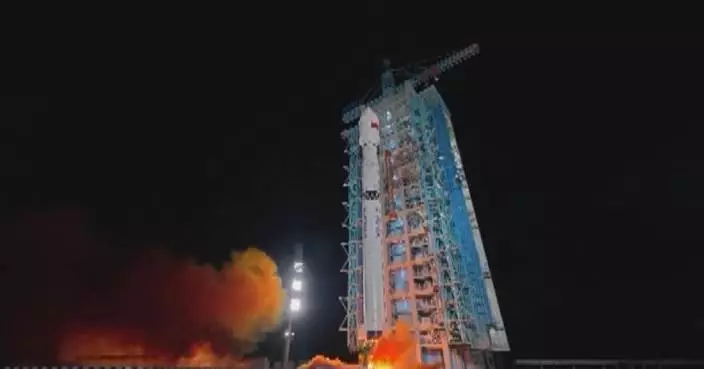
Alongside on-ground relief work, satellites are being used to make rescue efforts more targeted and efficient.
Relevant units under the China Aerospace Science and Technology Corporation launched an emergency response mechanism immediately after the earthquake. Multiple satellites, including Gaofen-07 and Ludi Tance (Land Exploration)-1 A, have been deployed to monitor the disaster area and provide remote sensing imagery to aid relief work.
Up to now, 11 satellite imaging tasks have been carried out, obtaining 21 sets of post-quake data and sharing 19 sets of historical data. These data provide solid support for emergency rescue deployment and decision-making.
At least 16 people were killed and 76 others injured after the quake jolted Baqen County at 22:33 Beijing time (1433 GMT) on Thursday.

Shelters erected, relief supplies delivered to quake-hit county in Xizang Autonomous Region in southwest China