From robots to new materials to design expertise, foreign companies are increasingly integrating Chinese innovation into their global supply chains and turning local partnerships into products for worldwide sales.
Aptiv, a foreign automotive connector manufacturer, is one of the multinationals pioneering a new manufacturing model leveraging China's innovation capacity. In its smart factory in Shanghai, it has set aside space to train humanoid robots made by its Chinese partners before they take up posts on the production line. Two similar components, differing by just three millimeters, are sorted by the robot into different boxes.
"China is already leading the world in AI and embodied robotics. Before these intelligent machines can be deployed into digital and smart manufacturing environments, they must undergo training to seamlessly integrate into our automated industrial ecosystem," said Simon Yang, President of Aptiv China and Asia-Pacific.
Chinese partners are involved far beyond robot production. Having operated in China for over 30 years, Aptiv has steadily upgraded its research capabilities and now develops products for global markets, with Chinese suppliers now participating in the design process.
"In the past, we completed the design ourselves, took the drawings to suppliers, and asked them to build accordingly. Today, the model has changed. We already incorporate elements from our suppliers during our design process, phase itself, we already incorporate elements from our suppliers, because they possess a wealth of innovation and new technologies," said Shen Guoliang, Vice President of Aptiv's Connection Systems division.
New materials and processes from suppliers offer more options for product development. Jointly developed results are also taken to overseas factories. More than 200 Chinese suppliers have entered Aptiv's global supply chain.
Aptiv is investing about five billion yuan (about 749 million U.S. dollars) in a new factory in Jiaxing City, Zhejiang Province, and increasing R&D spending in data centers and energy storage.
In the first eight months of this year, Shanghai's actual use of foreign capital reached 11.59 billion dollars, up 6.9 percent year on year, while the number of enterprises making profit reinvestments surged 147.6 percent.
"Foreign companies investing here value the city's complete industrial chain and the expanding network of innovation partners. We will promptly address the issues companies face in commercialization, technological upgrading and reinvestment, so they can achieve better development in China and innovation here can serve the world," said Chen Hao, deputy director of the Shanghai Municipal Commission of Commerce.
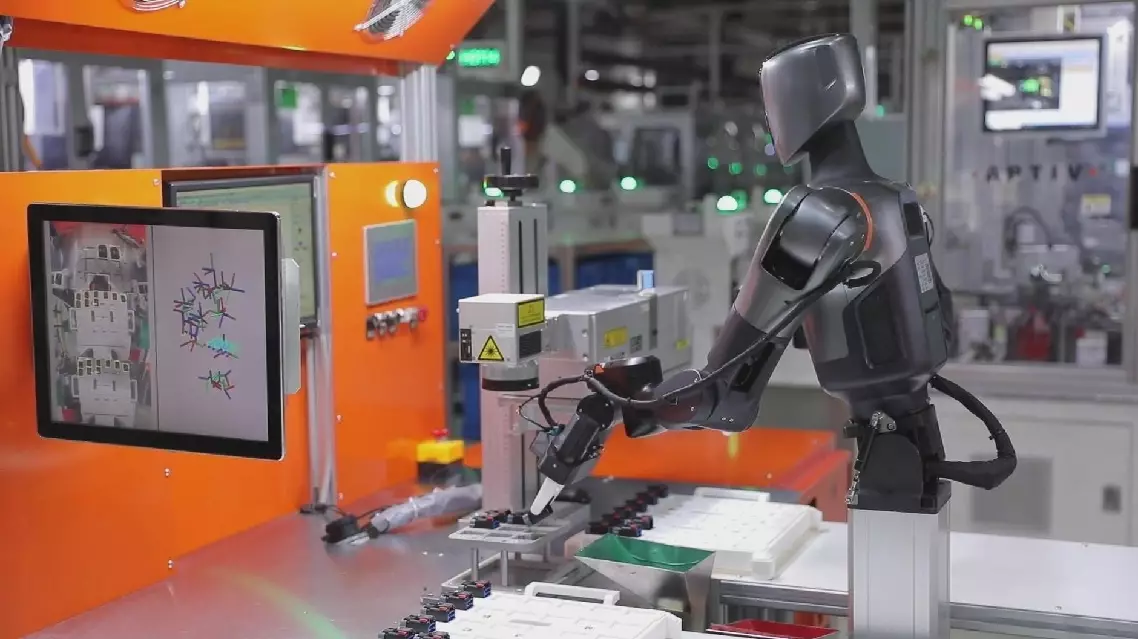
Multinationals tap China's innovation to serve global markets