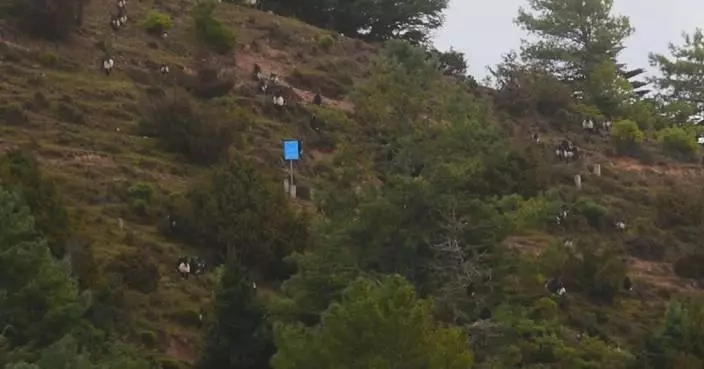
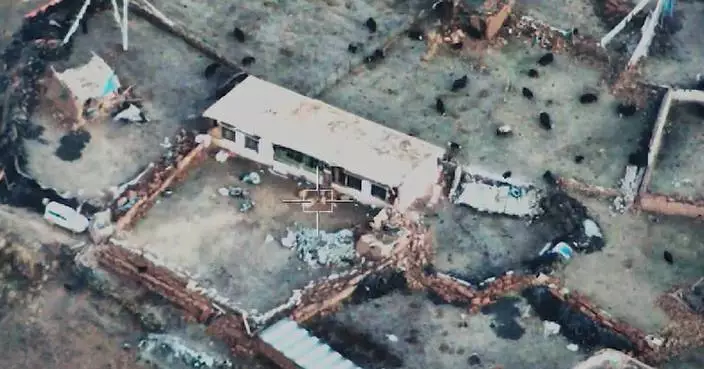
As Typhoon Champi brings strong winds and waves to east China's coast, cities of Zhoushan and Yuhuan in Zhejiang Province have stepped up precautionary measures, reinforcing facilities at coastal homestays, closing beaches, patrolling to dissuade away sightseers, and ensuring the stable operation of an offshore wind farm.
Xiaowushitang, a small coastal village in Zhoushan facing the East China Sea, is surrounded by mountains on three sides and sits in a U-shaped pocket open to the sea, making the village particularly vulnerable when a typhoon hits.
Local authorities say waves here have reached about nine meters during past typhoons. Champi is weaker than previous ones, and with the tide going out, waves are peaking at around four meters, not yet the highest. Still, precautionary work has already begun.
Nearly 100 homestays line the coast of Xiaowushitang. Most tourists have been persuaded to leave before the typhoon, and for a few who chose to stay, homestay owners and local government officials reminded each one of them to stay indoors and refrain from going to the seawall.
The beach here is usually open for tourists to dig for seafood and sightseeing. Days before the typhoon, the entrance was closed and seaside stalls shut down. Authorized personnel are patrolling key spots and persuading wave-watchers to leave.
As of 09:00 Saturday (Beijing Time), 11,494 people had been evacuated across Zhoushan.
In Yuhuan, Typhoon Champi has put a local offshore wind farm in waters northwest of Pishan Island inside its seven-level wind circle, with winds continuing to intensify.
Footage from industrial cameras show churning waves and heavy rain. At around 08:00 Saturday, instantaneous maximum wind speeds here exceeded 20 meters per second, and 32 turbines were connected to the grid, seizing the favorable wind conditions to generate power.
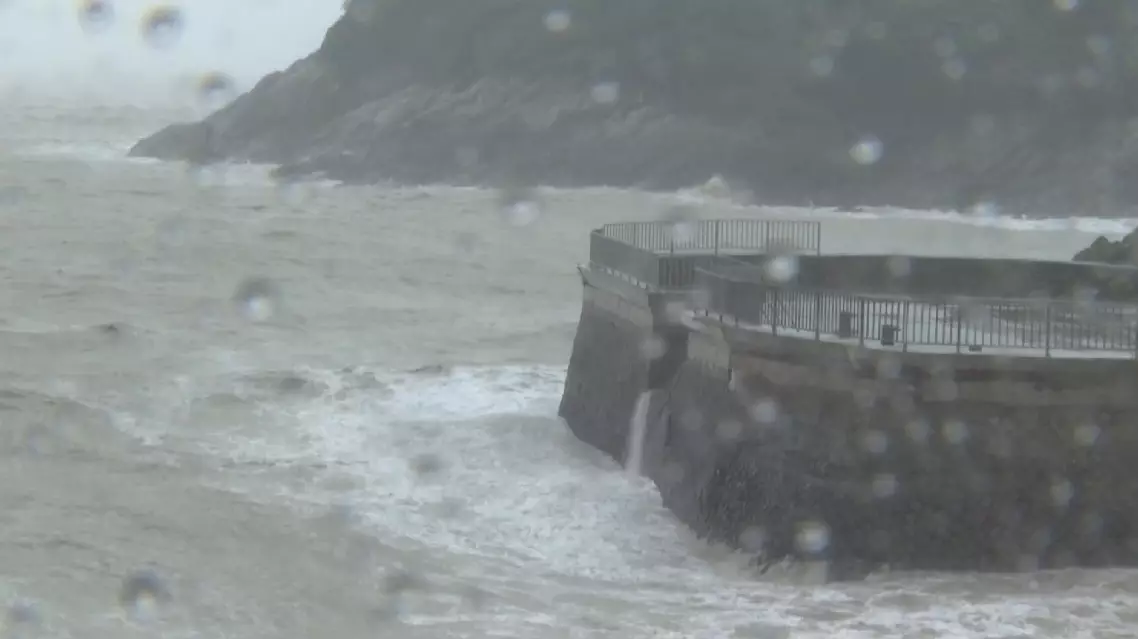
Coastal cities ramp up precautions for Typhoon Champi