Parked in his truck along a rural Idaho highway on his way to an elk hunt, Neill Goodfellow pondered a question that will appear on his November ballot: which of six historic firearms to choose as the official state gun?
Goodfellow is going to vote for the M1 Garand, a semiautomatic rifle widely carried by U.S. troops in World War II.
In Massachusetts, voters are deciding a vastly different ballot question — whether to uphold a 2024 law requiring all firearms to be serialized and registered with the state and broadening a ban on “assault-style” guns.
Massachusetts and Idaho are about 2,000 miles (3,200 kilometers) apart — literally and figuratively — in America's gun debate. The November election won't settle the tension between firearm freedoms and restrictions, but the ballot questions will provide a gauge of public opinion.
Should voters approve it, Massachusetts Question 9 will continue an array of gun restrictions passed overwhelmingly by the Democratic-led Legislature in a state with one of the nation's lowest gun ownership rates. The question is going to voters because opponents gathered petition signatures forcing a referendum.
In Boise, the Republican-led Legislature placed a nonbinding question on the ballot seeking voters' advice on designating “the state gun of Idaho.” About 3 in 5 Idaho adults live in households with guns, which ranks among the highest rates nationally, according to an estimate from the RAND Gun Policy in America initiative. Some Republican lawmakers hope the ballot question will encourage more people to vote.
Residents in Massachusetts face a Wednesday deadline to register their firearms with the state. The referendum on whether to repeal that requirement happens six days later. That sequence has frustrated some gun owners.
“It’s a total violation of people’s rights to require this before they have their chance to vote on it,” said Toby Leary, chair of The Civil Rights Coalition, a group formed to lead the effort to repeal the gun law.
Normally, when a referendum petition is submitted, a law is placed on hold until an election can occur. But Democratic Gov. Maura Healey signed an emergency provision making the gun law take effect immediately in 2024 — two years ahead of the referendum.
Advocates tout the measure as the most comprehensive update in a decade to the state's firearms laws. In addition to establishing a state firearm registry, it bars "ghost guns” that lack serial numbers and devices that convert guns to fire rapidly, and expands a ban on assault-style weapons. It also broadens a “red flag” law to add healthcare providers and school administrators to the list of those who can ask courts to temporarily remove guns from people who pose a risk to themselves or others.
“This legislation both preserves a legal pathway to gun ownership while also putting guardrails in place that keep people safe," said Ruth Zakarin, who chairs the campaign committee backing the gun law and is CEO of the Massachusetts Coalition to Prevent Gun Violence.
A 40-year-old federal law prohibits the U.S. government from establishing a national registry of firearms or their owners. But some states have adopted their own requirements.
Massachusetts was the third jurisdiction, behind Hawaii and the District of Columbia, to enact a comprehensive gun registry. Six additional states require registration of some firearms, such as handguns or those defined as assault weapons, according to the Giffords Law Center to Prevent Gun Violence.
“These laws help law enforcement solve crimes, track down stolen and trafficked guns," said Lindsay Nichols, the center's policy director. "They also discourage illegal gun sales, and they help protect law enforcement by providing them information about what guns might be present when they are responding to an incident.”
But creating a government database of gun owners also could put people at risk, if the information is hacked and leaked, Leary said. Thieves possessing the addresses of gun owners could monitor their homes, waiting for them to leave for work or vacation to rob them of their firearms, he said.
“The criminal element will know exactly who has what, where they live," he said. "It’s a wish list for nefarious actors for where they can go get guns.”
Utah and Arizona were the first states, in 2011, to adopt official state firearms. Utah lawmakers chose the Browning M1911 pistol, which was designed by a Utah native. Arizona lawmakers picked the Colt single-action Army revolver, described by the National Rifle Association as “an iconic firearm of the American West.”
Of the six options presented to Idaho voters, “none of them really have a significant place in the history of Idaho,” said Goodfellow, a board member of the Idaho State Rifle & Pistol Association. "My suspicion is a lot of folks are not going to have a clue” which one to choose, he said.
Yet for some people, the gun vote is a fun topic to debate. That's primarily the point, said Idaho House Majority Leader Jason Monks, a Republican who sponsored the measure as a means of driving up voter turnout during the midterm elections.
It's timed intentionally to coincide with the nation's 250th anniversary.
“There’s not much more patriotic in Idaho than guns — and the importance of guns in helping to found our country and settle the West,” Monks said.
If the election results in a clear winner, Idaho lawmakers likely will take up a bill during their 2027 session to make the preferred firearm official. If the results are evenly split, well, that might be too controversial for lawmakers to settle, Monks said.
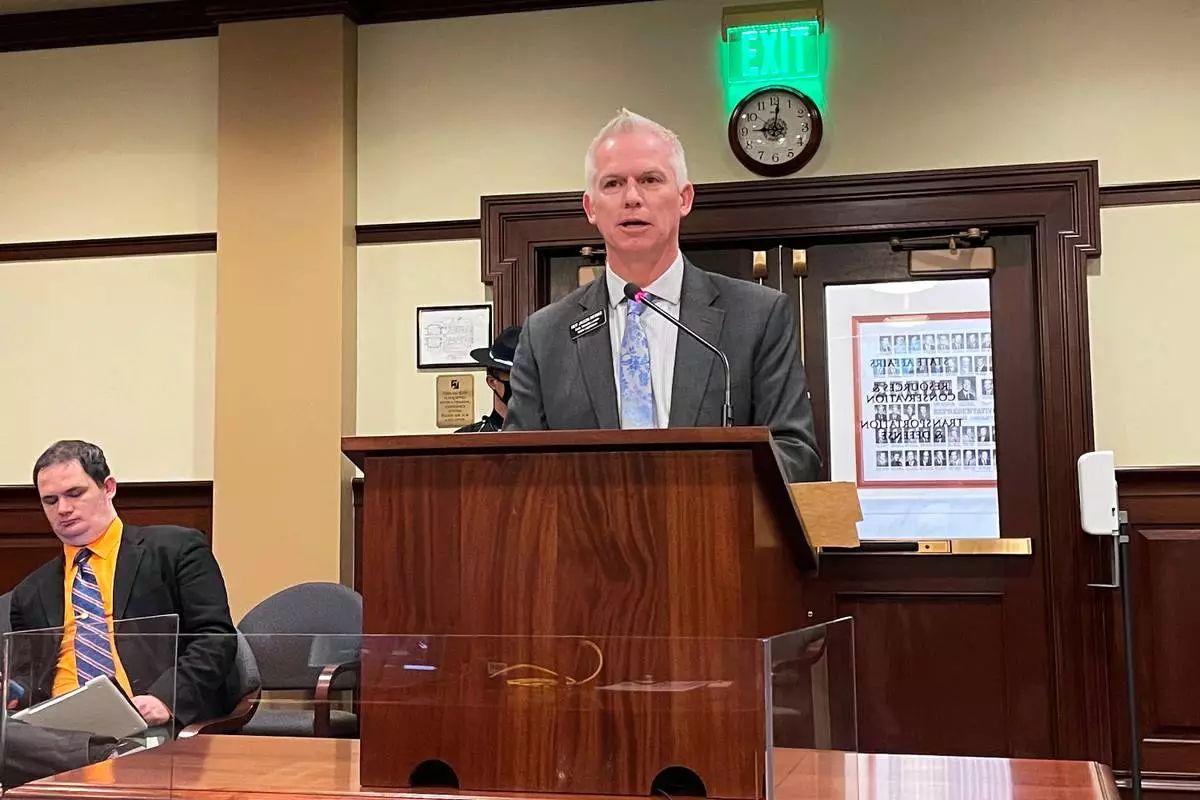
FILE - Idaho state Rep. Jason Monks, R-Meridian, testifies before the House State Affairs Committee at the state Capitol in Boise, Idaho, on Jan. 20, 2021. (AP Photo/Keith Ridler, File)
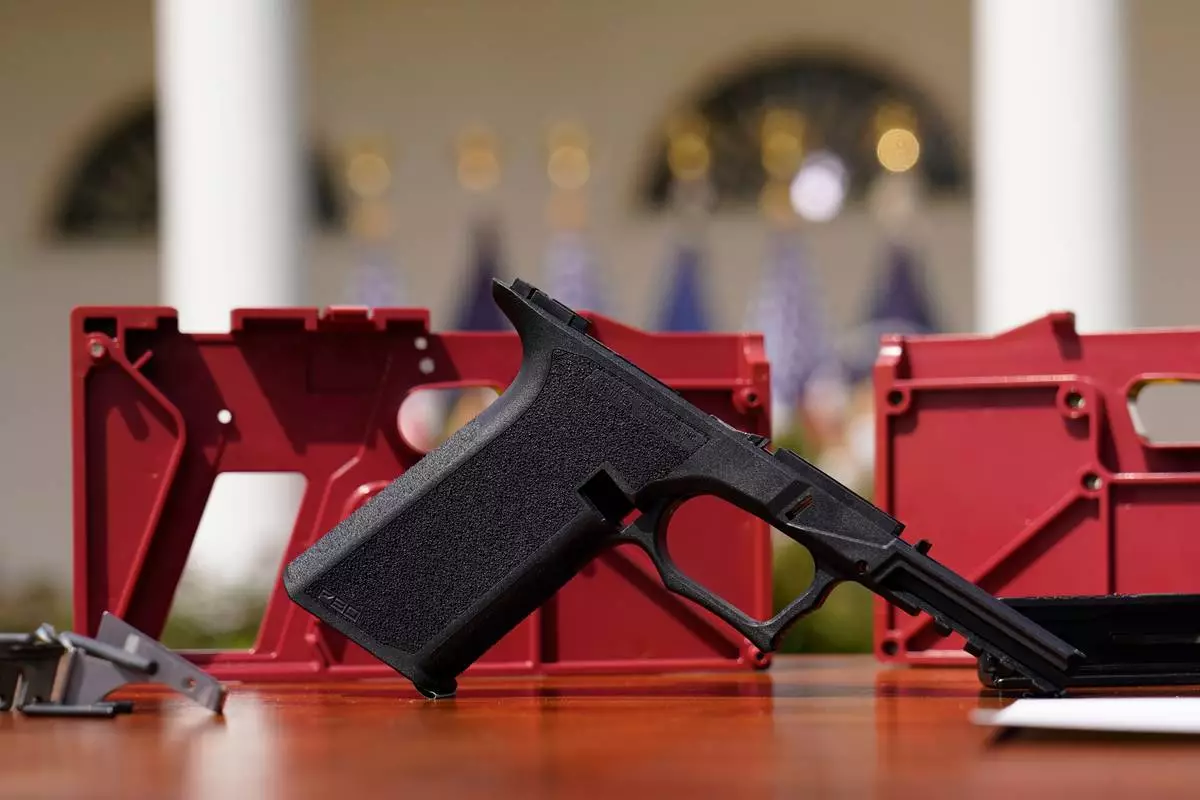
FILE - A 9mm "ghost gun" pistol build kit with a commercial slide and barrel with a polymer frame is displayed in the Rose Garden of the White House, April 11, 2022, in Washington. (AP Photo/Carolyn Kaster, File)
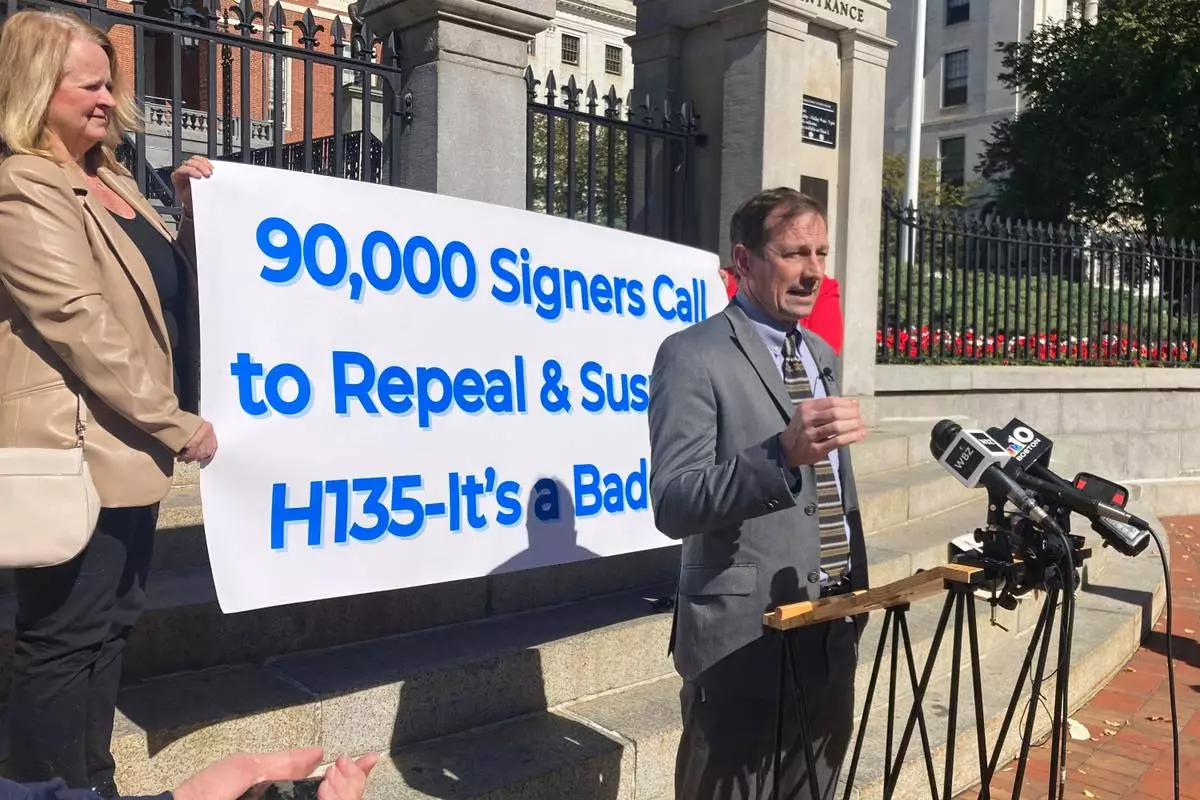
FILE - Toby Leary, a gun shop owner and Second Amendment advocate, announces that firearms activists have collected enough signatures to place a question on the Massachusetts 2026 ballot that would repeal the state's new sweeping gun law, Oct. 8, 2024, outside the Massachusetts Statehouse in Boston. (AP Photo/Steve LeBlanc, File)
CARACAS, Venezuela (AP) — Opposition leader and Nobel laureate María Corina Machado reappeared in Venezuela Sunday for the first time since December, returning from exile at a time when doubts about the country's democratic future — and the role of the U.S. — are growing.
It was her first appearance since the U.S. military deposed the country’s then-President Nicolás Maduro in January, replacing him with an interim president who has exceeded the time she was authorized to serve, with no election scheduled.
Machado announced her arrival on social media, writing, “I am here. With you.”
Another leading figure in the Venezuelan opposition, Edmundo González, wrote on X that he would be at her side “very soon.”
“Today is a very important day for Venezuelans," he wrote. "Our sovereign voice returns with her to lead and guide this process!”
On Sunday afternoon, Machado strode into a church in the state of Lara, west of Caracas, shocking dozens who began to applaud as they shook her hand and hugged her, with cellphones aloft to record her return.
“María! María!” one person cried, as another shouted, “Welcome to Venezuela!”
One woman wiped away tears and called it “a miracle” while another woman’s hands flew to her face as she saw Machado enter the church.
“Long live freedom, damn it!” a man yelled.
Machado then headed to Caracas with stops along the way as thousands of people joined the caravan or awaited it.
“The future of my children is in your hands. Please!” said a man who teared up as he ran alongside her car.
Asked by reporters Sunday about Machado’s return to Venezuela, U.S. President Donald Trump said, “I don’t know anything about it, but I think she’s a very nice woman. She gave me her Nobel Prize. So how can I say anything else? And I hope she’s safe. She’s a very nice woman. But we’re doing really well in Venezuela.”
U.S. Secretary of State Marco Rubio wrote on X Sunday that the conditions allowing for Machado’s safe return “is the direct result of the U.S. supported reconciliation talks."
“The United States expects the freedoms of all sectors of Venezuelan politics to continue to be respected. Likewise, we expect all political actors to support these talks which represent the best chance Venezuela has had in thirty years to peacefully achieve not just a free and fair election but an enduring democracy,” he wrote.
Rubio has argued that before holding new elections, Venezuela must stabilize its economy and rebuild its institutions, including its courts and electoral council.
Brian Fonseca, a Venezuela expert and professor at Florida International University, said he thought her arrival was politically motivated when he first heard the news.
“But at the same time, it’s very symbolic,” he said. “Until there’s institutional change, or institutional space for the democratic opposition, this is a symbolic gesture.”
Fonseca said Machado’s arrival could complicate Washington’s strategy and might be a sign of talks about elections in Venezuela.
He said it remains to be seen how much latitude Machado is given and what steps she’ll take, adding that it could have consequences for the U.S. midterms.
Since Maduro’s ouster, Venezuela has been run by acting President Delcy Rodríguez, a longtime Maduro ally who received the Trump administration’s blessing to succeed him.
Rodríguez was initially supposed to serve only 90 days as acting president, but has remained in office and has made no move to call an election.
Machado was briefly detained in January 2025, following a protest against Maduro’s planned swearing-in ceremony, and went into hiding in Venezuela for 11 months. After making a clandestine escape from the country, she reappeared that December in Norway, where she was awarded the Nobel Peace Prize for her peaceful challenge to Maduro’s authoritarian government.
Machado and her allies have been demanding a date for a presidential election in Venezuela, but U.S. officials have emphasized economic stabilization first.
In October 2023, Machado won an opposition primary and intended to challenge Maduro in the 2024 presidential election, but the government barred her from running for office.
González took her place on the ballot, and ample credible evidence showed that he defeated Maduro by more than a 2-to-1 margin. But the National Electoral Council, which is stacked with ruling-party loyalists, declared Maduro the winner.
The lead-up and aftermath of the election were marked by widespread government repression, including forced disappearances, torture and other human rights violations. More than 2,000 people, including poll workers, were detained in the days after the vote.
In January, the U.S. military captured Maduro in Caracas and whisked him to New York to face drug-related charges, which he has denied. Many Venezuelans were stunned by the Trump administration’s decision to work with Rodríguez, instead of Machado, to try to revitalize the crisis-racked country.
Machado had repeatedly vowed to return to Venezuela and, according to her party, she made seven unsuccessful attempts.
One of the efforts would have seen her take a charter boat, but the operator canceled the trip, alleging the vessel was unfit for navigation. In another attempt, her team said, Machado tried to fly to the Caribbean island of Curacao, from where she could take a speedboat to Venezuela, but her plane was denied landing permits.
Opposition activists have accused Venezuela’s government of blocking Machado’s return, a claim denied by Venezuelan authorities. Others have also questioned whether the Trump administration has also been involved in the efforts to stop her from returning.
Trump administration officials deny they are holding Machado back but have said that, on some occasions, they have advised her against returning due to safety concerns.
After Maduro was deposed, Venezuela’s highest court said Rodríguez could serve as acting president for up to 90 days — an interim appointment that could be extended by the National Assembly for an additional 90 days. But the ruling party-controlled assembly never voted to extend her term.
Machado and her allies have demanded that the Rodríguez government set a date for a presidential election. Rodríguez told the U.N. General Assembly in September that Venezuelans will determine the “right moment” for the next election.
Supporters of Machado have held demonstrations in Caracas demanding her return.
Garcia Cano reported from New York City; Coto reported from San Juan, Puerto Rico. Associated Press reporter Josh Boak in Washington, D.C. contributed to this report.
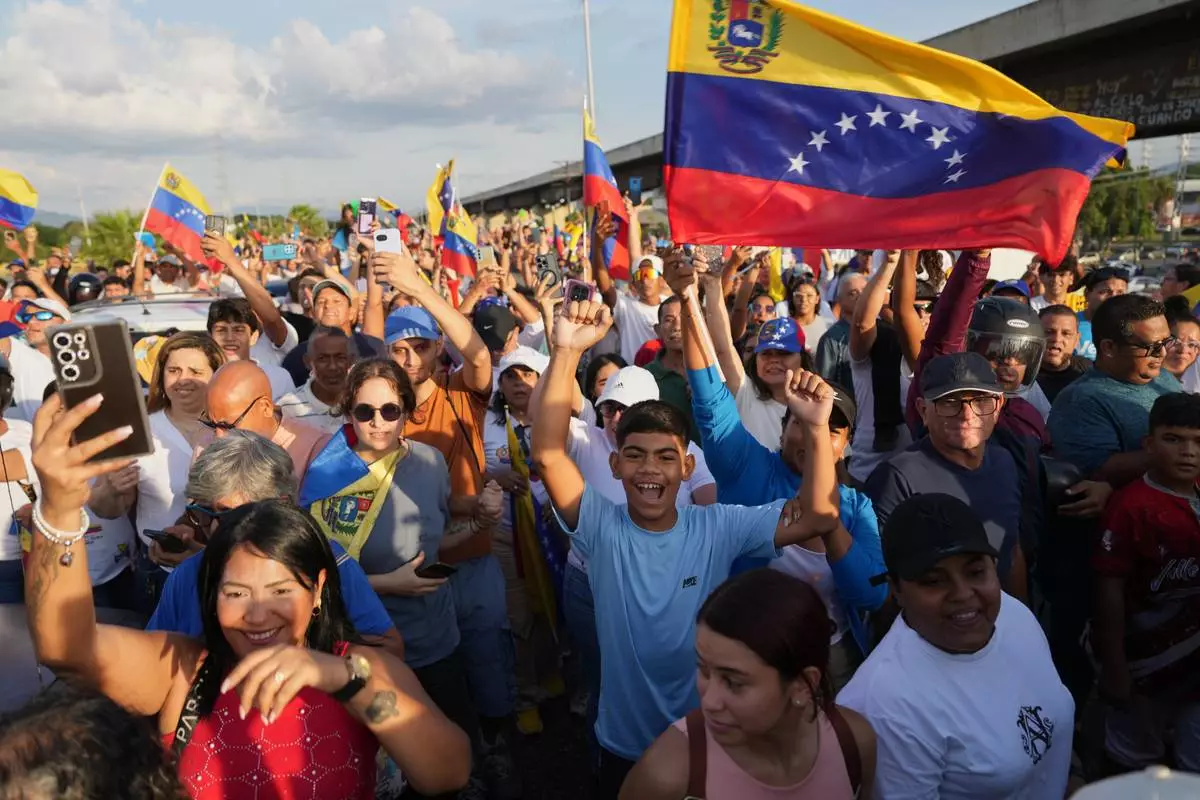
Supporters of Venezuelan opposition leader and Nobel Peace Prize laureate Maria Corina Machado rally as they await her arrival in Maracay, Venezuela, following her return to the country after months abroad, Sunday, Oct. 25, 2026. (AP Photo/Ariana Cubillos)
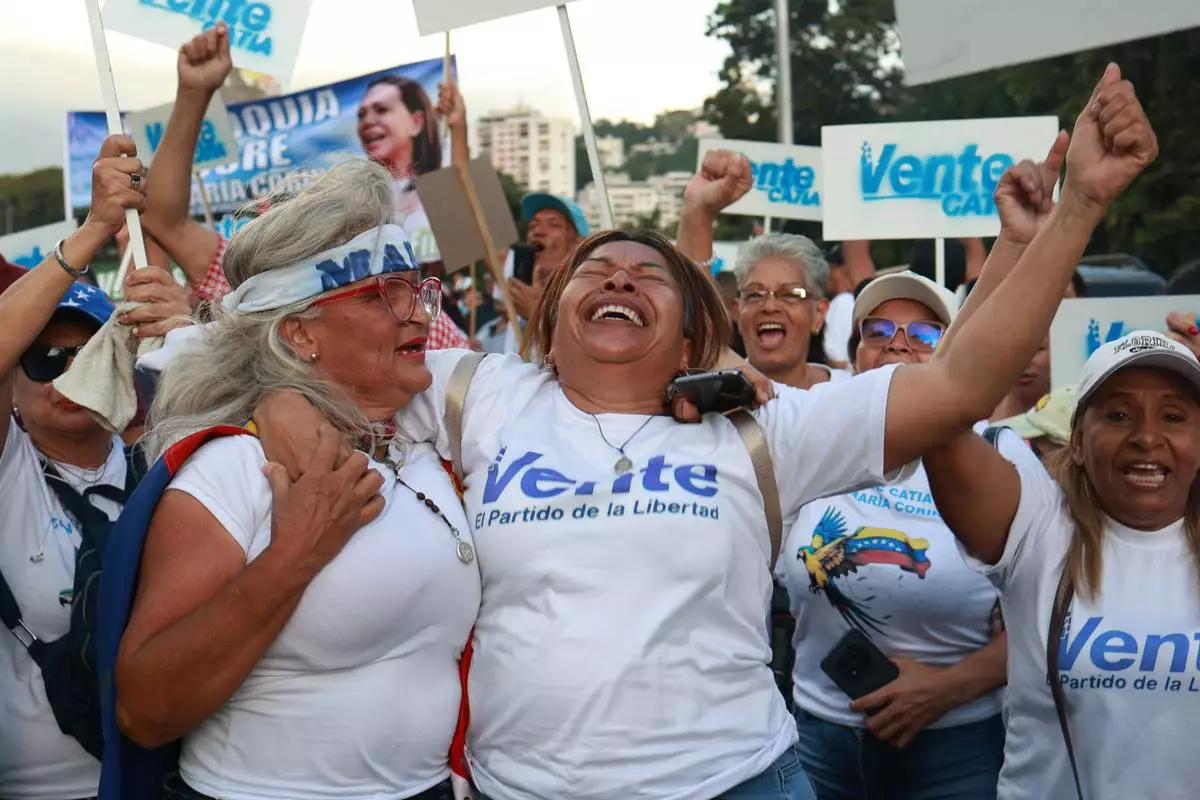
Supporters of Venezuelan opposition leader and Nobel Peace Prize laureate Maria Corina Machado celebrate her return to the country after months abroad in Caracas, Venezuela, Sunday, Oct. 25, 2026 (AP Photo/Javier Campos)
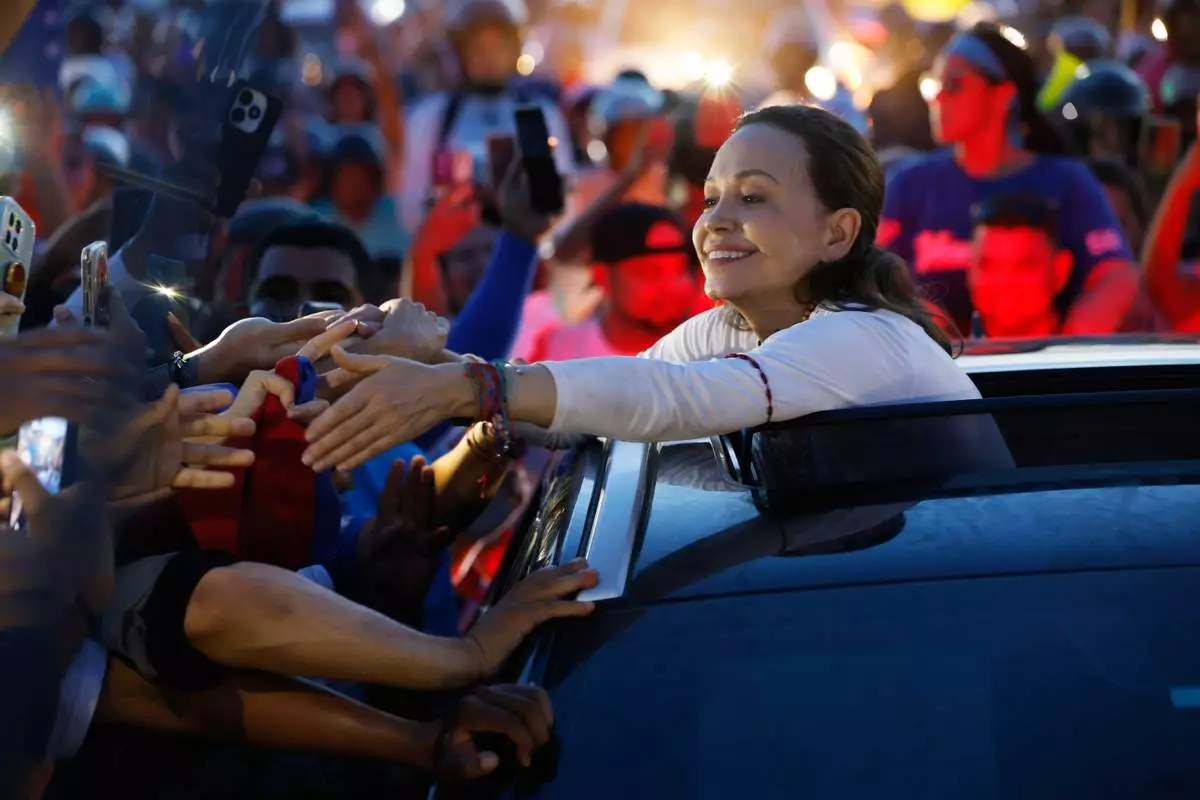
Venezuelan opposition leader and Nobel Peace Prize laureate Maria Corina Machado greets supporters in Valencia, Venezuela, following her return to the country after months abroad, Sunday, Oct. 25, 2026. (AP Photo/Pedro Mattey)
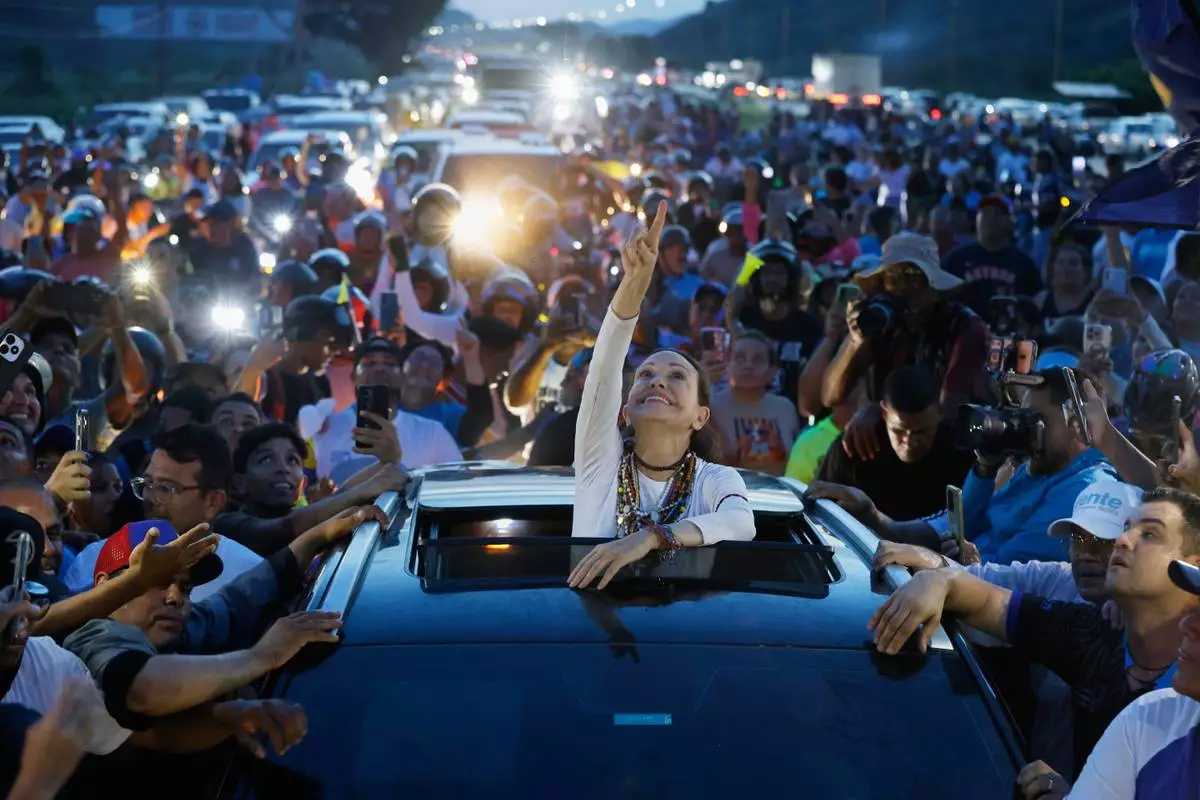
Supporters surround Venezuelan opposition leader and Nobel Peace Prize laureate Maria Corina Machado in Valencia, Venezuela, following her return to the country after months abroad, Sunday, Oct. 25, 2026. (AP Photo/Pedro Mattey)
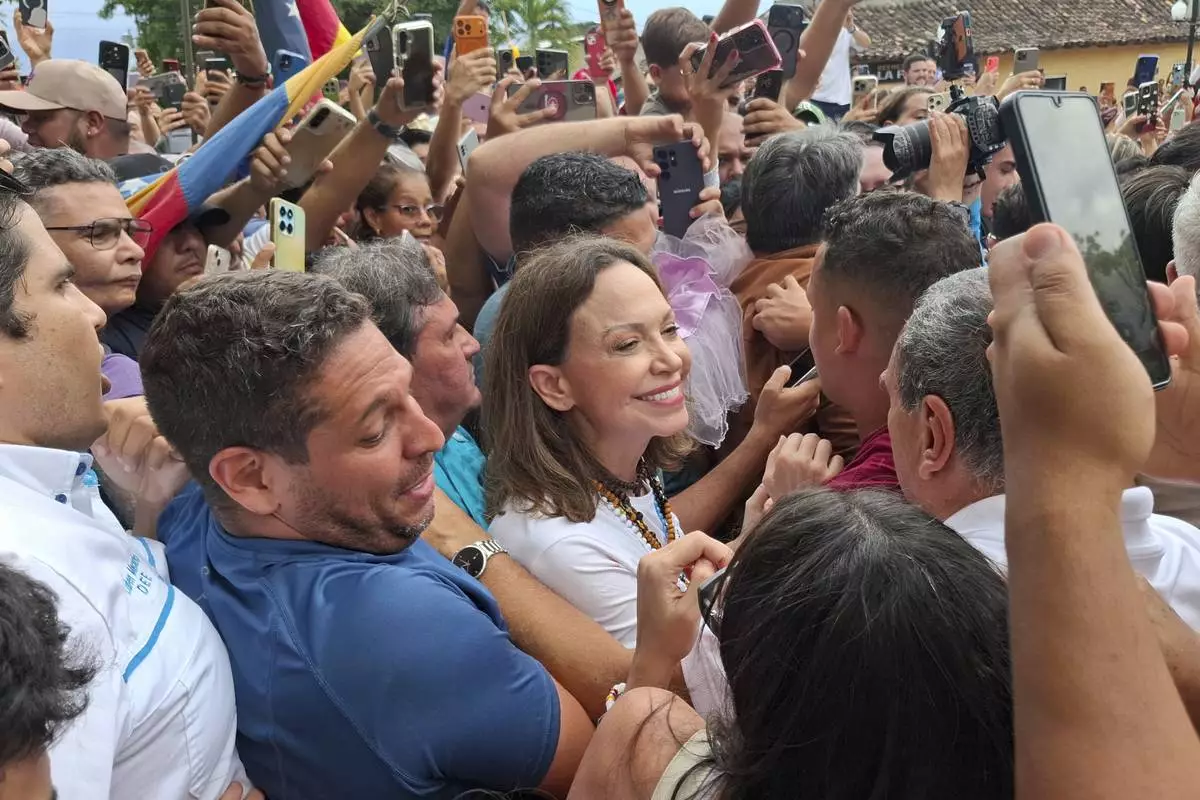
Venezuelan opposition leader Maria Corina Machado, center, greets supporters in Barquisimeto, Venezuela, Sunday, Oct. 25, 2026. (AP Photo/Jesus Hernandez)
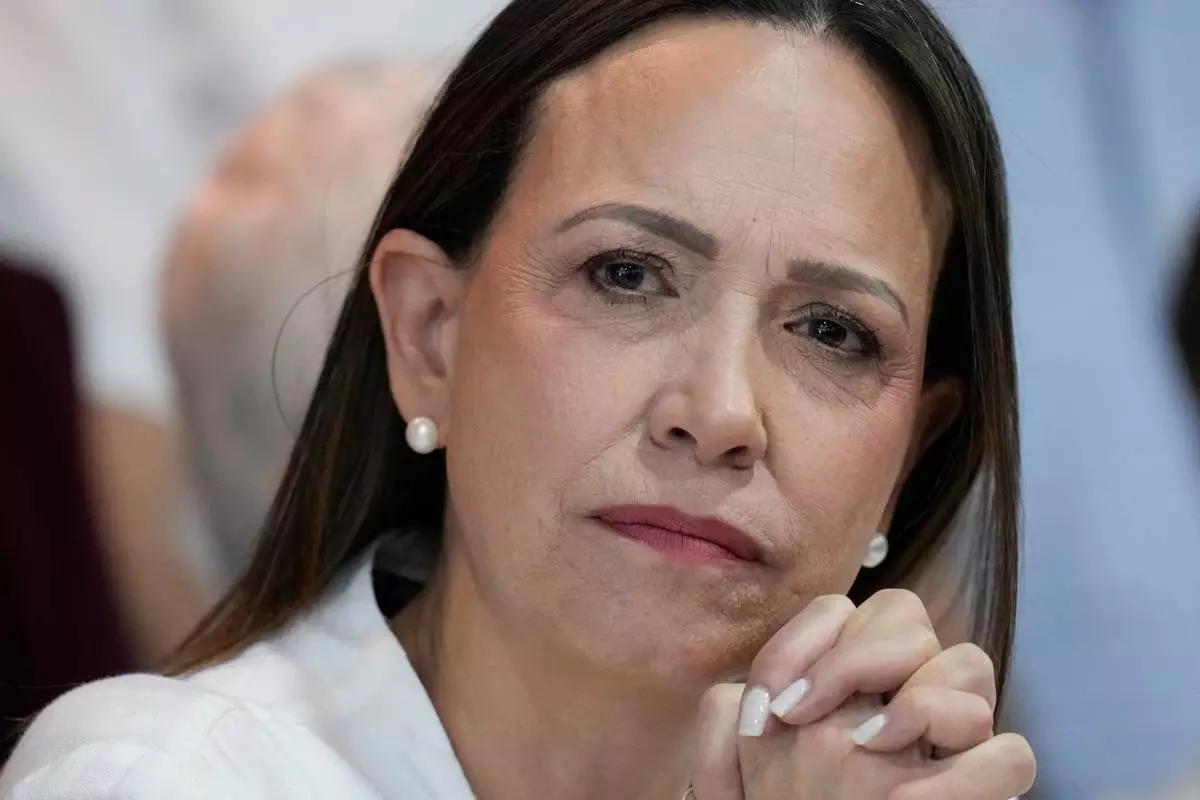
FILE - Venezuela's opposition leader Maria Corina Machado attends a press conference in Panama City, May 23, 2026. (AP Photo/Matias Delacroix, File)
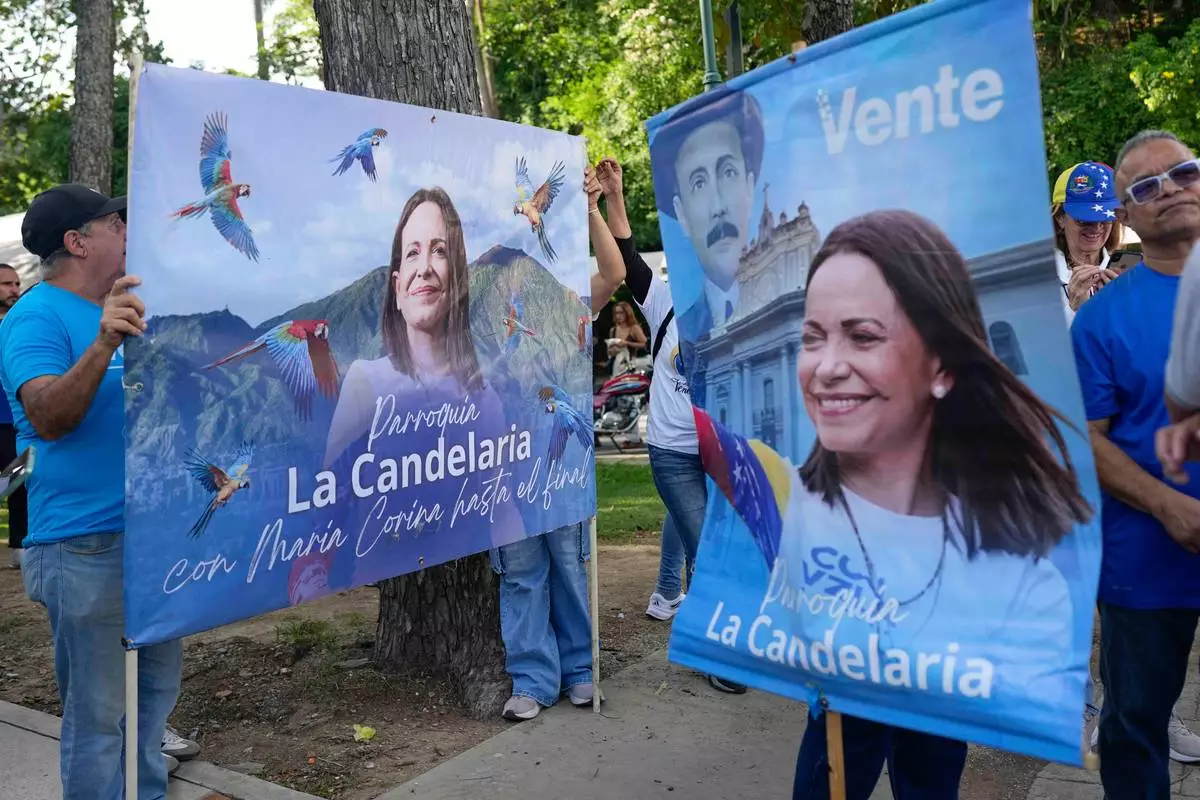
Supporters of opposition leader Maria Corina Machado gather to demand that a date be set for presidential elections in Caracas, Venezuela, Thursday, Oct. 22, 2026. (AP Photo/Ariana Cubillos)