CAIRO (AP) — Many Iranians are bracing for a return to all-out war as Israeli and U.S. leaders sharpen their threats ahead of elections in both countries in the coming days, and as Iran’s leaders remain defiant despite mounting pressure.
Israeli Prime Minister Benjamin Netanyahu, who faces a close vote Tuesday, says Iran's leadership must be eliminated. U.S. President Donald Trump vows to “finish the job” in Iran eight months after the war began, as a third aircraft carrier and thousands of troops make their way to the region. Some fear attacks just after the U.S. midterms on Nov. 3.
Click to Gallery
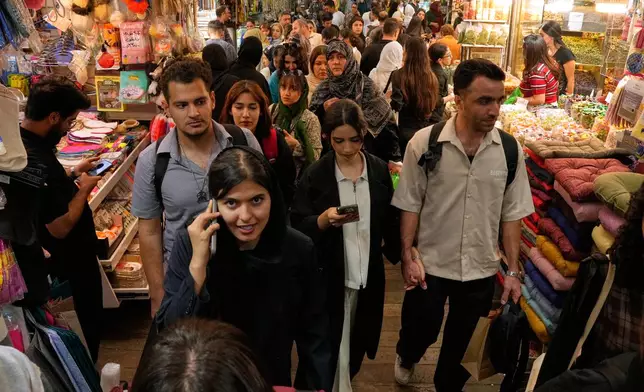
People walk at Tajrish traditional bazaar in Tehran, Iran, Thursday, Oct. 22, 2026. (AP Photo/Vahid Salemi)
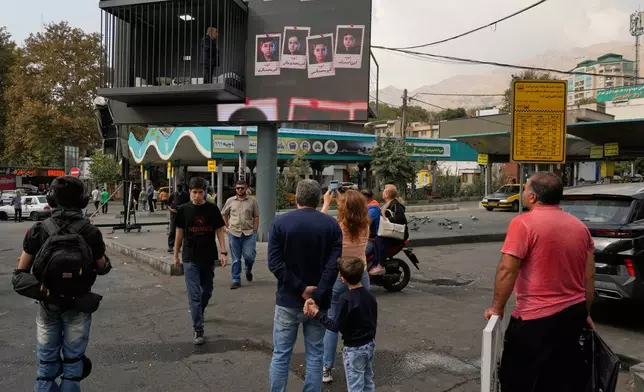
People look at a billboard installation featuring an actor portraying U.S. President Donald Trump behind bars in a mock prison cell as the screen shows portraits of some school boys who were killed after their school was hit by a strike in southern city of Minab on Feb. 28, in Tajrish Square in Tehran, Iran, Friday, Oct. 23, 2026. (AP Photo/Vahid Salemi)
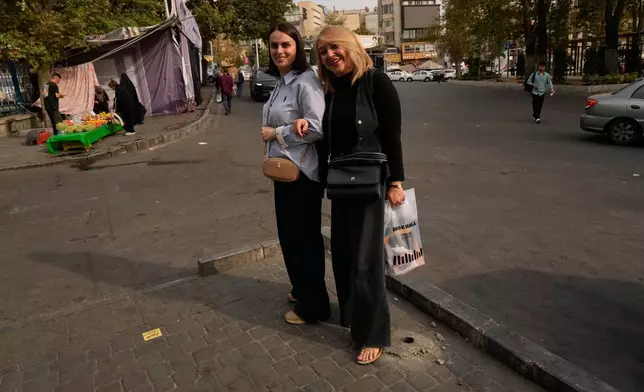
Women pose for a photo in Tajrish Square in Tehran, Iran, Thursday, Oct. 22, 2026. (AP Photo/Vahid Salemi)
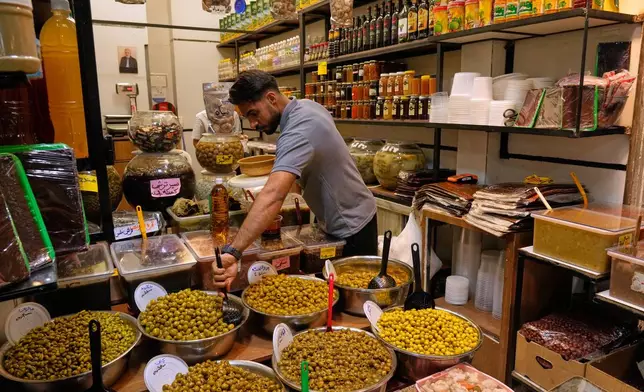
A shopkeeper arranges olives at his shop at Tajrish traditional bazaar in Tehran, Iran, Thursday, Oct. 22, 2026. (AP Photo/Vahid Salemi)
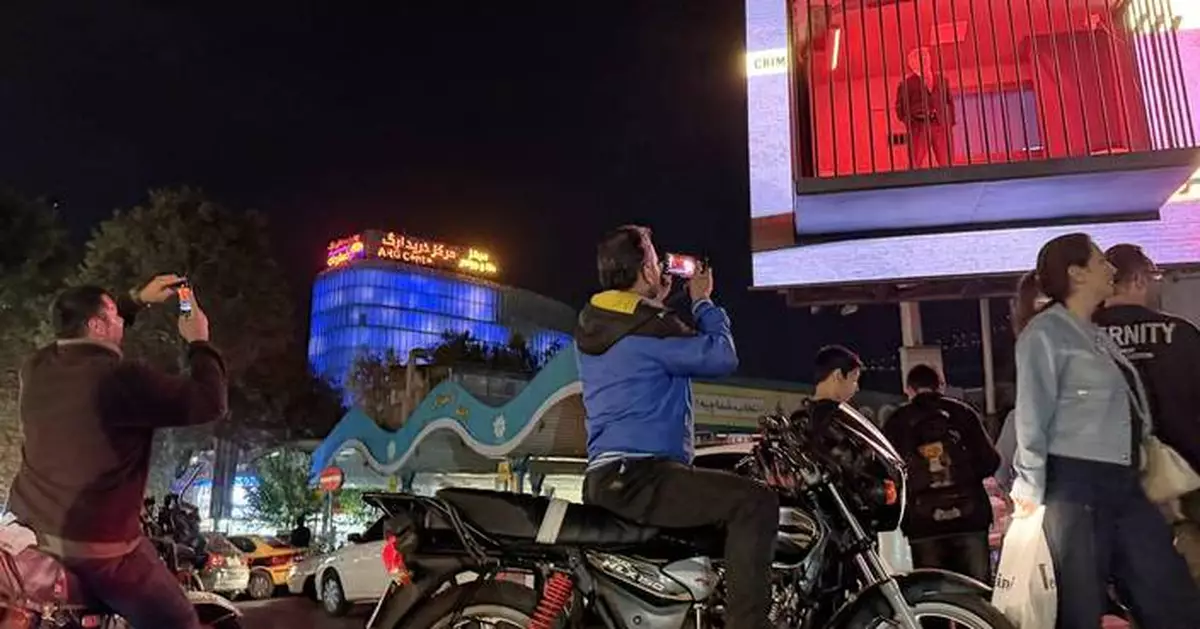
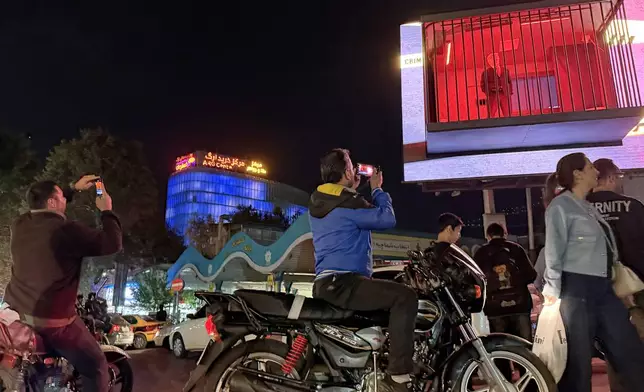
People take pictures of a billboard installation featuring an actor portraying President Donald Trump behind bars in a mock prison cell in Tajrish Square in Tehran, Wednesday, Oct. 21, 2026. (AP Photo/Vahid Salemi)
The Associated Press spoke with Tehran residents who described growing anxiety. Some were preparing to leave the capital. Iran's president has accused the U.S. of disrupting negotiations that have shown little sign of progress for months.
Fereshteh Hajipour, 35, the mother of a toddler, said she was stockpiling over-the-counter medicines and food for fear of a “possible war and bigger bombs.”
Iran's leadership believes that Trump likely will order new strikes regardless of the results in the midterm elections, and “they are planning for the scenarios so they can take remedial measures,” said a former government official and foreign policy professor at the University of Tehran, Sasan Karimi.
“They’ve accepted that he will attack us again, before or after the elections,” Karimi said.
Iran has again threatened U.S. military bases and allies in the Middle East, and has warned that it could attack new targets, including undersea data cables that snake through the Strait of Hormuz. This month has seen the highest number of reported attacks on commercial ships transiting the strait since the war’s opening weeks in March.
Meanwhile, a U.S. naval blockade of Iranian ports has restricted oil exports on which Iran's government depends, increasing the economic pain as each side tries to outlast the other. Trucks have piled up at borders as Iran's trade shifts to overland.
The blockade has caused medicine shortages in Iran, though there is no sign of shortages of food or other essential goods. Iranians have seen livelihoods and purchasing power crumble as their currency’s value has reached record lows, losing much of its value in the past year. Inflation has soared.
Iranian officials have accused the U.S. of aiming to foment unrest.
“Economic warfare is the main axis of the war against us,” Iran’s parliamentary chief and lead negotiator in past rounds of talks with the U.S., Mohammad Bagher Qalibaf, told a gathering of officials this month.
President Masoud Pezeshkian said Iran faces “a dangerous turning point” as the government seeks to manage growing economic problems and find consensus within the Islamic Republic’s fractious power structure.
Memories are fresh of the nationwide protests sparked by economic pressures that led to a deadly crackdown weeks before the war.
Even for middle-class Iranians, affording basic groceries has become difficult. Prices for staples have risen steeply since the war began. Rice is over 60% more expensive, and beef over 150%.
Mohammad Mohammadi, 36, said a trip to the supermarket can burn through half a monthly mid-range salary of 400 million rials (roughly $150).
Despite the high prices, Mohammad Abedi, 39, said the rising attacks on the Strait of Hormuz spurred him to buy extra supplies for his family, including dried dates, cooking oil and rice.
“I’m worried that the situation could get worse,” he said.
Political moderates are calling for a deal with the U.S. to salvage the economy.
“With the increase in the exchange rate, the conditions for governing the country have become difficult for the executive branch,” warned politician Mohsen Hashemi Rafsanjani in an editorial this month in the reformist daily Saazandegi.
But economic pressure won’t change Iran’s negotiating positions, said Karimi, the former official who served under Pezeshkian. “This is a tested thing. No economic pressure will convince people here to make a deal.”
Karimi added: “Tehran is calculating based on resistance, because they are convinced that will change the calculations of the other side.”
There has been little said publicly about negotiations via mediators after Trump rejected an Iranian proposal last month to end the war and fully open the Strait of Hormuz within a week if Washington met certain conditions like lifting the blockade.
Tehran is dotted with bombed-out buildings from U.S. and Israeli strikes during the height of the war in March and April. Thousands of homes were damaged or destroyed.
Hashem Vajdani, 45, a gym trainer, said he plans to leave the city as anxiety grows.
“I have already packed my belongings to go to a safer town in the north of the country,” he said. “Today I bought more canned food, crackers and extra blankets.”
There are concerns that new fighting could bring a higher toll for Iranian civilians. Thousands have been killed in the war. Trump has repeated threats to take out power plants and other infrastructure.
Anger at the U.S. president has found expression in a billboard set up days ago at a major Tehran square. Passersby have gawked at a Trump impersonator languishing behind bars as footage airing behind him shows a deadly strike on a wedding party in southern Iran that was blamed on the U.S.
Staring up at the cage, Farzaneh Arabzadeh, 30, said she hoped the scene would happen in reality. Trump said he launched the war to help Iranians, she said, but he “put our people in a worse situation.”
The elections in Israel and the U.S. are expected to reflect voters' anger over the war and other issues. Trump’s political support could be weakened, while Netanyahu is in a tight race at a time of anger over Hamas' Oct. 7, 2023, attack, and a series of inconclusive wars in Gaza, Lebanon and Iran.
Israel's elections are especially important, Tehran-based analyst Rahman Ghahremanpour said. If Netanyahu stays, there is a higher chance of all-out war resuming because of his willingness to take major risks, he added.
Tehran residents said neither election is likely to improve relations.
“It makes no difference. Their hostility toward us remains unchanged,” said Rasool Ghanbari, 50.
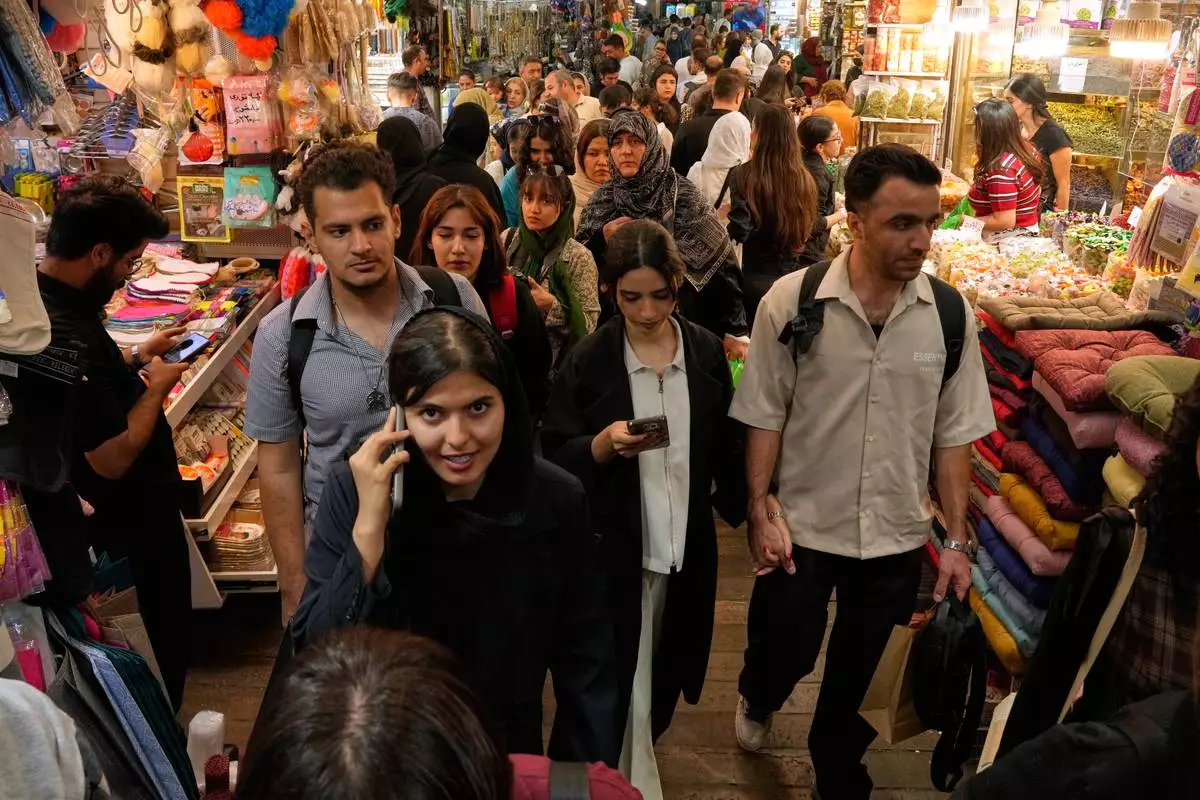
People walk at Tajrish traditional bazaar in Tehran, Iran, Thursday, Oct. 22, 2026. (AP Photo/Vahid Salemi)
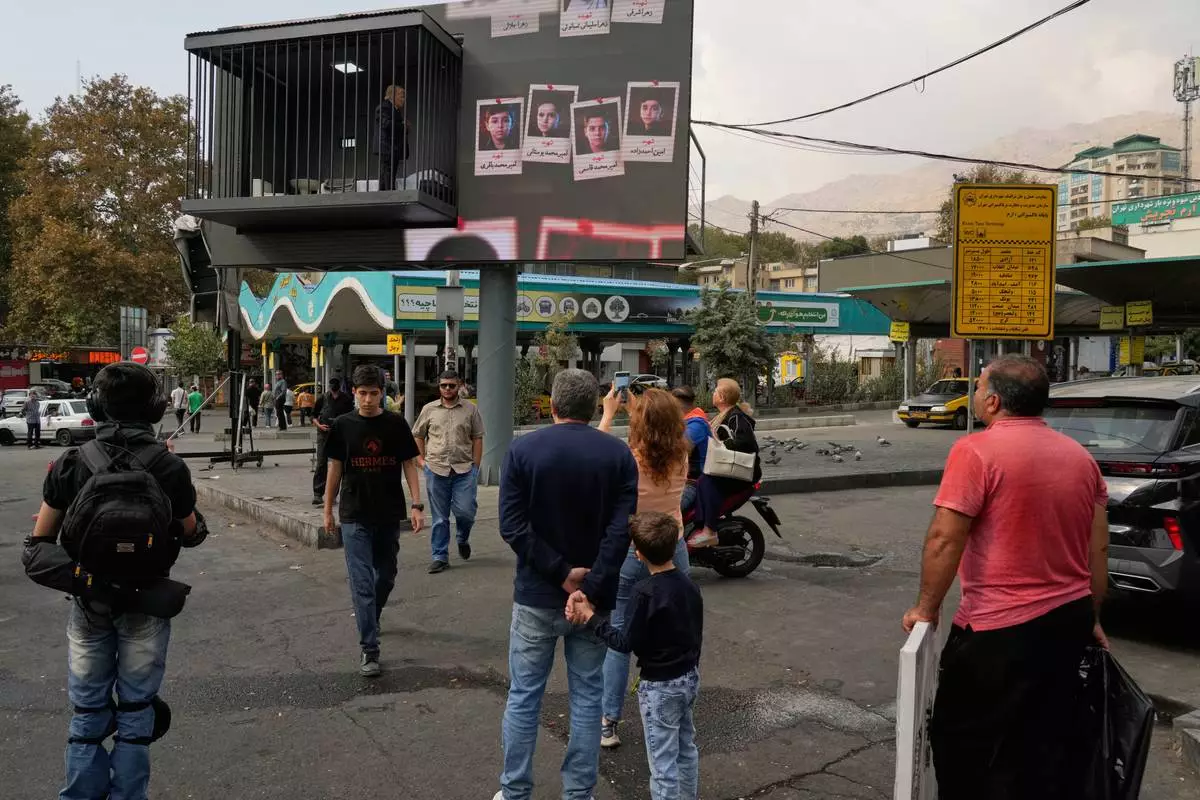
People look at a billboard installation featuring an actor portraying U.S. President Donald Trump behind bars in a mock prison cell as the screen shows portraits of some school boys who were killed after their school was hit by a strike in southern city of Minab on Feb. 28, in Tajrish Square in Tehran, Iran, Friday, Oct. 23, 2026. (AP Photo/Vahid Salemi)
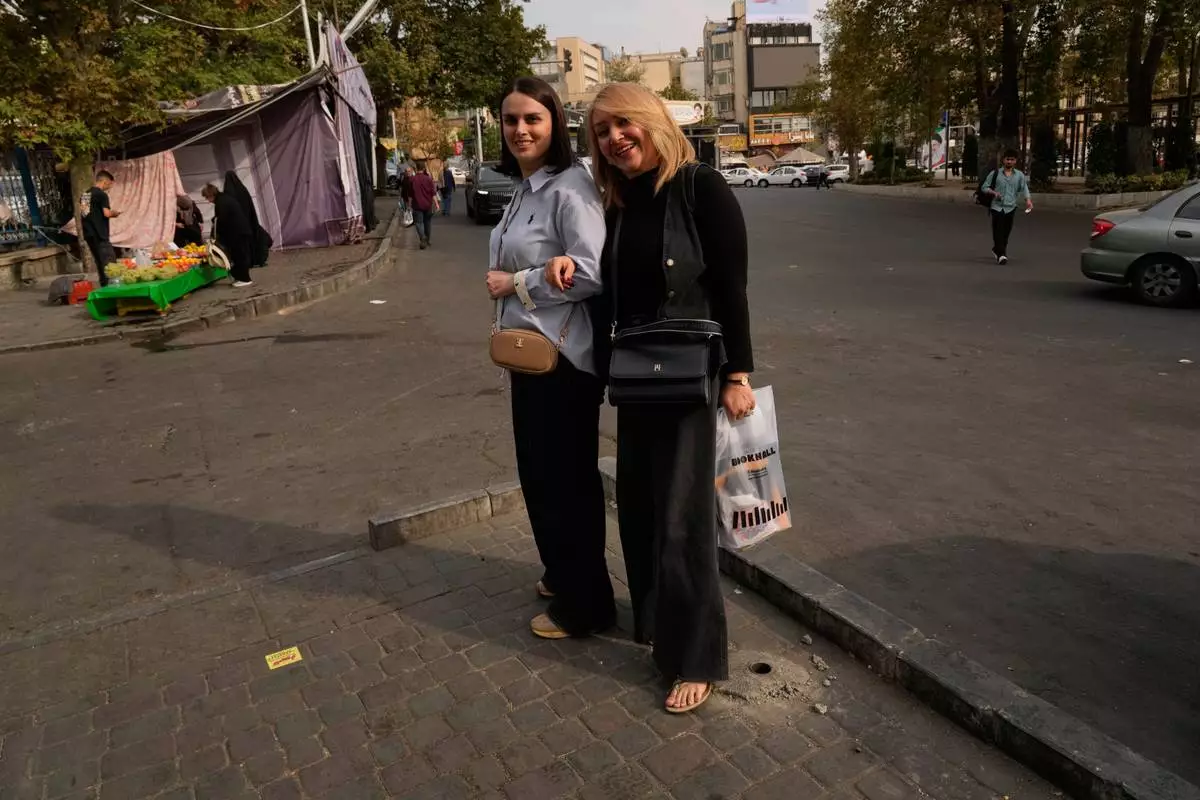
Women pose for a photo in Tajrish Square in Tehran, Iran, Thursday, Oct. 22, 2026. (AP Photo/Vahid Salemi)
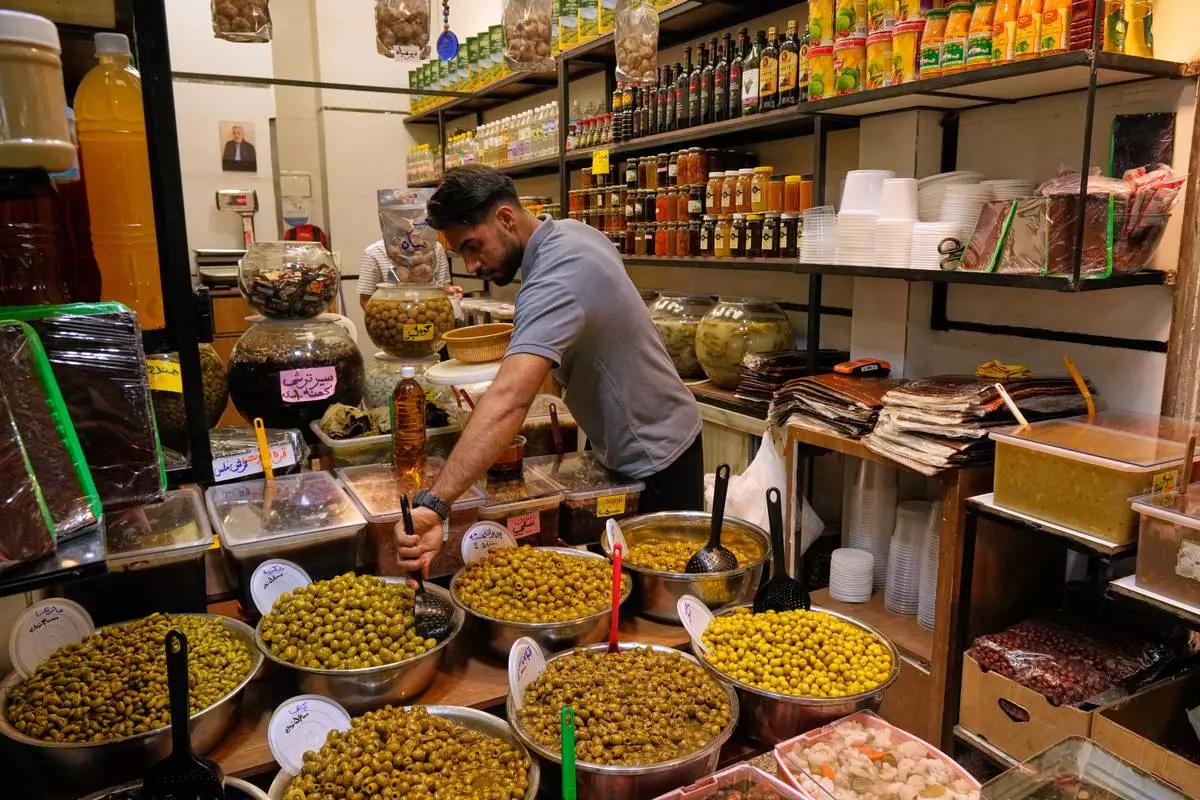
A shopkeeper arranges olives at his shop at Tajrish traditional bazaar in Tehran, Iran, Thursday, Oct. 22, 2026. (AP Photo/Vahid Salemi)
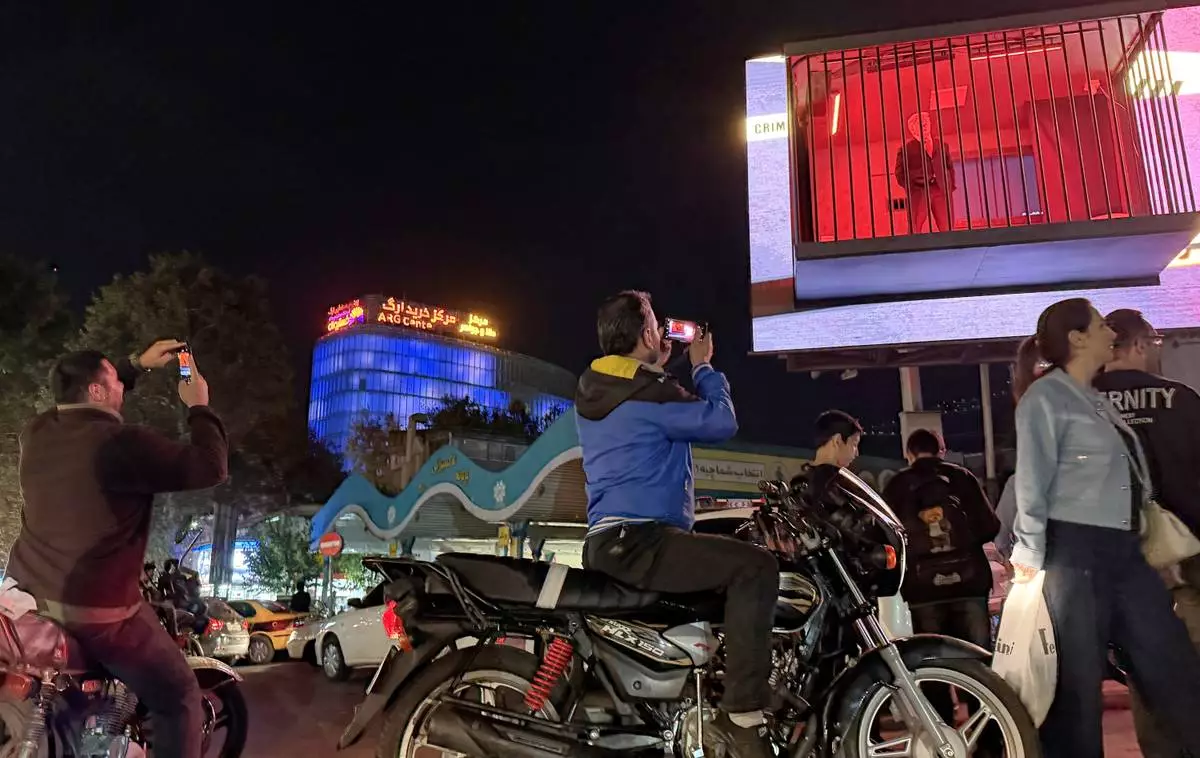
People take pictures of a billboard installation featuring an actor portraying President Donald Trump behind bars in a mock prison cell in Tajrish Square in Tehran, Wednesday, Oct. 21, 2026. (AP Photo/Vahid Salemi)
Brazilians are voting Sunday in a presidential runoff that pits leftist incumbent Luiz Inácio Lula da Silva against Sen. Flávio Bolsonaro, a far-right ally of U.S. President Donald Trump.
Bolsonaro, the son of imprisoned former President Jair Bolsonaro, bested Lula by more than 2.2 million votes in the first round of the election earlier this month. More than 33 million of the nearly 160 million registered voters did not turn out.
The difference between the two candidates is stark. Bolsonaro and Lula have opposing ideological views on issues ranging from U.S.-Brazil relations and climate change to social welfare. A win for Bolsonaro would signify a pivot to the right by Latin America’s most populous country and its largest economy in a year when Trump allies have notched victories in Chile, Peru and Colombia.
Here's the latest:
Young and old trickled in and out of a Catholic church in Rio de Janeiro’s famed Copacabana neighborhood, where army trucks dotted the beachfront. Some people wore stickers displaying the number 13, corresponding to the digits Lula voters punch into the electronic voting machines, while others the number 22, representing Flávio Bolsonaro at the polls.
Religion became a central theme in the lead-up to the election, after a comment about Jesus by Bolsonaro went viral and triggered fears among many Catholics that he might intend to remove Our Lady of Aparecida as Brazil’s patron saint.
Maria Helena Vilanova, a 76-year-old Bolsonaro voter, said her candidate of choice would never do such a thing. She accused Lula of “giving crumbs” to the poor and said that his famed Bolsa Familia welfare program discourages people from seeking work.
“I shouldn’t have to put up with beggars asking me for money,” she said. “Brazil isn’t growing enough as a country because we’re exploited.”
Jorge Lemos, 72, said he was on his way to vote for Lula. He recalled the quotas introduced during the incumbent’s first two terms, from 2003 to 2010, which enabled his children to study and become a doctor and a dentist.
“I feel like I could never repay the debt I owe Lula,” Lemos, who is originally from Belem in the Amazon region, said. “I went into the church to ask Our Lady of Aparecida to give us strength so that the Brazilian people vote for Lula.”
Brazil was sharply divided across its five main regions in the first round of the presidential election.
Flávio Bolsonaro won in three of the country’s five regions, but Luiz Inácio Lula da Silva took the second most populous by wide margins. Bolsonaro won in the populous and rich Southeast, where Sao Paulo, Rio de Janeiro and Minas Gerais states lie. They will be the key battlegrounds in Sunday's runoff.
Bolsonaro, 45, carried the agribusiness hub of the country’s Center-West and easily won in the South, which borders Uruguay and Argentina. Lula erased much of Bolsonaro’s gains by winning in the Northeast and also triumphed in the North, the region that includes the Amazon rainforest.
Luzia da Souza, who runs a bar in a middle-class neighborhood of Rio de Janeiro, is a longtime supporter of incumbent Lula and identified herself as "a Black woman from the periphery.”
“Black people’s lives greatly improved during Lula’s terms,” she said, and blamed Congress — which is largely right-wing — for the slow pace of reform.
“A president doesn’t govern on his own,” da Souza said. “But Lula is a man of the people and he knows what it’s like to be poor. I find it impossible not to vote for him.”
Anderson Falcão, a 43-year-old journalist in Brasilia who sported a red shirt in support of Lula, said he worried about Bolsonaro’s long-term political vision, which he called “exclusionary.”
“It’s a project that harms the less fortunate, harms the worker, women, the forest, the Amazon,” he said.
Brazil’s left was caught off guard when Flávio Bolsonaro bested incumbent Luiz Inácio Lula da Silva by over 2 million votes in Brazil’s first-round election.
Since then, it has made a clear bet on an unprecedented wave of digital activism and street protests to support Lula. The shift signals a turning point for the left, which has historically struggled to counter the far-right’s dominant online presence and savvy digital strategy.
Between the campaign’s launch on Aug. 16 and up to the first round, Lula and Bolsonaro had more or less the same number of interactions, according to data analytics company Bites. But since the beginning of the second round, the incumbent’s profiles received around 111 million interactions against Bolsonaro’s 31 million, it said.
After the first-round results confirmed a runoff between Flávio Bolsonaro and Luiz Inácio Lula da Silva, eliminated candidates started trying to influence the final vote.
Third-place finisher Augusto Cury, a writer who describes himself as a moderate and garnered 3.4 million votes, endorsed Bolsonaro to align anti-establishment voters. Conservative former governors Ronaldo Caiado and Romeu Zema, who combined received almost 3 million votes, also endorsed Flávio Bolsonaro. Renan Santos, who drew 2.4 million votes on a reject-all-other-candidates platform, has endorsed neither Lula nor Bolsonaro.
Lula voted in the city of Sao Bernardo do Campo, where he began his political career as a union leader in the 1960s.
“I am thankful to the Brazilian people. What people did to me in recent days is something I cannot repay,” he said before casting his vote and holding Brazil’s flag in front of the cameras.
He said he was still emotional about Saturday’s demonstration of support from voters in São Paulo. “I don’t think Paulista Avenue had so many people in any political event.”
“It is a lot of generosity, a lot of care, a lot of love. I will be forever grateful,” Lula said.
First lady Rosângela da Silva, Vice President Geraldo Alckmin and other allies accompanied Lula to the polling station.
Voting is mandatory for literate Brazilians aged 18 to 70. But that has never been a real consideration for nonvoters, who must either submit a formal justification online or at a polling station, or pay a small fine of less than $1.
More than 33 million people did not vote in the first round of the elections on Oct. 4. Some of those were hospitalized, living overseas or working outside their voting areas. And others just chose not to.
Unexcused absences in three consecutive elections freeze tax IDs, block nonvoters from applying to state jobs, hinders loans from state banks, and delays the issuance of passports. For those who don’t want to choose a candidate even when they show up, they can cast blank or null votes.
Fabianne Borges Santoro, a 45-year-old physiotherapist who lives in the neighborhood where Bolsonaro voted, said she voted for change.
“The Workers’ Party has been in power for a long time and the voice of the people is saying that we need change to see improvements in security and the cost of living,” she said, wearing a top featuring Brazil’s national colors, yellow and green. “Things are really expensive and taxes are too high.”
Santoro said she once voted for Lula’s party but now associates it with corruption, particularly after the so-called Operation Car Wash that started in 2014, when the Workers’ Party was in power and entangled dozens of politicians.
Roulen Azeredo, a 76-year-old army reservist, said he had always voted right. He also echoed the desire for a shift in the country’s direction.
“The current government did nothing,” said Azeredo, who hopes Jair Bolsonaro, who is currently serving a 27-year sentence for attempting a coup, will be freed if the former president’s eldest son wins. “His imprisonment is a disgrace.”
Sunday’s runoff is a battle of politics as much as personalities. Brazil’s next president — Lula or Bolsonaro, a Trump ally — will determine whether U.S. influence further expands in Latin America, where Trump-allied candidates have won elections in countries that include Colombia, Argentina and Peru.
Brazil is the region’s most populous country and its largest economy. A Lula win would leave Brazil and Mexico, the region’s second most populous country, with left-of-center leaders; a Bolsonaro win would likely bring Brazil closer to Washington.
Presidential candidate Flávio Bolsonaro voted at a local school in Rio de Janeiro just after 8 a.m., accompanied by his wife, Fernanda Bolsonaro. Wearing a light yellow shirt, he smiled and waved to supporters waiting to see him in the rain.
“The time of real change has arrived,” Bolsonaro told journalists. “Brazil can’t go on another four years on its current trajectory.”
As Bolsonaro voted, supporters of the opposition candidate shouted “Lula, thief, your place is in prison,” while fans of the incumbent responded with clapping and the chant “Olé olé olé ola, Lula!” The two anthems are common in demonstrations.
In Brazil, voting is fully electronic — meaning votes are counted much more quickly than in some other countries.
Polls opened at 8 a.m. and will close at 5 p.m. Brasilia time (2000 GMT) in most of the country.
On the ballot: the presidential face-off between Lula and Bolsonaro and six gubernatorial races. Votes are tallied quickly because each ballot box calculates results locally and prints a paper summary. The encrypted data is transmitted via secure networks to the nation’s top electoral court in capital Brasilia, which aggregates and publishes the counts within hours.
The system has been in place since the 1990s with few questioning its efficiency. One of its critics is former President Bolsonaro.
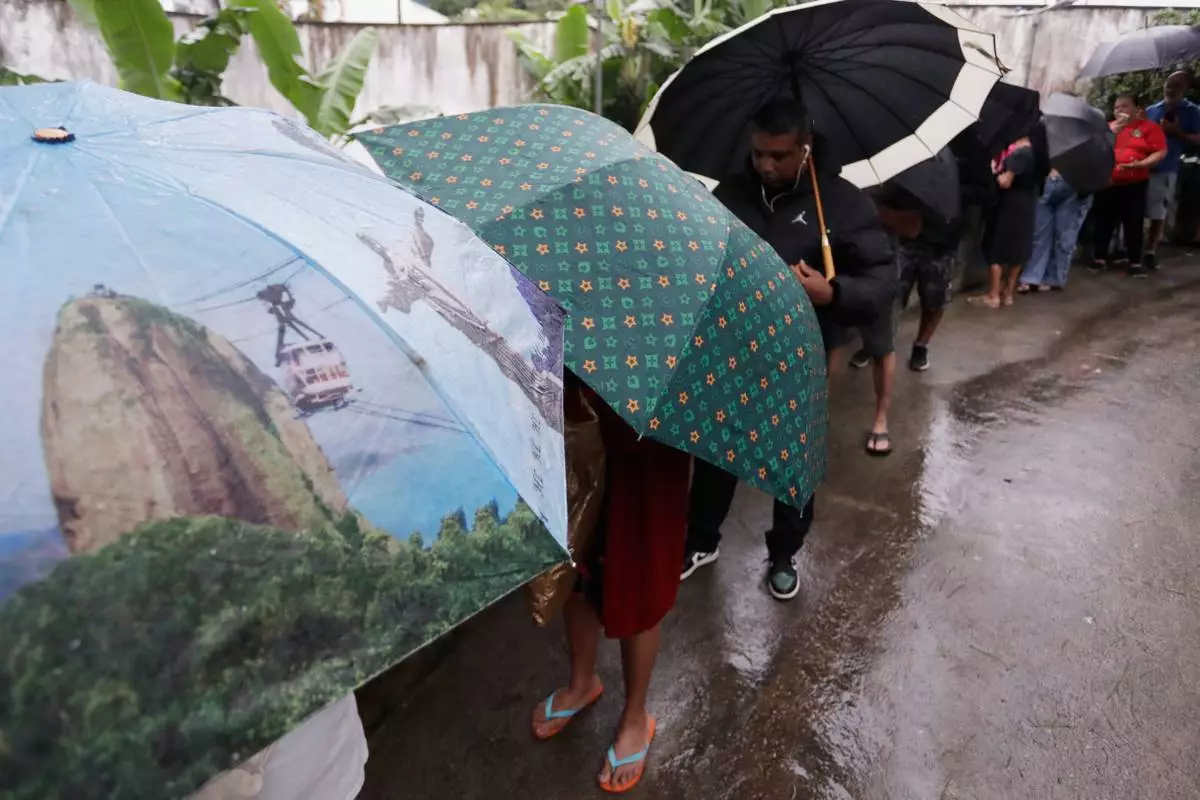
Voters line up to enter a polling station during the presidential runoff in the Rocinha favela in Rio de Janeiro, Brazil, Sunday, Oct. 25, 2026. (AP Photo/Bruna Prado)
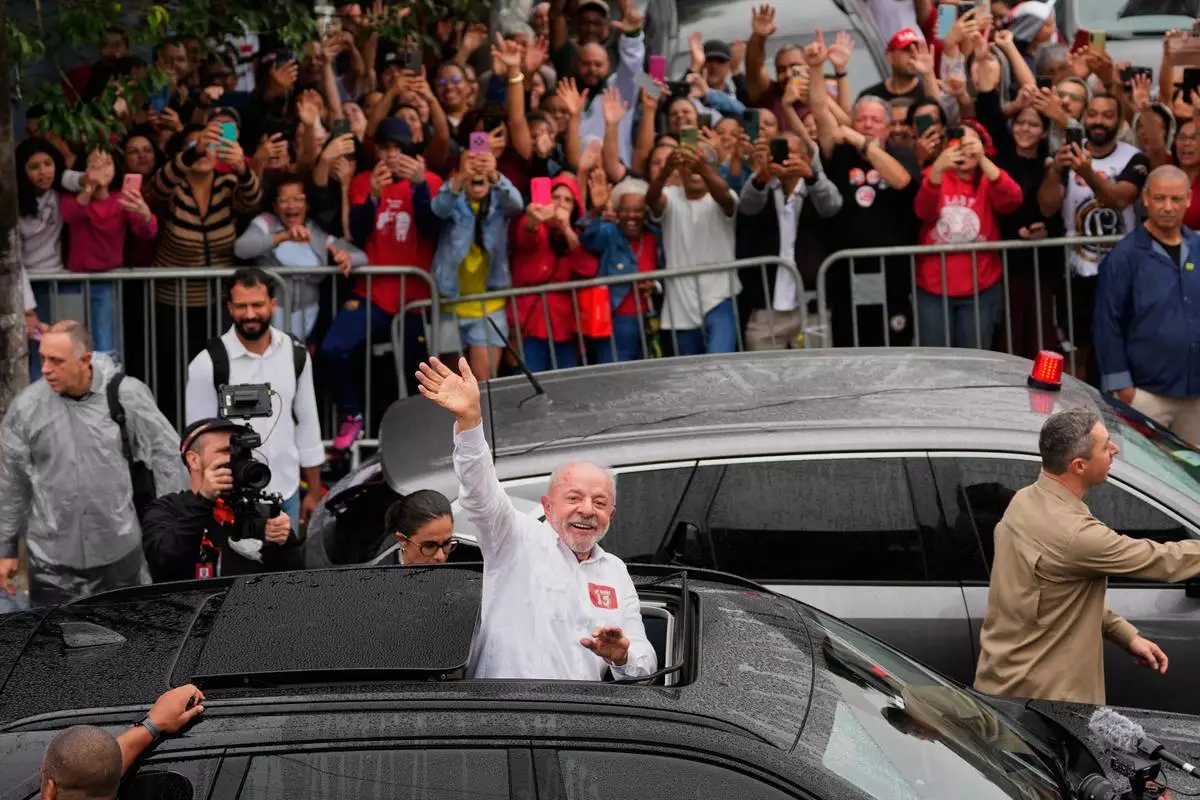
President Luiz Inacio Lula da Silva, who is seeking reelection, waves after voting in the presidential runoff in Sao Bernardo do Campo, Brazil, Sunday, Oct. 25, 2026. (AP Photo/Andre Penner)
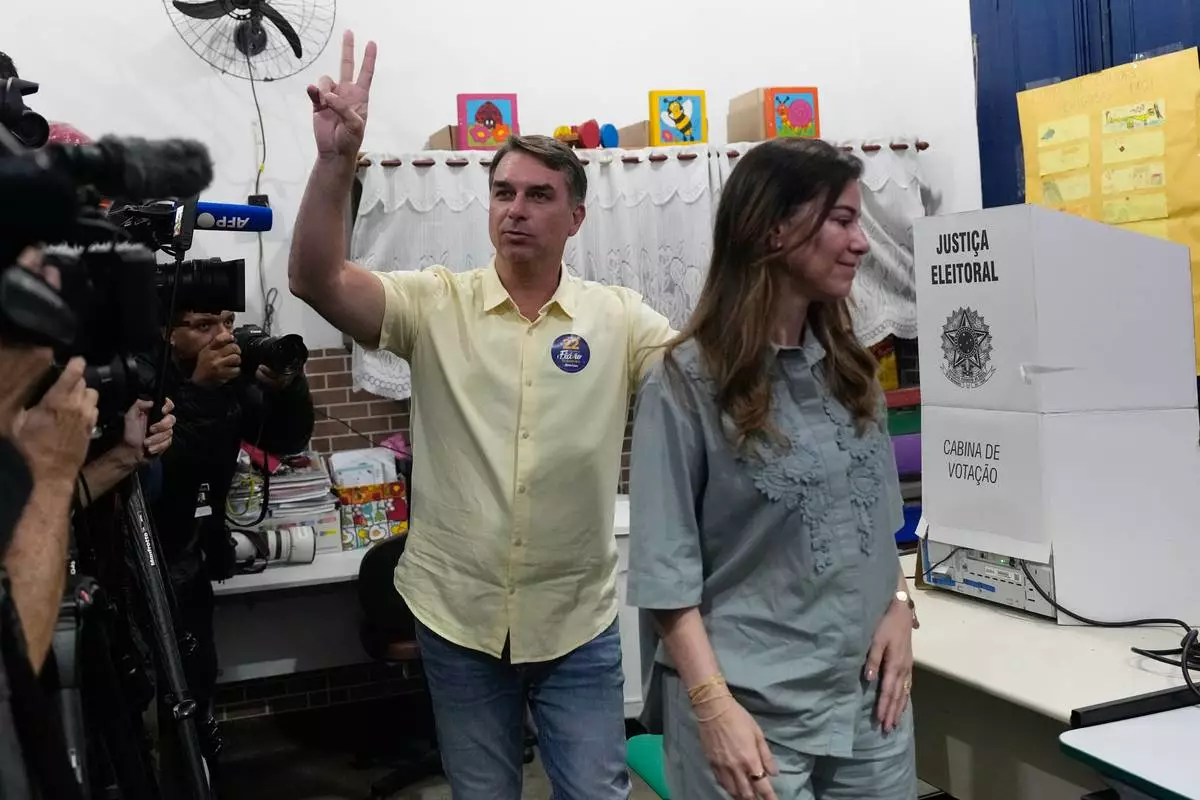
Opposition presidential candidate Sen. Flavio Bolsonaro makes the victory sign after voting in the presidential runoff in Rio de Janeiro, Sunday, Oct. 25, 2026. (AP Photo/Silvia Izquierdo)
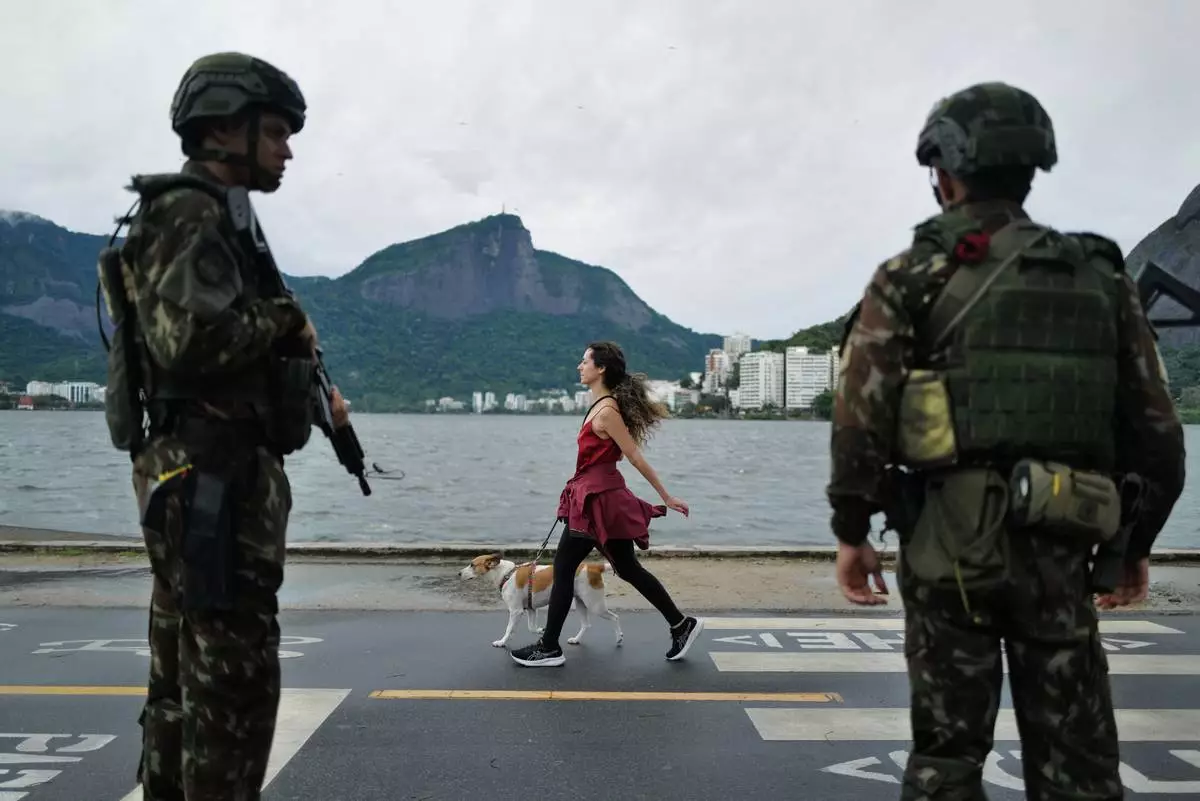
Soldiers stand guard during the presidential runoff in Rio de Janeiro, Brazil, Sunday, Oct. 25, 2026. (AP Photo/Lucas Landau)
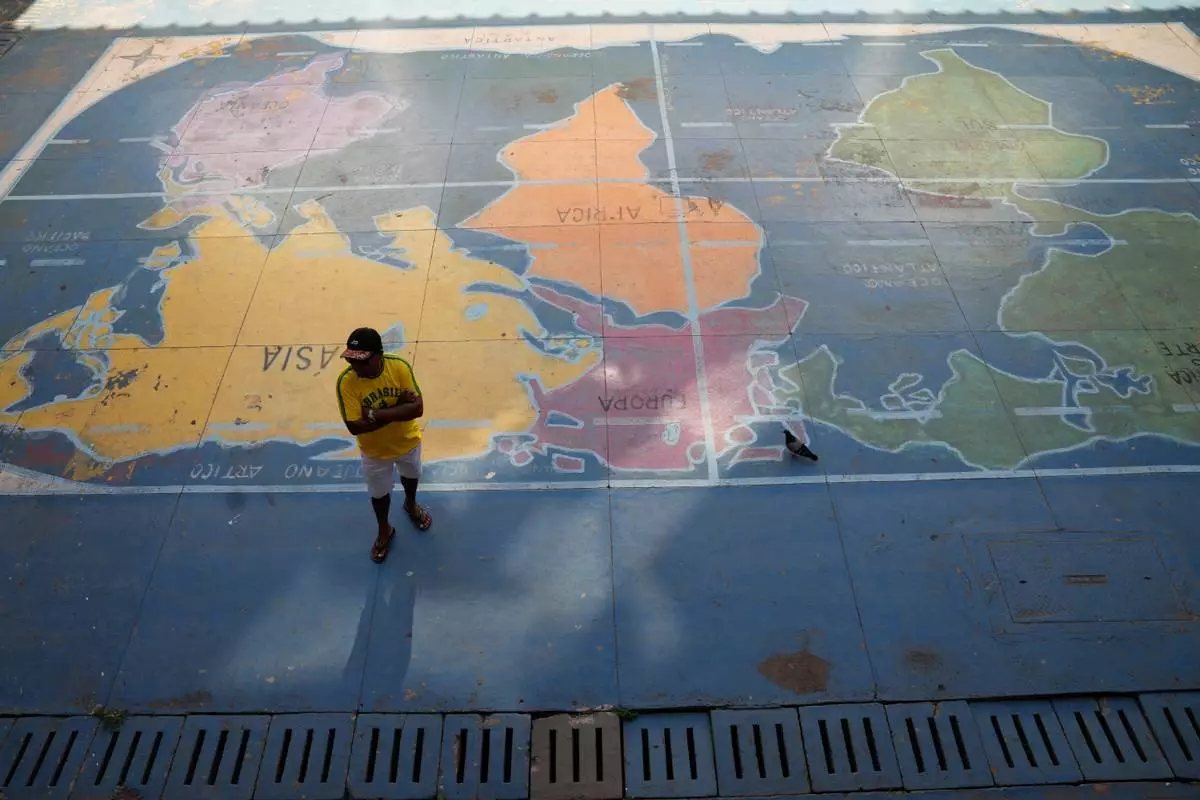
A voter stands at a polling station during a presidential runoff in Brasilia, Brazil, Sunday, Oct. 25, 2026. (AP Photo/Eraldo Peres)
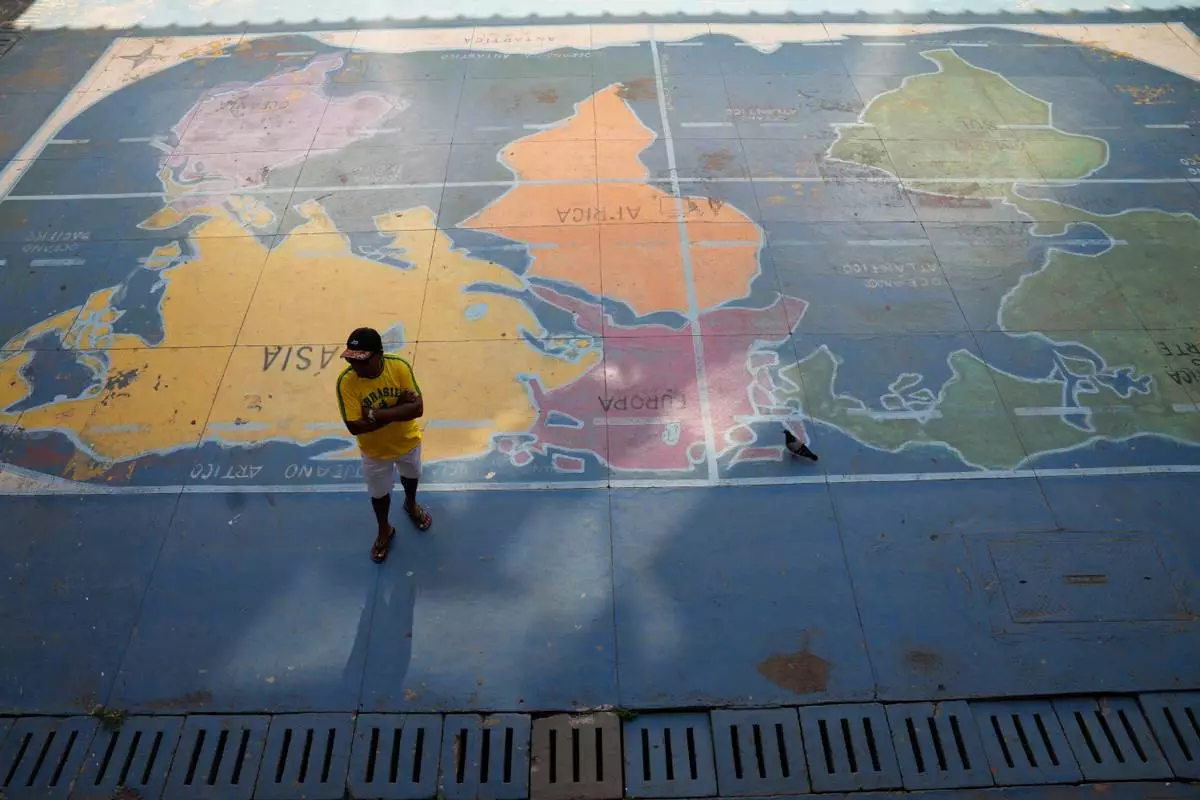
A voter stands at a polling station during a presidential runoff in Brasilia, Brazil, Sunday, Oct. 25, 2026. (AP Photo/Eraldo Peres)
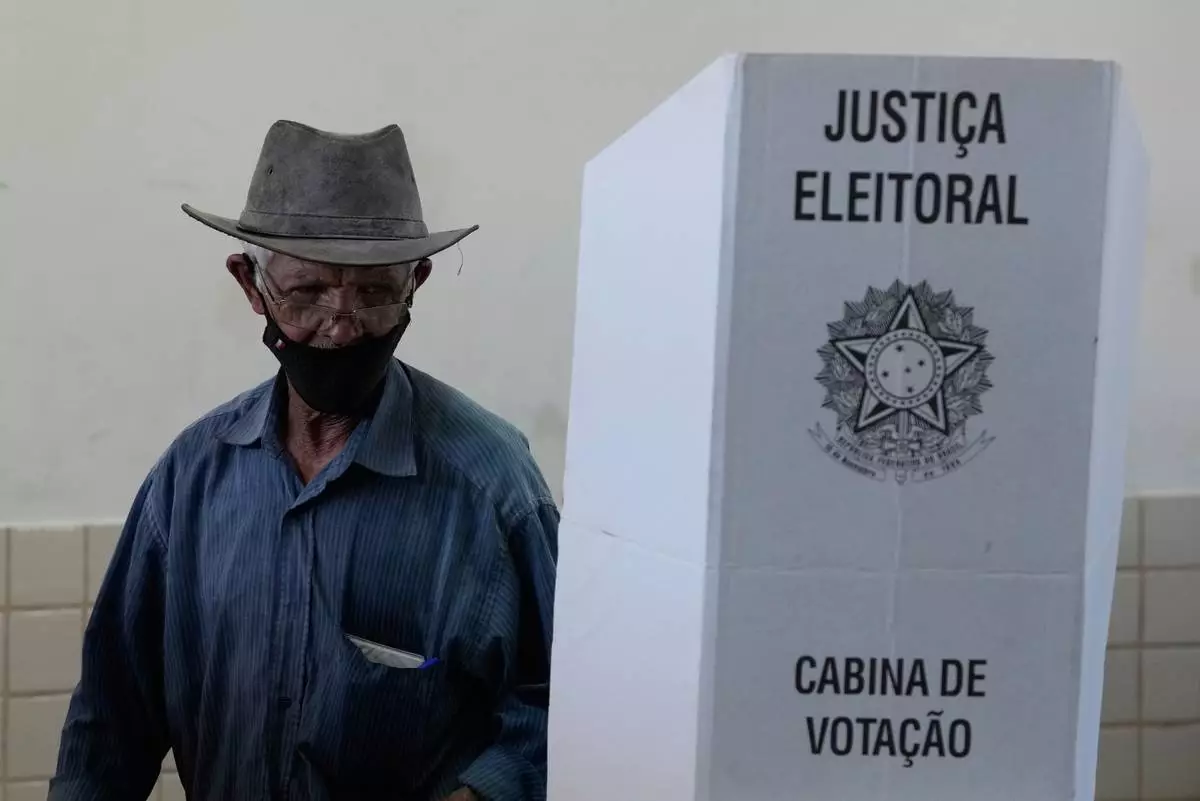
A man votes in the presidential runoff in Brasilia, Brazil, Sunday, Oct. 25, 2026. (AP Photo/Eraldo Peres)
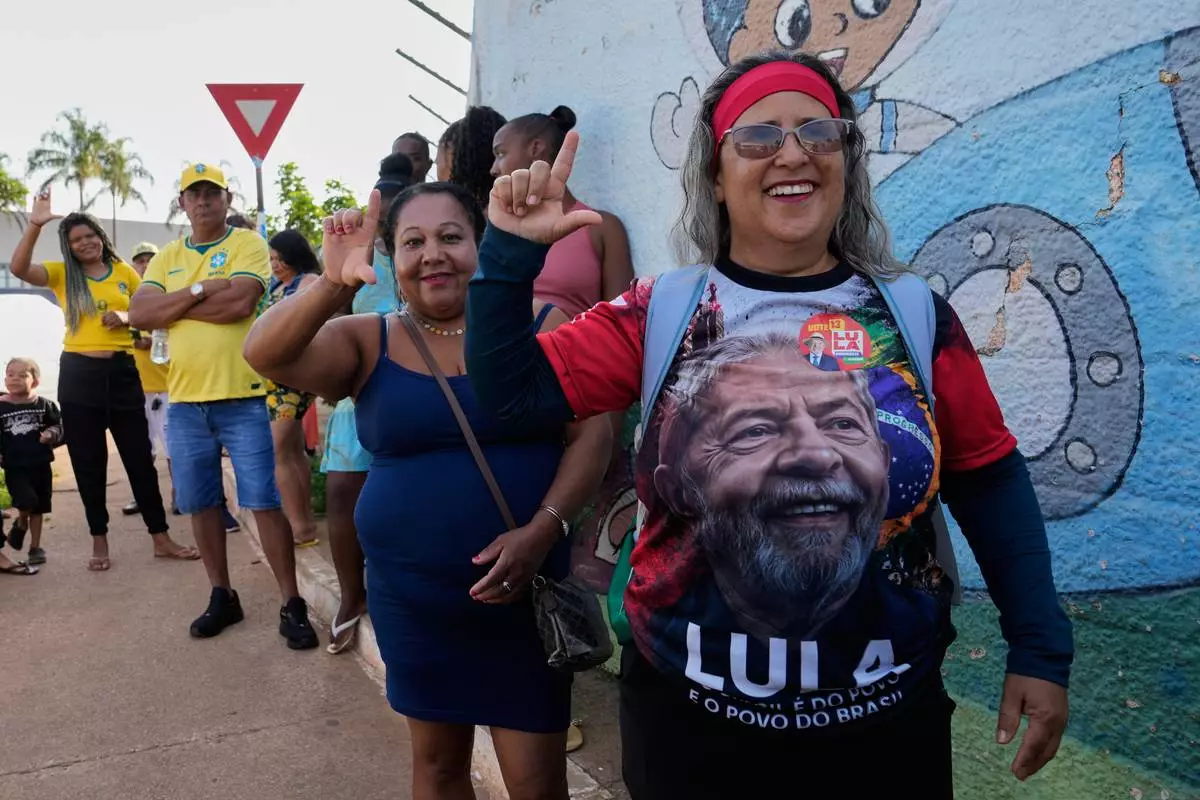
A supporter of President Luiz Inacio Lula da Silva, who is seeking reelection, lines up at a polling station during a presidential runoff in Brasilia, Brazil, Sunday, Oct. 25, 2026. (AP Photo/Eraldo Peres)
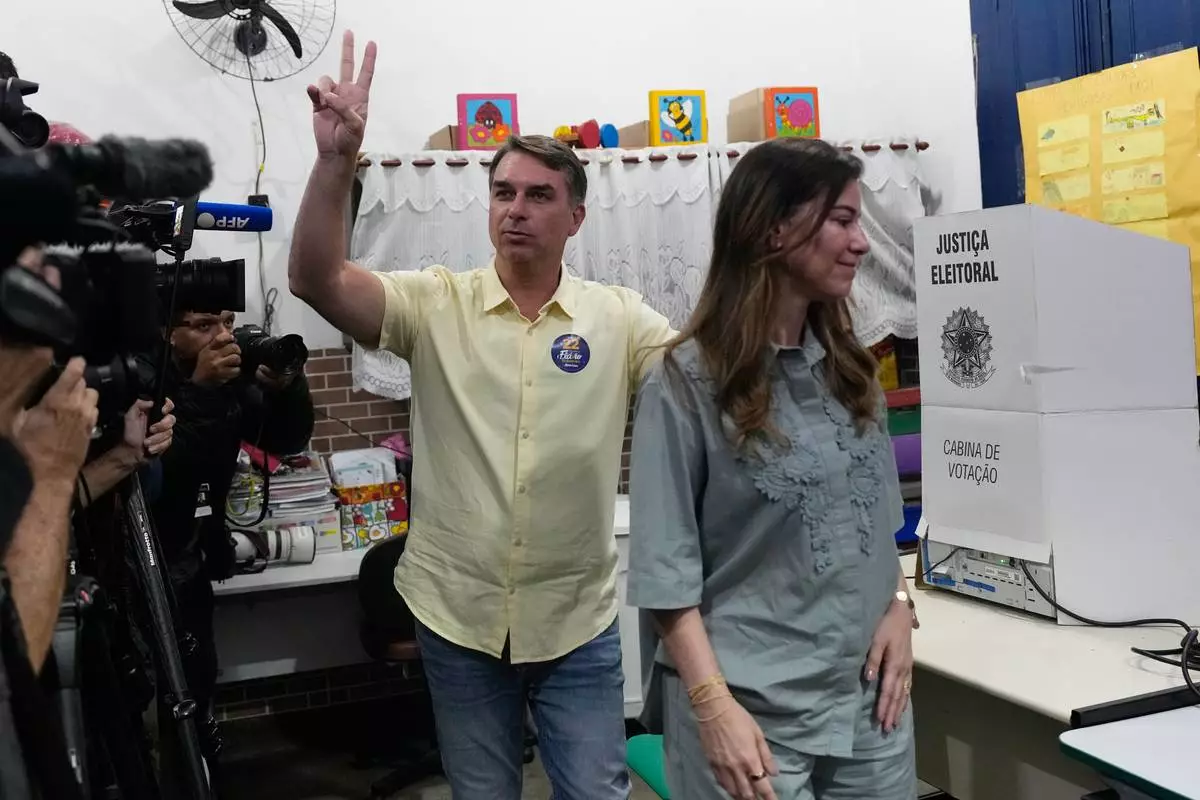
Opposition presidential candidate Sen. Flavio Bolsonaro makes the victory sign after voting in the presidential runoff in Rio de Janeiro, Sunday, Oct. 25, 2026. (AP Photo/Silvia Izquierdo)
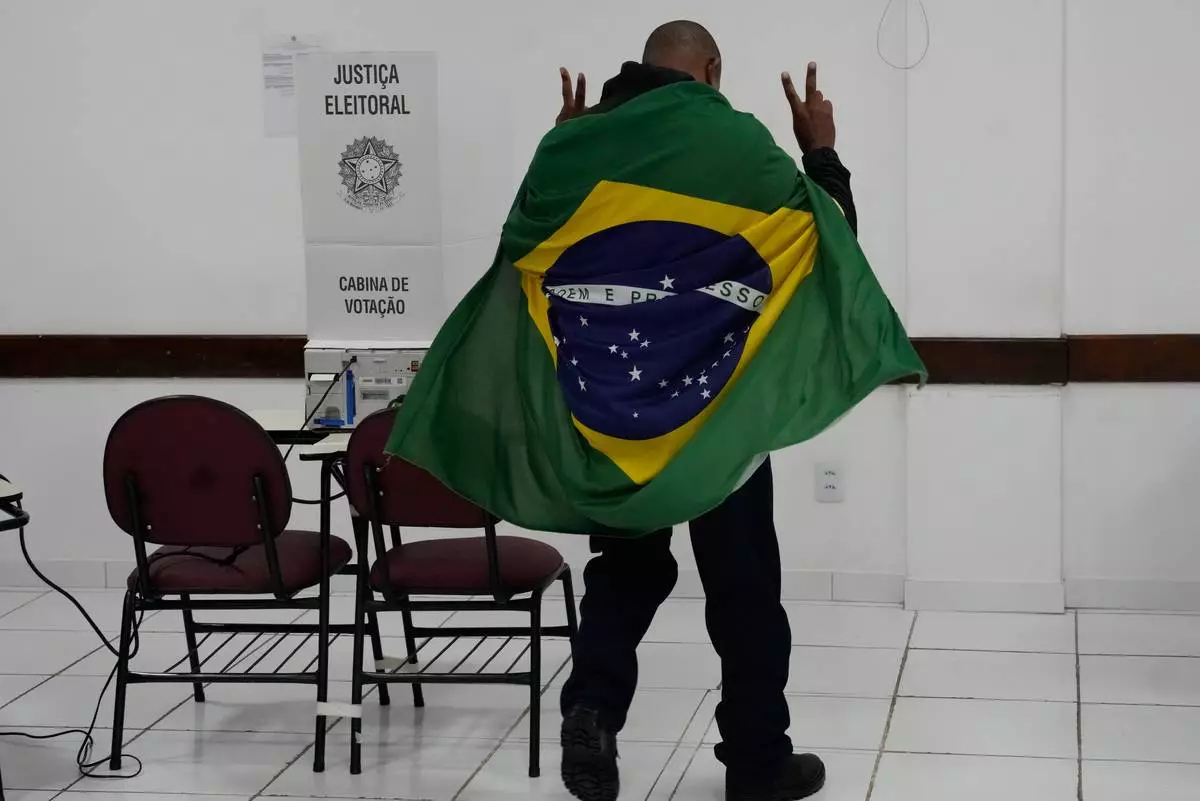
A man wrapped in a Brazilian flag arrives to vote in the presidential runoff in Brasilia, Brazil, Sunday, Oct. 25, 2026. (AP Photo/Eraldo Peres)
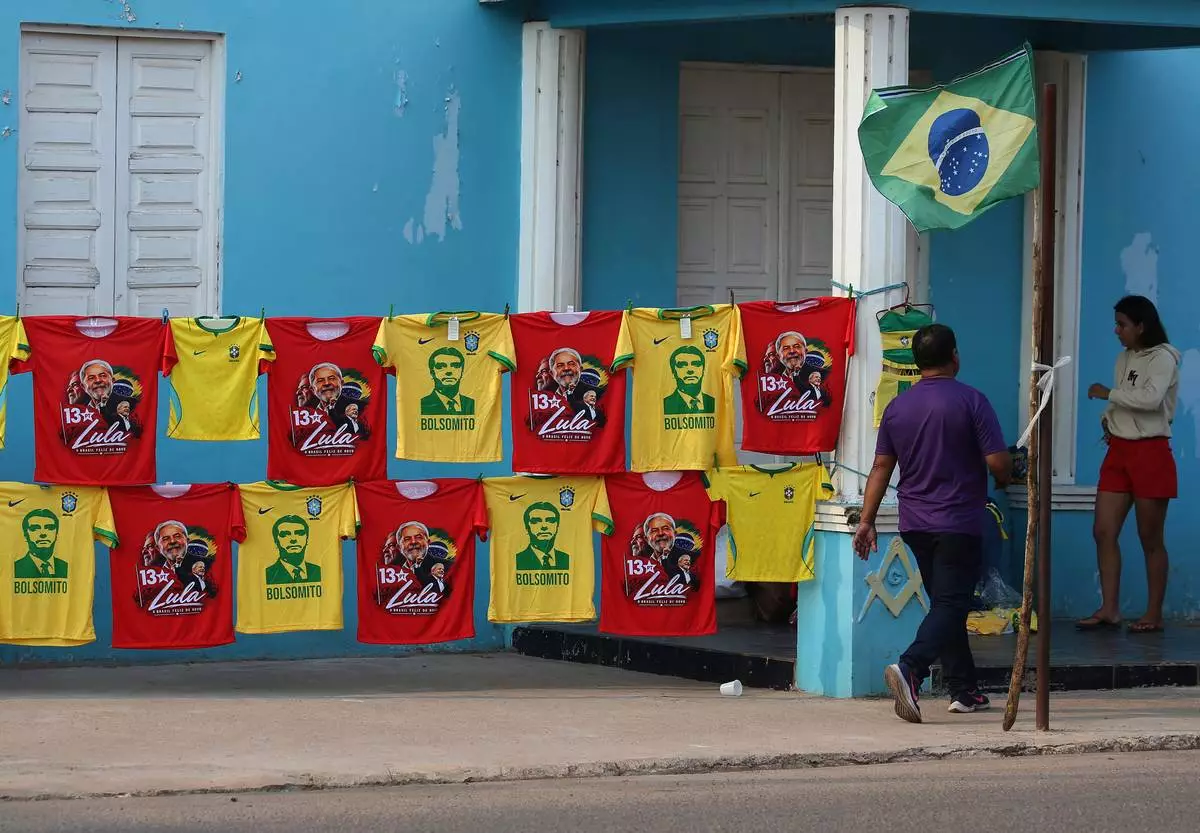
Red T-shirts depicting Brazilian President Luiz Inacio Lula da Silva, who is running for reelection, and yellow T-shirts depicting opposition presidential candidate Sen. Flavio Bolsonaro hang for sale outside a building ahead of Brazil's presidential runoff election in Autazes, Amazonas state, Brazil, Saturday, Oct. 24, 2026. (AP Photo/Edmar Barros)
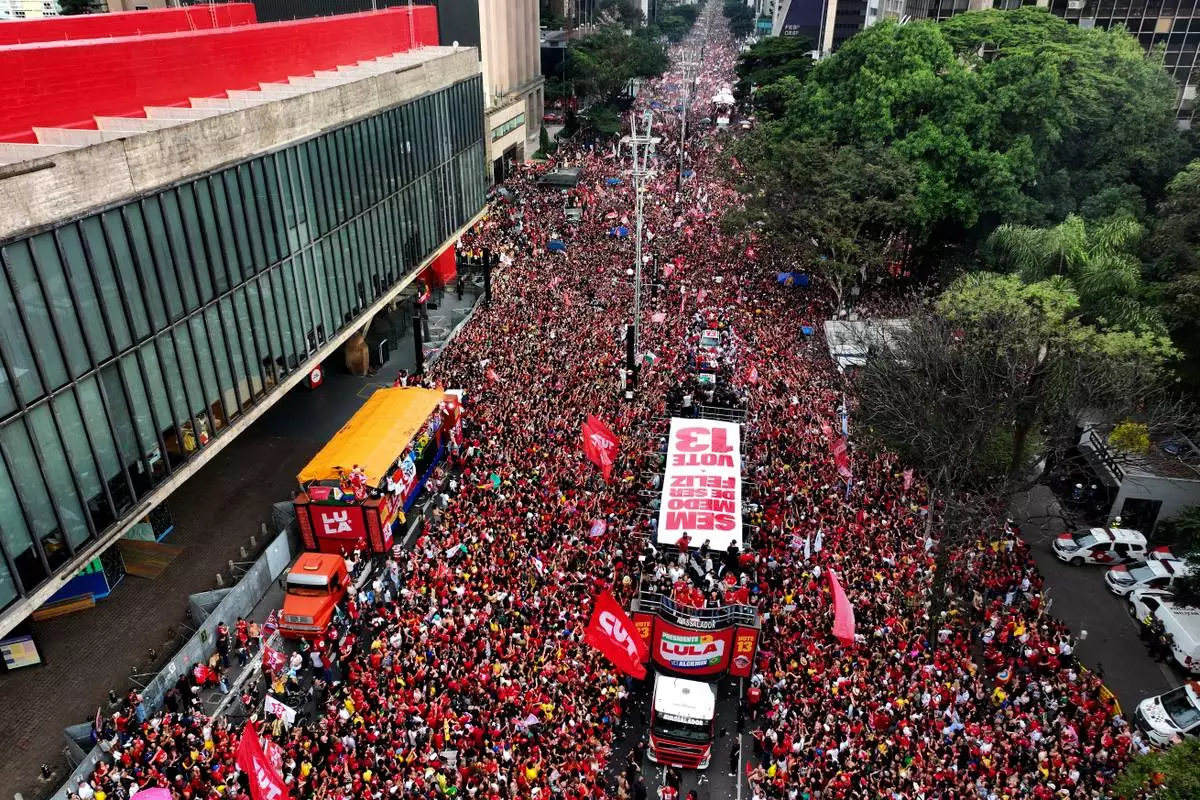
Supporters of Brazilian President Luiz Inacio Lula da Silva, who is running for reelection, crowd Paulista Avenue as his campaign vehicle passes during his final campaign rally ahead of Brazil's presidential runoff election in Sao Paulo, Brazil, Saturday, Oct. 24, 2026. (AP Photo/Andre Penner)
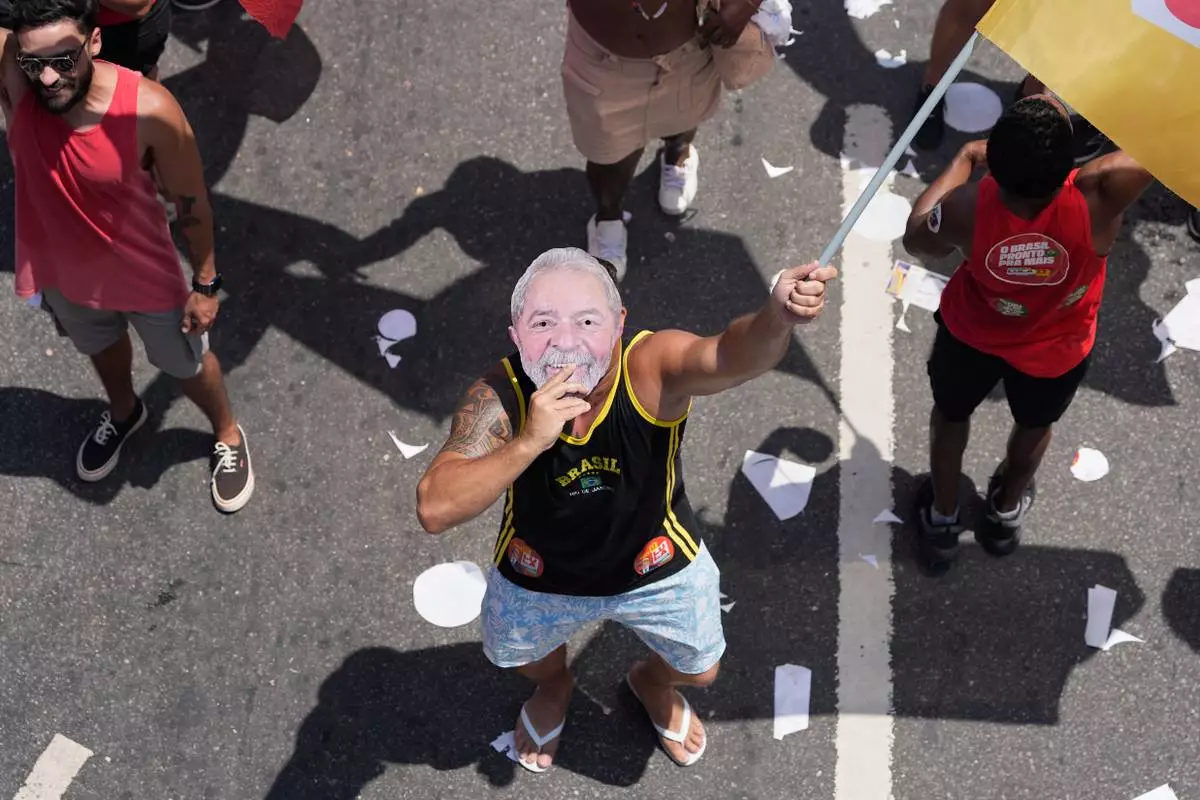
A supporter wears a mask of Brazilian President Luiz Inacio Lula da Silva, who is running for reelection, during his final campaign rally on Copacabana beach a day ahead of the presidential runoff election in Rio de Janeiro, Saturday, Oct. 24, 2026. (AP Photo/Silvia Izquierdo)

FILE - Brazil President Luiz Inacio Lula da Silva, right, who is running for reelection, gestures as opposition presidential candidate Sen. Flavio Bolsonaro stands beside him during a televised presidential debate one week before the runoff election in Sao Paulo, Brazil, Oct. 18, 2026. (AP Photo/Andre Penner, File)