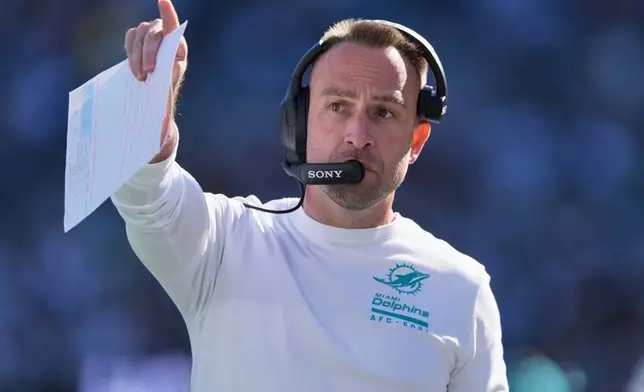
EAST RUTHERFORD, N.J. (AP) — Jeff Hafley had a towel draped around his neck as he stepped to the podium and the Miami Dolphins coach wiped his face one last time before taking questions from reporters.
He had just been doused by his players in the middle of a jubilant locker room after they held on for a 28-25 victory — his first leading the Dolphins — over the New York Jets on Sunday.
Click to Gallery
Miami Dolphins head coach Jeff Hafley in the first half of an NFL football game against the New York Jets in East Rutherford, N.J., Sunday, Oct. 25, 2026. (AP Photo/Seth Wenig)
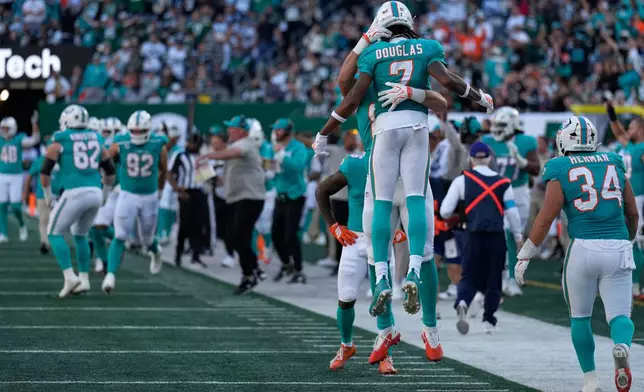
Miami Dolphins wide receiver Caleb Douglas celebrates his touchdown against the New York Jets in the second half of an NFL football game in East Rutherford, N.J., Sunday, Oct. 25, 2026. (AP Photo/Seth Wenig)
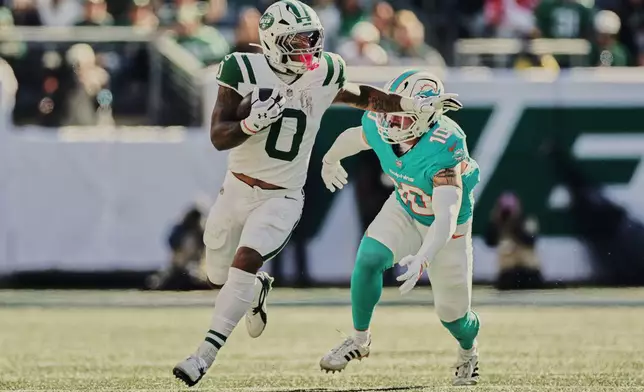
New York Jets running back Braelon Allen (0) is pursued by Miami Dolphins linebacker Jacob Rodriguez (10) in the second half of an NFL football game in East Rutherford, N.J., Sunday, Oct. 25, 2026. (AP Photo/Adam Hunger)
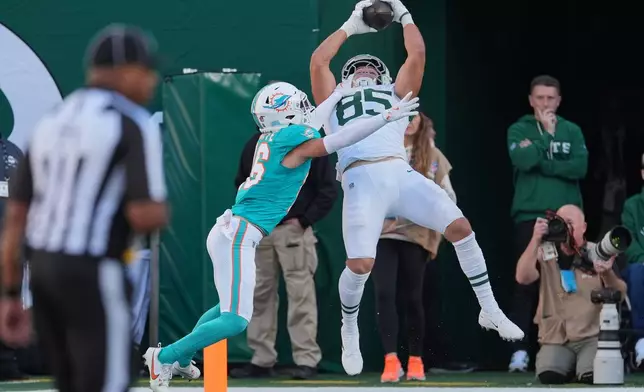
New York Jets tight end Mason Taylor catches a pass for a touchdown next to Miami Dolphins safety Michael Taaffe (16) in the second half of an NFL football game in East Rutherford, N.J., Sunday, Oct. 25, 2026. (AP Photo/Seth Wenig)
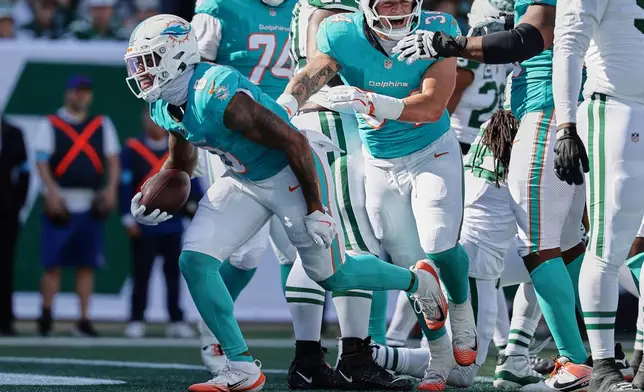
Miami Dolphins running back Ollie Gordon II, left, carries in for a touchdown in the first half of an NFL football game against the New York Jets in East Rutherford, N.J., Sunday, Oct. 25, 2026. (AP Photo/Adam Hunger)
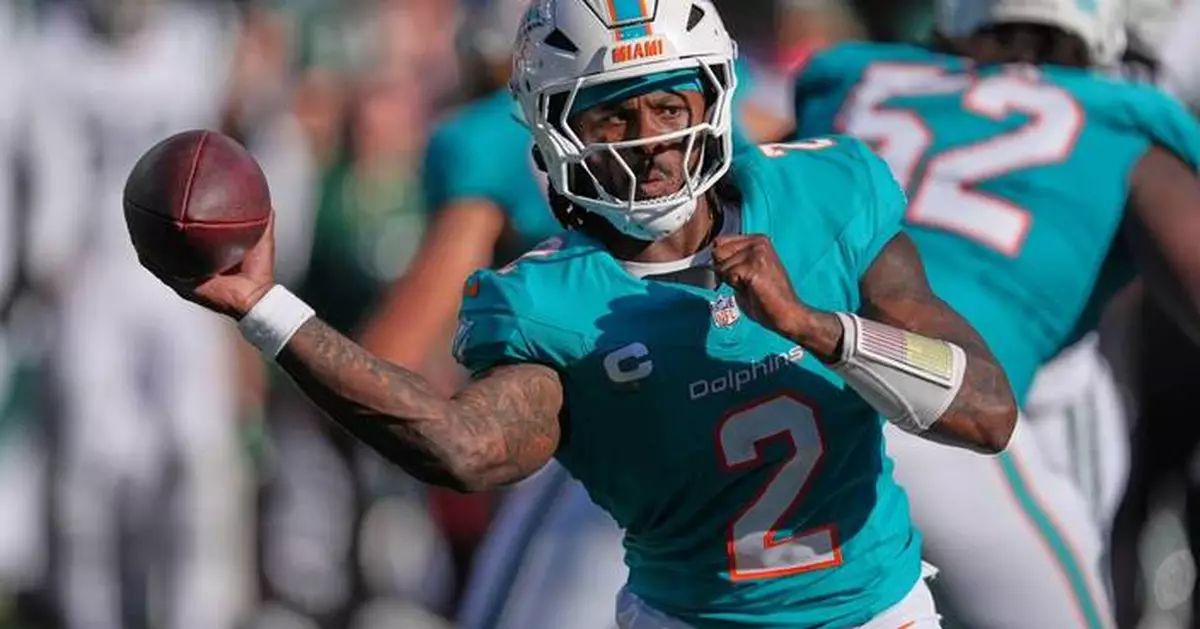
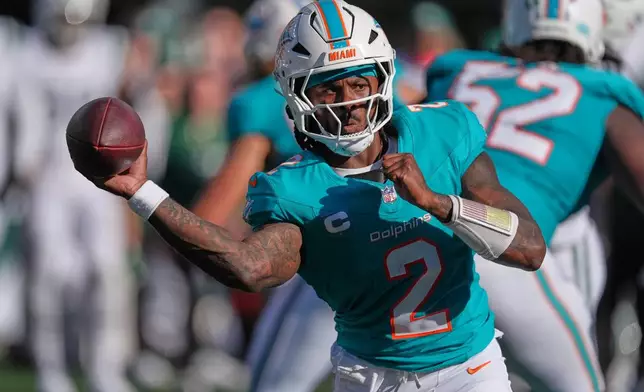
Miami Dolphins quarterback Malik Willis (2) passes in the second half of an NFL football game against the New York Jets in East Rutherford, N.J., Sunday, Oct. 25, 2026. (AP Photo/Seth Wenig)
“I grabbed every guy as they ran in,” a happy Hafley said. "My socks are wet. I had so much water on me. It was a really, really special moment, one that I’m appreciative of and one that I won’t forget. It was fun.
“They deserve it. You could feel a lot come out of it. I'm very happy for the players. They did a great job.”
Malik Willis threw two touchdown passes and ran for a score, and made a victory-sealing 2-yard push up the middle on fourth-and-1 as the Dolphins (1-5) came off their bye-week break and avoided their first 0-6 start since 2019.
“It was awesome,” said Willis, who was 14 of 21 for 208 yards and two TD passes to rookie Caleb Douglas. He also ran for 37 yards on eight carries, but the last one was the biggest of the game.
The Jets (2-5) made a late push trailing 28-17. On fourth-and-4, Geno Smith completed a short pass to Isaiah Davis, who zipped downfield 41 yards to the Dolphins 18. Three plays later, Smith found Mason Taylor for a 12-yard touchdown, the tight end's second of the game.
Penalties negated New York's first two 2-point tries before Smith threw to Taylor to make it 28-25 with 3:24 left.
Looking to end it, the Dolphins faced fourth-and-1 from the Jets 49 at the two-minute warning and Hafley went straight to his offensive linemen.
“I asked them what they thought,” Hafley said. “When I saw the look in their eyes, I was very confident that we’d get it. As soon as I saw that, there was no doubt in my mind that we’d go for it.”
Passing up the punt, Hafley left it to the offense — and Willis pushed forward for 2 yards as the Dolphins celebrated.
“He trusted us,” Willis said, "and we trusted him.”
Hafley, who grew up about 20 minutes north of MetLife Stadium in Montvale, got the win in front of about 30 friends and family members.
The Jets, meanwhile, dropped to 0-8 against AFC East opponents under Aaron Glenn, including consecutive losses to New England and Miami.
“When it comes to this game, highly disappointed,” Glenn said. “Disappointed in myself, first and foremost.”
Smith was 23 of 30 for 287 yards and three touchdowns, the two to Taylor and another to Omar Cooper Jr., and an interception. Braelon Allen had 104 yards rushing.
The Dolphins started quickly, marching 76 yards on seven plays and taking their first lead in any game this season on Willis' 7-yard touchdown pass to Douglas.
It also ended New York's streak of not allowing any points on an opening possession in five straight games.
But the Jets came right back with a 13-yard touchdown catch by Taylor — son of former Dolphins star and Pro Football Hall of Famer Jason Taylor — to tie it. It's the third straight game in which New York scored on its opening drive.
Miami then went on a 14-play drive that was capped by a 1-yard touchdown run by Gordon, who finished with 103 yards rushing.
New York was driving again on its next possession at the Miami 21 when Smith was intercepted by Michael Taaffe.
The Dolphins' touchdown streak ended on their third possession when they went three-and-out. They got right back at it on their next drive, with Willis scoring on a 2-yard scramble with 6 seconds left in the first half.
Allen gave New York some immediate second-half juice with a 27-yard run on the Jets' first play of the third quarter, but the drive stalled. Adding to the misery, Jason Sanders — a longtime Dolphins kicker in his first season with the Jets — hit the right upright on a 40-yard try.
Cooper got New York's next drive started with a 60-yard reception, and ended it five plays later with a 3-yard touchdown catch to make it a one-score game at 21-14 with 5:50 left in the third quarter.
The Jets later got to the Dolphins 1, but couldn't punch it in on runs by Andrew Beck and Allen and settled for a 33-yard field goal when Smith was sacked on third down.
Willis side-armed a short toss to Douglas, who tiptoed the sideline after the catch and raced for a 63-yard touchdown that put Miami up 28-17 with 4:44 remaining.
Dolphins: RB Jaylen Wright left in the fourth quarter with an injured quadriceps. ... S Dante Trader Jr. hurt his left shoulder in the third quarter. ... CB JuJu Brents left with a stinger in the second half, but returned in the fourth quarter.
Jets: DT T'Vondre Sweat limped off with a knee injury late in the second quarter and didn't return.
Dolphins: Host New England next Sunday.
Jets: Host Las Vegas next Sunday.
See AP’s full NFL coverage here
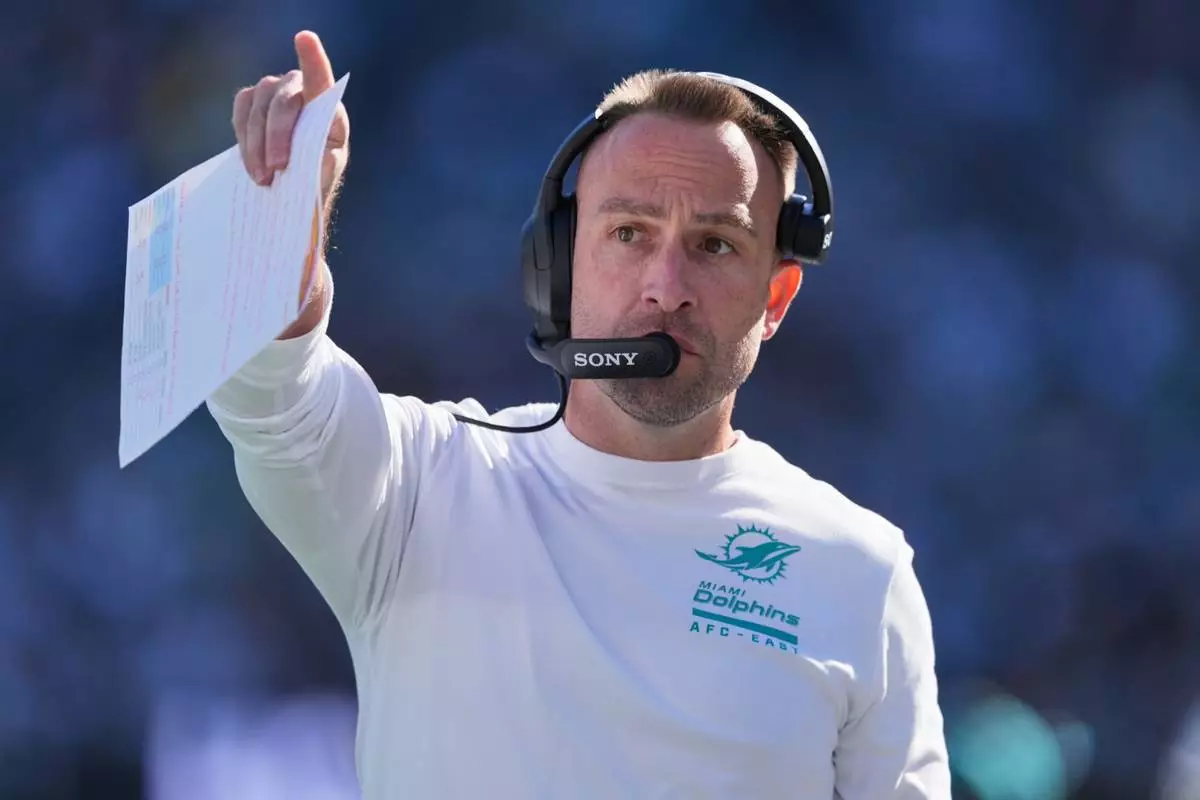
Miami Dolphins head coach Jeff Hafley in the first half of an NFL football game against the New York Jets in East Rutherford, N.J., Sunday, Oct. 25, 2026. (AP Photo/Seth Wenig)
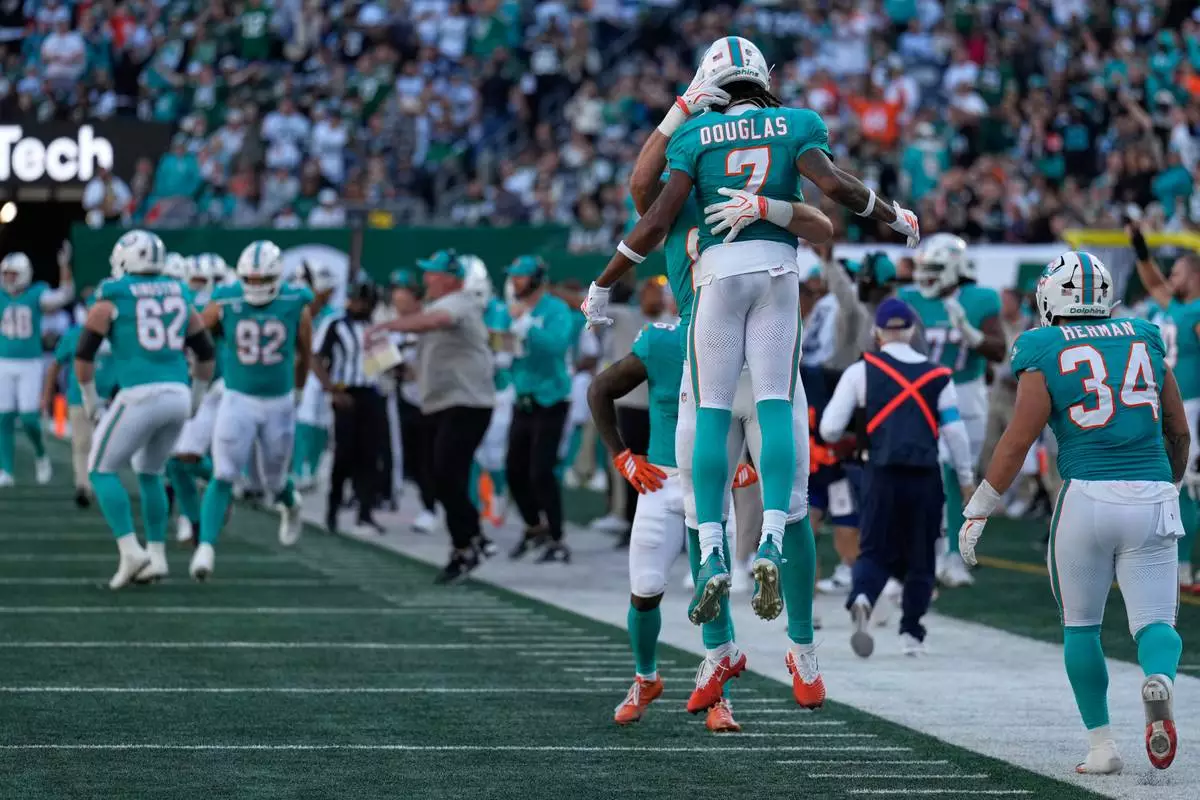
Miami Dolphins wide receiver Caleb Douglas celebrates his touchdown against the New York Jets in the second half of an NFL football game in East Rutherford, N.J., Sunday, Oct. 25, 2026. (AP Photo/Seth Wenig)
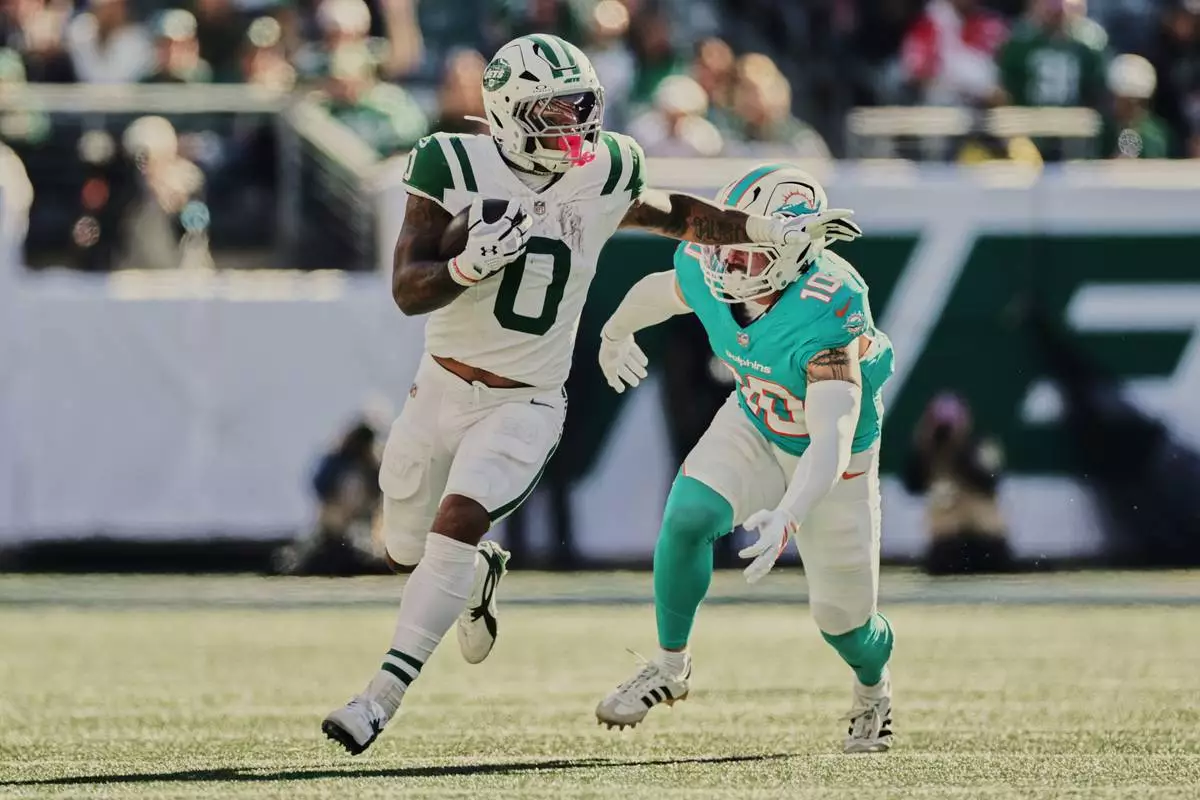
New York Jets running back Braelon Allen (0) is pursued by Miami Dolphins linebacker Jacob Rodriguez (10) in the second half of an NFL football game in East Rutherford, N.J., Sunday, Oct. 25, 2026. (AP Photo/Adam Hunger)
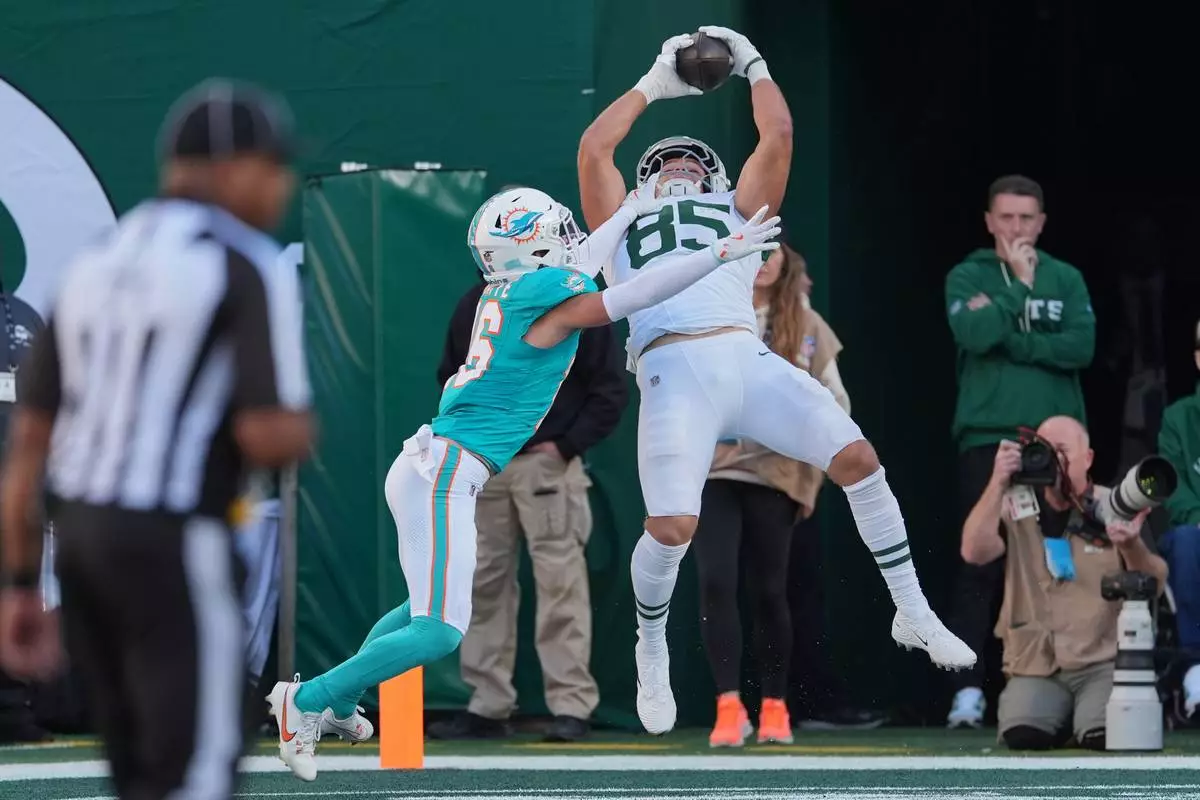
New York Jets tight end Mason Taylor catches a pass for a touchdown next to Miami Dolphins safety Michael Taaffe (16) in the second half of an NFL football game in East Rutherford, N.J., Sunday, Oct. 25, 2026. (AP Photo/Seth Wenig)
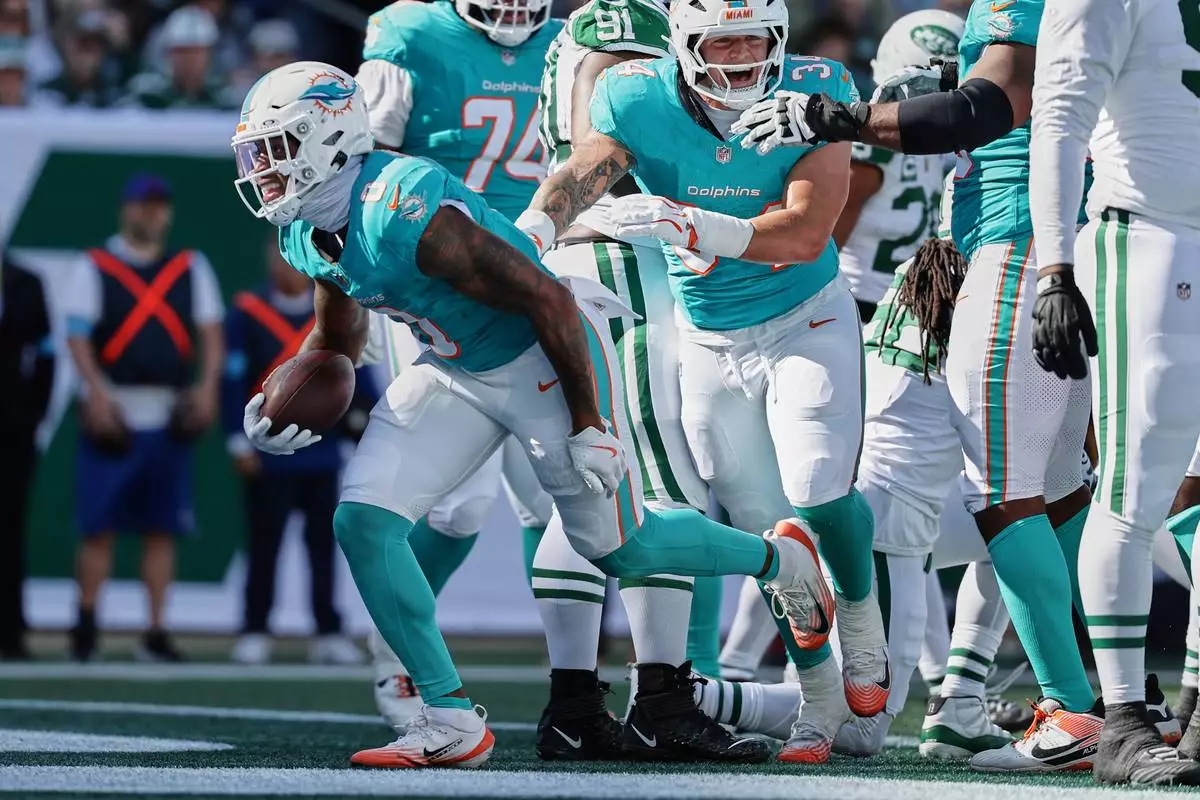
Miami Dolphins running back Ollie Gordon II, left, carries in for a touchdown in the first half of an NFL football game against the New York Jets in East Rutherford, N.J., Sunday, Oct. 25, 2026. (AP Photo/Adam Hunger)
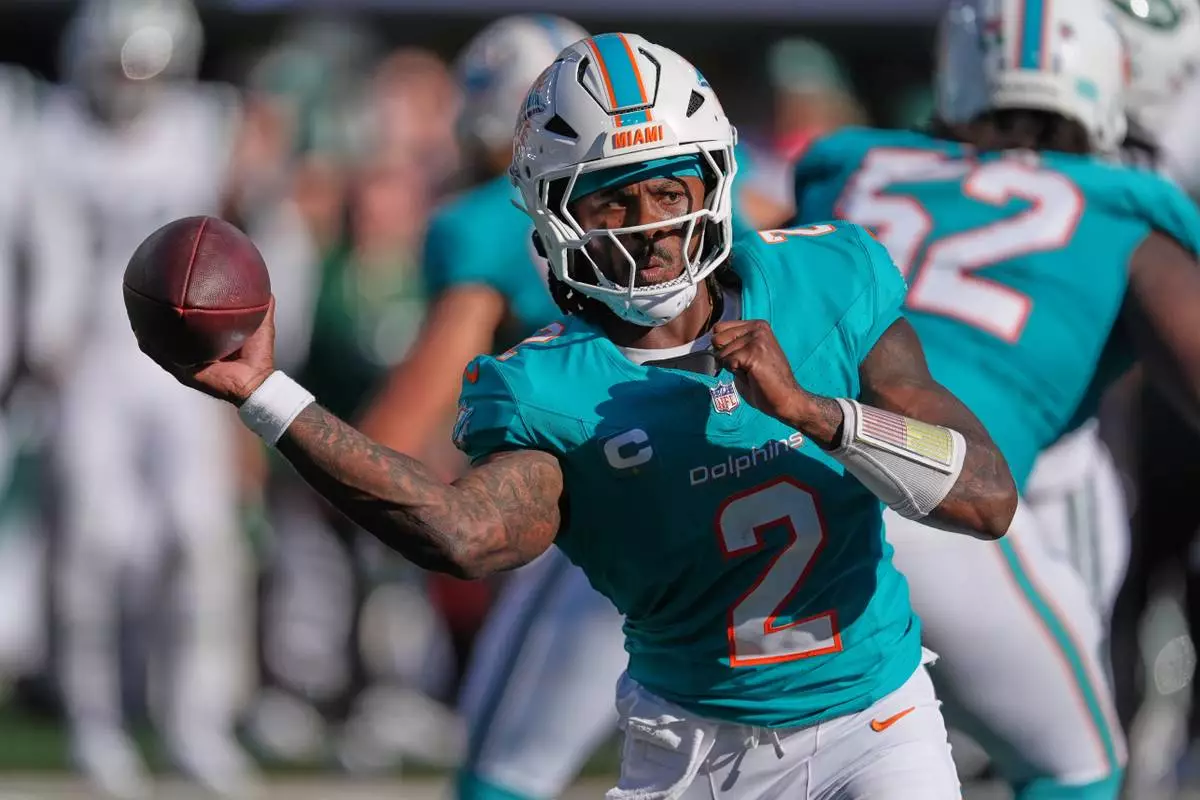
Miami Dolphins quarterback Malik Willis (2) passes in the second half of an NFL football game against the New York Jets in East Rutherford, N.J., Sunday, Oct. 25, 2026. (AP Photo/Seth Wenig)
Leftist incumbent Luiz Inácio Lula da Silva defeated Sen. Flávio Bolsonaro, a far-right ally of U.S. President Donald Trump, and was reelected to a fourth term in Brazil's presidential runoff Sunday.
With 100% of the vote counted, Brazil’s electoral court said Lula held an unassailable lead. The announcement capped an evening of chaos at polling places following a last-minute decision to extend voting by two hours. That decision by a Supreme Court justice may trigger legal action by Bolsonaro.
The son of imprisoned former President Jair Bolsonaro bested Lula by more than 2.2 million votes in the first round of voting earlier this month. More than 33 million of the nearly 160 million registered voters did not turn out.
The difference between the two candidates was stark. Bolsonaro and Lula have opposing ideological views on issues ranging from U.S.-Brazil relations and climate change to social welfare.
Here's the latest:
Lula and his wife celebrate with cake
A video published by his campaign shows Lula celebrating with first lady Rosângela da Silva and allies after his runoff victory was confirmed by Brazil’s electoral court. Wearing star-shaped red glasses, he kissed his wife as a small cake appeared on a table. Lula will turn 81 on Tuesday.
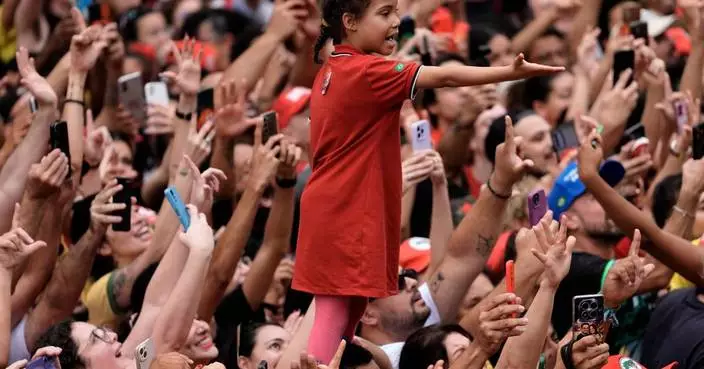
Meanwhile hundreds of his supporters are arriving on Paulista Avenue, São Paulo’s main artery, to kick off celebrations into the night. Some supporters of Flávio Bolsonaro are nearby, which caused police to go to the region.
In Copacabana, two bars facing each other on a busy road filled with supporters of the opposing candidates watching the results.
As it became apparent the night was going in Lula’s favor, Bolsonaro supporters paid the bill and left the bar shaking their heads, as cries of “Olé olé olé ola Lula” rang out and supporters of the incumbent shouted and jumped around in joy.
Rodrigo Valentim, a 51-year-old businessman, said another Lula government would harm the economy.
“I don’t understand how people can vote for Lula,” he said. “The country is collapsing.”
A few meters away, Raquel Costa, who owns a small business, said she felt relief at Lula’s victory.
“Winning always feels good, but this isn’t about winning just for winning. This is about increased social justice, about how we look at ourselves and at the future,” she said.
Brazil’s President Luiz Inácio Lula da Silva was reelected Sunday in a result that provides relief to critics of U.S. President Donald Trump and keeps some distance between Latin America’s biggest economy and Washington.
With 100% of the vote counted, Brazil’s electoral court said the soon to be 81-year-old Lula held an unassailable lead. The announcement capped an evening of chaos at polling places across Brazil, following a last-minute decision to extend voting by two hours. That decision by a Supreme Court justice may trigger legal action by opponent Flávio Bolsonaro.
His triumph bucks a trend in Latin America where increasing numbers of right-of-center presidental candidates allied with Trump have been winning, further extending the United States’ influence in the region. Lula’s victory leaves Mexico and Brazil, Latin America’s two most populous nations, with left-of-center leaders. It also positions Latin America’s largest economy, with a GDP of $2.6 trillion per year, to remain independent of the U.S., despite the pressure of increased tariffs imposed by Trump.
Brazilian Supreme Court Cristiano Zanin ruled shortly after the polls closed that voters nationwide would have another two hours to cast their ballots — at the request of both candidates.
Confusion reigned at many polling stations. Some had already shut down when the decision — made three minutes before poll close time — was relayed to them several minutes after they’d already shut down, and results were paused until the end of the two-hour window.
In Brasilia, volunteers who oversaw the vote count at a school debated whether they needed to stay after the announcement to extend voting, but most left 15 to 20 minutes after polls closed and they had given count information to electoral authorities. At a polling station in Rio de Janeiro, the voting machines had already been switched off minutes after polls were set to close and couldn’t be turned back on.
Eduardo Bolsonaro, presidential candidate Flávio Bolsonaro’s brother and a 42-year-old former lawmaker, spoke to supporters at a polling station in Miami, Florida.
“What we really need is freedom,” Eduardo Bolsonaro said, as he called for judicial reform. “Most of the people here are coming to vote to free Jair Bolsonaro ... we need to reform the judiciary, we need to free the political prisoners.”
Eduardo Bolsonaro was sentenced for lobbying to impose sanctions against members of the Brazilian government and implement higher tariffs on the country’s exports during the trial of his father, former President Jair Bolsonaro, for a coup attempt.
It is unclear whether Eduardo Bolsonaro cast a ballot. Pre-trial detainees can vote in elections, but those convicted with a final sentence cannot as their political rights are suspended.
Eduardo Bolsonaro’s trial has been finalized and earlier this month, Moraes issued a warrant for his arrest. Eduardo Bolsonaro has lived in the U.S. since 2025 and experts say it is unlikely he will be extradited.
With minutes to go before poll closing time, both presidential candidates are asking Brazil’s electoral court to extend voting hours in some cities. The request from President Luiz Inácio Lula da Silva came after issues in nine states with buses that provide transportation to polls. Flávio Bolsonaro’s is due to heavy rains in the nation’s south. Polls were expected to close nationwide at 5 p.m.
Brazilian Supreme Court Justice Kássio Nunes, who also heads the country’s electoral court, told journalists in capital Brasilia that some cities are indeed experiencing bus shortages, but did not answer whether the voting hours will be extended. He did not address Bolsonaro’s request in his comments.
While leaving the White House on Sunday, President Donald Trump declined to endorse anyone in Brazil’s presidential election. “I don’t want to get into that,” he told reporters.
But the president added that his administration was tracking the race. “We are watching,” Trump said.
Brazilian newspapers are stressing that Sunday’s runoff between Lula and Bolsonaro will be a nail-biter, though Bolsonaro’s campaign is more optimistic after recent polls.
Folha de S.Paulo cited an analysis by its own pollster to say the election result is still open, but Lula will have to see his voters increase turnout to close the 2.2 million-vote gap between the two in the first round.
Rio de Janeiro-based O Globo, owned by Brazil’s biggest media company, reported that Bolsonaro, who was handpicked by his father, former President Jair Bolsonaro, overcame initial fears in the right-wing camp that he would not be a competitive candidate because of recent corruption investigations involving him.
Brazil was sharply divided across its five main regions in the first round of the presidential election.
Flávio Bolsonaro won in three of the country’s five regions, but Luiz Inácio Lula da Silva took the second most populous by wide margins. Bolsonaro won in the populous and rich Southeast, where Sao Paulo, Rio de Janeiro and Minas Gerais states lie. They will be the key battlegrounds in Sunday's runoff.
Bolsonaro, 45, carried the agribusiness hub of the country’s Center-West and easily won in the South, which borders Uruguay and Argentina. Lula erased much of Bolsonaro’s gains by winning in the Northeast and also triumphed in the North, the region that includes the Amazon rainforest.
Luzia da Souza, who runs a bar in a middle-class neighborhood of Rio de Janeiro, is a longtime supporter of incumbent Lula and identified herself as "a Black woman from the periphery.”
“Black people’s lives greatly improved during Lula’s terms,” she said, and blamed Congress — which is largely right-wing — for the slow pace of reform.
“A president doesn’t govern on his own,” da Souza said. “But Lula is a man of the people and he knows what it’s like to be poor. I find it impossible not to vote for him.”
Anderson Falcão, a 43-year-old journalist in Brasilia who sported a red shirt in support of Lula, said he worried about Bolsonaro’s long-term political vision, which he called “exclusionary.”
“It’s a project that harms the less fortunate, harms the worker, women, the forest, the Amazon,” he said.
Brazil’s left was caught off guard when Flávio Bolsonaro bested incumbent Luiz Inácio Lula da Silva by over 2 million votes in Brazil’s first-round election.
Since then, it has made a clear bet on an unprecedented wave of digital activism and street protests to support Lula. The shift signals a turning point for the left, which has historically struggled to counter the far-right’s dominant online presence and savvy digital strategy.
Between the campaign’s launch on Aug. 16 and up to the first round, Lula and Bolsonaro had more or less the same number of interactions, according to data analytics company Bites. But since the beginning of the second round, the incumbent’s profiles received around 111 million interactions against Bolsonaro’s 31 million, it said.
Lula voted in the city of Sao Bernardo do Campo, where he began his political career as a union leader in the 1960s.
“I am thankful to the Brazilian people. What people did to me in recent days is something I cannot repay,” he said before casting his vote and holding Brazil’s flag in front of the cameras.
He said he was still emotional about Saturday’s demonstration of support from voters in São Paulo. “I don’t think Paulista Avenue had so many people in any political event.”
“It is a lot of generosity, a lot of care, a lot of love. I will be forever grateful,” Lula said.
First lady Rosângela da Silva, Vice President Geraldo Alckmin and other allies accompanied Lula to the polling station.
Voting is mandatory for literate Brazilians aged 18 to 70. But that has never been a real consideration for nonvoters, who must either submit a formal justification online or at a polling station, or pay a small fine of less than $1.
More than 33 million people did not vote in the first round of the elections on Oct. 4. Some of those were hospitalized, living overseas or working outside their voting areas. And others just chose not to.
Unexcused absences in three consecutive elections freeze tax IDs, block nonvoters from applying to state jobs, hinders loans from state banks, and delays the issuance of passports. For those who don’t want to choose a candidate even when they show up, they can cast blank or null votes.
Fabianne Borges Santoro, a 45-year-old physiotherapist who lives in the neighborhood where Bolsonaro voted, said she voted for change.
“The Workers’ Party has been in power for a long time and the voice of the people is saying that we need change to see improvements in security and the cost of living,” she said, wearing a top featuring Brazil’s national colors, yellow and green. “Things are really expensive and taxes are too high.”
Santoro said she once voted for Lula’s party but now associates it with corruption, particularly after the so-called Operation Car Wash that started in 2014, when the Workers’ Party was in power and entangled dozens of politicians.
Roulen Azeredo, a 76-year-old army reservist, said he had always voted right. He also echoed the desire for a shift in the country’s direction.
“The current government did nothing,” said Azeredo, who hopes Jair Bolsonaro, who is currently serving a 27-year sentence for attempting a coup, will be freed if the former president’s eldest son wins. “His imprisonment is a disgrace.”
Presidential candidate Flávio Bolsonaro voted at a local school in Rio de Janeiro just after 8 a.m., accompanied by his wife, Fernanda Bolsonaro. Wearing a light yellow shirt, he smiled and waved to supporters waiting to see him in the rain.
“The time of real change has arrived,” Bolsonaro told journalists. “Brazil can’t go on another four years on its current trajectory.”
As Bolsonaro voted, supporters of the opposition candidate shouted “Lula, thief, your place is in prison,” while fans of the incumbent responded with clapping and the chant “Olé olé olé ola, Lula!” The two anthems are common in demonstrations.
In Brazil, voting is fully electronic — meaning votes are counted much more quickly than in some other countries.
Polls opened at 8 a.m. and will close at 5 p.m. Brasilia time (2000 GMT) in most of the country.
On the ballot: the presidential face-off between Lula and Bolsonaro and six gubernatorial races. Votes are tallied quickly because each ballot box calculates results locally and prints a paper summary. The encrypted data is transmitted via secure networks to the nation’s top electoral court in capital Brasilia, which aggregates and publishes the counts within hours.
The system has been in place since the 1990s with few questioning its efficiency. One of its critics is former President Bolsonaro.
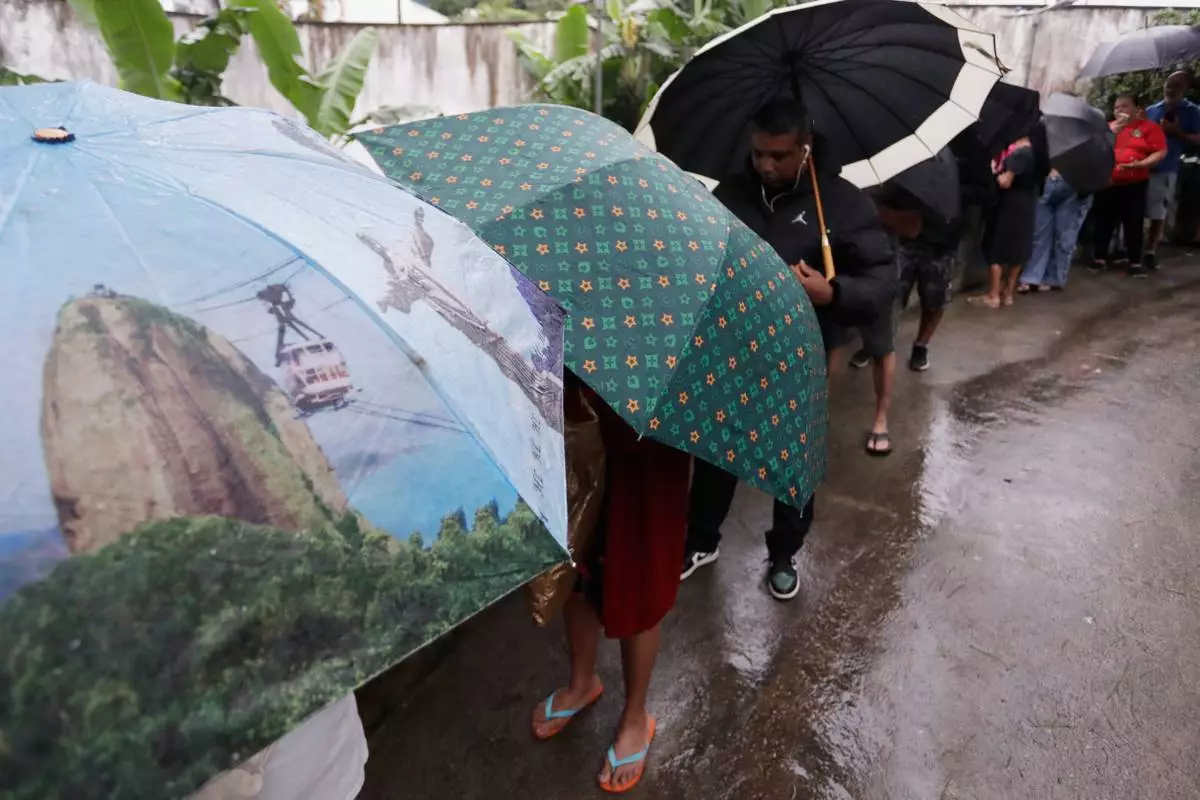
Voters line up to enter a polling station during the presidential runoff in the Rocinha favela in Rio de Janeiro, Brazil, Sunday, Oct. 25, 2026. (AP Photo/Bruna Prado)
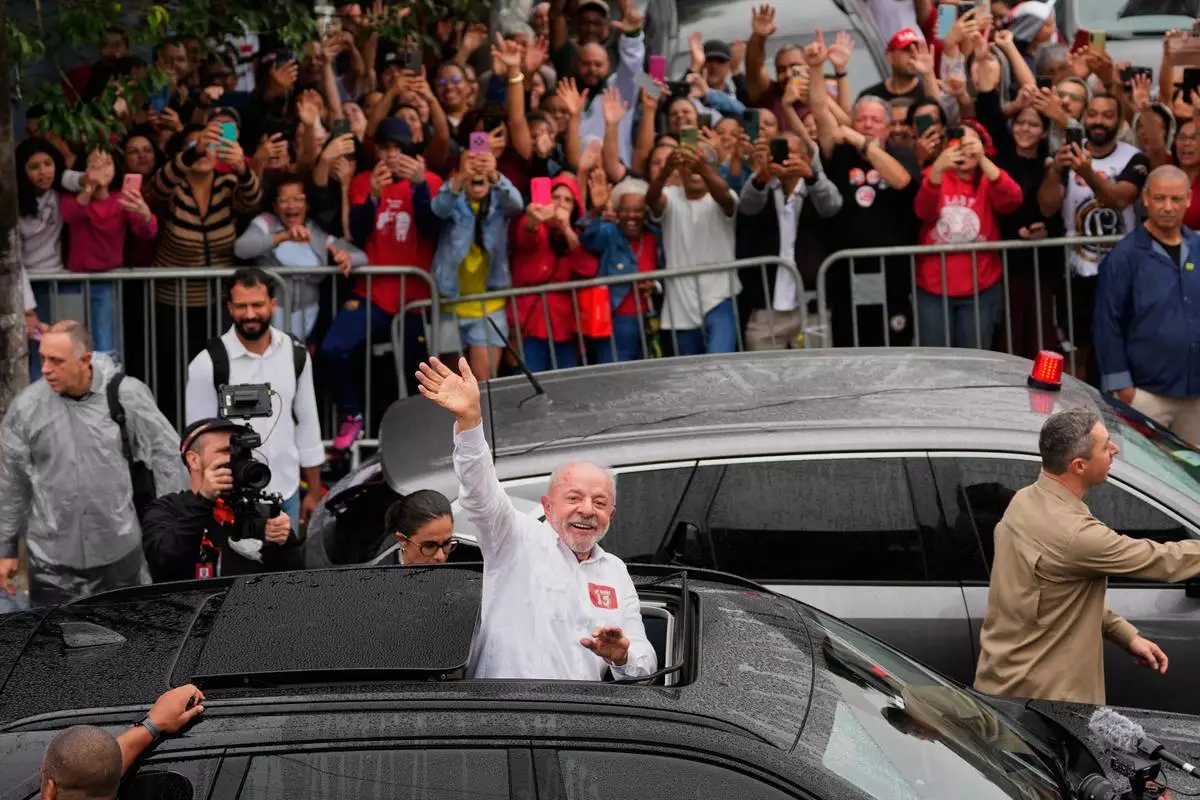
President Luiz Inacio Lula da Silva, who is seeking reelection, waves after voting in the presidential runoff in Sao Bernardo do Campo, Brazil, Sunday, Oct. 25, 2026. (AP Photo/Andre Penner)
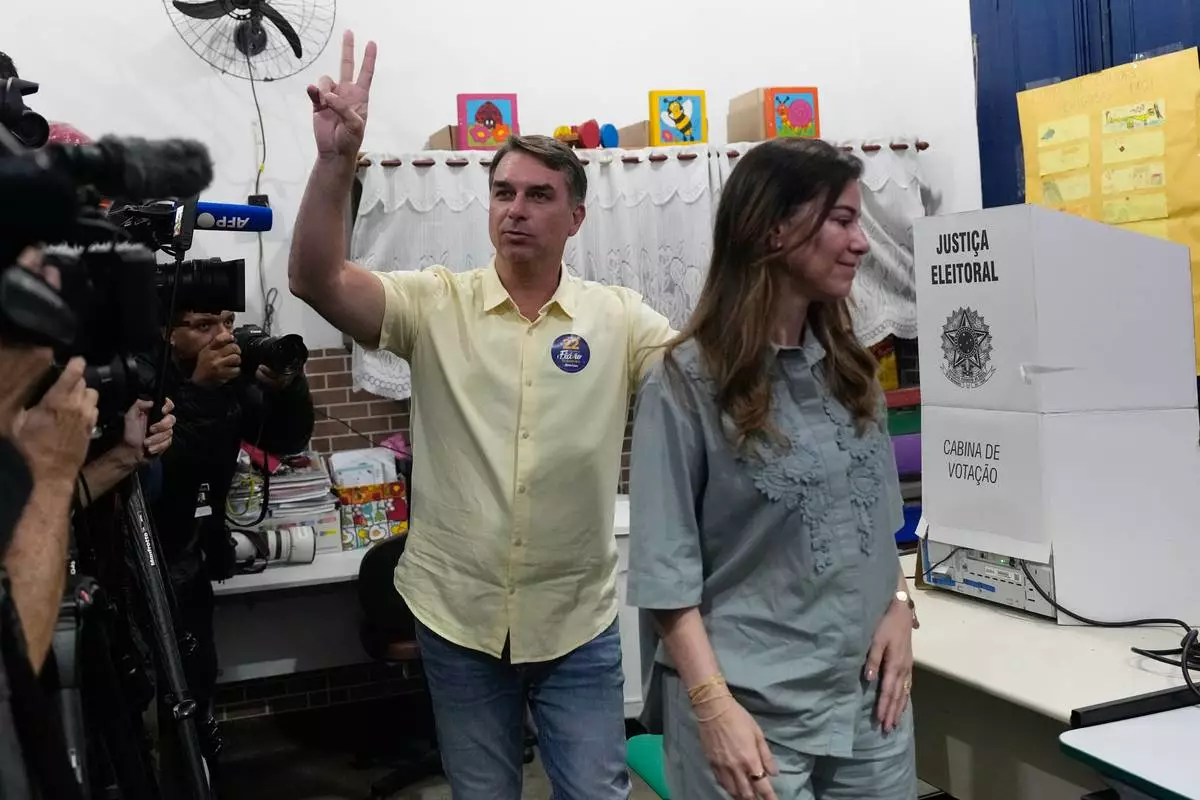
Opposition presidential candidate Sen. Flavio Bolsonaro makes the victory sign after voting in the presidential runoff in Rio de Janeiro, Sunday, Oct. 25, 2026. (AP Photo/Silvia Izquierdo)
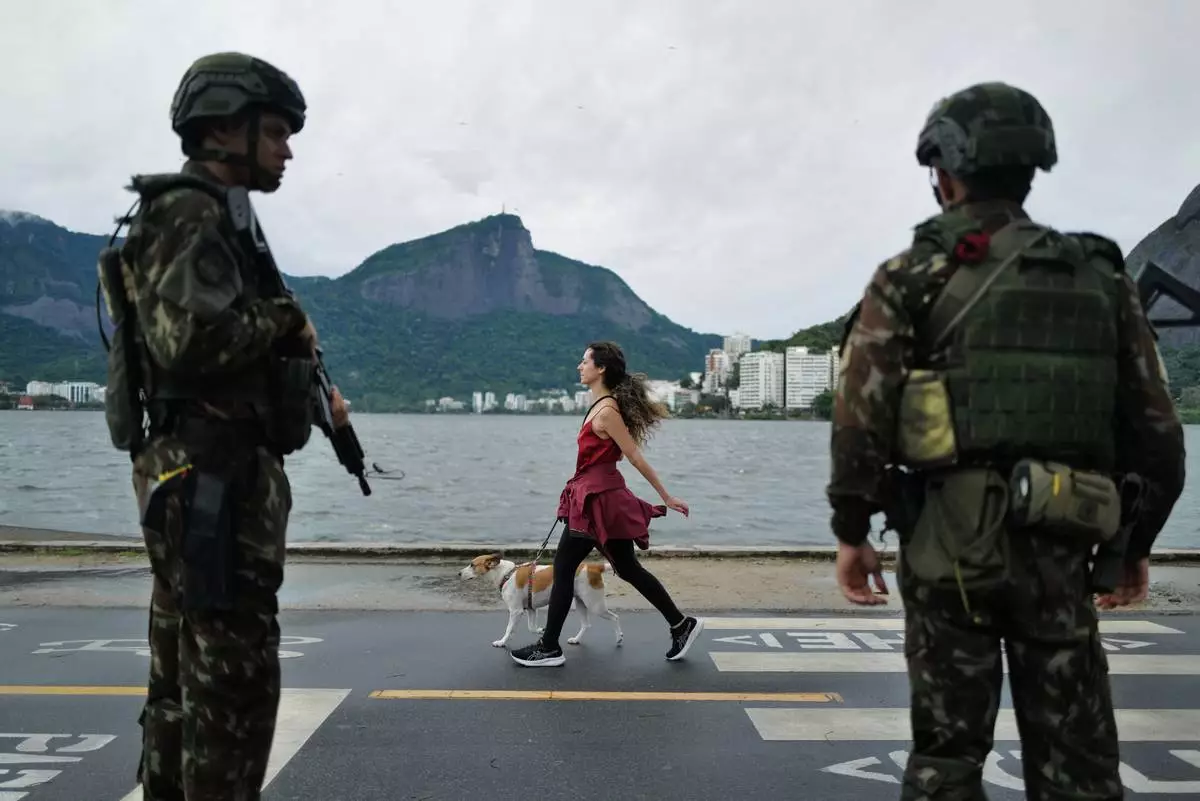
Soldiers stand guard during the presidential runoff in Rio de Janeiro, Brazil, Sunday, Oct. 25, 2026. (AP Photo/Lucas Landau)
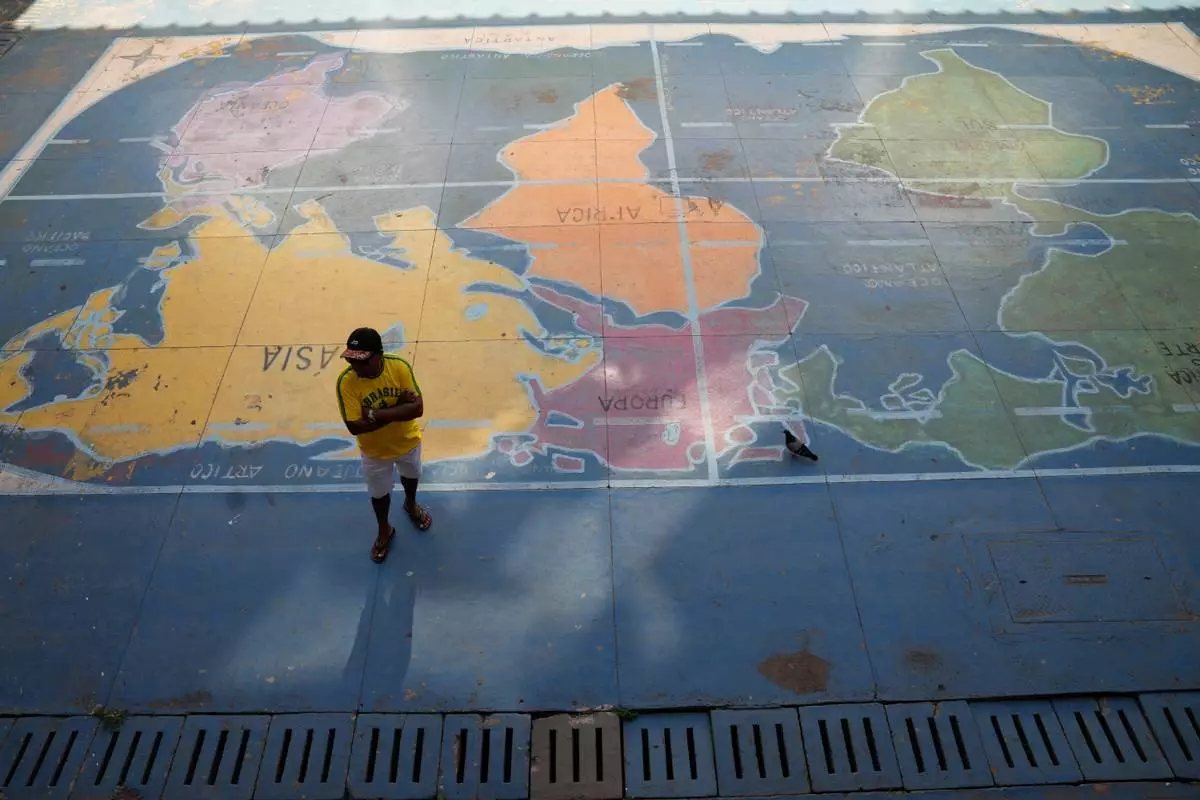
A voter stands at a polling station during a presidential runoff in Brasilia, Brazil, Sunday, Oct. 25, 2026. (AP Photo/Eraldo Peres)
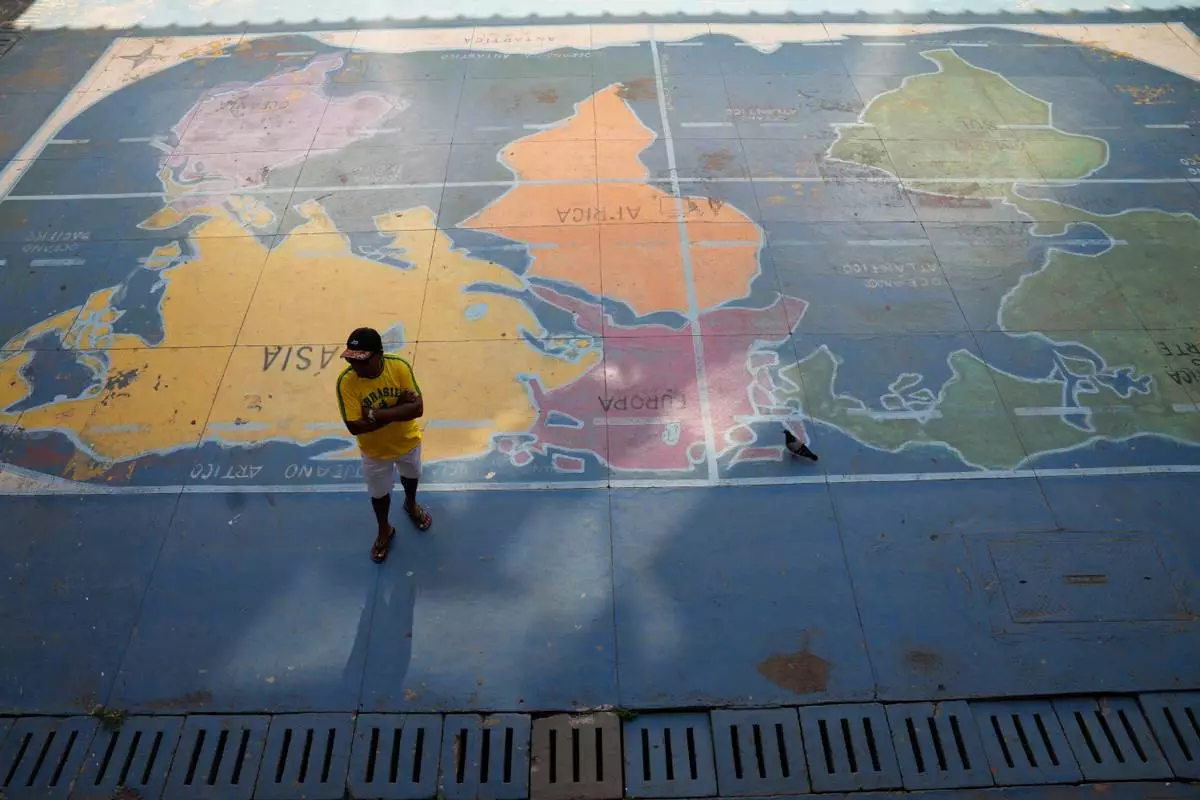
A voter stands at a polling station during a presidential runoff in Brasilia, Brazil, Sunday, Oct. 25, 2026. (AP Photo/Eraldo Peres)
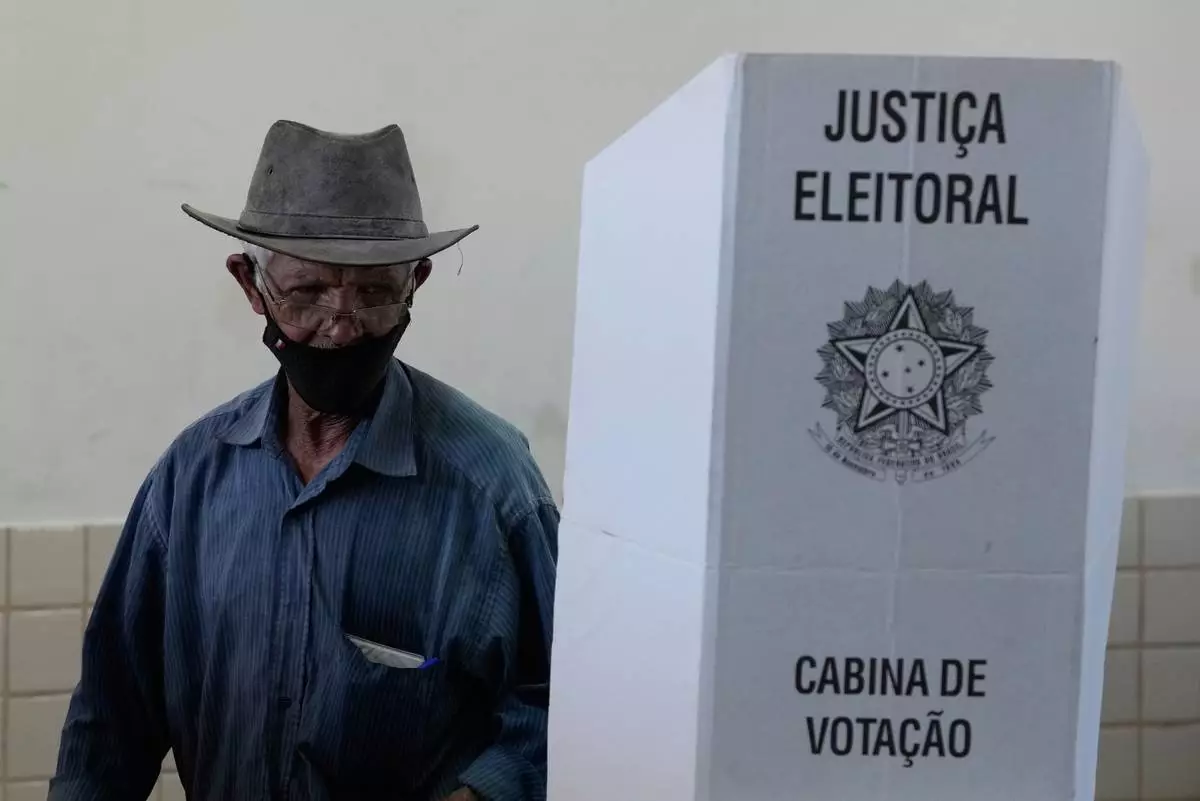
A man votes in the presidential runoff in Brasilia, Brazil, Sunday, Oct. 25, 2026. (AP Photo/Eraldo Peres)
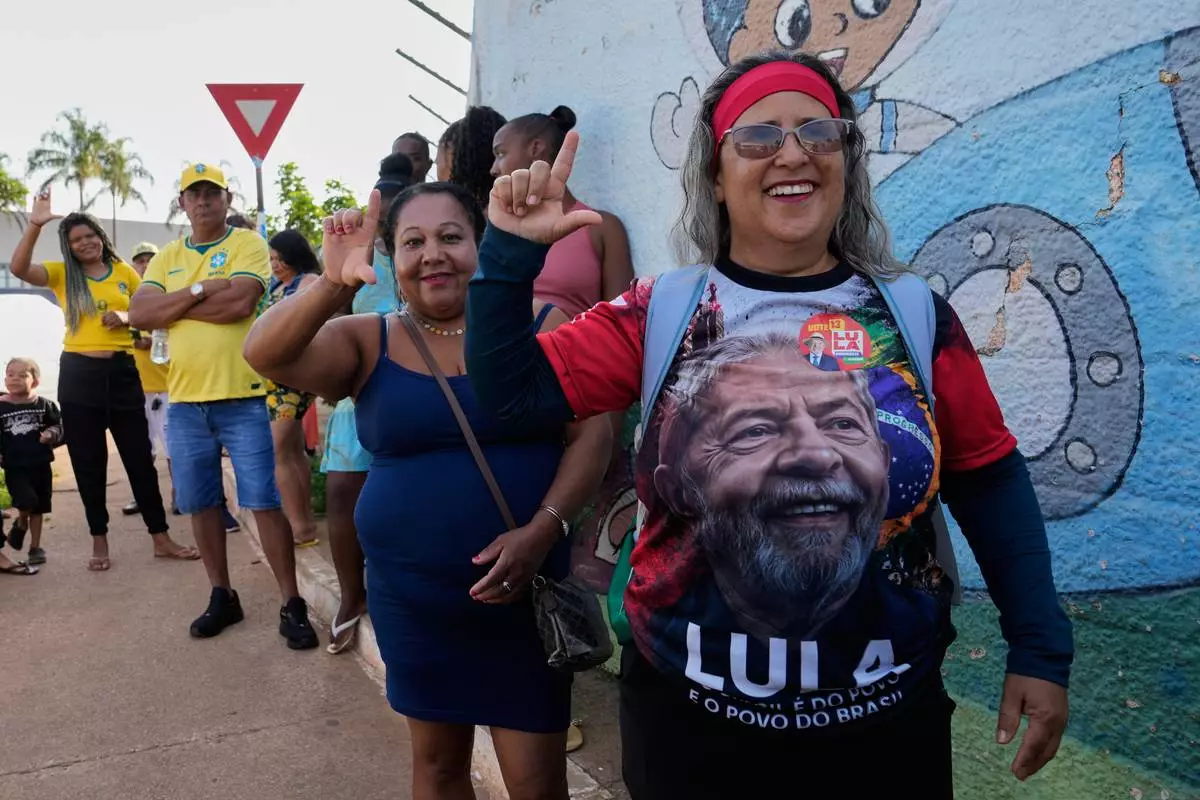
A supporter of President Luiz Inacio Lula da Silva, who is seeking reelection, lines up at a polling station during a presidential runoff in Brasilia, Brazil, Sunday, Oct. 25, 2026. (AP Photo/Eraldo Peres)
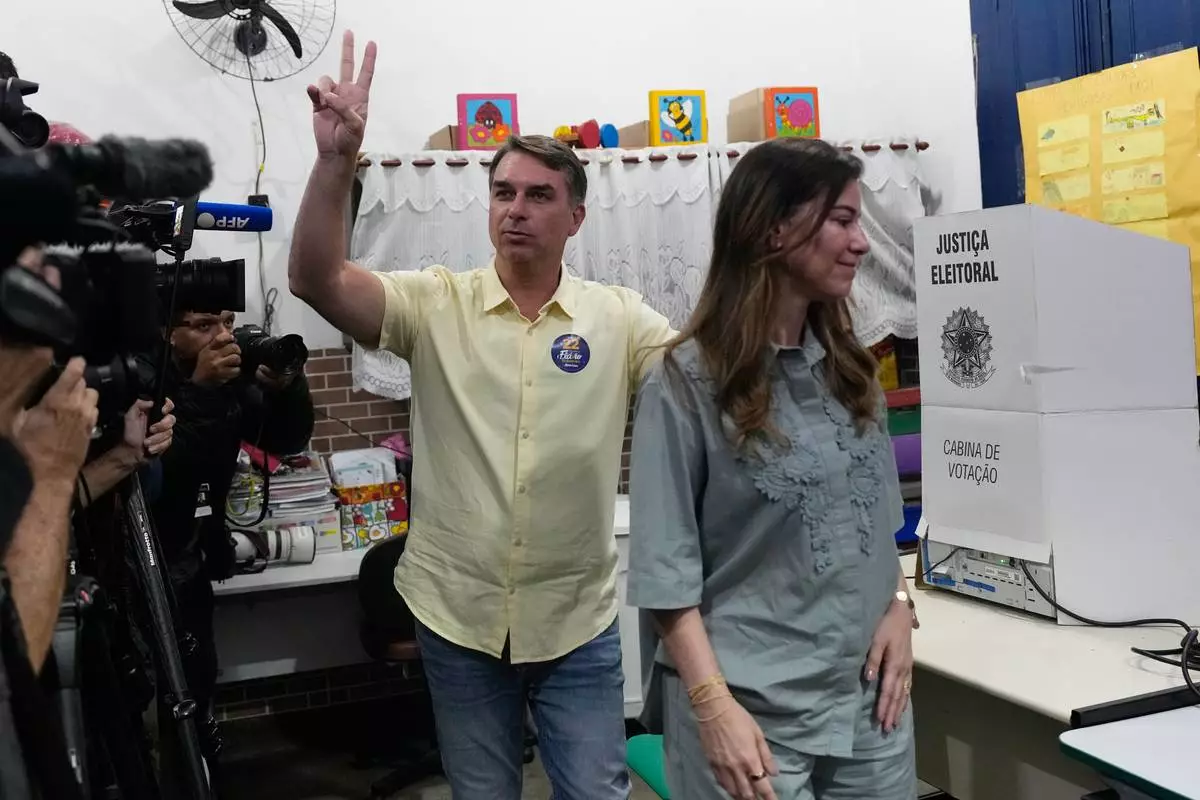
Opposition presidential candidate Sen. Flavio Bolsonaro makes the victory sign after voting in the presidential runoff in Rio de Janeiro, Sunday, Oct. 25, 2026. (AP Photo/Silvia Izquierdo)
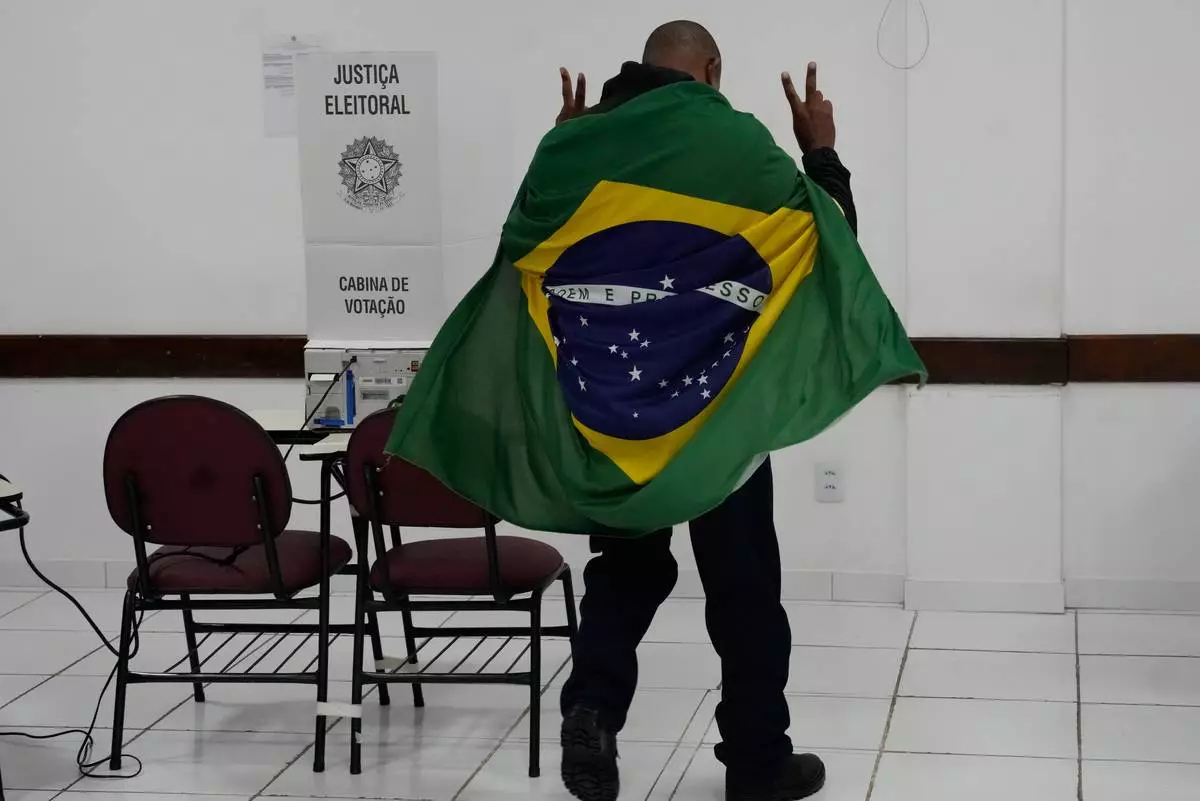
A man wrapped in a Brazilian flag arrives to vote in the presidential runoff in Brasilia, Brazil, Sunday, Oct. 25, 2026. (AP Photo/Eraldo Peres)
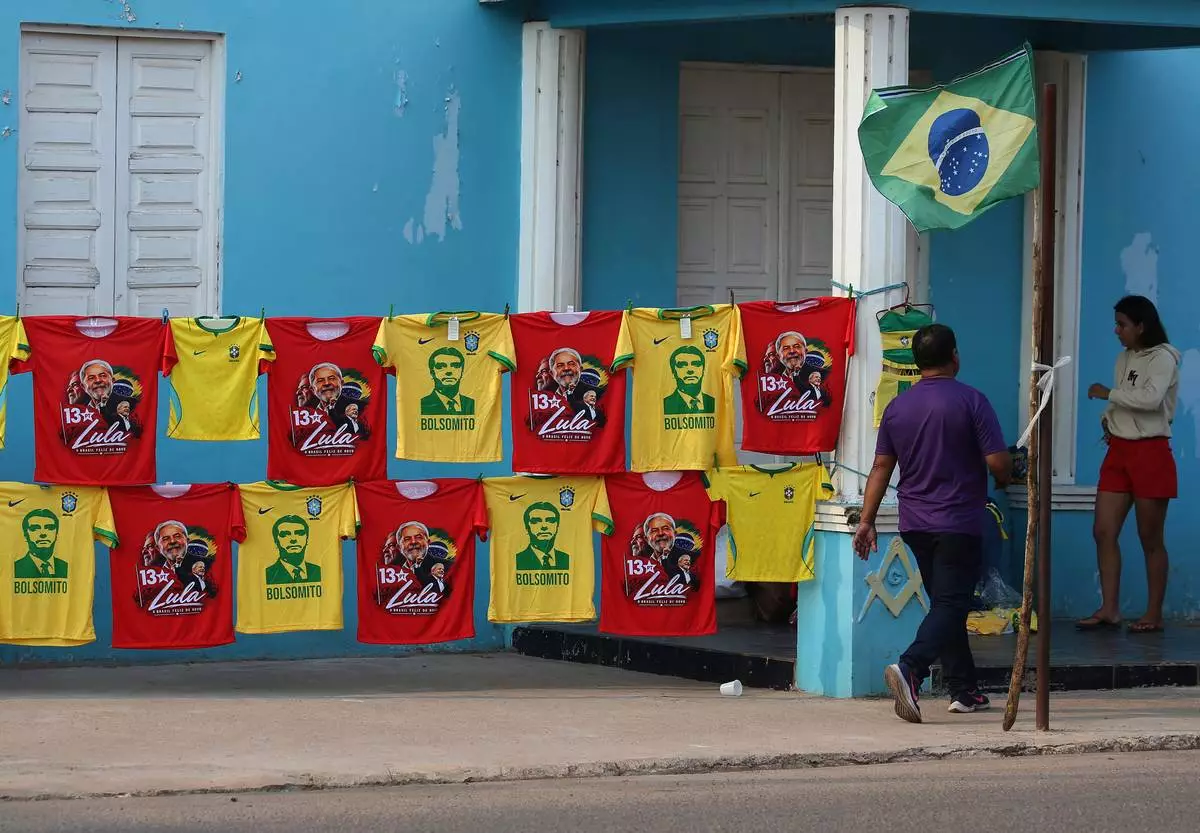
Red T-shirts depicting Brazilian President Luiz Inacio Lula da Silva, who is running for reelection, and yellow T-shirts depicting opposition presidential candidate Sen. Flavio Bolsonaro hang for sale outside a building ahead of Brazil's presidential runoff election in Autazes, Amazonas state, Brazil, Saturday, Oct. 24, 2026. (AP Photo/Edmar Barros)
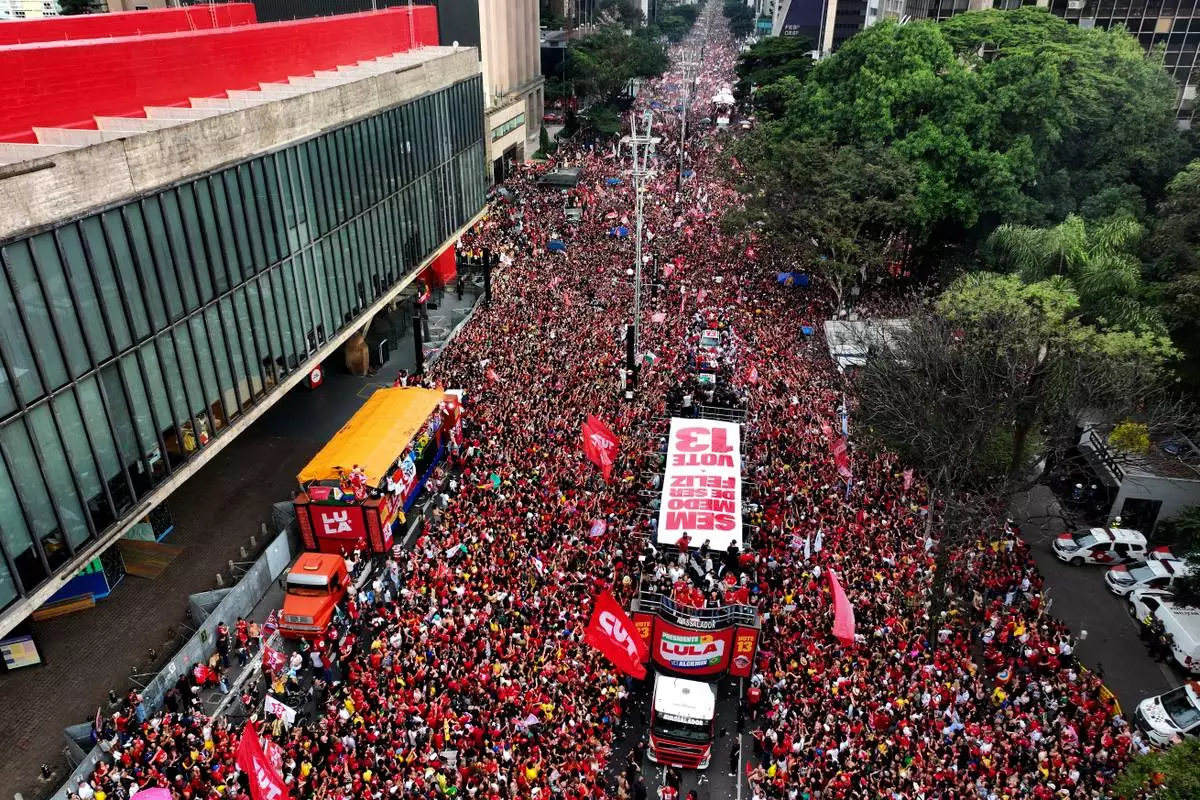
Supporters of Brazilian President Luiz Inacio Lula da Silva, who is running for reelection, crowd Paulista Avenue as his campaign vehicle passes during his final campaign rally ahead of Brazil's presidential runoff election in Sao Paulo, Brazil, Saturday, Oct. 24, 2026. (AP Photo/Andre Penner)
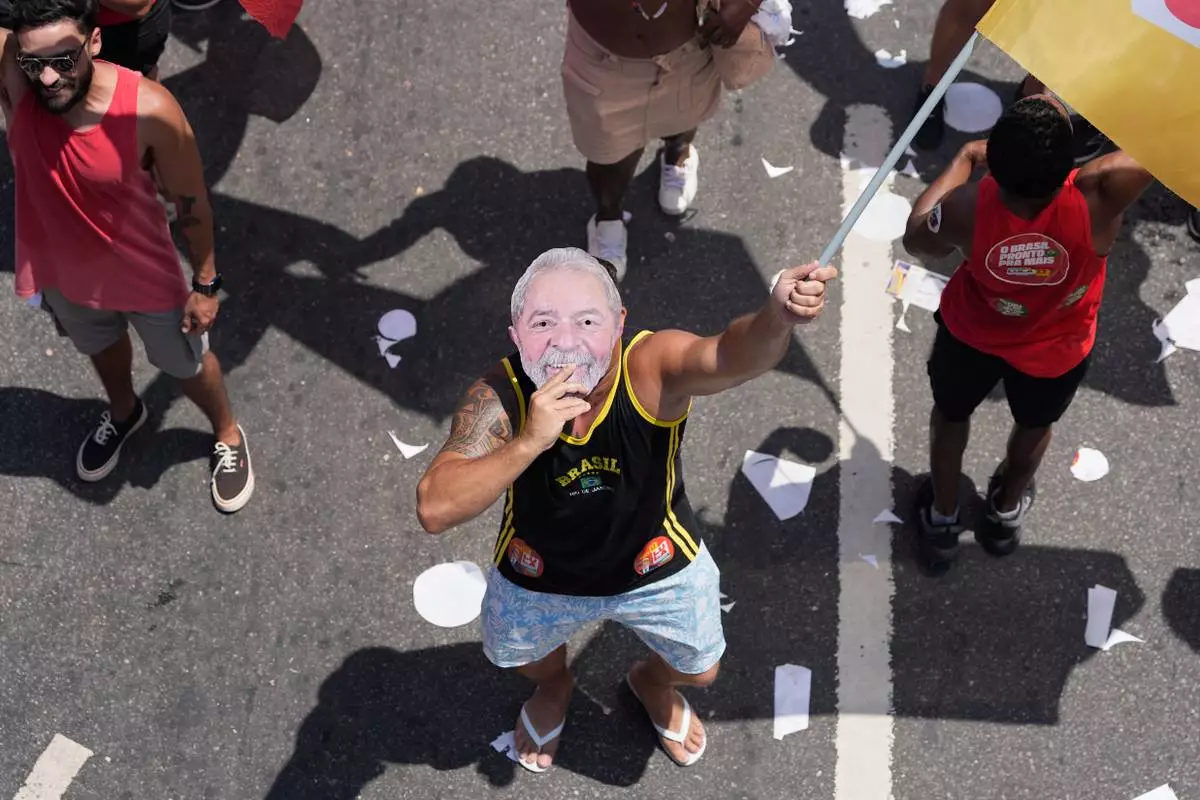
A supporter wears a mask of Brazilian President Luiz Inacio Lula da Silva, who is running for reelection, during his final campaign rally on Copacabana beach a day ahead of the presidential runoff election in Rio de Janeiro, Saturday, Oct. 24, 2026. (AP Photo/Silvia Izquierdo)

FILE - Brazil President Luiz Inacio Lula da Silva, right, who is running for reelection, gestures as opposition presidential candidate Sen. Flavio Bolsonaro stands beside him during a televised presidential debate one week before the runoff election in Sao Paulo, Brazil, Oct. 18, 2026. (AP Photo/Andre Penner, File)