Skip to Content Facebook Feature Image

CLPe Partners with Canadian International School of Hong Kong and Kwoon Chung Bus to Advance School Bus Electrification

HK

CLPe Partners with Canadian International School of Hong Kong and Kwoon Chung Bus to Advance School Bus Electrification
HK

HK

CLPe Partners with Canadian International School of Hong Kong and Kwoon Chung Bus to Advance School Bus Electrification

2026-10-26 12:08 Last Updated At:12:19

CLPe has joined hands with Canadian International School of Hong Kong (CDNIS) and Kwoon Chung Bus Holdings Limited (Kwoon Chung Bus) to electrify campus transport. CLPe has designed and built dedicated fast-charging facilities on campus, enabling CDNIS to switch to fully electric school buses. Under a one-stop Electric Vehicle Charging-as-a-Service solution, the project establishes an on-campus charging hub that supports school bus fleet operations through an innovative model. It promotes clean energy adoption and a greener campus, while supporting Hong Kong’s accelerated adoption of electric commercial vehicles.
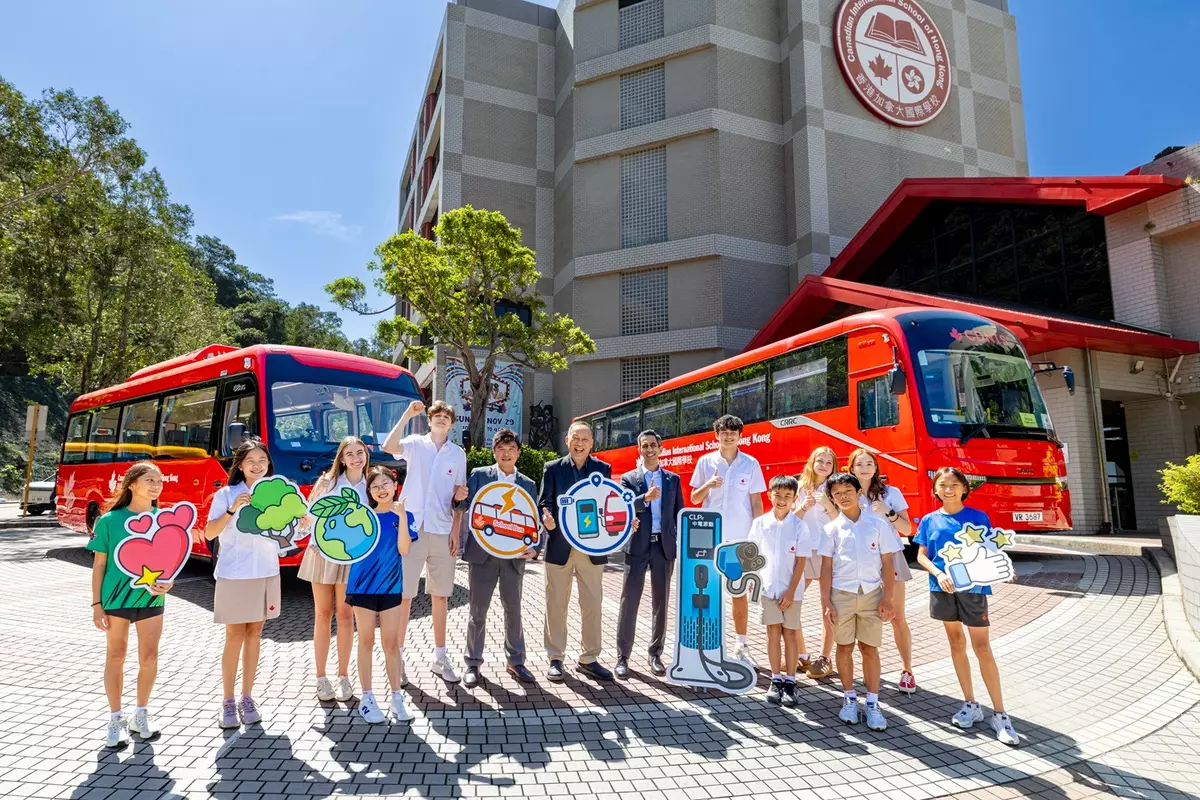
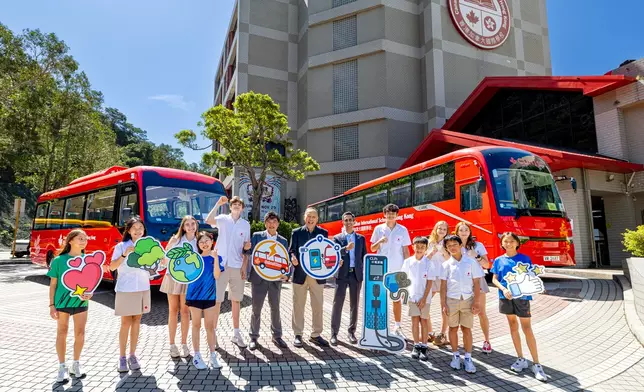
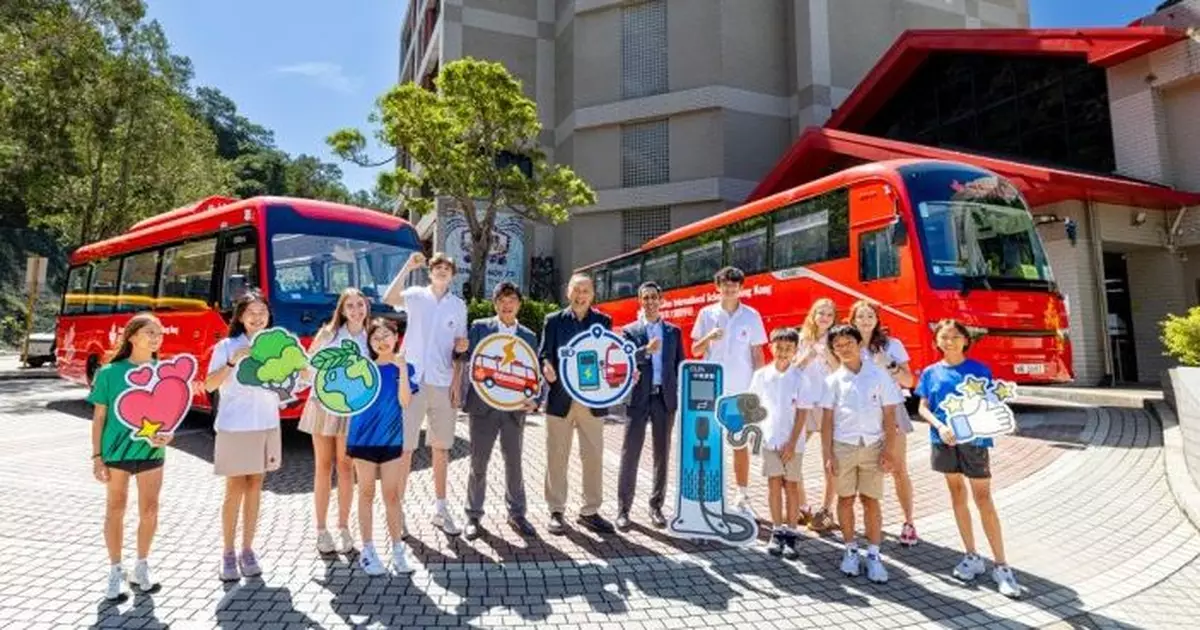
CLPe eMobility Director Mr Saraansh Dave (right), Canadian International School of Hong Kong Head of School Dr Wil Chan (middle) and Kwoon Chung Bus Holdings Limited Engineering Director Mr Rex Wong (left) witness the two fully electric school buses entering service, supporting the adoption of clean energy on campus and the wider uptake of electric commercial vehicles in the city.
CLPe eMobility Director Mr Saraansh Dave (right), Canadian International School of Hong Kong Head of School Dr Wil Chan (middle) and Kwoon Chung Bus Holdings Limited Engineering Director Mr Rex Wong (left) witness the two fully electric school buses entering service, supporting the adoption of clean energy on campus and the wider uptake of electric commercial vehicles in the city.

CDNIS is located on Nam Long Shan Road in Aberdeen on a hillside campus reached by winding roads. Most of the school’s more than 2,400 students and staff rely on school buses for their daily commute. The school began planning its transition to electric school buses two years ago and has since been actively exploring solutions suited to its campus operations.

More Images
CLPe eMobility Director Mr Saraansh Dave (right), Canadian International School of Hong Kong Head of School Dr Wil Chan (middle) and Kwoon Chung Bus Holdings Limited Engineering Director Mr Rex Wong (left) witness the two fully electric school buses entering service, supporting the adoption of clean energy on campus and the wider uptake of electric commercial vehicles in the city.

CLPe eMobility Director Mr Saraansh Dave (right), Canadian International School of Hong Kong Head of School Dr Wil Chan (middle) and Kwoon Chung Bus Holdings Limited Engineering Director Mr Rex Wong (left) witness the two fully electric school buses entering service, supporting the adoption of clean energy on campus and the wider uptake of electric commercial vehicles in the city.

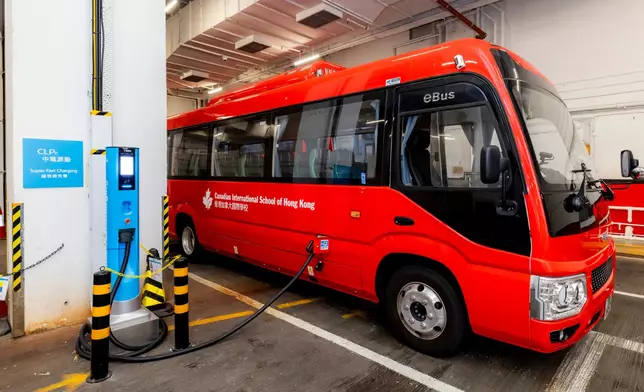
CLPe provides the Canadian International School of Hong Kong with a one-stop “Electric Vehicle Charging-as-a-Service” solution, featuring five fast-charging bays on campus with charging capacity of up to 240kW, to support rapid charging of the two electric school buses of a new model in Hong Kong.
CLPe provides the Canadian International School of Hong Kong with a one-stop “Electric Vehicle Charging-as-a-Service” solution, featuring five fast-charging bays on campus with charging capacity of up to 240kW, to support rapid charging of the two electric school buses of a new model in Hong Kong.

School bus electrification enables students to put sustainability into practice in their daily commute, integrating low-carbon principles into education and campus life.
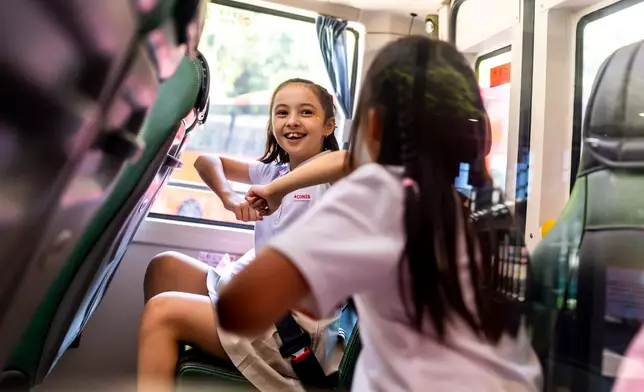
School bus electrification enables students to put sustainability into practice in their daily commute, integrating low-carbon principles into education and campus life.

School bus electrification enables students to put sustainability into practice in their daily commute, integrating low-carbon principles into education and campus life.

School bus electrification enables students to put sustainability into practice in their daily commute, integrating low-carbon principles into education and campus life.

Drawing on its expertise in energy solutions and EV charging infrastructure, CLPe first assessed the school’s electricity needs. It then planned and installed charging facilities to meet the operational requirements of Kwoon Chung Bus’s school bus fleet. The campus now has five fast-charging bays with charging capacity of up to 240kW. CLPe supports CDNIS from upfront investment through to ongoing operation and maintenance, helping it build reliable low-carbon transport infrastructure.
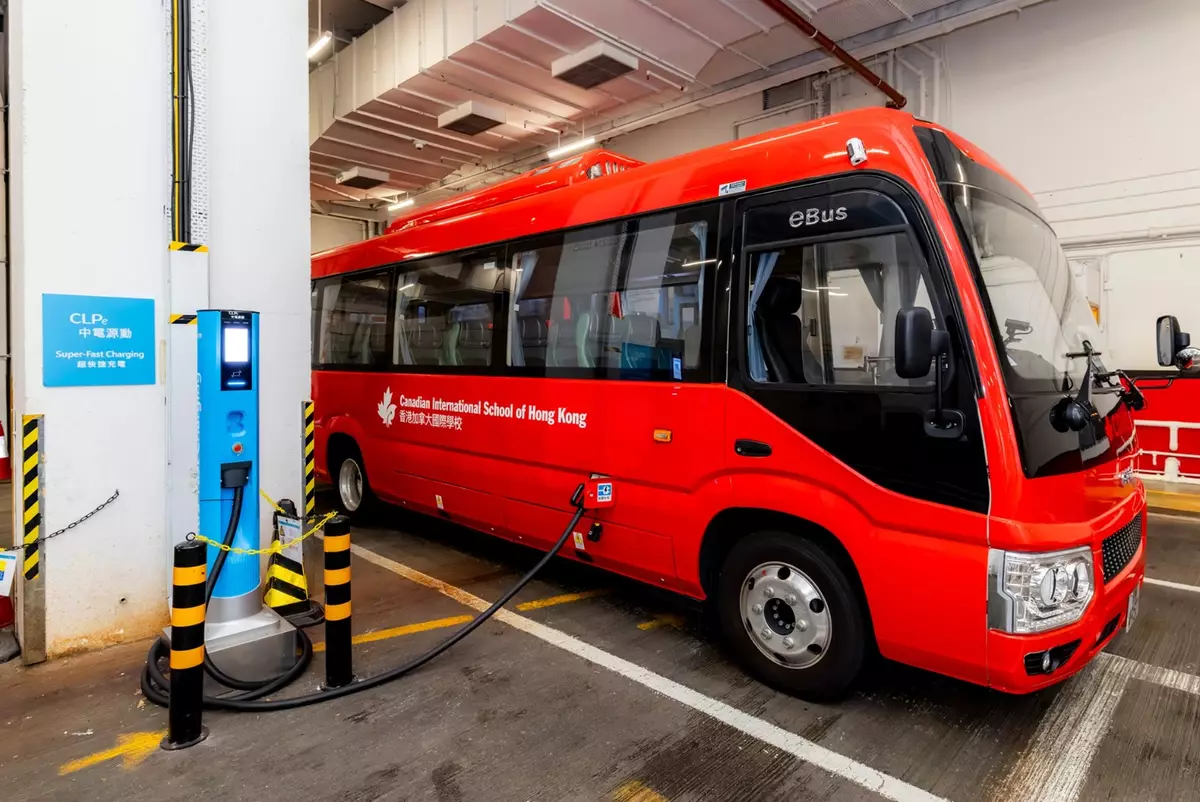
CLPe provides the Canadian International School of Hong Kong with a one-stop “Electric Vehicle Charging-as-a-Service” solution, featuring five fast-charging bays on campus with charging capacity of up to 240kW, to support rapid charging of the two electric school buses of a new model in Hong Kong.

CLPe provides the Canadian International School of Hong Kong with a one-stop “Electric Vehicle Charging-as-a-Service” solution, featuring five fast-charging bays on campus with charging capacity of up to 240kW, to support rapid charging of the two electric school buses of a new model in Hong Kong.

CLPe Managing Director Mr Ringo Ng said, “CLPe is pleased to support CDNIS and Kwoon Chung Bus with our one-stop ‘Electric Vehicle Charging-as-a-Service’ solution. It has helped overcome the challenges of on-campus charging and put electric school buses into service smoothly. This innovative business model effectively lowers the upfront investment barrier to fleet electrification and provides comprehensive support for future operations. As electric school buses carry students to and from school every day, students, teachers and parents can see for themselves how transport electrification improves air quality and reduces carbon emissions. Looking ahead, CLPe will continue to provide reliable charging infrastructure and professional services to help more commercial fleets go electric.”

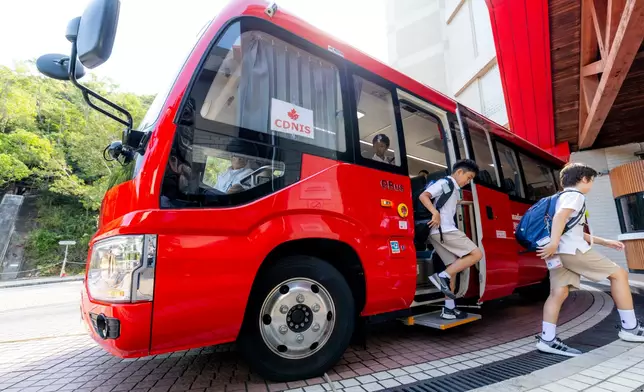
The two electric school buses have 28 and 60 seats respectively. They produce zero tailpipe emissions, creating a cleaner and quieter environment for the campus and the surrounding community. They also enable students to put sustainability into practice in their daily commute.

CDNIS Head of School Dr Wil Chan said, “Schools play a vital role in shaping not only young minds but also the values that guide future generations. The exciting introduction of electric school buses to our campus is an important step in our sustainability journey and reflects our commitment to reducing our environmental impact while creating meaningful learning opportunities for our students. Together with our valued partners, CLPe and Kwoon Chung Bus, we are turning a shared vision into action. This collaboration demonstrates the power of innovation, partnership, and collective responsibility in building a more sustainable future for our school community and for Hong Kong.”
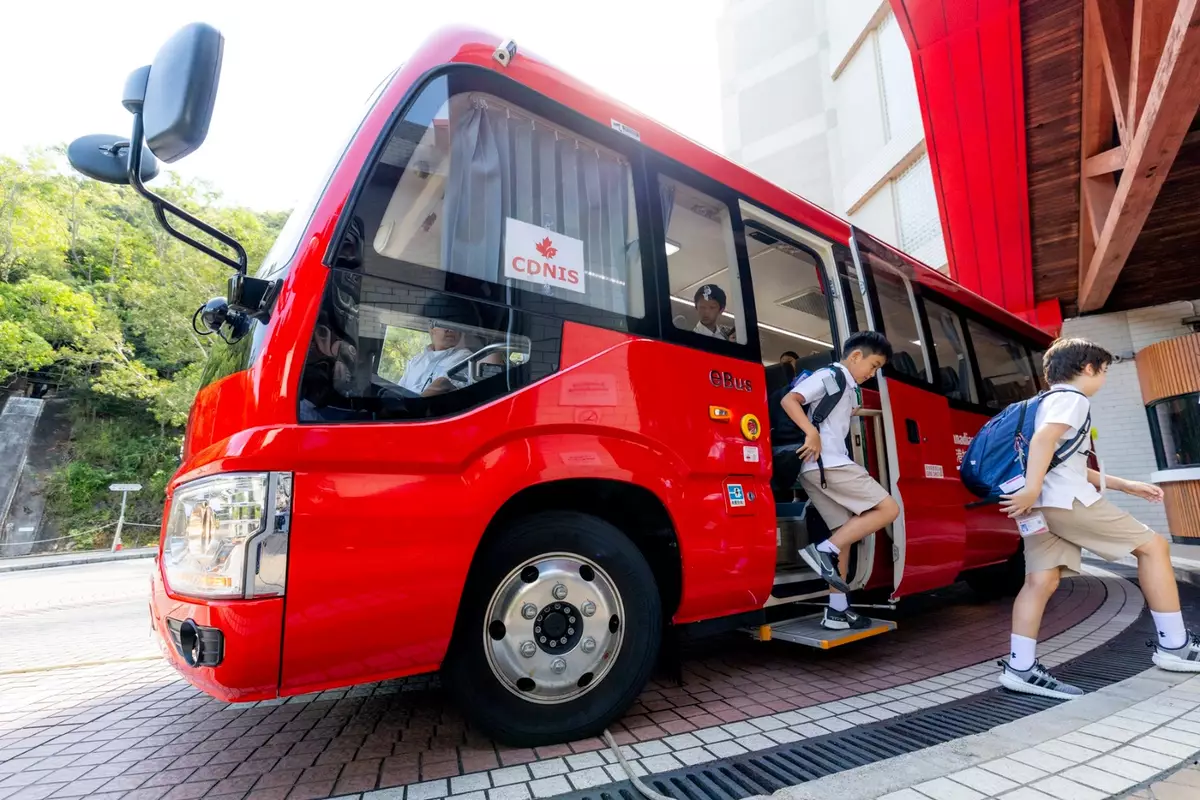
School bus electrification enables students to put sustainability into practice in their daily commute, integrating low-carbon principles into education and campus life.

School bus electrification enables students to put sustainability into practice in their daily commute, integrating low-carbon principles into education and campus life.

As CDNIS’s school bus service operator, Kwoon Chung Bus has introduced two electric buses of a new model to Hong Kong. Their next-generation battery and powertrain systems significantly enhance range on uphill routes, making them well suited to the city’s hilly terrain and to school bus operations. With battery capacities of 232kWh and 466kWh, the two school buses offer four to six times the capacity of a typical electric private car, which has a battery of around 50kWh to 80kWh. This is sufficient to meet the demands of long daily operating hours for transporting students.

Kwoon Chung Bus Holdings Limited Executive Director Mr Timothy Wong said, “Reliability and punctuality are the top priorities for school bus services. The key to adopting electric school buses lies in whether the charging infrastructure can support intensive daily operating schedules. In collaboration with the school and CLPe, the two electric school buses can be rapidly recharged on campus whenever needed, enabling flexible top-up charging between service runs. This helps maintain reliable and on-time school bus service while alleviating pressure from fuel costs. We look forward to gaining further operational experience with electric school buses and, in the future, expanding low-carbon transport services to more schools as we gradually advance fleet electrification.”
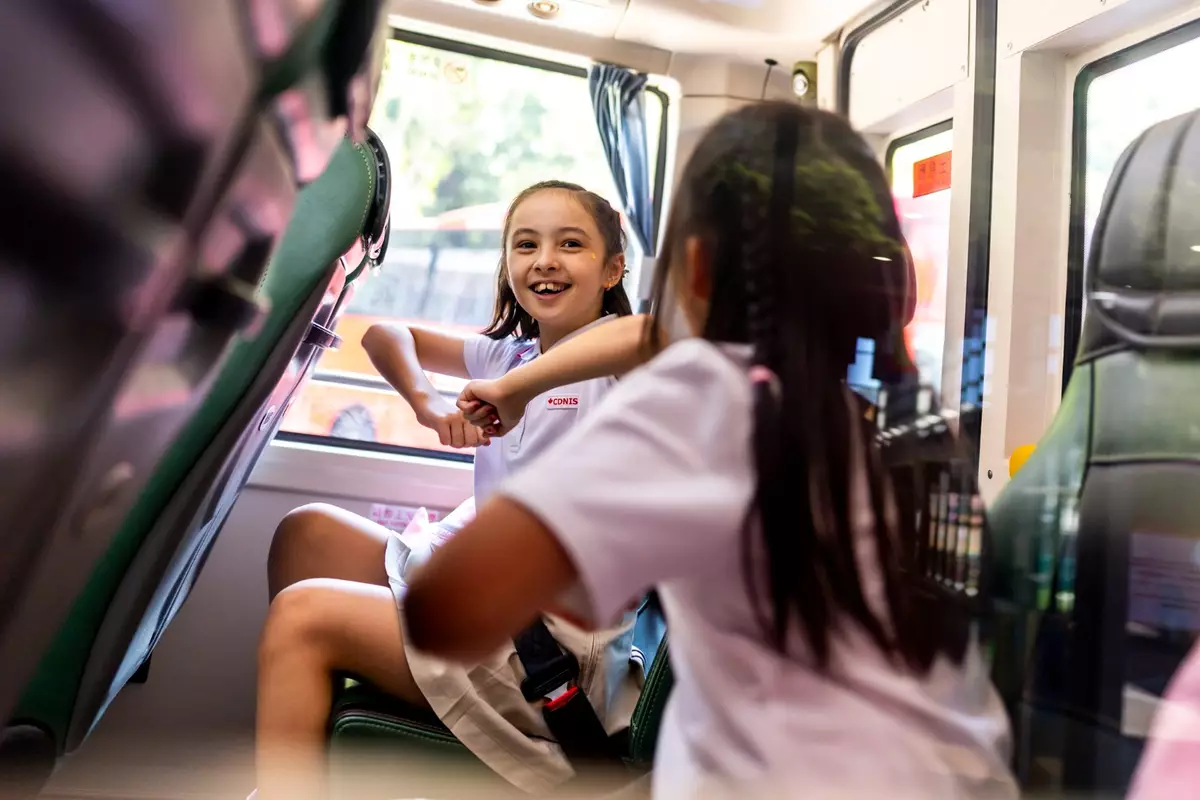
School bus electrification enables students to put sustainability into practice in their daily commute, integrating low-carbon principles into education and campus life.

School bus electrification enables students to put sustainability into practice in their daily commute, integrating low-carbon principles into education and campus life.

Kwoon Chung Bus will collect operational data to study the feasibility of expanding its electric school bus fleet. Depending on operational experience, CDNIS plans to transition fully to electric school buses in the coming years. This tripartite collaboration sets an example for the electrification of schools and commercial fleets in Hong Kong, and supports the long-term development of Hong Kong as a green-transport, low-carbon city.

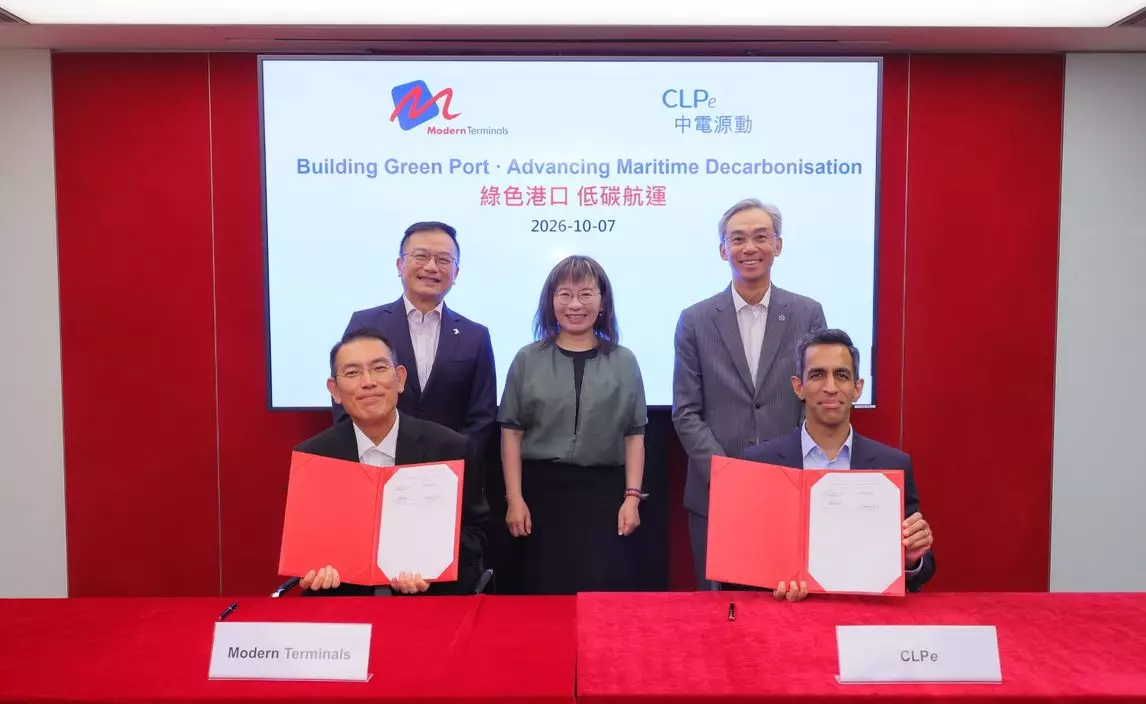
CLPe and Modern Terminals Limited (Modern Terminals) have recently signed a Memorandum of Understanding (MOU) to jointly develop an electrification roadmap and explore innovative low-carbon solutions for container port operations of Modern Terminals in Hong Kong, accelerating the transition towards a greener and more sustainable maritime ecosystem in line with the Hong Kong SAR Government's strategic initiatives.

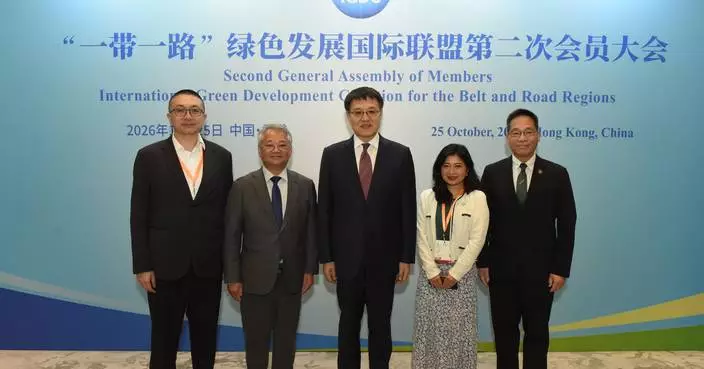
(Back row, from left) Witnessed by Modern Terminals Limited Group Managing Director Mr Horace Lo, Deputy Secretary for Transport and Logistics cum Commissioner for Maritime and Port Development Miss Amy Chan, and CLPe Managing Director Mr Ringo Ng, (front row, from left) Modern Terminals Limited Managing Director – Hong Kong Mr Charles Yung and CLPe eMobility Director Mr Saraansh Dave sign the MOU to jointly develop a port electrification roadmap and explore innovative low-carbon solutions for Hong Kong's container port operations.

(Back row, from left) Witnessed by Modern Terminals Limited Group Managing Director Mr Horace Lo, Deputy Secretary for Transport and Logistics cum Commissioner for Maritime and Port Development Miss Amy Chan, and CLPe Managing Director Mr Ringo Ng, (front row, from left) Modern Terminals Limited Managing Director – Hong Kong Mr Charles Yung and CLPe eMobility Director Mr Saraansh Dave sign the MOU to jointly develop a port electrification roadmap and explore innovative low-carbon solutions for Hong Kong's container port operations.

Under the MOU, CLPe and Modern Terminals will combine their expertise in energy infrastructure and port operations to develop a holistic approach to port electrification and green transformation. CLPe will support Modern Terminals’ decarbonisation strategy and long-term sustainability goals by exploring onshore power systems for container vessels, battery-swapping solutions for container tractors, charging infrastructure for electric vehicles and mobile equipment, and power infrastructure for electric barges.

Deputy Secretary for Transport and Logistics cum Commissioner for Maritime and Port Development Miss Amy Chan said at the MOU signing ceremony, “The partnership between Modern Terminals and CLPe marks a significant milestone in the green transformation of the container terminal operations, and a landmark moment for Hong Kong’s maritime industry to accelerate port electrification and maritime decarbonisation. Perfectly echoing the Government’s policy goals, this collaboration sets an example for the industry’s transition to a sustainable and low-carbon operating ecosystem.”

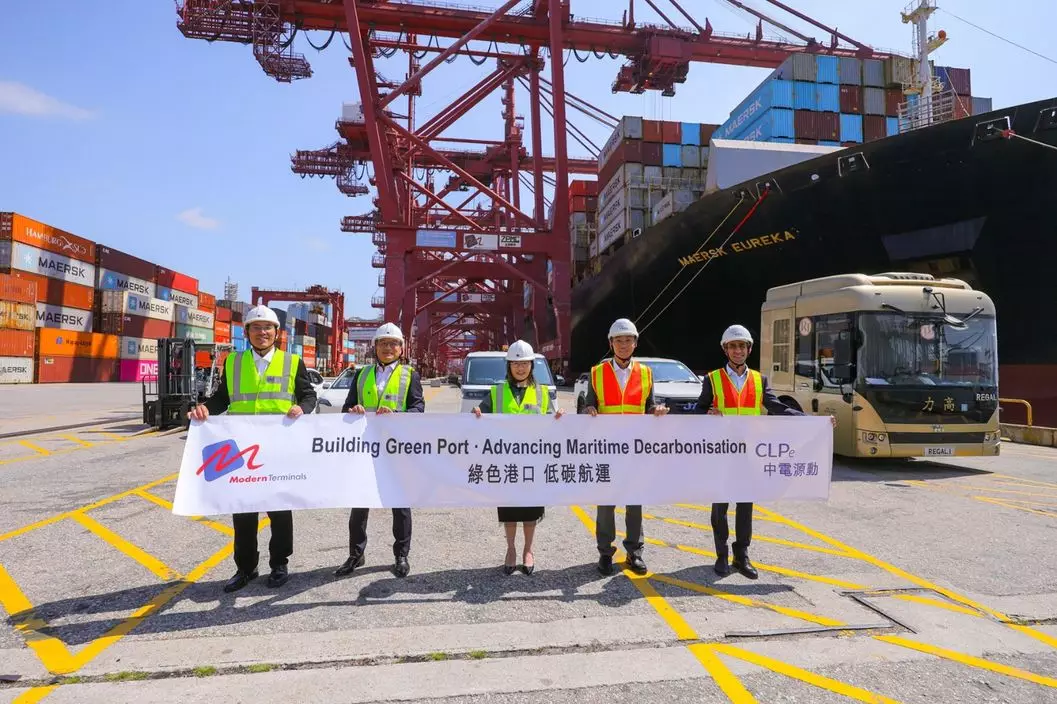
Under the MOU, CLPe and Modern Terminals will combine their expertise in energy infrastructure and port operations to explore electrification opportunities and lowcarbon solutions across the port ecosystem. (From left) Modern Terminals Limited Managing Director – Hong Kong Mr Charles Yung, Modern Terminals Limited Group Managing Director Mr Horace Lo, Deputy Secretary for Transport and Logistics cum Commissioner for Maritime and Port Development Miss Amy Chan, CLPe Managing Director Mr Ringo Ng, and CLPe eMobility Director Mr Saraansh Dave.

Under the MOU, CLPe and Modern Terminals will combine their expertise in energy infrastructure and port operations to explore electrification opportunities and lowcarbon solutions across the port ecosystem. (From left) Modern Terminals Limited Managing Director – Hong Kong Mr Charles Yung, Modern Terminals Limited Group Managing Director Mr Horace Lo, Deputy Secretary for Transport and Logistics cum Commissioner for Maritime and Port Development Miss Amy Chan, CLPe Managing Director Mr Ringo Ng, and CLPe eMobility Director Mr Saraansh Dave.

CLPe Managing Director Mr Ringo Ng said, “Decarbonising the maritime sector is vital to Hong Kong’s competitiveness as an international maritime centre. From supporting green marine fuel bunkering for ocean-going vessels to exploring innovative electrification solutions for port operations, CLPe is committed to advancing the city’s development as a green and smart port. Together with Modern Terminals, we aim to deliver one-stop solutions that set a new benchmark for greener port operations and propel the maritime industry towards a net-zero carbon future.”

Modern Terminals Limited Group Managing Director Mr Horace Lo said, “Following the establishment of our 2030 decarbonisation target to eliminate direct greenhouse gas emissions from our operations, we identified three potential pathways. With advances in battery technology, electrification has emerged as a key long-term pathway supplemented by other alternative green fuels. In addition, we are committed to supporting the green transition of shipping lines and barge operators. Achieving our decarbonisation goals requires strong support from the power sector, and we are pleased to have CLPe’s support on this important journey.”

Following the signing of the MOU, CLPe and Modern Terminals will launch a series of feasibility studies and technical assessments for the identified initiatives, with a view to developing a phased roadmap that advances Modern Terminals’ long-term electrification and sustainability goals.

Recommended Articles