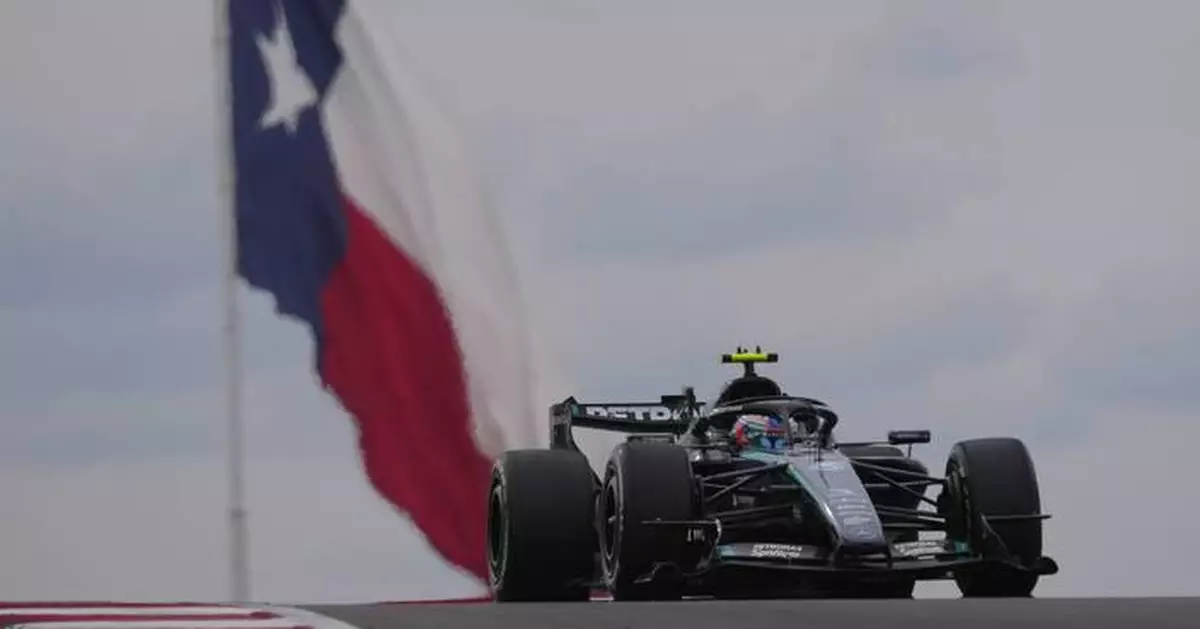
Victory in Texas didn't just put Kimi Antonelli on the verge of winning the Formula 1 title. It gave an important signal he could repeat the feat next year.
In recent weeks, Antonelli and Mercedes had been struggling with a package of car upgrades that often seemed more like downgrades as Max Verstappen and Red Bull took advantage to win back-to-back races.
But Antonelli’s dominant win from pole position at the Circuit of the Americas on Sunday showed he’s now confident of getting the best out of the car over a full race distance at a pace Red Bull and Ferrari largely couldn’t match.
“All this time putting so much work into bringing this new package and finally seeing the result is very pleasant,” he said.
In Singapore earlier this month, Antonelli said there was only a “very, very small” window of performance to unlock the new design's benefits before it became skittish and unpredictable.
Now the car is working as intended, he says there's more to come.
“In some places, I would say, still not as much as we expected, but in other places it is delivering very well,” Antonelli said. “We’re still struggling a little bit in low-speed with front locking, but overall, I feel like the package is finally starting to deliver.”
With much smaller regulation tweaks coming for 2027 compared with the sweeping changes implemented this year, what teams learn from late-season developments can have a direct benefit next year.
Only one of Mercedes' drivers is seeing the benefit. George Russell was at a loss for his “rubbish” pace as he finished eighth in Texas. A five-second penalty didn't help, but Russell told Sky Sports he was clueless about the rest of the yawning gap to Antonelli.
“Hopefully there are some answers somewhere but at the moment I don’t have them,” he said.
Russell has less experience with the upgrades after the team put him back on the old package in Singapore to make a side-by-side comparison.
Verstappen's still a threat after Red Bull developments made his set up more predictable, but the car is slow off the line at the start of the race and it's costing him. Verstappen started second alongside Antonelli but spent his first lap under attack from Charles Leclerc as Antonelli zoomed off into a lead that was never seriously under threat.
“The start definitely is something we’ve improved massively,” Antonelli said. “We were nowhere at the beginning of the season, and now we’re good, so that’s definitely one less thing to worry about.”
See AP’s full auto racing coverage here

Mercedes driver Andrea Kimi Antonelli of Italy celebrates on the podium after winning the Formula One U.S. Grand Prix auto race in Austin, Texas, Sunday, Oct. 25, 2026. (AP Photo/Eric Gay)

Mercedes driver Andrea Kimi Antonelli of Italy, center, celebrates after winning the Formula One U.S. Grand Prix auto race in Austin, Texas, Sunday, Oct. 25, 2026. (AP Photo/Eric Gay)

Mercedes driver Andrea Kimi Antonelli of Italy steers his car during the Formula One U.S. Grand Prix auto race in Austin, Texas, Sunday, Oct. 25, 2026. (AP Photo/Eric Gay)
CAIRO (AP) — High-level delegations from Saudi Arabia, Pakistan and Turkey were in Tehran on Monday for meetings with Iranian authorities to try to avert renewed fighting between Iran and Israel and the United States, Iran's Foreign Ministry said.
The talks come as many in Iran are bracing themselves for the possible return to a return to all-out war, as Israeli and American leaders have been sharpening their threats ahead of pending elections in both countries, while Iranian leaders have remained defiant.
Saudi Defense Minister Khalid bin Salman, Pakistan army chief Field Marshal Asim Munir and Ibrahim Kalin, the head of Turkey’s intelligence service, were to meet with Iran’s top security officials and negotiators to push for a deal between Tehran and Washington.
The war in Yemen and strikes by Iranian-backed Houthi rebels against Saudi Arabia were topics also on the table, according to two regional officials who spoke on condition of anonymity because they were not authorized to speak to reporters.
Iran’s Foreign Ministry spokesperson, Esmail Baghaei, told reporters in the Iranian capital that the meeting's agenda was not set, but that they would “undoubtedly address the most pressing threats to regional security.”
Saudi Arabia said in a statement that the delegations hoped to find “ways to de-escalate tensions, enhance regional security and promote its stability.”
Qatari mediators were in Tehran on Sunday, working in coordination with the U.S., as part of ongoing efforts to de-escalate regional tensions, according to a regional official speaking on condition of anonymity due to the sensitivity of the talks.
Pakistan and Qatar helped broker an agreement in June aimed at having Iran fully reopen the Strait of Hormuz to shipping, ending a U.S. blockade of Iranian ports and opening negotiations on a broader settlement addressing Iran’s nuclear program. The deal unraveled quickly, however, as both sides renewed attacks.
With worries about renewed fighting ahead of Israel's election on Tuesday and the Nov. 3 midterm elections in the U.S., Baghaei on the weekend said Tehran had not closed the window of diplomacy and that messages were being passed to the U.S. via intermediaries.
With negotiations long stalled, he said that the U.S. appears to be persisting in unilateral demands and that Trump and U.S. officials repeatedly use the phrase “complete surrender,” which Baghaei said no Iranian accepts.
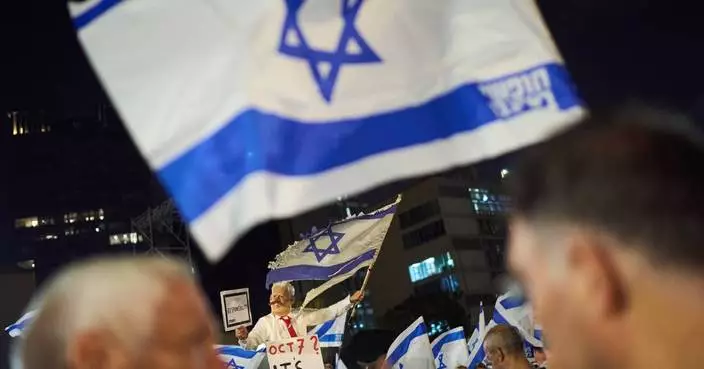
Israeli Prime Minister Benjamin Netanyahu, meantime, repeated his warning on Sunday that Iran or its proxies could attack ahead of the close elections to disrupt the vote, citing intelligence.
“The (military) is ready both to defend and to strike,” he said in a video statement, adding: “You will suffer disproportionate blows far greater than you can imagine.”
Israel’s Channel 12 reported Sunday night that Netanyahu and his military chief of staff clashed over an instruction by Netanyahu to carry out an “action” that the army believes could quickly trigger a resumption of the conflict with Iran.
Netanyahu’s office later described the report as “fake news.” There was no immediate military comment.
Asked whether Iran was planning attacks, Baghaei on Monday only said that “the Israeli regime is highly skilled at carrying out false-flag operations.”
He underscored, however, that “we are in a state of war” and that Iran would defend itself.
"The Islamic Republic of Iran will not hesitate to exercise its inherent right to self-defense to protect Iran’s sovereignty, territorial integrity, and independence,” he said.
Yemen has become a widening front in the Iran war that began in February, with the Houthis increasingly launching attacks on Saudi Arabia because it supports Yemen’s internationally recognized government battling the rebels.
The conflict has intensified since forces from the internationally recognized government and Saudi-led coalition launched airstrikes on Houthi-held Sanaa International Airport in July, shattering a 2022 ceasefire deal that largely stopped the fighting in the country’s civil war.
Early Monday, the Houthi military spokesperson Yahya Saree said the rebel group had fired ballistic missiles at military gatherings and weapons depots belonging to Saudi-backed government forces in Aden and Lahj provinces. He claimed the attacks caused the loss of military equipment and personnel but did not provide evidence of the strikes.
The Associated Press couldn’t independently verify the claims.
Associated Press journalists Victoria Eastwood and Fatma Khaled in Cairo, Natalie Melzer in Tel Aviv, Israel, Munir Ahmed in Islamabad and David Rising in Bangkok contributed to this report.
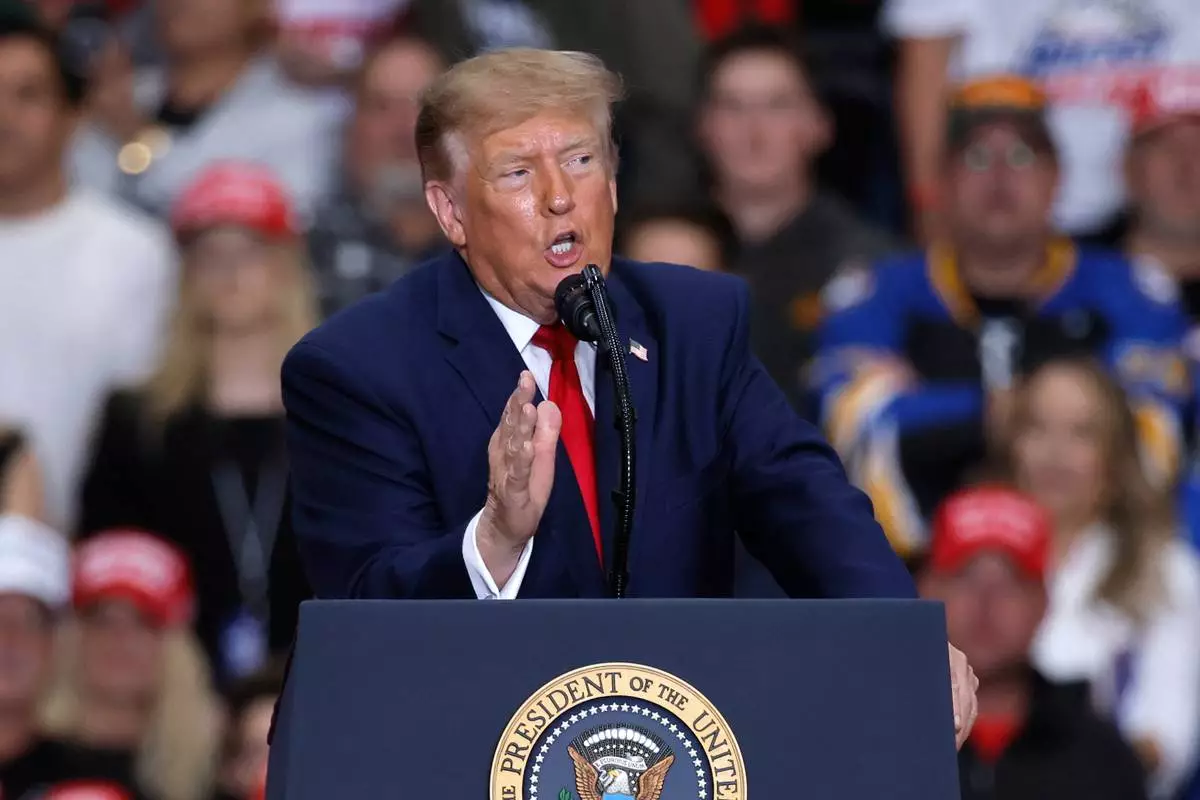
President Donald Trump speaks during a campaign rally at McMorran Place Arena in Port Huron, Mich., Sunday, Oct. 25, 2026. (AP Photo/Duane Burleson)
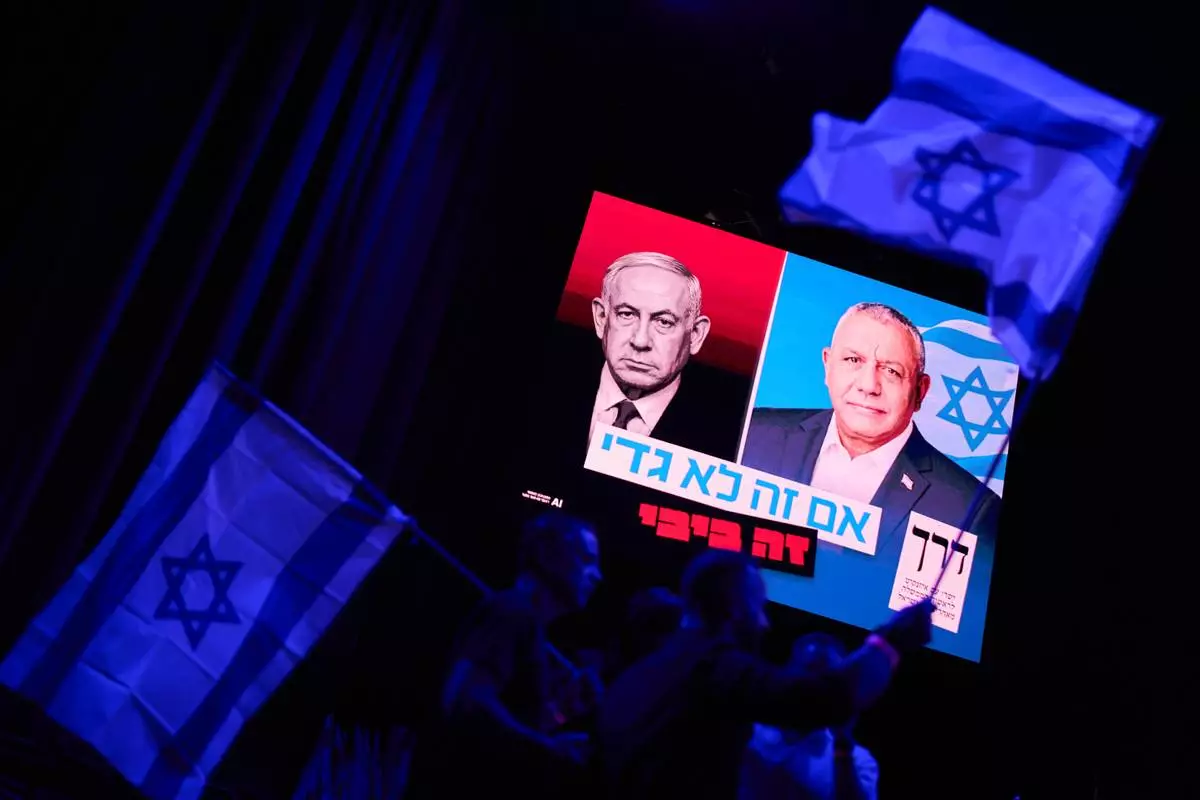
A screen projects an image of Israeli Prime Minister Benjamin Netanyahu, left, and his main rival, opposition candidate Gadi Eisenkot, leader of the Yashar ("Straight") party, during a campaign rally for Eisenkot ahead of Israel's general election, Sunday, Oct. 25, 2026, in Tel Aviv, Israel. (AP Photo/David Goldman)
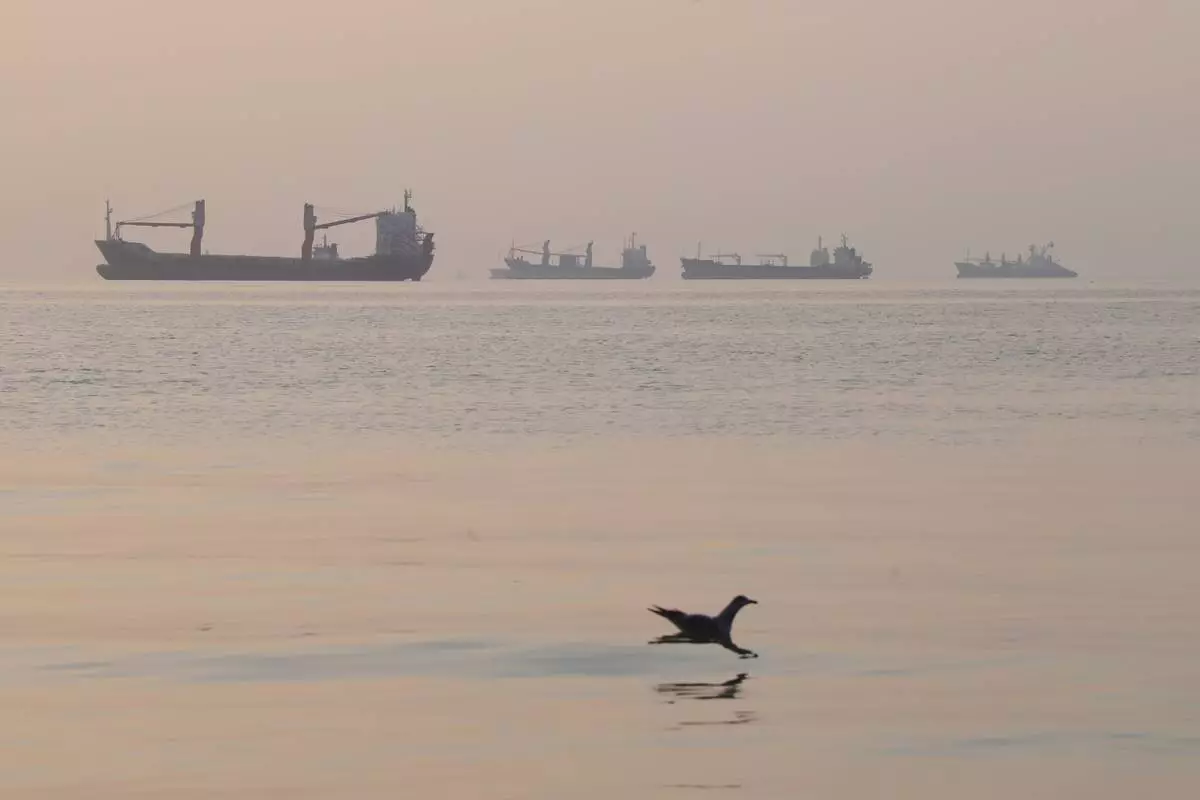
A bird flies low over the water as cargo ships lie at anchor in the Strait of Hormuz off Bandar Abbas, Iran, early Saturday, Oct. 24, 2026. (Amirhosein Khorgooi/ISNA via AP)