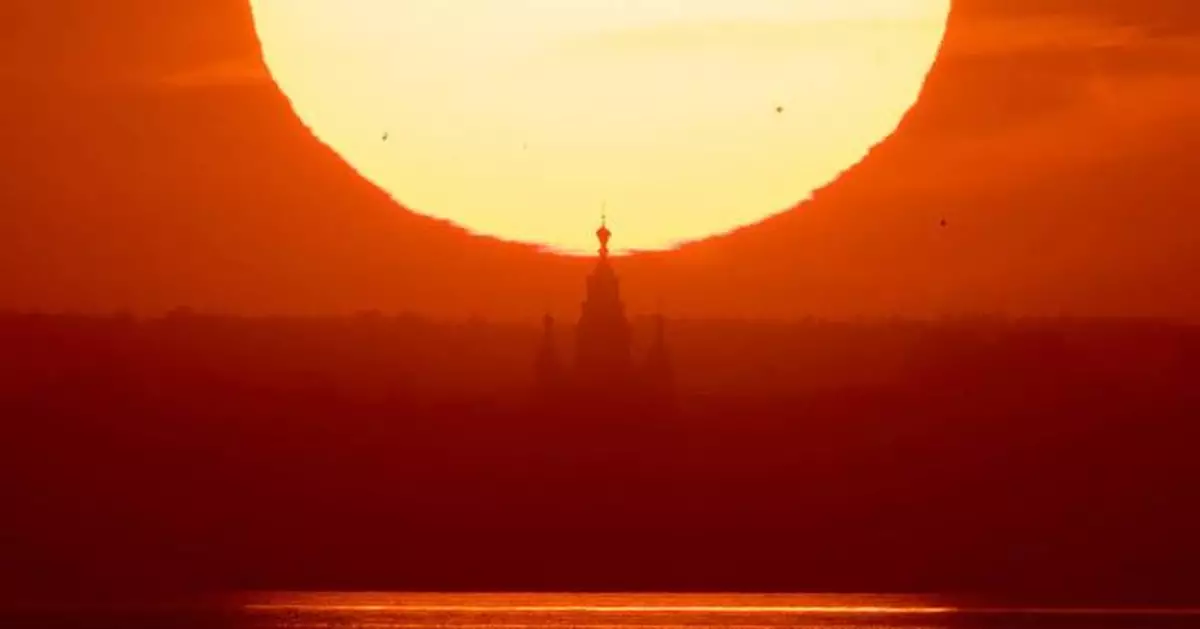
ST. PETERSBURG, Russia (AP) — Associated Press photojournalist Dmitri Lovetsky is based in St. Petersburg, Russia, and has worked for the AP since 2002.
Here’s what Lovetsky had to say about this extraordinary photo:
I like to take photos of sunsets and moonsets from a distance over historic buildings on the ground. The farther the object on the ground is from the photographer’s position, the larger the moon or sun will appear. I’ve long wanted to photograph a sunset with the Cathedral of Saints Peter and Paul in Peterhof, a suburb of St. Petersburg.
This required a combination of the right azimuth toward which the sunset occurs and a clear sky near the horizon. To determine my location and time of shooting, I use the TPE app on my phone — The Photographer’s Ephemeris — a precision planning tool that helps photographers visualize the sun, moon, and natural light anywhere on Earth.
For this shot, I realized I needed to be on the other side of the Gulf of Finland at Vasilievsky Island. The distance to the cathedral is 17 kilometers (10.5 miles). I traveled several times to the shooting location, but clouds prevented me from taking the photo. Finally, I succeeded.
I used a Sony 400-800 lens with an X2 converter. The actual focal length was 1340 mm. Program: Manual. ISO:320, Aperture:22, Shutter:1/1000, RAW. Editing in Capture One, about 70% crop.
In my opinion, this photograph works because it concisely combines the earthly and the cosmic in a single image without being overloaded with unnecessary details.
I’m glad I finally managed to take this photo, as good weather in St. Petersburg is rare, but this time all the circumstances were perfect.
See more extraordinary AP photography.
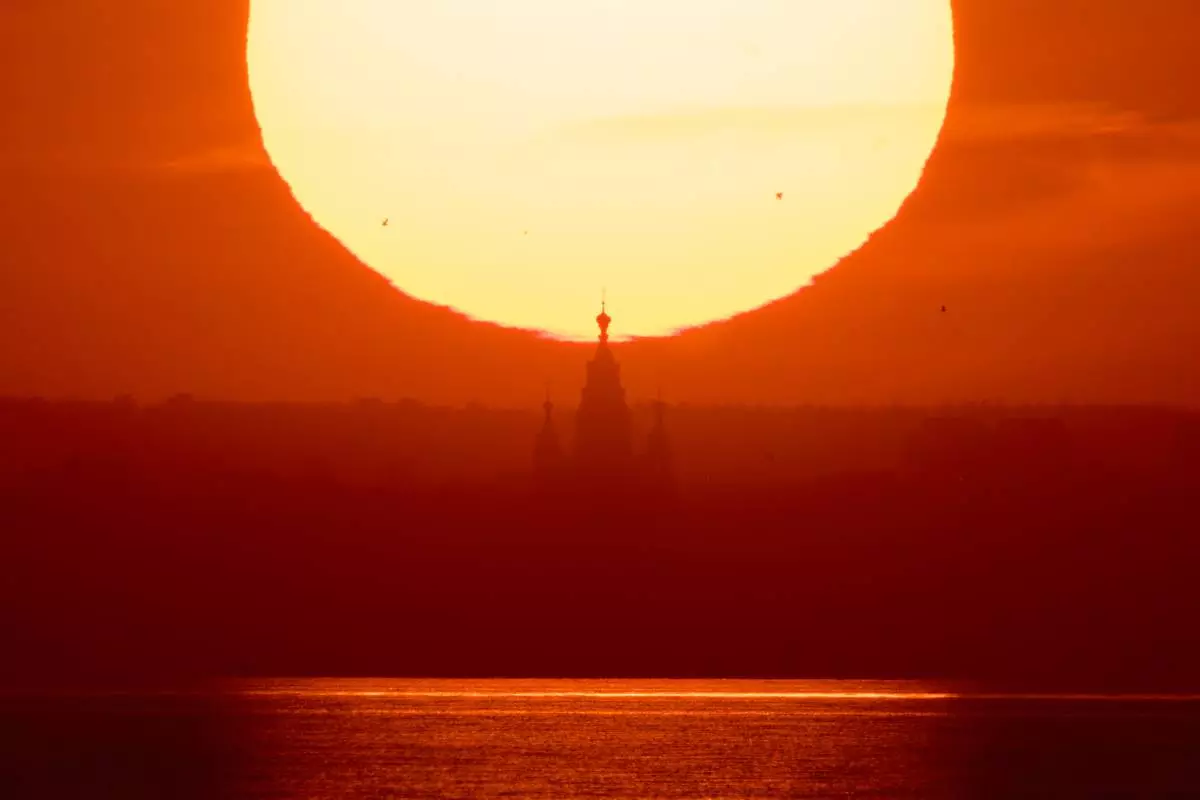
The sun sets behind the Saints Peter and Paul Cathedral in Petergof outside St. Petersburg, Russia, Monday, Oct. 19, 2026. (AP Photo/Dmitri Lovetsky)
AMMAN, Jordan (AP) — Jordan carried out airstrikes against armed groups in Syria in retaliation for Friday’s attack on a Greek Orthodox Church in the southern Jordanian city of Karak that killed nine people, the Jordanian air force said in a statement.
It said the operation “resulted in the killing and wounding of many members of these terrorist groups and the destruction of a number of their vehicles.” It did not specify who the groups were or the precise location of the strikes.
Syrian state media reported that civilians had been killed in the strikes. The director of health in the southern province of Daraa, where the strikes took place, told state news agency SANA that at least five civilians had been killed, including women and children and a 65-year-old man.
Earlier Monday, Jordanian authorities arrested three men for last week's attack, which also wounded more than two dozen people. The arrests followed a dawn shootout, and all three men were wounded, officials said.
The attack struck the Greek Orthodox Church during a funeral in Karak, about 90 kilometers (55 miles) south of the capital, Amman, on Friday. Karak is home to a minority Christian population.
The attack shocked the nation, and Jordan declared three days of mourning for the victims. No group immediately claimed responsibility for the attack; the attackers' motive remained unknown.
Later Monday, the Public Security Directorate identified the three arrested men as brothers Hazzah Zaidan Mohammad and Mishal Zaidan Mohammad, and their brother-in-law Ahmad Sami Hussein. All three are Jordanian; they were taken into custody in Karak, south of Amman.
The agency's chief described the gunmen as “takfiri,” a term used for Sunni militants, but said they were not tied to any organized group.
“They only represent themselves,” Maj. Gen. Obaidallah Abd Rabbo Al-Maayta told a news conference. He also said a large cache of munitions was found in the abandoned house where Jordanian forces apprehended the men.
Jordan’s Interior Minister Mazen Al-Faraya said the attack by the three was the result of “a terroristic, extremist way of thinking.”
“If this way of thinking is not resolved, we will see incidents like this again,” he told reporters.
Jordan's King Abdullah II had ordered authorities to respond with “an iron fist” against what he called the outlaws of Islam and anyone attempting to undermine the unity of the Jordanian people.
“We vowed the terrorists would not escape punishment, and no proponent of dark ideologies that divide Jordanians will be tolerated,” he said in a statement on Monday.
Relatives of the victims said the arrests brought them some relief.
“Despite the profound and immense tragedy, what happened today has eased our grief — and the grief of the Jordanian people — not just for us, the families of the martyrs," Khaled al-Borqan, himself a survivor of the attack and a relative of three of the people killed, told Al-Mamlaka.
“Despite the sadness and pain, the news brought us joy,” Fares Halaseh, an uncle of one of the victims and a survivor of the attack, told the TV station.
But the pain remains, he added. "We will not forget this agony for years to come.”
Associated Press writer Kareem Chehayeb in Beirut contributed to this report.
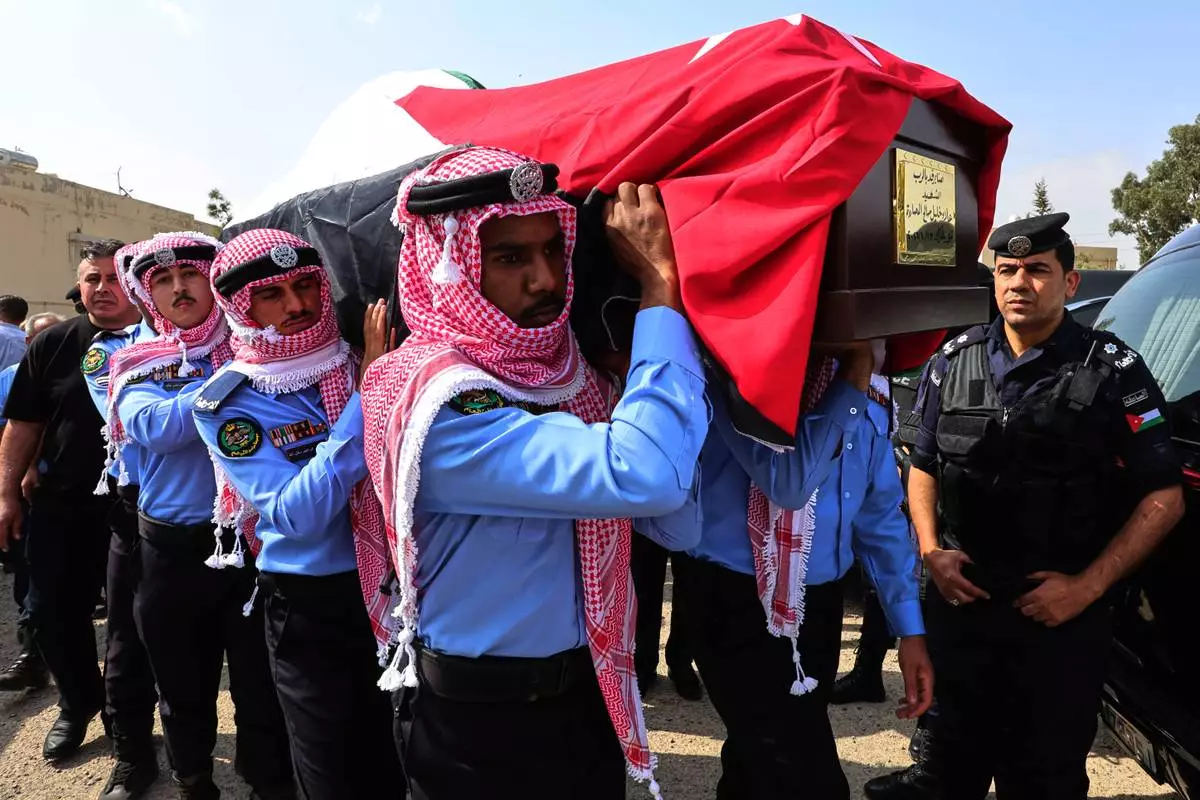
Jordanian honor guards carry a flag-draped coffin of on of the victims killed in an attack on a Greek Orthodox church during their funeral procession in Karak, Jordan, Sunday, Oct. 25, 2026. (AP Photo/Raad Adayleh)
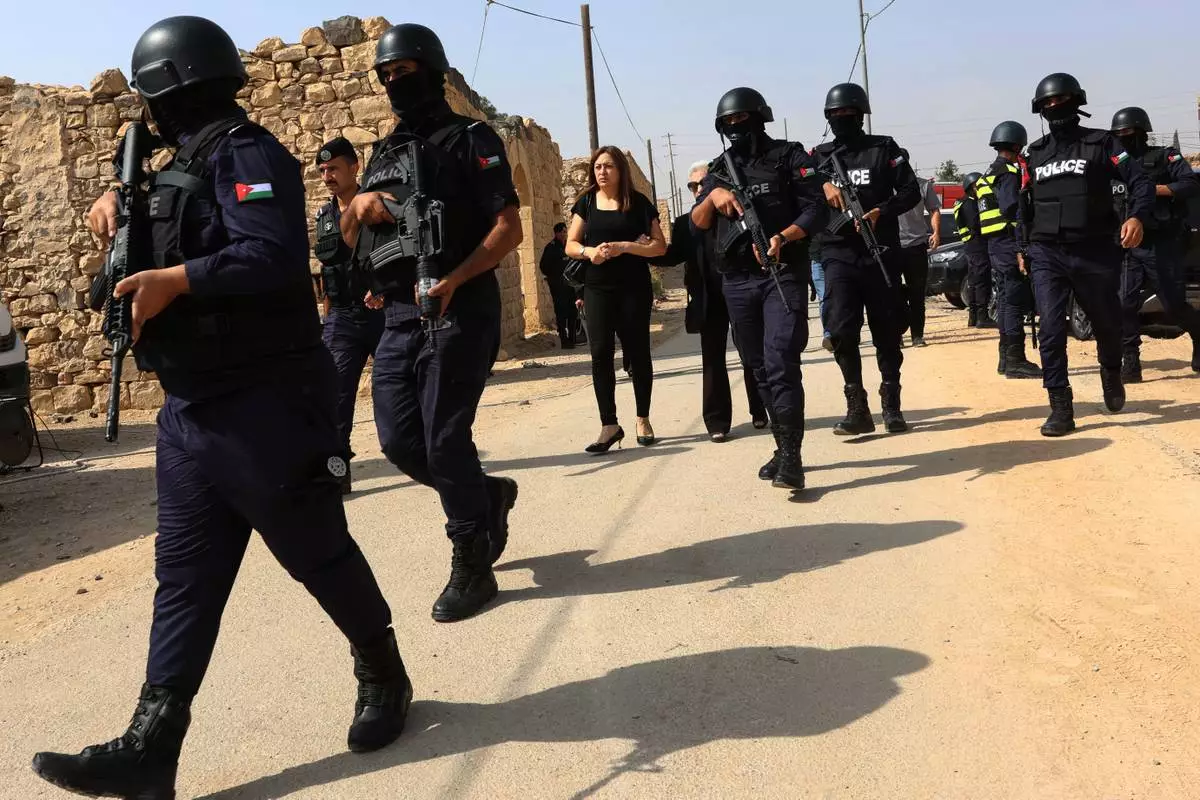
Armed Jordanian police officers patrol near mourners during the funeral of victims killed in an attack on a Greek Orthodox church in Karak, Jordan, Sunday, Oct. 25, 2026. (AP Photo/Raad Adayleh)
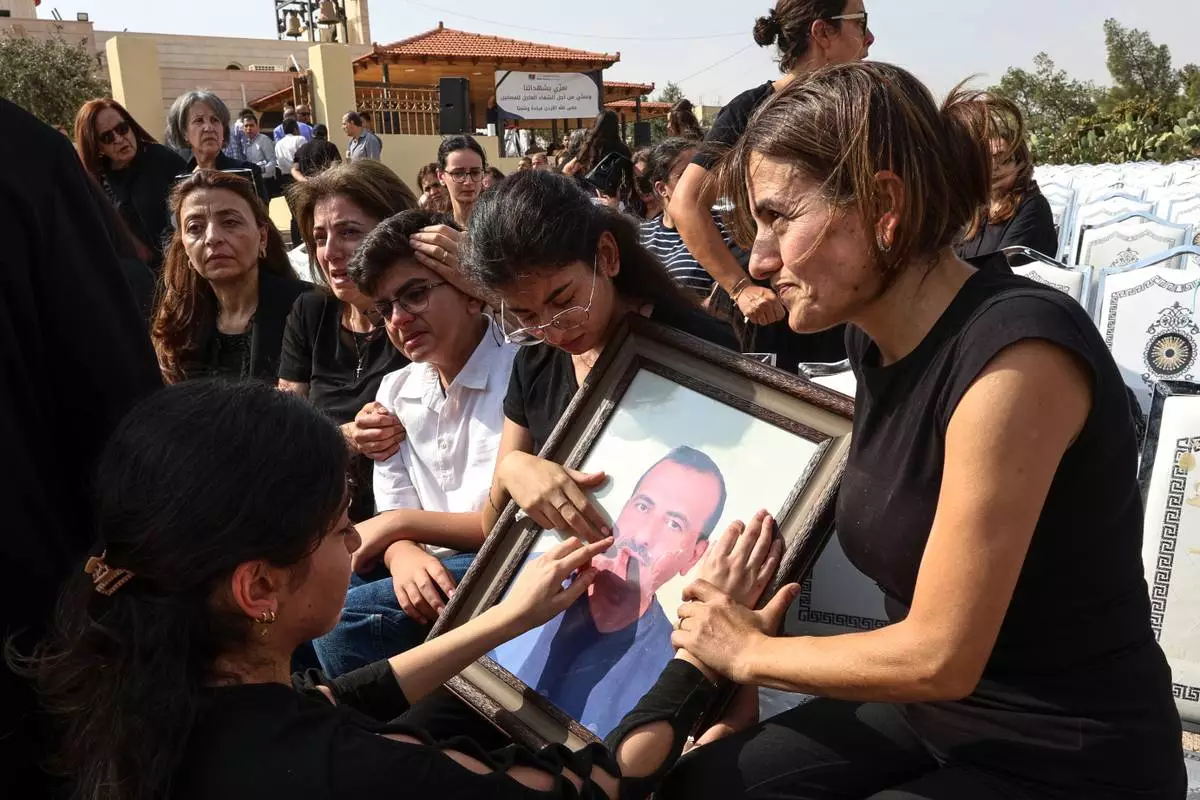
Relatives mourn as they hold a framed portrait of a victim killed in an attack on a Greek Orthodox church during a funeral ceremony in Karak, Jordan, Sunday, Oct. 25, 2026. (AP Photo/Raad Adayleh)