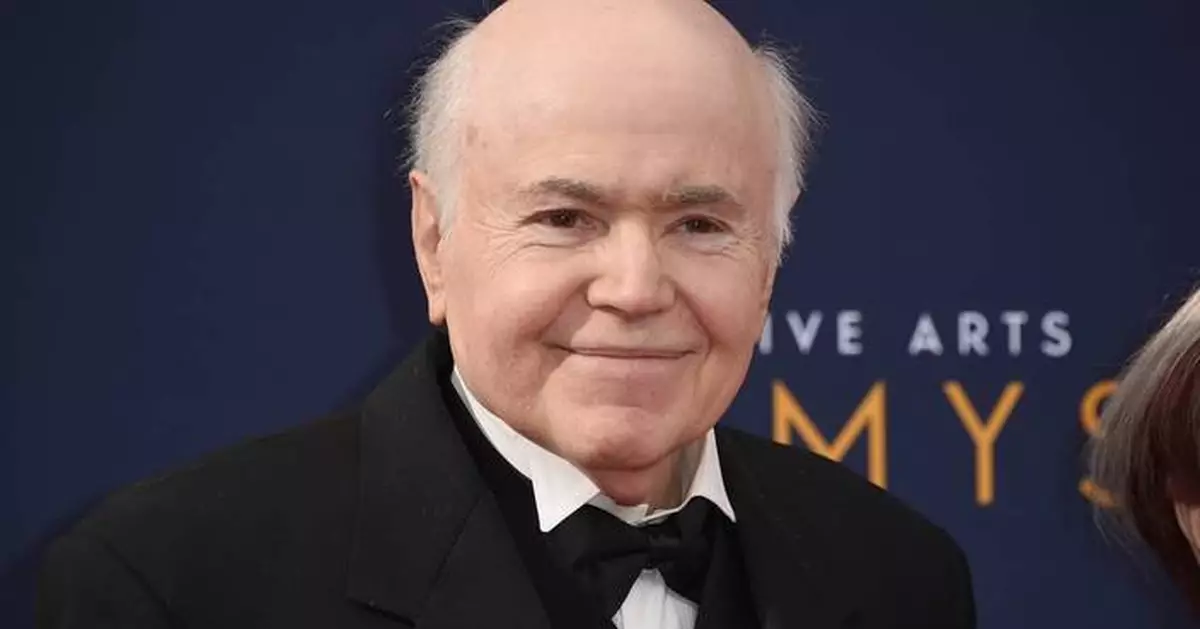
LOS ANGELES (AP) — Actor Walter Koenig, who played Ensign Pavel Chekov, the youthful Russian navigator on the “ Star Trek ” television series and several movies, has died. He was 90.
Koenig died Monday at his home in the North Hollywood neighborhood of Los Angeles, talent agent Zachery McGinnis said in a statement.
In “Star Trek,” Ensign Chekov was the sole Communist-bloc member of the spaceship Enterprise bridge staff. His friendly, supportive presence showed how the rival nations (in the far-off future in which the show was set) were capable of working together.
Speaking Russian-accented English, Chekov embodied stereotypical Russian personality traits, including fierce pride, love of poetry and blind loyalty.
“Star Trek” ran on NBC from 1966 to 1969 and has had an almost unprecedented afterlife as fans, or Trekkies, kept interest in the show alive.
Koenig was born Sept. 14, 1936, in Chicago, the son of a businessman. He graduated from the University of California, Los Angeles in 1958, then studied acting at New York's The Neighborhood Playhouse for two years. He began getting television roles in the early 1960s, appearing on “Mr. Novak” and “Ben Casey.”
“My heart is heavy,” Koenig's castmate, George Takei, said in a post on the social platform X. “Walter was more than Chekov. He was a writer, a teacher, a thoughtful man, and a loyal friend.”
Koenig was the best man at Takei’s 2008 wedding to Brad Altman, his partner of more than two decades.
“Walter’s legacy extends far beyond the screen. Through countless convention appearances and interactions with fans, he shared his kindness, wit, and appreciation with everyone fortunate enough to meet him. He understood what Star Trek meant to people and embraced the community that grew around it,” McGinnis said. “Thank you, Walter, for the memories, the inspiration, and for boldly going where few have gone before.”
McGinnis said Koenig died surrounded by his daughter and niece.
Koenig played Chekov in seven “Star Trek” movies starting in 1979, as well as innumerable other spinoffs, including writing a “Star Trek” book, “Chekov's Enterprise,” in 1980. The TV show has also inspired two spinoff TV series with new casts, and conventions that draw thousands of fans.
After “Star Trek” ended, Koenig continued acting and wrote scripts for “Family,” “The Incredible Hulk” and other shows. He also taught part time at UCLA and other schools.
Koenig also worked in the burgeoning field of computer games, including some with a “Star Trek” theme. In 1995, he took a role in the CD-ROM game “Maximum Surge.”
“I'm at a point where I could opt in my life for complacency and a bit of predictability, or I could have one last holler — one last try for adventure,” Koenig told The Associated Press in 1995. “I'm of the opinion that adventure is still a very enticing and exciting option.”
He returned to the science fiction genre with occasional appearances in the syndicated 1990s TV series “Babylon 5.”
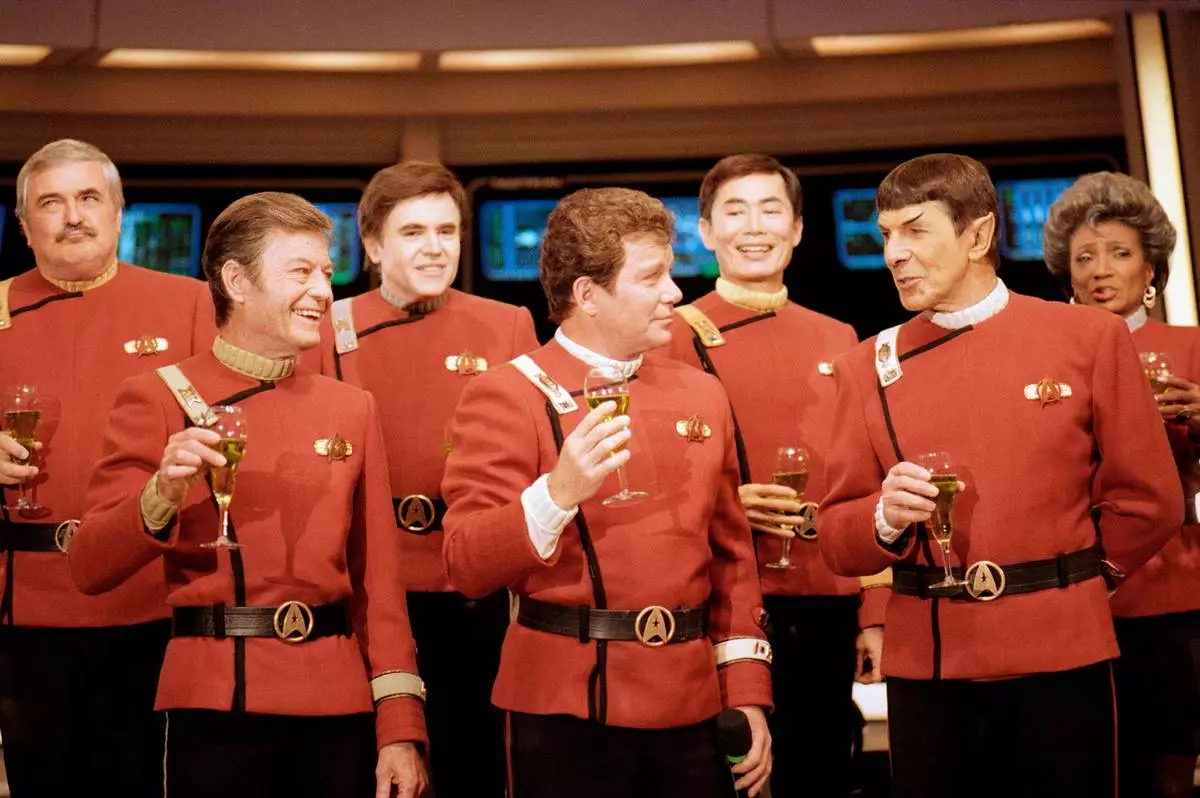
FILE- Members of the "Star Trek" crew, from left, James Doohan, DeForest Kelley, Walter Koenig, William Shatner, George Takei, Leonard Nimoy, and Nichelle Nichols, toast the newest "Star Trek" film at Paramount Studios on Dec. 28, 1988. (AP Photo/Bob Galbraith, File)
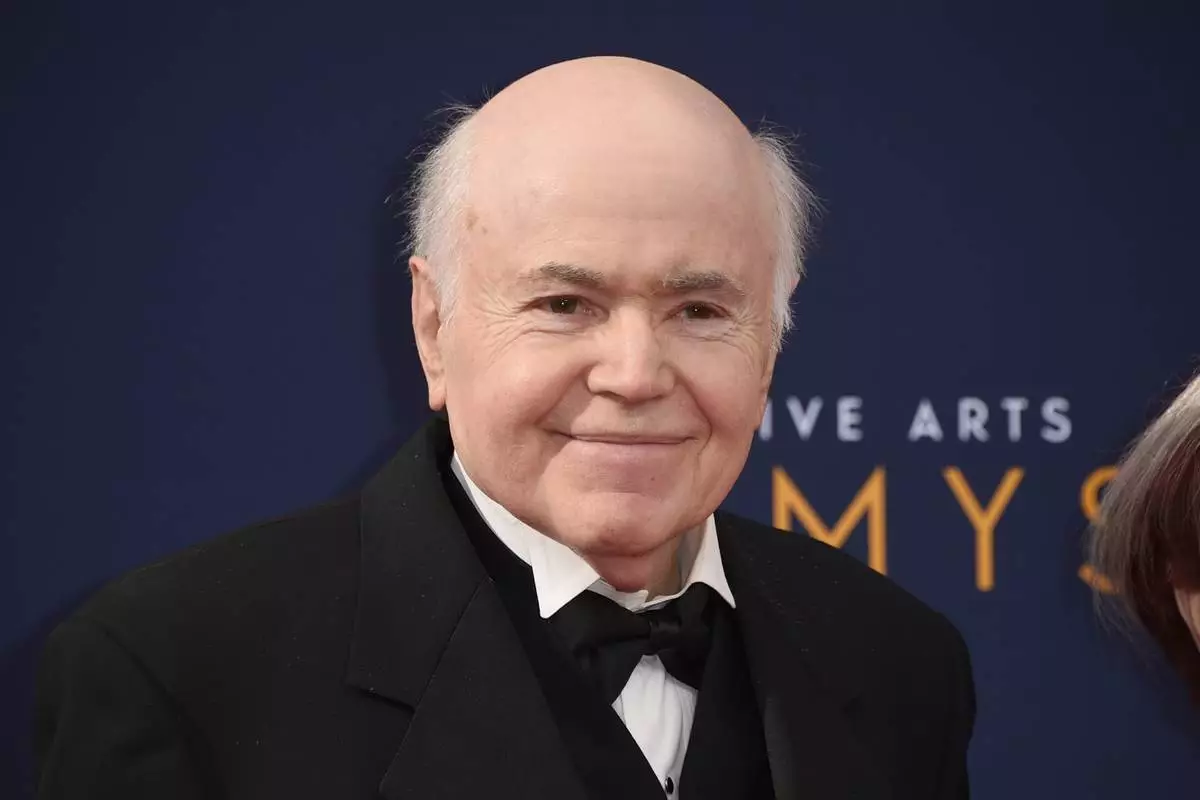
FILE - Walter Koenig appears at the Creative Arts Emmy Awards in Los Angeles on Sept. 8, 2018. (Photo by Richard Shotwell/Invision/AP, File)
BRASILIA (AP) — President Luiz Inácio Lula da Silva 's comeback to win Brazil’s presidential runoff Sunday is already facing its first hurdle as his competitor, Sen. Flávio Bolsonaro, challenges the results, setting the stage for a possible showdown between the country’s two polarizing political forces.
Lula, who convinced an extra 10.4 million voters to support him in the runoff, is expected to take office on Jan. 5, 2027, for his fourth non-consecutive term. He will serve as a counterweight in a region where leaders are shifting to the right and aligning with U.S. President Donald Trump. Bolsonaro, son of former President Jair Bolsonaro, promised to cozy up to the Trump administration.
At a news conference Sunday, Bolsonaro said he planned to request an annulment of the election following a chaotic extension of voting at the request of both candidates. However, it's unclear what legal avenue he would have to do that. His father also contested his loss to Lula four years ago and now serves a 27-year prison sentence for a coup attempt.
Early signs from Brazil’s institutions and from leaders across the region, including conservative presidents who oppose Lula, suggest the results will be respected nationally and internationally. Trump has yet to weigh in.
Even with the vote extension, Lula’s win was decisive. The soon-to-be 81-year-old incumbent won more than 64 million votes compared to just under 60 million for Bolsonaro, a margin of nearly 4%.
President of Brazil’s electoral authority, Kassio Nunes, who was appointed to the Supreme Court by ex-president Jair Bolsonaro, was among those who recognized Lula’s victory Sunday.
“This is a really uphill battle for Flavio Bolsonaro. Important Brazilian power brokers are closing ranks behind Lula, sometimes begrudgingly," said Brian Winter, Brazil analyst and editor-in-chief of Americas Quarterly.
“I sense that Brazilian power brokers that matter don’t really want to go down the path of a truly contested election,” he said.
The key to Lula’s win was the additional 14.1 million voters who showed up for the second-round election, including those who voted for other candidates in the first round. Analysts say three-quarters of those votes went to Lula, handing him the victory. And notably, the first round set a record for the number of Brazilians who decided not to vote, while the second round had the least number of abstentions ever.
Lula gave his digital campaign to lawmaker André Janones, who mounted a fierce and persistent social media operation that mobilized many of those previously uncommitted voters. Janones' key tool was a channel on messaging app WhatsApp called “Lula's Army,” which gathered almost 11 million people and mobilized them to campaign via social media for the incumbent.
Janones “basically embraced the right’s style of aggressive politics, very intense, constant messaging,” said Oliver Stuenkel, a professor of International Relations at Fundação Getulio Vargas in Sao Paulo.
“The defeat in the first round jolted the Lula campaign into action. The strategy during the first round was lackluster and saw a lot of infighting,” Stuenkel said.
Juliano Cortinhas, international relations professor at the University of Brasília, said Lula's social media initiative in the runoff was also key to pressuring Meta, the owner of Instagram, WhatsApp and Facebook, to end what the president's campaign denounced as bias helping Bolsonaro.
Brazil’s top electoral court ruled on Oct.15 that Meta must adopt measures that assure equal treatment of the two presidential candidates, which the company later said it addressed.
There was “external interference we were suffering by major platforms,” Cortinhas said. “It wasn't only Meta, many others were using their algorithms to repost many images and many messages of the far-right, and they did not do the same to the left.”
It was the first time since 1989 that a candidate came from behind in the first round to win in the second.
Results show voter turnout surged overall, particularly in wealthier metropolitan centers, but Lula achieved his highest gains in lower-income municipalities where his base was already established. He mobilized former non-voters, those who voted blank in the first round and supporters of third-party candidates.
Jorge Henrique Oliveira Sena, a 26-year-old maintenance worker in Brasilia, was one of those who didn’t vote in the first round. Neither candidate excited him much, but he cast his vote for Lula. “It’s not a question of supporting, but between the two, I had more of a connection with him,” he said.
Brazil holds general elections every four years, and its electronic voting machines have made the tallying process quick and secure.
Brazilian authorities adopted electronic voting machines in the 1990s to combat fraud and the system has been largely reliable since then. Results are usually reported mere hours after polls close.
In the lead-up to the 2022 vote, Jair Bolsonaro repeatedly cast unfounded doubts on Brazil’s electronic voting system. No significant fraud has ever been detected.
But the usually swift voting process was thrown into disarray Sunday after a last-minute decision to extend voting nationwide at both candidates’ requests.
Lula made the request because of issues with public transportation in metropolis, Sao Paulo, and the northeastern city of Salvador, two of his strongholds. Bolsonaro requested it after heavy rains in the south, which he won by a strong margin in the first round.
The decision was made by a Supreme Court justice mere minutes before polls were set to close at 5 p.m. and the speed of Brazil’s counting process meant many polling stations didn’t receive the news until they were already wrapping up.
Yet given the reliability of Brazil's voting system and Lula's win by a significant margin, a path to annul the results could be difficult for Bolsonaro.
Benjamin Gedan, senior fellow and director of the Stimson Center Latin America program, said Bolsonaro's rejection of his loss was not surprising.
“False claims of fraud are becoming commonplace, though that does not make them any less dangerous," he said. He noted “Lula’s margin of victory, and the quick recognition of the result by conservative leaders in the region."
Nevertheless, Lula still faces challenges moving forward, including political polarization in the country, a possible fiscal crisis and a right-wing Congress in which Bolsonaro's party will have more seats than any other. Bolsonaro himself remains a senator, though his term ends in January.
“We shouldn’t underestimate the power of the Bolsonaro family," said Winter, the Brazil analyst. "They can make life difficult for Lula for weeks and months to come.”
Savarese reported from Sao Paulo.
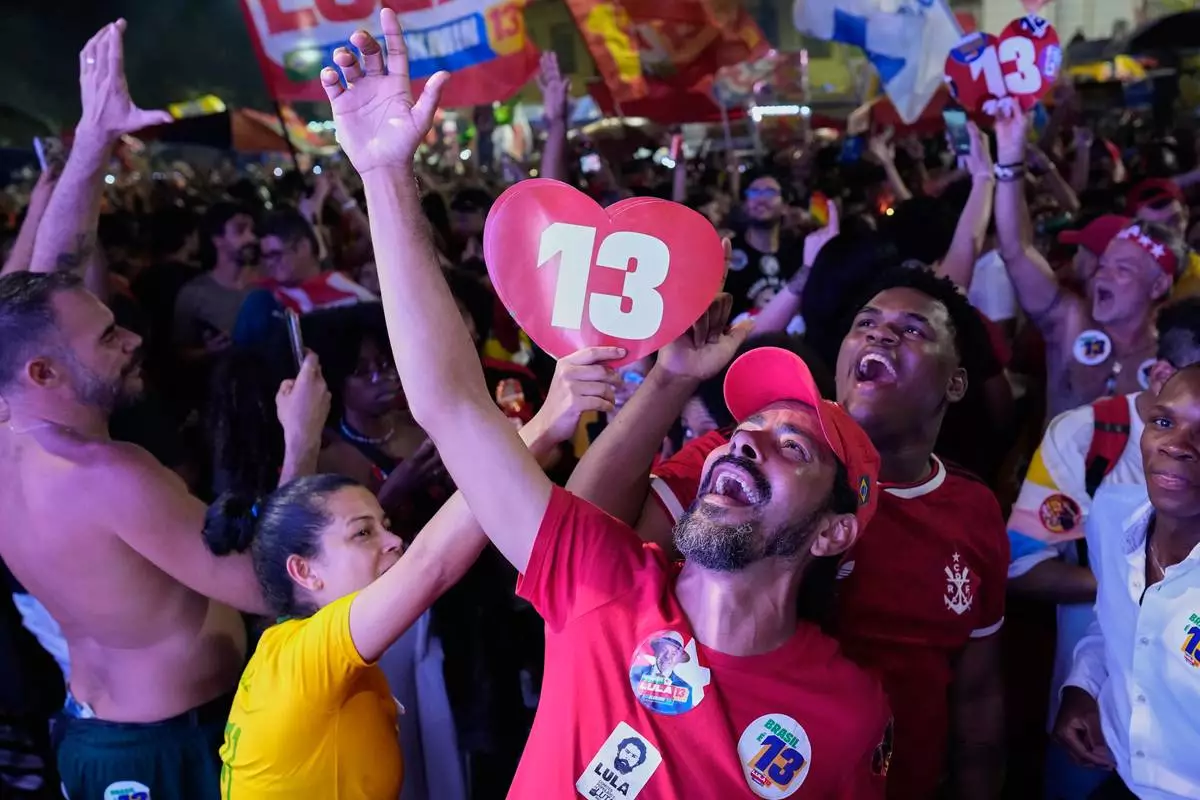
Supporters of President Luiz Inacio Lula da Silva celebrate after he wins a fourth term in the presidential runoff in Rio de Janeiro, Brazil, Sunday, Oct. 25, 2026. (AP Photo/Silvia Izquierdo)
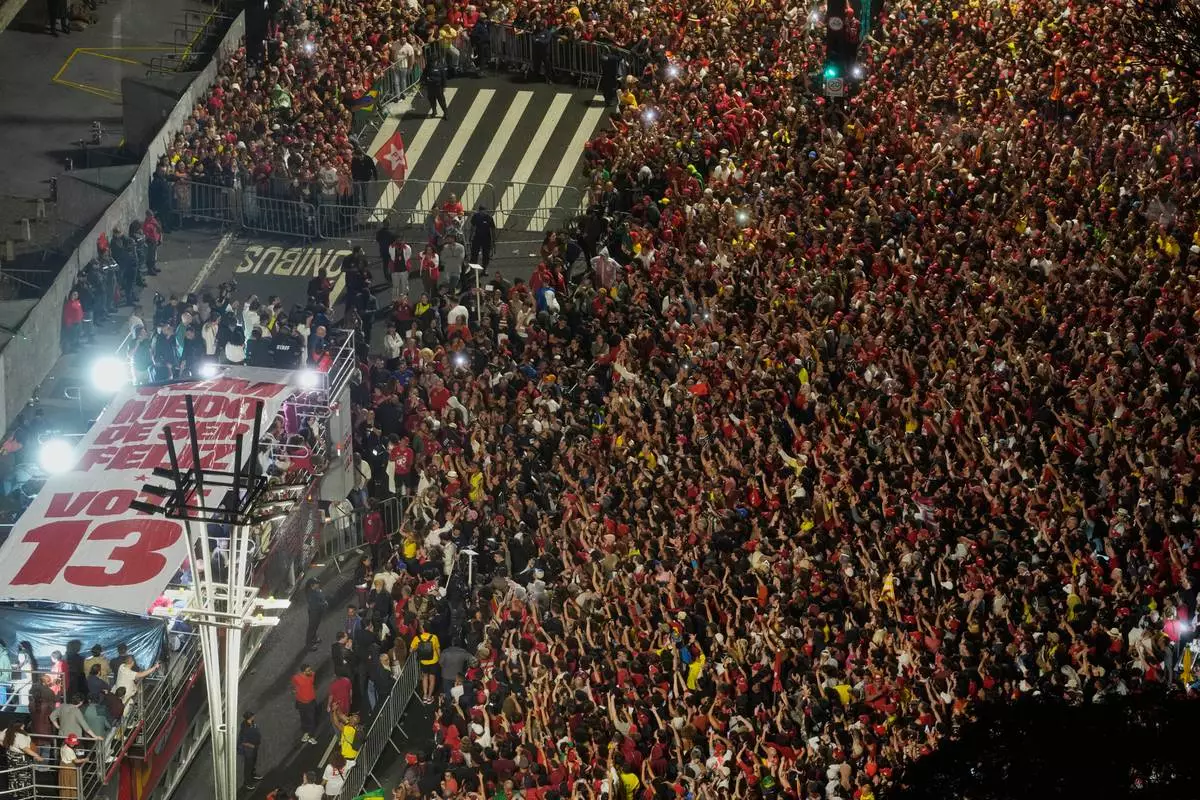
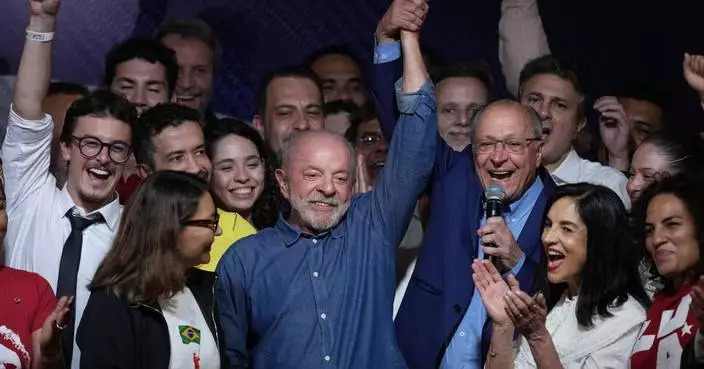
President Luiz Inacio Lula da Silva addresses supporters during a victory rally after winning a fourth term in the presidential runoff on Paulista Avenue in Sao Paulo, Brazil, Sunday, Oct. 25, 2026. (AP Photo/Andre Penner)
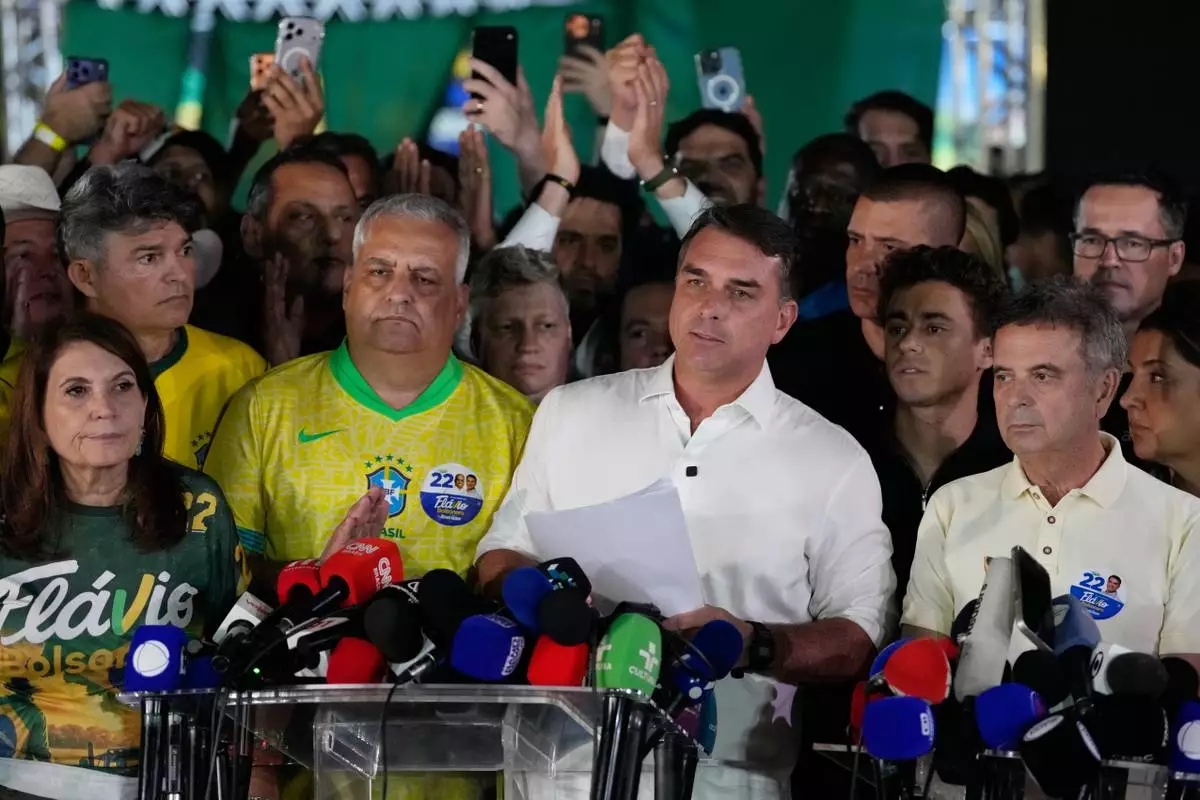
Opposition presidential candidate Sen. Flavio Bolsonaro speaks after the presidential runoff in Brasilia, Brazil, Sunday, Oct. 25, 2026. (AP Photo/Eraldo Peres)
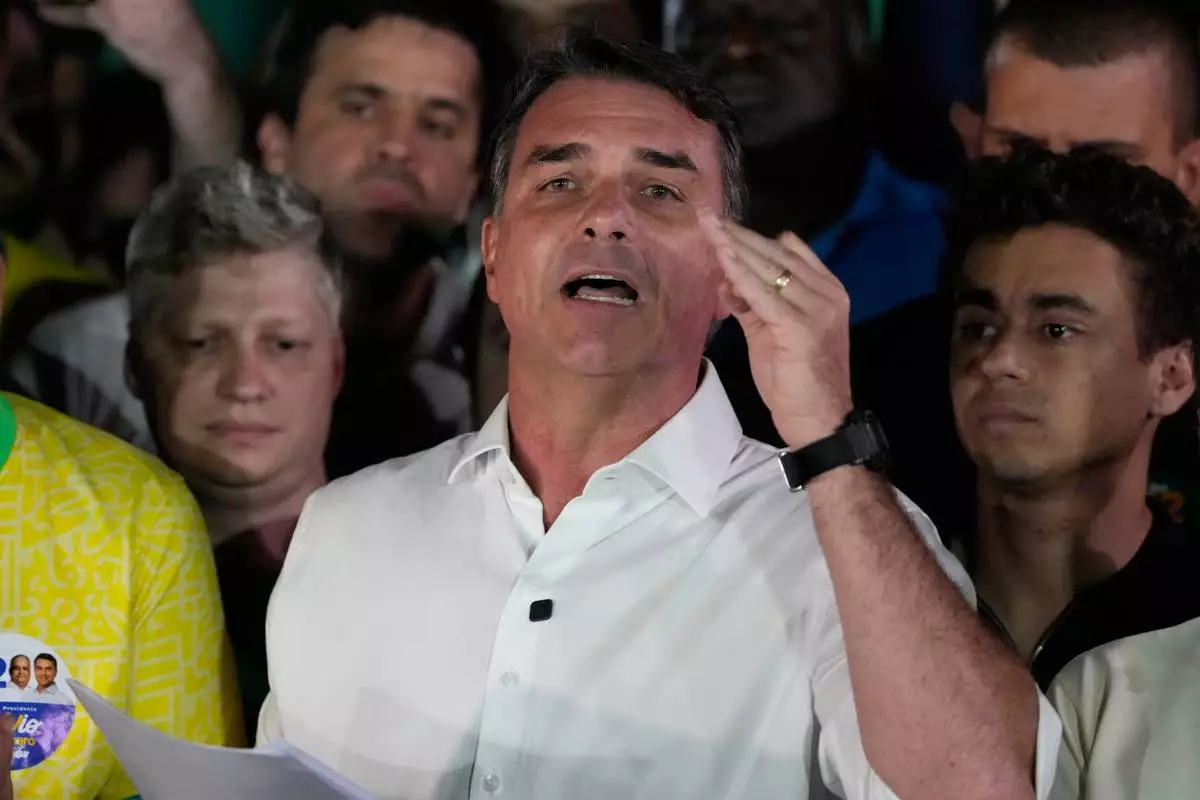
Opposition presidential candidate Sen. Flavio Bolsonaro speaks after the presidential runoff in Brasilia, Brazil, Sunday, Oct. 25, 2026. (AP Photo/Eraldo Peres)
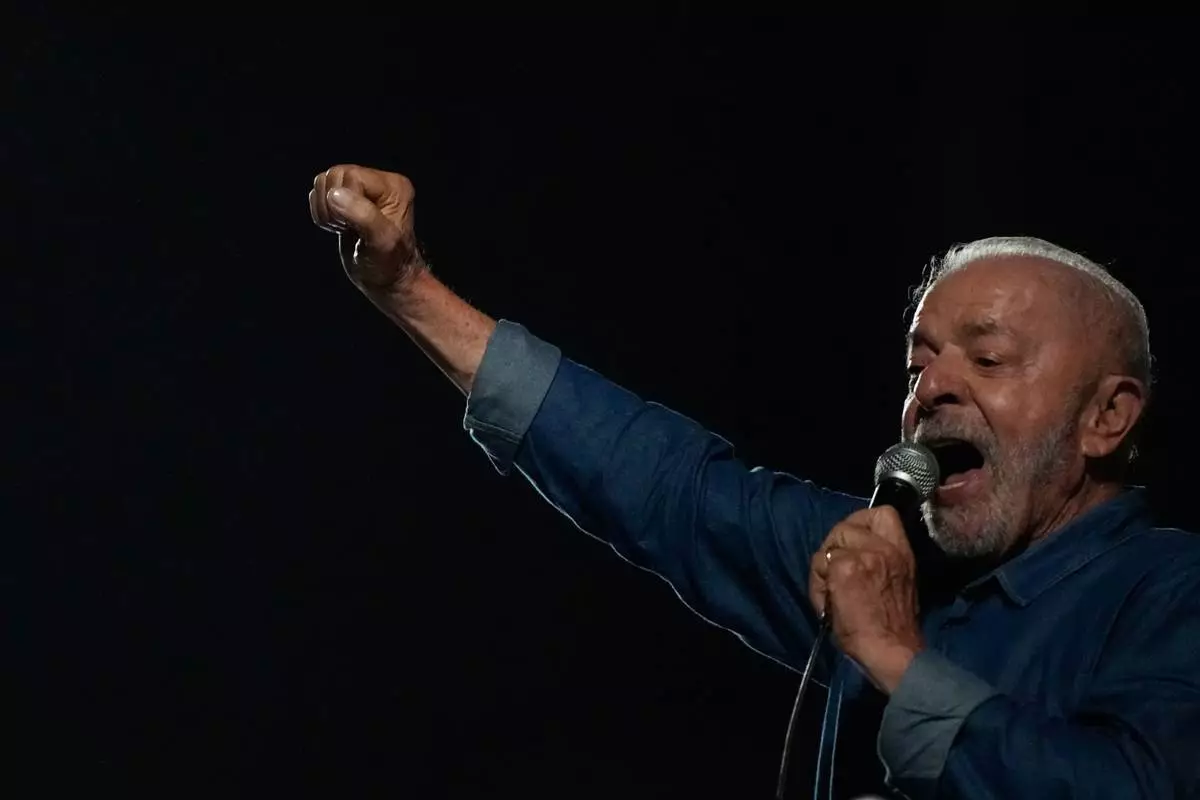
President Luiz Inacio Lula da Silva addresses supporters during a victory rally after winning a fourth term in the presidential runoff on Paulista Avenue in Sao Paulo, Brazil, Sunday, Oct. 25, 2026. (AP Photo/Natacha Pisarenko)