CHICAGO--(BUSINESS WIRE)--Oct 26, 2026--
Food processing, ingredients and affordability are shaping how Americans make food purchasing decisions, according to FoodMinds’ 2026 Conscious Consumption Index™ (CCI), a national survey of 1,000 U.S. adults responsible for household grocery shopping.
This press release features multimedia. View the full release here: https://www.businesswire.com/news/home/20261026104440/en/
54% say they started buying or bought more of a food or beverage in the past year because it seemed less processed, had fewer additives or contained ingredients they preferred.
46% report stopping or reducing purchases because a product seemed more processed, had additives or contained ingredients they preferred to avoid. Meanwhile, 58% agree that affordable foods are often the most processed, highlighting a perceived tension between ingredient and processing preferences and affordability.
“Americans are using ingredients and perceptions of processing to help decide what belongs in their shopping carts,” said Lauren Hoffman, MBA, RD, Senior Vice President at FoodMinds. “For food companies, understanding those perceptions is essential to communicating nutrition science in ways that address consumers’ questions and concerns.”
How food affordability influences consumer purchasing decisions
Six in 10 consumers (61%) agree that healthy, sustainable foods are too expensive. Nearly half (49%) strongly agree that food companies should do more to make healthier foods affordable.
Affordability and access also rank prominently among the actions consumers want companies to take to build trust. 30% say improving access to healthier foods in lower-income communities is a priority, and 28% say lowering the price of healthier foods will build trust.
Consumers want clear ingredient lists and transparent food labeling
When asked what would make brand messages about healthier, more affordable or less processed foods more believable, consumers most frequently select a clear ingredient list on the package (33%), followed by Nutrition Facts information showing lower added sugar, sodium or saturated fat (25%).
In message testing, statements about how foods are made and recognizable ingredients with explanations of their purpose rank among those most frequently selected as likely to increase trust. Statements about affordability, convenience and clearer information for parents rank among those most frequently selected as likely to encourage purchase.
“Consumers want clearer information about their food, and they want healthier choices to be affordable,” said Andrea Carrothers, MS, RD, Senior Vice President and Group Lead at FoodMinds. “Companies can build credibility by explaining what is in their products and why and supporting nutrition claims with understandable evidence. Addressing affordability alongside those efforts is essential to responding to what consumers say they need.”
Consumers increasingly use AI for food and nutrition information, while trust remains limited
44% of consumers report using AI tools or AI-generated search results for food, nutrition or grocery information. Use varies by generation, with 60% of Millennials and 55% of Gen Z reporting use, compared with 21% of Baby Boomers.
Across all respondents, 31% say they somewhat or completely trust AI tools to provide accurate food, nutrition, ingredient and food processing information.
As consumers turn to generative AI for nutrition guidance, food and beverage companies have an opportunity to improve how their brands appear in AI-generated answers, but also whether the information consumers encounter is accurate, credible and grounded in nutrition science.
GLP-1 users seek more nutrition information but face conflicting guidance
Current GLP-1 users are more likely than respondents reporting no GLP-1 use in their household to search at least weekly for:
Among current GLP-1 users, 32% strongly agree they feel overwhelmed by conflicting information about which foods are healthy (compared with 20% of respondents reporting no household use of GLP-1), suggesting a need for clear guidance that addresses their specific nutrition questions.
Explore the 2026 Conscious Consumption Index
Download the 2026 CCI executive summary for an overview of key findings and consumer trends.
For in-depth analysis, purchase the full CCI report, which includes a one-hour strategy session with senior FoodMinds advisors.
About the Conscious Consumption Index
CCI is a signature research initiative designed to track how consumer values, expectations and behaviors related to food, sustainability and agriculture evolve over time. The 2026 CCI focuses on the U.S. market, examining consumer perspectives on food processing and ingredients, affordability, trust and emerging sources of food and nutrition information.
The online survey included 1,000 U.S. adults with primary or shared responsibility for household grocery shopping. Fieldwork took place August 5–17, 2026. Findings reflect self-reported attitudes, perceptions and behaviors.
About FoodMinds
FoodMinds is a leading global marketing and communications consultancy specializing in the intersection of nutrition science, food policy and public health. A division of Padilla, FoodMinds helps food, nutrition, health and agriculture organizations translate complexity into credible strategies that build trust and drive meaningful impact across the food system. Visit FoodMinds.com.
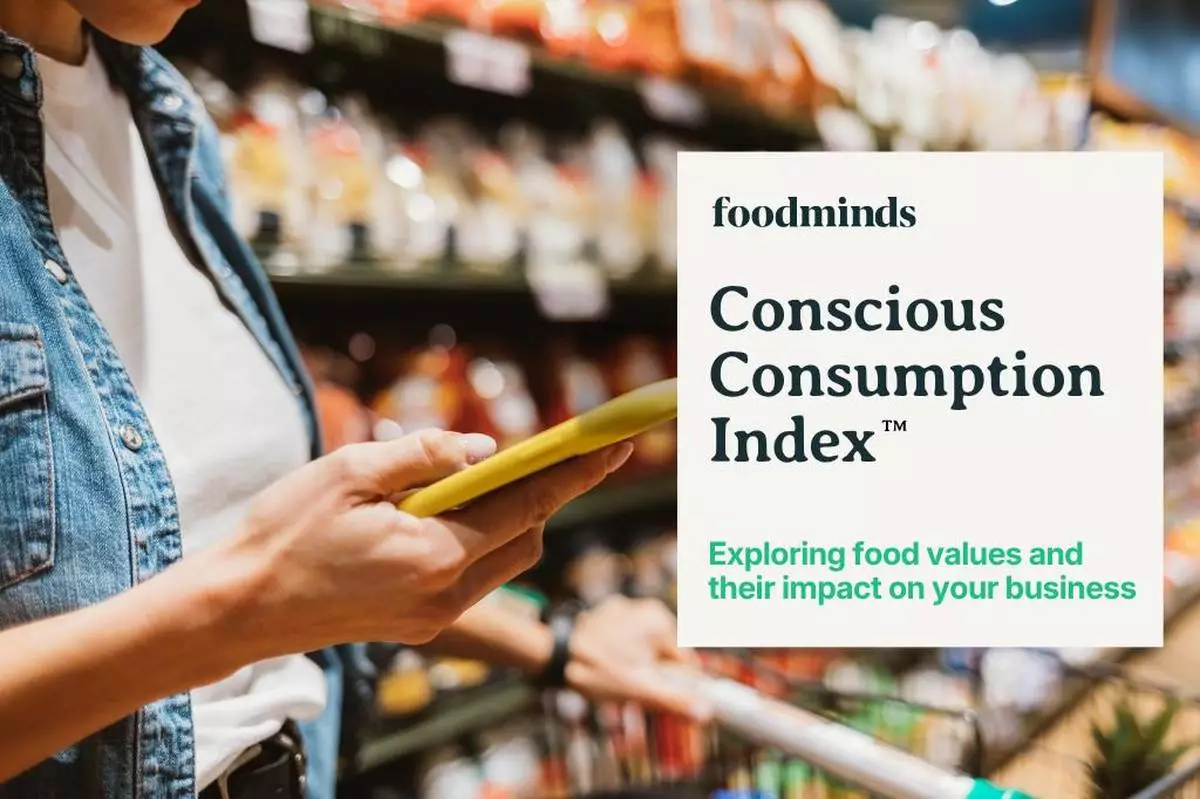
FoodMinds' 2026 Conscious Consumption Index™ explores how food processing, ingredients and affordability influence U.S. consumer purchasing decisions.
PARIS (AP) — France’s government pledged Monday to replace its national online university admissions platform by 2028, seeking to quell student anger after weeks of often violent mass protests over education and living costs.
Higher Education Minister Philippe Baptiste announced “substantial change” to the platform for 2027, before its replacement the following year. Ministers also pledged up to 4 billion euros ($4.5 billion) in low-interest loans for school renovations, alongside smaller classes, additional teaching posts, more places in higher education and increased student grants.
The concessions target the school grievances that helped ignite the unrest. But the movement has widened to include workers demanding relief from rising living costs, making the government’s task broader than resolving a dispute over university admissions.
The announcements followed France’s worst unrest in years on Oct. 17, when demonstrations over school funding and rising living costs descended into rioting and looting across the country.
Groups of protesters set fires, looted shops, clashed with police and attacked public buildings, briefly storming Marseille’s City Hall and setting Limoges’ 19th-century town hall ablaze. The fire brought down the Limoges building’s roof and clock tower.
About 2,400 people were arrested in connection with the demonstrations, in which hundreds of thousands marched peacefully.
Two high school student groups welcomed some concessions, but called for protests to continue. Their representatives spoke after meeting with Prime Minister Sébastien Lecornu earlier Monday, before a news conference.
Further demonstrations are planned for Oct. 31, before nationwide strikes and protests called by labor unions for Nov. 5.
The 2028 deadline puts a central concession to protesters beyond President Emmanuel Macron’s time in office, leaving his successor’s government to deliver it.
Macron can’t seek a third consecutive term in 2027, and far-right leader Marine Le Pen leads polling before the first round of presidential voting on April 18. A winner-takes-all runoff is scheduled for May 2.
Le Pen's National Rally party has sought to capitalize on the unrest, presenting itself as a force for law and order and urging voters to channel their anger into support for her presidential bid.
The university admissions replacement system still has to be designed, and legal changes may be needed — leaving crucial decisions unresolved even as the government seeks to persuade students to end their protests.
The platform, called Parcoursup, allows students to apply to universities and other higher education courses and receive admissions decisions. A record 1.05 million people applied through it this year, according to the Higher Education Ministry.
It has been a focus of the protests, with students criticizing unclear selection criteria and unequal access to their preferred courses.
For the 2027 admissions round, institutions would publish more detailed selection criteria. The platform would provide explanatory information with each rejection, and institutions would have to give applicants the reasons for their decisions if requested.
A committee involving students and teachers would produce initial recommendations for the replacement system by the end of November. The government said that it would introduce legislation if the proposed changes require it.
The government also promised 15,000 additional places in higher education across 2027 and 2028, mostly in vocational and technical programs, and increases in student grants linked to inflation from the start of the 2027 academic year.
To address demands for better learning conditions, the government pledged to cap some first-year high school classes at 28 students from 2027, starting with more disadvantaged schools. It also promised to cancel planned cuts to teaching positions at secondary schools and create 500 additional jobs.
The building plans would extend still further into the next presidency. The government proposed up to 4 billion euros ($4.5 billion) in low-interest loans to regional authorities for school renovations through 2030. A separate 1 billion-euro ($1.1 billion) state plan would fund university renovations through 2029.
Another round of nationwide demonstrations on Saturday saw less violence. Authorities estimated turnout at 410,000, while organizers put it at nearly 800,000.
Authorities deployed 70,000 police officers and gendarmes to prevent a repeat of the previous weekend’s widespread destruction. Interior Minister Laurent Nuñez said Monday that 1,435 people had been arrested nationwide in connection with the latest weekend’s protests.
Earlier Monday, the French president promised “concrete measures” to address students’ demands during a visit to the southern port city of Marseille.
“I have asked the government to address the legitimate demands at the root of this protest movement,” Macron said.
Macron and his centrist government have faced criticism for failing to address students’ grievances since high school blockades began in mid-September. The protests have led to mass arrests and scrutiny of police riot control weapons blamed for life-changing injuries suffered by some teenagers.
The demands for better-resourced schools, particularly in poorer communities, come as France grapples with record poverty and record public debt.

French President Emmanuel Macron meets with police officers in Marseille, France, Monday, Oct. 26, 2026. (AP Photo/Aurelien Morissard, Pool)

French President Emmanuel Macron meets with police officers in Marseille, France, Monday, Oct. 26, 2026. (Aurelien Morissard/Pool Photo via AP)

Protesters attend a demonstration against rising living costs in Strasbourg, France, Saturday, Oct. 24, 2026. (AP Photo/Jean-Francois Badias)

A protester holds a French flag during a demonstration against rising living costs in Strasbourg, France, Saturday, Oct. 24, 2026. (AP Photo/Jean-Francois Badias)

Protesters march during a demonstration against rising living costs in Paris, Saturday, Oct. 24, 2026. (AP Photo/Thibault Camus)

French President Emmanuel Macron addresses the media in Marseille, France, Monday, Oct. 26, 2026. (AP Photo/Aurelien Morissard, Pool)

French President Emmanuel Macron addresses the media in Marseille, France, Monday, Oct. 26, 2026. (AP Photo/Aurelien Morissard, Pool)