WASHINGTON (AP) — Federal Reserve policymakers are likely to keep their key interest rate unchanged Wednesday when they finish what may seem like an uneventful meeting. But investors and economists will be looking between the lines of the central bank's statement Wednesday for clues about its next moves and where it thinks inflation is headed.
The Fed's Oct. 27-28 meeting will be the fourth of Chairman Kevin Warsh's tenure, which has been marked by questions regarding his independence from President Donald Trump, who appointed him earlier this year. It also comes just six days before midterm elections that have been shaped by affordability concerns as gas prices have soared and grocery prices remain elevated.
High mortgage rates have become another elevated cost for consumers, with the average 30-year mortgage reaching a three-year high of 7.4% earlier this month before slipping last week to 7.32%. A year ago, the rate was just under 6.2%. Oxford Economics estimates that the sharp increases this year has put home buying out of reach for another 5 million households. Further rate hikes by the Fed could push mortgage rates even higher.
With all those moving parts, here's what to watch for from the Fed's meeting:
After inflation came in hotter than expected last month, Wall Street investors and some economists expected the Fed to lift rates at Wednesday’s meeting by a quarter-point, to about 4.1%. The Fed is charged with combatting inflation, and typically seeks to cool spending and bring down inflation by boosting borrowing costs.
Yet several top officials on the Fed’s rate-setting committee in speeches downplayed the likelihood of a rate hike in October. Investors now see almost no chance of an increase in the Fed's rate, currently at about 3.9%, according to futures prices.
Philip Jefferson, vice chair of the Fed's board of governors, noted that longer-term interest rates had shot higher in financial markets and added that, “my colleagues and I will need to come to our own judgment, which may take more time.”
Joseph LaVorgna, chief economist at SMBC Americas and a former top Trump administration official, said that the central bank will hold back just before the election.
“The Fed doesn't want to poke the White House in the eye six days before an election,” LaVorgna said.
The comments from Jefferson and others raise questions about one of Warsh’s signature initiatives: His disdain for so-called “forward guidance,” a term for the clear signals about the central bank's next moves provided by previous chairs. Warsh has said that such direction commits the Fed to a specific path and limits its ability to respond to economic data.
Yet the speeches this month by top officials appeared to some economists to be very much like forward guidance — just not from the chairman.
“Either he blessed this message from them and he was on board, in which case, one would have to question the credibility of this idea that that he doesn’t like forward guidance,” said Aditya Bhave, head of U.S. economics research at Bank of America. “But the other possibility is that he wasn't on board."
In that case, Warsh could implement a surprise rate hike, which would “end forward guidance by showing markets that they can’t listen to the guidance anymore."
Still, most economists see the odds of a hike as quite low.
At the Fed's last meeting in September, Warsh defied Trump's preferences and raised rates, a step that defied concerns that the new Fed chair would turn out to be, in the words of Massachusetts Sen. Elizabeth Warren, “a sock puppet” for the president.
Trump had said before choosing Warsh in January of this year that he would only pick a Fed chair who would cut rates.
James Knightley, chief international economist for Netherlands-based bank ING, said that September's rate hike, in defiance of the White House, largely assuaged those concerns.
“So far I think the markets have been encouraged by what they've seen,” Knightley said.
Yet since the September meeting, Trump has renewed his efforts to fire Fed governor Lisa Cook. If he is successful, it would open up another slot on the Fed's board for Trump to fill. The Supreme Court in June blocked an earlier attempt to remove her.
Trump also said after last month's Fed meeting that he had called Warsh beforehand and told him he “might as well” vote to raise rates because other officials on the rate-setting committee had publicly called for a hike. Trump said the committee is “hostile” and “political.”
Warsh declined at last month's news conference to comment on any communications with Trump, despite news reports that he has spoken often with the president. With the scope of Warsh's communications with Trump unclear, Derek Tang, an economist at Monetary Policy Analytics, said, “I think there is still a question mark there” regarding the chairman's independence.
Inflation has come in hotter than most economists expected for two months in a row, heightening concerns that gas price spikes could raise costs across the economy. Diesel fuel reached an all-time high of $6.53 in late September, and has only fallen to $6.35 since then.
High diesel costs raise the price of shipping all sorts of goods, including groceries, cars, and nearly everything else. Businesses could then pass on the costs to consumers, spreading inflation to more parts of the economy.
Bhave notes that inflation hasn't been at the Fed's target of a 2% annual rate for a single calendar quarter since the final three months of 2020 — nearly six years ago.
If Warsh reiterates some of what he's said before — that inflation is too high, and the Fed intends to return it to 2% in a “timelier” fashion — economists and investors will see such comments as a sign the Fed will likely hike rates at its next meeting in December.
The Fed's September decision to lift rates was unanimous. Many Fed watchers, however, expect there could be two or even three dissents among the 12 officials who vote on rates. Beth Hammack, president of the Federal Reserve Bank of Cleveland, and Lorie Logan, president of the Dallas Fed, are considered the most likely to vote in favor of a rate hike this week.
Both have expressed concerns that the Fed's key rate isn't high enough to slow the economy and cool inflation.
Ironically, dissents could help Warsh and the Fed, some economists say, by illustrating that there is still support for higher rates on the committee.
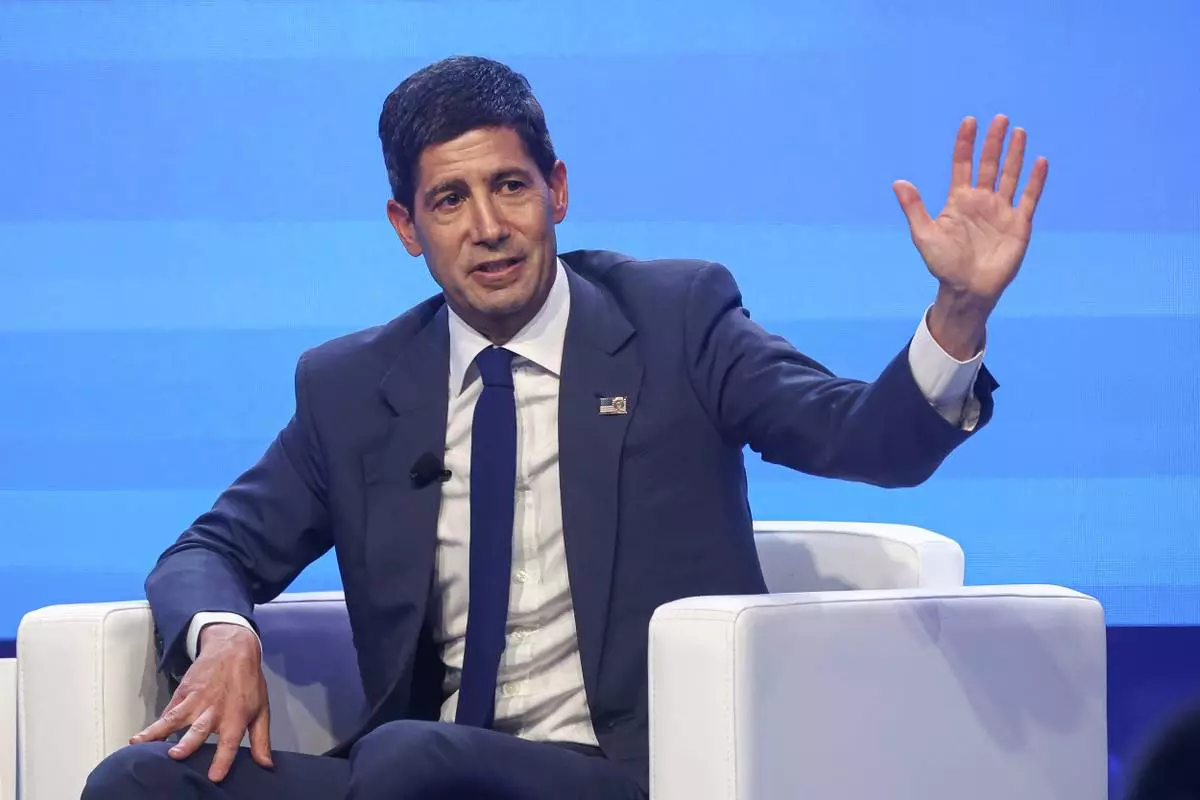
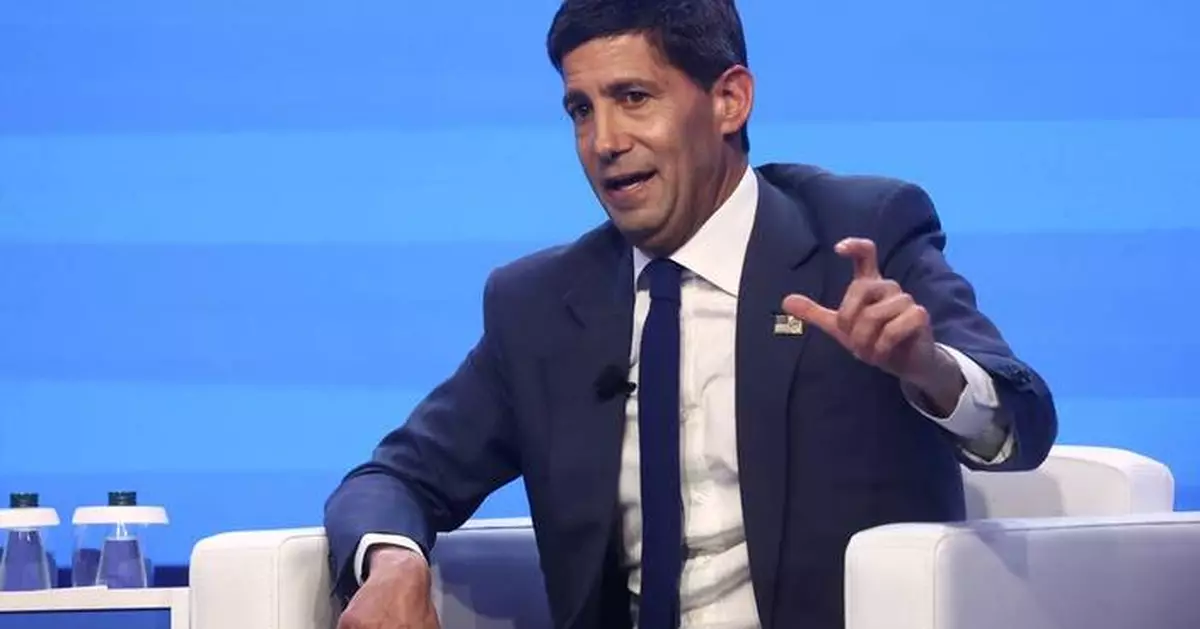
U.S. Federal Reserve Chairman Kevin Warsh speaks during the annual meetings of the International Monetary Fund and the World Bank Group in Bangkok, Thailand, Friday, Oct. 16, 2026. (AP Photo/Dhitaraht Dhanarahtsombat)
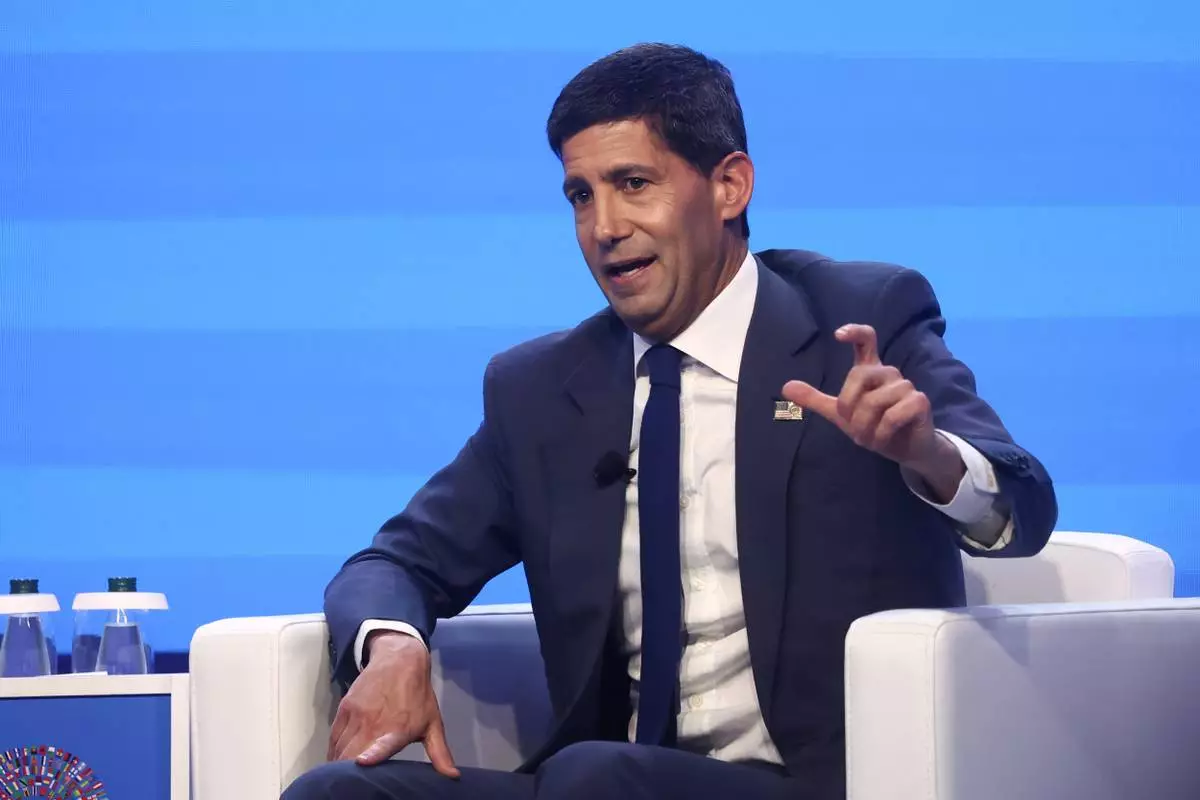
U.S. Federal Reserve Chairman Kevin Warsh speaks during the annual meetings of the International Monetary Fund and the World Bank Group in Bangkok, Thailand, Friday, Oct. 16, 2026. (AP Photo/Dhitaraht Dhanarahtsombat)
ST. PETERSBURG, Fla. (AP) — Taylor Walls stabbed at Brice Turang's sharp grounder and felt it glance off his glove.
“Knife in the chest,” the Tampa Bay Rays shortstop said.
Tampa Bay's first World Series game at Tropicana Field in 18 years turned into a record-setter for Brewers batters.
Milwaukee became the first team to score eight runs with two outs in a World Series inning, routing the Rays 10-1 on Monday night to take a 3-0 lead in the best-of-seven series.
Turang's two-run single was the second of a postseason-record seven straight two-out hits against starter Freddy Peralta and relievers Cam Booser and Cole Sulser.
Milwaukee turned a 2-0 lead into a 7-0 advantage with hits on three straight pitches by Turang, Garrett Mitchell and Cooper Pratt. The Brewers went on to score eight runs in a 17-pitch span to open a 10-run advantage. Jackson Chourio had two hits in the inning, part of his four-hit night.
"Worst feeling in the world, feeling like you let your team down,” a downcast Booser said in the quiet Tampa Bay clubhouse.
Among 25 previous teams that fell behind 3-0 in a World Series, 21 were swept and four lost in five games. Of 43 teams to trail 3-0 in any best-of-seven postseason matchup, only the Boston Red Sox against the New York Yankees in the 2004 American League Championship Series rebounded to win.
“It’s kind of that chip and a chair mentality," Rays manager Kevin Cash said. “We’ve got a seat at the table. We’ve got to do something with the chip. Obviously the only thing we can do is win tomorrow.”
Coming off a pair of one-run wins at American Family Field, the Brewers took a 2-0 lead in the third when Christian Yelich and William Contreras hit opposite-field, one-out RBI singles on consecutive pitches.
Chourio singled with one out in the fifth and Christian Yelich walked with two outs. Contreras grounded to third and Junior Caminero threw to second as umpire Dan Bellino signaled a forceout. But the call was reversed in the New York replay operations center by umpire Alfonso Márquez, giving Contreras an infield single that loaded the bases.
Caminero may have had a better chance of throwing out Contreras at first base.
“I knew the speed at first base wasn’t necessarily the best in that situation,” Caminero said through a translator. “So going into the moment, once I got the groundball I was going to second base all the way.”
Booser relieved and Turang’s 106 mph one-hopper hit the dirt just past the infield grass, bounced off Walls' glove and into short center field.
“I’d like to have that one back. Those are plays that you’d like to make, that you expect to make even though they may be on the tougher end,” Walls said. “That was pretty much the turning point in the game there.”
Walls dropped to a knee and held out his glove at shoulder level trying to make what would have been an excellent stop, then tumbled as the ball bounced past him.
“You just try to get your eyes as close to where the ball is going to be, the height of the hop,” he said. “Ideally, I guess if you want to talk about fractions, if you can get your glove behind the ball and work more backwards you have a better chance to make the play than if you’re slightly above it having to kind of work down a little bit, which is where I kind of felt I was.”
Mitchell grounded an opposite-field RBI single through the shortstop hole vacated with Walls shifted toward second for the left-handed batter. Pratt followed with a smash off the glove of a diving Caminero that rolled into the left-field corner for a two-run double.
Sal Frelick sliced an opposite-field double that hit the wall on a hop in the left-field corner, scoring Pratt and chasing Booser.
David Hamilton greeted Sulser by lining a shoulder-high fastball into center for a run-scoring single and a 9-0 lead. Chourio then lofted an opposite-field RBI double that hit just in front of the warning track.
Boston set the previous Series high of seven runs with two outs in the fifth inning of the 2007 opener against Colorado, a feat matched three years later by San Francisco in the eighth inning of Game 2 against Texas, according to the Elias Sports Bureau. The Los Angeles Dodgers were the only prior team with eight two-out runs in any postseason inning, scoring 10 with two outs in the first inning of Game 3 against Atlanta in the 2020 NL Championship Series.
Griffin Jax said he'll put the Series deficit out of his mind when he starts Game 4 on Tuesday.
“We just got our butts kicked tonight. I don’t think there’s really much else to say,” Jax explained. “We’ll just kind of forget it and try to sleep it off and come back tomorrow ready to fight.”
This story has been corrected to note that Turang’s two-run single was the second of seven straight two-out hits, and that the Dodgers played Atlanta in the 2020 NLCS.
See AP’s full MLB coverage here
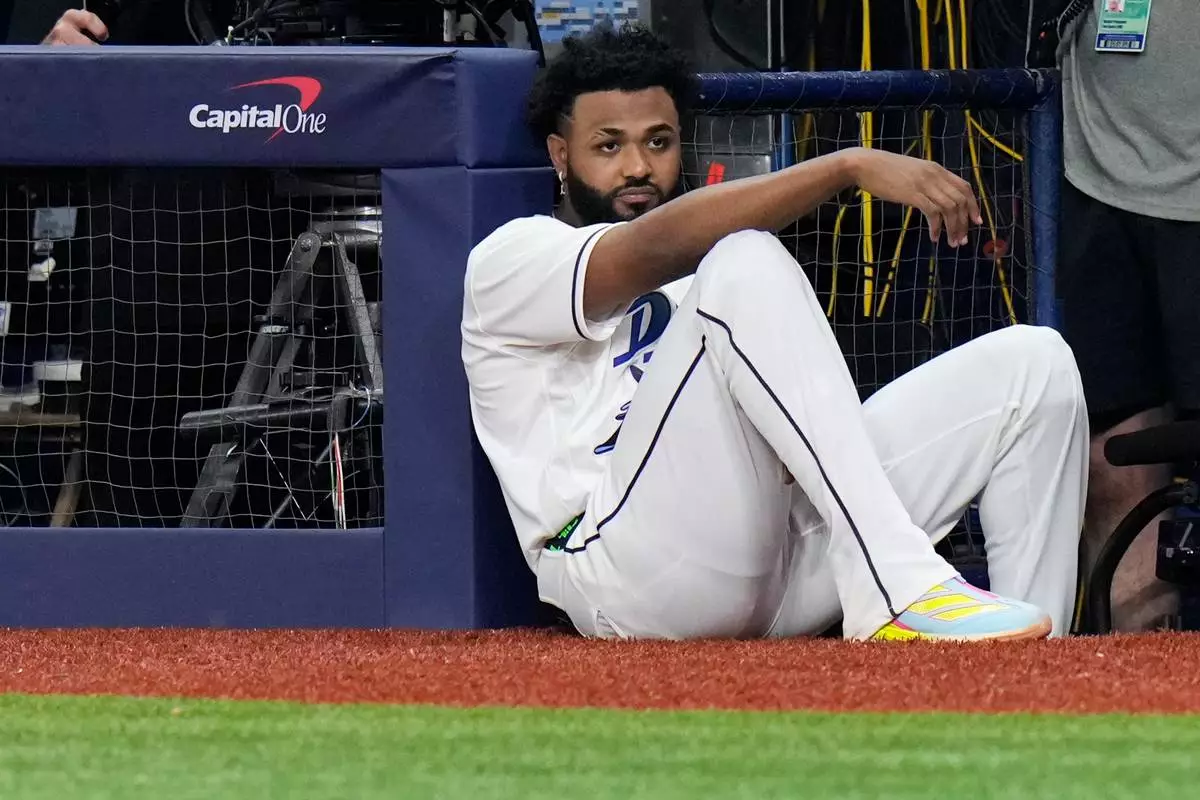
Tampa Bay Rays third baseman Junior Caminero watches from the dugout during the eighth inning of Game 3 of baseball's World Series, Monday, Oct. 26, 2026, in St. Petersburg, Fla., between the Milwaukee Brewers and the Tampa Bay Rays. (AP Photo/Chris O'Meara)
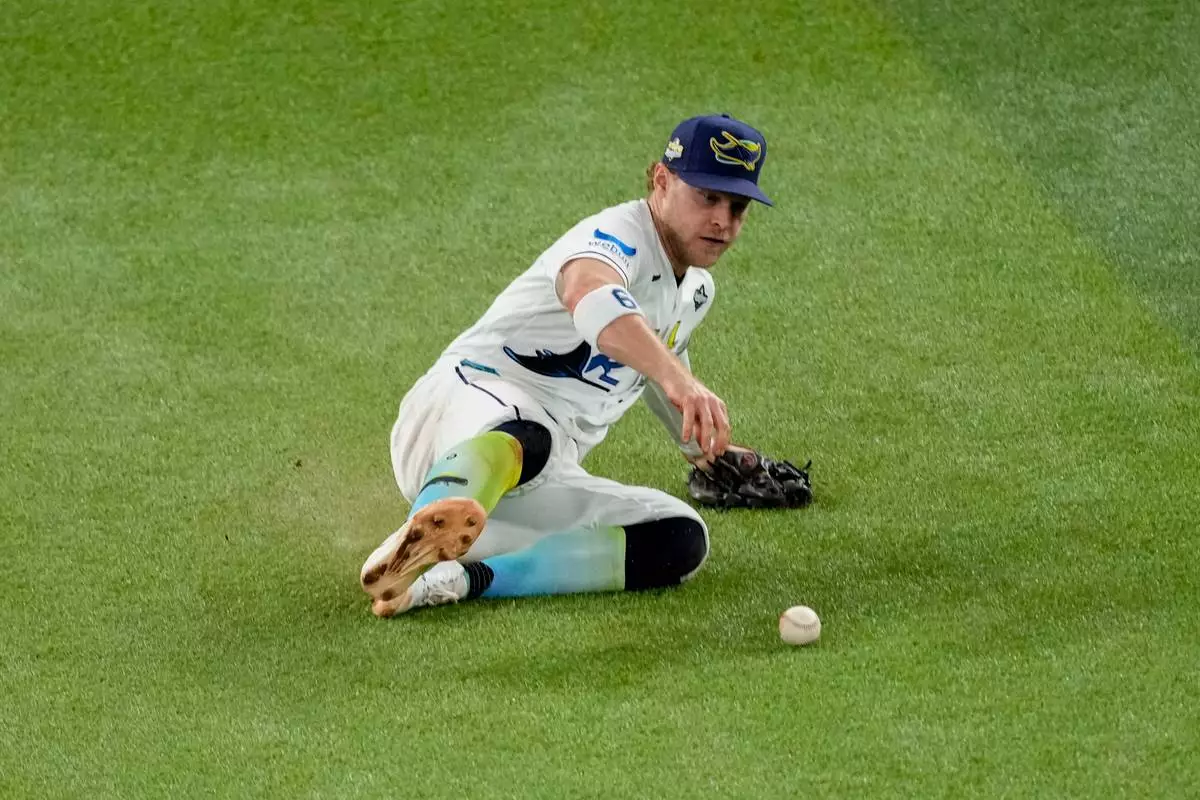
Tampa Bay Rays shortstop Taylor Walls fields a two-RBI base hit by Milwaukee Brewers second baseman Brice Turang during the fifth inning of Game 3 of baseball's World Series, Monday, Oct. 26, 2026, in St. Petersburg, Fla., between the Milwaukee Brewers and the Tampa Bay Rays. (AP Photo/Morry Gash)
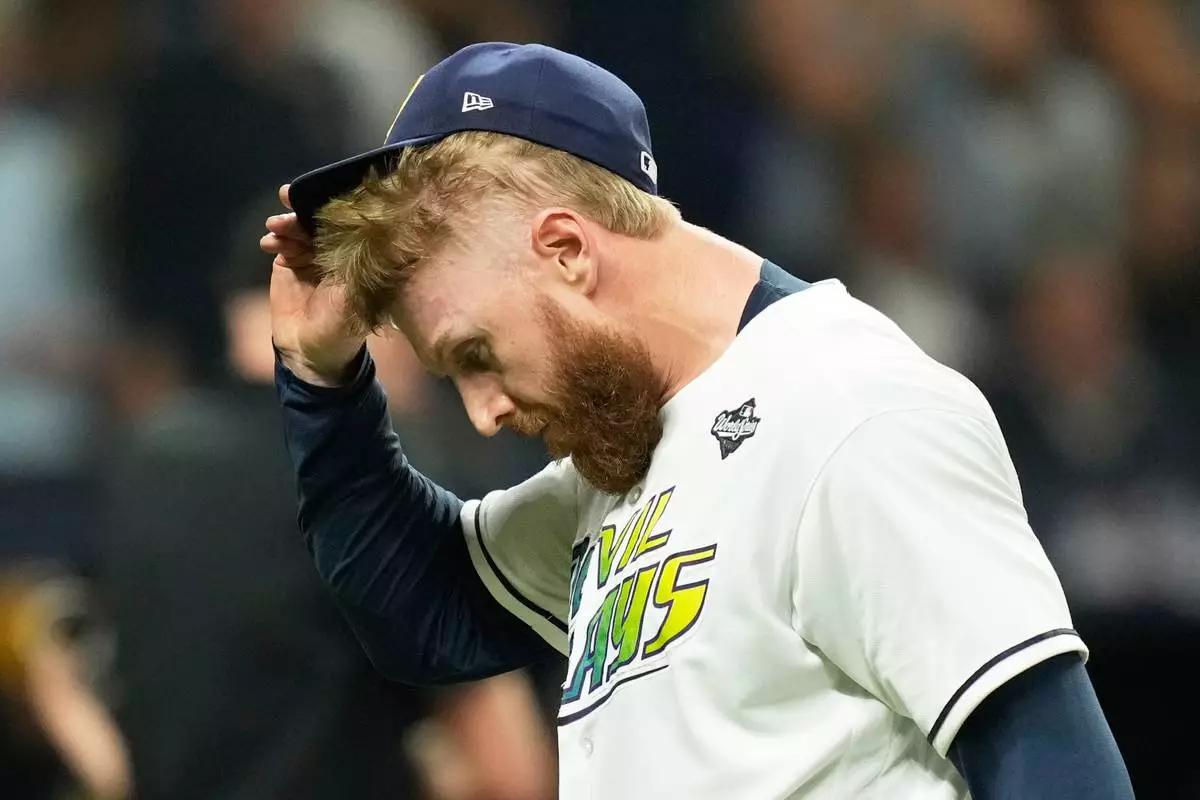
Tampa Bay Rays pitcher Cam Booser leaves the game during the fifth inning of Game 3 of baseball's World Series, Monday, Oct. 26, 2026, in St. Petersburg, Fla., between the Milwaukee Brewers and the Tampa Bay Rays. (AP Photo/Ashley Landis)
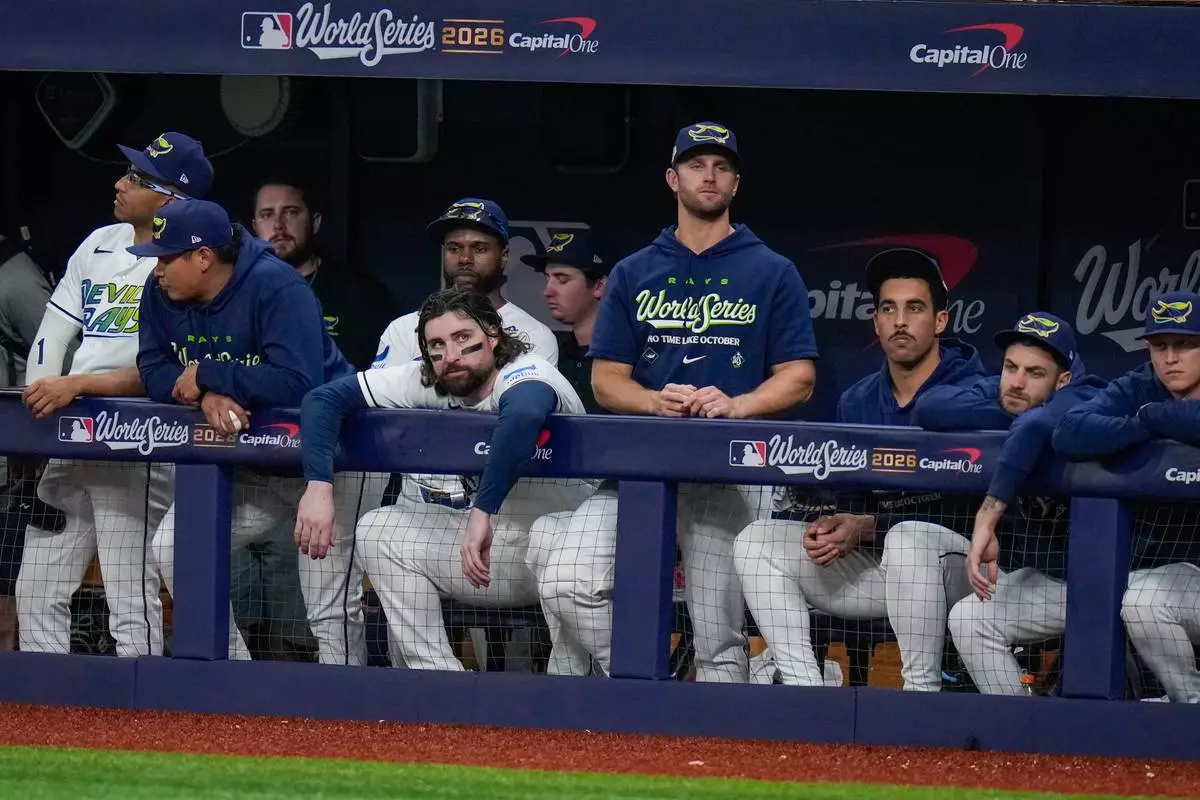
Tampa Bay Rays players watch from the dugout during the fifth inning of Game 3 of baseball's World Series, Monday, Oct. 26, 2026, in St. Petersburg, Fla., between the Milwaukee Brewers and the Tampa Bay Rays. (AP Photo/Chris O'Meara)
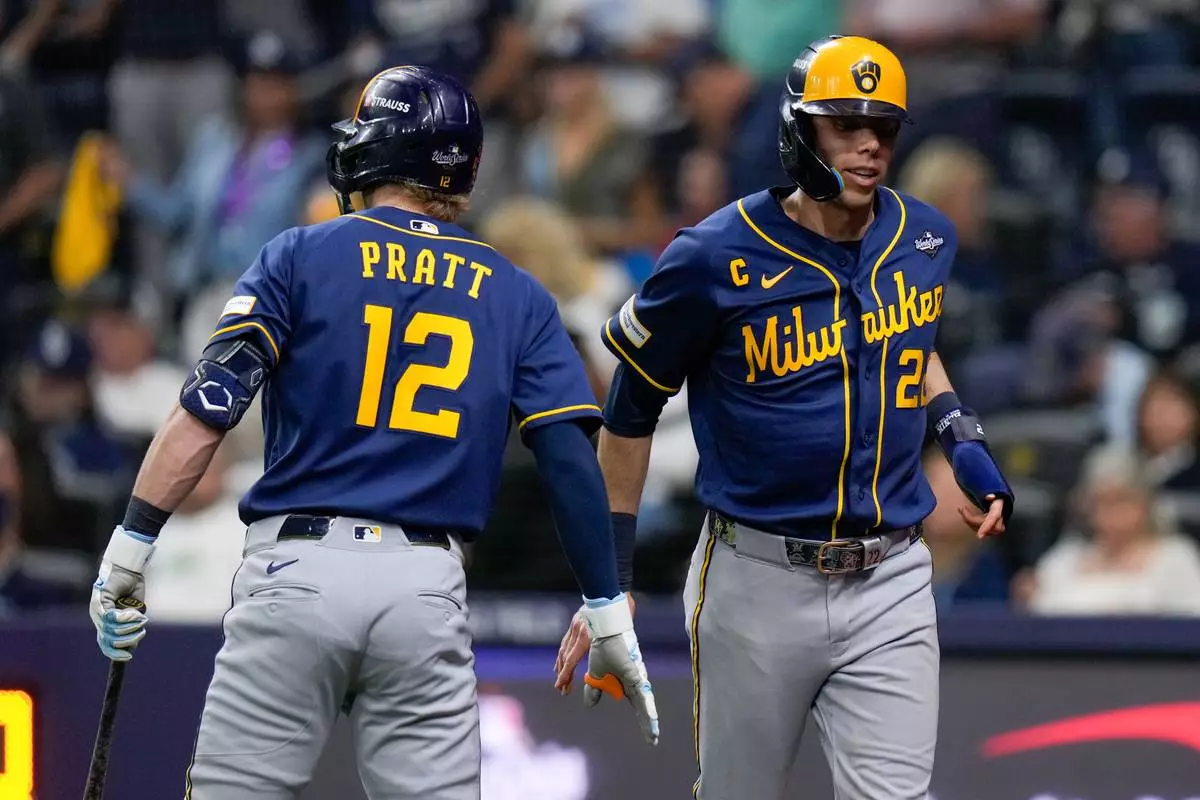
Milwaukee Brewers designated hitter Christian Yelich celebrates scoring with shortstop Cooper Pratt (12) off a base hit by second baseman Brice Turang during the fifth inning of Game 3 of baseball's World Series, Monday, Oct. 26, 2026, in St. Petersburg, Fla., between the Milwaukee Brewers and the Tampa Bay Rays. (AP Photo/Chris O'Meara)
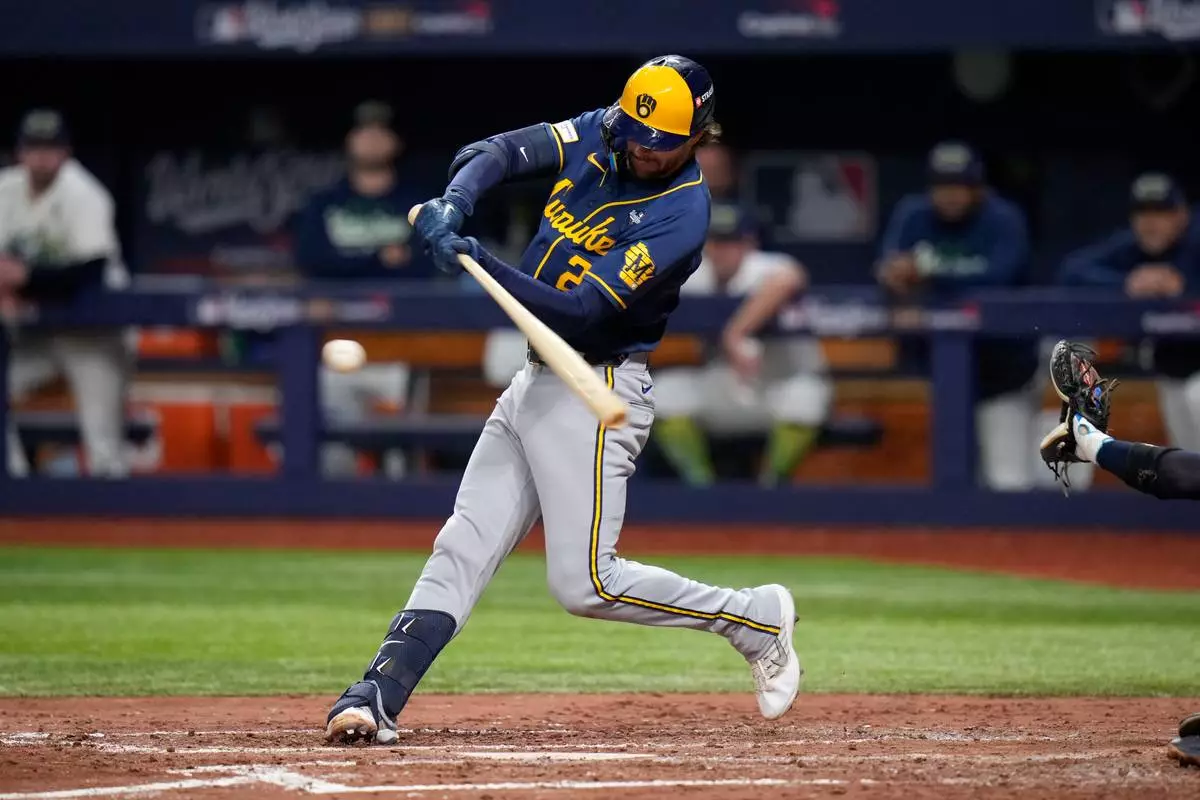
Milwaukee Brewers second baseman Brice Turang connects for a two-RBI base hit during the fifth inning of Game 3 of baseball's World Series, Monday, Oct. 26, 2026, in St. Petersburg, Fla., between the Milwaukee Brewers and the Tampa Bay Rays. (AP Photo/Chris O'Meara)
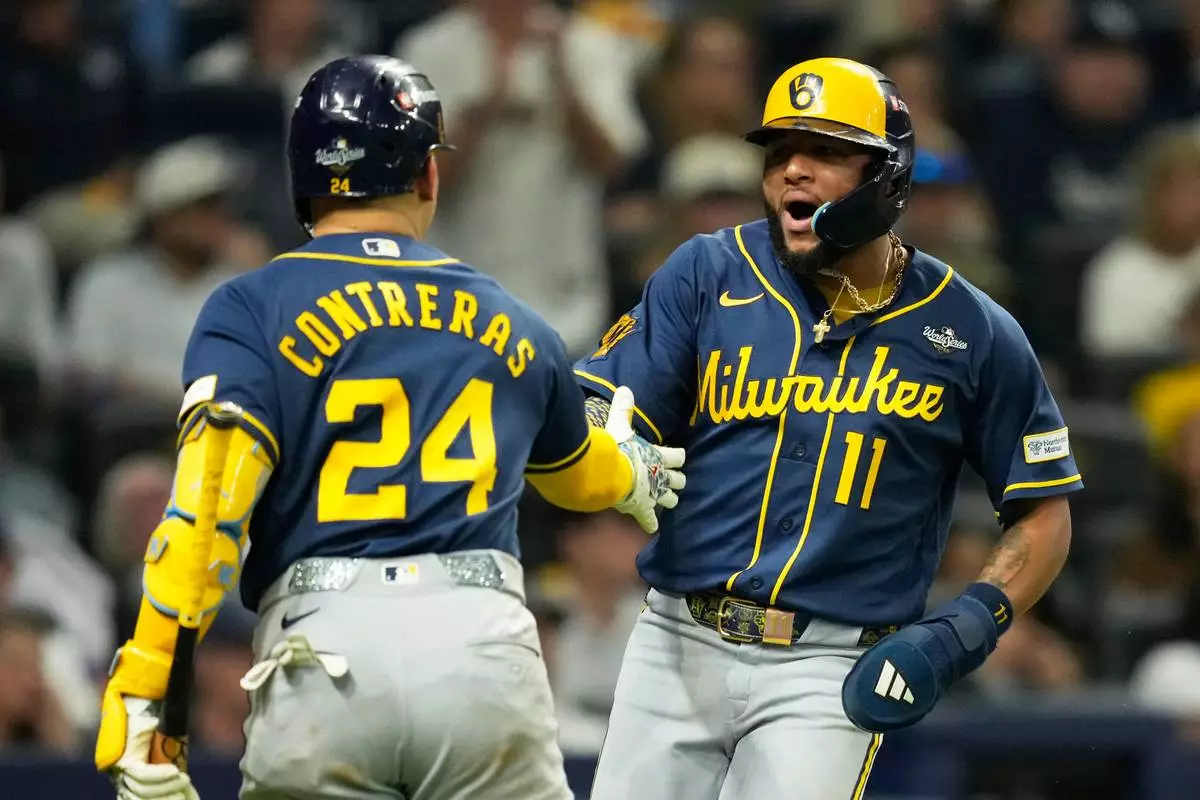
Milwaukee Brewers' Jackson Chourio (11) celebrates after scores on a hit by Christian Yelich during the third inning of Game 3 of baseball's World Series, Monday, Oct. 26, 2026, in St. Petersburg, Fla., between the Milwaukee Brewers and the Tampa Bay Rays. (AP Photo/Ashley Landis)
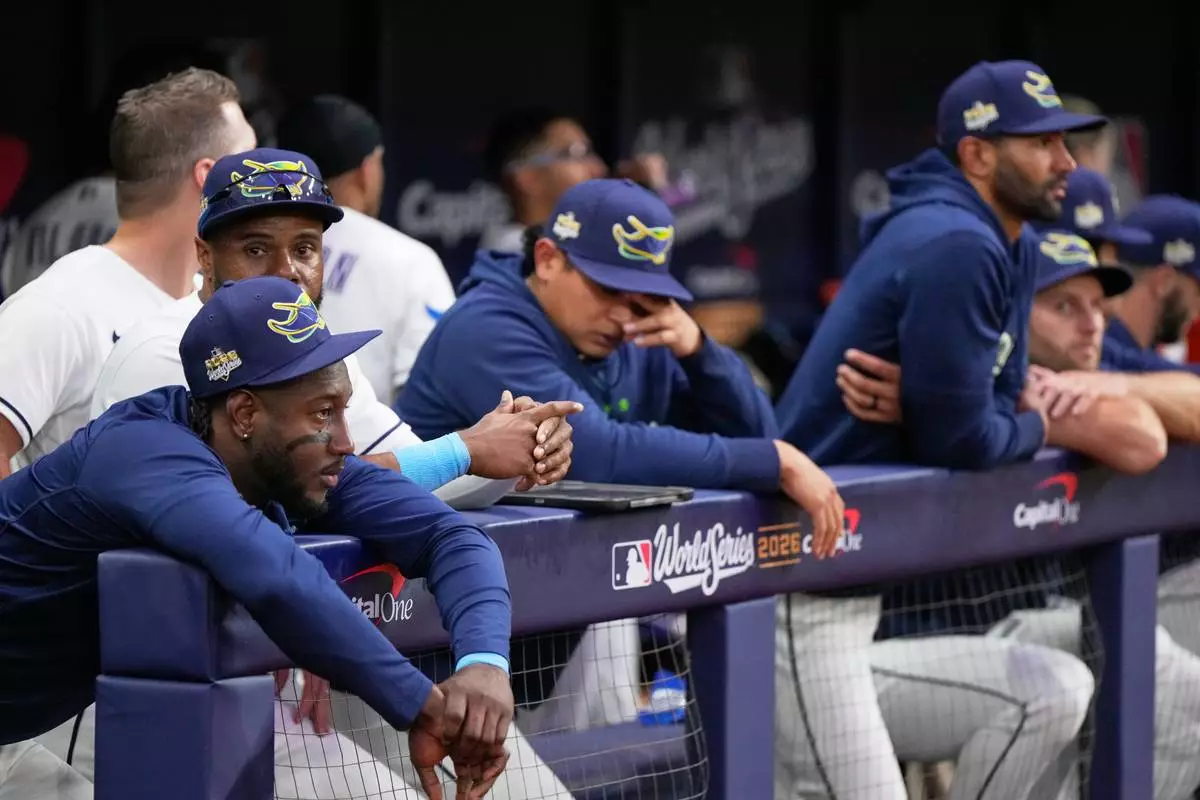
Members of the Tampa Bay Rays watch during the seventh inning of Game 3 of baseball's World Series, Monday, Oct. 26, 2026, in St. Petersburg, Fla., between the Milwaukee Brewers and the Tampa Bay Rays. (AP Photo/Ashley Landis)