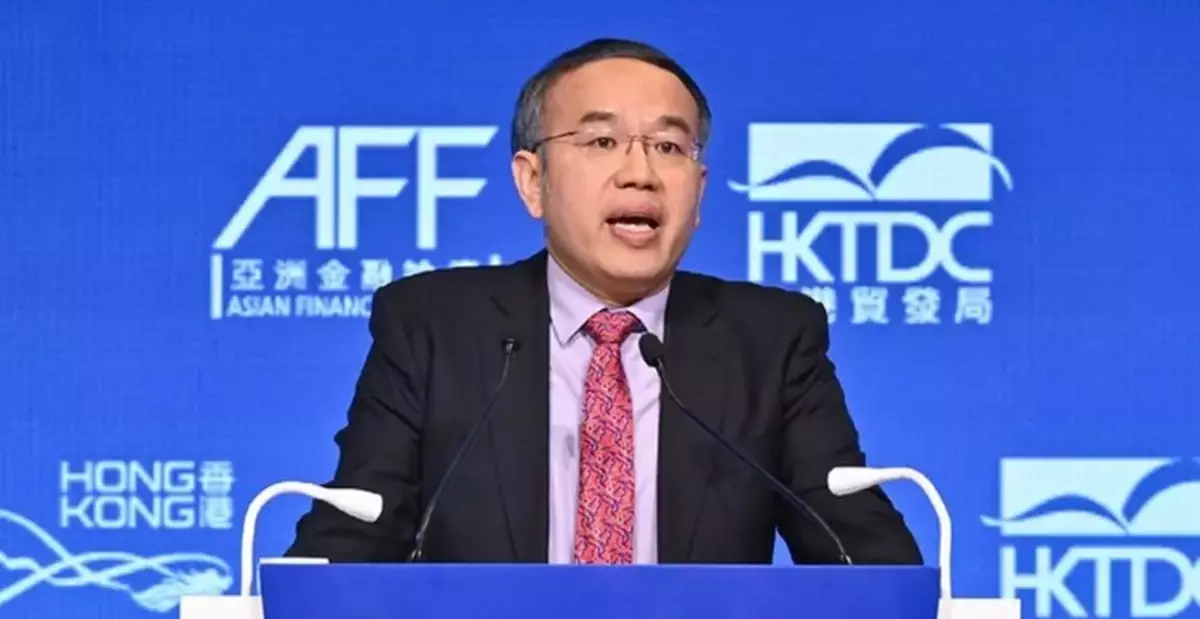
Speech by SFST at Global University Presidents and Leaders Summit 2026
Following is the speech by the Secretary for Financial Services and the Treasury, Mr Christopher Hui, at the Global University Presidents and Leaders Summit 2026 today (October 27):
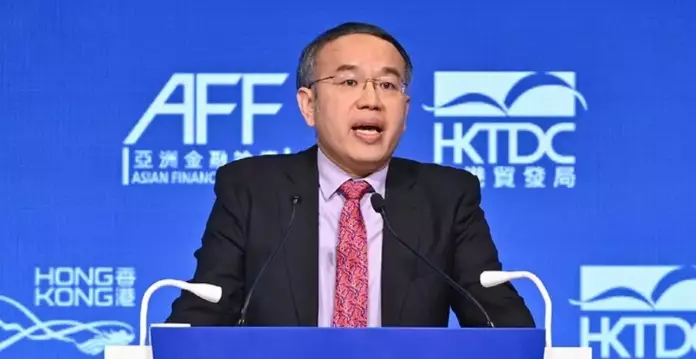
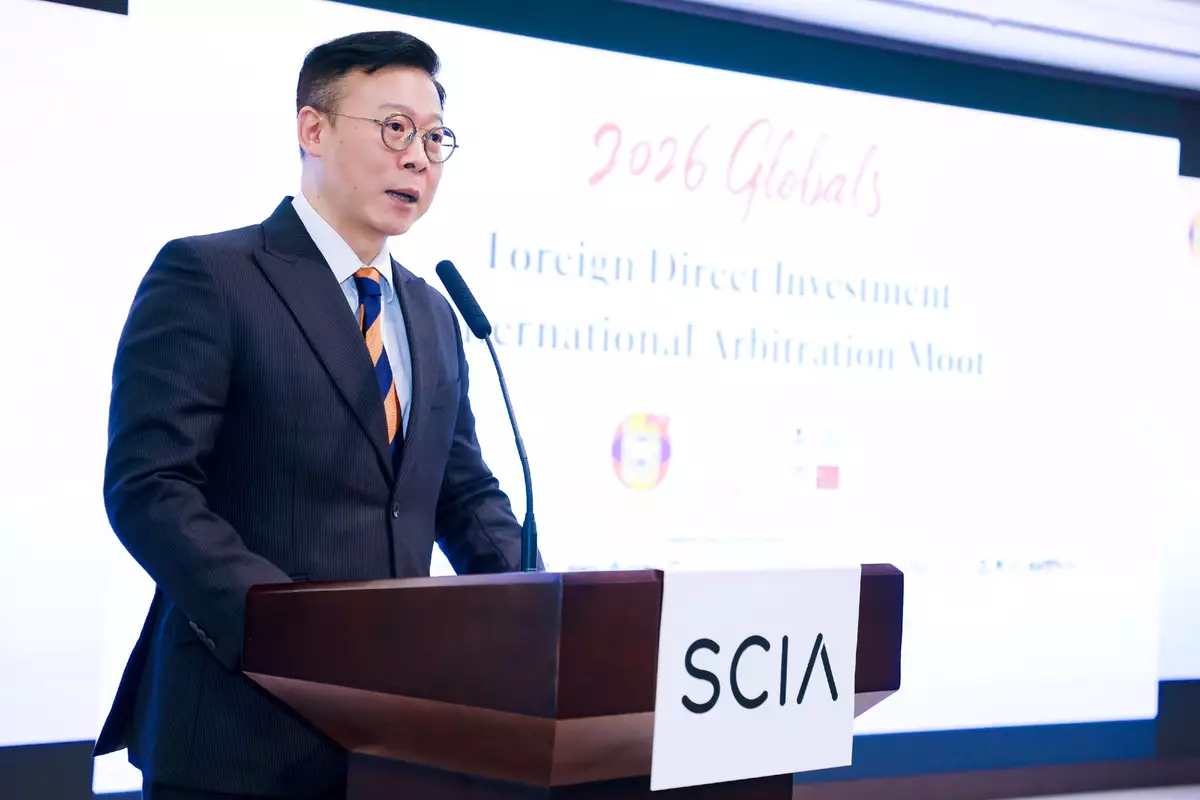
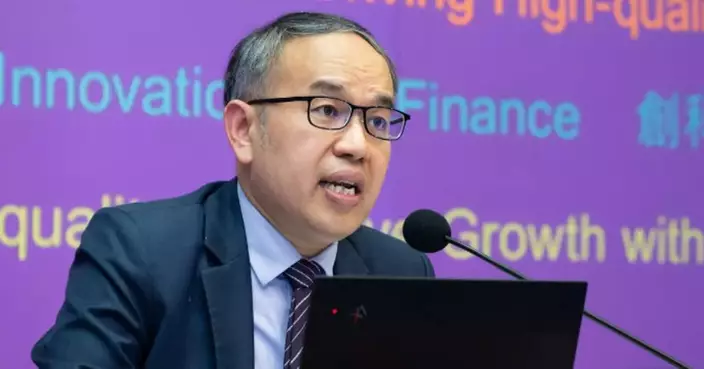
The Secretary for Financial Services and the Treasury, Mr Christopher Hui. Photo source: reference image
Professor the Honourable Priscilla Leung (Founding President and Chief Executive Officer of the Hong Kong Association for External Friendship), Professor Dennis Lo (Vice-Chancellor and President of the Chinese University of Hong Kong), distinguished university presidents and academic leaders, honourable guests, ladies and gentlemen,
Good afternoon. It is a great pleasure to join you at the Global University Presidents and Leaders Summit 2026. May I begin by thanking Professor the Honourable Priscilla Leung for her kind invitation, and for her leadership in organising this Summit. I must say I went through the programme of this Summit. I can see almost a third of my government colleagues will be or have been here, so it's indeed a much closer event. I also thank the Hong Kong Association for External Friendship for assembling so distinguished a gathering of university leaders and partners from around the world, and for placing this year's discussion at the intersection of knowledge, enterprise and public purpose.
Your theme - the globalisation of knowledge, and deeper industry-academia-research collaboration - speaks directly to our Hong Kong's agenda. This session asks how policy, entrepreneurship and education may reinforce one another; how governance and intellectual property protection may build trust; and also how industry collaboration may turn discovery into lasting public value. From the standpoint of financial services and treasury management, a policy portfolio which I oversee, the proposition is simple: ideas require capital, markets and sound risk management if they are to travel from laboratory to real economy. That is why we are advancing the "Finance+" strategy, and why financing the Northern Metropolis University Town matters to this Summit.
Hong Kong's First Five-Year Plan is clear: finance is our pivotal and crowning strength. As an international financial centre, we must seek growth through stability, reinforce stability through growth, and fully leverage the core function of propelling the real economy with finance. One of the Plan's core directions is therefore to take forward "Finance+" - so that capital, expertise and risk management empower businesses, accelerate innovation, and serve the real economy.
So the next question to ask is what does "Finance+" mean in practice?
First, finance must offer end-to-end support for innovation and industry - from venture capital and private equity through to our equity and bond markets - helping enterprises raise funds, manage risk and commercialise technology.
Second, financial innovation must address the pain points of the real economy. Fintech, green and sustainable finance, and stronger market infrastructure open better channels for trade, fundraising, financing and risk management.
Third, finance must sit alongside talent, research and industry — not apart from them. That is why this Summit's framing of policy, industry, academia, research and investment resonates so strongly with our approach. Investment is not an afterthought. It is the bridge that turns collaboration into scale.
Under the Policy Address this year, we are translating "Finance+" into action: consolidating our edges as a global offshore Renminbi business hub, an international asset and wealth management centre, and an international risk management centre; enhancing our equity and bond markets; developing a commodity trading ecosystem with gold as an entry point; and promoting green finance and fintech - always with prudent risk management at the core.
To attract enterprises that strengthen the real economy, we are advancing preferential policy packages covering land, subsidies and tax concessions. My Bureau plans to introduce an amendment bill providing preferential tax rates of five per cent, or half-rate, for selected enterprises in key sectors such as finance, advanced manufacturing, research and development in innovation and technology, headquarters activities, and logistics and supply chain management.
We are also putting capital to work where Hong Kong's next engine of growth is taking shape. The Northern Metropolis Financial Advisory Taskforce, established by the Hong Kong Monetary Authority and the Hong Kong Association of Banks, is exploring public-private partnership approaches and tailored financing for companies moving into the Northern Metropolis. Enhancements to the insurance risk-based capital regime will release more insurance capital for infrastructure, including Northern Metropolis projects. As at July this year, funding for Northern Metropolis-related public works secured from the Legislative Council Finance Committee has already exceeded $180 billion. The Legislative Council has also approved raising the total borrowing ceiling of the Government Sustainable Bond Programme and the Infrastructure Bond Programme to $900 billion, enabling bond markets to support infrastructure development at scale.
In short, "Finance+" turns Hong Kong's financial strength into a force multiplier for education, technology and industry - the triad at the heart of this Summit.
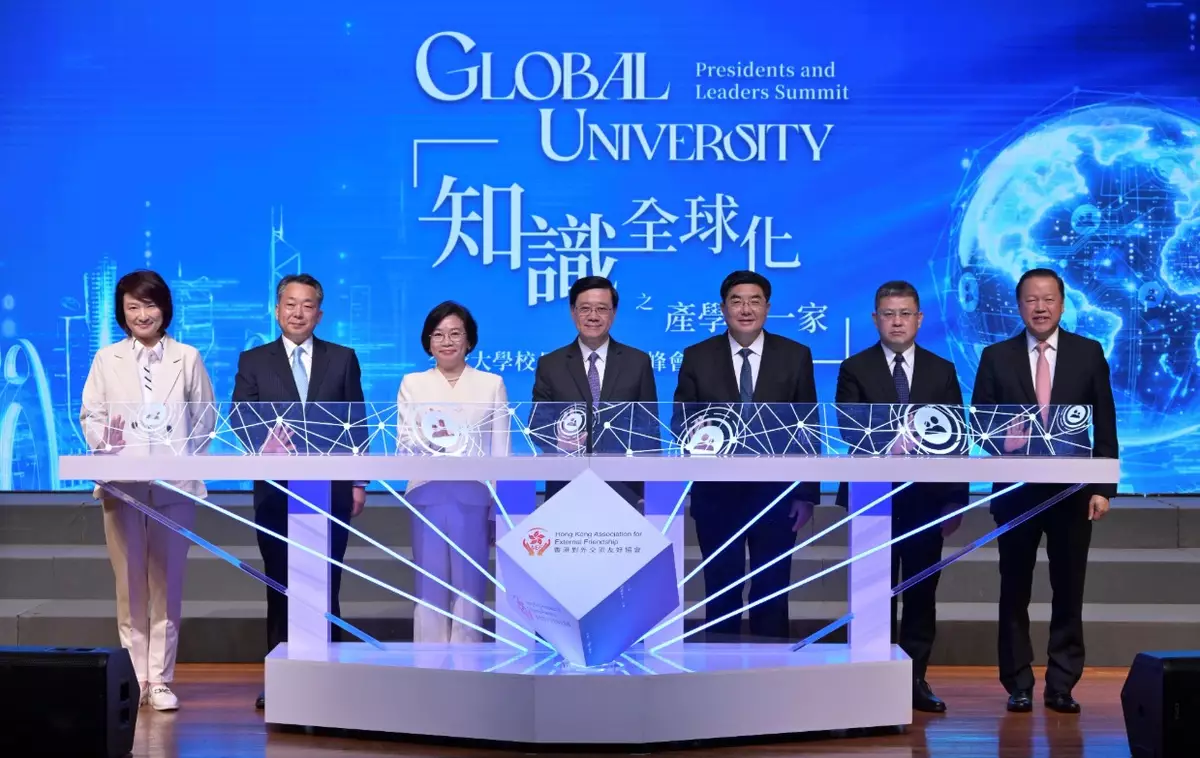
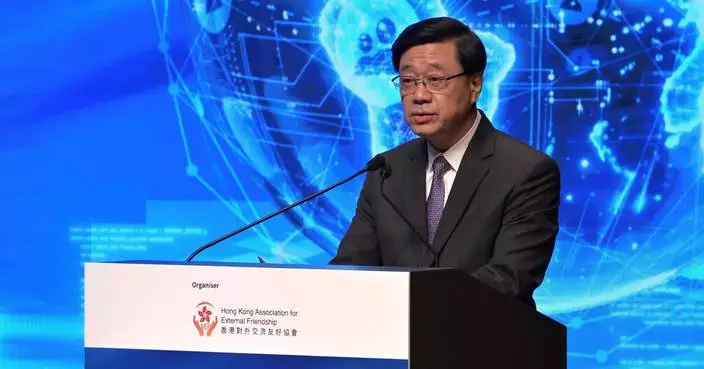
The Global University Presidents and Leaders Summit 2026. Photo source: HKSAR Government Press Releases
That brings me briefly to the Northern Metropolis University Town - not as an education blueprint, but as a platform where policy, industry, academia, research and investment must meet.
The Northern Metropolis is no longer merely a plan on paper. It is a strategic vehicle for integrating high-quality post-secondary education with innovation, technology and industry, and for pooling international talent. The University Town is being developed as a place where campuses, research and industry may co-locate, and where the transformation of research outcomes into commercial and public value may be financed, not only conceived.
Vision must be matched by means. In the Budget, the Financial Secretary announced that the Government will earmark $10 billion for providing loans to support campus development at the Northern Metropolis University Town. These loans will support part of campus development costs on terms that encourage financially sound, competitive proposals - so that public resources and institutional ambition advance together.
This is the financial services' and the government treasury's contribution to the Summit's logic: policy sets the frame; universities and industry generate insight and application; and capital - through loans, markets, insurance and public–private partnership - supplies the bridge.
Why does this matter for the leaders in this room?
Because sustainable growth depends upon systems that interact co-operatively and productively rather than operate in isolation. Research without pathways to application remains just potential. Industry without investable innovation loses momentum. Finance without a pipeline of ideas becomes just capital in search of purpose. Policy without partners cannot scale.
Hong Kong's answer, from a financial services perspective, is to connect these capacities deliberately: to protect and commercialise intellectual property so that trust and investment may follow ideas; to strengthen pathways from discovery to application; and to invite local and global institutions to plant campuses and partnerships in the Northern Metropolis - supported by a financial system that understands patient capital, risk management and global markets.
To our visiting university leaders: under "one country, two systems", Hong Kong offers a common law jurisdiction, a freely convertible currency, world-class financial infrastructure, and deep connectivity with the Mainland and the world - a platform for co-investment, commercialisation, and bringing international research networks into an ecosystem where capital is ready to engage. I encourage you to explore partnerships with our institutions, to consider the opportunities opening around the University Town, and to help us build a talent and innovation hub for the Guangdong-Hong Kong-Macao Greater Bay Area and the world.
Knowledge becomes powerful when it travels - across borders, across disciplines, and across the boundary between campus and society. Hong Kong is determined to make that journey shorter, safer and more rewarding: where policy sets the frame, universities generate insight, industry creates application, and finance supplies the bridge.
I wish this session, and the Summit as a whole, every success. May your discussions strengthen the synergies we are building into Hong Kong's future: between education and enterprise, research and investment, and Hong Kong and the world.
Thank you.
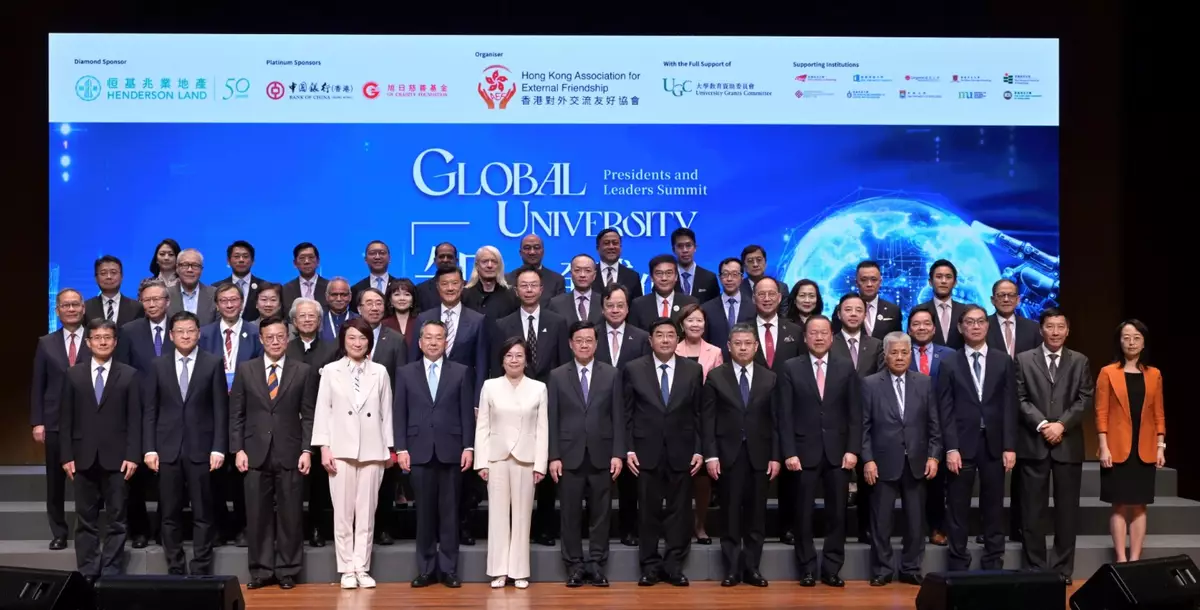
The Global University Presidents and Leaders Summit 2026. Photo source: HKSAR Government Press Releases