- Strengthening a collaboration ecosystem for logistics innovation, validation, and deployment
- Reinforcing contract logistics competitiveness with automated and intelligent next-gen logistics centers through process optimization
SEOUL, South Korea, Oct. 27, 2026 /PRNewswire/ -- LX Pantos (President & CEO: Lee Yong-ho) is accelerating its transition toward tech-driven logistics (TDL), with robotics transformation (RX) and AI transformation (AX) at the core of its strategy. By shifting from traditional labor-intensive operations to technology-driven operations, the company aims to lead the development of next-generation intelligent logistics centers that will also significantly strengthen its competitiveness in contract logistics (CL).
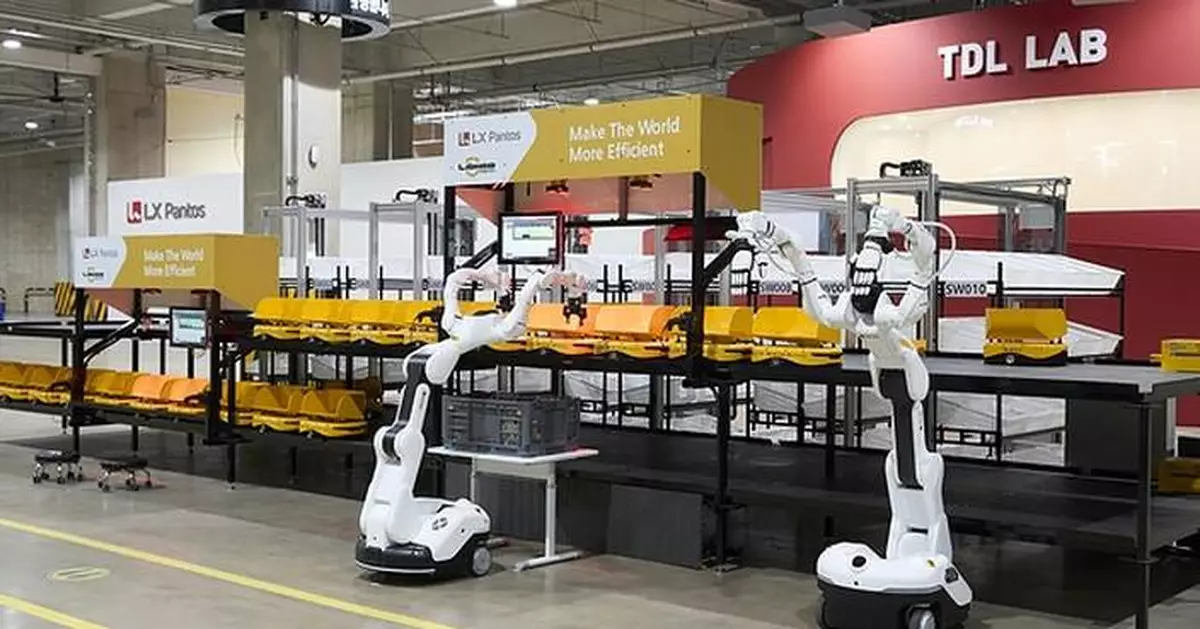
As part of this initiative, LX Pantos recently opened a TDL Lab at the MegaWise Cheongna Logistics Center in Incheon, Korea. TDL refers to the company's technology-based logistics operating model designed to deliver fully customized logistics services. Embedded in LX Pantos's on-site logistics operations, the TDL Lab is the practical testbed for innovative logistics technologies, validating the technological readiness of advanced solutions, including robotics and AI, and designing optimized operating models for their field application.
Notably, the TDL Lab is an open innovation platform that brings together LX Pantos and leading technology partners specializing in software and hardware solutions. The lab is designed to build a robust TDL Alliance, which is subsequently fostering an organic collaborative ecosystem to identify, validate, and deploy promising technologies for logistics operations.
LX Pantos TDL Alliance Partners
| Partner | Core Technologies | Areas of Collaboration |
| LG CNS | Automation systems integration (SI) and
centralized control systems
| Integrated warehouse automation |
| Hai Robotics | Automated guided vehicle (AGV)-based
storage and picking automation
| Improving the efficiency of storage
and picking flow
|
| Libiao Robotics | AGV-based sorting automation | Enhancing the efficiency of B2B, B2C
sorting process
|
| XYZ Robotics | Robotic arm-based loading
and unloading automation
| Automating container loading/unloading
and palletizing/depalletizing operations
|
| SUM | Autonomous vehicle development
and fleet management systems
| Automating inter-floor cargo transport |
| Twinny | Autonomous mobile robot (AMR)-based
collaborative picking solutions
| Improving the efficiency of material
transport and picking
|
| Deepfine | Vision-based technology solutions | Improving the accuracy and productivity of
picking and inspection processes
|
Partner
Core Technologies
Areas of Collaboration
LG CNS
Automation systems integration (SI) and
centralized control systems
Integrated warehouse automation
Hai Robotics
Automated guided vehicle (AGV)-based
storage and picking automation
Improving the efficiency of storage
and picking flow
Libiao Robotics
AGV-based sorting automation
Enhancing the efficiency of B2B, B2C
sorting process
XYZ Robotics
Robotic arm-based loading
and unloading automation
Automating container loading/unloading
and palletizing/depalletizing operations
SUM
Autonomous vehicle development
and fleet management systems
Automating inter-floor cargo transport
Twinny
Autonomous mobile robot (AMR)-based
collaborative picking solutions
Improving the efficiency of material
transport and picking
Deepfine
Vision-based technology solutions
Improving the accuracy and productivity of
picking and inspection processes
Since the initiative officially launched in April 2026, LX Pantos has signed a series of memoranda of understanding (MOUs) with seven domestic and international tech firms, including LG CNS, Hai Robotics, and Libiao Robotics. The company continues to expand its TDL Alliance by adding leading technology providers with specialized capabilities.
The TDL Lab marks the first step in LX Pantos's ambitious TDL strategy to transform logistics center operations through robotics, AI, and other advanced technologies. LX Pantos's TDL strategy outlines five core technology areas: mobile robots, robotic arms, new mobility, artificial intelligence, and digital twins. Going forward, the company is working to integrate these technologies into its logistics operations to achieve greater automation, intelligence, and operational optimization across all its logistics centers.
In the coming years, LX Pantos plans to progressively advance its logistics operating model through a three-stage roadmap: human-robot collaborative logistics centers, fully unmanned logistics centers, and intelligent logistics centers. Through this phased approach, the company aims not only to lead the development of next-generation intelligent logistics facilities but also to substantially enhance its CL competitiveness.
While discussing the company's tech-driven logistics, Auh Jae-hyuck, Executive Vice President and Head of CL Business Unit at LX Pantos, said, "TDL goes beyond simply installing automation equipment. The key is to seamlessly and efficiently integrate advanced solutions such as robotics and AI across logistics center operations and to tailor them to each customer's specific needs. By collaborating with a diverse range of tech partners, we will test and validate promising automation and intelligent logistics solutions and progressively implement next-generation logistics center operating models."
About LX Pantos
Established in 1977, LX Pantos is a leading global logistics provider headquartered in Korea. It delivers comprehensive logistics solutions across sea, air, rail, and contract logistics through a worldwide network spanning more than 40 countries.
Learn more about LX Pantos online and follow it on LinkedIn.
** This press release is distributed by PR Newswire through automated distribution system, for which the client assumes full responsibility. **

LX Pantos Accelerates Its RX and AX Drive With Launch of TDL Lab
SYDNEY, Oct. 27, 2026 /PRNewswire/ -- Clarity Pharmaceuticals (ASX: CU6) ("Clarity" or "Company"), a clinical-stage radiopharmaceutical company with a mission to develop next-generation products that improve treatment outcomes for patients with cancer, is pleased to announce that the registrational Phase III CLARIFY trial (NCT06056830)[1] has dosed the planned target of 383 participants in the study.
CLARIFY (Positron Emission Tomography Using 64Cu-SAR-bisPSMA in Participants With High-risk Prostate Cancer Prior to Radical Prostatectomy: A Prospective, Single-arm, Multi-center, Blinded-review, Phase 3 Diagnostic Performance Study) is the first Phase III registrational trial for Clarity, being conducted in the United States (US) and Australia. It is a non-randomised, open-label study of 64Cu-SAR-bisPSMA in participants with untreated, histopathology-confirmed prostate cancer with high-risk features who are proceeding to radical prostatectomy (removal of the prostate) with pelvic lymph node dissection (removal of lymph nodes from the pelvic region).
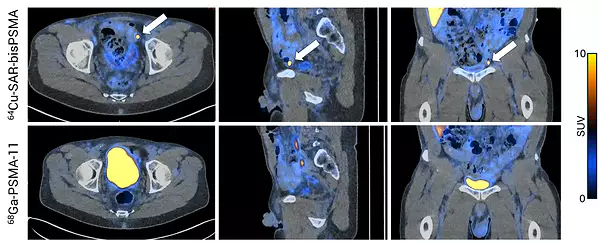
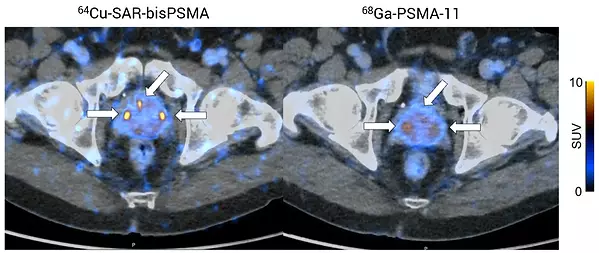
The primary endpoints of the study are the sensitivity and specificity of 64Cu-SAR-bisPSMA to detect prostate cancer within the pelvic lymph nodes compared to the standard of truth (histopathology), assessed independently for Day 1 (1-4 hours post-administration, same-day imaging) and Day 2 (approximately 24 hours post-administration, next-day imaging). CLARIFY builds on the findings from the Phase I PROPELLER study (first-in-human multi-centre trial involving 30 participants). The study demonstrated improved diagnostic performance of same-day 64Cu-SAR-bisPSMA positron emission tomography (PET) compared to 68Ga-PSMA-11 PET in the pre-prostatectomy setting, including approximately 30% greater lesion detection, 2-3 times higher tracer uptake and contrast as well as higher proportion of participants with more lesions identified by 64Cu-SAR-bisPSMA vs. 68Ga-PSMA-11 (73% vs. 27%, respectively; average across readers for participants with discordant lesion findings; Figures 1 and 2)[2]. The improved diagnostic performance of next-day vs. same-day 64Cu-SAR-bisPSMA PET observed in the COBRA and Co-PSMA trials in biochemical recurrence (BCR) supports the hypothesis that next-day imaging may also offer incremental benefits in the pre-prostatectomy setting, to be assessed in the CLARIFY study.
Topline data from the CLARIFY trial are anticipated to be released in the first half of calendar year 2027, along with topline results from the AMPLIFY trial, which is investigating 64Cu-SAR-bisPSMA in patients with BCR of prostate cancer[3]. As a pivotal trial, the final CLARIFY study results are intended to provide sufficient evidence to support an application to the US Food and Drug Administration (FDA) for approval of 64Cu-SAR-bisPSMA as a new diagnostic imaging agent in prostate cancer patients prior to undergoing definitive therapy.
Dr Alan Taylor, Executive Chairperson of Clarity Pharmaceuticals, commented, "This milestone is a significant achievement from our team and collaborators as we progress our optimised 64Cu-SAR-bisPSMA product towards trial completion and subsequent US FDA New Drug Application (NDA) submission. We now have two registrational Phase III trials with 64Cu-SAR-bisPSMA that have successfully completed recruitment and are in the process of patient follow-up, in line with the trials' protocols. We look forward to the upcoming data readout from CLARIFY outlining the sensitivity and specificity of our 64Cu-SAR-bisPSMA product.
"The development of 64Cu-SAR-bisPSMA aims to address a significant gap in patient care for the accurate initial staging of prostate cancer (CLARIFY trial) and detection of recurrent disease (AMPLIFY trial). Currently approved prostate-specific membrane antigen (PSMA) PET agents have reported sensitivities of 27%-40%, according to their respective Phase III pivotal studies, based on the detection of pelvic lymph node metastases prior to prostatectomy (verified by histopathology)[4-9]. Importantly, none of these agents achieved the prespecified primary endpoint thresholds for sensitivity in their respective pivotal trials [4-9]. This means that the currently approved PSMA PET agents did not detect prostate cancer in the pelvic lymph nodes in more than half of the study participants in whom such metastases were confirmed by histopathology. We believe that this substantial limitation in sensitivity warrants the development of next-generation products that provide greater diagnostic confidence to clinicians and support more informed management of patients with prostate cancer.
"64Cu-SAR-bisPSMA has demonstrated higher diagnostic performance with increased product uptake compared to standard-of-care (SOC) PSMA PET agents in clinical trials to date[2],[10-11]. This improvement is enabled by our innovative, science-driven approach where we optimised the product with a bivalent bisPSMA molecule and explored next-day imaging benefits, made possible by the proprietary SAR Technology and the half-life of copper-64. With strong data supporting the development of 64Cu-SAR-bisPSMA, we believe this product has the potential to overcome the shortcomings of the current-generation PSMA PET and improve outcomes for patients with prostate cancer.
"What is most important about the CLARIFY trial is that this study is the first to determine the sensitivity and specificity of our SAR-bisPSMA product, based on the appropriate assessment of true positive, true negative, false positive and false negative lesions that can only be determined accurately using histopathology specimens (in this case, pelvic lymph nodes that are surgically removed during prostatectomy). Utilising similar principles in study design to those previously used by other PSMA imaging agents on the market for their respective registrational Phase III studies, CLARIFY will provide sensitivity and specificity estimates for same-day and next-day imaging, as well as have direct comparative data to SOC PSMA imaging where SOC PET was undertaken. As sensitivity and specificity are fundamental measures of a diagnostic test's accuracy and are of high clinical importance, this trial will provide clinicians with valuable information through direct comparisons of those parameters across imaging timepoints and against real-world SOC PSMA imaging. Having the most accurate diagnostic information is essential for clinicians to determine the best course of treatment for their patients. Such treatment pathways may be quite distinct, including the removal of the prostate, with considerable long-lasting morbidities in some cases, or other more conservative approaches, personalised to each patient and potentially preserving quality of life post-treatment.
"As we move closer towards product launch, we look forward to making 64Cu-SAR-bisPSMA available to the patients who need it most. We hope this will represent a paradigm shift in management of prostate cancer through improved accuracy for the detection of disease, while making radiopharmaceuticals more accessible through centralised product manufacture and broad distribution to any imaging centre with a PET camera, with flexibility in the timing of the scan."
About SAR-bisPSMA
SAR-bisPSMA derives its name from the word "bis", which reflects a novel approach of connecting two PSMA-targeting agents to Clarity's proprietary sarcophagine (SAR) technology that securely holds copper isotopes inside a cage-like structure, called a chelator. Unlike other commercially available chelators, the SAR technology prevents copper leakage into the body. SAR-bisPSMA is a Targeted Copper Theranostic (TCT) that can be used with isotopes of copper-64 (Cu-64 or 64Cu) for imaging and copper-67 (Cu-67 or 67Cu) for therapy.
Disclaimer
64Cu-SAR-bisPSMA and 67Cu-SAR-bisPSMA are unregistered products. Their safety and efficacy have not been assessed by health authorities such as the US FDA or the Therapeutic Goods Administration (TGA). There is no guarantee that these products will become commercially available.
About Prostate Cancer
Prostate cancer is the second most common cancer diagnosed in men globally and the fifth leading cause of cancer death in men worldwide[12]. Prostate cancer is the second-leading cause of cancer death in American men. The American Cancer Institute estimates there will be about 333,830 new cases of prostate cancer in the US in 2026 and around 36,320 deaths from the disease[13].
About Clarity Pharmaceuticals
Clarity is a clinical stage radiopharmaceutical company focused on the treatment of serious diseases. The Company is a leader in innovative radiopharmaceuticals, developing Targeted Copper Theranostics based on its SAR Technology Platform for the treatment of cancers.
www.claritypharmaceuticals.com
For more information, please contact:
Clarity Pharmaceuticals
Dr Alan Taylor
Lisa Sadetskaya
Executive Chairperson
Director, Corporate Communications
ataylor@claritypharm.com
lisa@claritypharm.com
References
- ClinicalTrials.gov Identifier: NCT06056830. https://clinicaltrials.gov/study/NCT06056830
- Veronica Wong, Nat Lenzo, Michelle Parker and Louise Emmett. 64Cu-SAR-bisPSMA (PROPELLER) positron emission tomography (PET) imaging in patients with confirmed prostate cancer. JCO 41, 5039-5039(2023). DOI:10.1200/JCO.2023.41.16_suppl.5039
- ClinicalTrials.gov Identifier: NCT06970847. https://clinicaltrials.gov/study/NCT06970847
- Gallium Ga 68 gozetotide injection. Prescribing Information. UCLA Biomedical Cyclotron Facility; 2022. https://www.accessdata.fda.gov/drugsatfda_docs/label/2022/212642s002lbl.pdf
- Hope T, et al., JAMA Oncol. 2021;7;(11):1635-1642
- PYLARIFY TRUVU® (piflufolastat F 18) prescribing information. FDA; 2026. https://www.accessdata.fda.gov/drugsatfda_docs/label/2026/220089Orig1s000lbl.pdf
- Pienta KJ, et al. J Urol. 2021;206(1):52-61
- POSLUMA® (flotufolastat F 18) prescribing information. FDA; 2023. https://www.accessdata.fda.gov/drugsatfda_docs/label/2023/216023s000lbl.pdf
- Surasi DS, el al. Eur Urol 2023;84:361-370
- Khan et al. Prospective Comparison of 64Copper [64Cu]SAR-bisPSMA vs 68Gallium[68Ga] PSMA-11 PET/CT for Biochemical Recurrence of Prostate Cancer Following Radical Prostatectomy (Co-PSMA Trial). Eur Urol. 2026 Jun;89(6):512520. doi: 10.1016/j. eururo.2026.03.001. PMID: 41904043
- Nordquist et al. COBRA: Assessment of safety and efficacy of 64Cu-SAR-bisPSMA in patients with biochemical recurrence of prostate cancer following definitive therapy. EANM, 2024
- Global Cancer Statistics 2020: GLOBOCAN Estimates of Incidence and Mortality Worldwide for 36 Cancers in 185 Countries. https://acsjournals.onlinelibrary.wiley.com/doi/10.3322/caac.21660
- American Cancer Society: Key Statistics for Prostate Cancer. https://www.cancer.org/cancer/prostate-cancer/about/key-statistics.html
This announcement has been authorised for release by the Executive Chairperson.
** This press release is distributed by PR Newswire through automated distribution system, for which the client assumes full responsibility. **
Registrational Phase III CLARIFY trial: Target number of participants achieved
Registrational Phase III CLARIFY trial: Target number of participants achieved